Encyclopedia › Wildlife and weather
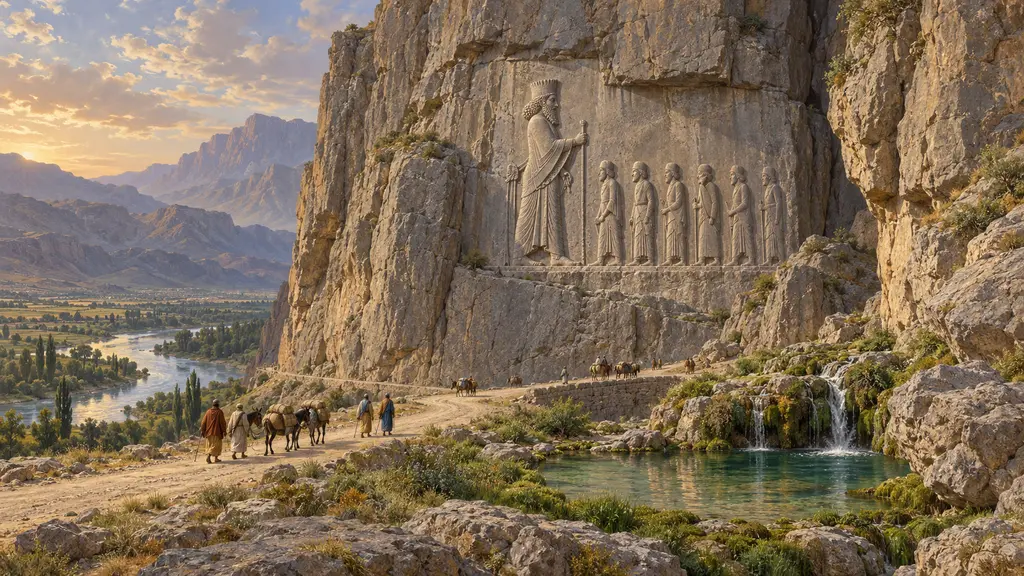
The Persian leopard
The leopard of the Zagros and nearby hills, a wild cat of the Persian lands, 6th-5th century BCE
In the game: Level 3: The Lie
The leopard was a native hunter of the mountains of western Asia, including the Zagros, where the game places Media. Ancient texts of the Persian period say little about the animal itself, so the picture rests mostly on the natural range of the species and on what Greek writers record about wild beasts and royal parks.
In the game: The game draws one leopard on the hills of Media in the Bagastana level. It is scenery only and no rule reads it. Nothing in the sources ties a leopard to the events at Behistun.
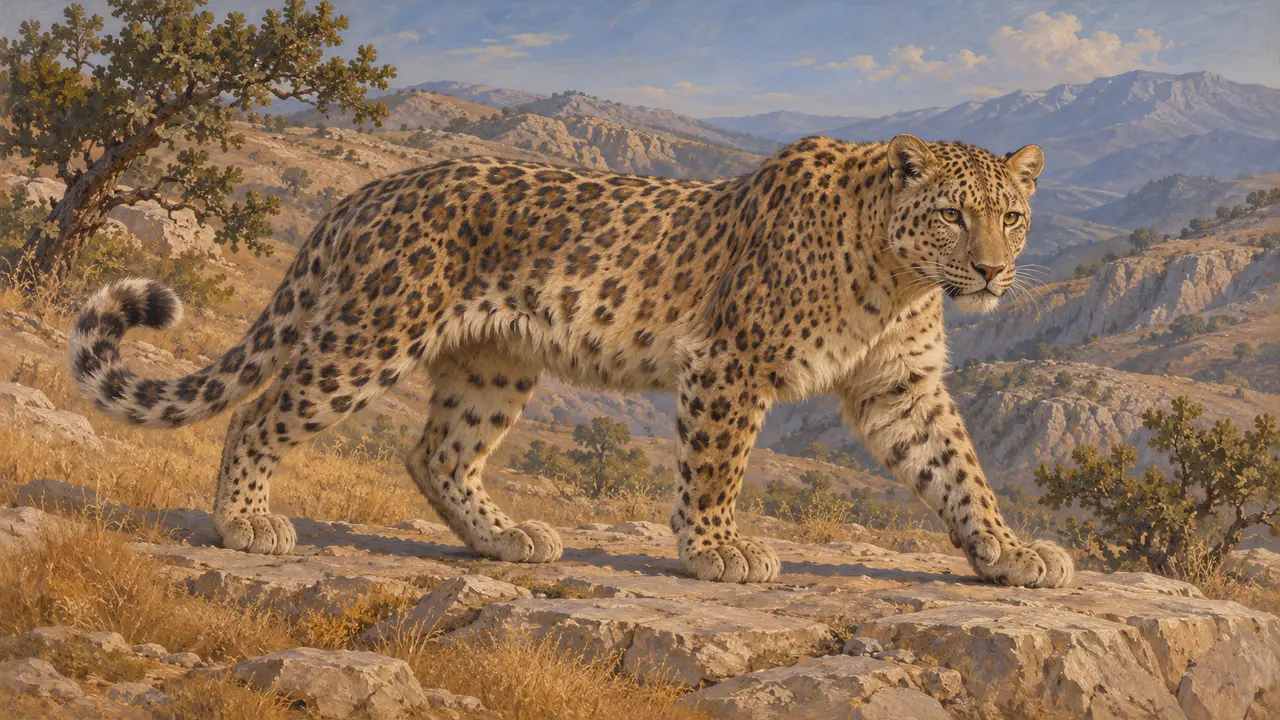
A cat of the hill country
Ancient accountGreek writers knew the leopard as the pardalis. Herodotus names it in passing among wild animals, but he gives no description of a Persian leopard. Xenophon records that Persian parks held wild animals for the hunt, though the passage does not single out leopards.
Xenophon, Anabasis 1.2
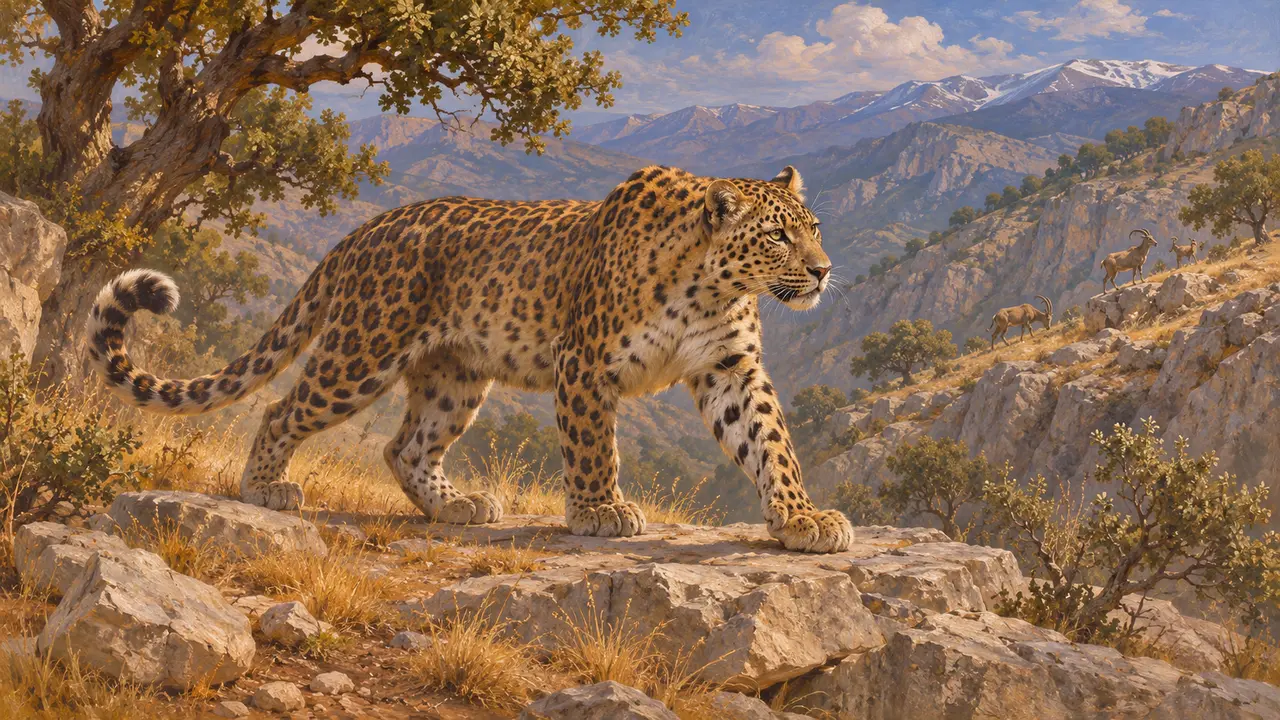
Range and habits
DisputedThe leopard of Iran, the subspecies Panthera pardus tulliana, survives in small numbers in the Zagros, the Alborz and the Caucasus. It lives in rocky uplands and takes wild goat, urial and deer. That the same hills held leopards in the Achaemenid period is a reasonable inference from the present range, not a documented fact; no study is cited here for the ancient bones.
Modern zoological surveys; no single study cited
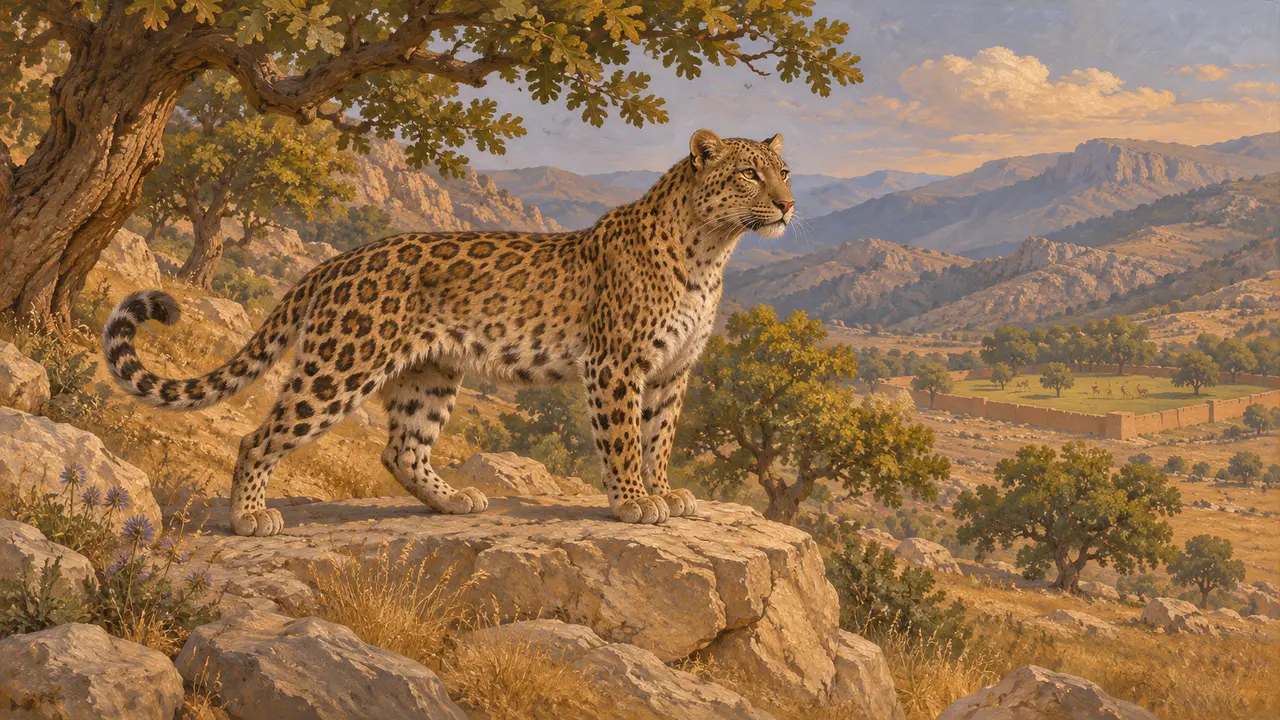
Leopards and the royal hunt
DisputedPersian kings kept enclosed parks called paradeisoi, and Greek writers describe them as stocked with game. Whether leopards were hunted or held in such parks is not firmly attested for this period. Claims about pelts or live animals as tribute rest on later or indirect evidence.
Xenophon, Anabasis 1.2
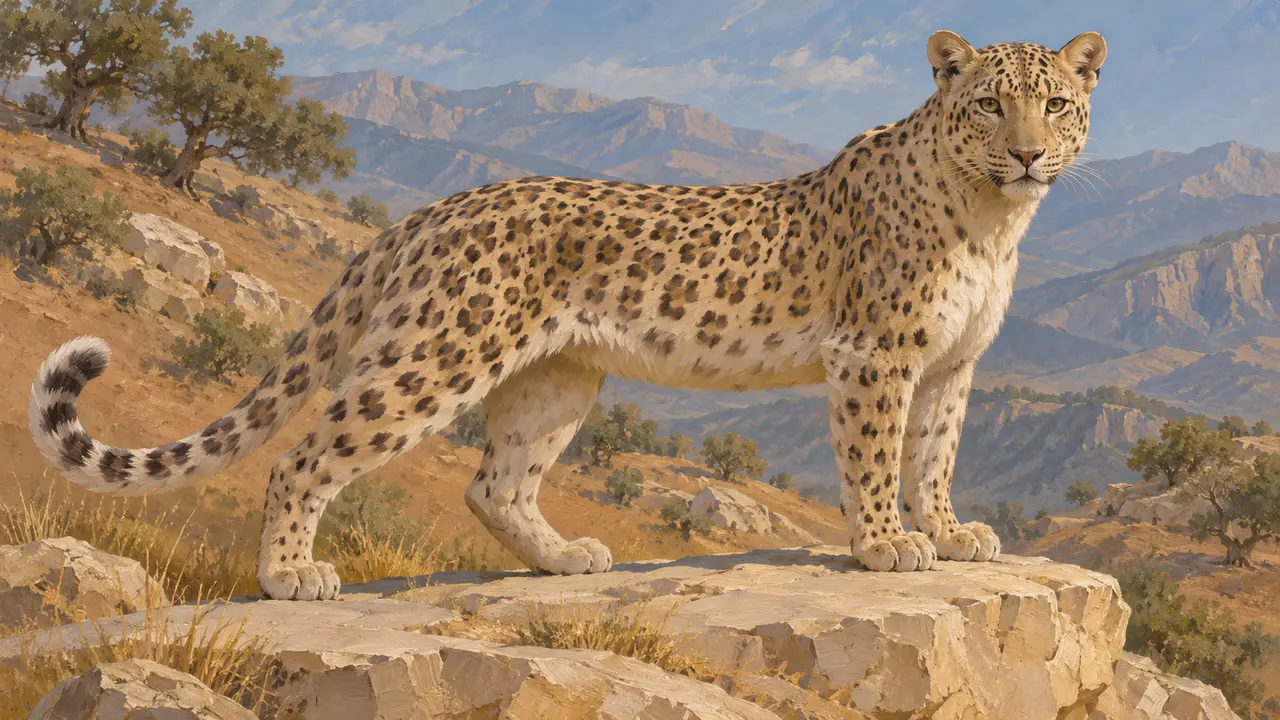
The game's drawing
Ancient accountThe game gives the animal a pale coat with small dark discs, in a low-poly faceted style. This matches the living animal. It is the game's own stylisation and does not copy any ancient image.
The game's own drawing; no ancient source
Sources
- Xenophon, Anabasis 1.2
- Herodotus 7.69
- P. Briant, From Cyrus to Alexander, 2002