Level 3: The Lie · Bagastana · 521 BCE
The Lie
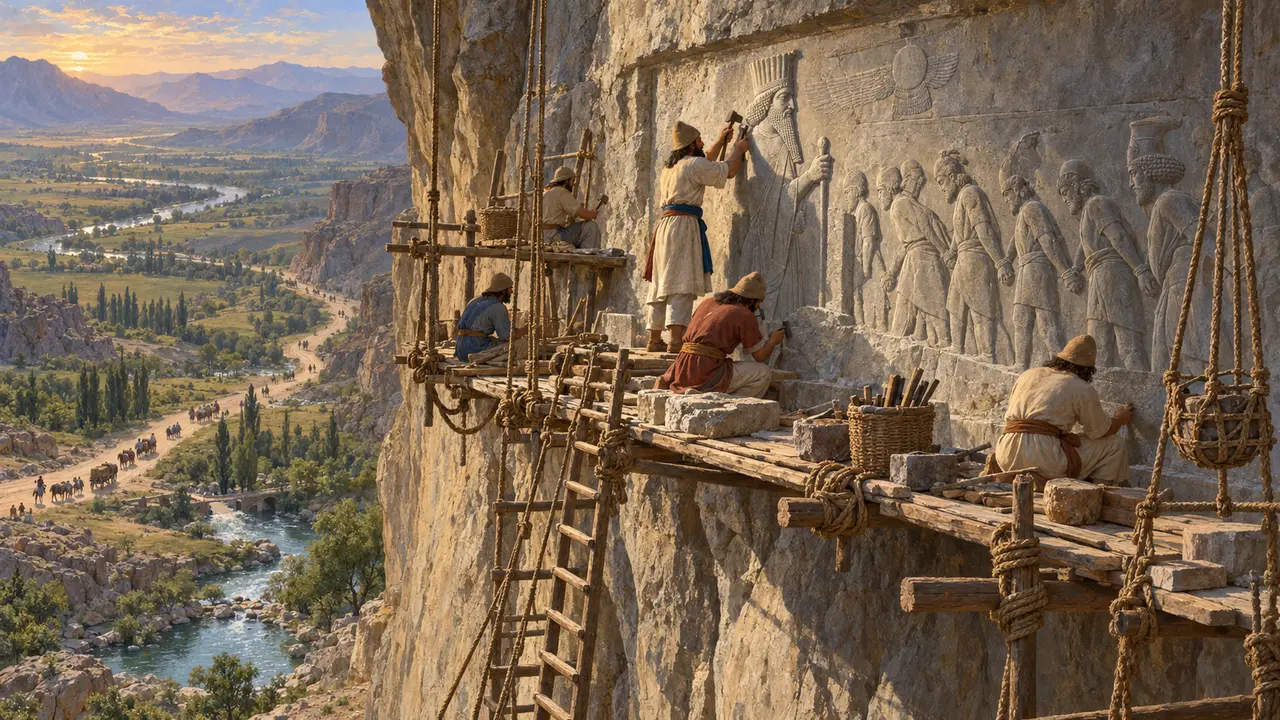
The cliff at Bagastana, Behistun, where Darius cut his account above the road.
Encyclopedia › The History
In 522 the empire nearly broke apart. Cambyses died, a king calling himself Bardiya held the throne, and after Darius and six nobles killed him, nine rebel kings rose across the empire. Darius told his story himself, in three languages, on a cliff at Bagastana, 'the place of the gods'.
- 522 BCE Bardiya on the throne
- 522 BCE The seven strike
- 521 BCE Nineteen battles
- 520 BCE The relief cut
The king who may have been a lie
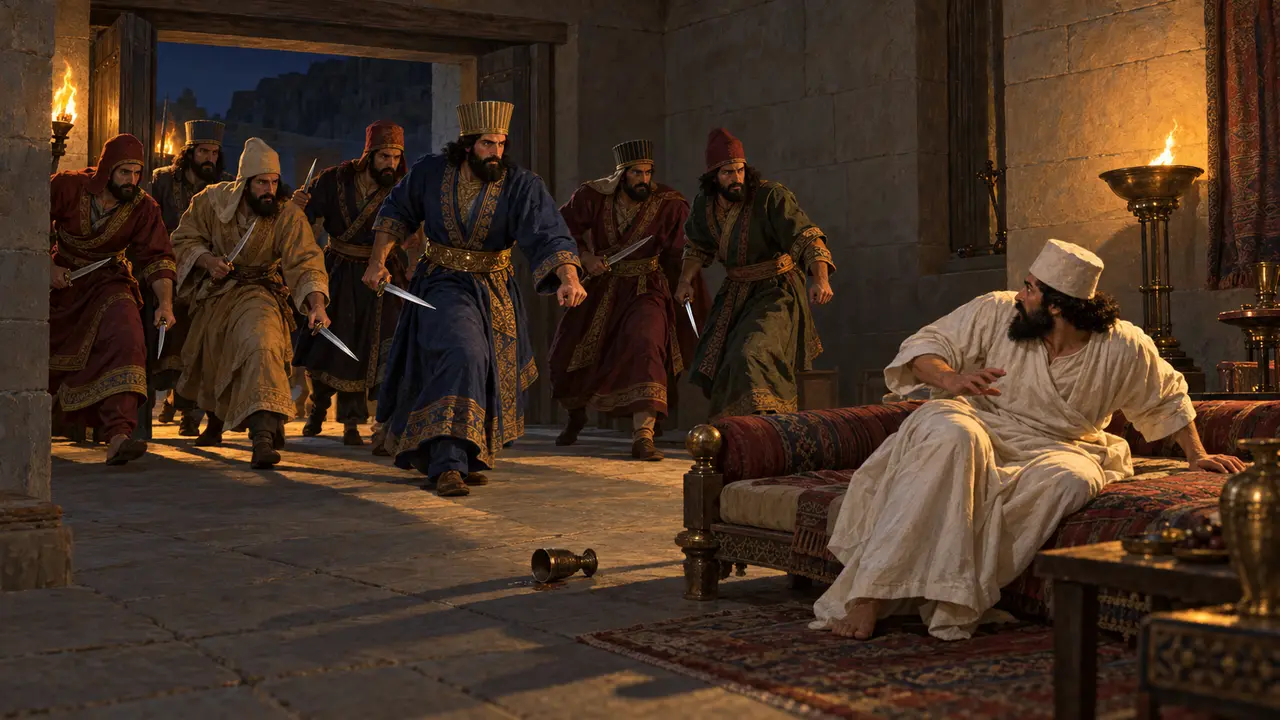
DisputedDarius says Cambyses had secretly killed his brother Bardiya, and that a magus named Gaumata took his name and his throne. Herodotus tells the same tale. Many historians suspect the king really was Bardiya, and that Darius, a distant cousin, seized the throne and needed a story. No other source can settle it.
Behistun inscription sections 10-13; Herodotus 3.61-79
The seven
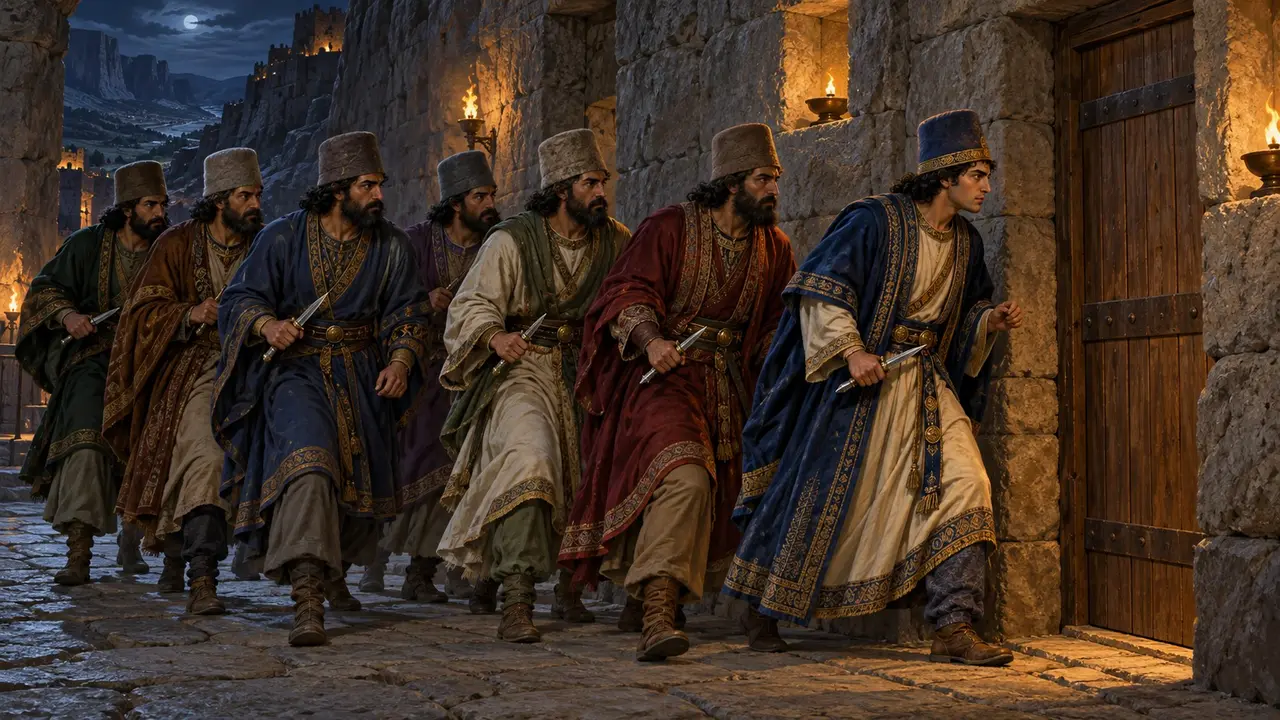
In the recordDarius names the six men who stood with him: Intaphernes, Otanes, Gobryas, Hydarnes, Megabyzus and Ardumanish. On 29 September 522 they killed the king in the fortress of Sikayauvati in Media. Their families stayed at the top of the empire for generations.
Behistun inscription sections 13, 68
Nineteen battles, nine kings
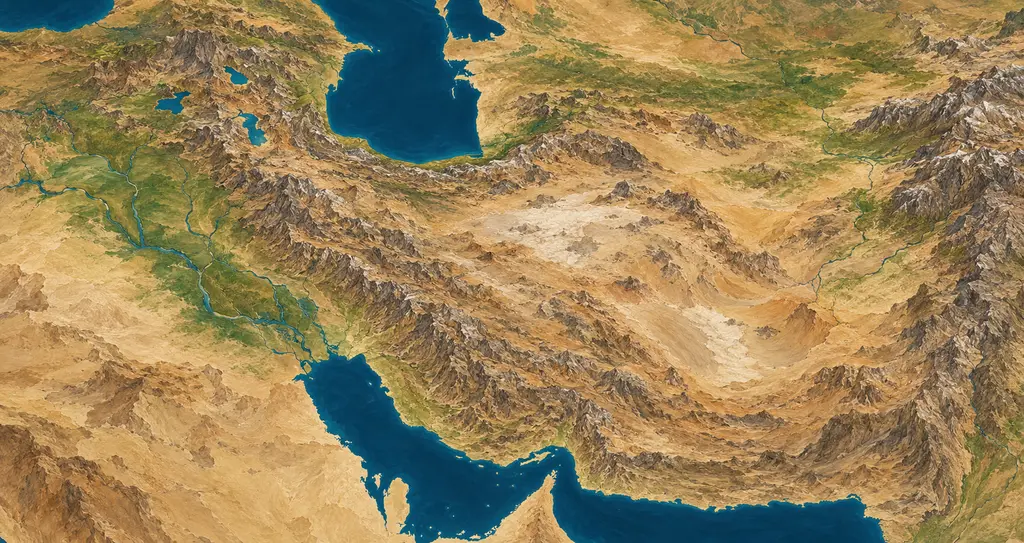
In the recordElam, Babylon, Media, Persia, Armenia, Sagartia and Margiana all rose. Darius and his generals fought, he says, nineteen battles in one year and took nine kings, each named and dated on the rock.
In the game: The revolts map shows each battle on Darius's own dates.
Behistun inscription sections 16-57
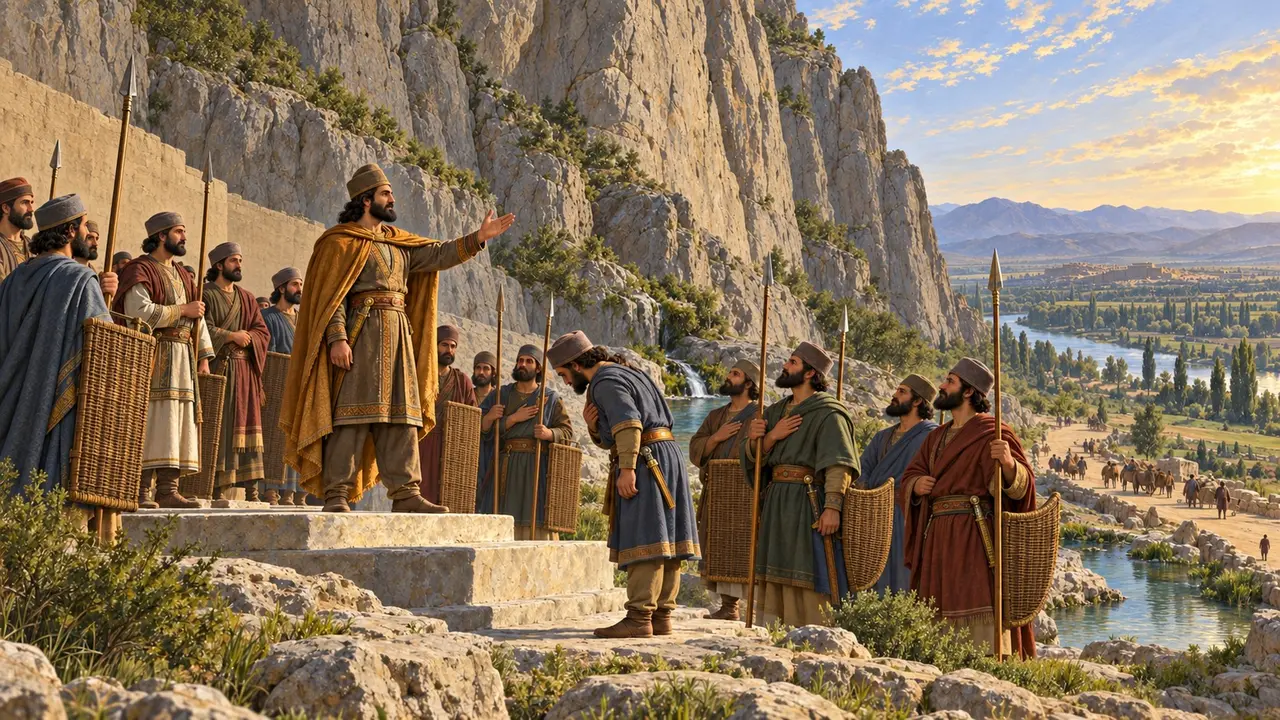
Fravartish of Media
In the recordFravartish claimed descent from the old Median kings. Darius beat him at Kunduru and caught him at Raga. He was mutilated, chained at the palace gate for all to see, and impaled at Ecbatana. The inscription meant the lesson to be read.
In the game: The Medes ride: a quarter of the raids are horsemen of the Nisaean plain.
Behistun inscription sections 24-32
Cutting the cliff
In the recordHigh on the rock Darius stands with his foot on the fallen magus, nine bound kings before him and the winged figure of Auramazda above. The text is in Elamite, Babylonian and Old Persian. The ledge below was cut away when the work was done, so no one could climb up to deface it.
In the game: The relief is the level's great work.
Behistun inscription; Briant (2002) chapter 3
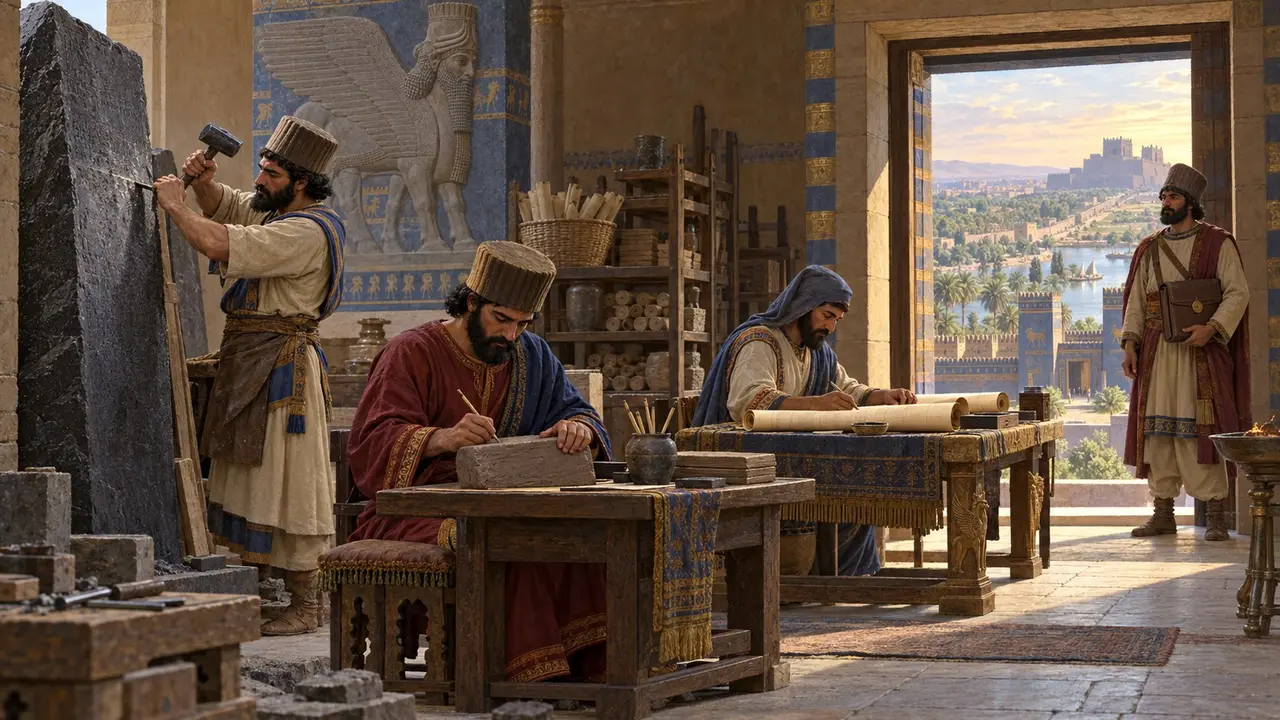
Copies for every land
In the recordDarius says he sent copies of the text to every land. Pieces of a Babylonian copy on stone were found at Babylon, and an Aramaic copy on papyrus, made about a century later, at Elephantine in Egypt.
Behistun inscription section 70; Elephantine Aramaic papyrus of the inscription
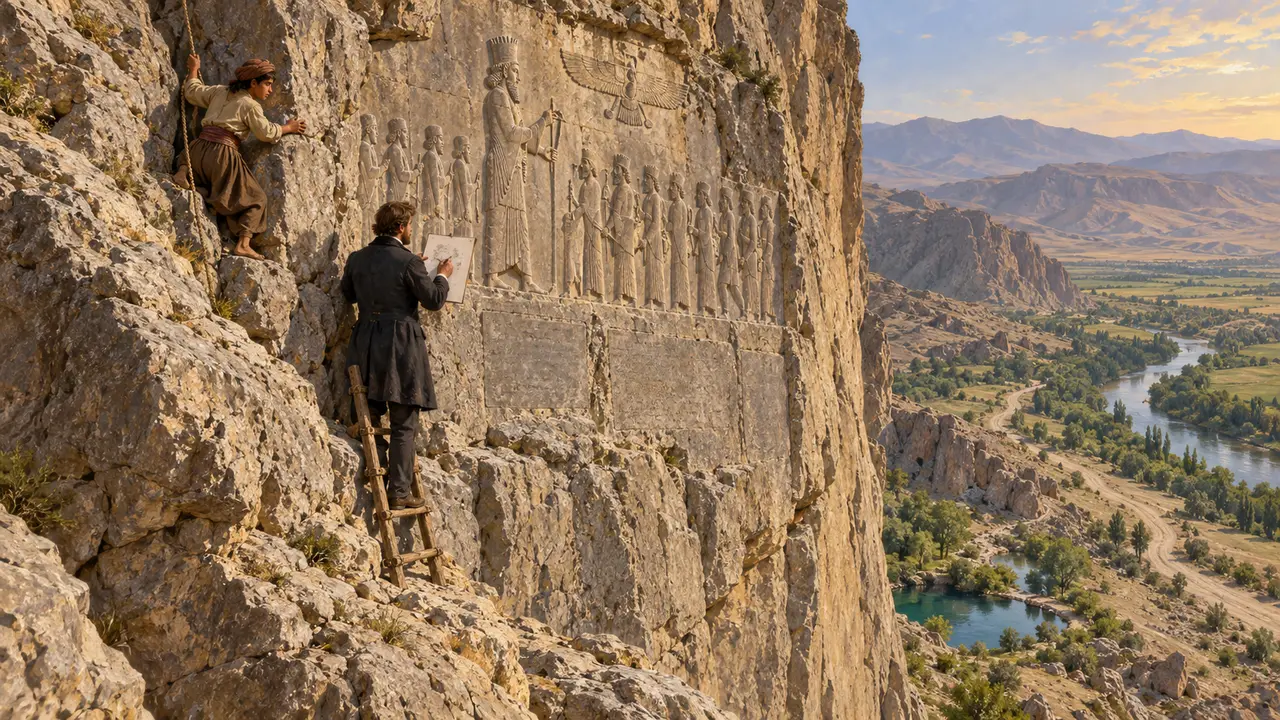
Rawlinson on the ledge
In the recordBetween 1835 and 1847 the British officer Henry Rawlinson copied the inscription from ladders and ropes; a Kurdish boy swung across the rock to take paper casts of the Babylonian text. The Old Persian helped scholars read Babylonian cuneiform, and with it the libraries of ancient Mesopotamia.
H. C. Rawlinson, Journal of the Royal Asiatic Society 10 (1847)
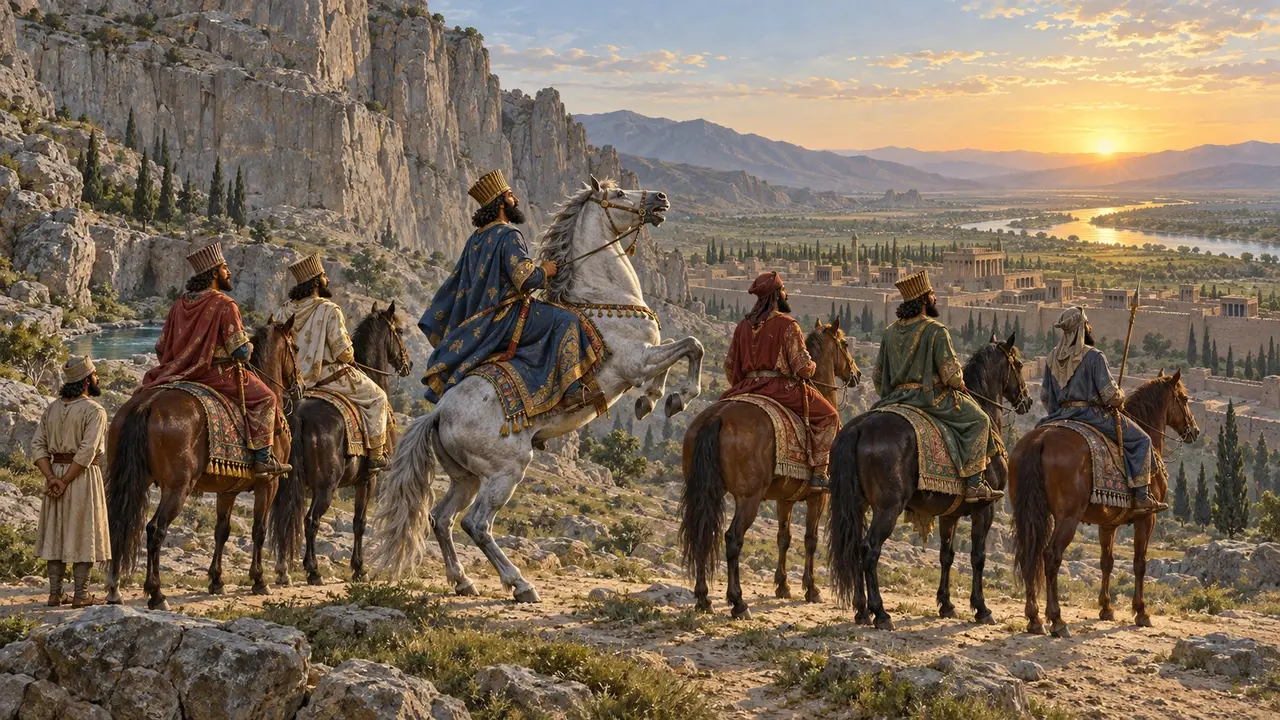
The neighing horse
Later legendHerodotus says the seven agreed that whoever's horse neighed first at sunrise would be king, and that Darius's groom made sure it was his. It is a good story; Darius's own account gives his descent from Achaemenes as his right.
Herodotus 3.84-87; Behistun inscription sections 1-4
Read next: the topics of The Lie
Battles and events
The revolts of 522-521 · The revolt of Nidintu-Bel · The revolt of Fravartish · The revolt of Vahyazdata · The war in Armenia · The revolt of Arakha
Buildings
Soldiers and ships
People
Cambyses · Bardiya, or Gaumata · Darius the Great · Fravartish · Gobryas · Hydarnes · Intaphernes (Vindafarna)
Peoples
The Persians · The Medes · The Babylonians · The Assyrians of Arbela · The Parthians · The Margians
Places
Ecbatana · Babylon · Behistun (Bagastana) · Bagastana (Behistun) · Elephantine · Media · Armenia · Egypt · Elam · Margiana · Sagartia
Wildlife and weather
The gazelle · The wild goat · The wild boar · The white stork · The hare · The fox · The wolf · The Persian leopard · The urial · Wild ducks · The partridge · The kite · The griffon vulture · The rock dove · The jackdaw · The crane · The swallow · Bats · The little owl · The hooded crow