Encyclopedia › Wildlife and weather

The rock dove
Wild pigeon of the lands of the Persian empire, known to Greek writers, 6th-5th century BCE
In the game: Level 1: The Founder's Tomb, Level 2: The Spear-bearer, Level 3: The Lie, Level 4: The Terrace, Level 5: The Charter, Level 6: The Bridge of Boats, Level 7: Sardis Burns, Level 8: The Bay of Marathon, Level 9: The Canal, Level 10: The Hot Gates, Level 11: The Finale
The rock dove (Columba livia) is the wild ancestor of the domestic pigeon and nested on cliffs and buildings across the lands the empire held, from Persis to Egypt and the Aegean. No surviving text of the Achaemenid period describes the bird or Persian dealings with it. What the period's sources say about doves comes from Greek writers, and concerns Greek and Egyptian cult.
In the game: The game draws doves as birds overhead on all eleven levels, from Pasargadae to Plataea. They are scenery only, and no rule reads them.
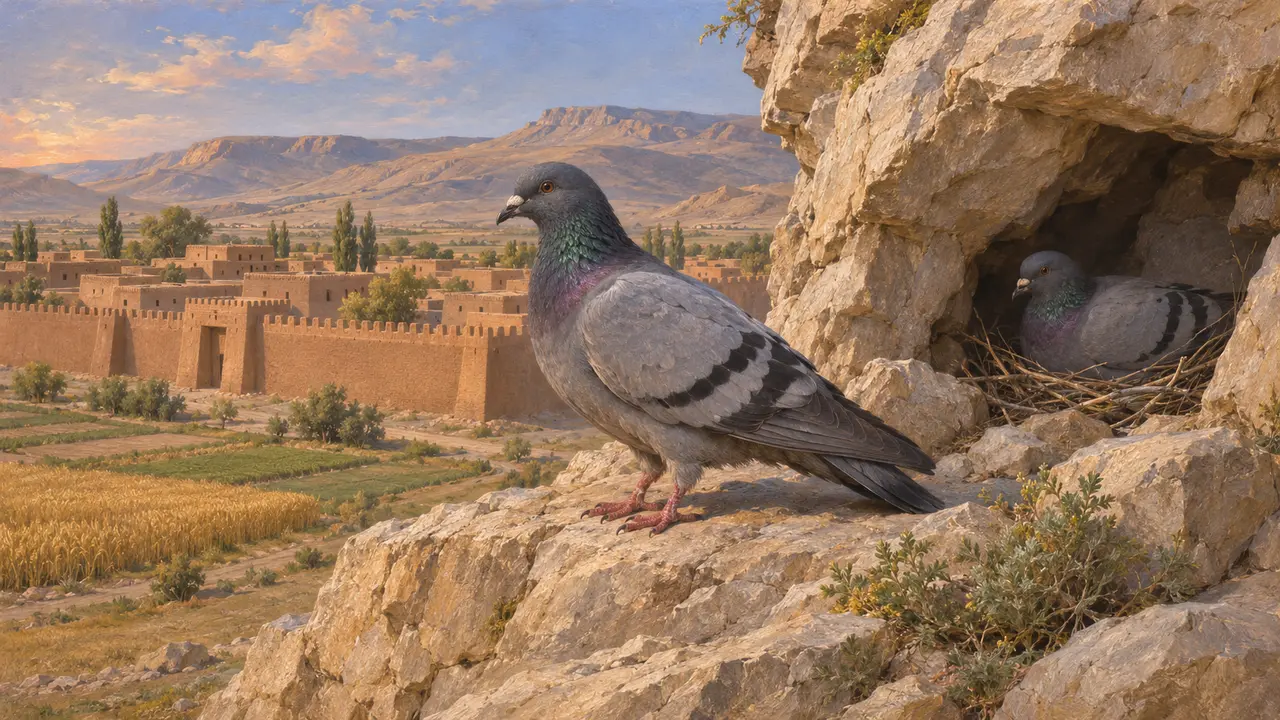
A bird of cliffs and towns
Ancient accountThe wild rock dove nests on cliffs and in rock crevices, and it has long lived beside farms and walled towns. It is a natural inhabitant of the regions the empire held. No document of the period describes the wild birds, so their presence rests on the modern natural history of the species, not on any text of the time.
Modern range of Columba livia; no ancient source cited
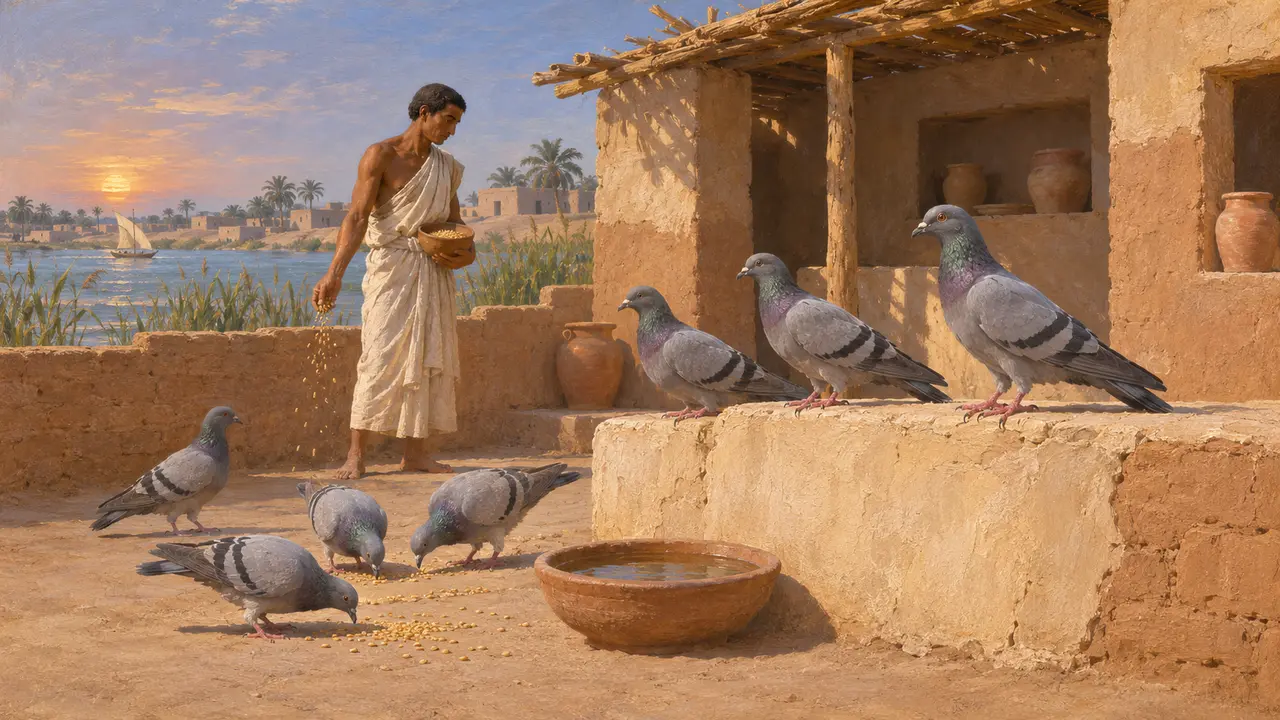
Doves kept before the Persians
DisputedScholars agree that pigeons were kept in western Asia and Egypt in earlier ages, but the date and extent of organised dovecotes in Iran are debated. The surviving documents of the sixth and fifth centuries do not show clearly whether Achaemenid estates ran dovecotes. Claims for them in this period should be treated with caution.
P. Briant, From Cyrus to Alexander, 2002
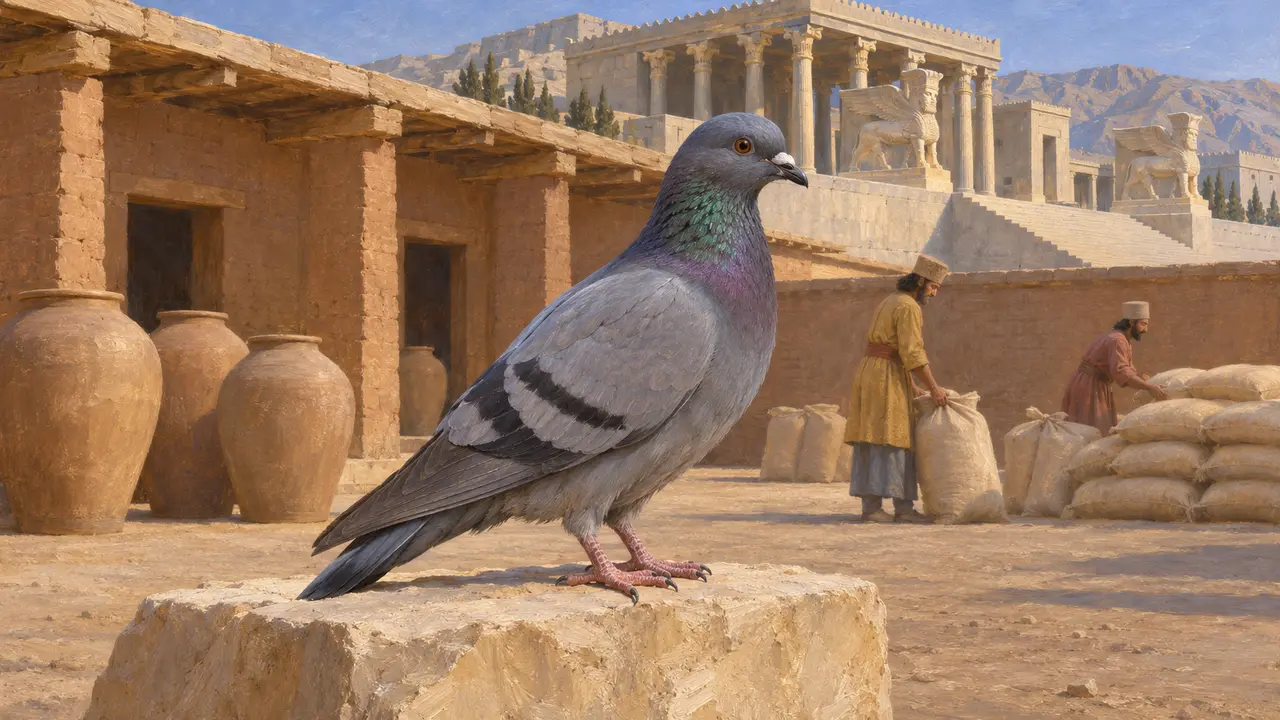
The tablets and the royal rations
In the recordThe Persepolis Fortification tablets record rations and supplies in Persis under Darius, and they show that the administration tracked livestock and foodstuffs closely. No tablet is cited here for doves, and the tablets cannot be used to claim that doves were a regular ration.
PF series, as discussed in P. Briant, From Cyrus to Alexander, 2002
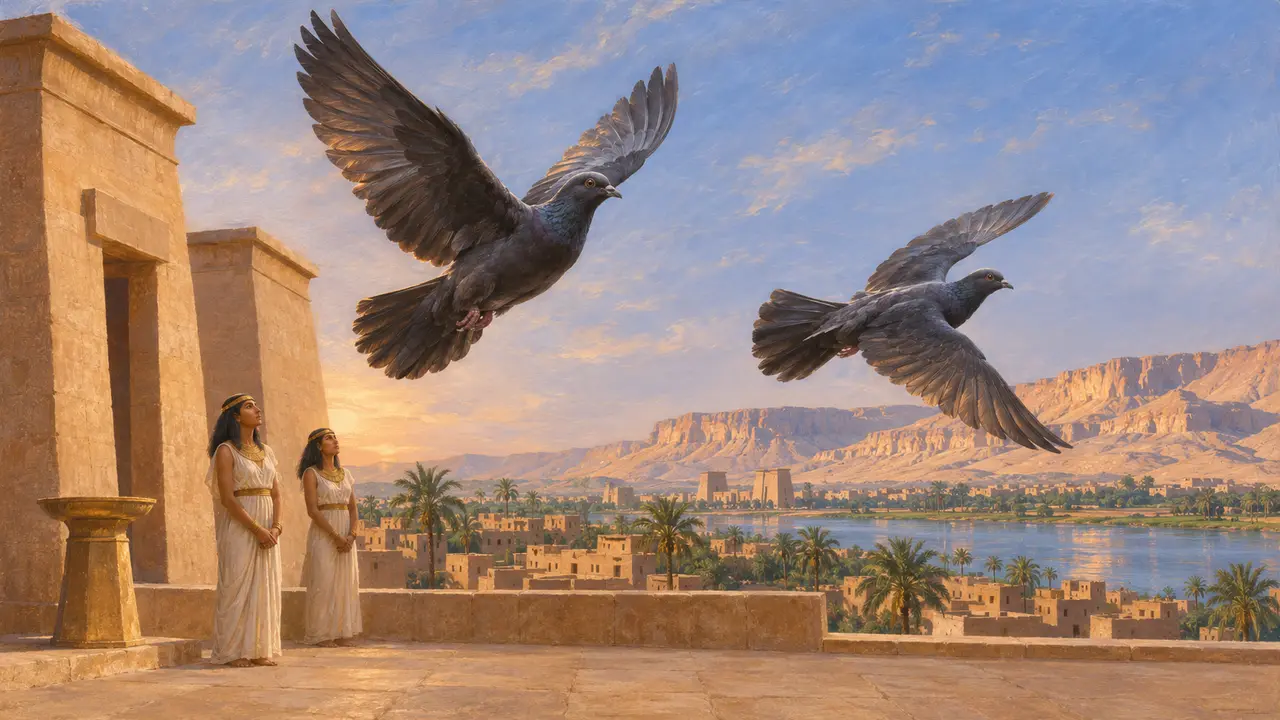
Doves in Greek report
Ancient accountHerodotus gives the priestesses of Dodona's story that two black doves flew from Thebes in Egypt, one to Libya and one to Dodona (2.55), beside the Theban priests' story of two priestesses carried off by Phoenicians (2.54). He explains the doves as foreign women whose speech sounded like birds' (2.57).
Herodotus 2.54-57
Sources
- Herodotus 2.54-57
- P. Briant, From Cyrus to Alexander, 2002