Persepolis (Parsa)
Darius's terrace palace city in Persis, begun about 518 BCE
In the game: Level 4: The Terrace, Level 5: The Charter, Mycale
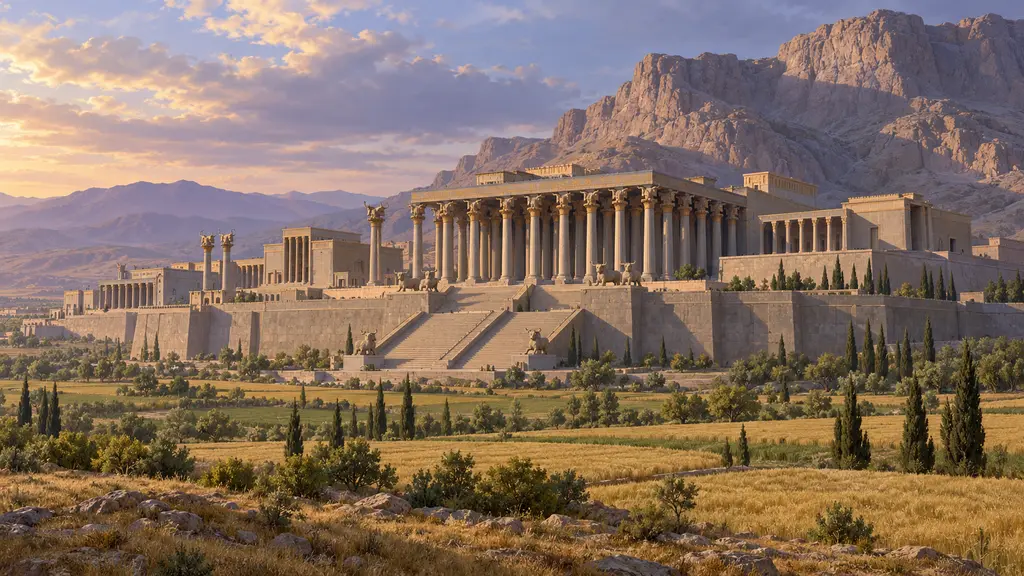
Persepolis, called Parsa in Old Persian, was the palace city Darius I founded on a stone terrace below the Kuh-e Rahmat, the Mountain of Mercy, in Persis. Xerxes and later kings added halls and gates for more than a century, and its clay tablets are the richest surviving record of how the King's economy in Persis fed and paid its workers. Alexander burned its palaces in 330.
In the game: The Parsa level is set in 521, a few years before work on the terrace is usually dated to begin, about 518. Building there in 521 puts the start slightly earlier than the evidence suggests.
A terrace built against the mountain
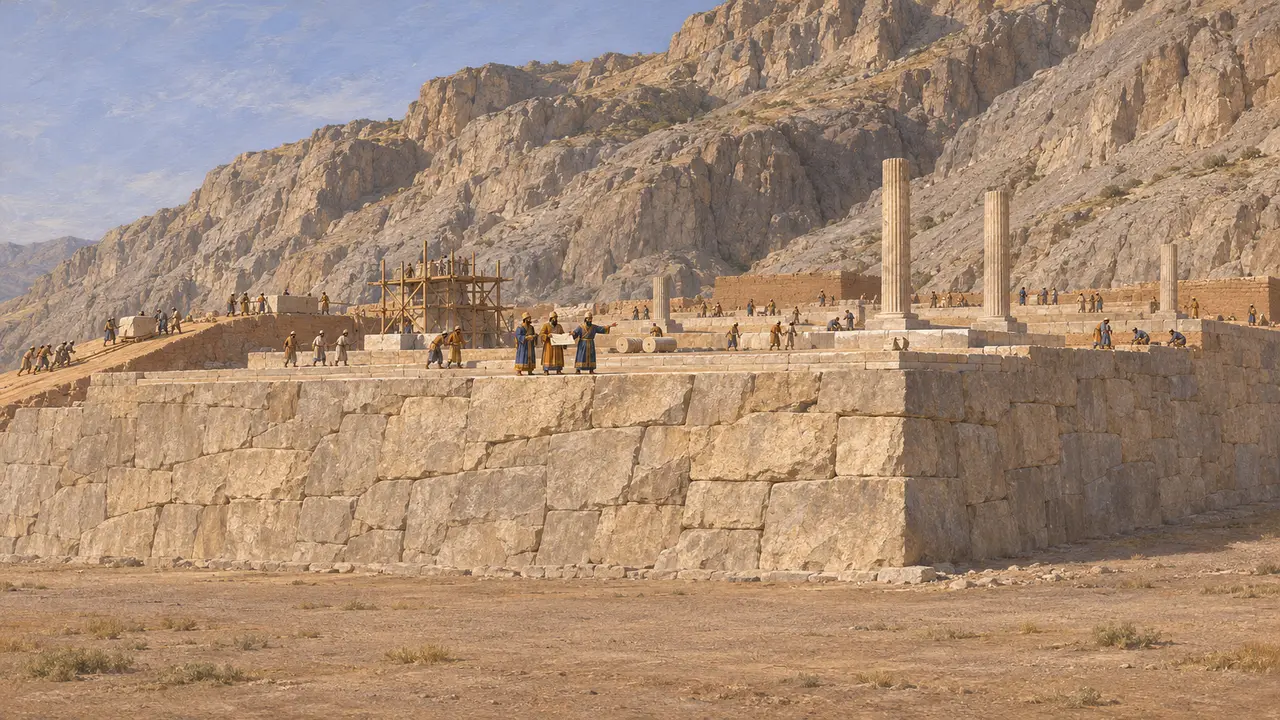
In the recordDarius had a platform of about 12 hectares levelled and walled against the mountain, probably beginning around 518 to 515. Inscriptions on its south wall name him, and one Elamite text (DPf) says a fortress was built here where none had stood before. Foundation tablets of gold and silver (DPh) were found in 1933 in stone boxes under corners of the Apadana. They describe the extent of his kingdom.
DPf; DPh; E. Schmidt, Persepolis I, 1953
Kings who kept building
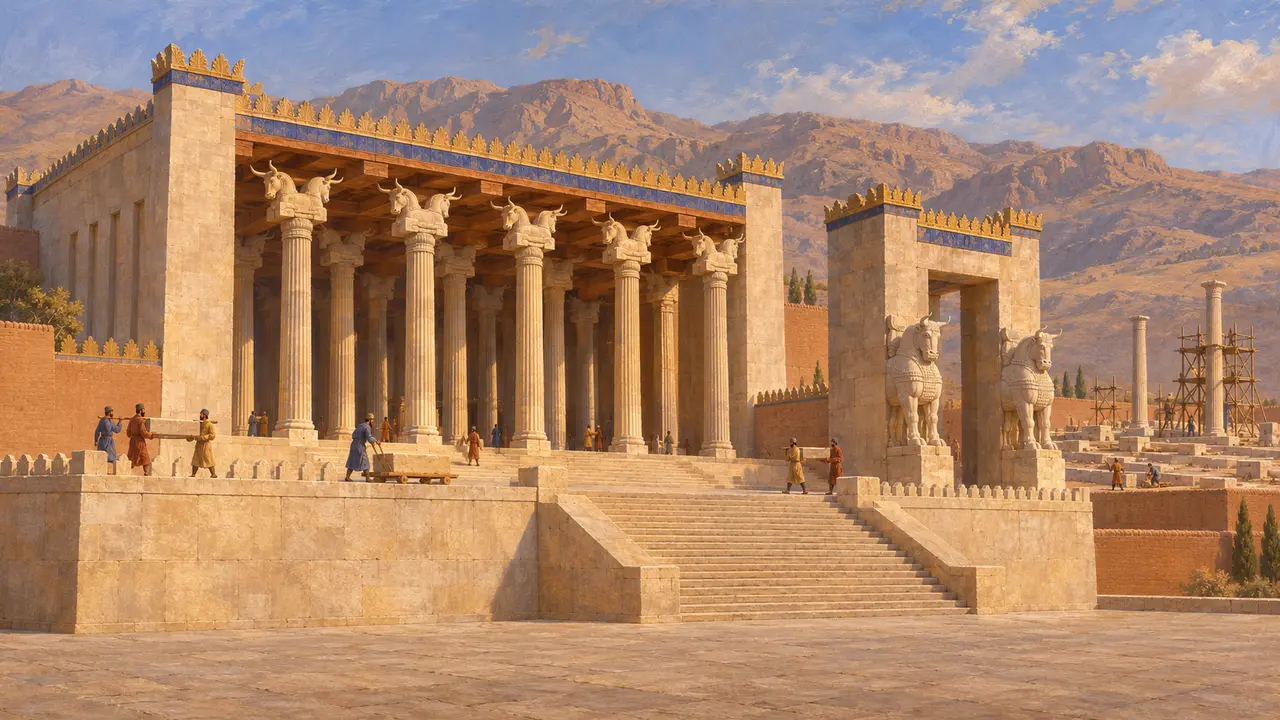
In the recordThe Apadana was a hall of 36 columns, probably used for royal audiences. Darius began it and it was finished under Xerxes. Xerxes added the Gate of All Nations, whose inscription (XPa) names him, and began the Hall of a Hundred Columns, which was completed under Artaxerxes I. Building on the terrace went on in some form until the end of the dynasty.
XPa; E. Schmidt, Persepolis I, 1953
Tablets of the King's workers
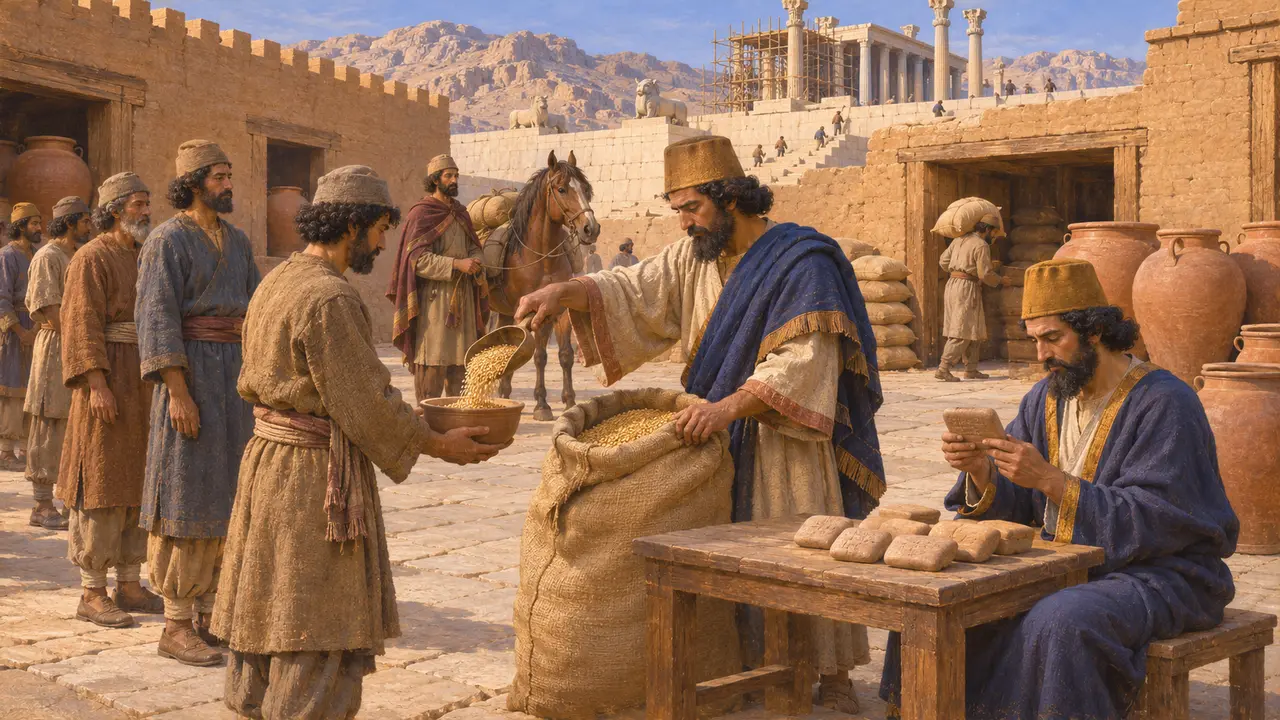
In the recordChicago excavators found thousands of clay tablets, mostly in Elamite with some in Aramaic, in the fortification wall in 1933. They record food issued between 509 and 493 to workers, travellers on the roads and horses, and for offerings to gods. Payments were made in barley, flour, wine and beer. A later group from the Treasury, dated 492 to 458, records silver paid to craftsmen in place of part of their rations.
R. Hallock, Persepolis Fortification Tablets, 1969; G. Cameron, Persepolis Treasury Tablets, 1948
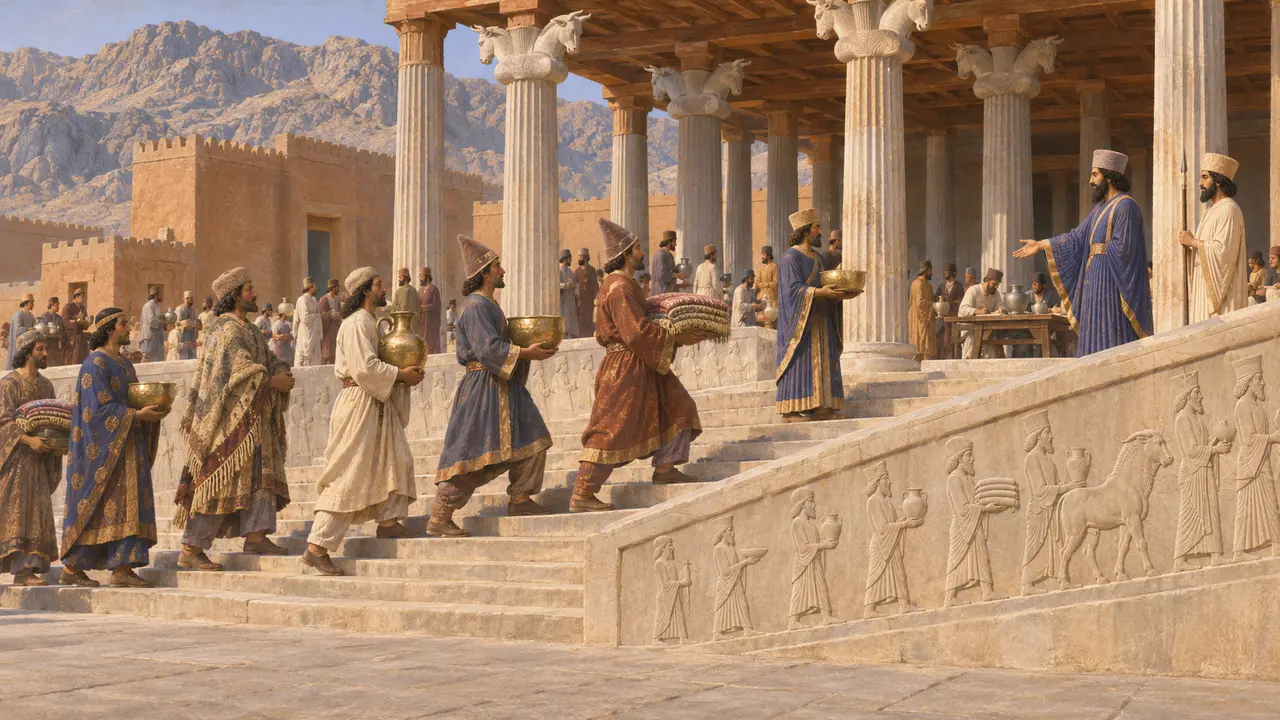
What the terrace was for
DisputedThe Apadana stairways show delegations of subject peoples bringing gifts to the King. Some scholars read the terrace as a stage for a yearly festival, perhaps the new year. Others note that no ancient text names such a festival, and that the tablets show a busy administrative and residential centre. Herodotus never mentions Persepolis, and Greek writers seem to have known little of it before Alexander.
P. Briant, From Cyrus to Alexander, 2002
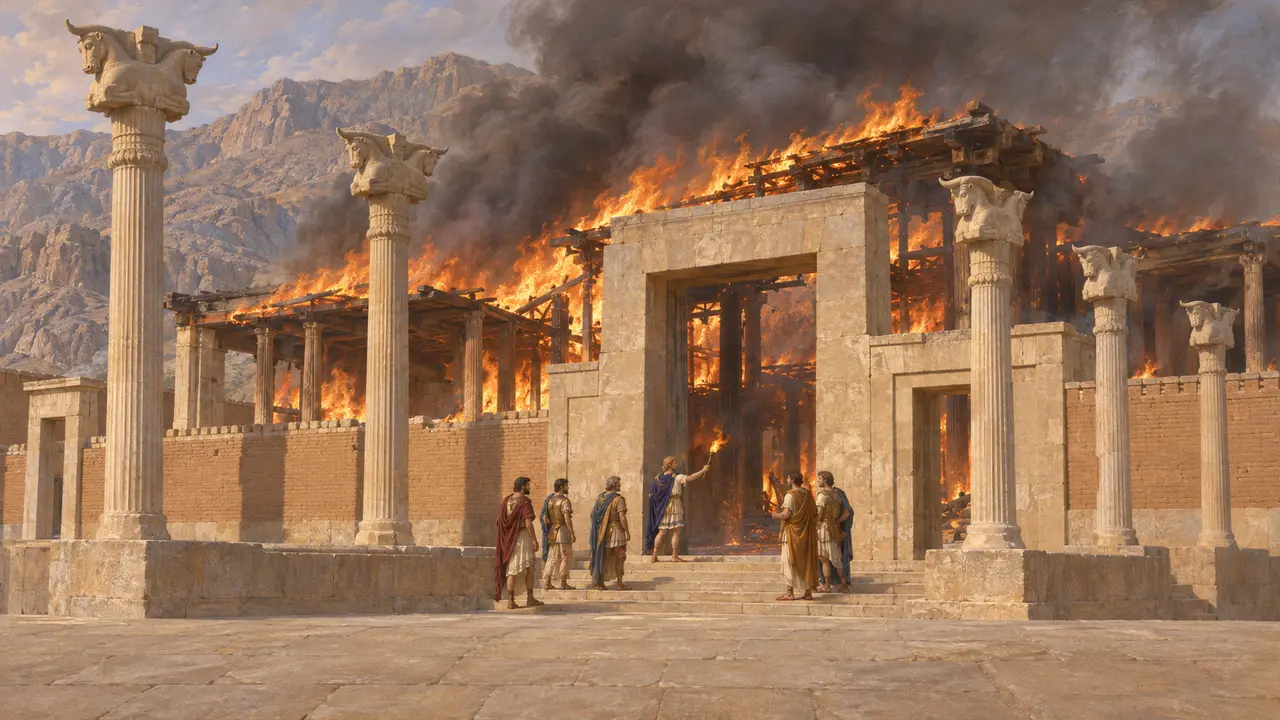
The burning of 330
DisputedArrian says Alexander burned the palaces on purpose, against Parmenion's advice, as revenge for the Persian burning of Athenian temples in 480. Diodorus describes the sack of the city and a drinking party at which the Athenian courtesan Thais urged the king to start the fire. Historians still argue whether the burning was policy or a drunken act. Burnt layers survive in the Treasury and the halls.
Arrian, Anabasis 3.18; Diodorus 17.70-72
Sources
- E. Schmidt, Persepolis I, 1953
- R. Hallock, Persepolis Fortification Tablets, 1969
- G. Cameron, Persepolis Treasury Tablets, 1948
- Arrian, Anabasis 3.18
- Diodorus 17.70-72
- P. Briant, From Cyrus to Alexander, 2002