The Mountain of Mercy
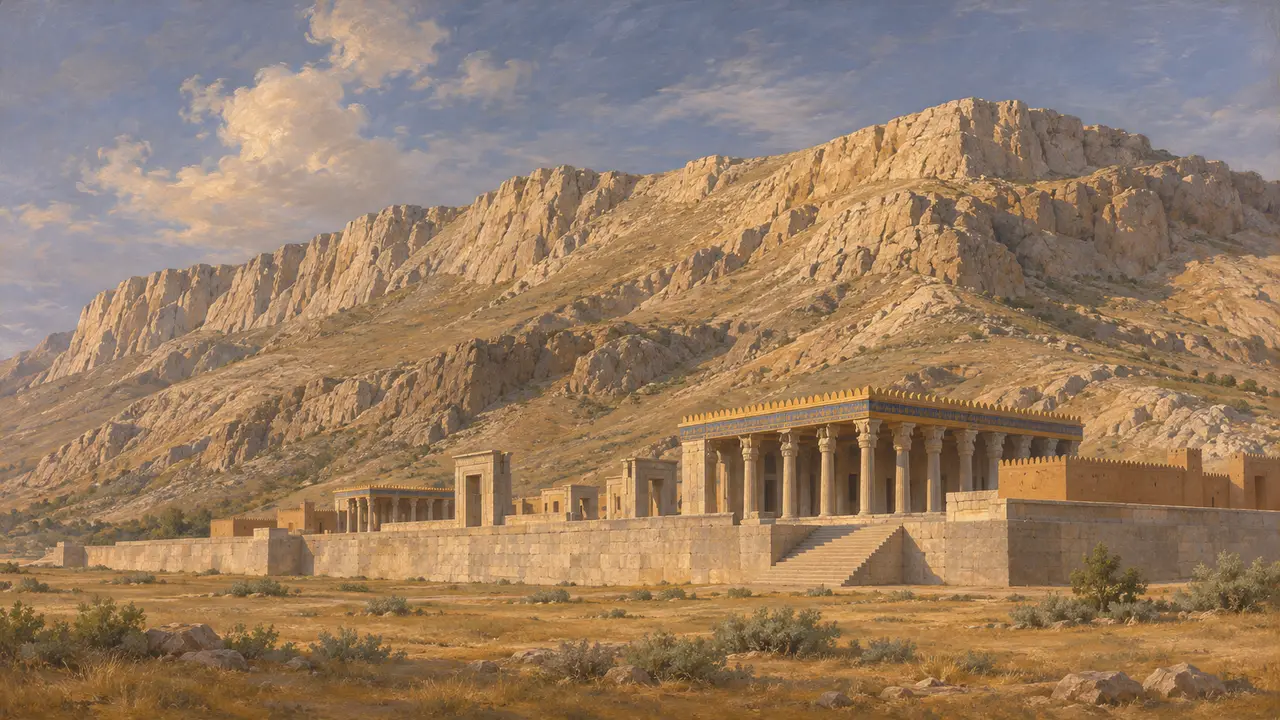
Kuh-e Rahmat, the mountain behind the terrace of Persepolis, from about 518 BCE
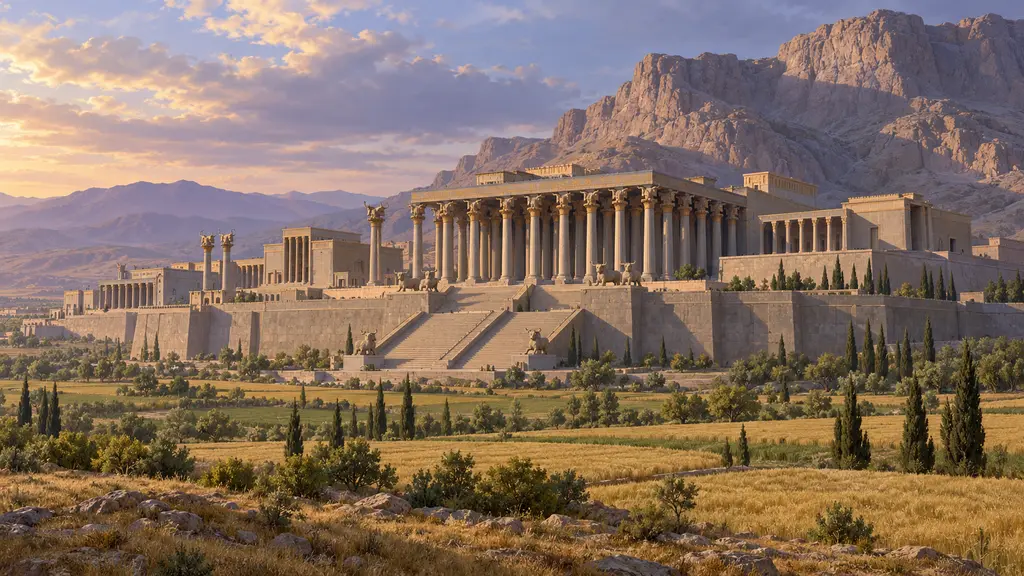
The Mountain of Mercy, Kuh-e Rahmat in Persian, is the ridge that rises behind the terrace of Persepolis on the Marv Dasht plain. Darius set his palace platform against its foot about 518, and later kings cut their tombs into its face. The name is modern; the ancient name is not known.
In the game: The Parsa level is built below the Mountain of Mercy: the Royal Terrace is founded with its back to it, and its quarries must touch its rock.
The terrace against the mountain
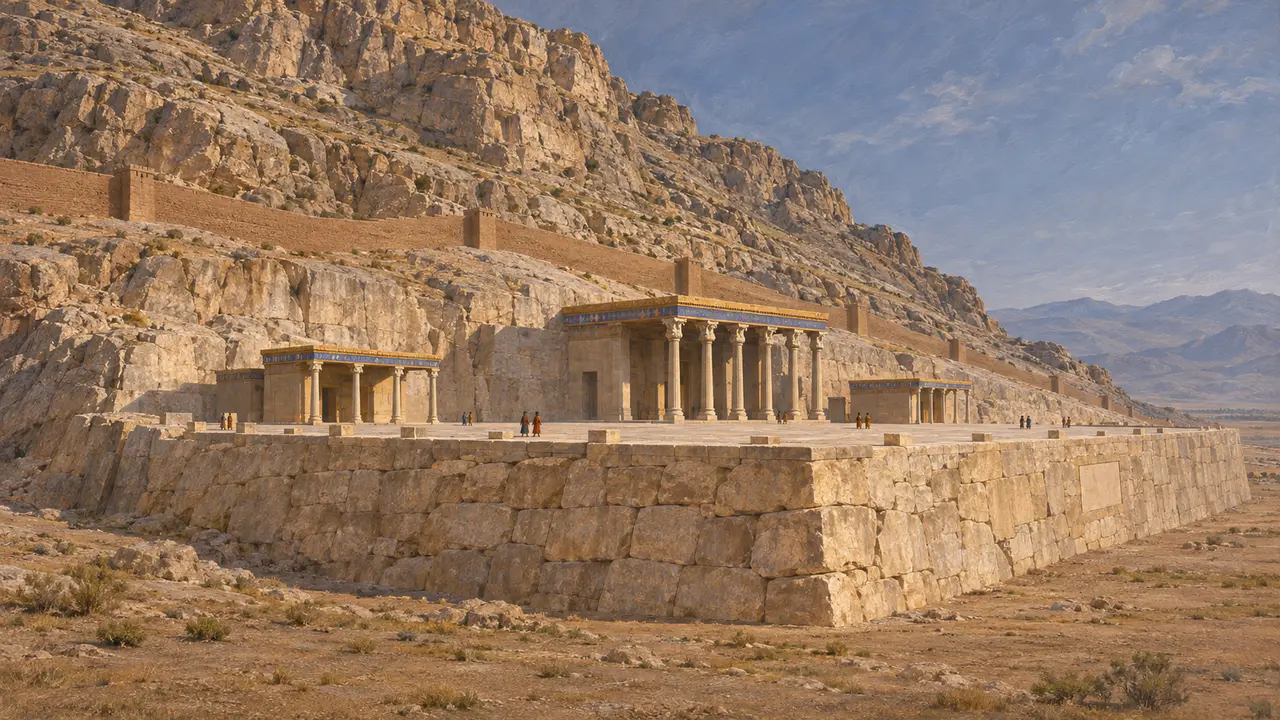
In the recordThe terrace of Persepolis was partly cut from the mountain's lower slope and partly built up with fitted blocks to a platform about 450 by 300 metres. Darius's inscription on its south wall names him its builder. A fortification wall ran up the slope behind it.
DPf; E. F. Schmidt, Persepolis 1, 1953
The royal tombs
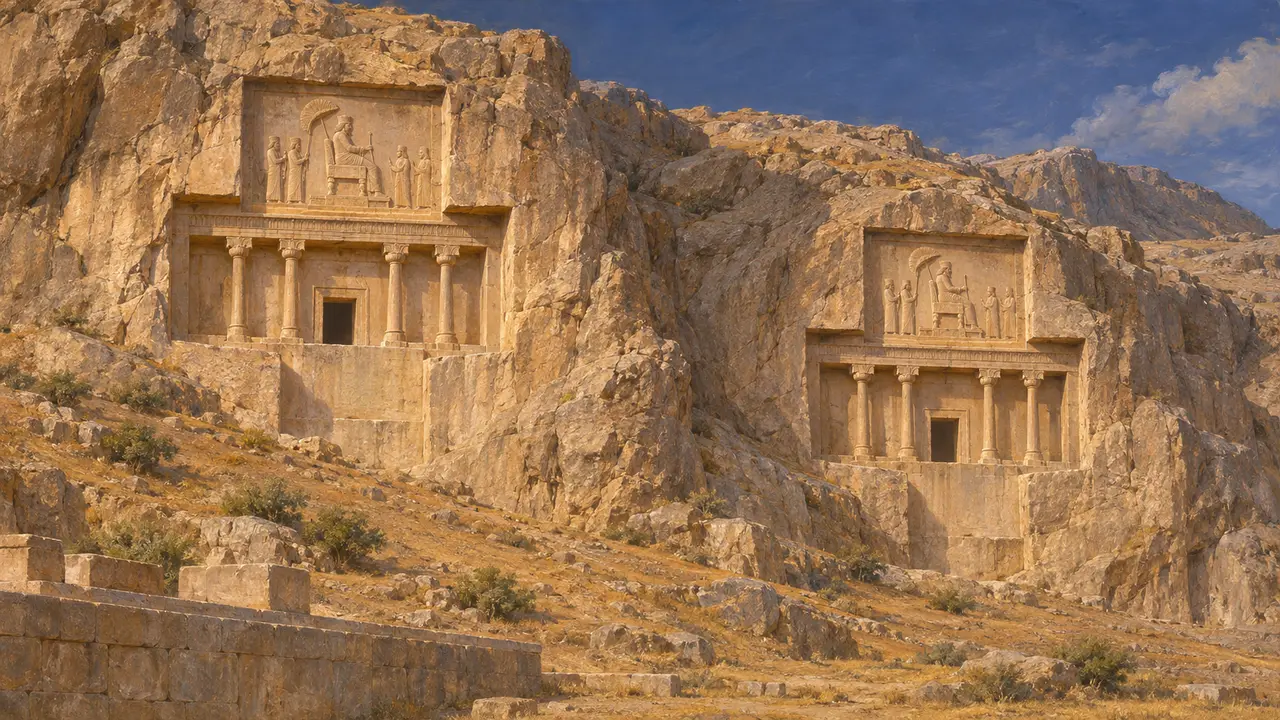
In the recordTwo rock-cut tombs in the mountain above the terrace, with façades like those at Naqsh-e Rostam, are usually given to Artaxerxes II and Artaxerxes III, of the fourth century. Darius and the next kings were buried at Naqsh-e Rostam a few kilometres to the north.
E. F. Schmidt, Persepolis 3, 1970
Stone for the works
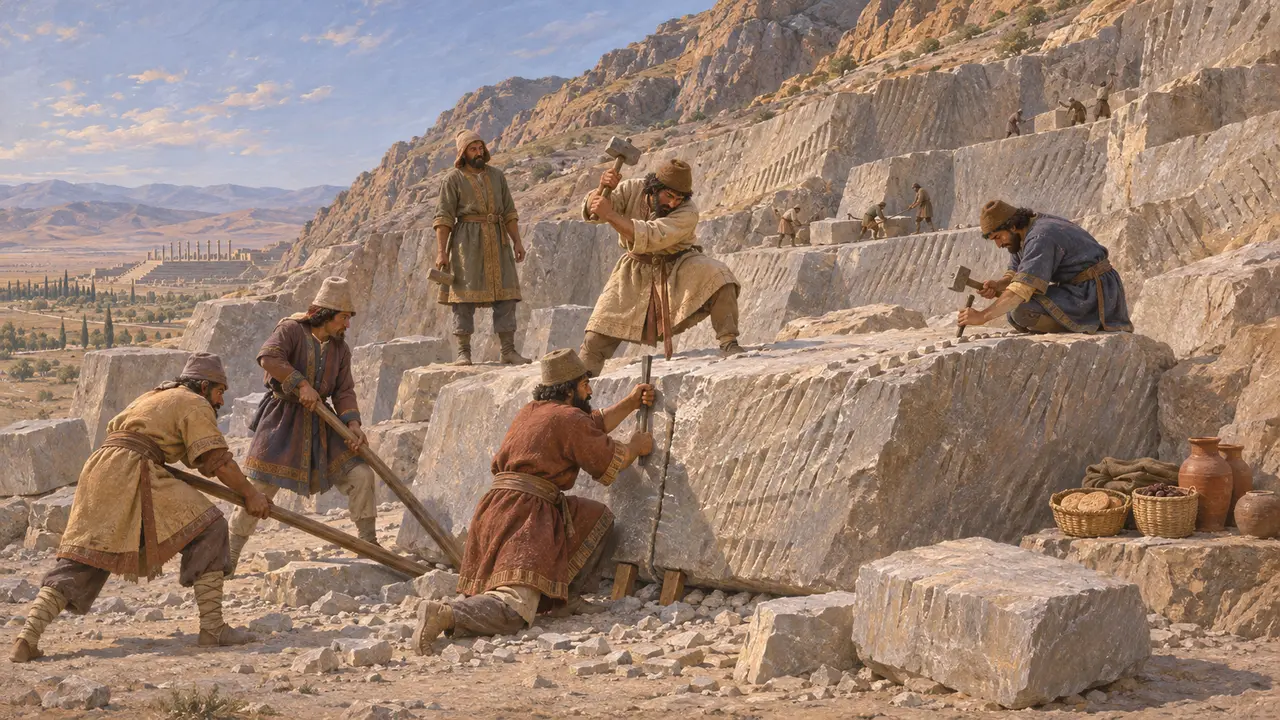
In the recordQuarries in the mountain and nearby hills supplied the grey limestone of the terrace and its palaces. Unfinished blocks and quarry faces with tool marks survive, and the Fortification tablets record gangs of workers fed from the royal stores.
Persepolis Fortification tablets; Persepolis excavations
A modern name
DisputedKuh-e Rahmat means 'Mountain of Mercy' and is the name used today. No ancient text gives the mountain a name, and Greek writers who describe Persepolis after Alexander speak only of the royal tombs in the hill behind the palace.
Diodorus 17.71
Sources
- E. F. Schmidt, Persepolis 1-3, 1953-1970
- DPf (Kent, Old Persian)
- Diodorus 17.71