Encyclopedia › Battles and events
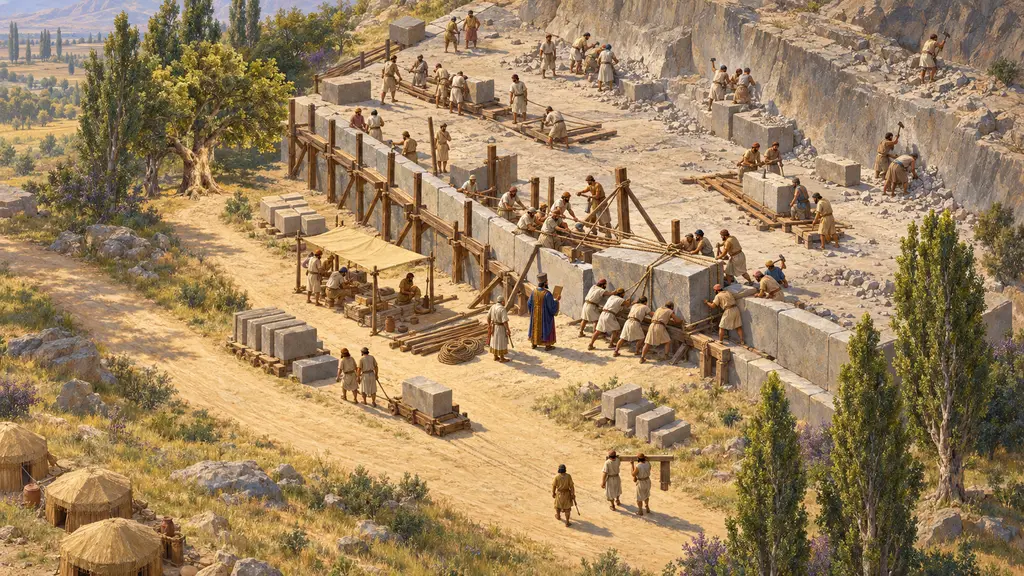
The building of the terrace of Parsa
Darius I's palace platform at Parsa (Persepolis) in Persis, begun about 518 BCE
In the game: Level 4: The Terrace
From about 518 Darius I had a great stone platform raised at the foot of a mountain on the Marv Dasht plain in Persis, and built palaces on it. Its own name was Parsa, which the Greeks later called Persepolis, and it became the ceremonial centre of the Persian homeland. The administration based there left clay tablets that are the richest surviving record of how the empire worked day to day.
In the game: The Parsa level is built around the terrace, dated in the game from about 518, a start historians still debate. The game ties the fortification tablets to the terrace workers, though in fact they cover much of Persis.
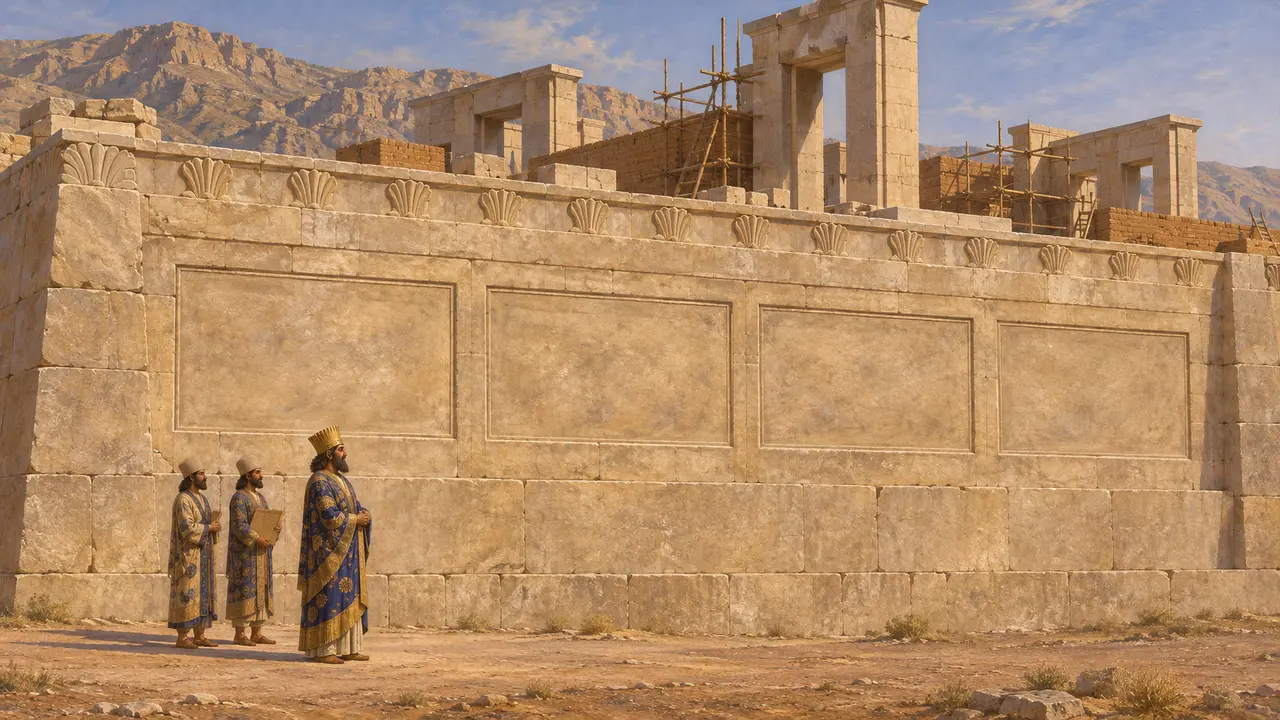
Darius names himself the builder
In the recordDarius placed four inscriptions on the south retaining wall of the terrace, in Old Persian, Elamite and Babylonian. In the Elamite text he says that, by the favour of Auramazda, he built a fortress on this spot where none had stood before, and made it secure and beautiful. Two of the others list the lands he ruled, and an Old Persian prayer asks the god to protect the country from enemy armies, from famine and from the Lie.
DPd; DPe; DPf; DPg
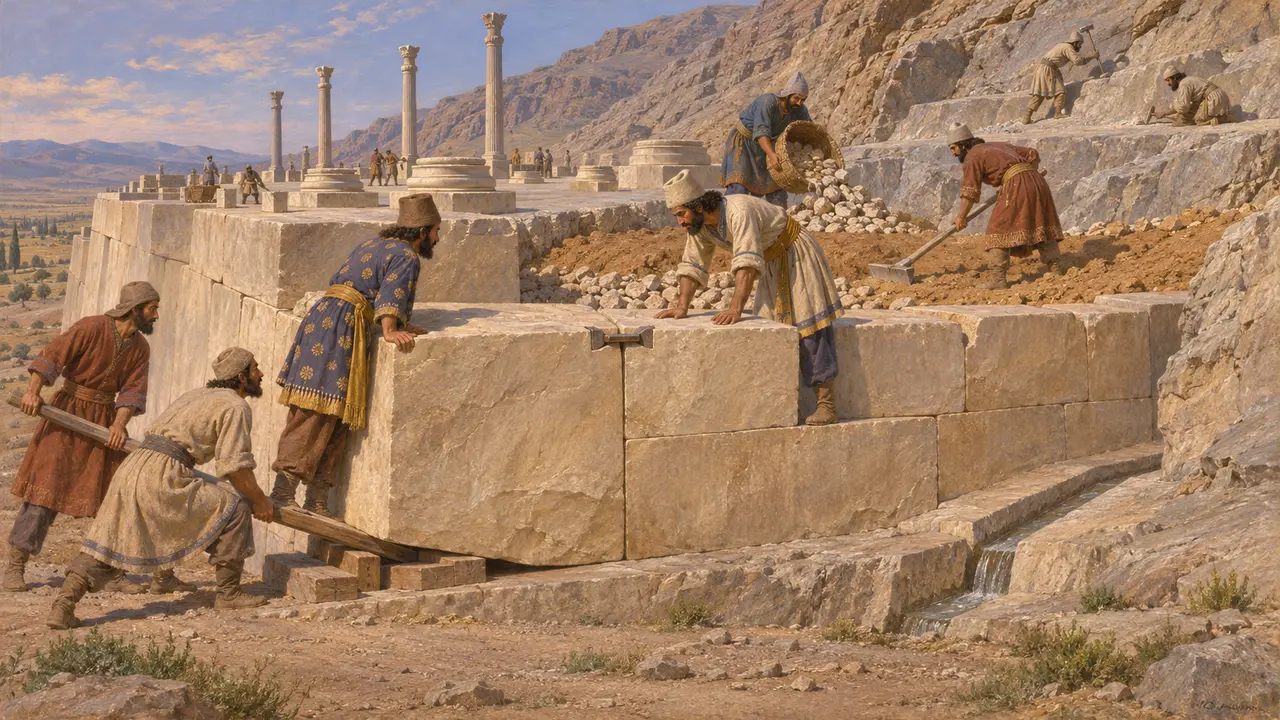
A platform cut and built from the rock
In the recordExcavations by Ernst Herzfeld from 1931 and Erich Schmidt from 1935 showed how the terrace was made. The builders levelled the rocky foot of the mountain, filled the hollows with rubble and earth, and cut drains into the rock. They faced the platform with huge limestone blocks fitted without mortar and joined by metal clamps. On it stood the Apadana, begun by Darius and completed by Xerxes, whose hall and three porches had seventy-two columns.
E. F. Schmidt, Persepolis I, 1953
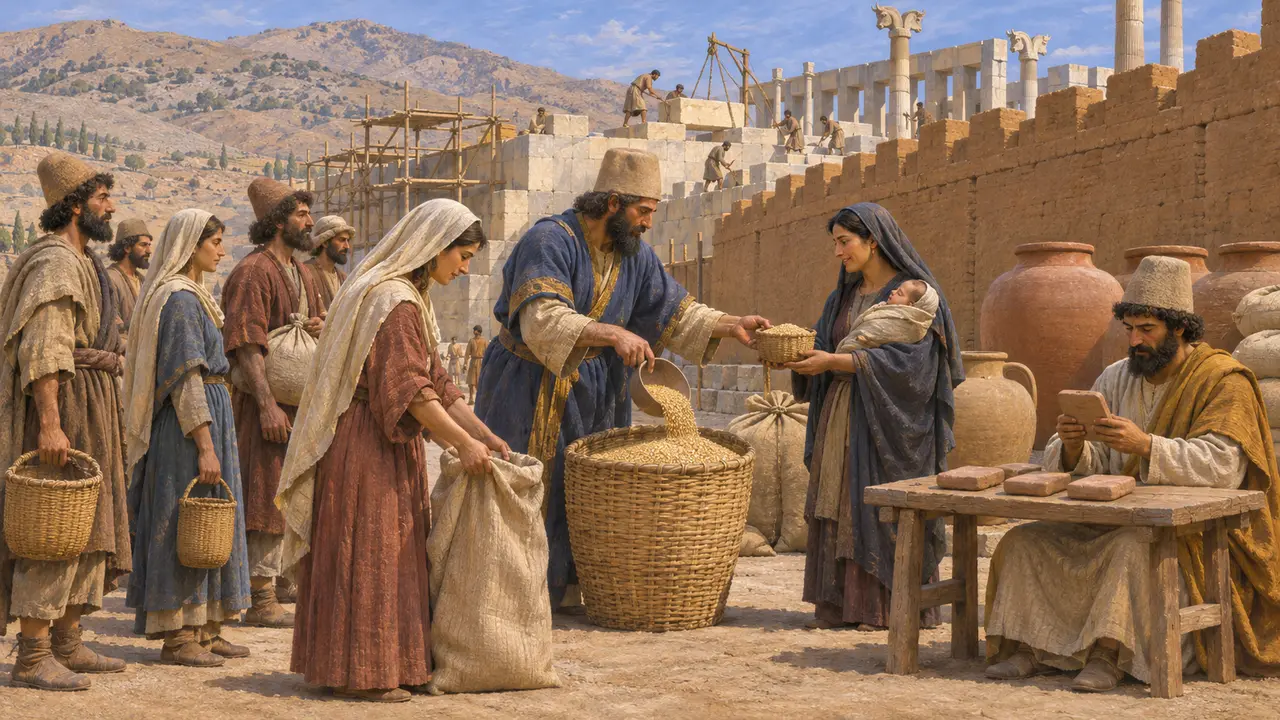
The tablets of the workers
In the recordIn 1933 excavators found thousands of clay tablets in the northern fortification wall, most in Elamite and dated 509 to 493. They record barley, wine, beer and other goods issued across Persis and into Elam, not only on the terrace. Workers, men and women, drew rations, and mothers received extra after a birth. The later Treasury tablets record silver paid to craftsmen of many peoples working at Parsa.
R. T. Hallock, Persepolis Fortification Tablets, 1969; G. G. Cameron, Persepolis Treasury Tablets, 1948; W. Henkelman, The Other Gods Who Are, 2008
When the work began
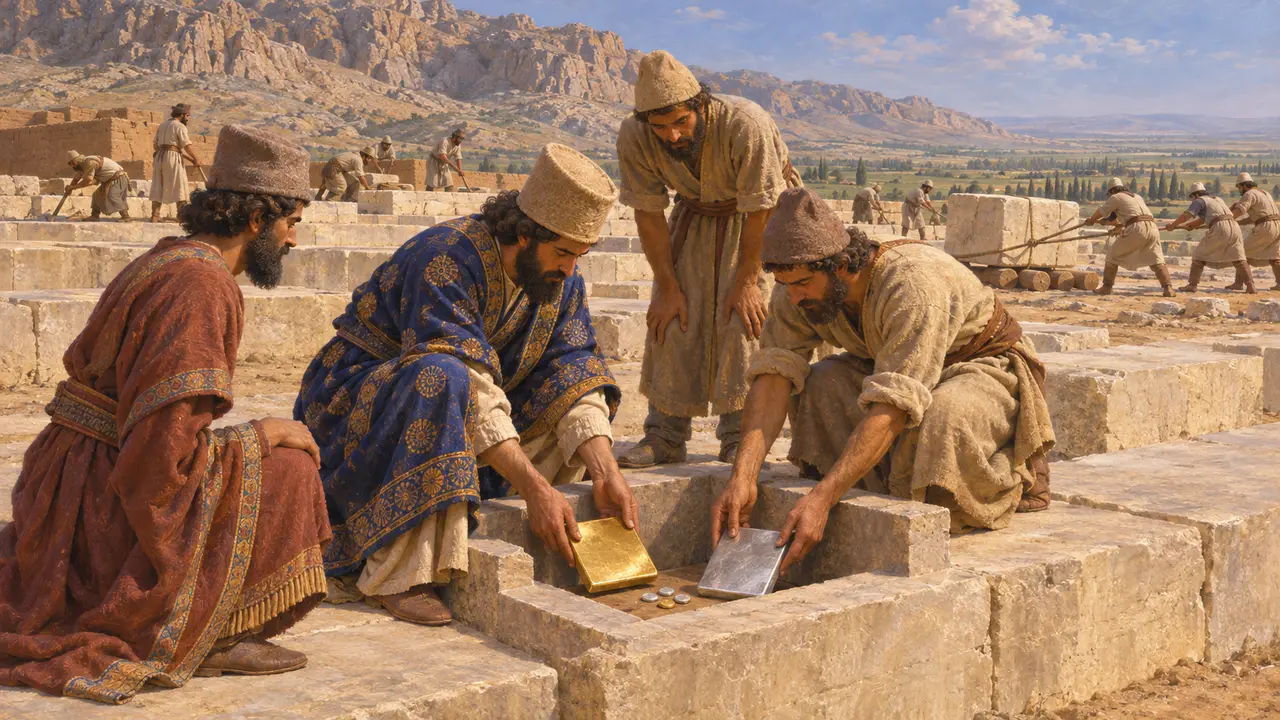
DisputedNo text gives the year building started. Many historians place it about 518, once the revolts were over, and others about 515. The gold and silver foundation tablets of the Apadana (DPh) carry no date, and the coins buried with them are Lydian and Greek pieces with no darics, which some read as a sign that the deposit came before Darius's own coinage. Historians also argue over whether Cyrus or Cambyses had begun any work at the site.
DPh; P. Briant, From Cyrus to Alexander, 2002
The fire of 330
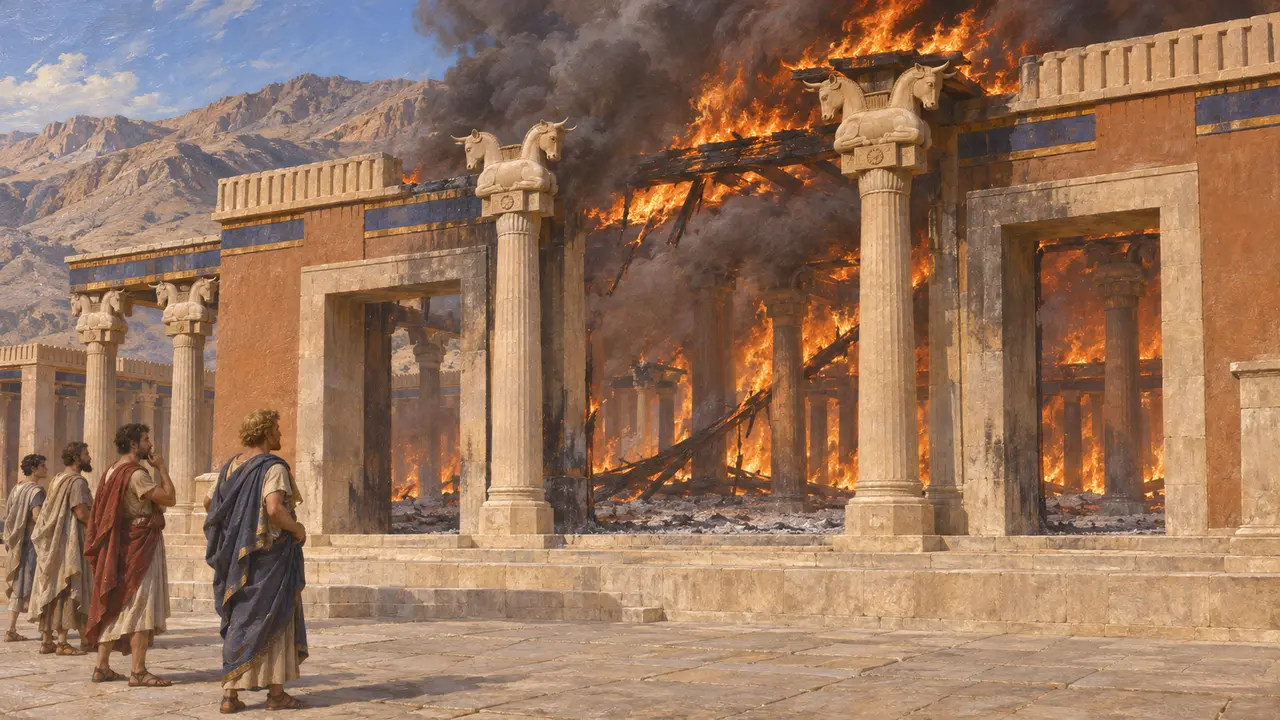
Ancient accountGreek writers knew little of Parsa before Alexander, and Herodotus never mentions it. Arrian says Alexander burned the palaces in 330 as revenge for Xerxes' burning of Athens, against the advice of Parmenion. Diodorus and Plutarch tell a different story, in which the fire began at a drinking party when the Athenian courtesan Thais urged it. Excavation has confirmed a great fire, with thick layers of ash in the Treasury and the halls.
Arrian, Anabasis 3.18.11-12; Diodorus 17.72; Plutarch, Alexander 38
Sources
- DPd, DPe, DPf, DPg (south wall inscriptions, Persepolis)
- E. F. Schmidt, Persepolis I, 1953
- R. T. Hallock, Persepolis Fortification Tablets, 1969
- W. Henkelman, The Other Gods Who Are, 2008
- P. Briant, From Cyrus to Alexander, 2002
- Arrian, Anabasis 3.18