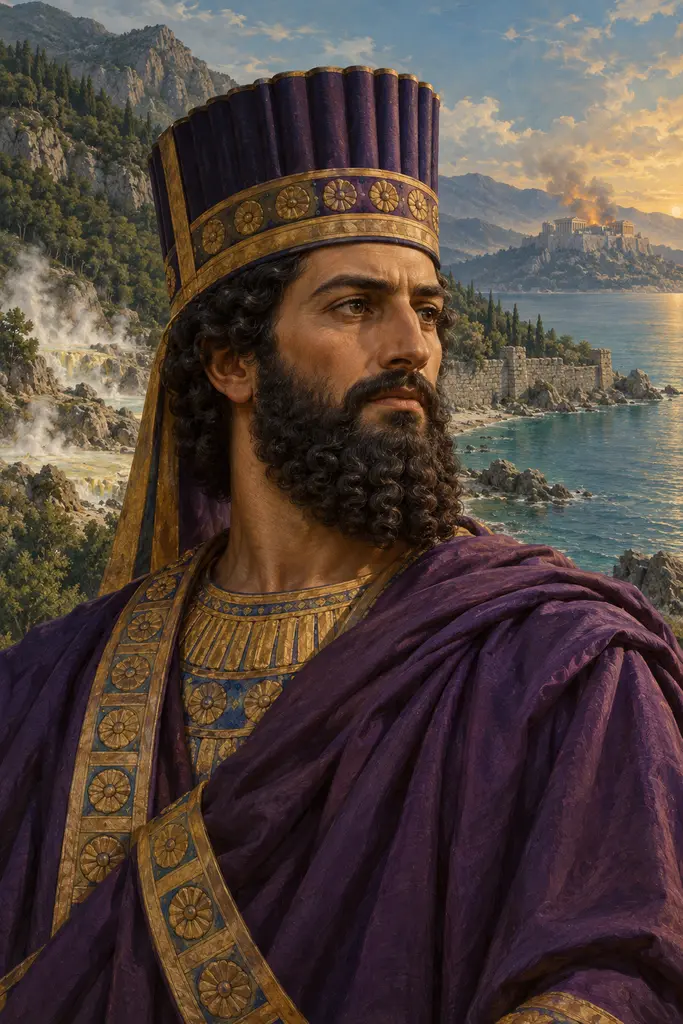
Xerxes
King of the Persian empire, son of Darius and Atossa, reigned 486-465 BCE
In the game: Level 4: The Terrace, Level 9: The Canal, Level 10: The Hot Gates, Level 11: The Finale, Mycale
Xerxes (Old Persian Xshayarsha), son of Darius and Atossa, ruled the empire from 486 until he was killed in a palace plot in 465. He put down revolts in Egypt and Babylonia, completed and extended the palaces at Persepolis, and in 480 led the invasion of Greece that took Athens but failed at Salamis. Greek writers made him a model of royal pride, while his own inscriptions present a pious king continuing his father's work.
In the game: The game's chronicle note sums up his reign from Herodotus books 7-9: Egypt's revolt, the Athos canal, the Hellespont bridges, the taking of Athens in 480 and his return home after Salamis. It leaves out the Babylonian revolts.
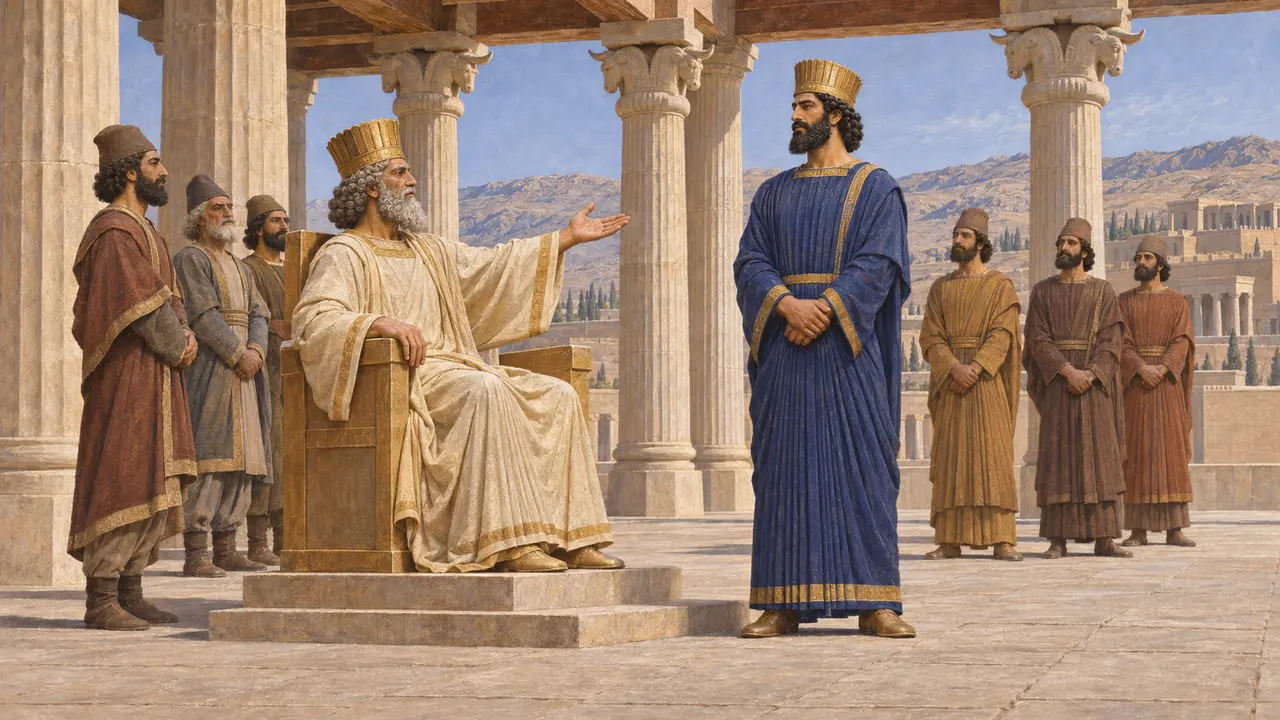
Chosen heir of Darius
In the recordIn an inscription from Persepolis (XPf), Xerxes states that Darius had other sons but, by the will of Auramazda, made him the greatest after himself. The same text traces his line through Darius and Hystaspes to Arsames. Darius died late in 486, and Babylonian documents soon begin to be dated by Xerxes' reign.
XPf
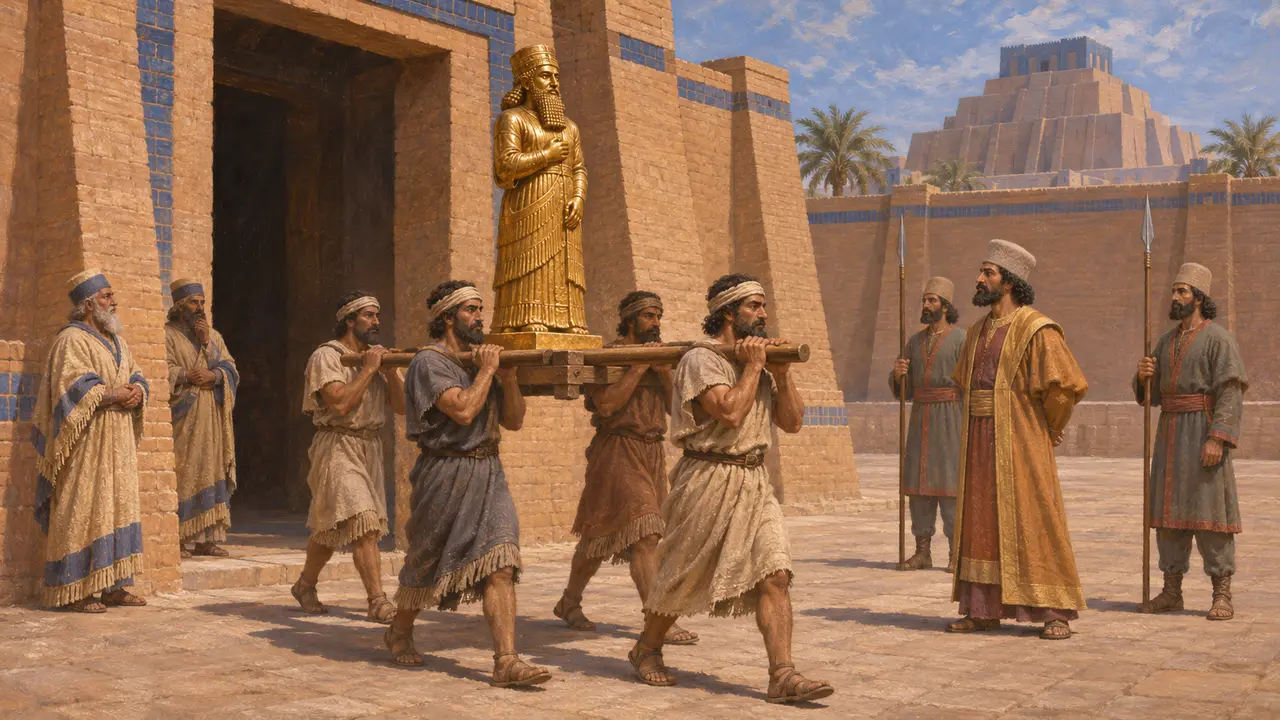
Revolts in Egypt and Babylonia
DisputedHerodotus (7.7) says Xerxes crushed the Egyptian revolt begun under Darius and made his brother Achaemenes governor. Babylonian tablets name two rebel kings, Bel-shimanni and Shamash-eriba, probably in 484, after which several family archives end. Herodotus (1.183) says Xerxes took a gold statue from Bel's sanctuary, and Arrian later claimed he destroyed the temples. Historians doubt a general destruction and still argue over his reprisals.
Herodotus 7.7, 1.183; Arrian, Anabasis 7.17; C. Waerzeggers, The Babylonian Revolts against Xerxes and the End of Archives, 2003/2004
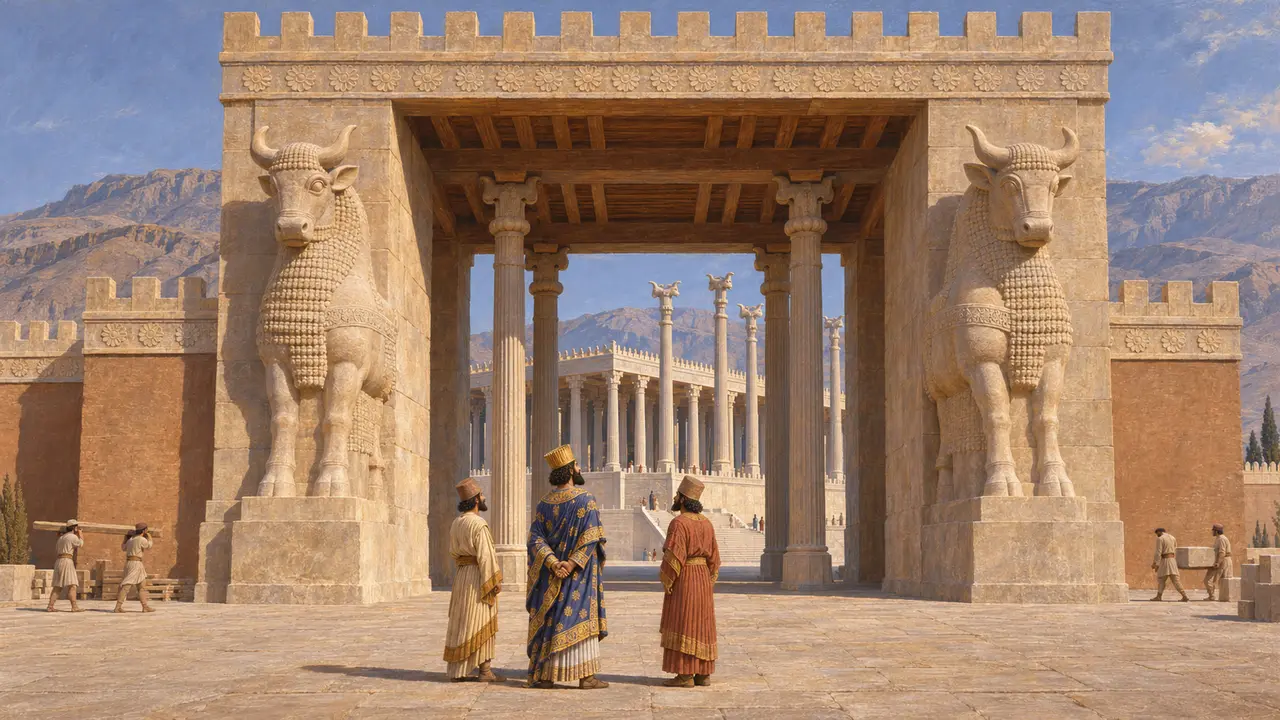
Builder at Persepolis
In the recordAt Persepolis Xerxes completed the Apadana begun by his father, built the Gate of All Lands named in its inscription (XPa), and added his own palace. In the XPh inscription he says that in one land the daiva had been worshipped. He says that by the favour of Auramazda he destroyed their sanctuary, forbade their worship and worshipped Auramazda there. The land is not named, and scholars do not agree which event, if any, it describes.
XPa; XPh; E. Schmidt, Persepolis I, 1953
The invasion of Greece
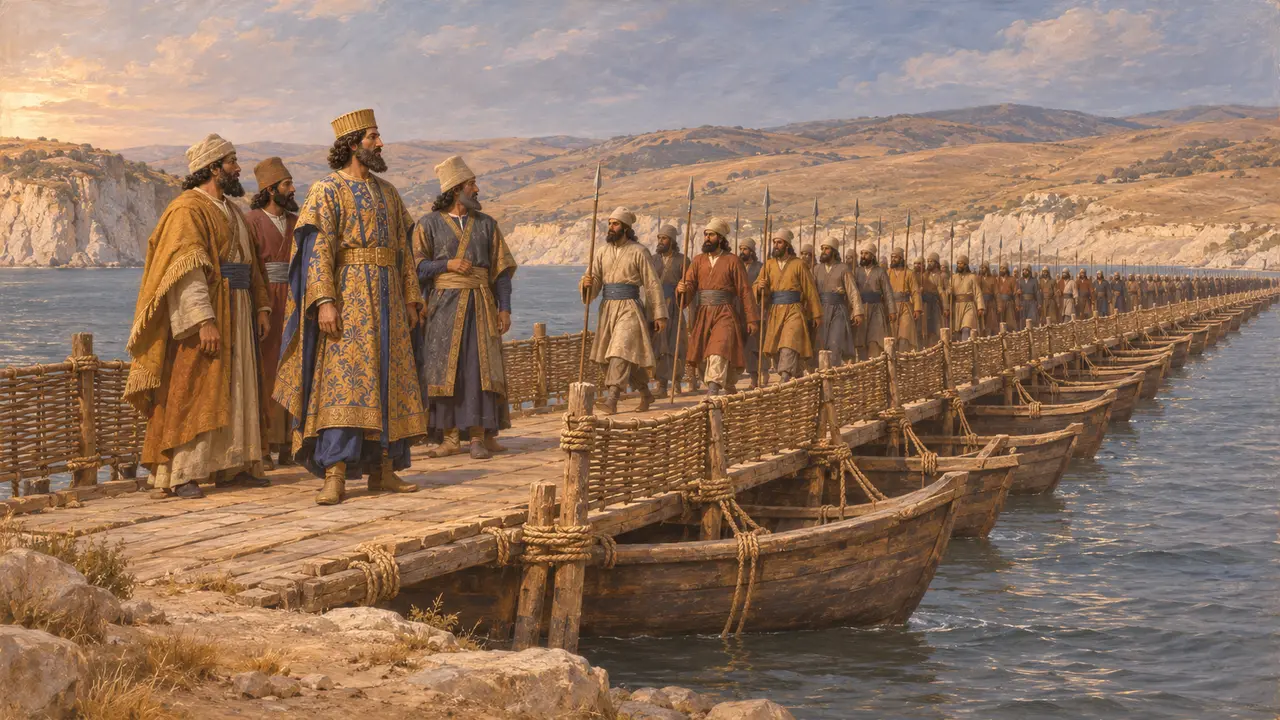
Ancient accountHerodotus tells how Xerxes had a canal cut behind Athos and bridges of boats laid over the Hellespont, then marched through Thrace in 480. After Thermopylae his army took Athens and burned the Acropolis. When his fleet was beaten at Salamis he returned to Asia, leaving Mardonius in Greece. Herodotus (7.186) puts the host above five million, a figure historians regard as greatly exaggerated.
Herodotus 7.22-24, 7.33-36, 7.186, 8.53, 8.97-120
Lashing the Hellespont
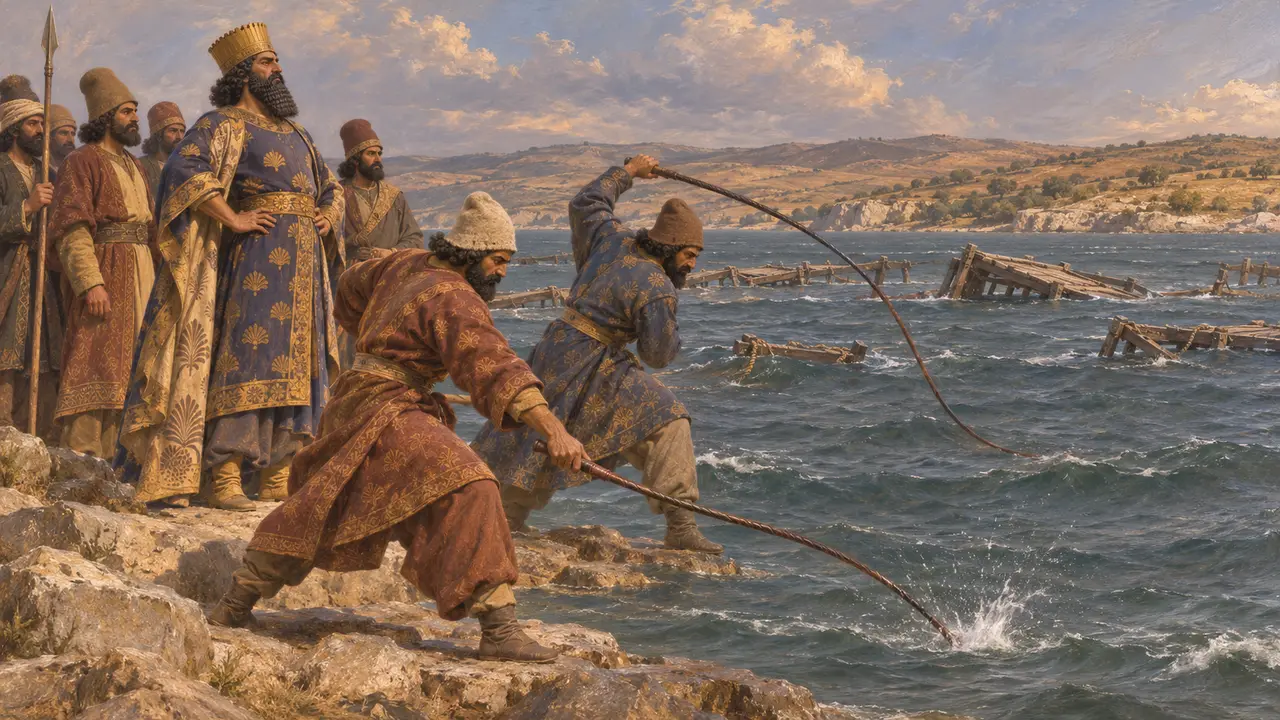
Later legendHerodotus (7.35) says that when a storm broke the first bridges, Xerxes had the strait given three hundred lashes and the overseers beheaded. Aeschylus' Persians, staged at Athens in 472, shows a king humbled by the gods for his pride. Such scenes served Greek moral lessons about arrogance and are not confirmed by any Persian source.
Herodotus 7.35; Aeschylus, Persians
Sources
- Herodotus, Histories, books 7-9
- Xerxes' inscriptions XPa, XPf, XPh
- P. Briant, From Cyrus to Alexander, 2002
- A. Kuhrt, The Persian Empire: A Corpus of Sources from the Achaemenid Period, 2007
- C. Waerzeggers, The Babylonian Revolts against Xerxes and the End of Archives, 2003/2004
- Aeschylus, Persians