The Hellespont
Strait between Asia and Europe, bridged for Xerxes at Abydos, 481-480 BCE
In the game: Level 9: The Canal, Level 11: The Finale, Mycale
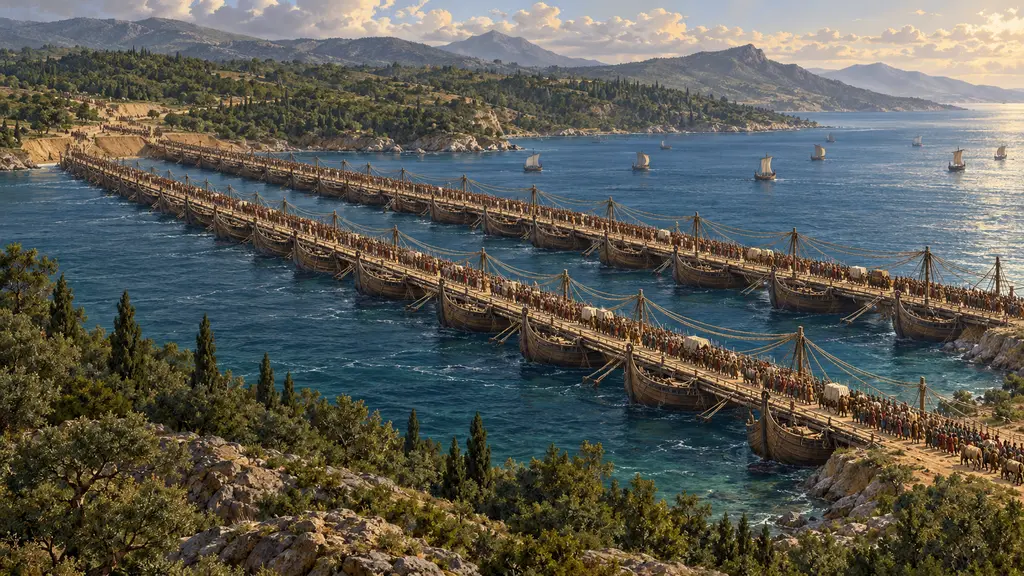
The Hellespont, now the Dardanelles, is the narrow strait between the Aegean and the Sea of Marmara that divides Asia from Europe. In 480 Xerxes crossed it on two bridges of boats near Abydos to invade Greece. Herodotus made the crossing a central image of royal power and pride, and almost everything known about it comes from Greek writers.
In the game: The game's chronicle presents the strait at Abydos, bridged twice on boats for Xerxes in 481-480 after a storm broke the first bridges, with a seven-day crossing. This follows Herodotus, the only detailed source.
Building the bridges
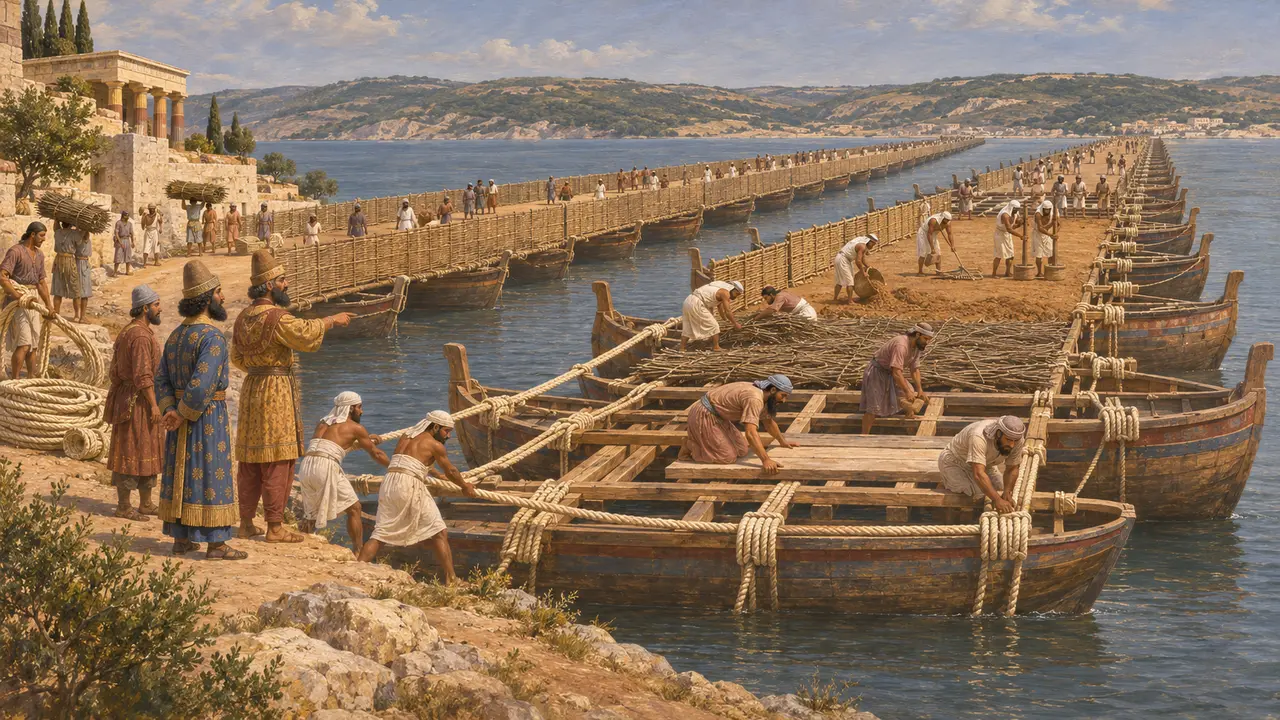
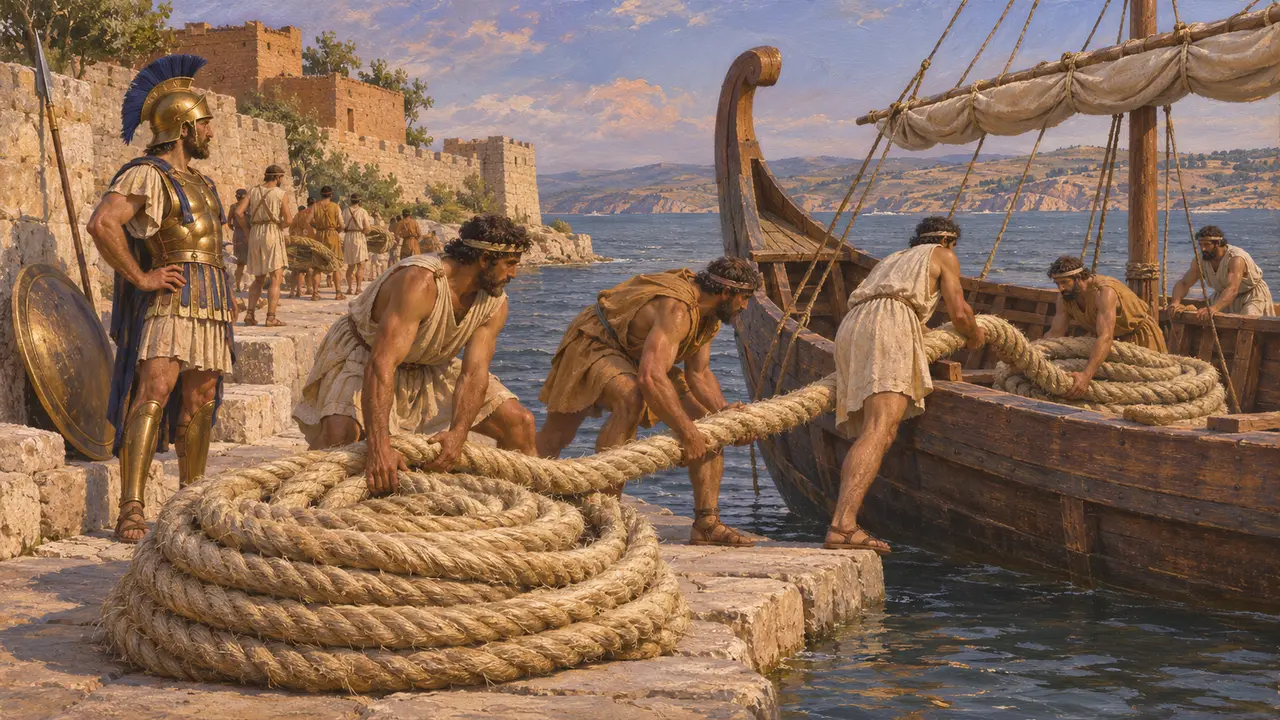
Ancient accountHerodotus says that Phoenician and Egyptian crews first spanned the seven stades from Abydos to the shore between Sestos and Madytus, using cables of white flax and of papyrus. A storm destroyed this work. New engineers then moored 360 ships for one bridge and 314 for the other. They stretched cables across the hulls and laid planks, brushwood and earth on top, with screens at the sides so the animals would not see the water.
Herodotus 7.33-36
The punishment of the sea
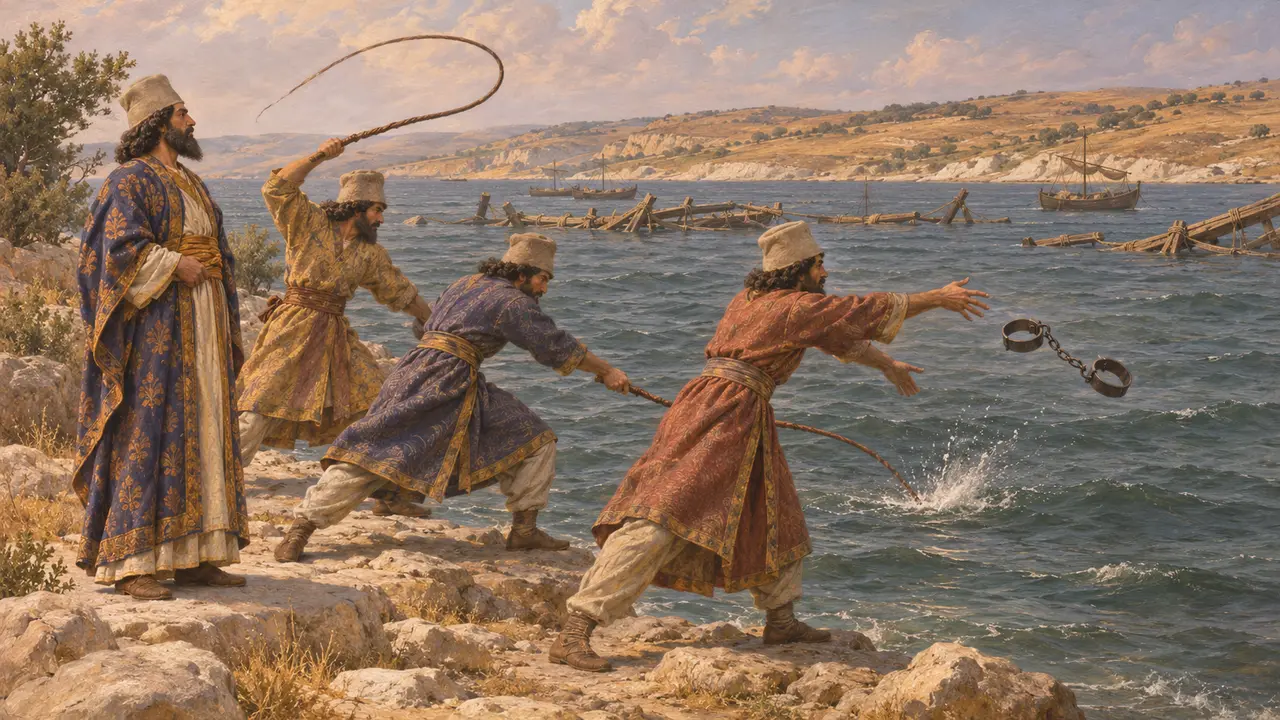
DisputedHerodotus says Xerxes had the strait given 300 lashes and a pair of fetters thrown in, and had the overseers of the failed bridges beheaded. He frames this as arrogance, and Aeschylus likewise treats the yoking of the sea as an offence to the gods. Some historians read the story as a Persian rite against a disorderly water; others see Greek moralising. No Persian inscription mentions the bridges at all.
Herodotus 7.35; Aeschylus, Persians; P. Briant, From Cyrus to Alexander, 2002
The review and the crossing
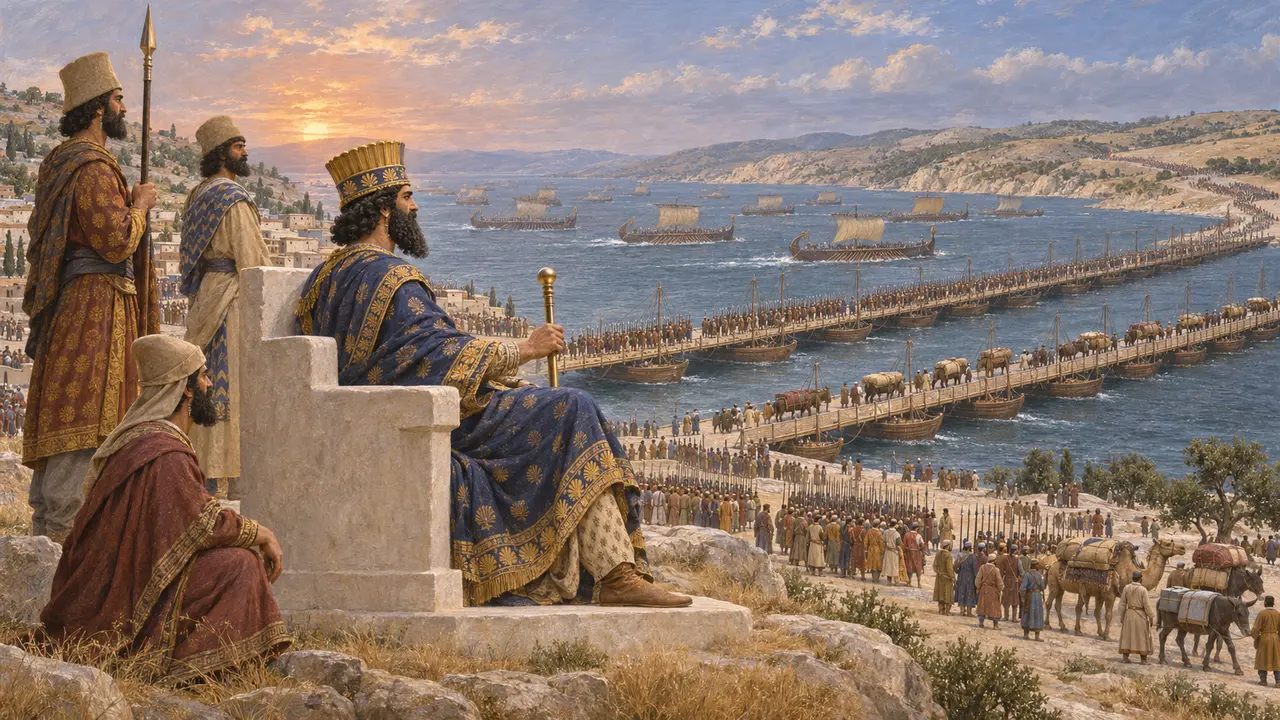
Ancient accountHerodotus tells how Xerxes sat on a throne of white stone on a hill at Abydos and watched his fleet race and his army fill the shore. At sunrise he poured a libation and threw a gold cup, a bowl and a Persian sword into the water. Fighting men used one bridge and baggage animals the other, and the crossing went on for seven days and nights. Herodotus's total of over five million people is far beyond what modern historians accept.
Herodotus 7.44-45, 7.54-56, 7.186
The return and the captured cables
Ancient accountHerodotus says that when Xerxes came back after Salamis, storms had already broken the bridges, so the army crossed by ship. In 479, after Mycale, the Athenians sailed to the strait, besieged Sestos and carried the bridge cables home to dedicate in their sanctuaries. Artayctes, the Persian governor of Sestos, was captured and put to death.
Herodotus 8.117; Herodotus 9.114-121
The sea of Helle
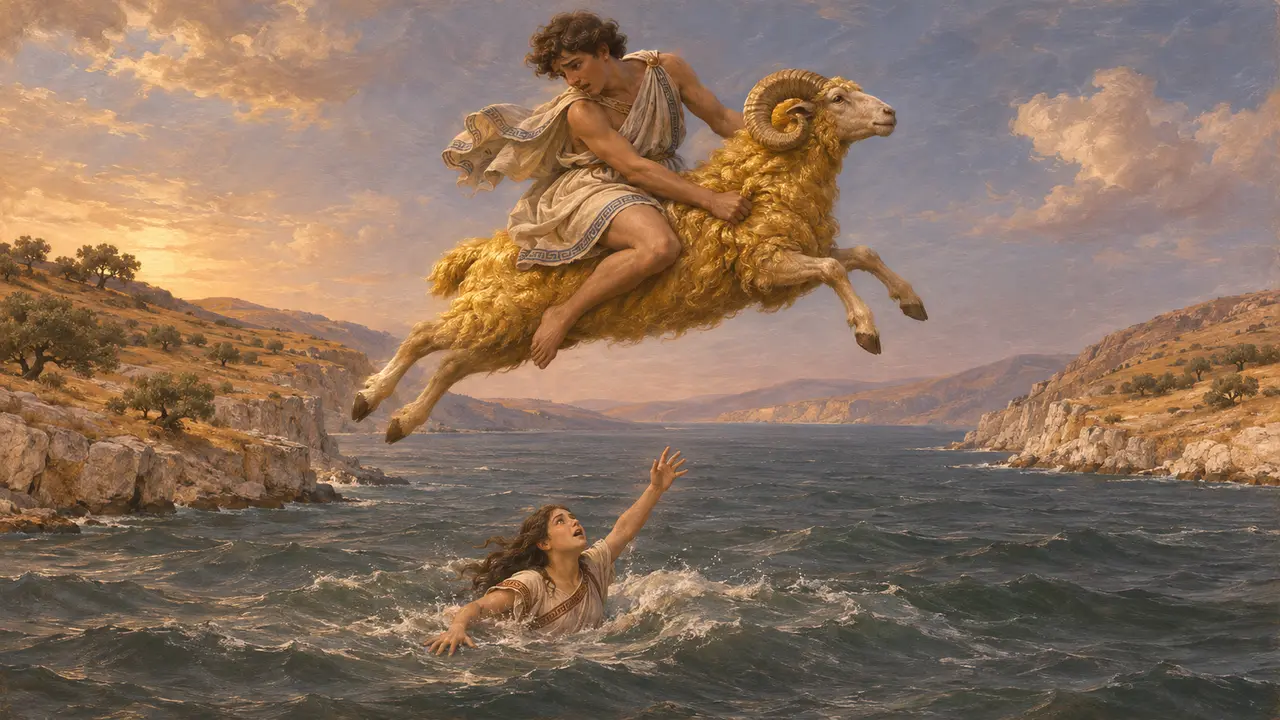
Later legendGreeks called the strait the sea of Helle. In the myth, Phrixus and his sister Helle fled their stepmother on a ram with a golden fleece, and Helle fell into the water and drowned. Herodotus mentions a tomb of Helle on the Chersonese that Xerxes' army marched past. The love story of Hero and Leander, set on either shore, survives first in Roman-era poetry such as Ovid's and later in the Greek poet Musaeus.
Herodotus 7.58; Apollodorus, Library; Ovid, Heroides 18-19
Sources
- Herodotus, Histories 7.33-58
- Herodotus, Histories 8.117 and 9.114-121
- Aeschylus, Persians
- P. Briant, From Cyrus to Alexander, 2002
- N. G. L. Hammond and L. J. Roseman, The construction of Xerxes' bridge over the Hellespont, 1996