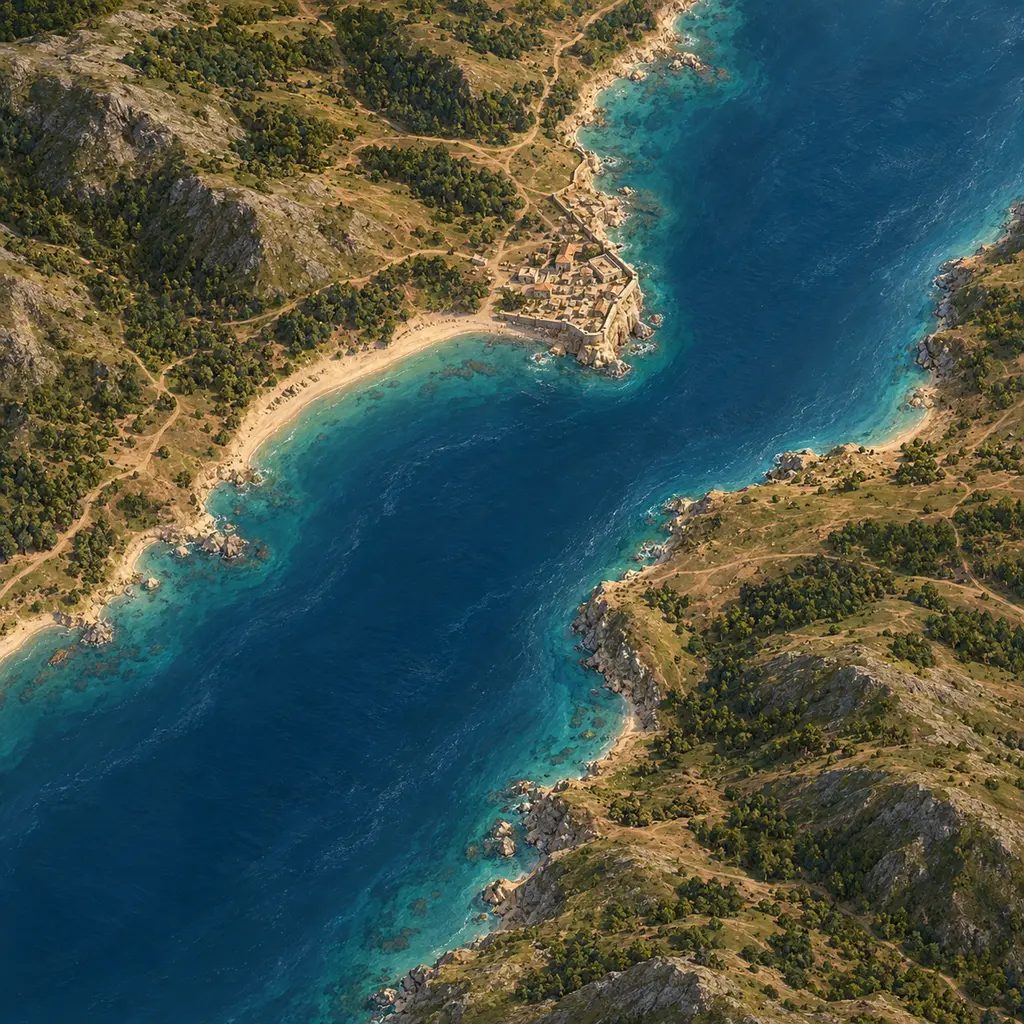
House of Sestos
A house in Sestos on the Hellespont, besieged by the Athenians, 479-478 BCE
Sestos was a walled town on the European shore of the Hellespont, facing Abydos across the strait. After the Greek victory at Mycale in 479, Persians from the surrounding country took refuge there, and an Athenian fleet besieged them until hunger forced them out. Herodotus ends his narrative of the war with this siege, which many historians read as the moment the Greeks turned from defending their homeland to attacking Persian positions.
In the game: A house of Sestos stands on a level's map as a historic structure that the player cannot build. Herodotus names no particular house, so it is a generic dwelling of the besieged town.
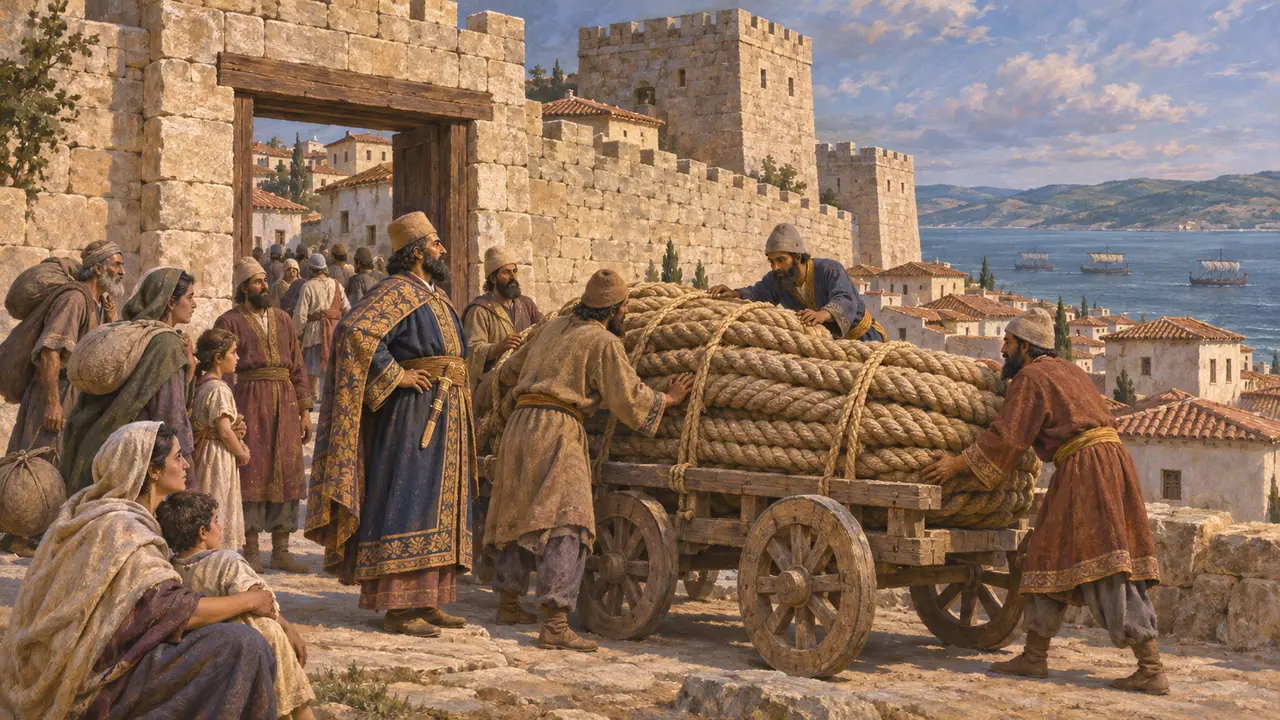
A refuge on the strait
Ancient accountHerodotus says that after Mycale the Spartan king Leotychides took the Peloponnesian ships home, while the Athenians under Xanthippus stayed to besiege Sestos. The Persians of the nearby towns had gathered there because it was the strongest fortress in the region. A Persian named Oeobazus came in from Cardia, bringing the cables from Xerxes' bridges across the Hellespont. The town's governor was Artayctes, a Persian appointed by Xerxes.
Herodotus 9.114-116
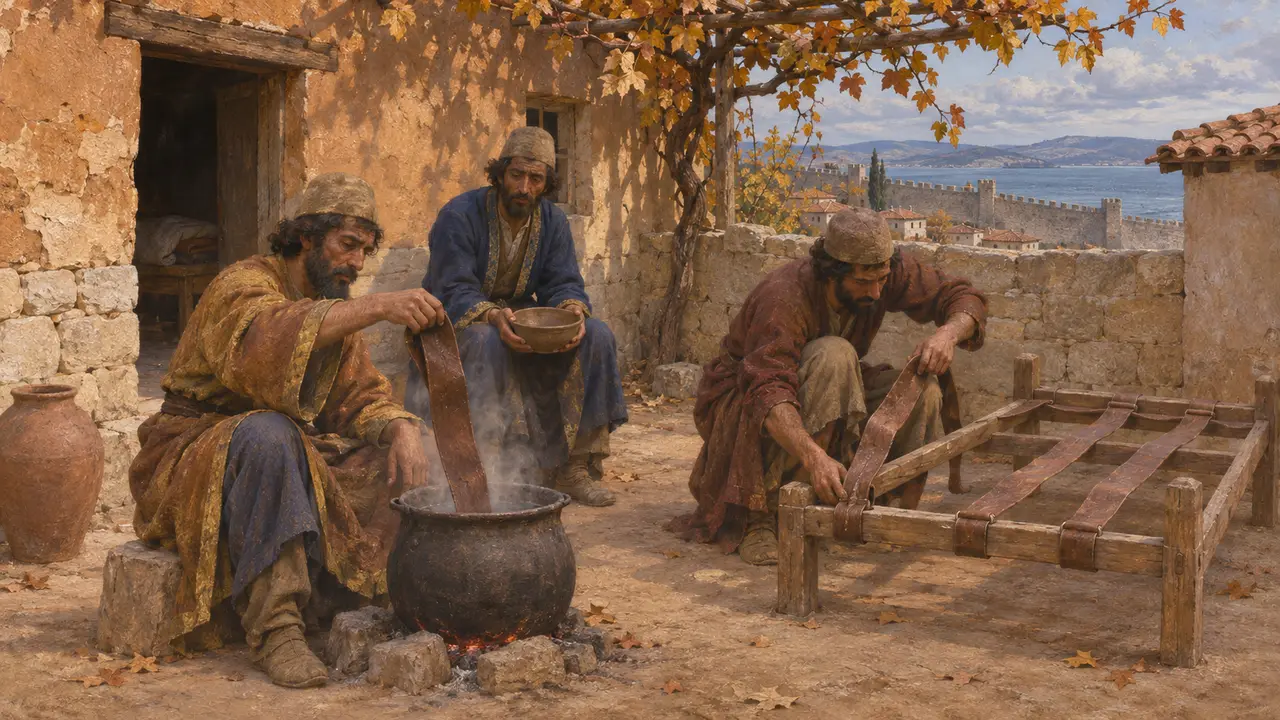
Hunger inside the walls
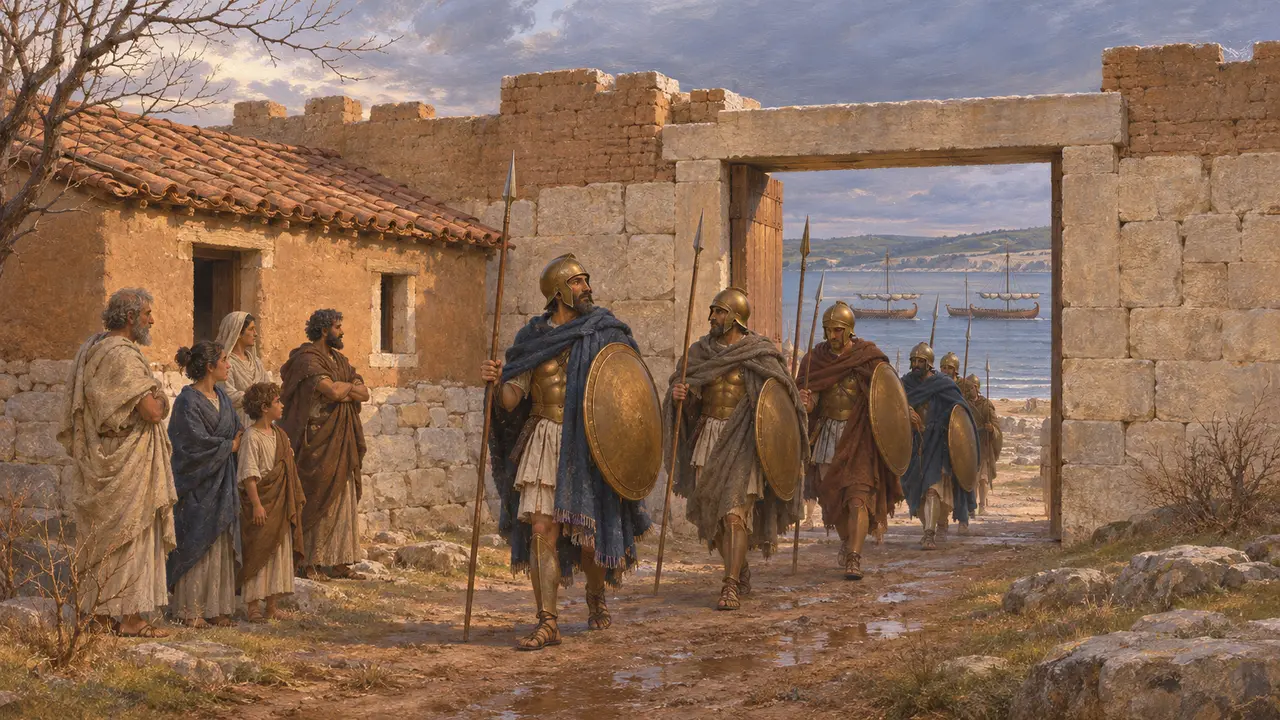
Ancient accountThe siege dragged on into the autumn. Herodotus says the Athenian soldiers grumbled at being kept from home, but their generals refused to leave until the town fell or Athens recalled them. Inside, food ran out, and the defenders boiled the leather straps of their beds and ate them. When even that was gone, Artayctes, Oeobazus and the Persians slipped out by night at the back of the wall, where the besiegers were thinnest, and the townspeople opened the gates.
Herodotus 9.117-118
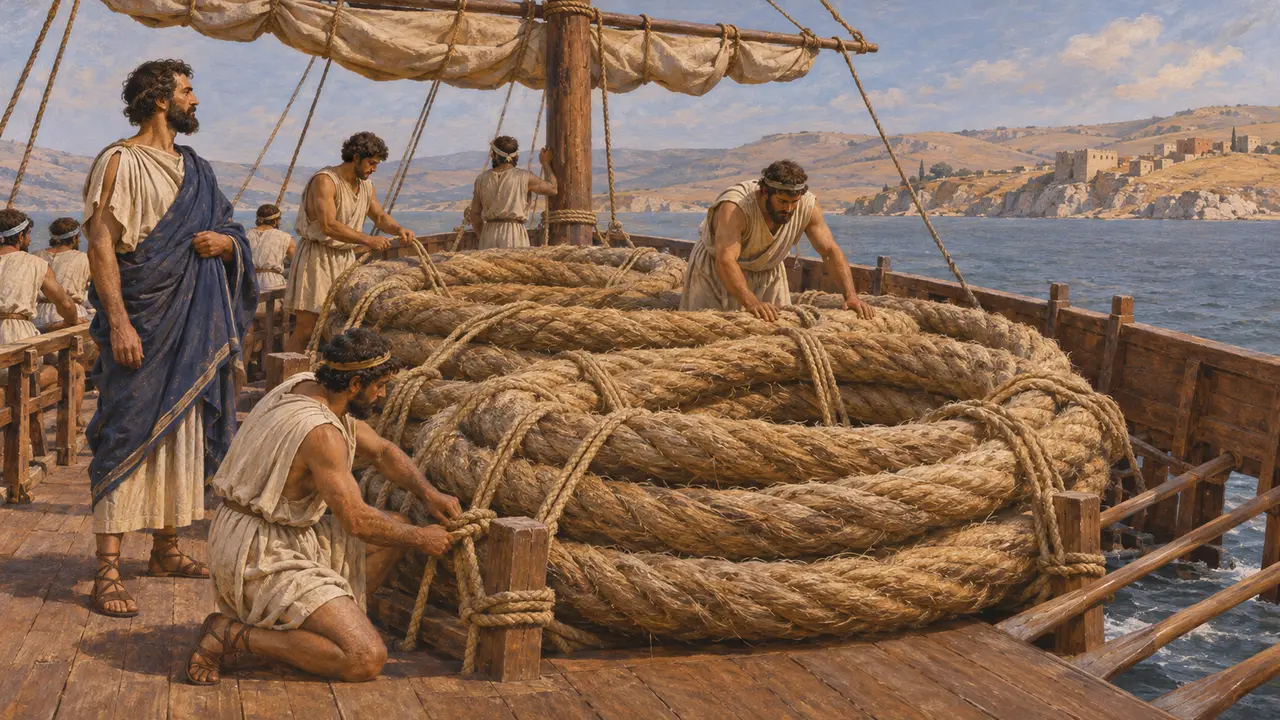
The fate of the Persian commanders
Ancient accountOeobazus escaped into Thrace, where, Herodotus says, the Apsinthian Thracians caught him and sacrificed him to their god Pleistorus. Artayctes was captured near Aegospotami. Herodotus accuses him of plundering the shrine of the hero Protesilaus at Elaeus, and says the Athenians, on Xanthippus's orders, nailed him to a board while his son was stoned before his eyes. The Athenians then sailed home carrying the bridge cables as offerings for their sanctuaries.
Herodotus 9.116, 9.119-121
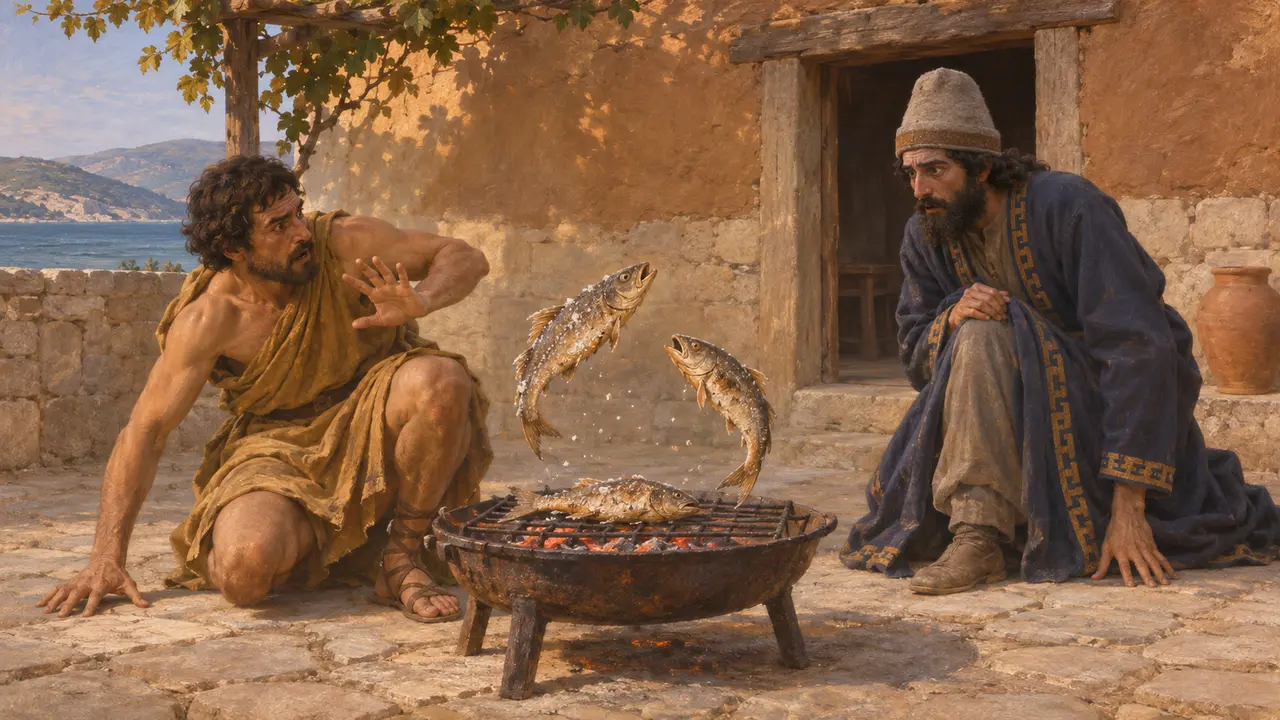
The leaping fish
Later legendHerodotus tells that a guard was roasting salted fish when the fish began to leap and quiver as if freshly caught. Artayctes read this as a sign from Protesilaus that the hero, though dead, had power to punish the man who had robbed him. The story is shaped as a moral tale about sacrilege and retribution, a theme that runs through the closing chapters of the Histories.
Herodotus 9.120
When it fell and what it meant
DisputedHerodotus places the fall of Sestos before the fleet went home for winter, while Thucydides says the Athenians and their Ionian and Hellespontine allies wintered there and took the town after a siege. Historians therefore argue whether it fell in late 479 or early 478. They also debate how far Herodotus chose this episode as an ending because it hints at the Athenian empire that followed.
Thucydides 1.89; M. Flower and J. Marincola, Herodotus: Histories Book IX, 2002
Sources
- Herodotus 9.114-122
- Thucydides 1.89
- M. Flower and J. Marincola, Herodotus: Histories Book IX, 2002
- P. Briant, From Cyrus to Alexander, 2002