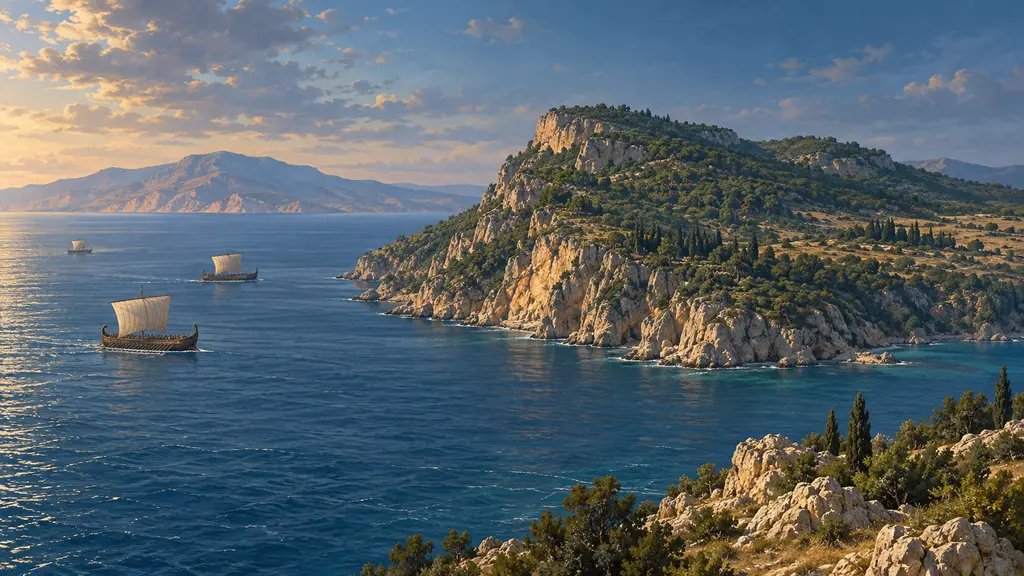
Mycale is the mountainous headland on the Ionian coast facing the island of Samos. In 479 the remnant of the Persian fleet was drawn ashore there under the guard of a land army, and a Greek fleet under Leotychides and Xanthippus stormed the camp and burned the ships. The defeat opened the way for the Ionian cities to break away from the King.
In the game: Mycale is the game's epilogue for 479. Its chronicle note follows Herodotus on the storming of the ship camp and the burning of the fleet. The claim that this happened on the same day as Plataea is his, and historians doubt it.
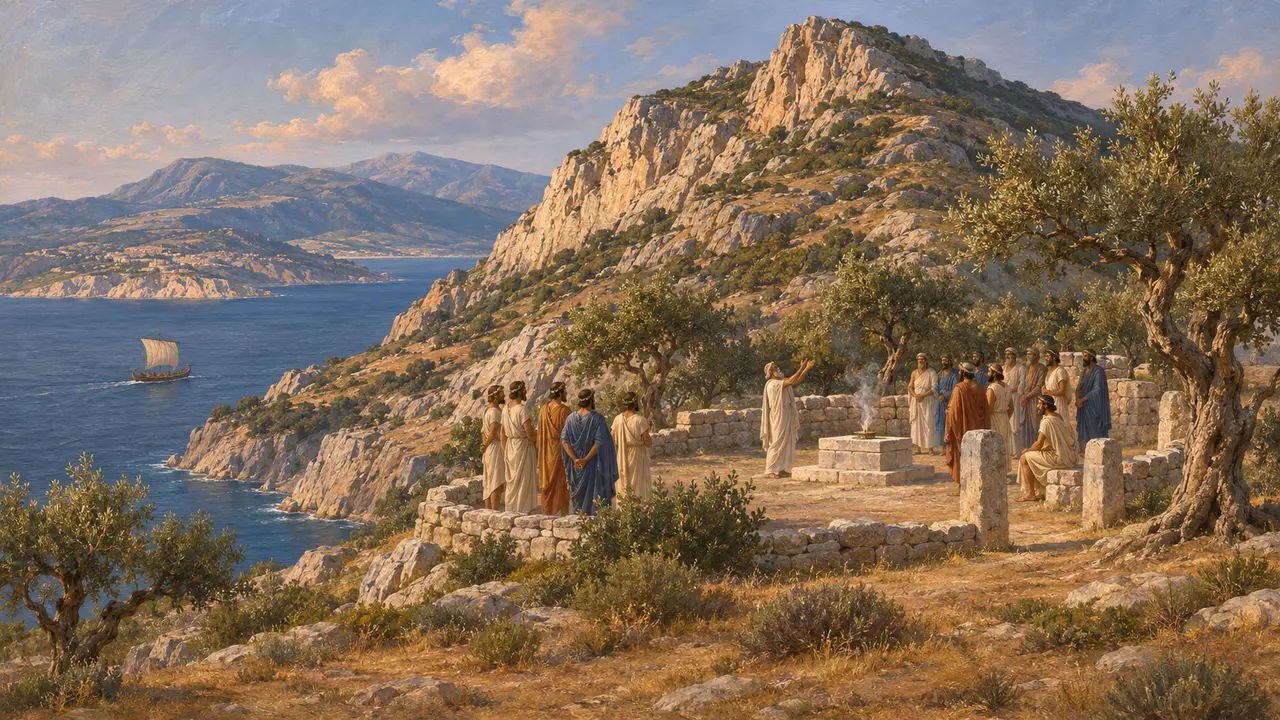
The headland and the Panionion
Ancient accountMycale rises steeply from the sea opposite Samos, across a narrow strait. Herodotus says the Panionion, the sacred place where the twelve Ionian cities met for their common festival of Poseidon Heliconius, lay on its northern side. The headland was a landmark for sailors and a meeting place for the same Ionians who would later fight on both sides there.
Herodotus 1.148
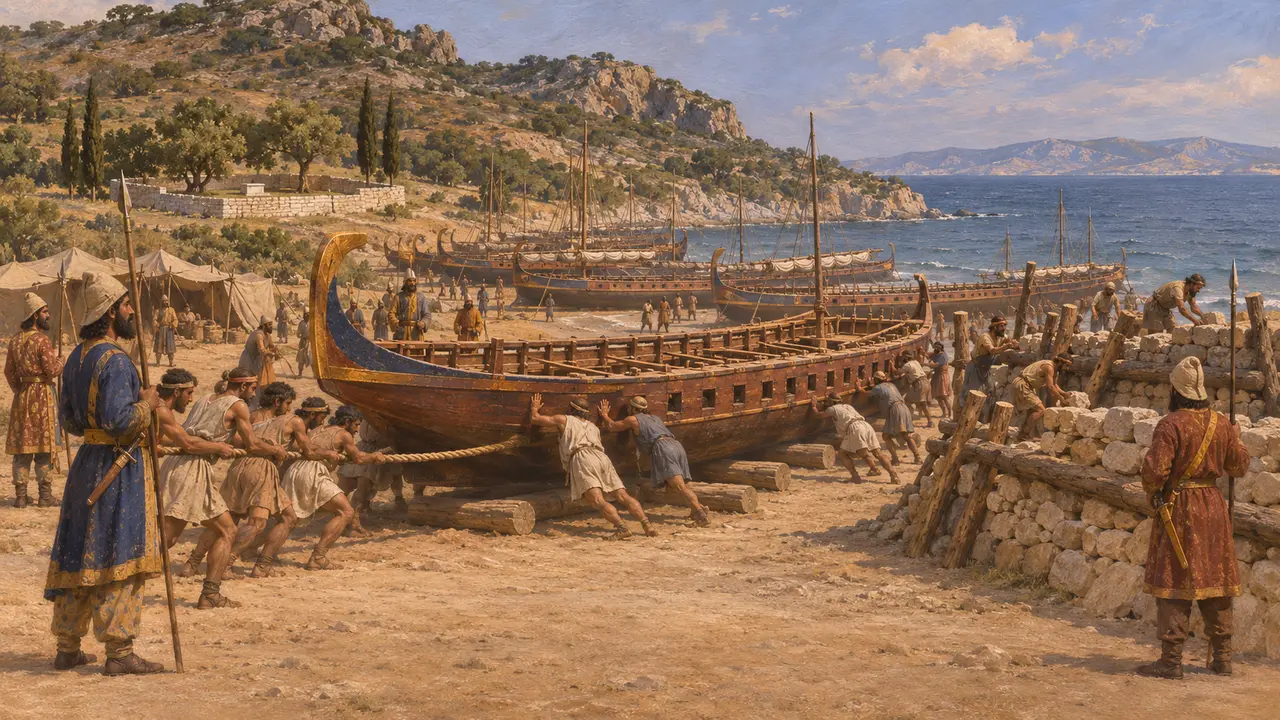
The Persian fleet goes ashore
Ancient accountHerodotus says that after Salamis the surviving fleet gathered at Samos in spring 479, about 300 ships including the Ionians. When the Greeks came from Delos, its commanders sent away the Phoenician ships and beached the rest at Mycale, near a precinct of Eleusinian Demeter. They built a rampart of stones and felled trees, guarded by a land army he puts at 60,000 under Tigranes, a figure probably too high.
Herodotus 8.130; 9.96-97
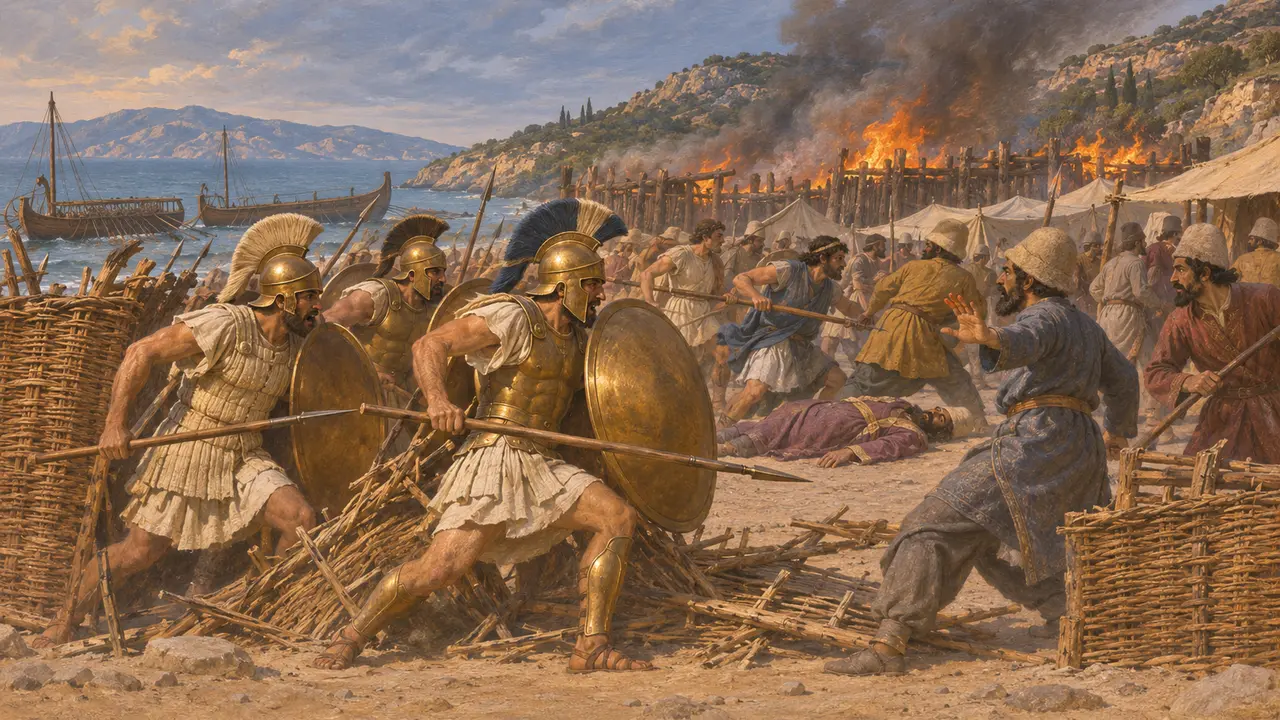
The storming of the camp
Ancient accountHerodotus says Leotychides first sailed along the shore calling on the Ionians to remember their freedom. The Persians, distrusting them, disarmed the Samians and sent the Milesians to guard the paths. The Athenians and those beside them on the beach broke the barricade of wicker shields and forced the camp; Tigranes fell. The Samians and other Ionians then turned on the Persians, and the Greeks burned the ships and the rampart.
Herodotus 9.98-106
The same day as Plataea
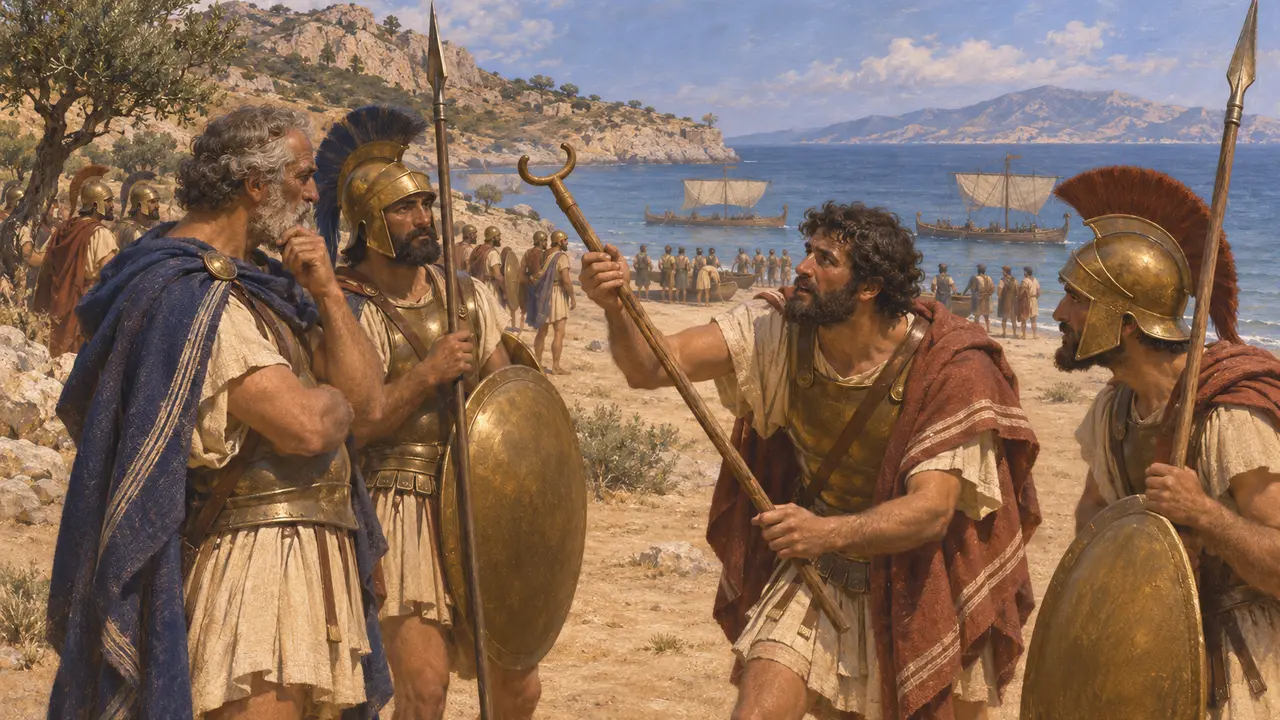
DisputedHerodotus says Plataea and Mycale were fought on the same day, and that word of the victory in Boeotia reached the Greeks before the attack, with a herald's staff found on the beach. Diodorus instead has Leotychides invent the news to hearten his men. Historians accept that both battles fell in late summer 479 but doubt the exact link, which Herodotus treats as a sign from the gods. No Persian document mentions the battle.
Herodotus 9.100-101; Diodorus 11.35
Ionia breaks away
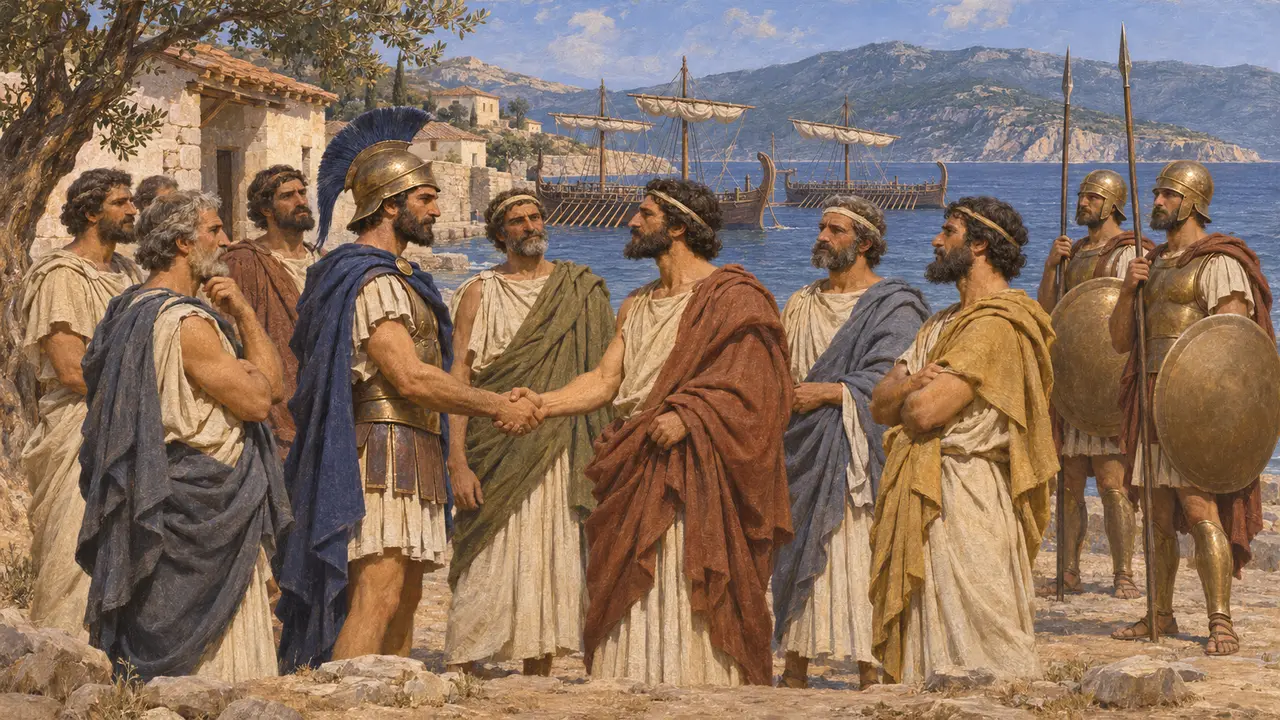
Ancient accountHerodotus calls Mycale the second revolt of Ionia from Persia. At Samos the Peloponnesians proposed moving the Ionians to mainland Greece, but the Athenians refused, and Samos, Chios, Lesbos and other islanders joined the Greek alliance. The fleet then sailed to the Hellespont, where Xanthippus and the Athenians besieged Sestos.
Herodotus 9.104-106; 9.114-121
Sources
- Herodotus, Histories 9.90-106
- Herodotus, Histories 8.130; 9.114-121
- Diodorus Siculus 11.34-37
- J. F. Lazenby, The Defence of Greece 490-479 BC, 1993
- P. Briant, From Cyrus to Alexander, 2002
- P. Green, The Greco-Persian Wars, 1996