Samos
Ionian island off the Carian coast, home of Polycrates and Mandrocles, 6th-5th century BCE
In the game: Level 2: The Spear-bearer, Level 6: The Bridge of Boats, Mycale
Samos was a rich Greek island close to the Asian mainland, and it lay between Persian power and the Aegean. Its tyrant Polycrates built a strong fleet and was killed by the Persian governor Oroetes. Later Samos supplied the engineer of the Bosporus bridge, ships at Lade, and the appeal that brought the Greek fleet to Mycale.
In the game: Samos is named in the Chronicle entries and in the Bosporus, Lade and Mycale articles. The game gives it no level, building or mechanic of its own.
Polycrates and his sea power
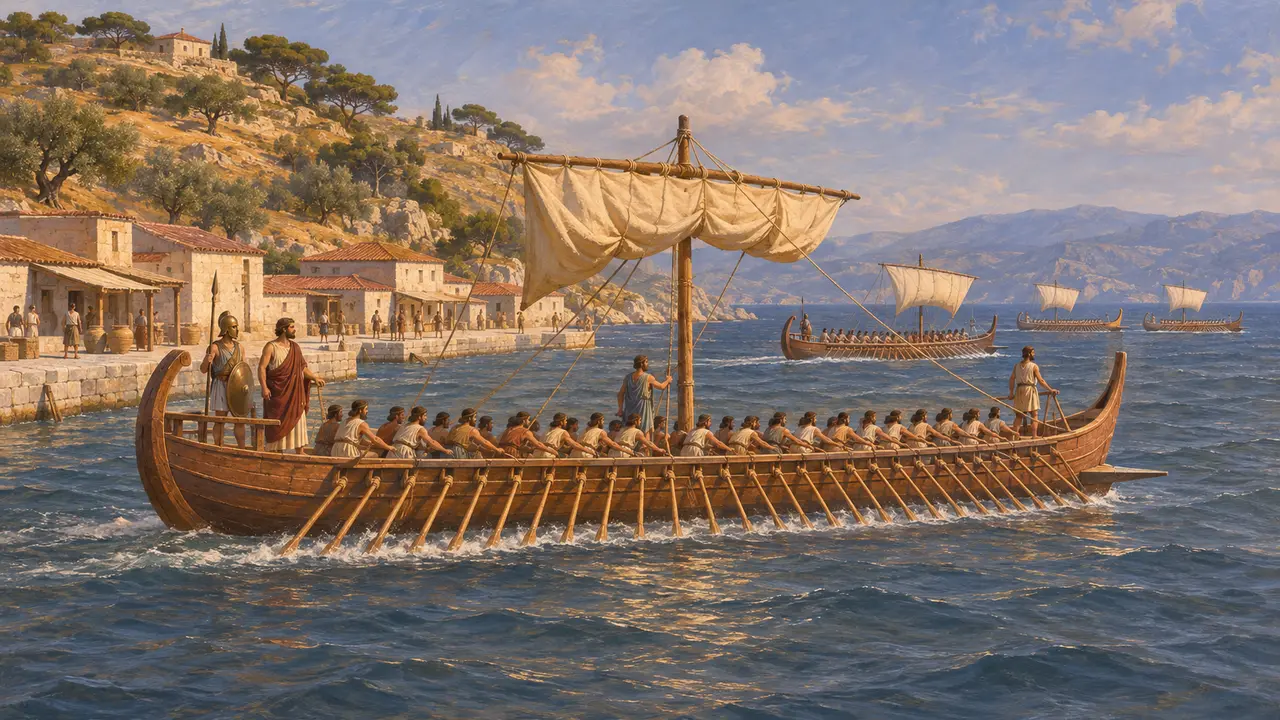
Ancient accountHerodotus says Polycrates seized Samos with his brothers, then ruled alone and made an alliance with Amasis of Egypt, which later broke down. He says Polycrates built a large fleet including penteconters, and took islands and mainland towns. Herodotus calls him the first Greek after Minos to aim at mastery of the sea.
Herodotus 3.39-47; 3.122
The death of Polycrates
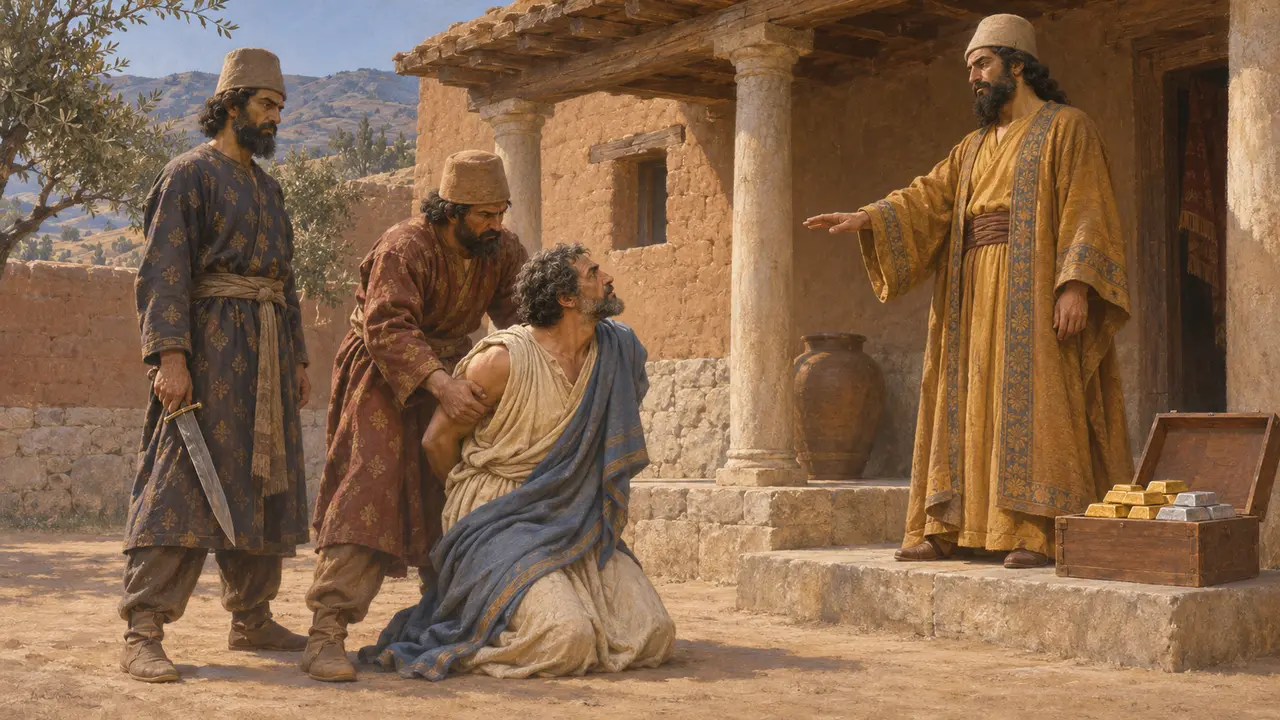
Ancient accountHerodotus says Oroetes, the Persian governor at Sardis, lured Polycrates to the mainland with promises of money and then killed him. He gives Oroetes' motives as a quarrel with the Persian Mitrobates and his own ambition, though he also reports a second explanation. The story rests on Herodotus, and the date is probably about 522.
Herodotus 3.120-125
Syloson and the Persian conquest
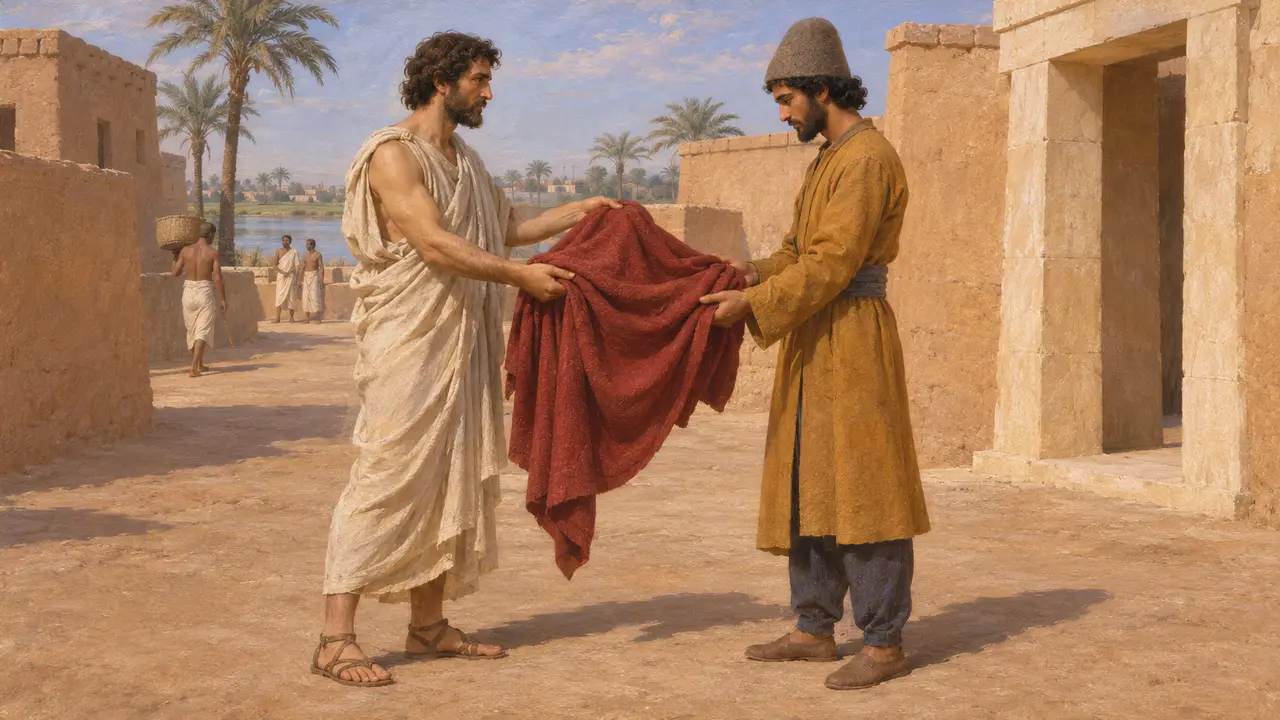
Ancient accountHerodotus says Darius, then a guardsman of Cambyses in Egypt, received a cloak from the exile Syloson. When Darius became king he repaid the favour by sending an army under Otanes to take Samos and give it to Syloson. Herodotus says the island was left almost empty of people and was resettled later.
Herodotus 3.139-149
Mandrocles and the Bosporus bridge
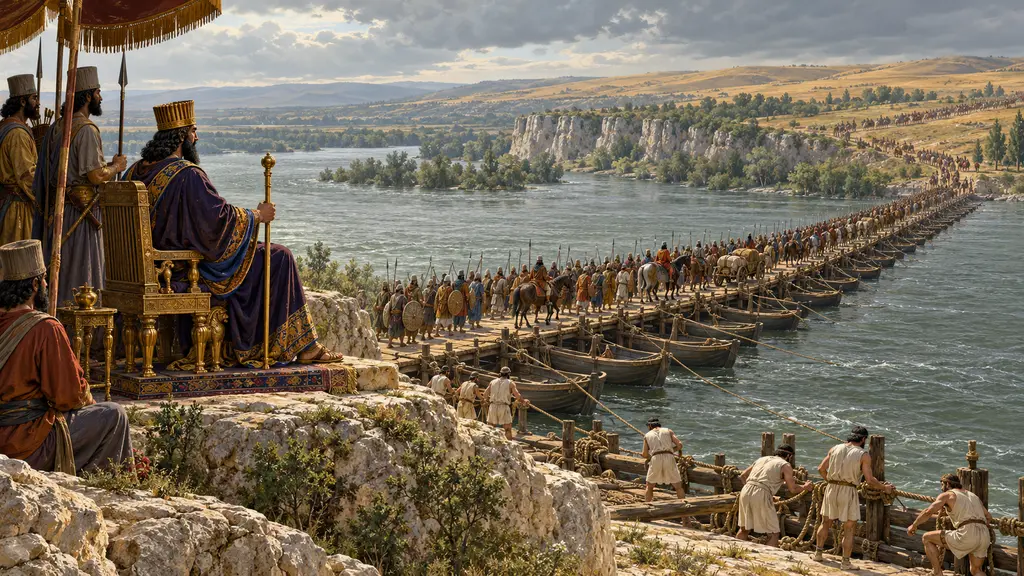
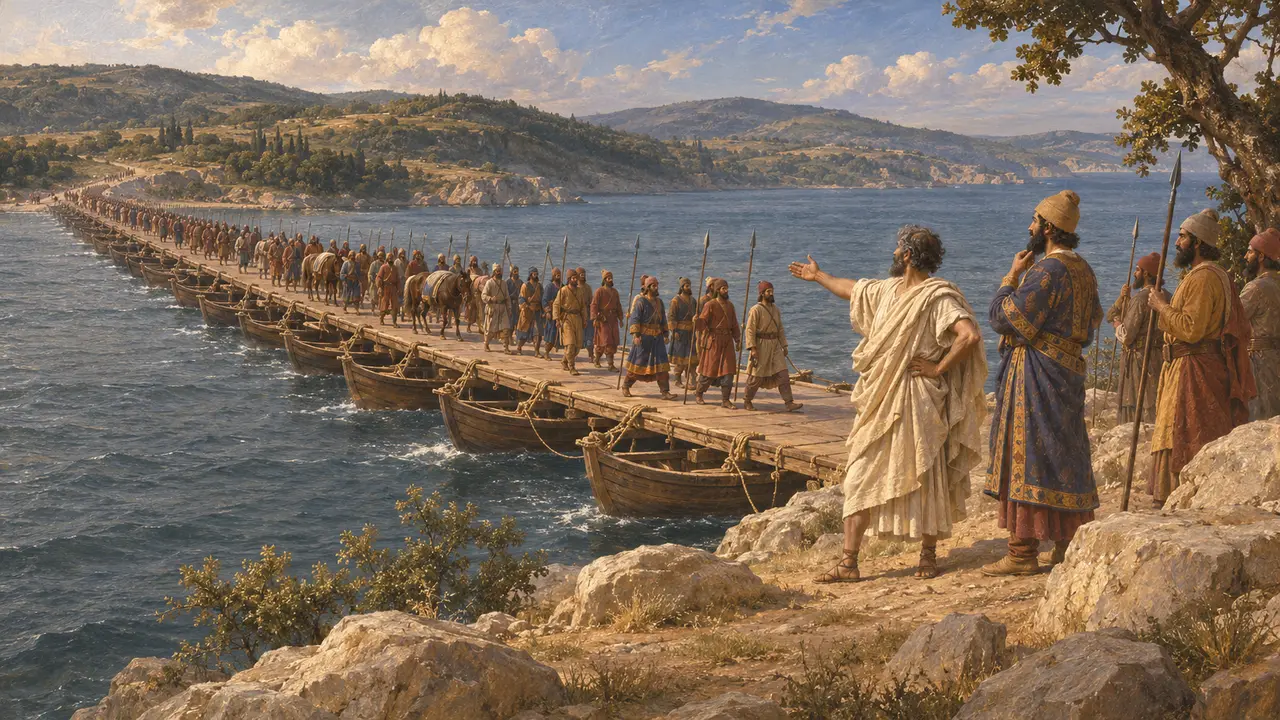
Ancient accountHerodotus says the Samian engineer Mandrocles designed the bridge over the Bosporus for Darius's Scythian campaign. He says Mandrocles was richly rewarded and dedicated a painting of the crossing in the Samian Heraion. Herodotus gives the verses that he says accompanied it.
Herodotus 4.87-88
Lade and the flight of the Samians
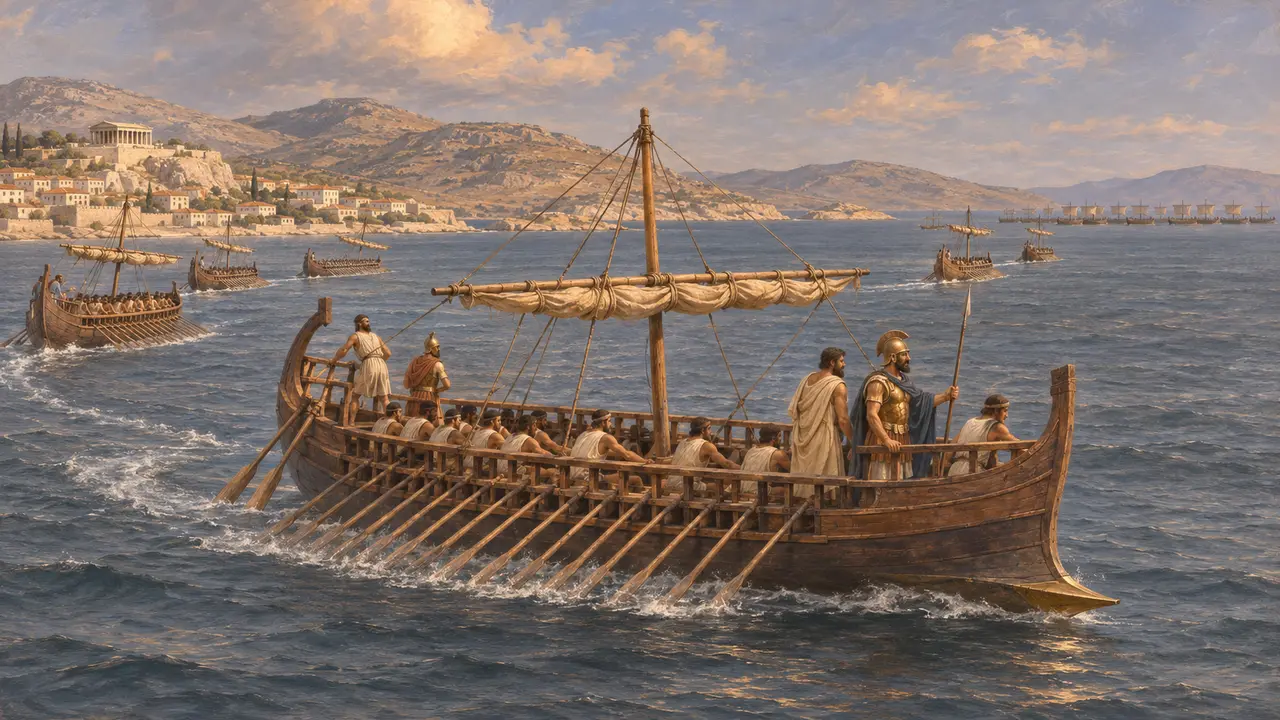
DisputedHerodotus says that at Lade in 494 most Samian captains sailed away as the battle began, after an agreement with the exiled tyrant Aeaces, and only a few stayed. He says the Samians later honoured those who remained. Modern historians question how far this hostile picture of the Ionian captains can be trusted.
Herodotus 6.8-14
Sources
- Herodotus 3.39-47
- Herodotus 3.120-125
- Herodotus 3.139-149
- Herodotus 4.87-88
- Herodotus 6.8-14
- P. Briant, From Cyrus to Alexander, 2002