Level 2: The Spear-bearer · Memphis · 525–524 BCE
The Spear-bearer
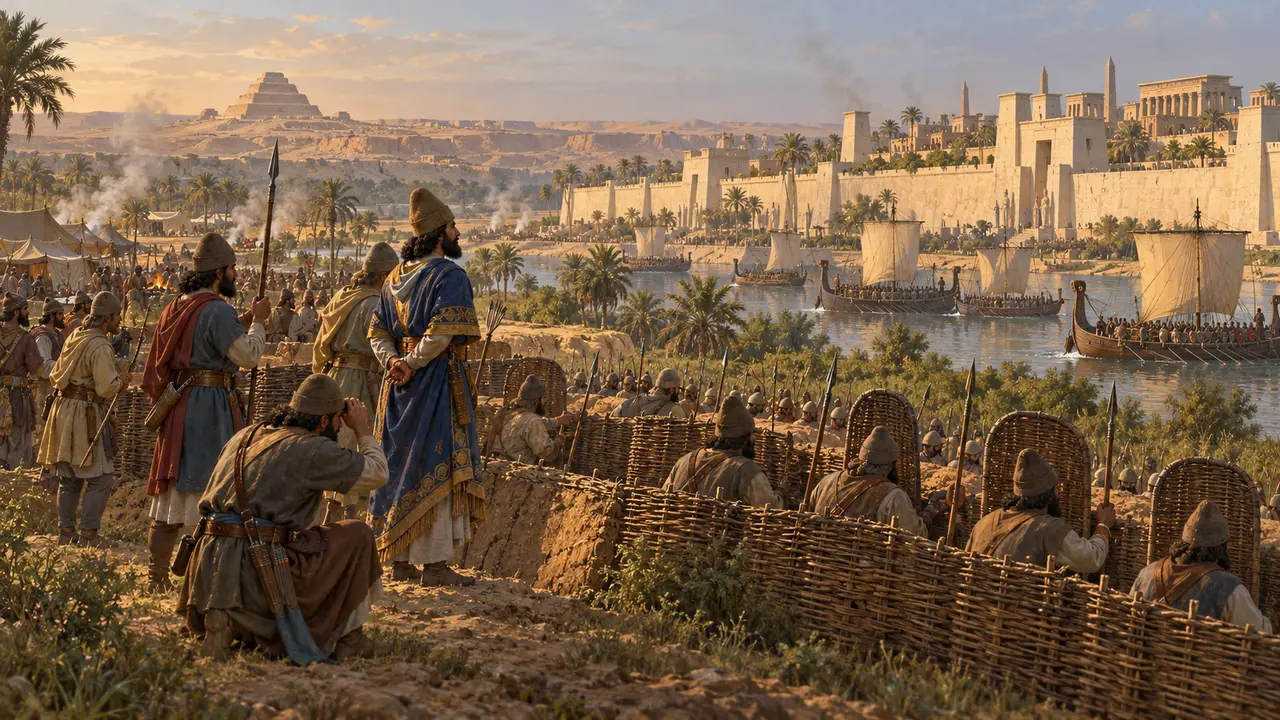
The White Walls of Memphis above the Nile, besieged in 525 BCE.
Encyclopedia › The History
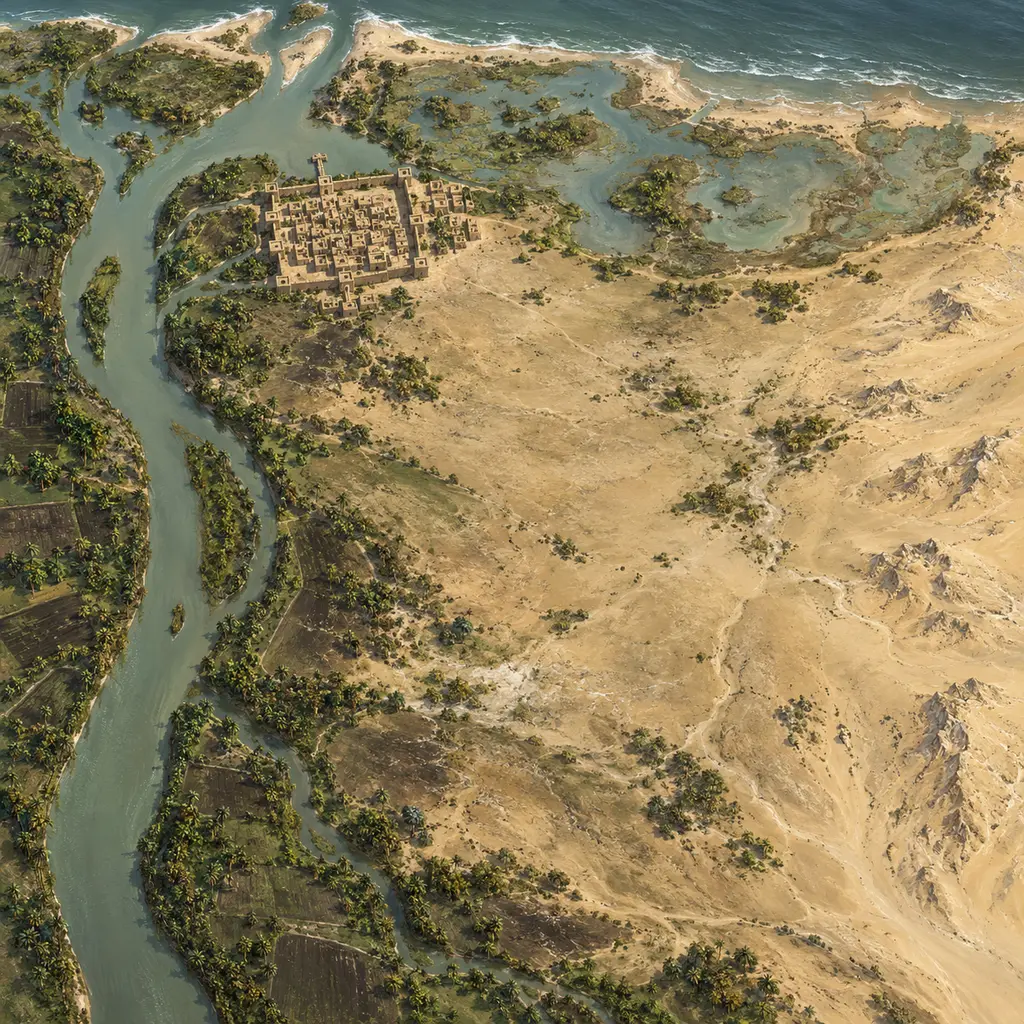
Cyrus took Media, Lydia and Babylon. Egypt, the oldest kingdom of all, was left to his son. In 525 Cambyses crossed the desert, broke Pharaoh's army at Pelusium and took Memphis after a siege. He ruled as Pharaoh, and the Greeks remembered him as a madman. The Egyptian records tell a different story.
- 550 BCE Cyrus takes Media
- 539 BCE Babylon
- 530 BCE Cambyses king
- 526 BCE Amasis dies
- 525 BCE Pelusium; Memphis falls
- 524 BCE An Apis buried
- 522 BCE Cambyses dies
Before Egypt: the empire of Cyrus
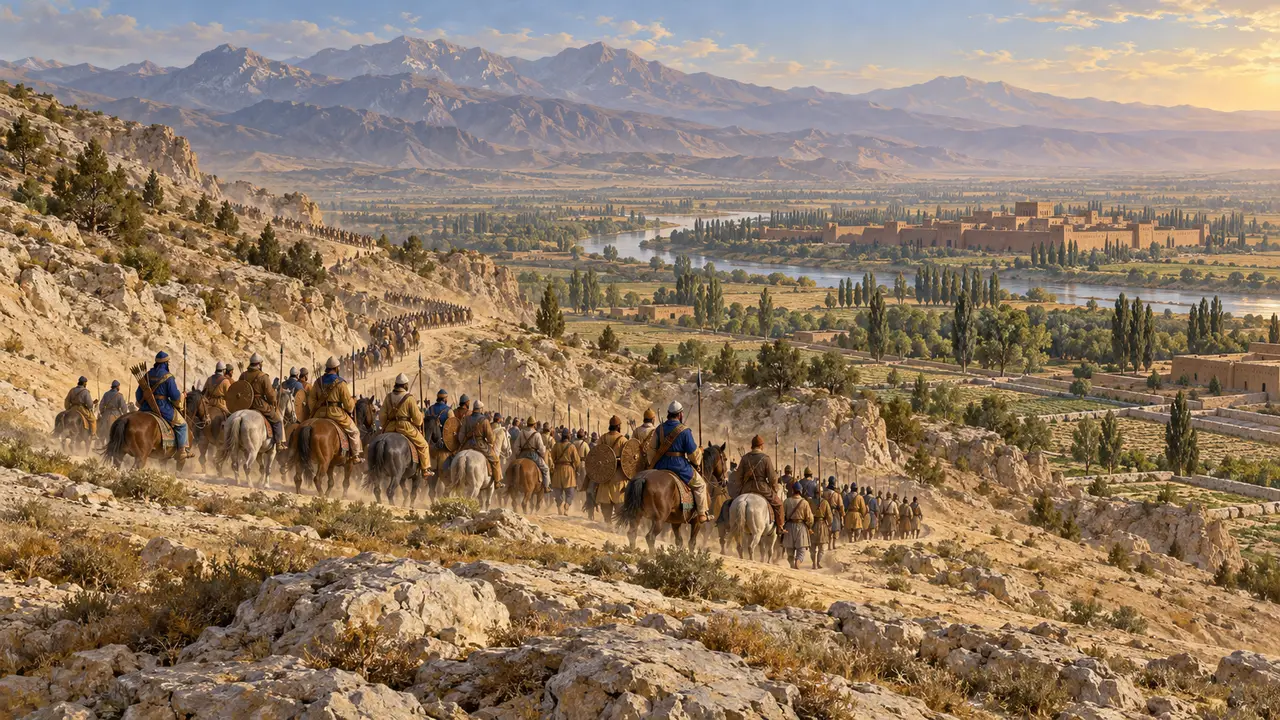
In the recordWithin twenty years Cyrus took Media (550), Lydia (about 547) and Babylon (539). Only Egypt was left of the old great powers, ruled by Amasis, a friend of the Greeks. Cyrus died on campaign in 530, and his son Cambyses inherited the plan.
Nabonidus Chronicle; Cyrus Cylinder; Herodotus 1.153, 3.1
A deserter shows the way
Ancient accountHerodotus gives several reasons for the war, among them an Egyptian princess sent in place of Amasis's daughter, and doubts them himself. The firmer story is Phanes of Halicarnassus, a Greek captain of Amasis's mercenaries, who fled to Cambyses and told him how to cross the desert.
In the game: Phanes' desertion arrives as news in 525.
Herodotus 3.1-4
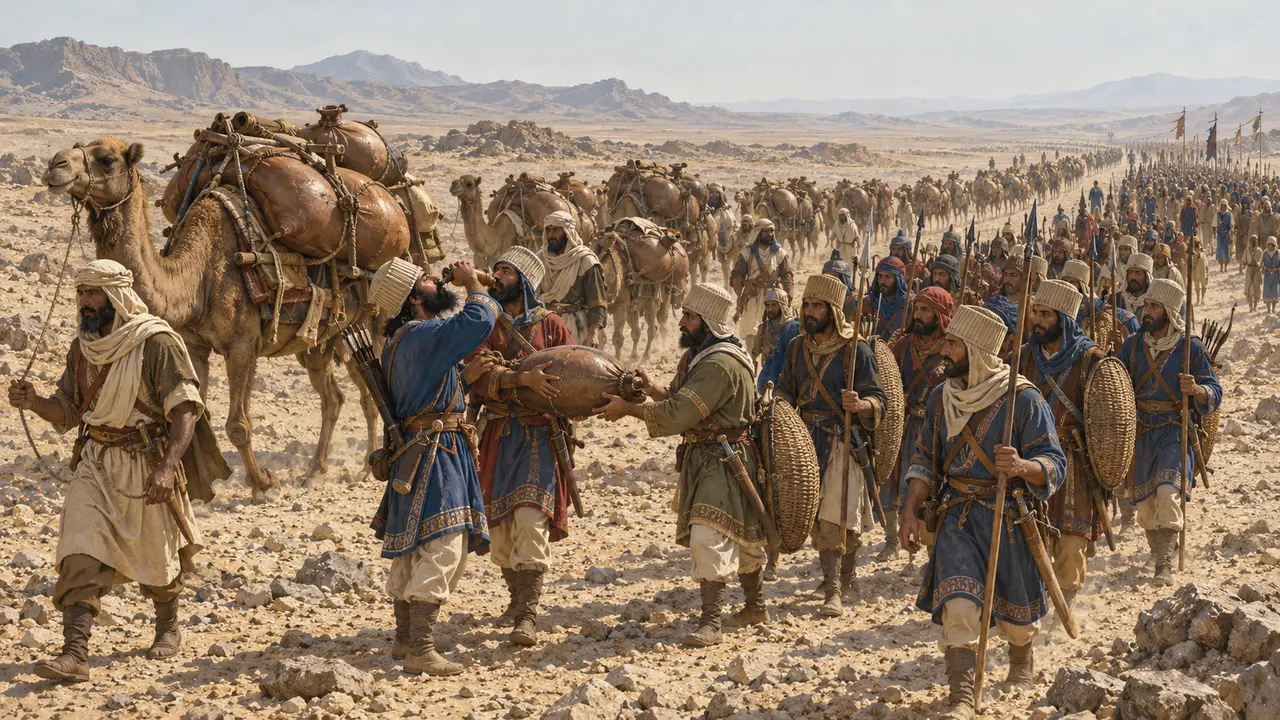
Water in the desert
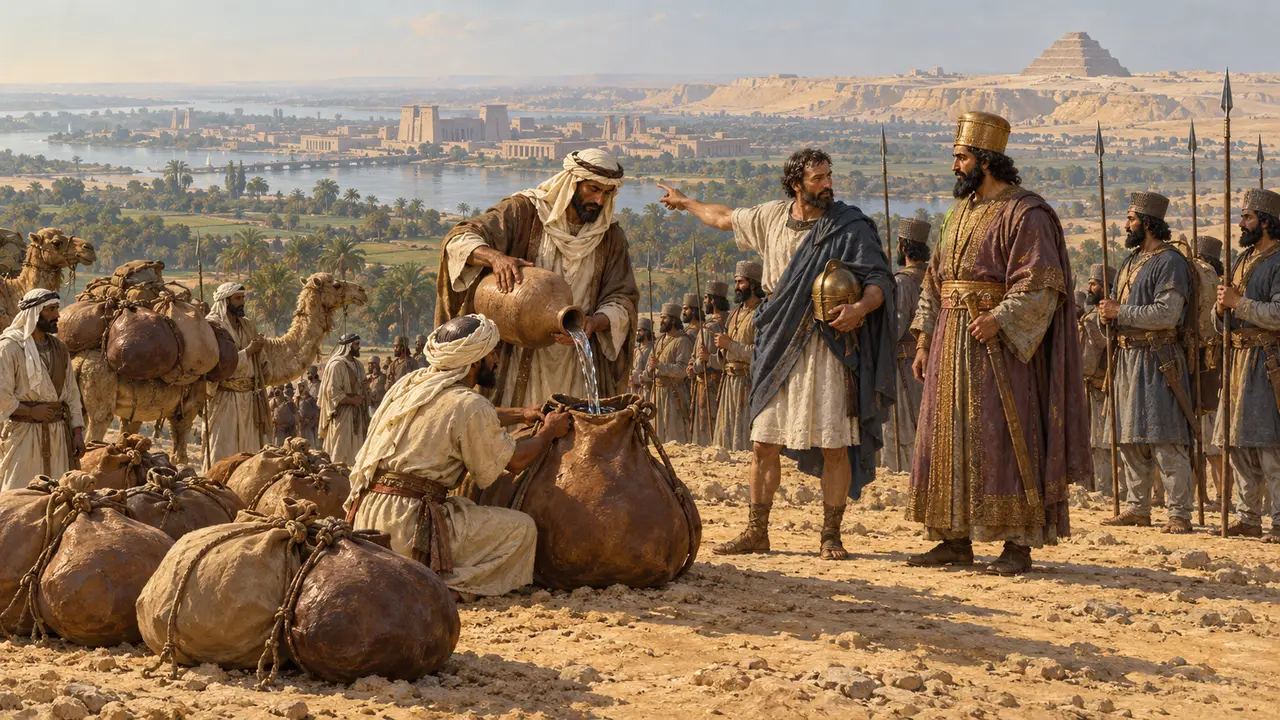
Ancient accountThree days of waterless desert lay between Gaza and Egypt. Cambyses swore a pact with the king of the Arabs, who loaded camels with skins of water and met the army in the desert. Herodotus also reports, and does not believe, a pipeline of ox-hides from a distant river.
In the game: The King's men reach your town by the desert road the Arabs watered.
Herodotus 3.4-9
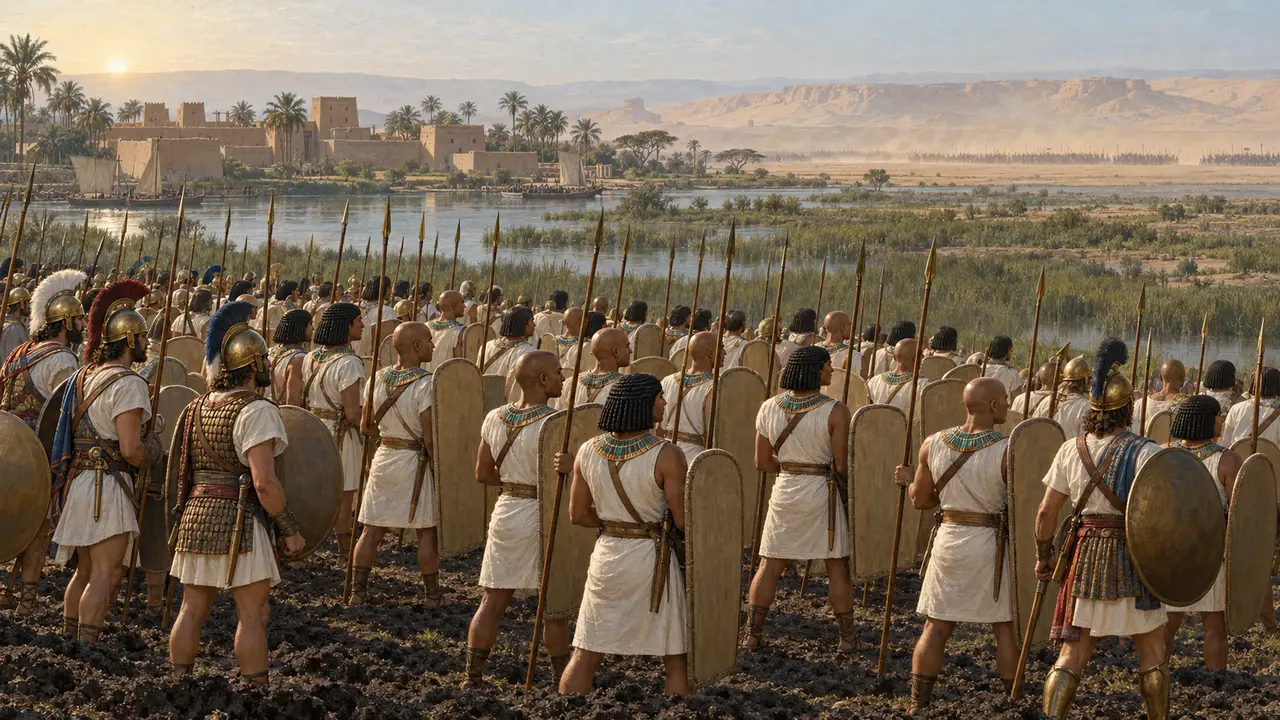
Pelusium, 525 BCE
Ancient accountAmasis died before the Persians came. His son Psamtik III, six months a king, met them at the Pelusiac mouth of the Nile with Egyptians and Greek and Carian mercenaries. The mercenaries killed Phanes' sons before the lines in revenge. After a hard fight the Egyptians broke and fled to Memphis.
In the game: Pelusium is the level's field battle, fought on its own map after the muster.
Herodotus 3.10-11
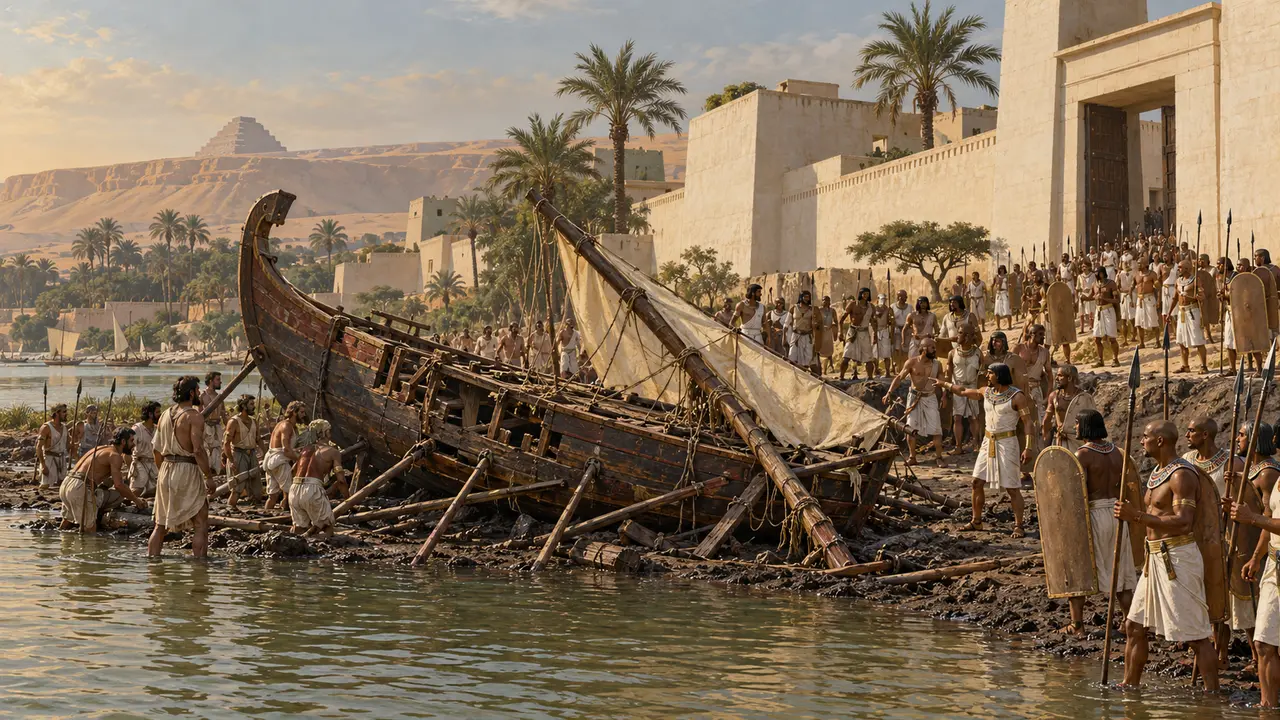
The herald's ship and the siege
Ancient accountCambyses sent a ship of Mytilene up the Nile with a herald to offer terms. The Egyptians poured out of the walls, wrecked the ship and tore its crew apart. Memphis was besieged and in time surrendered. The Libyans and the Greeks of Cyrene and Barca sent gifts at once.
In the game: The siege of Memphis is fought at your town, where the sources put it.
Herodotus 3.13
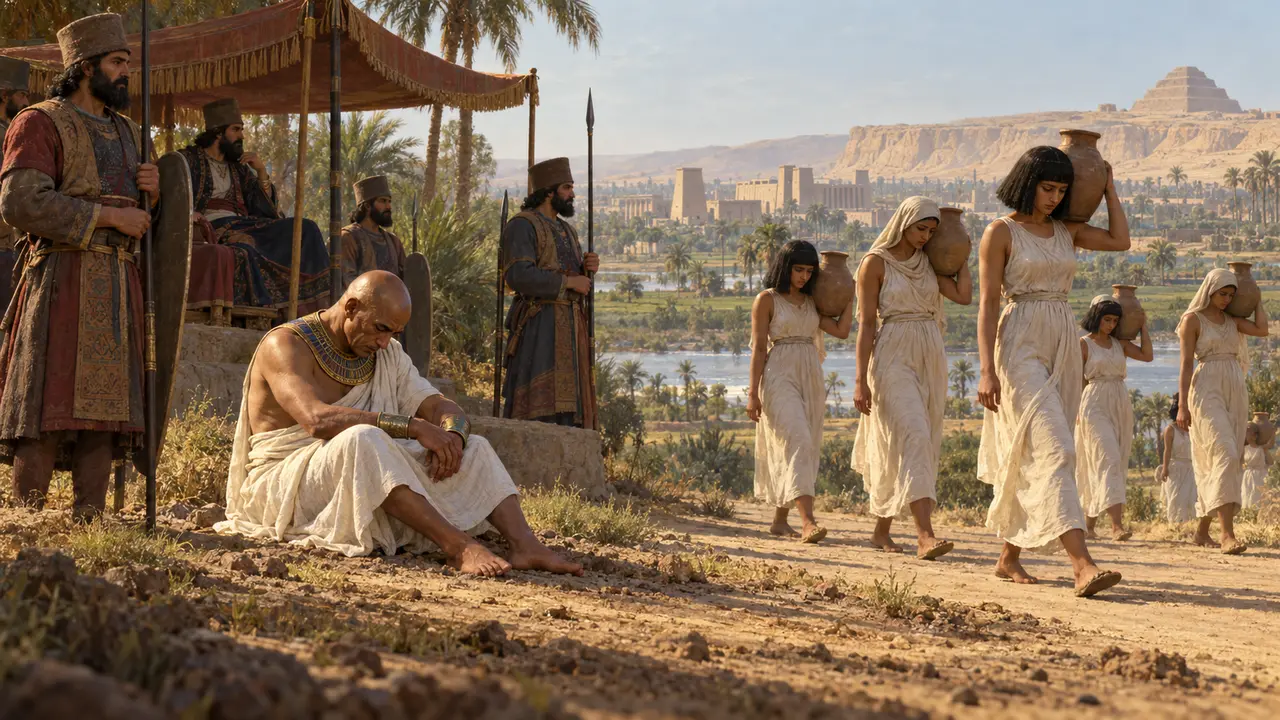
The test of Psamtik
Ancient accountHerodotus tells how Cambyses sat Psamtik by the road while his daughter passed dressed as a slave and his son was led to execution. Psamtik did not weep until he saw an old friend begging. Spared, he later plotted revolt and was put to death. Herodotus adds that the Persians usually left a defeated king's son to rule.
Herodotus 3.14-15
Pharaoh Mesutira
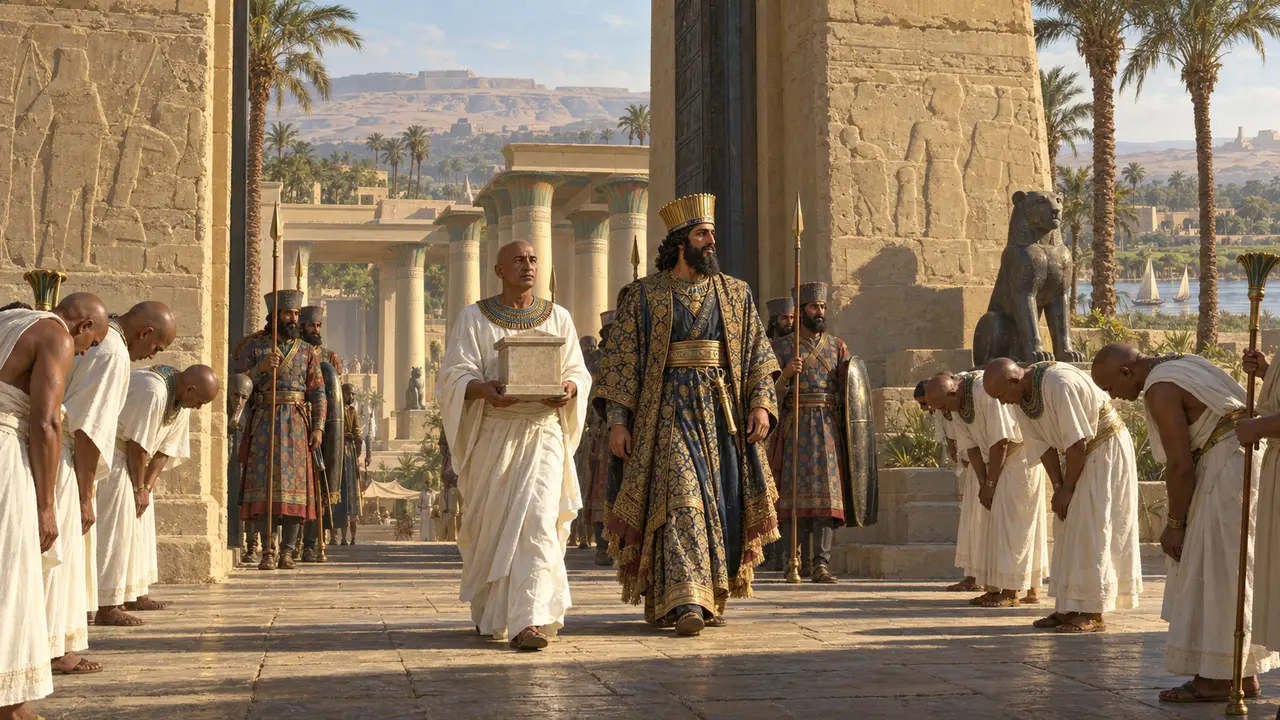
In the recordUdjahorresnet, an admiral of the last pharaohs, tells on his statue that Cambyses made him chief physician and that he composed the king's throne name, Mesutira, 'offspring of Ra'. At his request Cambyses cleared the foreigners camped in the temple of Neith at Sais, restored its incomes and worshipped there like any pharaoh.
In the game: You rule as the new Pharaoh's man: honour the gods of Memphis.
Statue of Udjahorresnet (Vatican Museums)
The Apis bull
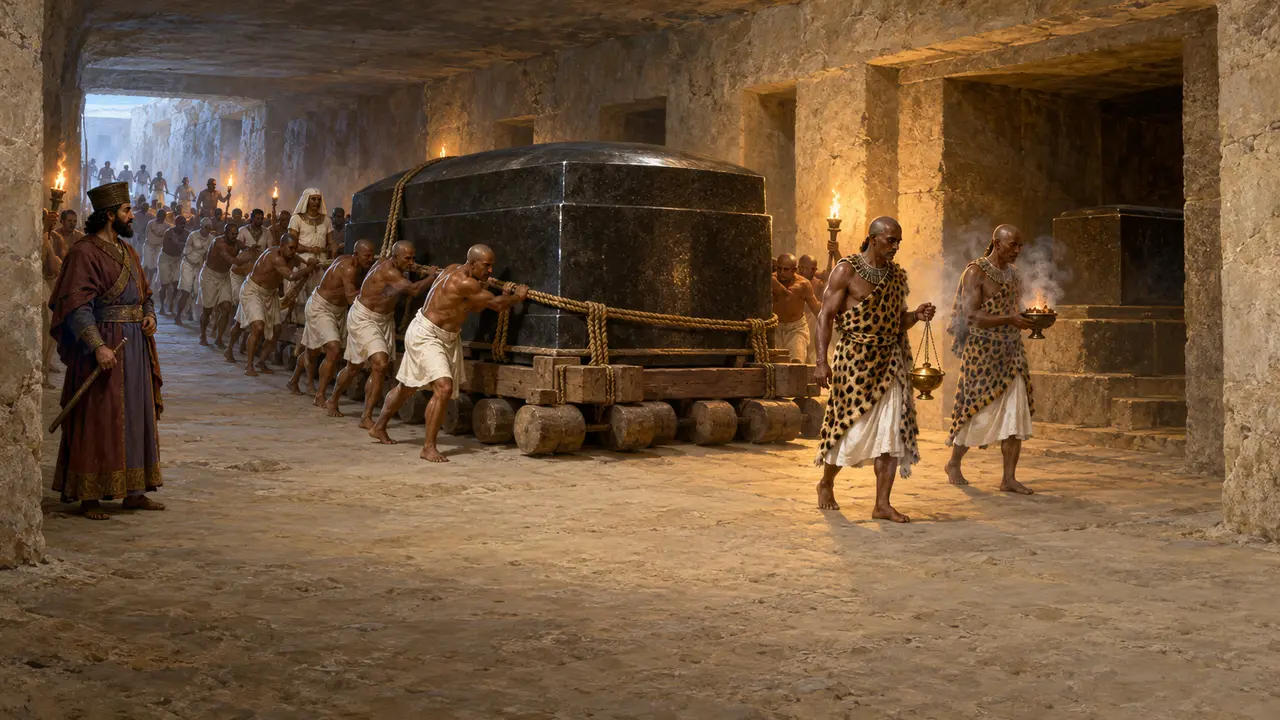
DisputedHerodotus says Cambyses, mad, stabbed the sacred Apis bull in the thigh and it died. But a stela from the bulls' galleries at Saqqara records an Apis buried with honours in Cambyses' sixth year, 524, in a granite coffin the king gave, with Cambyses kneeling before the bull in Egyptian dress. The next Apis lived until Darius's fourth year. Most historians think no bull fits Herodotus's story.
In the game: The Apis vault and the granite barges from Elephantine are the level's great work.
Herodotus 3.27-29; Apis stelae from the Serapeum (Louvre)
Why the priests remembered him badly
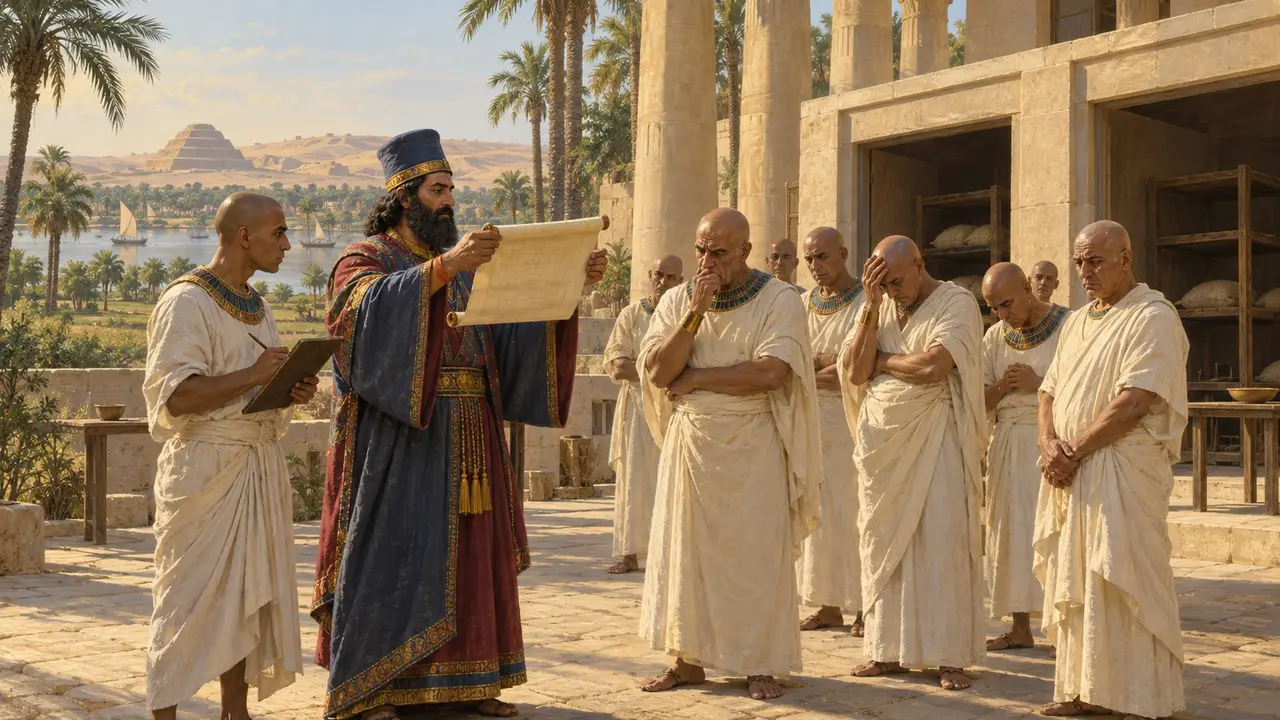
In the recordA decree of Cambyses, copied centuries later on the back of the Demotic Chronicle, cut the royal payments to most of Egypt's temples. In 407 the Jews of Elephantine wrote that when Cambyses came he destroyed the temples of Egypt's gods but spared theirs. Angry priests were Herodotus's informants.
Demotic Chronicle, verso (Paris); Elephantine papyri, petition of 407 BCE
Beyond Egypt
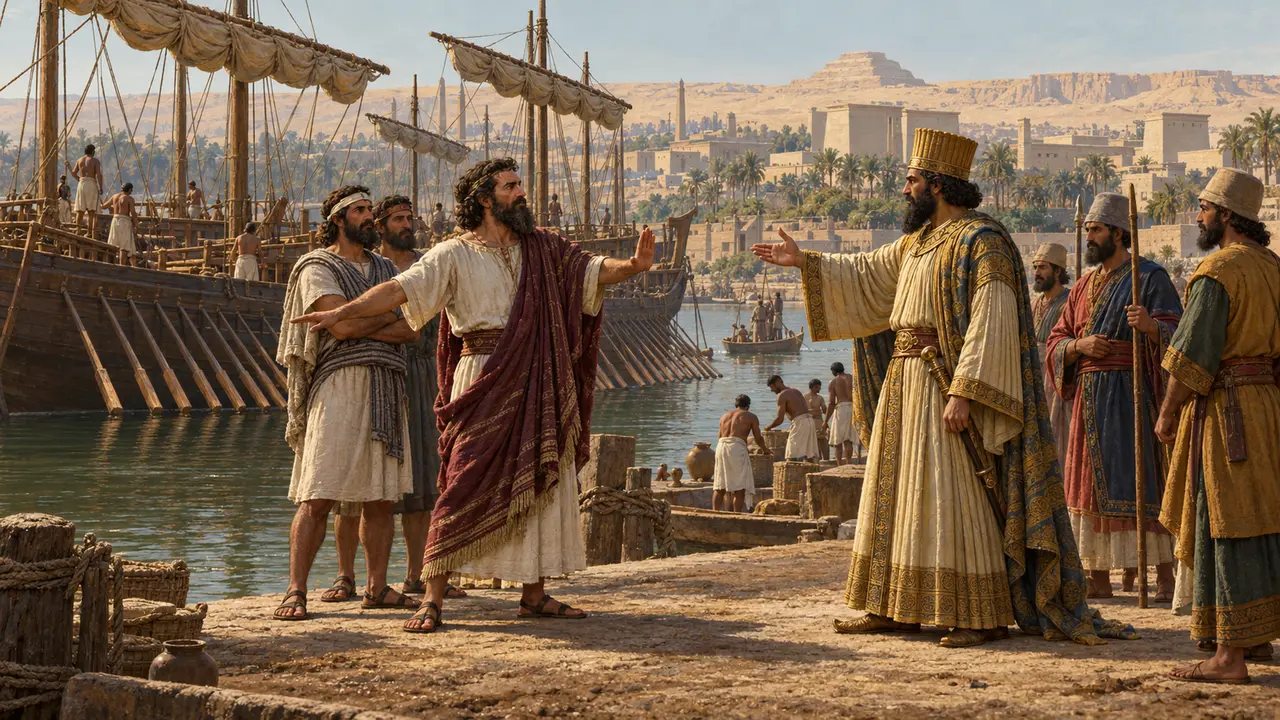
Ancient accountCambyses planned to sail on Carthage, but the Phoenicians would not fight their own colony, and without them the fleet was too weak. He marched south against the Ethiopians, and the march turned back when the food ran out.
In the game: These ventures reach your town as news in 524.
Herodotus 3.17-25
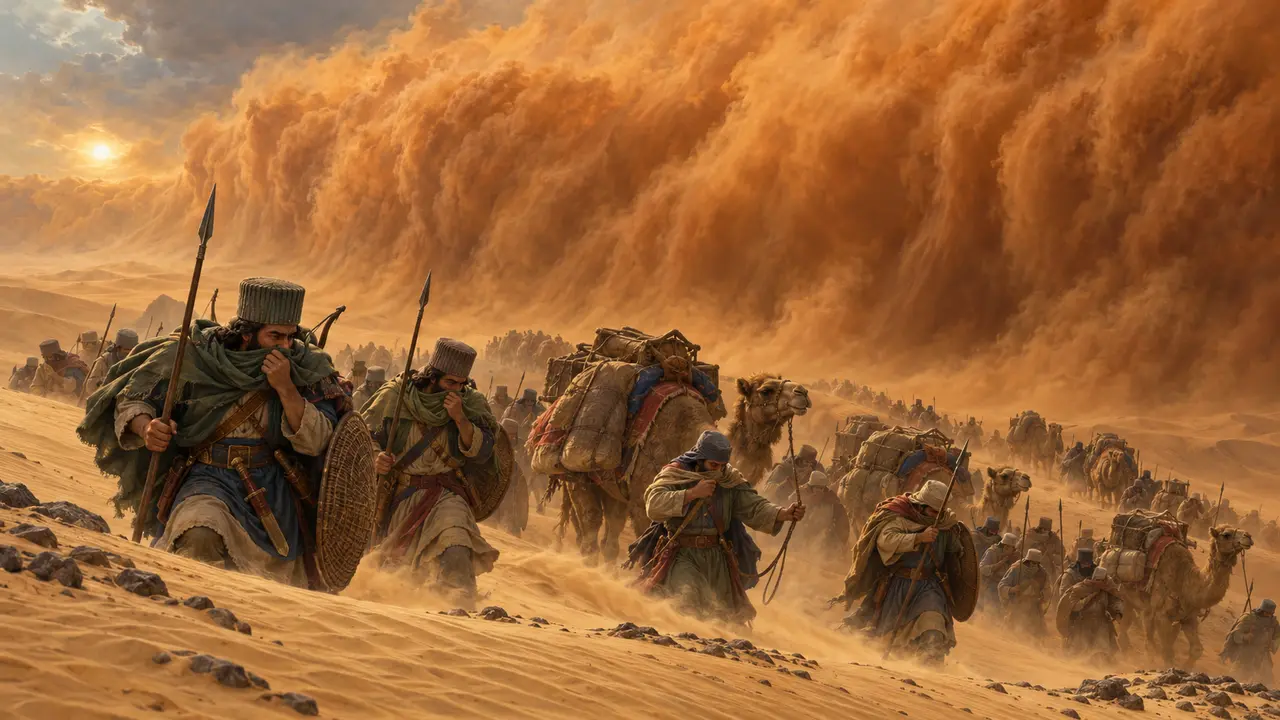
The army lost in the sand
Later legendHerodotus heard from the oasis people that fifty thousand men sent against the oracle of Ammon vanished in a sandstorm. No trace has ever been proven, though explorers have claimed finds.
Herodotus 3.26
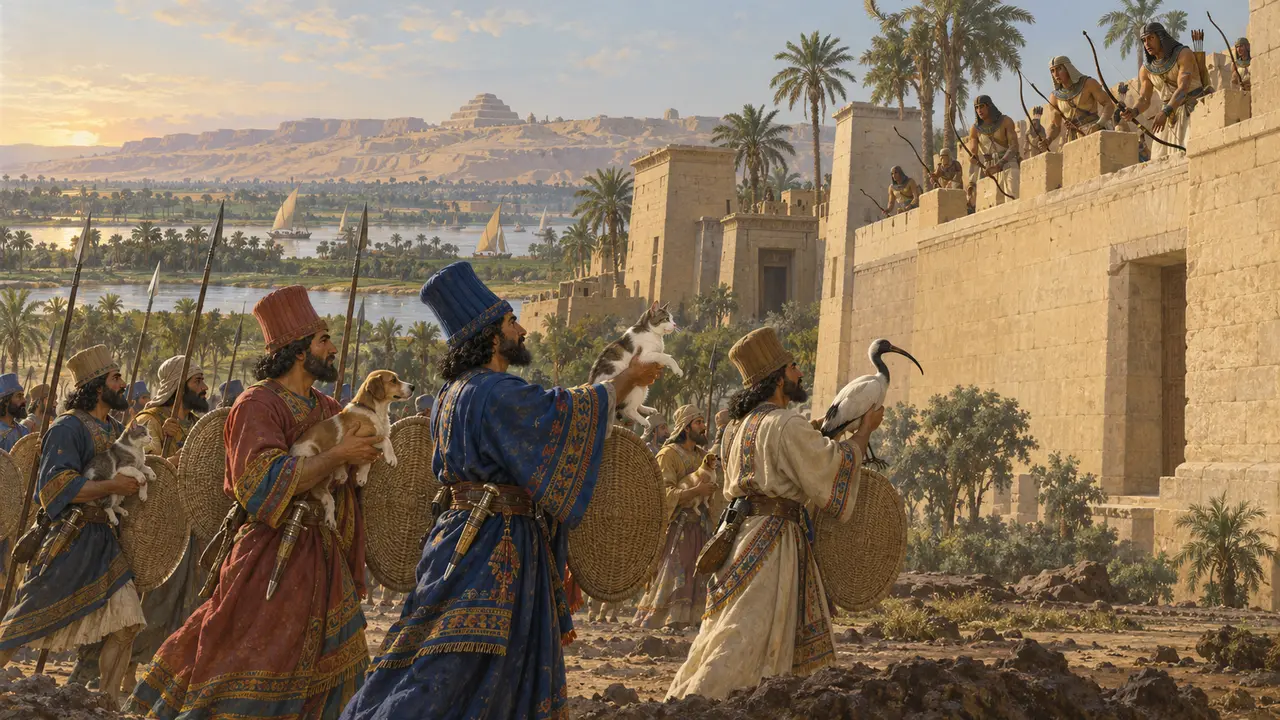
The cats of Pelusium
Later legendPolyaenus, writing about 700 years later, says Cambyses set cats, dogs, sheep and ibises before his army, and the Egyptians would not shoot for fear of hurting sacred animals. Herodotus, who visited Egypt and the battlefield, says nothing of it.
Polyaenus, Stratagems 7.9 (2nd century CE)
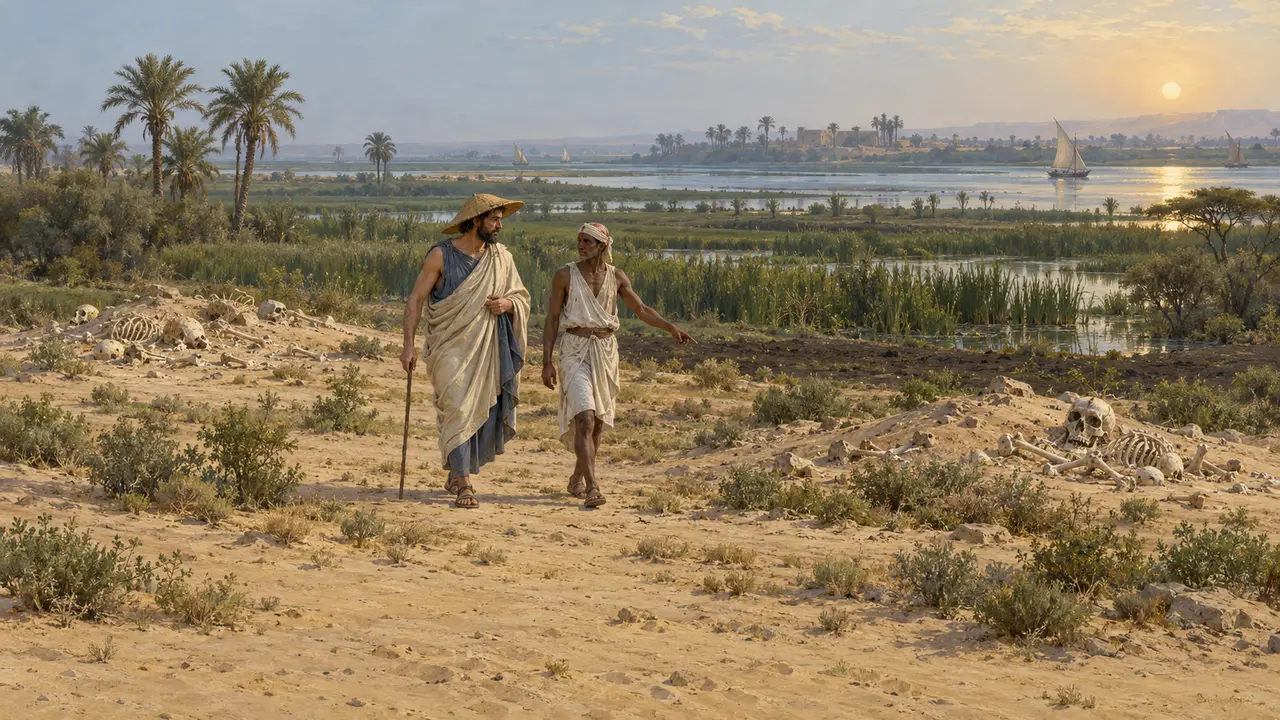
Skulls on the field
Ancient accountHerodotus walked the field of Pelusium decades later and saw the bones still lying in two heaps. The Persian skulls, he says, broke with a pebble, and the Egyptian ones would hardly crack with a stone, because Egyptians shaved their heads in the sun and Persians wore felt caps. The bones he saw; the reason is his own.
Herodotus 3.12
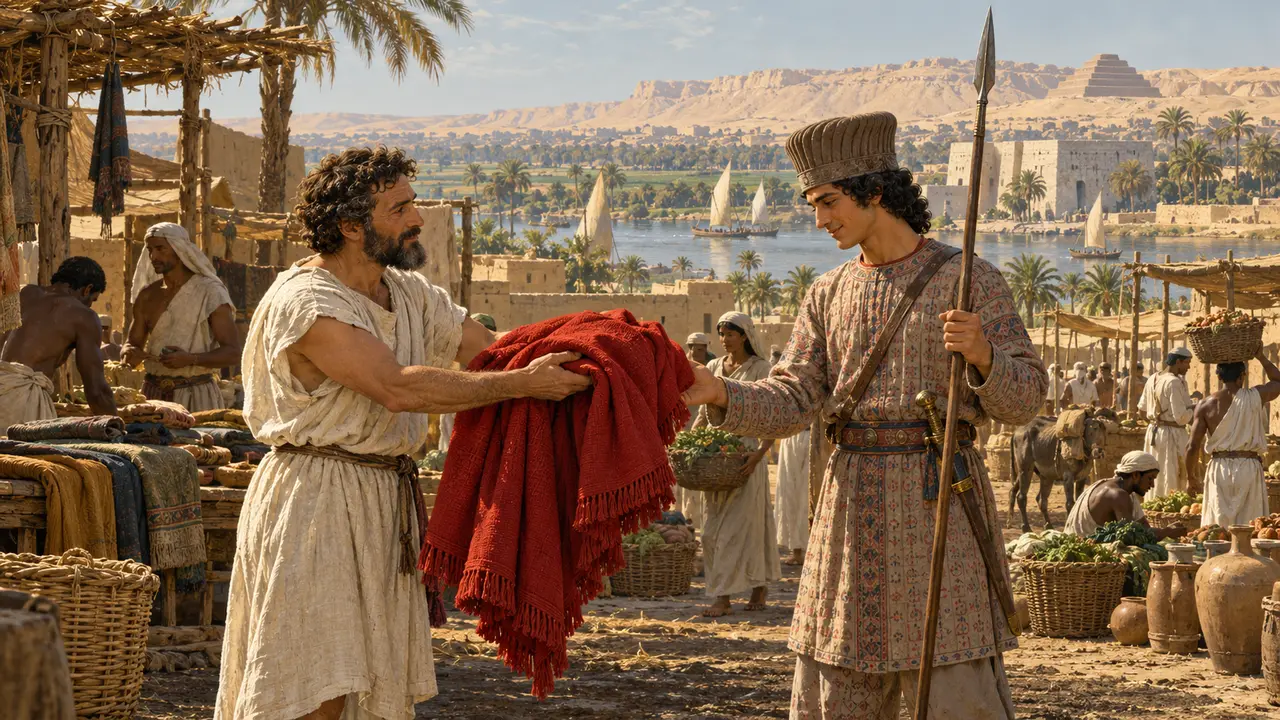
The spear-bearer
Ancient accountIn Memphis, Syloson of Samos gave his red cloak to a young spear-bearer of the guard: Darius, son of Hystaspes. Years later, as King, Darius repaid him with Samos. Cambyses died in Syria in 522 on his way home, of a wound in the thigh; Darius's own inscription says only that he died, in words that may mean 'his own death' or 'by his own hand'.
In the game: You play Darius, in charge of the army's town: a labelled dramatization.
Herodotus 3.64-66, 3.139-141; Behistun inscription section 11
Read next: the topics of The Spear-bearer
Battles and events
Cambyses' conquest of Egypt · The battle of Pelusium · The siege of Memphis · The death of the Apis bull · The abandoned expedition against Carthage · Cambyses' marches on Ammon and Ethiopia
Buildings
Barley Farm · Brewery · Burial of the Apis · Armoury · Date Grove
Soldiers and ships
Arab Camel Rider · Egyptian soldiers · Libyan riders · The trireme
People
Cyrus the Great · Hystaspes · Cambyses · Psamtik III · Udjahorresnet · Darius the Great · Phanes of Halicarnassus · Amasis II · Syloson of Samos
Peoples
The Persians · The Phoenicians · The Egyptians · The Libyans · The Arabs · The Greeks of Naucratis · The Ethiopians
Places
Babylon · Memphis · Pelusium · Elephantine · Barca · Sais · Saqqara (the Serapeum) · Carthage · Cyrene · Samos · Media · Egypt · Lesbos and Mytilene · Gaza
Wildlife and weather
The gazelle · The Nile crocodile · The white stork · The hare · The golden jackal · The Egyptian goose · The heron · The hippopotamus · The kite · The rock dove · The egret · The sacred ibis · The crane · The swallow · Bats · The little owl · The hooded crow · Sandstorms · Morning mist