Encyclopedia › Wildlife and weather

The Nile crocodile
Egypt's river predator, sacred in some places, as Herodotus saw it, about 450 BCE
In the game: Level 2: The Spear-bearer
The Nile crocodile lived in the Egyptian river and was feared in some places and honoured in others. Herodotus gives the fullest Greek description of it, probably from his own visit to Egypt after the Persian conquest of 525. It shows how Egyptian life looked to outsiders in the world that Cambyses and Darius ruled.
In the game: The game draws a crocodile lying on the river bank in the Memphis level only. It is scenery: no rule reads it.
Herodotus on the animal
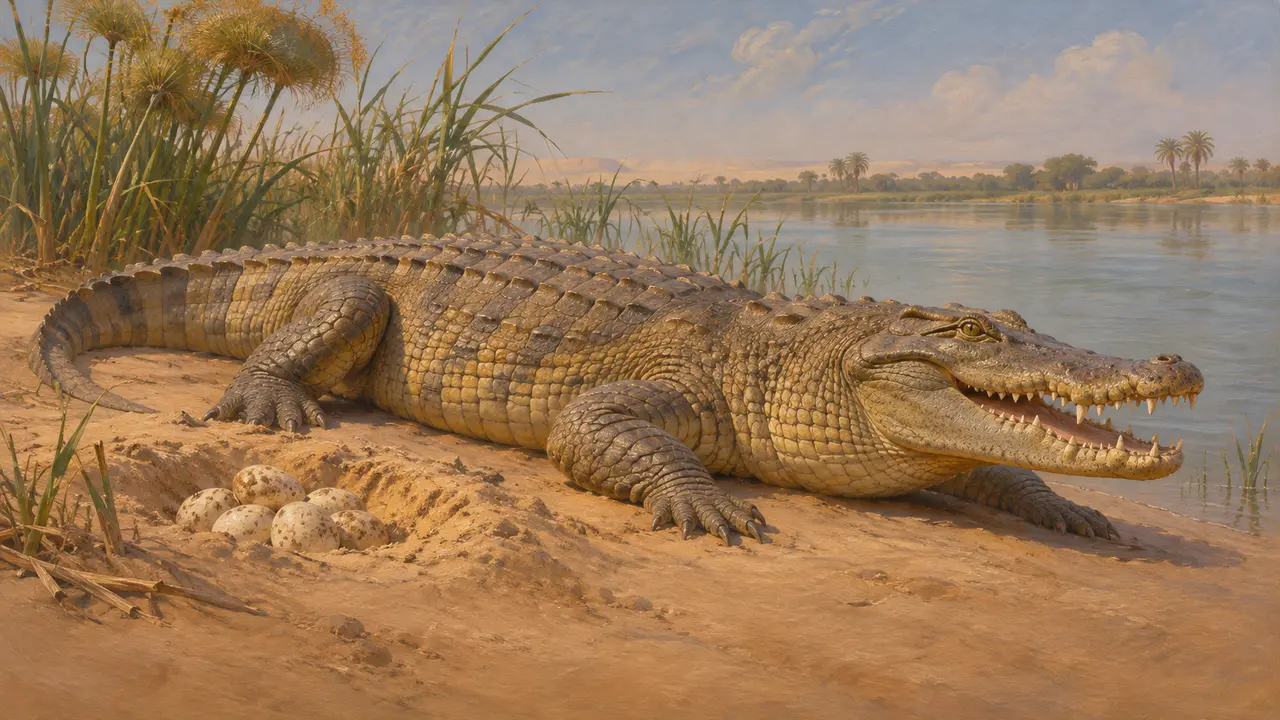
Ancient accountHerodotus describes the crocodile in his Egyptian book. He says it spends the day on land and the night in the water, lays its eggs on the bank, and has no tongue. The egg-laying on land is right. The claim that it has no tongue is wrong, since the tongue is fixed to the floor of the mouth and hard to see.
Herodotus 2.68
Sacred in some places, hunted in others
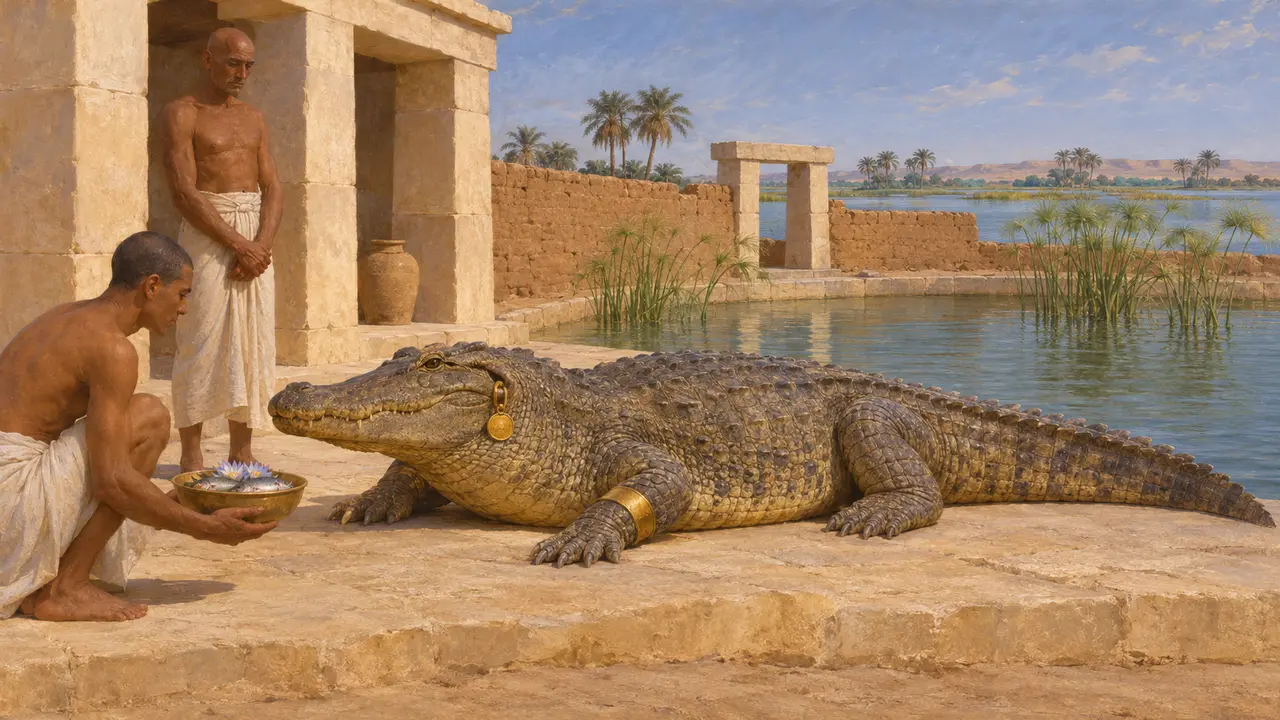
Ancient accountHerodotus says that some Egyptians held the crocodile sacred and others treated it as an enemy. Around Thebes and Lake Moeris, he says, a tame one was kept and decked with ornaments, and it was embalmed at death. At Elephantine, he says, people ate crocodiles and did not count them as sacred.
Herodotus 2.69
The bird that cleans the crocodile
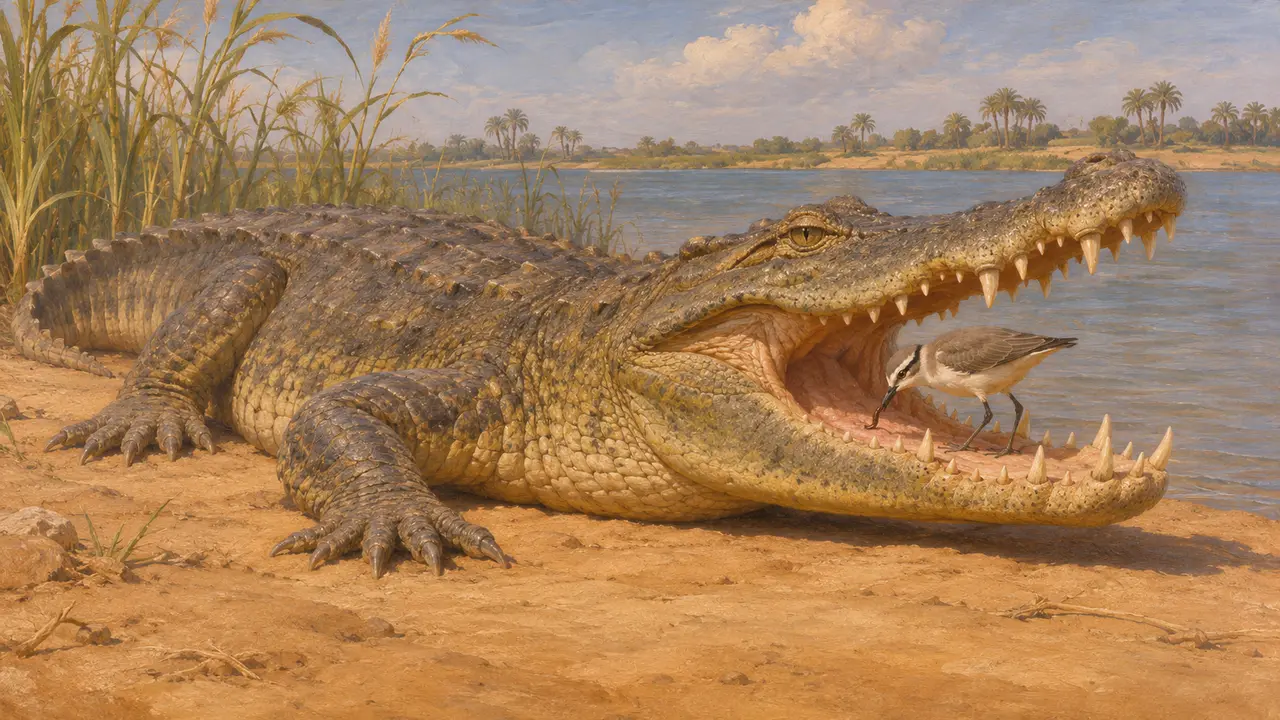
DisputedHerodotus says that a small bird enters the crocodile's open mouth and picks leeches from it, and that the crocodile does it no harm. Whether any such partnership occurs is still uncertain, and the story rests on Herodotus's report alone. It is best read as what he was told in Egypt.
Herodotus 2.68
Persian rule and Egyptian animal cults
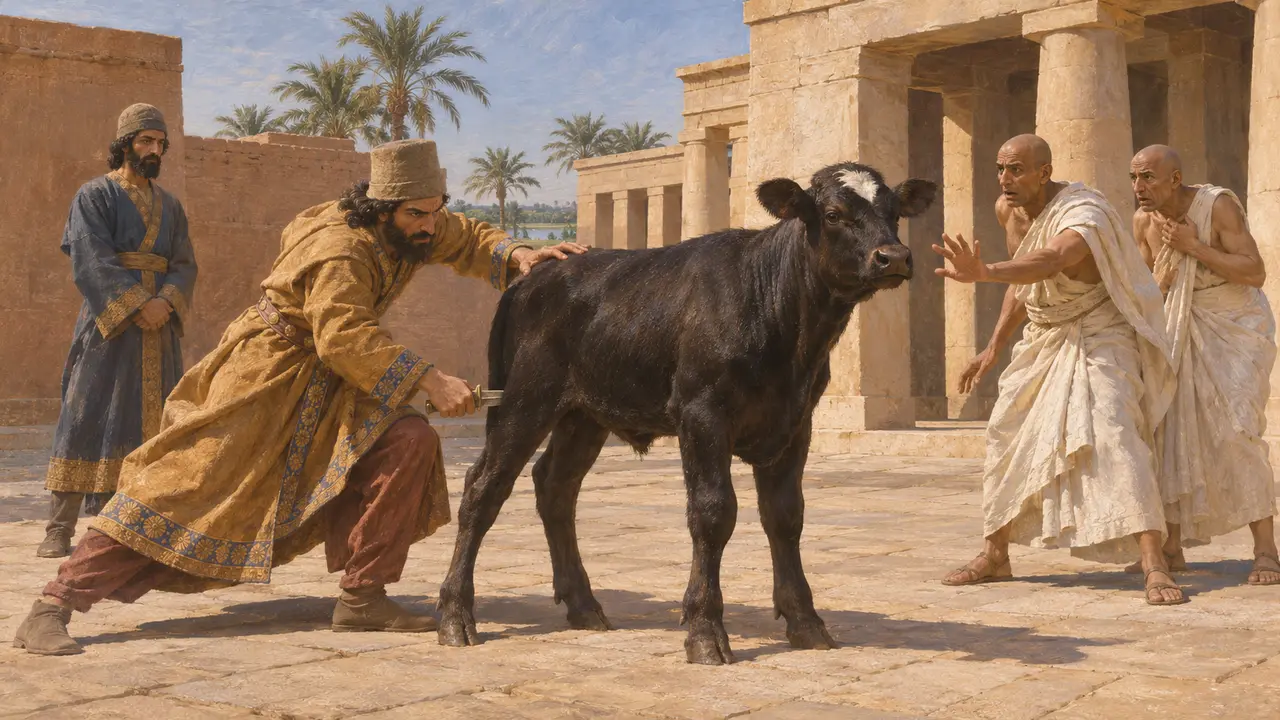
Ancient accountHerodotus tells how Cambyses stabbed the Apis calf and mocked the Egyptians' gods. Historians doubt this portrait of him, and Egyptian sources of the time suggest that Persian rule left animal cults in place. The story concerns the Apis bull, not the crocodile, and it shows how Greeks and Egyptians shaped the memory of the conquest.
Herodotus 3.27-29
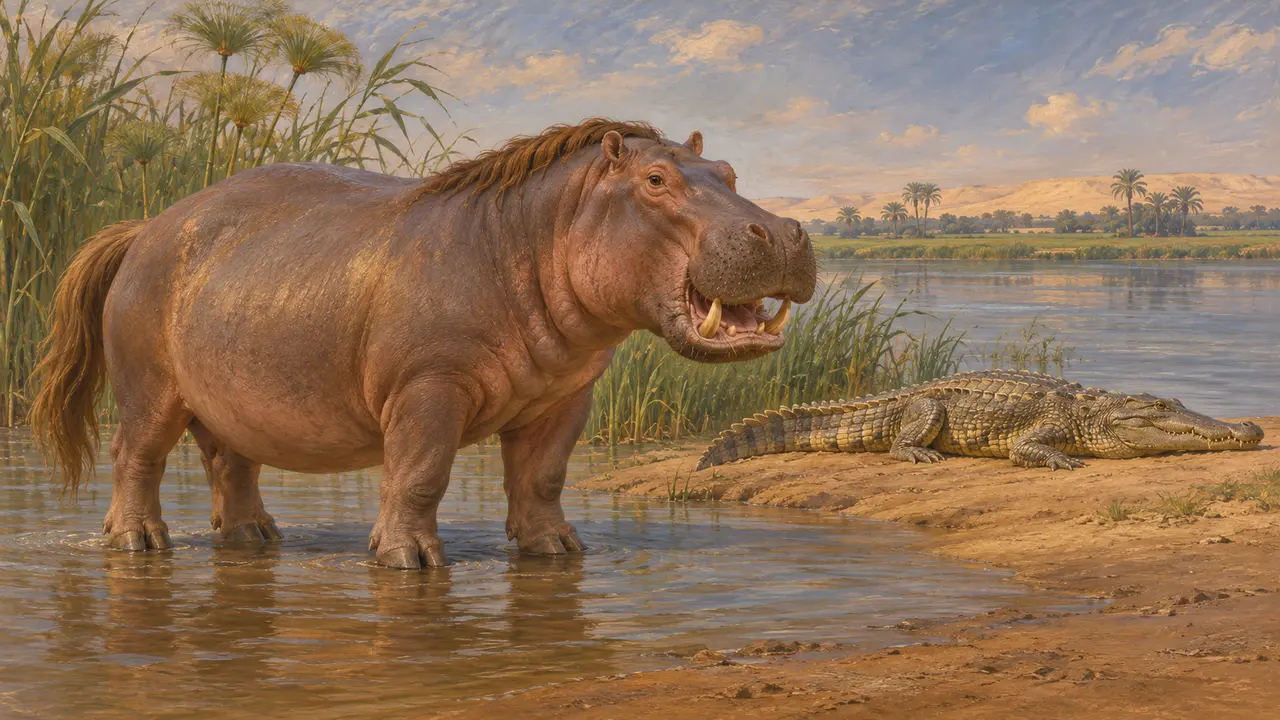
The hippopotamus beside it
Ancient accountHerodotus describes the hippopotamus in the next chapter. He gives it cloven hooves, a horse's mane and tail, and tusks. The hooves and mane are wrong, though the tusks are real. He treats both animals as marks of Egypt, which shows what Greek visitors found strange there.
Herodotus 2.71
Sources
- Herodotus 2.68-71
- Herodotus 3.27-29
- P. Briant, From Cyrus to Alexander, 2002