Encyclopedia › Battles and events
The death of the Apis bull
Death and burial of the sacred bull of Memphis, Cambyses' sixth year, 524 BCE
In the game: Level 2: The Spear-bearer
The Apis was the living sacred bull of Ptah at Memphis, and its death and burial were great events in Egyptian religion. Herodotus says Cambyses wounded the bull in anger and that the Egyptians dated his madness from this crime. Egyptian inscriptions from the Serapeum at Saqqara instead show an Apis buried with full honours in the king's name in 524. The clash between the two has shaped how historians judge Persian rule in Egypt.
In the game: The Chronicle sets Herodotus's stabbing story beside the Saqqara epitaph and treats both as one bull's death in 524. In Herodotus the stabbed bull was a newly found Apis, and which bull he meant is debated.
The sacred bull of Memphis
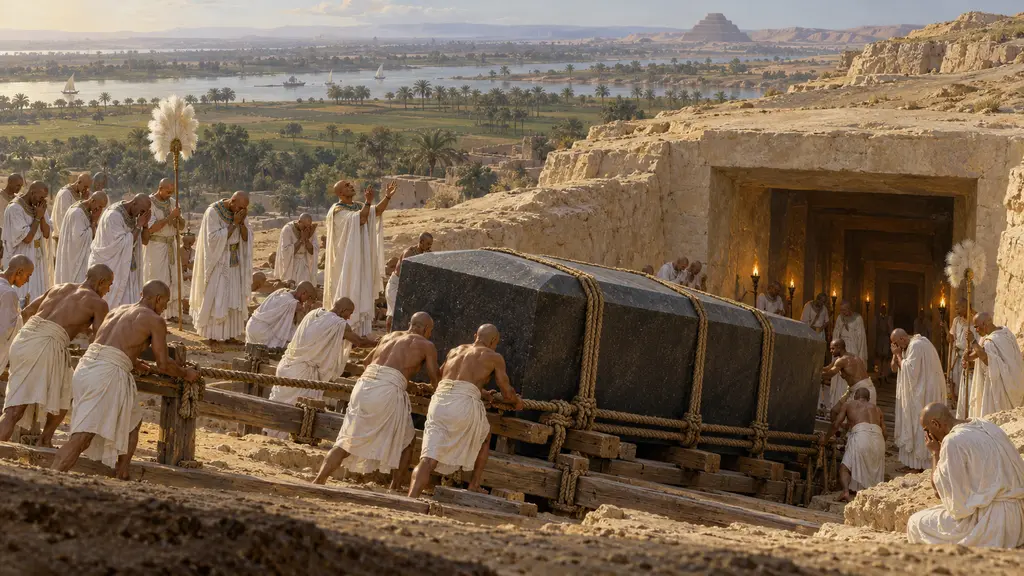
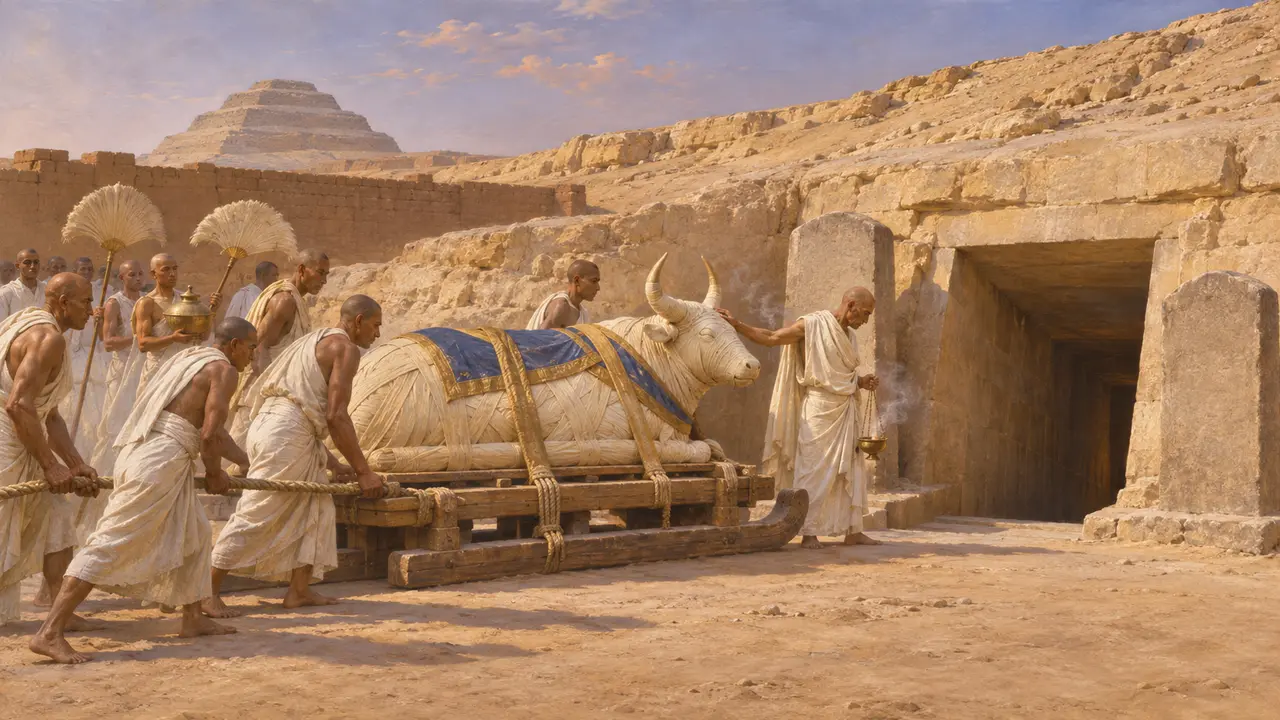
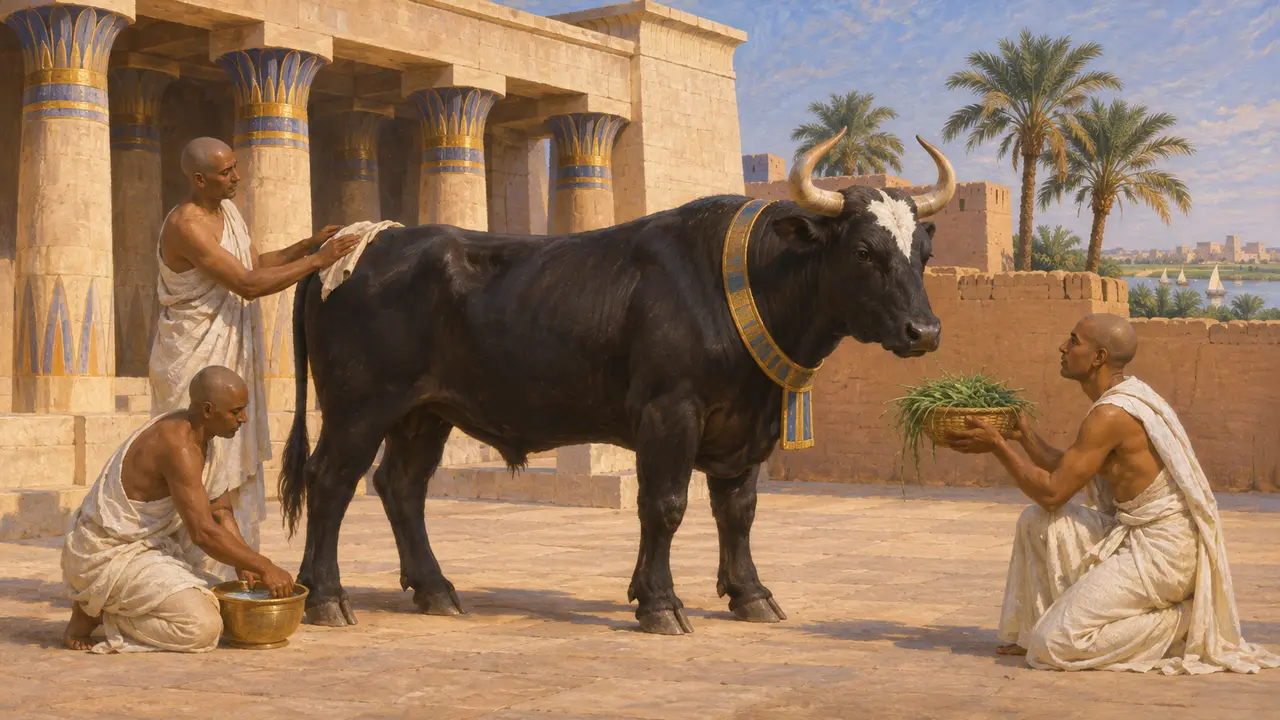
In the recordEgyptians held that one bull at a time, chosen by special markings, was the living image of the god Ptah. When it died it was mummified and buried in the underground galleries of the Serapeum at Saqqara, and a successor was sought. Stelae set up at each burial record the bull's birth, installation and death by regnal years, which makes them a valuable dating tool for the period.
A. Mariette, excavations of the Serapeum, 1850s; G. Posener, La première domination perse en Égypte, 1936
Herodotus's story of the stabbing
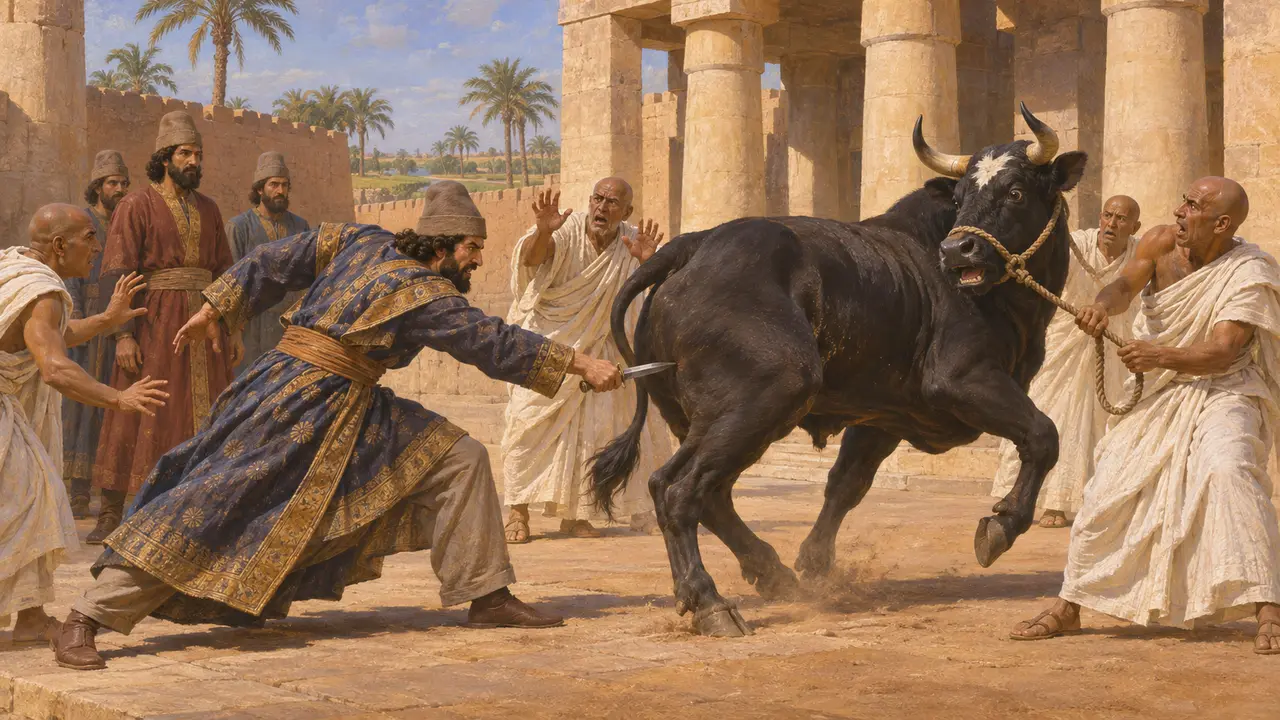
Ancient accountHerodotus says that when Cambyses returned to Memphis from his failed march south, a new Apis had appeared and the city was feasting. Thinking the Egyptians were mocking his defeat, the king had the bull brought and stabbed at its belly but struck its thigh. Herodotus says the Apis wasted away and the priests buried it in secret. He adds that the Egyptians traced Cambyses' madness to this crime, though he thought the king unsound even before.
Herodotus 3.27-30
The burial in year 6
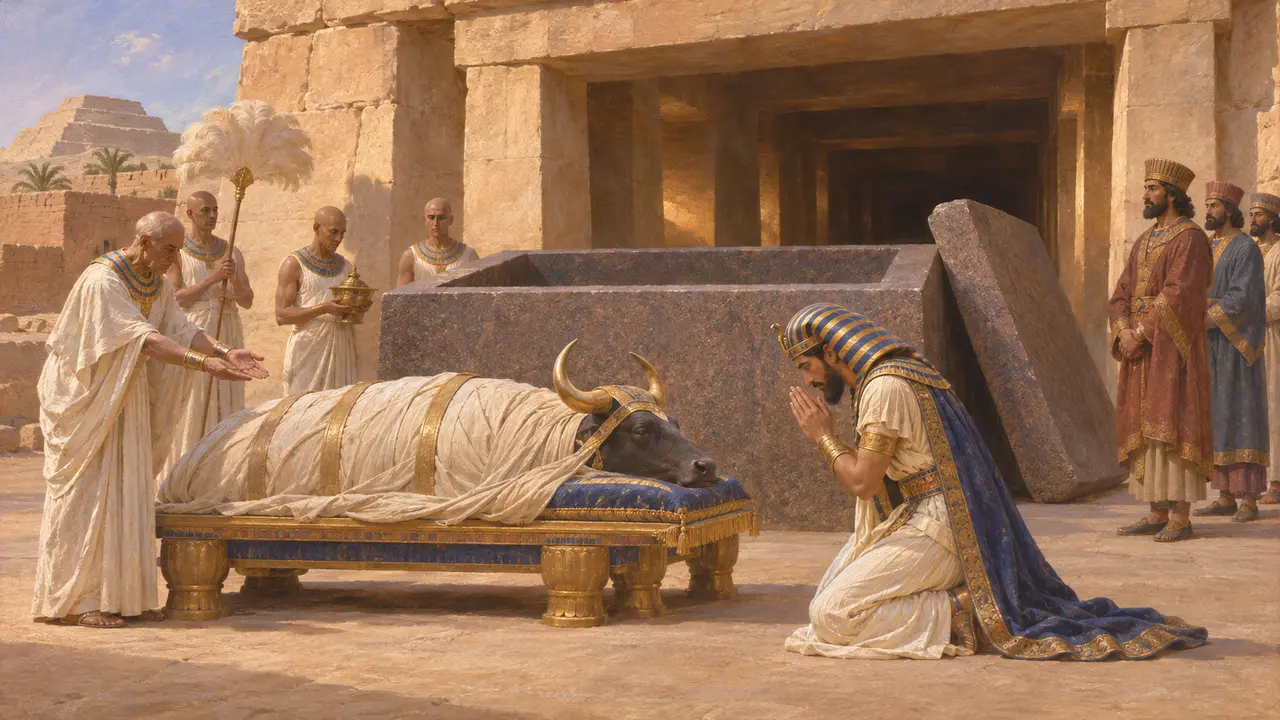
In the recordA stela from the Serapeum records that an Apis died and was buried in the sixth year of Cambyses, in 524. It shows the king in Egyptian royal dress kneeling before the bull. A large granite sarcophagus in the galleries also bears an inscription naming Cambyses as the one who made it for the god. Both point to a burial carried out with royal honours, not in secret.
Serapeum stela of Cambyses year 6 (Louvre); G. Posener, La première domination perse en Égypte, 1936
Which bull, and why the story arose
DisputedA stela of Darius's fourth year records the death of an Apis born in Cambyses' fifth year, so the new bull Herodotus describes seems to have outlived Cambyses. Most historians therefore treat the stabbing as hostile tradition. Some think it came from priests angered by cuts to temple income, which a much later Egyptian text, the Demotic Chronicle, credits to Cambyses. Others argue the dating leaves room for Herodotus, and the question is not fully settled.
P. Briant, From Cyrus to Alexander, 2002; L. Depuydt, Murder in Memphis, Journal of Near Eastern Studies 54, 1995
A wound for a wound
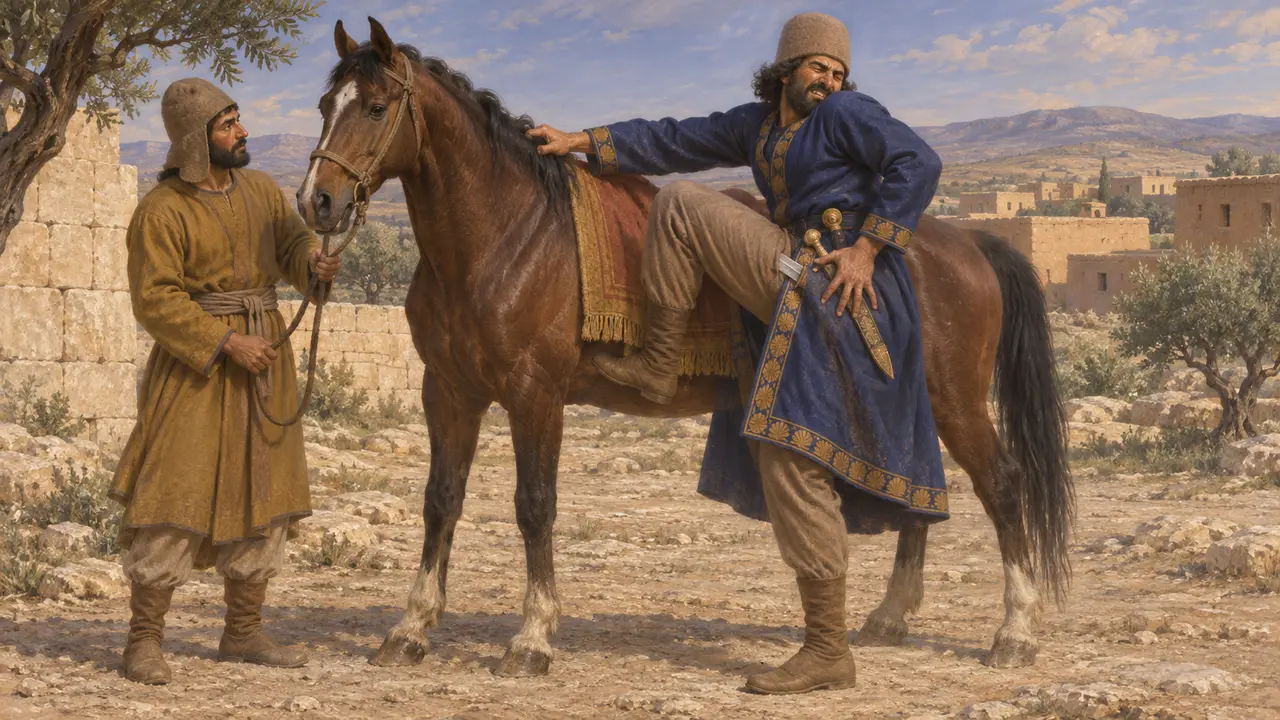
Later legendHerodotus closes the tale with a moral echo. When Cambyses later leapt onto his horse in Syria, the tip of his sword pierced his thigh at the very spot where he had struck the Apis, and he died of the wound. The neat match of crime and punishment marks this as a story shaped to teach, not a record of events.
Herodotus 3.64
Sources
- Herodotus 3.27-30
- Serapeum stela of Cambyses year 6 (Louvre)
- G. Posener, La première domination perse en Égypte, 1936
- P. Briant, From Cyrus to Alexander, 2002
- L. Depuydt, Murder in Memphis, Journal of Near Eastern Studies 54, 1995
- Herodotus 3.64