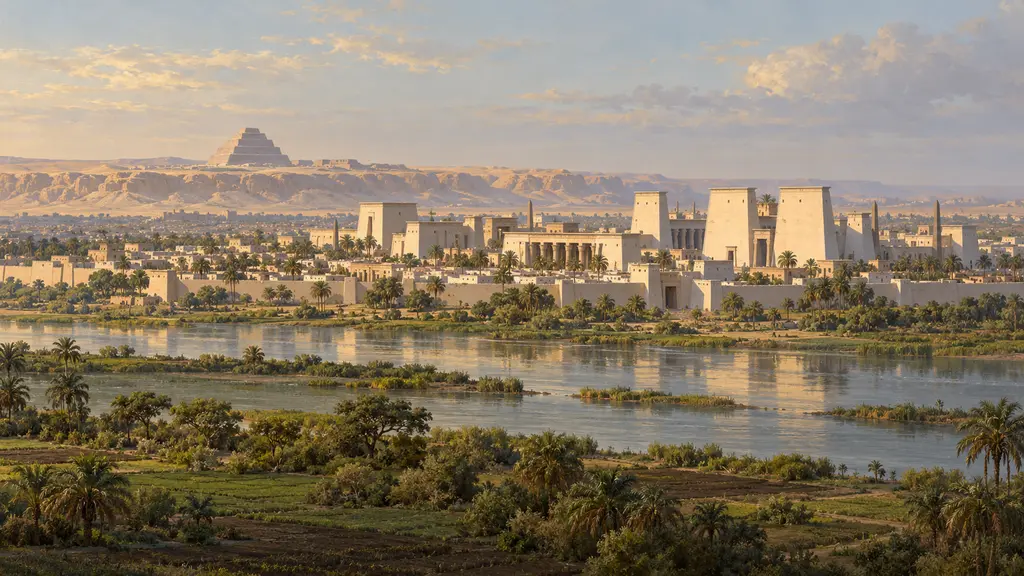
Memphis
Ancient capital of Egypt at the head of the Nile Delta, taken by Cambyses in 525 BCE
In the game: Level 2: The Spear-bearer
Memphis stood on the west bank of the Nile just south of the Delta, home of the god Ptah and for centuries the chief royal and administrative city of Egypt. Cambyses took it after his victory at Pelusium, probably in 525. Under Persian rule it held a Persian garrison and was probably the seat of the satrap. Nearby at Saqqara the sacred Apis bulls were buried in underground galleries.
In the game: The Memphis level is set in 525, the year of Cambyses' conquest. Its chronicle follows Herodotus on the Apis bulls, a story that the Saqqara stelae complicate.
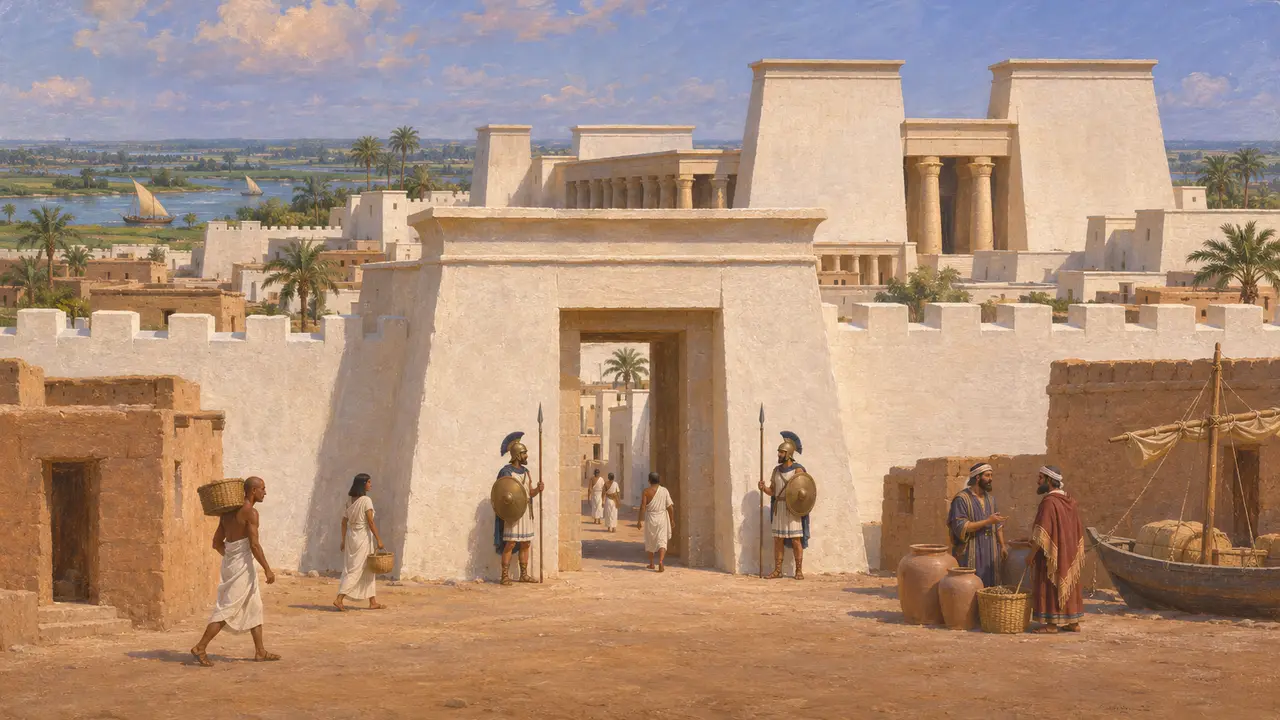
The city of the White Walls
Ancient accountThe Egyptians called the city the White Walls, after its old fortified core, and Greek writers kept the name. Herodotus calls its great temple that of Hephaestus, his name for Ptah. He says Amasis moved Ionian and Carian soldiers to Memphis as his guard, and he mentions a Tyrian quarter there, so the city already had foreign residents before the Persians came.
Herodotus 2.112, 2.154
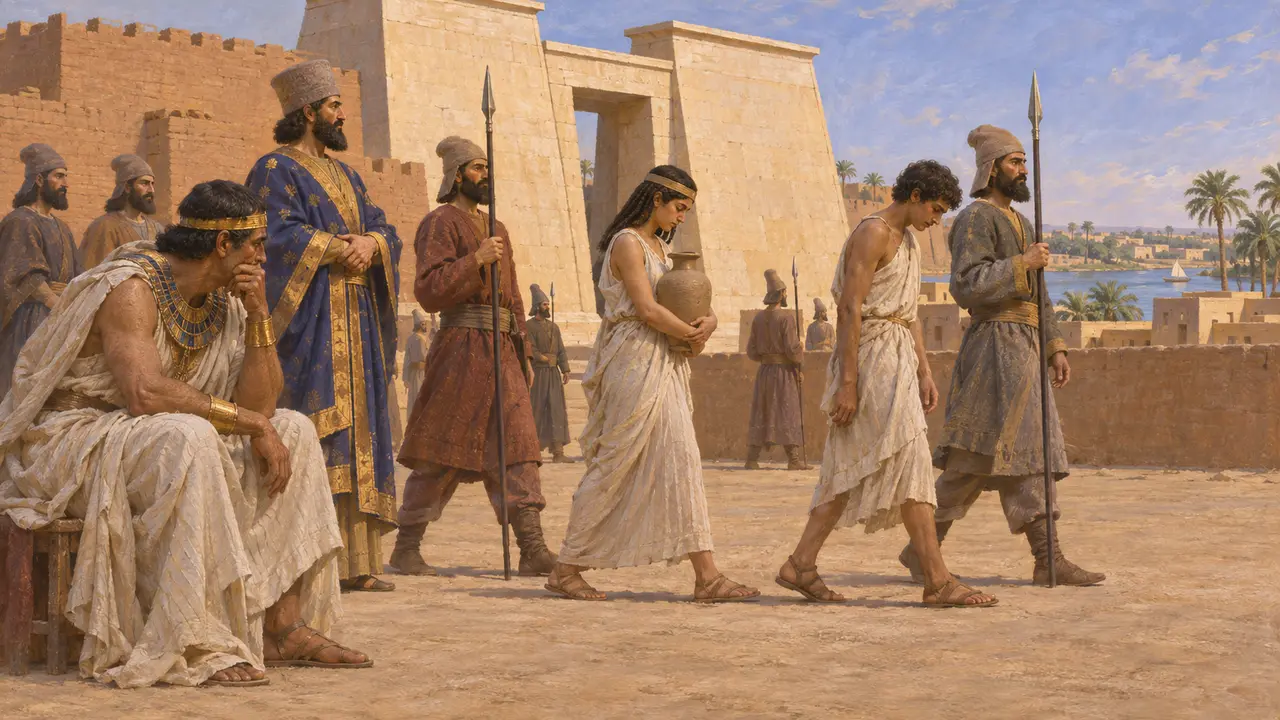
The siege of 525
Ancient accountHerodotus says the Egyptians fled to Memphis after their defeat at Pelusium. Cambyses sent a Persian herald upriver on a ship from Mytilene, and the Egyptians killed him and the crew. The city was then besieged until it surrendered. Herodotus goes on to tell how Cambyses tested the captured king Psamtik III by making him watch his children led past in disgrace.
Herodotus 3.13-14
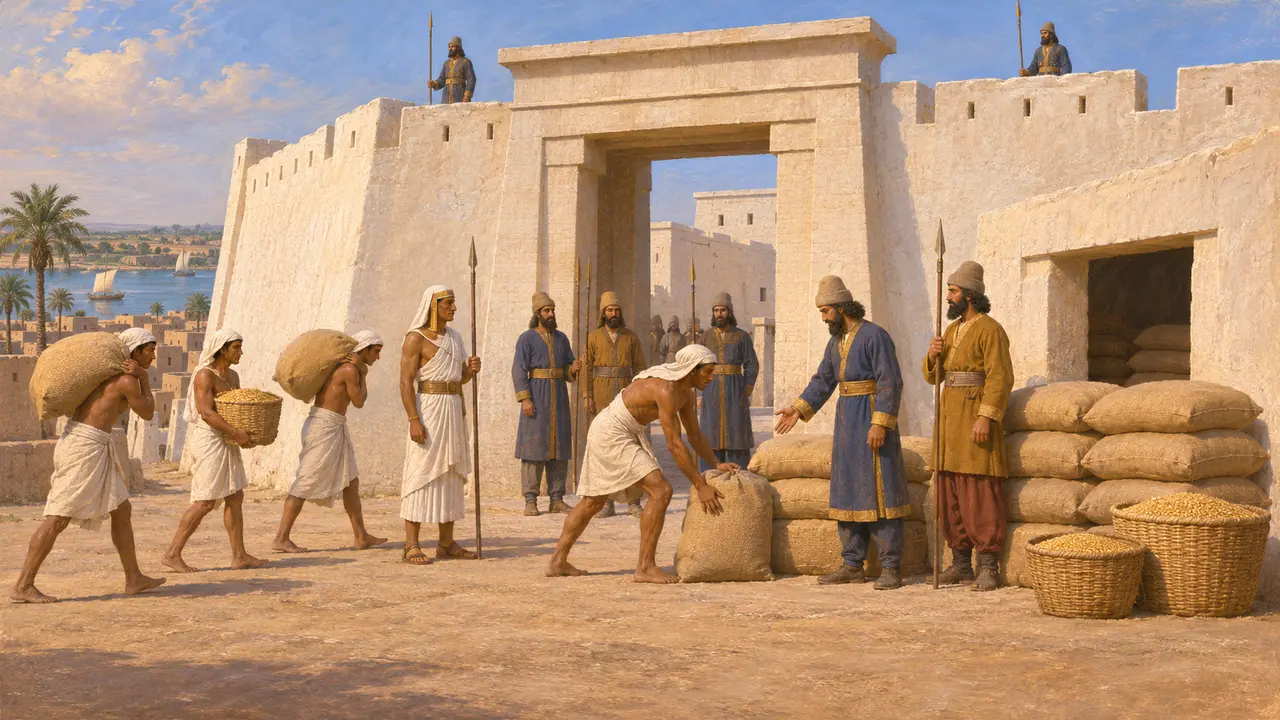
Persian Memphis
Ancient accountHerodotus says Egypt supplied grain for the Persians quartered in the White Fortress at Memphis and for their auxiliaries. Thucydides shows that the garrison was still there decades later. When Egypt revolted in about 459, Persians, Medes and loyal Egyptians held the White Wall, the third part of the city, against the rebels and their Athenian allies.
Herodotus 3.91; Thucydides 1.104
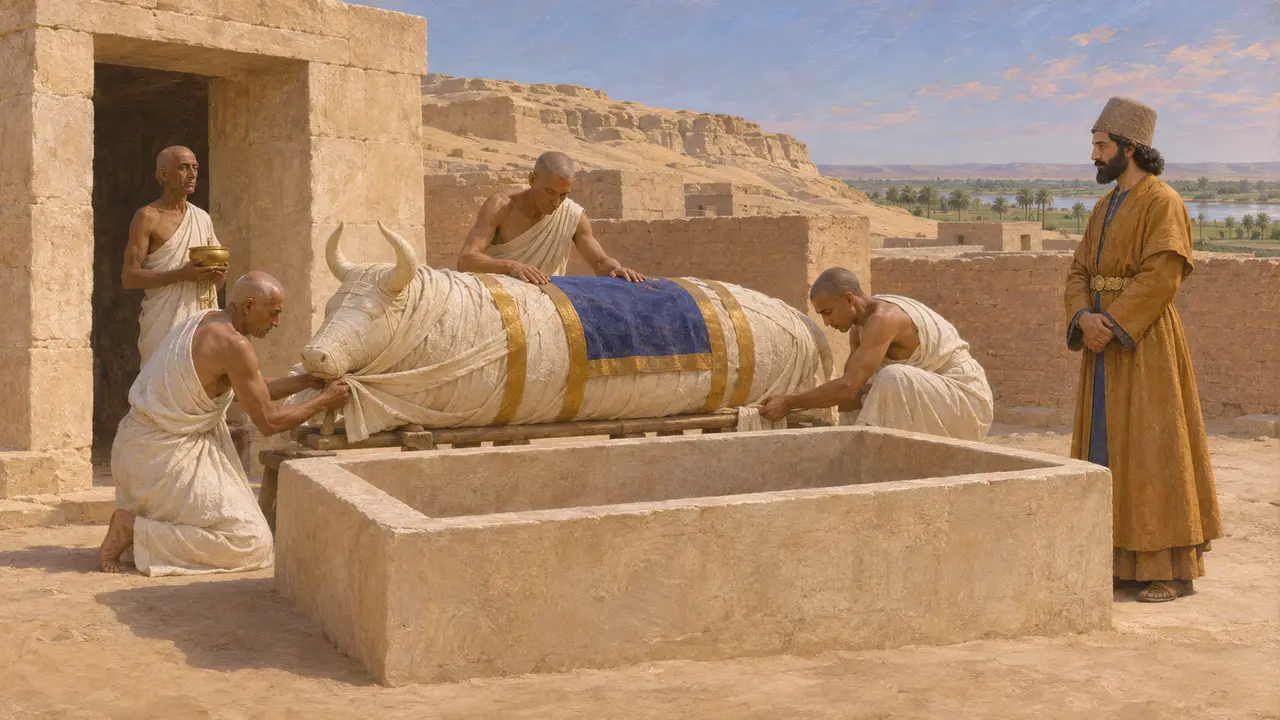
Cambyses and the Apis bull
DisputedHerodotus says Cambyses saw the Egyptians celebrating a new Apis and took it as mockery of his failures. He says the king stabbed the bull in the thigh and that it later died of the wound. The Apis stelae excavated at Saqqara tell another story: a bull was buried in Cambyses' sixth year in a sarcophagus dedicated in his name, and the next burial fell under Darius. Most historians treat Herodotus's tale as hostile Egyptian tradition, though how the dates fit is still debated.
Herodotus 3.27-29; Apis stelae from the Serapeum at Saqqara
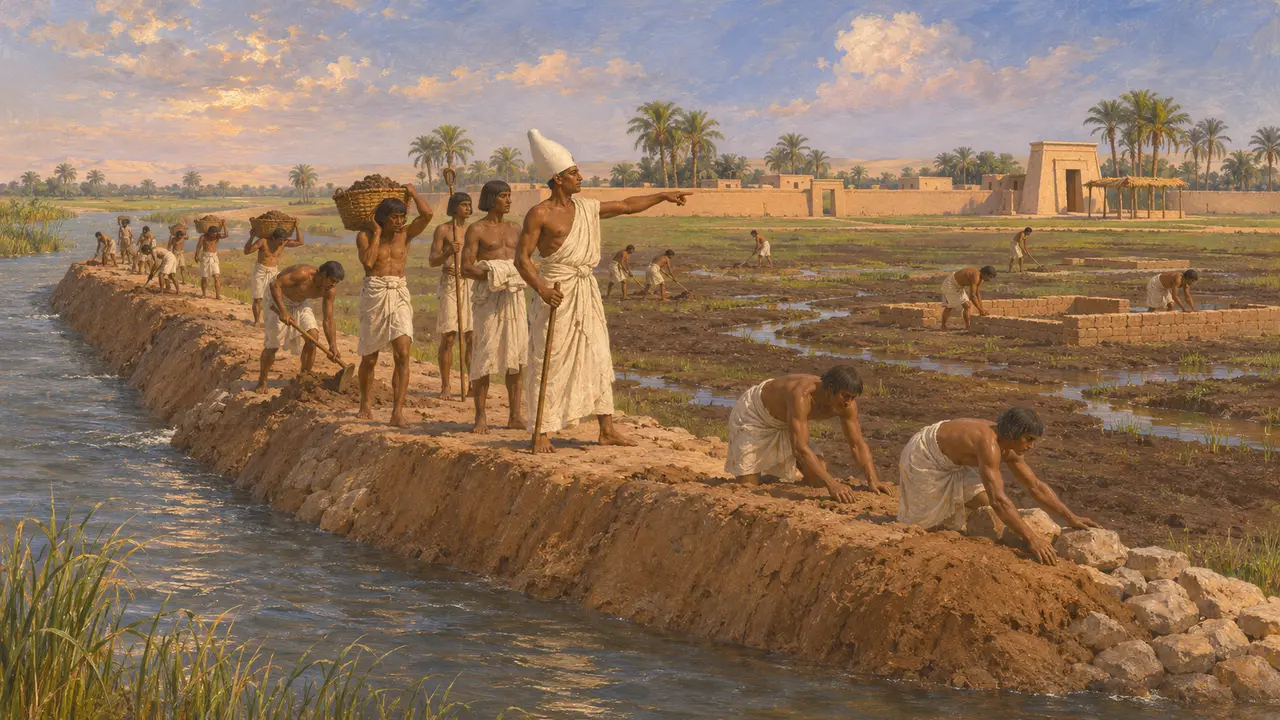
The founding by Min
Later legendHerodotus heard from the priests that the first king, Min, dammed the Nile south of the site and drained the land to build Memphis and the temple of Ptah. The story preserves an Egyptian memory of the city's great age. It was told more than two thousand years after the events it describes.
Herodotus 2.99
Sources
- Herodotus 3.13-14, 3.27-29, 3.91
- Apis stelae from the Serapeum at Saqqara
- Herodotus 2.99, 2.112, 2.154
- Thucydides 1.104
- P. Briant, From Cyrus to Alexander, 2002
- D. J. Thompson, Memphis under the Ptolemies, 1988