Pelusium
Fortress town on the Nile's easternmost branch, where Cambyses won Egypt in 525 BCE
In the game: Level 2: The Spear-bearer
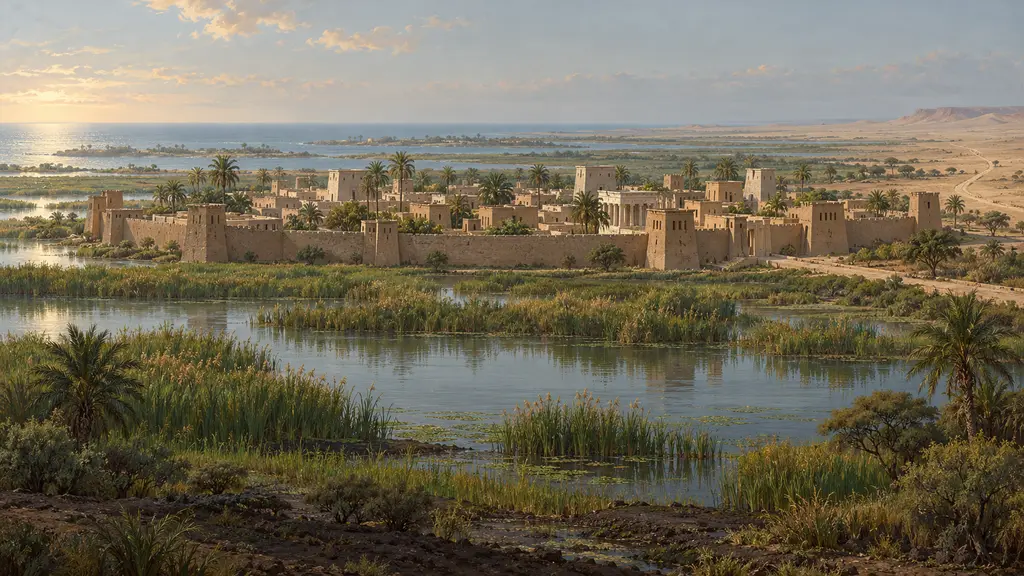
Pelusium stood at the mouth of the easternmost, Pelusiac, branch of the Nile, where the road from Gaza and Sinai reached the Delta. Any army coming from Asia had to pass it. In 525 Cambyses defeated Psamtik III's army nearby, and this one battle opened Egypt to Persian rule, which in its first period lasted until about 404.
In the game: Pelusium is not one of the game's levels. The chronicle names it as Egypt's gate, where Cambyses broke Psamtik III's army in 525, and recalls Herodotus's story of the skulls on the battlefield.
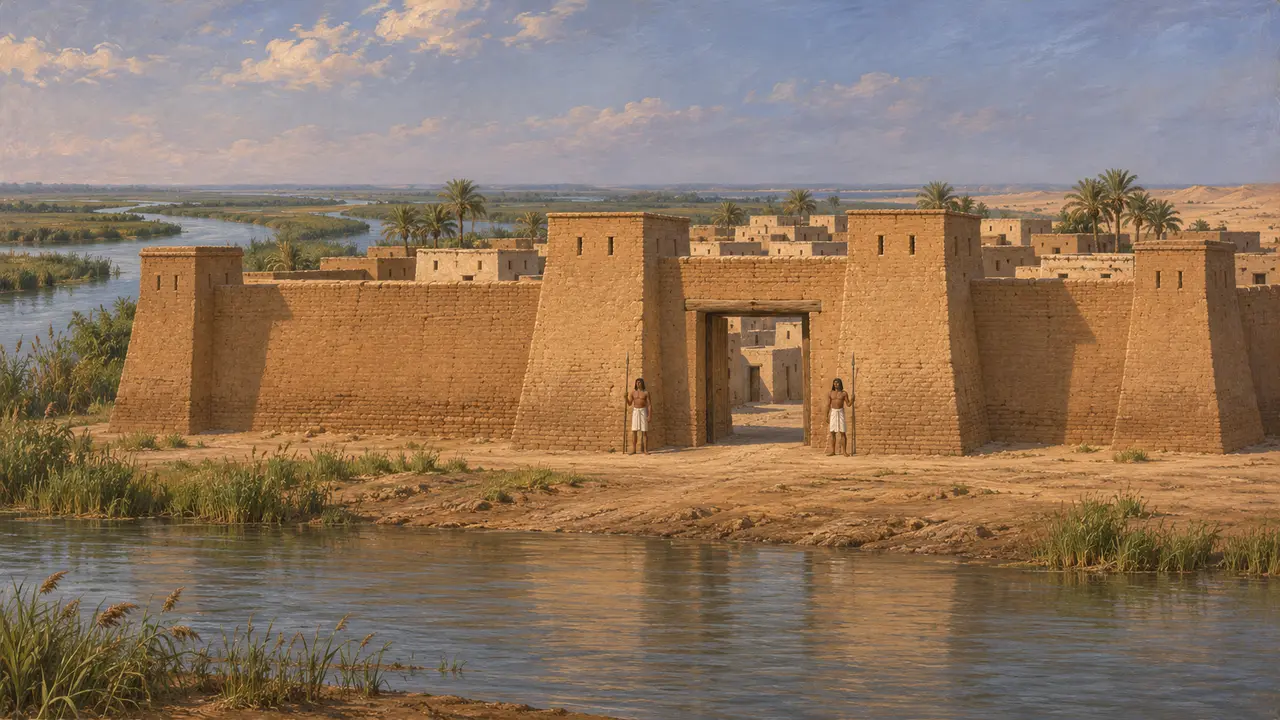
Egypt's gate on the Delta's edge
In the recordThe site lies at Tell el-Farama in north-west Sinai, now some distance inland because the coast and the river branch have shifted. The ruins visible there today are mostly Hellenistic, Roman and later, so little of the town of 525 can be seen. Excavated forts elsewhere on the eastern edge of the Delta, such as Tell Defenneh, show that the Saite kings guarded this frontier closely.
Excavation reports, Tell el-Farama and Tell Defenneh
Crossing the desert to reach it
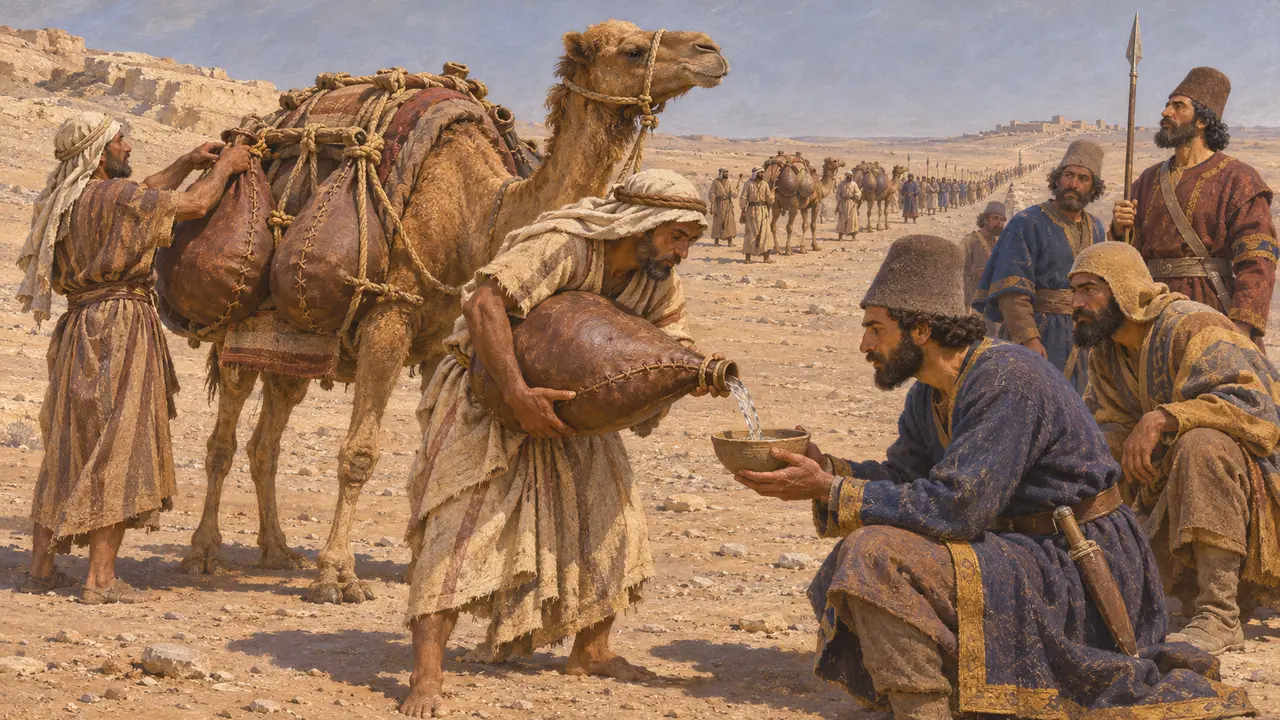
Ancient accountHerodotus says that Phanes of Halicarnassus, one of Amasis's Greek mercenaries, deserted to Cambyses. Phanes advised him to ask the Arab king for safe passage across the waterless desert. According to Herodotus, the Arabs carried water to the army in camel-skins. He also repeats a less likely tale of a leather pipeline from a distant river.
Herodotus 3.4-9
The battle of 525
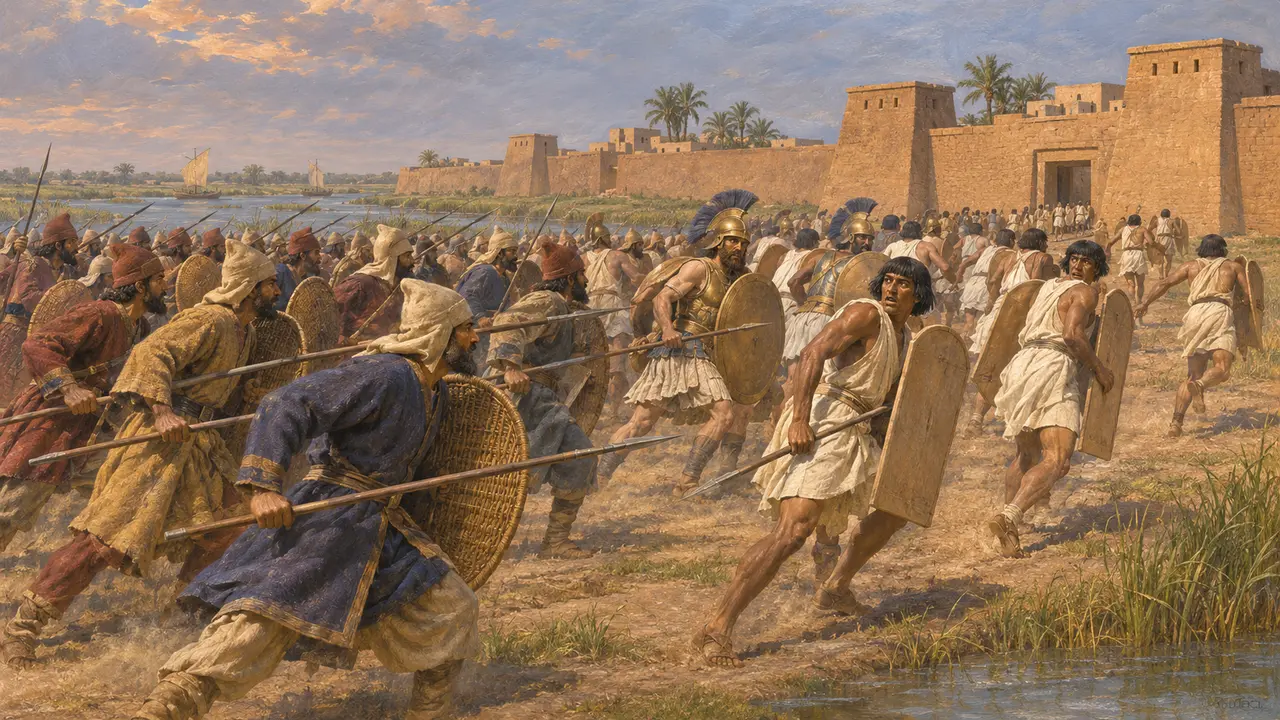
Ancient accountHerodotus says Amasis had died, and his son Psamtik III waited with his army at the Pelusiac mouth. Before the fighting, the Greek and Carian mercenaries killed the sons of Phanes in sight of their father and drank their blood mixed with wine and water. The battle was hard fought, but the Egyptians broke and fled to Memphis, which Cambyses then besieged and took.
Herodotus 3.10-13
The skulls and a rival version
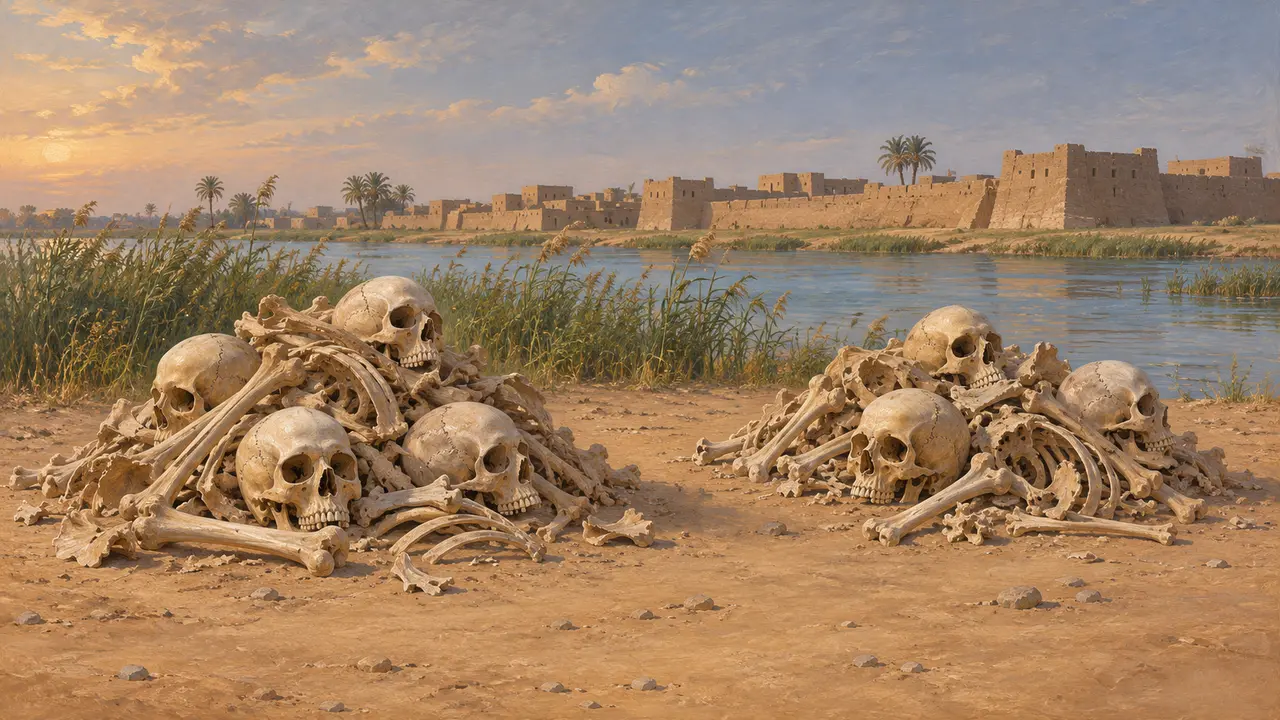
DisputedHerodotus says he saw the bones of the fallen still lying in two heaps. In his account the Persian skulls were so thin that a pebble could pierce them, while the Egyptian ones could hardly be broken with a stone, because Egyptians shaved their heads in the sun from childhood. Historians treat this explanation as local lore. Ctesias tells the war differently: he names the Egyptian king Amyrtaeus and credits the Persian victory to the treachery of a eunuch, Combaphis.
Herodotus 3.12; Ctesias, Persica (via Photius)
Cats before the army
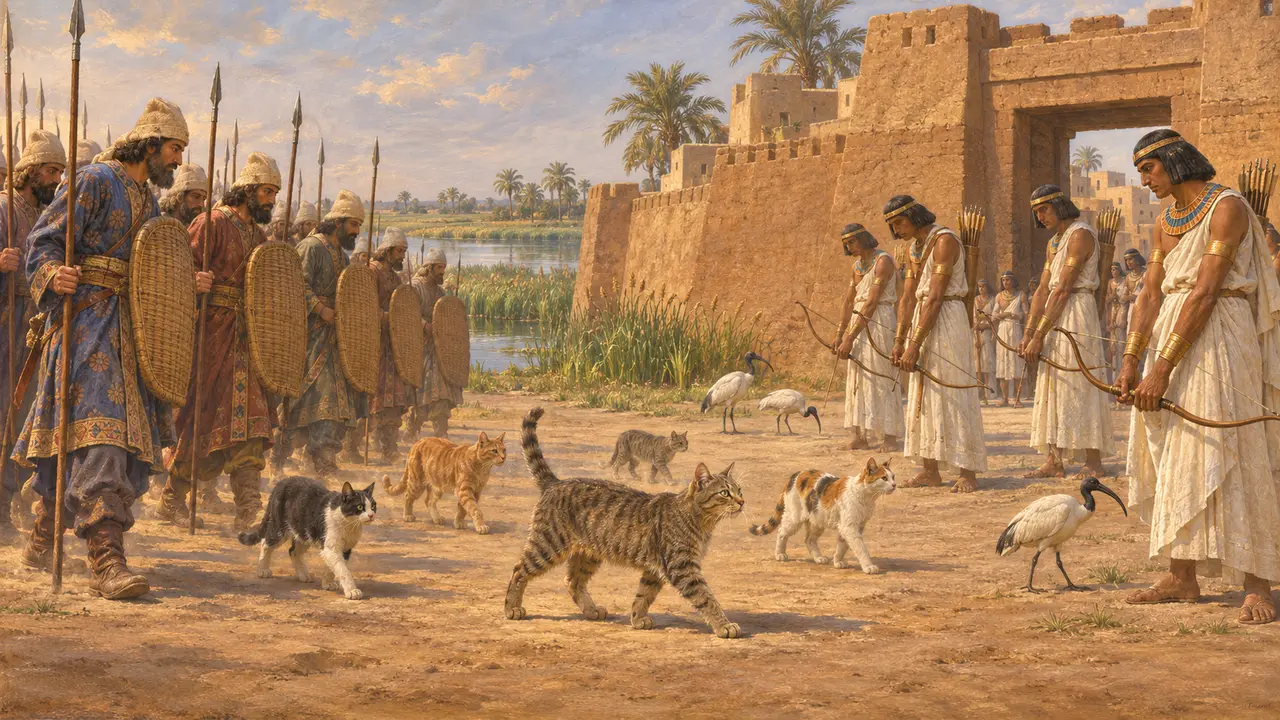
Later legendA tale written down more than six centuries later says that Cambyses won at Pelusium by placing cats and other animals sacred to the Egyptians in front of his troops. In this tale, the Egyptian soldiers would not shoot for fear of harming them. No early source mentions the story, and it is best read as a moral tale about Egyptian piety and Persian cunning.
Polyaenus, Stratagems 7.9
Sources
- Herodotus 3.1-16
- Herodotus 2.30
- P. Briant, From Cyrus to Alexander, 2002
- Ctesias, Persica (via Photius)
- Polyaenus, Stratagems 7.9
- Excavation reports, Tell el-Farama