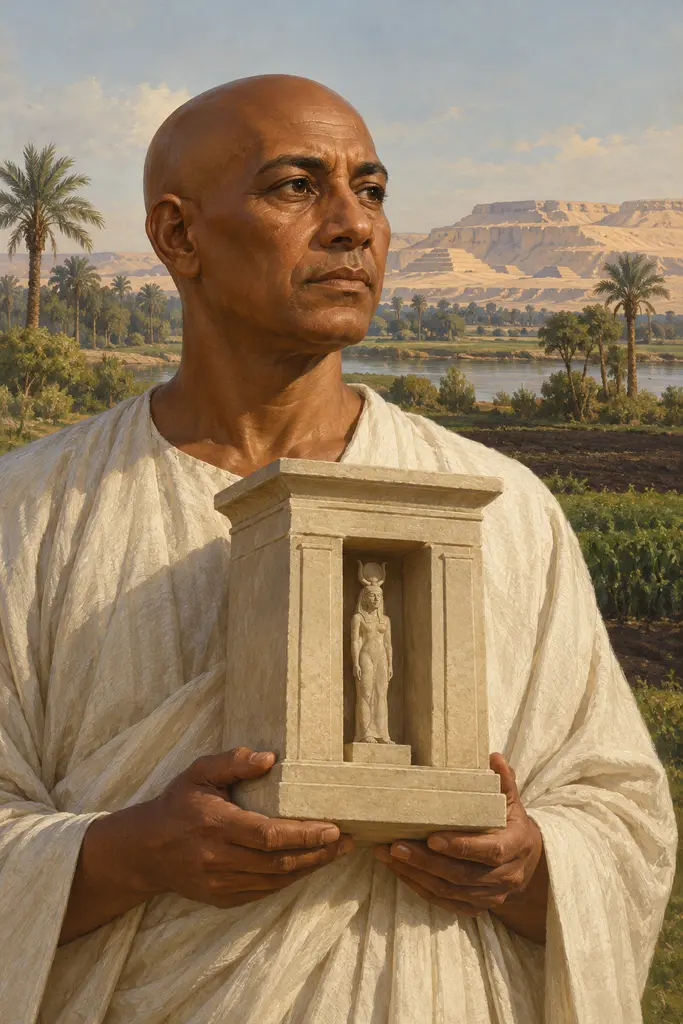
Udjahorresnet
Egyptian naval commander, physician and priest of Sais, 6th century BCE
In the game: Level 2: The Spear-bearer, Level 5: The Charter
Udjahorresnet was an Egyptian official from Sais who commanded ships for the last native kings and then served Cambyses and Darius. His inscribed statue is the fullest Egyptian account of the Persian conquest. It shows how a foreign king could be fitted into Egyptian kingship, and how local elites kept their temples and careers under the new rulers.
In the game: The game's chronicle note credits him with composing the Egyptian royal names of both Cambyses and Darius. His statue claims this only for Cambyses; for Darius it records the restoration of the House of Life at Sais.
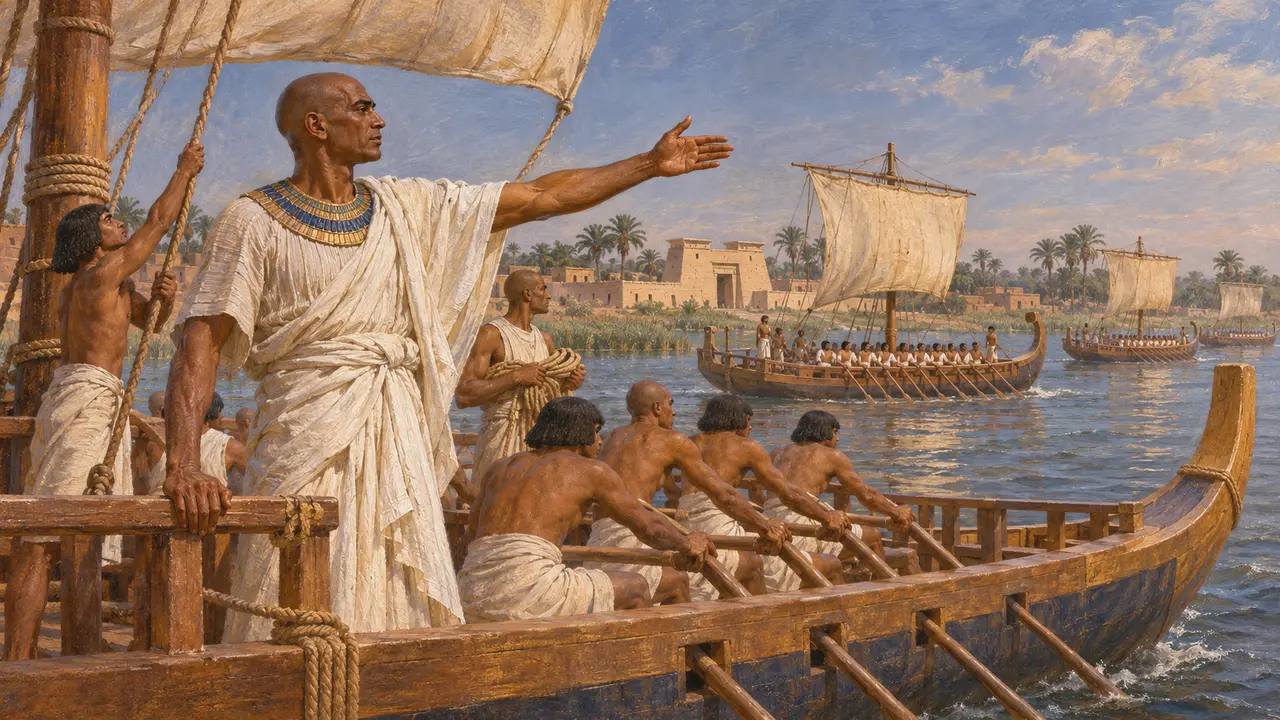
Commander of the royal ships
In the recordHis statue says he commanded the royal warships under Amasis and Psamtik III, the last kings of the Saite dynasty. He also held priestly titles at Sais, the dynasty's home city and the seat of the goddess Neith. When Cambyses conquered Egypt in 525, he moved into Persian service and kept his standing.
Statue of Udjahorresnet, Vatican Museums
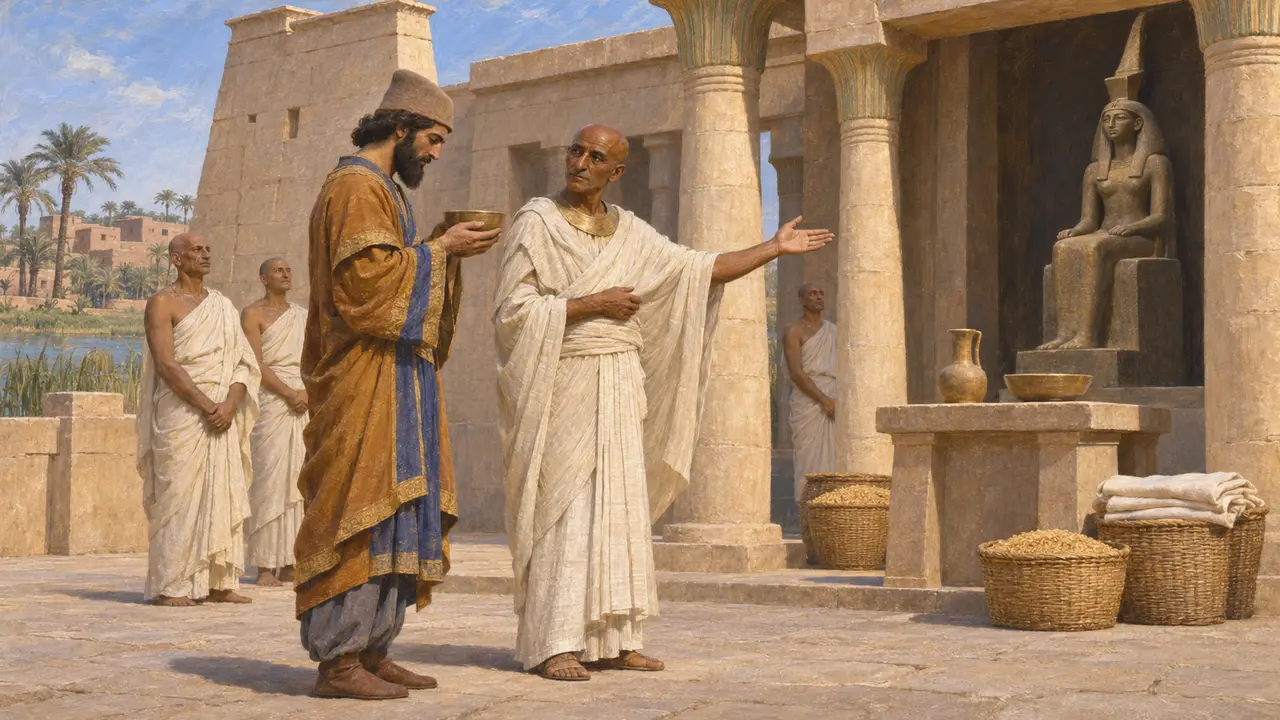
Physician and name-maker for Cambyses
In the recordCambyses made him chief physician and a companion of the king. Udjahorresnet says he composed Cambyses' Egyptian throne name, Mesutira, meaning offspring of Ra. He persuaded the king to expel foreigners who had settled in the temple of Neith, to restore its revenues and festivals, and to come to Sais and worship the goddess in person.
Statue of Udjahorresnet; M. Lichtheim, Ancient Egyptian Literature III, 1980
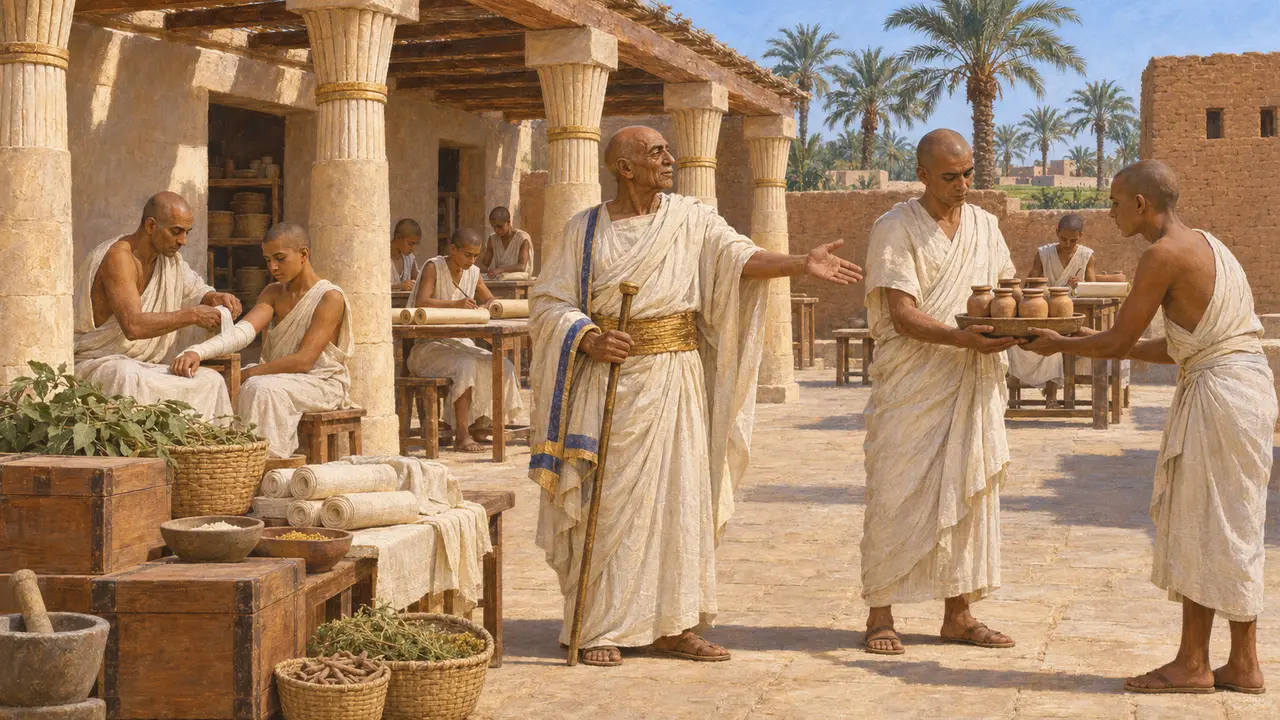
Restoring the House of Life for Darius
In the recordThe text says he was with Darius in Elam when the king ordered him back to Egypt. His task was to restore the House of Life, the temple institution where scribes copied texts and physicians trained. He says he staffed it and supplied it with everything it needed, because Darius knew the value of the healing art.
Statue of Udjahorresnet
Collaborator or protector of his people
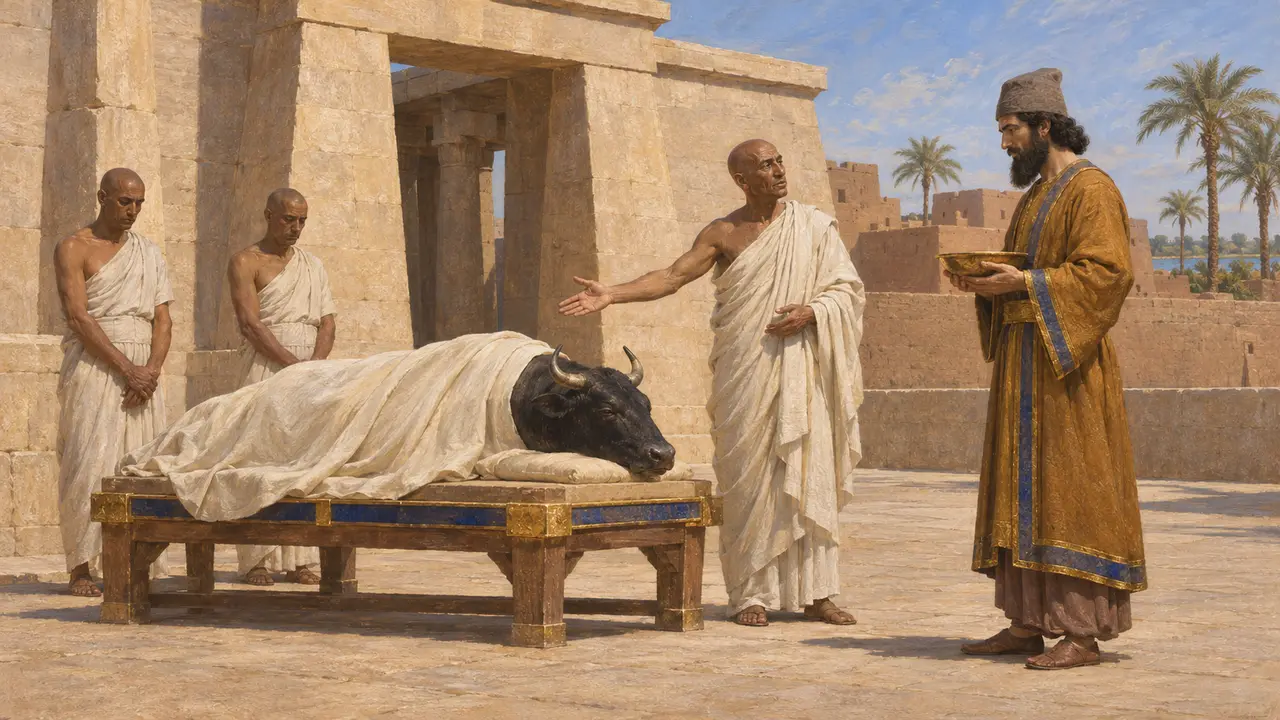
DisputedHerodotus portrays Cambyses as a mad king who killed the Apis bull and insulted Egyptian gods. The statue shows him honouring Neith, and an Apis stela records a bull buried with royal honours in his reign. Historians still argue whether Udjahorresnet was a self-serving collaborator or a patriot who protected his town. They also disagree whether the great turmoil he describes was the conquest of 525 or the unrest of 522.
Herodotus 3.27-29; G. Posener, La première domination perse en Égypte, 1936; A. B. Lloyd, JEA 68, 1982
The statue and the tomb
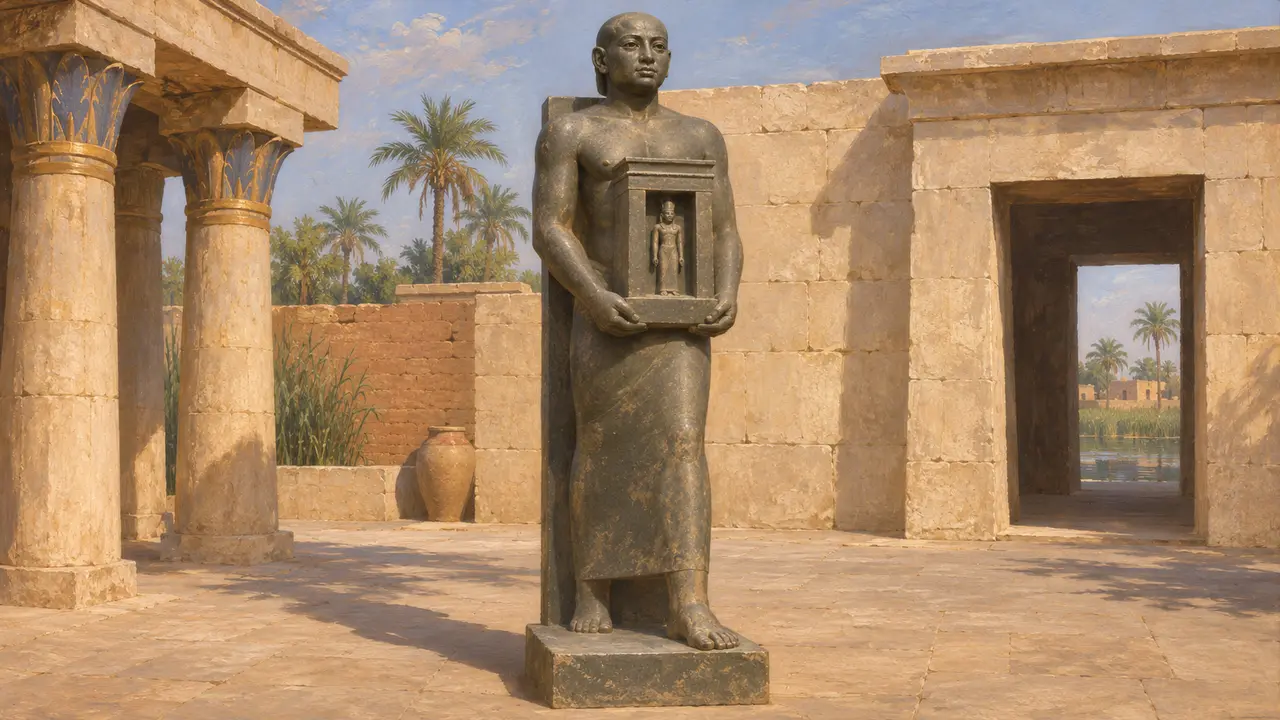
In the recordHis standing statue holds a small shrine and is covered with his autobiography. It was probably carried to Italy in Roman times and is now in the Vatican Museums. Czech archaeologists working at Abusir, near Memphis, excavated a large shaft tomb identified as his and published it in 1999.
L. Bareš, The Shaft Tomb of Udjahorresnet at Abusir, 1999
Sources
- Statue of Udjahorresnet, Vatican Museums
- A. B. Lloyd, The Inscription of Udjahorresnet: A Collaborator's Testament, Journal of Egyptian Archaeology 68, 1982
- G. Posener, La première domination perse en Égypte, 1936
- M. Lichtheim, Ancient Egyptian Literature III, 1980
- L. Bareš, The Shaft Tomb of Udjahorresnet at Abusir, 1999
- Herodotus 3.27-29