Level 5: The Charter · Susa · 519–515 BCE
The Charter
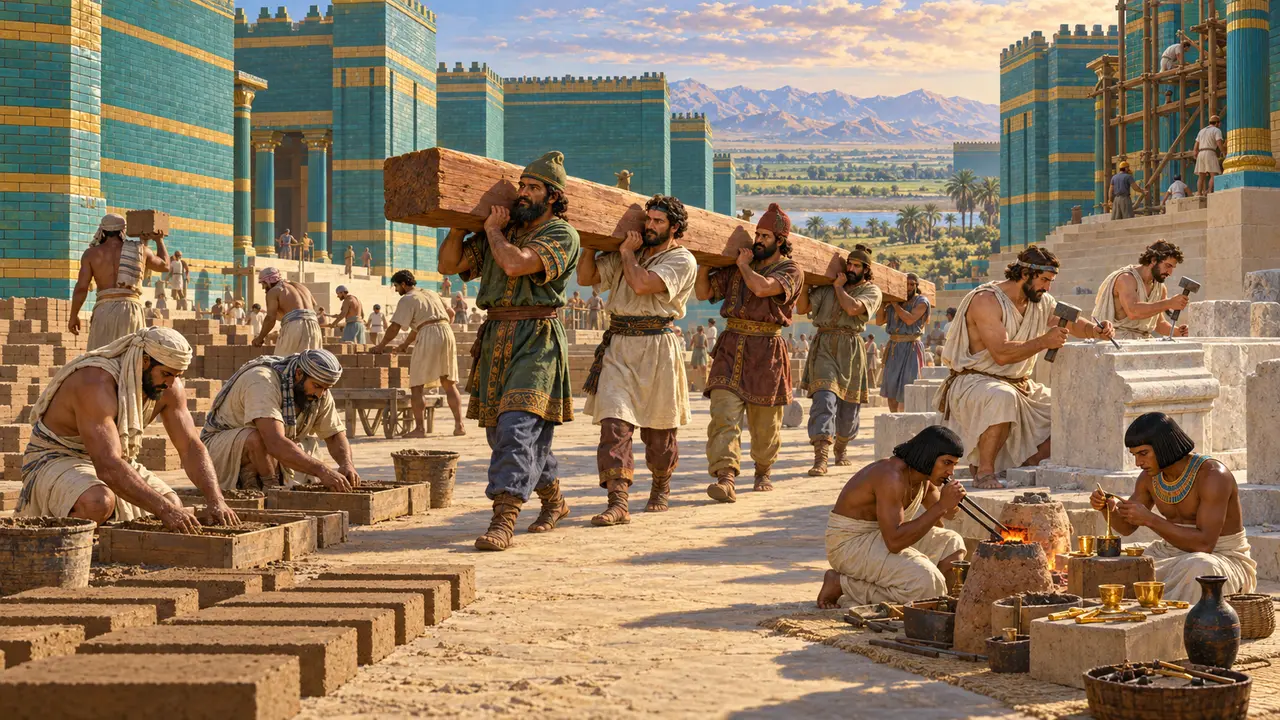
Susa, where craftsmen of many peoples built the King's palace.
Encyclopedia › The History
Susa was the capital of Elam two thousand years before Persia existed. Elam rose against Darius three times. Once it was quiet, he made Susa his chief seat and built a palace of glazed brick, recording on its foundation tablets where every material came from.
- 522 BCE Elam rises
- 519 BCE Athamaita beaten
- 515 BCE The palace
- 497 BCE The Nile canal
Elam rises three times
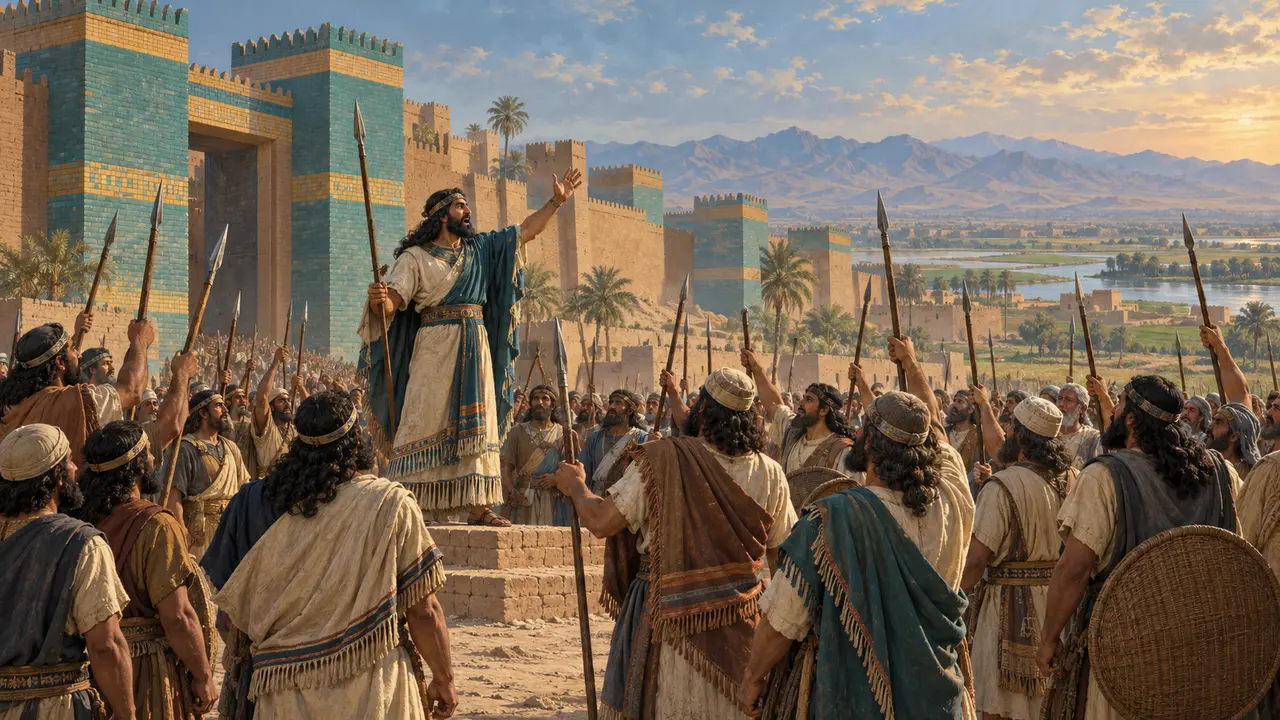
In the recordAçina rose first and was sent to Darius in chains. Martiya rose next, and the Elamites killed him themselves as Darius came near. In his second or third year Athamaita rose, and Gobryas put him down; this last revolt was added to the cliff later.
In the game: Athamaita's Elamites: four in ten of the host are bowmen with the King's own range.
Behistun inscription sections 16-23, 71
The charter
In the recordDarius's foundation charter lists it all: cedar from Lebanon, gold from Sardis and Bactria, lapis lazuli from Sogdiana, ivory from Ethiopia, Sind and Arachosia. Ionians and Sardians cut the stone, Medes and Egyptians worked the gold, Babylonians baked the bricks.
In the game: Charter caravans bring the cedar, gold, lapis and ivory the charter names.
Susa foundation charter DSf
Glazed brick
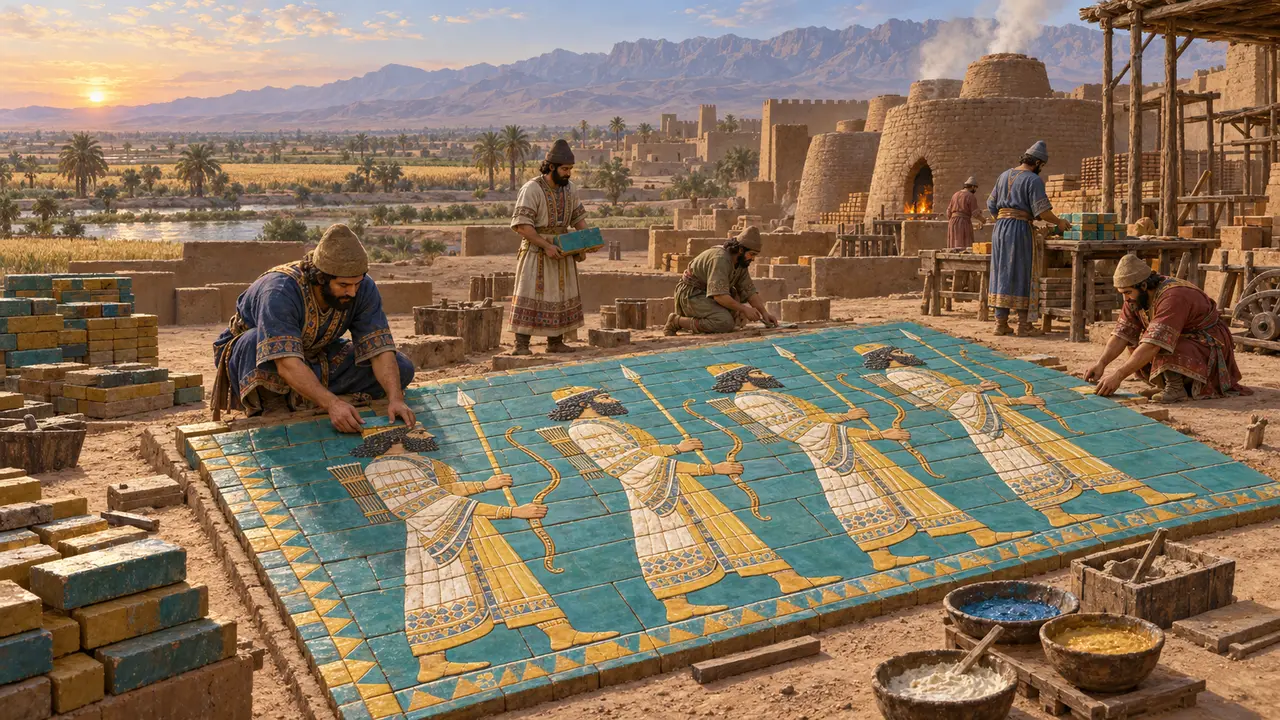
In the recordThe palace walls shone with moulded, glazed bricks: rows of life-size archers, lions and winged bulls in blue, green, yellow and white. The craft came from Babylon. Pieces of the archers' frieze are in the Louvre.
In the game: The glazed-brick kiln makes the palace's bricks.
DSf; Louvre, frieze of archers
The Royal Road
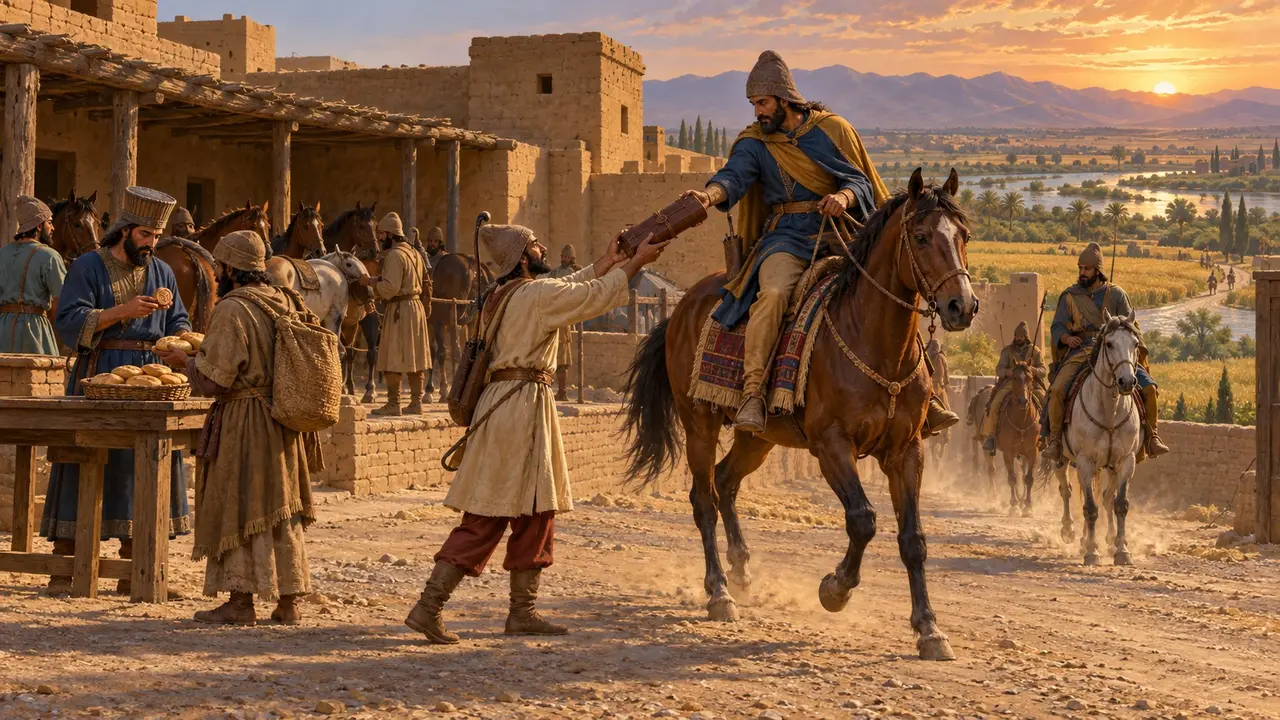
Ancient accountHerodotus counts 111 stations from Sardis to Susa, about ninety days on foot. Royal riders passed messages from station to station so that 'neither snow nor rain' could stop them. The Persepolis tablets confirm the stations, with travellers' sealed passes and rations.
In the game: Road Stations speed the caravans, and their riders see raiders early.
Herodotus 5.52-53, 8.98; Persepolis Fortification tablets
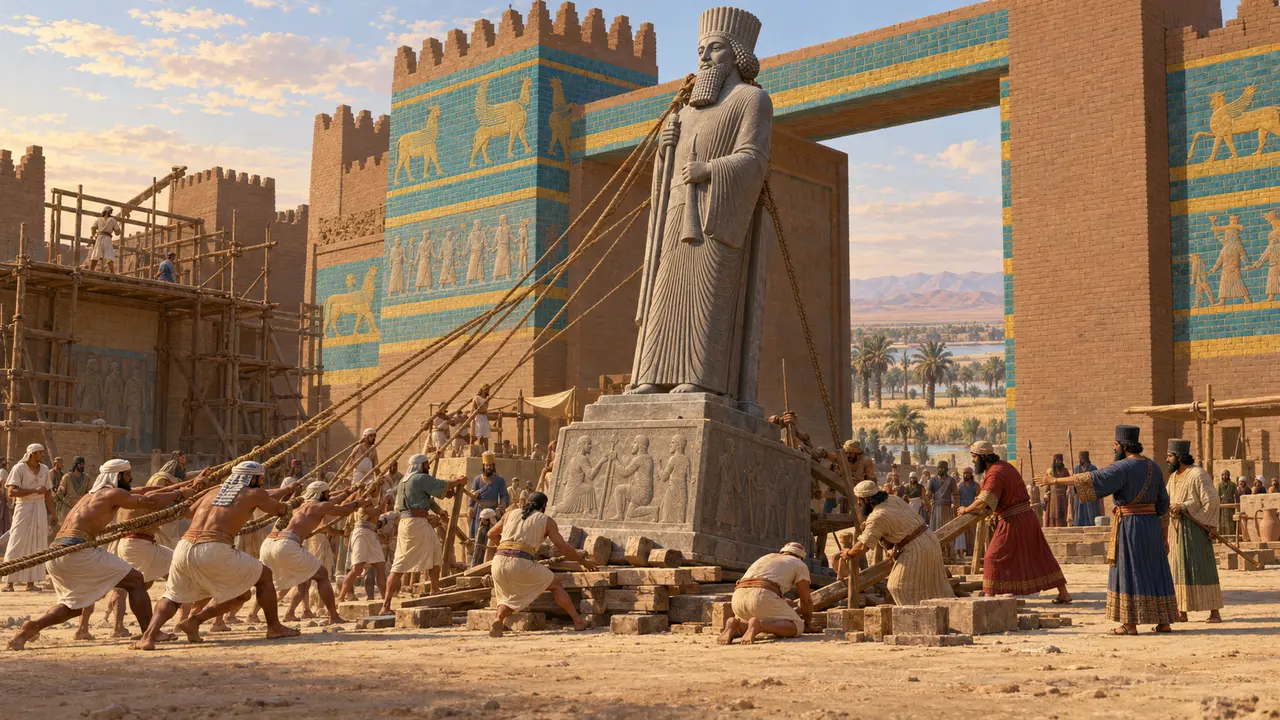
A statue from Egypt
In the recordIn 1972 French excavators found a headless statue of Darius at Susa's gate. It was carved in Egypt, in Egyptian style, with texts in hieroglyphs and in three cuneiform languages. Its base shows twenty-four subject peoples holding up the King.
Statue of Darius from Susa (National Museum of Iran)
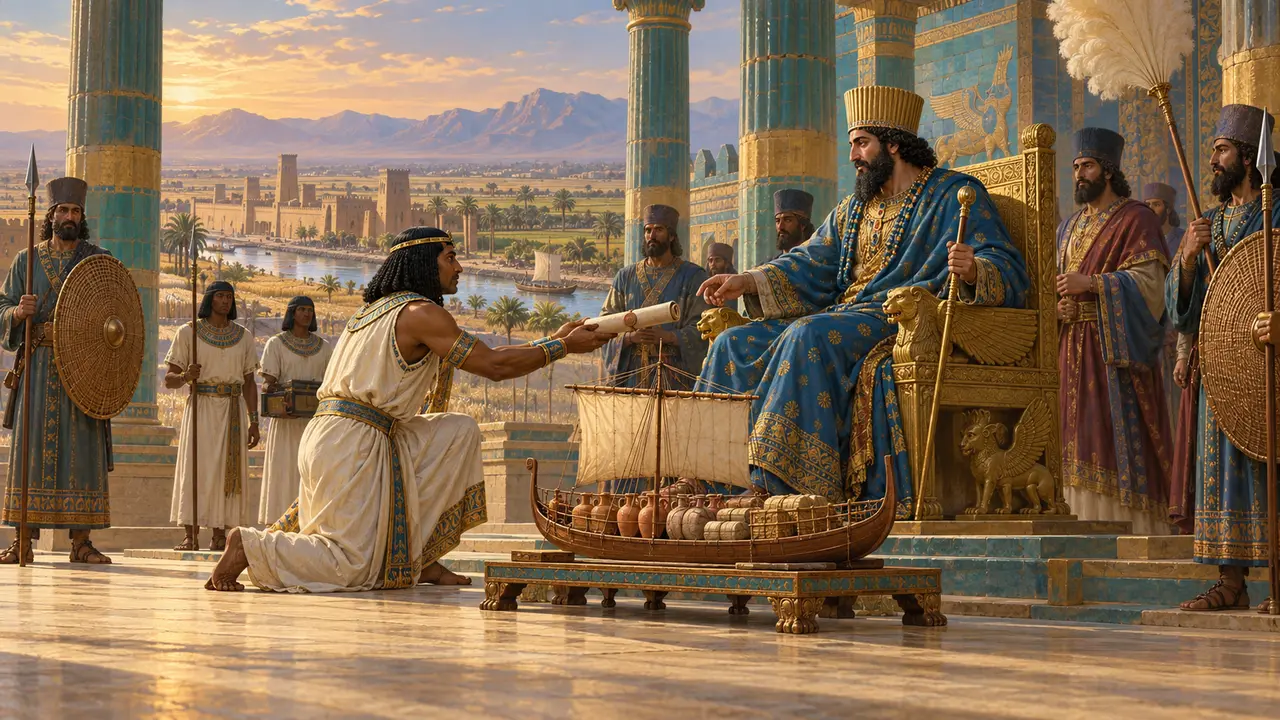
A canal to the Red Sea
In the recordStelae set up along the Wadi Tumilat say Darius ordered a canal dug from the Nile to the sea that goes to Persia, and that ships sailed it. Herodotus says Pharaoh Necho had begun it.
Darius's canal stelae (DZc); Herodotus 2.158, 4.39
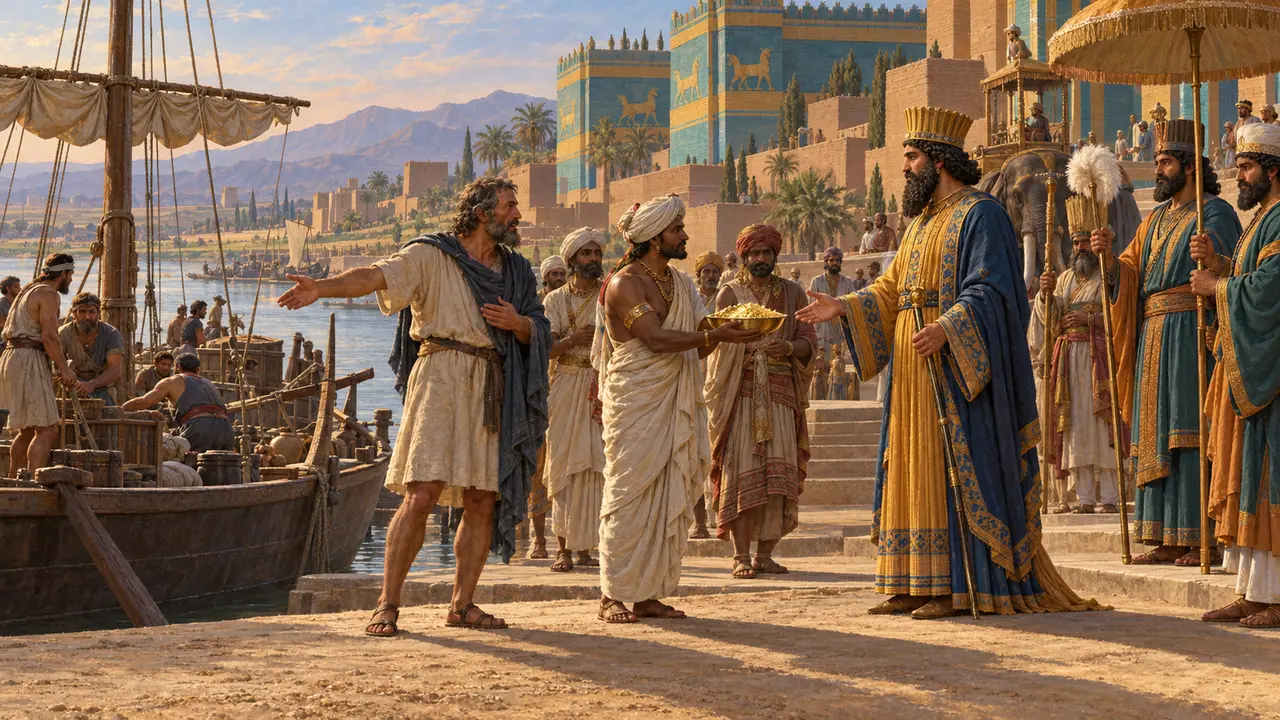
Scylax sails the Indus
Ancient accountDarius sent Scylax of Caryanda down the Indus to the sea and round Arabia to Egypt, a voyage of thirty months. Then he conquered the Indus lands.
Herodotus 4.44
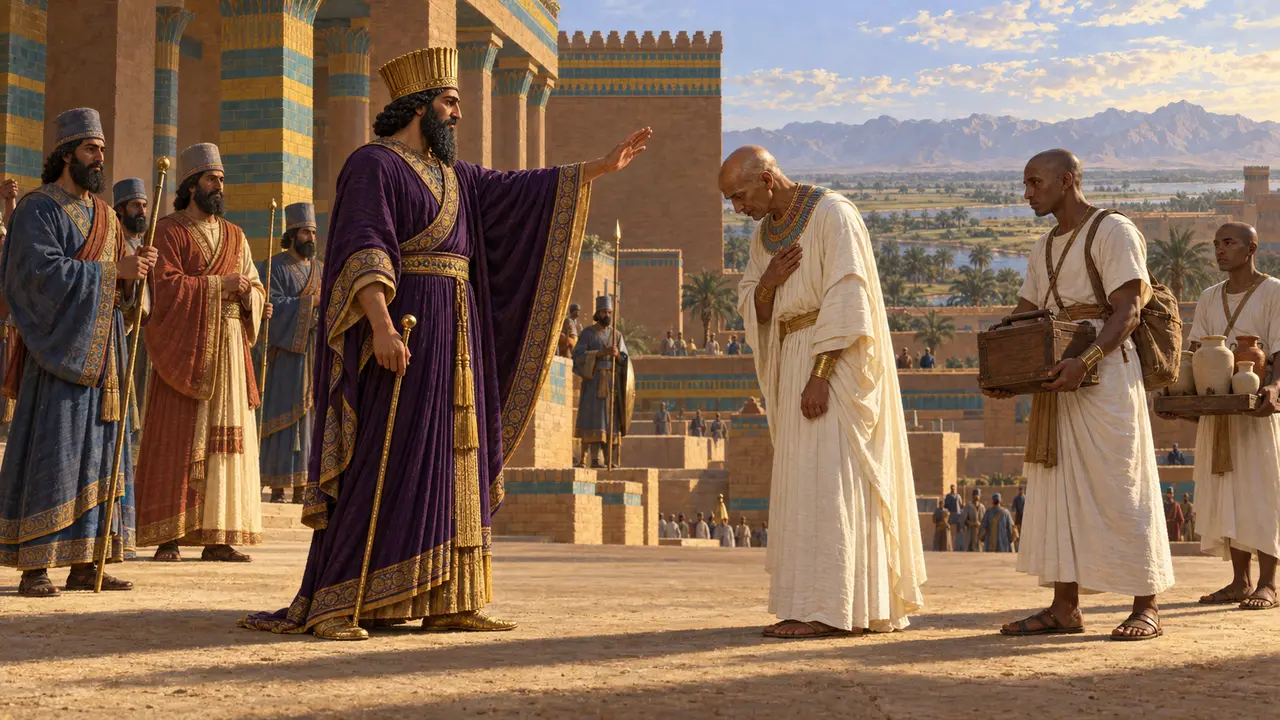
Read next: the topics of The Charter
Battles and events
The third Elamite revolt · Darius's restoration of the House of Life at Sais · Darius's campaign against Skunkha · Darius's Susa charter · The voyage of Scylax · Darius's canal from the Nile to the Red Sea
Buildings
Soldiers and ships
People
Cambyses · Udjahorresnet · Darius the Great · Gobryas · Athamaita · Scylax of Caryanda · Necho II
Peoples
The Persians · The Elamites · The Cissians · The Babylonians · The Phoenicians · The Egyptians · The Indians · The Ethiopians
Places
Persepolis (Parsa) · Susa · Babylon · Sardis · Sais · Arachosia · Sogdiana · Lebanon · Bactria · Egypt · Elam · The Indus river
Wildlife and weather
The gazelle · The onager · The wild boar · The white stork · The hare · The golden jackal · The lion · Wild ducks · The ostrich · The kite · The rock dove · The jackdaw · The crane · The swallow · Bats · The little owl · The hooded crow · Sandstorms · Morning mist