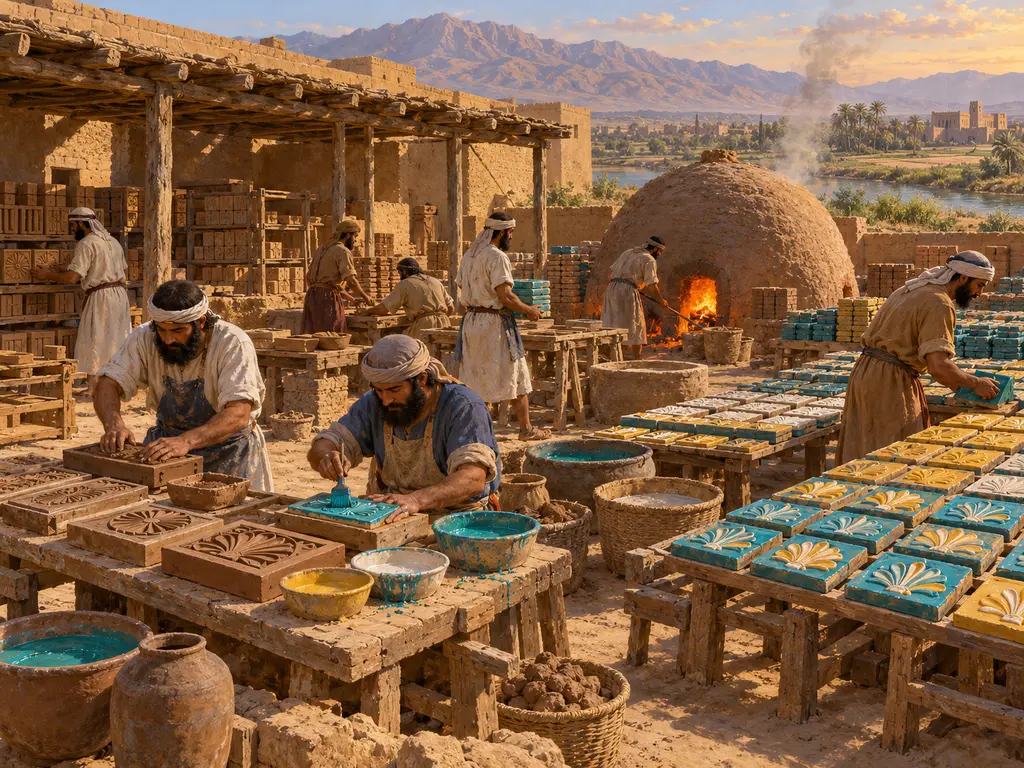
Glazed-brick Kiln
Workshops making coloured brick facings for Darius's palace at Susa, about 520-500 BCE
In the game: Level 5: The Charter
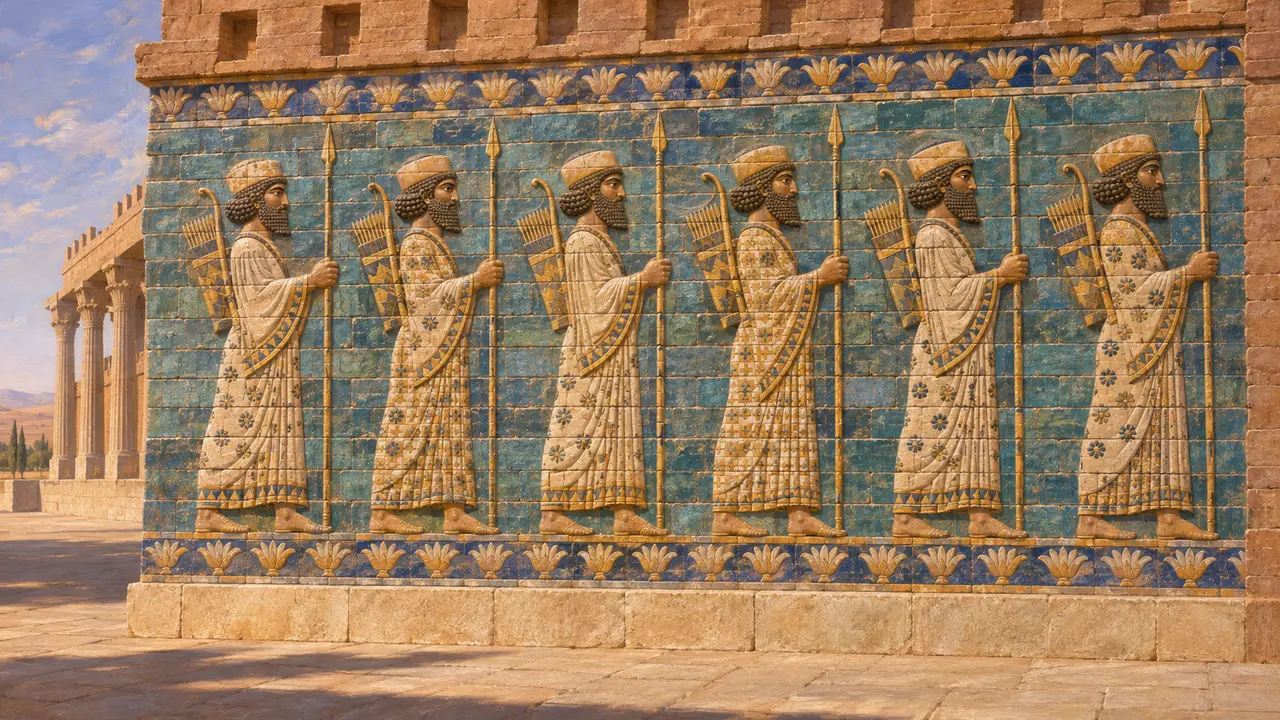
The walls of Darius's palace at Susa were faced with moulded bricks glazed in bright colours, showing guards, lions, bulls and winged creatures. Darius's own building charter says Babylonians moulded the baked brick. The craft had deep roots in Mesopotamia, where glazed relief brick had decorated Babylon's gates about two generations earlier. At Susa it became one of the clearest signs of an empire drawing on the skills of many peoples.
In the game: The kiln turns clay-pit clay into glazed palace bricks made by Babylonians, as DSf says of the brick-moulders. In fact many Susa bricks had a sandy siliceous body rather than plain clay, and used more colours than blue, yellow and white.
What Darius's charter says
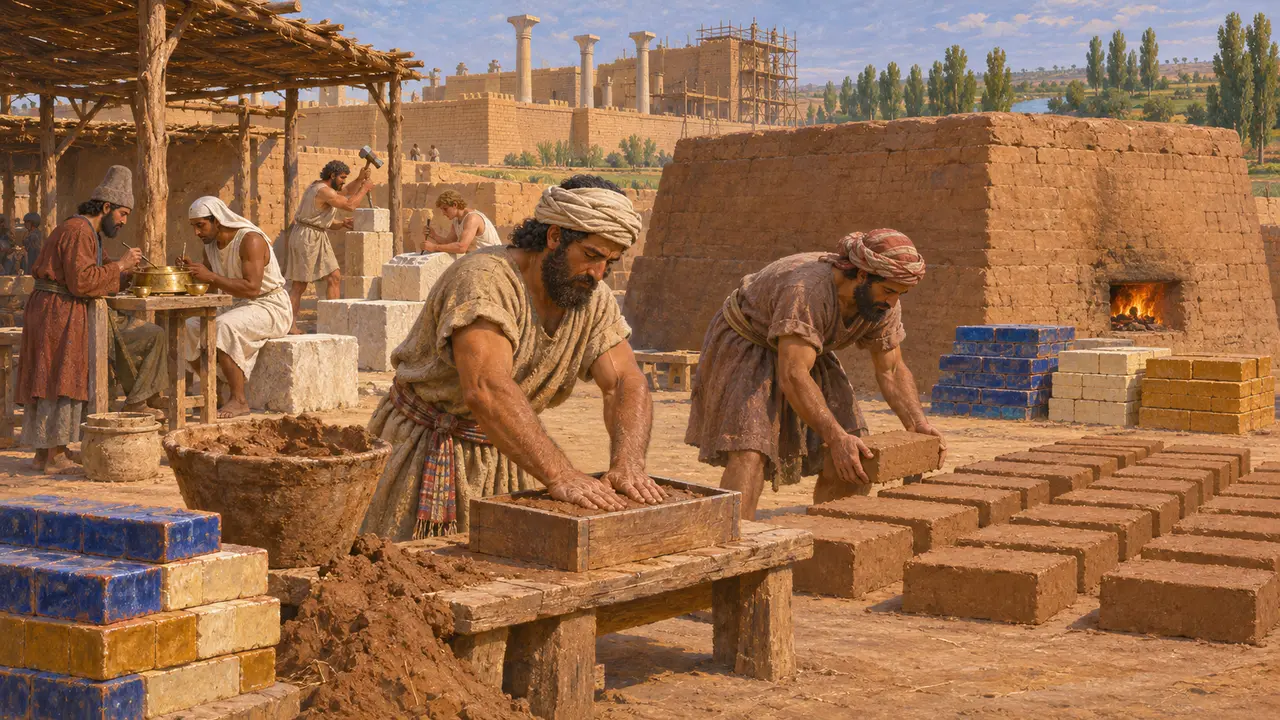
In the recordIn his foundation charter from Susa, Darius lists the materials of his palace and the peoples who worked them. He states that the men who moulded the baked brick were Babylonians, while the stone-cutters were Ionians and Sardians and the goldsmiths Medes and Egyptians. The text survives in Old Persian, Elamite and Akkadian versions, and a further Elamite charter, DSz, gives a similar account.
DSf; DSz
A Mesopotamian and Elamite craft
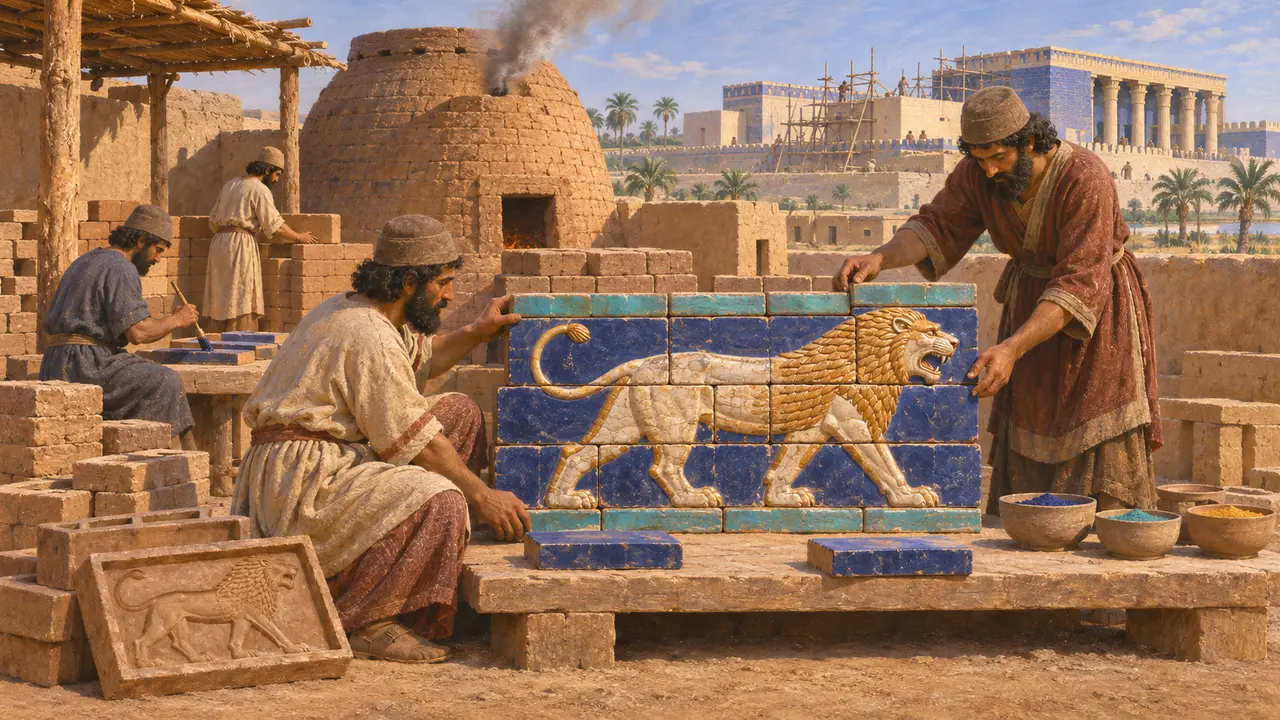
In the recordGlazed and moulded relief brick had a long history in Mesopotamia. Its best-known example is the Ishtar Gate and Processional Way of Babylon, built under Nebuchadnezzar II in the first half of the 500s, with lions, bulls and dragons in coloured glaze. German excavators led by Robert Koldewey uncovered these remains between 1899 and 1917. Susa itself also had an older Elamite tradition of glazed brick, which Darius's builders could draw on alongside the Babylonian one.
R. Koldewey, The Excavations at Babylon, 1914
What the excavations at Susa found
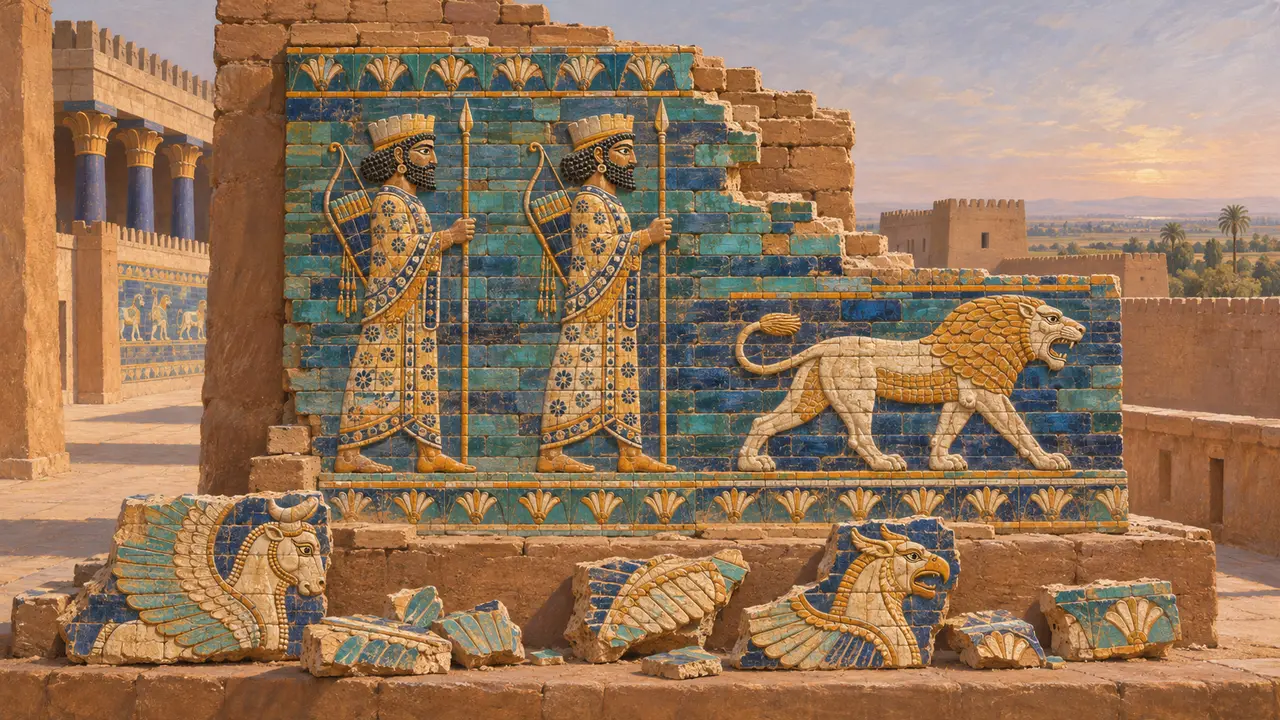
In the recordFrench excavations, beginning with Marcel and Jane Dieulafoy in the 1880s, recovered thousands of glazed brick fragments from the palace. They show rows of guards carrying spears and bows, striding lions, winged bulls, griffins and sphinxes, many now reassembled in the Louvre. Analysis shows that many bricks had a sandy, quartz-rich body and that raised lines kept the colours apart in firing. No kiln for them has been securely identified in the published excavations.
P. O. Harper, J. Aruz and F. Tallon (eds), The Royal City of Susa, 1992
Who the brick archers were
DisputedThe best-known panels show long lines of robed men holding spears, with bows and quivers on their backs. Some historians identify them with the royal guard that Herodotus calls the Immortals. Others see them as Persian nobles or as a symbol of the Persian people as the King's army. The modern reconstructions also combine bricks found in different places, so the original arrangement of the friezes is partly uncertain.
Herodotus 7.83; J. Perrot (ed.), The Palace of Darius at Susa, 2013
Sources
- DSf
- DSz
- P. O. Harper, J. Aruz and F. Tallon (eds), The Royal City of Susa, 1992
- J. Perrot (ed.), The Palace of Darius at Susa, 2013
- R. Koldewey, The Excavations at Babylon, 1914
- P. Briant, From Cyrus to Alexander, 2002