Susa
Old Elamite city rebuilt as a royal seat by Darius, lowland Elam, from about 520 BCE
In the game: Level 5: The Charter, Level 6: The Bridge of Boats, Level 7: Sardis Burns, Level 8: The Bay of Marathon
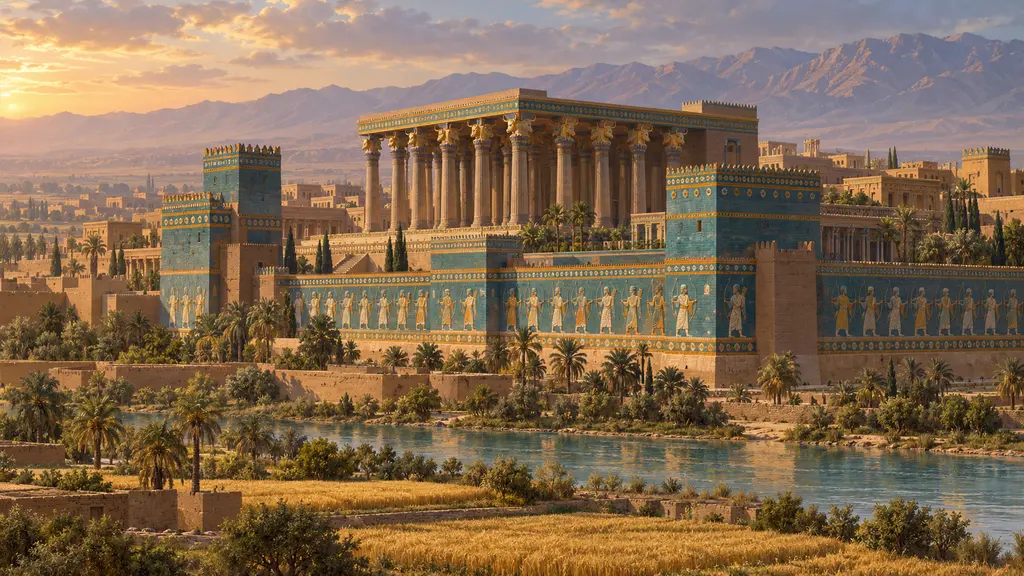
Susa stood on the plain of lowland Elam and had been one of its chief cities for thousands of years before the Persians came. Darius made it a royal residence, building a palace and a great columned hall with materials and craftsmen drawn from across the empire. Greek writers knew it as the King's city, where the Royal Road from Sardis ended.
In the game: The game presents Susa as Elam's capital, where Darius builds his palace and Apadana at the Royal Road's end. Susa was one of Elam's chief cities beside Anshan, not its only capital, and the works probably began a little after 521 BCE.
An Elamite city before the Persians
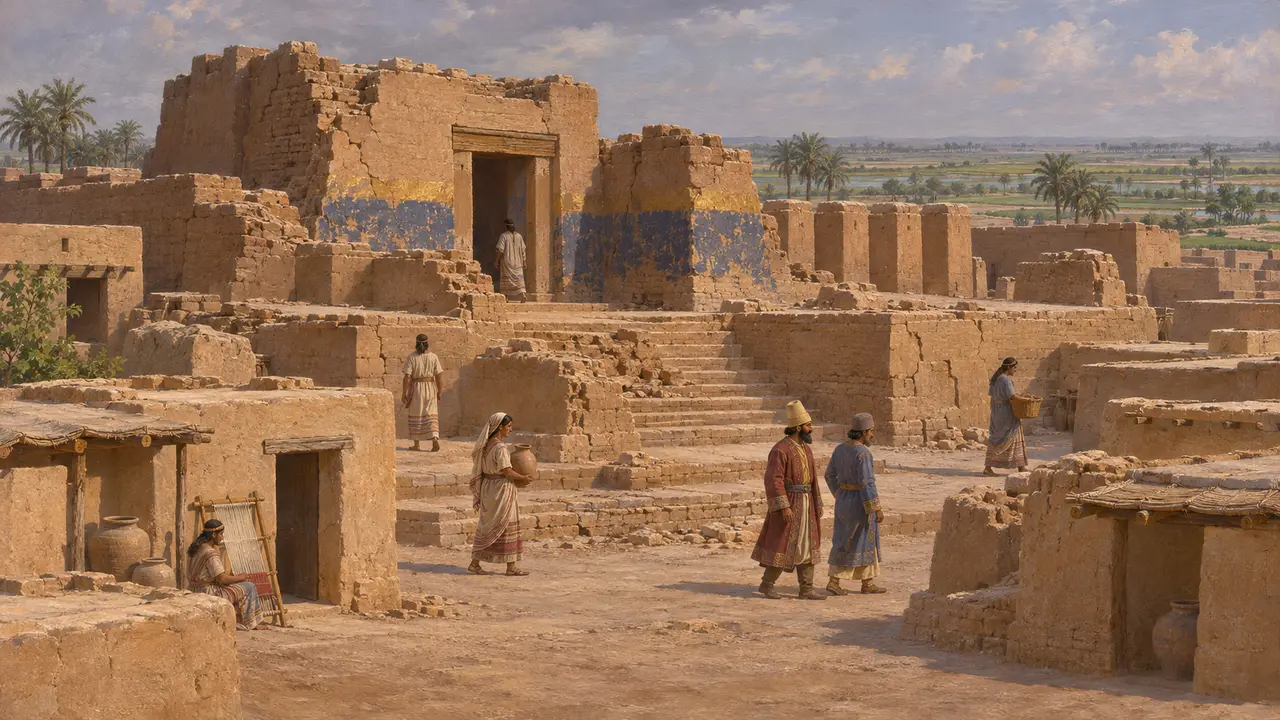
In the recordExcavations show settlement at Susa from about 4000, and for long periods it was a leading city of Elam, sharing that role with Anshan in the highlands. The Assyrian king Ashurbanipal sacked it in about 646 BCE and boasted of the destruction in his own inscriptions. The city was probably reoccupied by the time of Cyrus, though the remains of this period are thin, and no siege is recorded when it passed under Persian rule.
D. T. Potts, The Archaeology of Elam, 1999
Darius's foundation charter
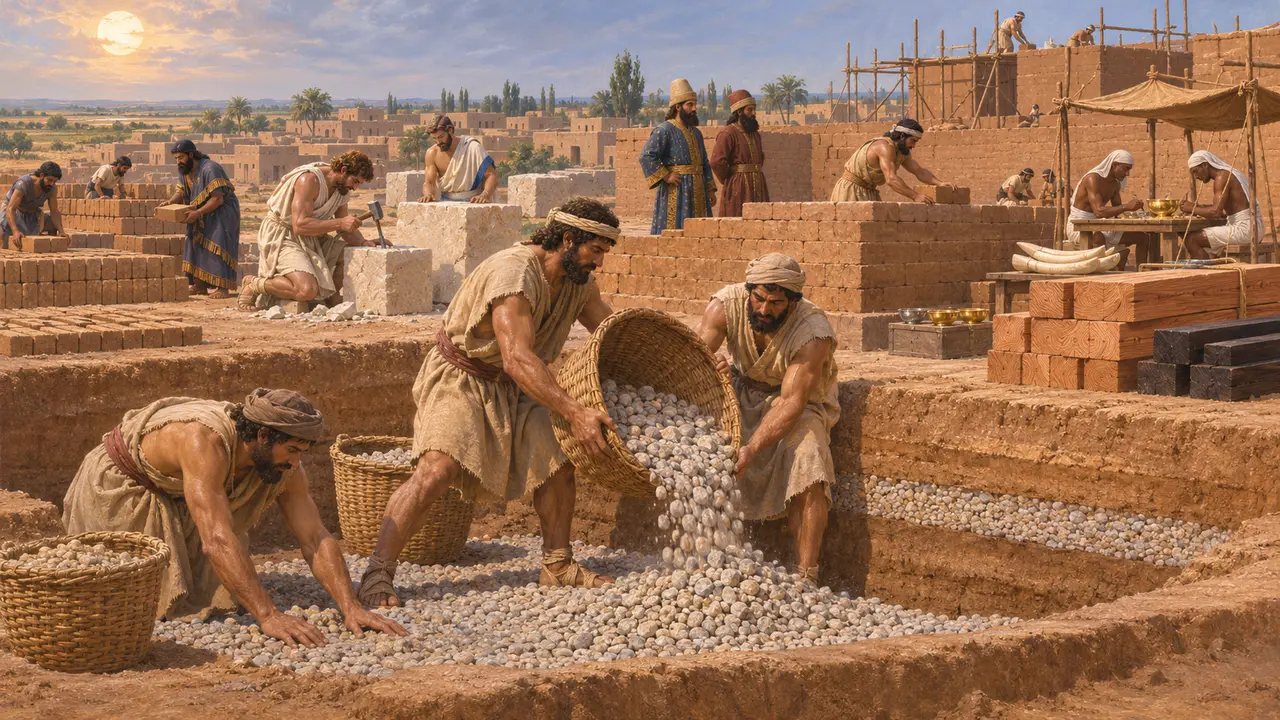
In the recordIn his charter DSf, Darius said his builders dug down to firm ground and filled the pit with gravel before raising the palace. He listed where things came from: cedar from Lebanon, gold from Sardis and Bactria, silver and ebony from Egypt, ivory from Kush and India. Ionians and Sardians cut the stone, Medes and Egyptians worked the gold, and Babylonians made the bricks. Behistun records that Darius put down three revolts in Elam between 522 BCE and about 519 BCE.
DSf; DB
Glazed brick and the Apadana
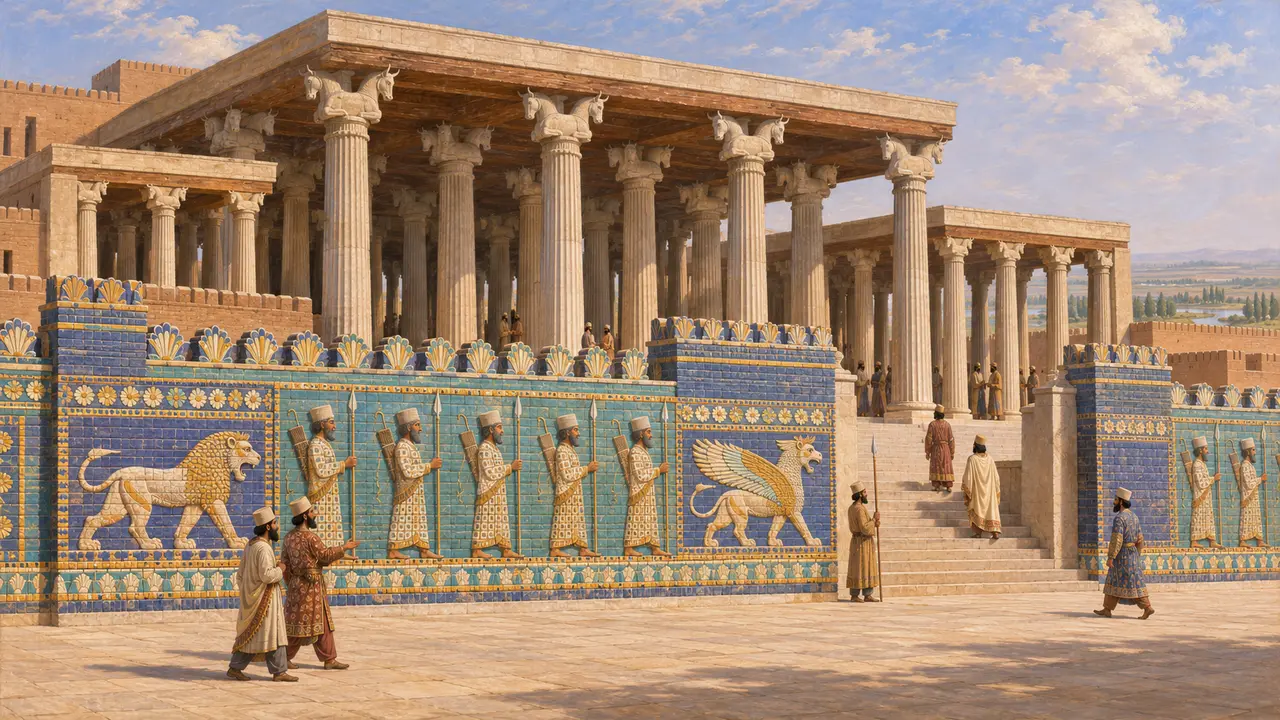
In the recordFrench excavators from the 1880s onwards uncovered the palace and the Apadana, a square hall of thirty-six stone columns with porches on three sides. Walls were faced with moulded, glazed bricks showing guardsmen with spears and bows, lions and winged creatures; many panels are now in the Louvre. A later inscription says the hall burned under Artaxerxes I and was rebuilt by Artaxerxes II.
J. Perrot (ed.), The Palace of Darius at Susa, 2013
The end of the Royal Road
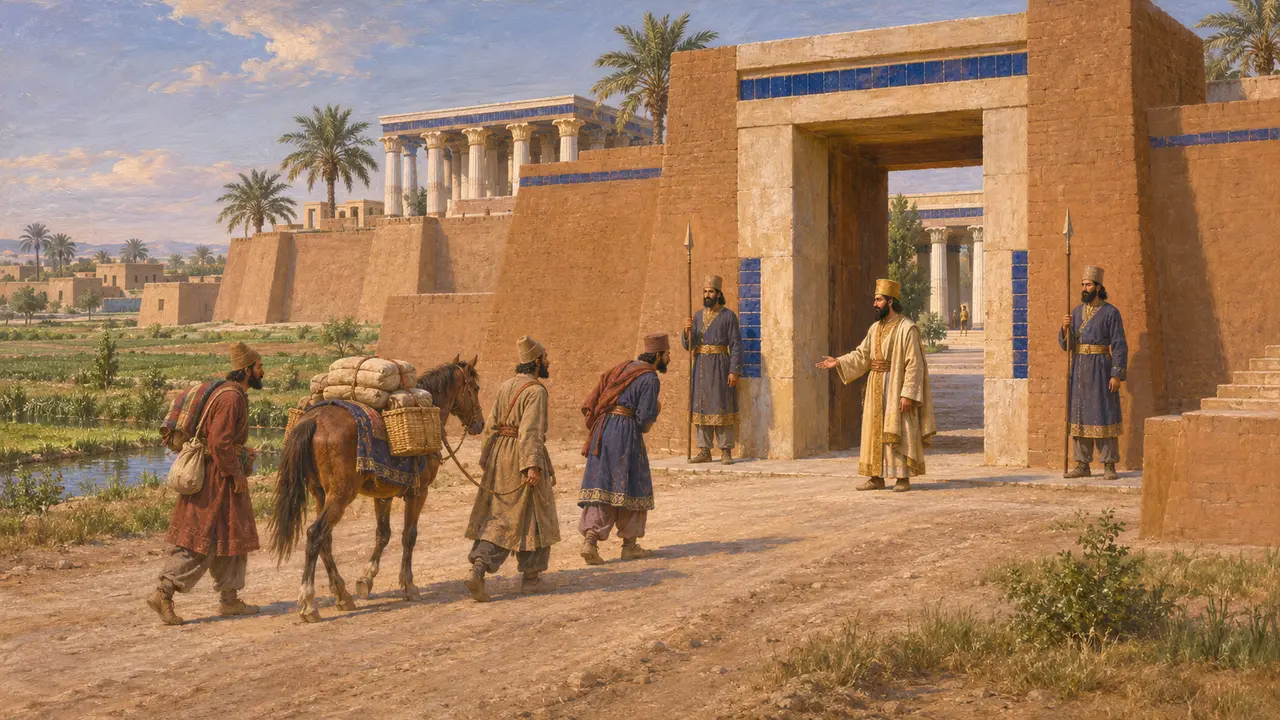
Ancient accountHerodotus describes the road from Sardis to Susa, with royal stations along its length, and reckons it at about 450 parasangs, some three months on foot. He adds three more days for the stretch from Ephesus on the coast up to Sardis. He also puts in the mouth of Aristagoras the claim that Susa held the King's treasures.
Herodotus 5.49; Herodotus 5.52-54
Capital or one seat among several
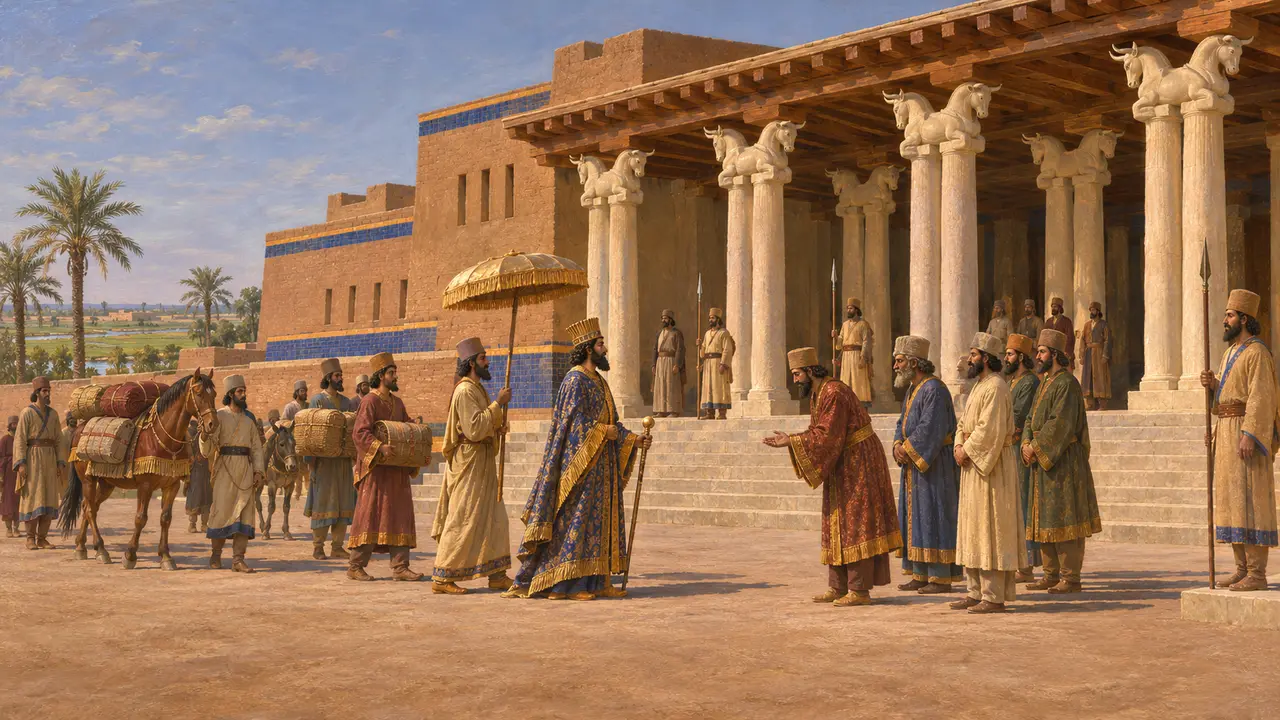
DisputedGreek writers treated Susa as the chief city of the Persian kings, and Aeschylus set his Persians there. Xenophon says the court moved with the seasons between Babylon, Susa and Ecbatana. Historians agree the King travelled between several residences, including Persepolis, but debate how regular this cycle was and how far Susa outranked the others.
Xenophon, Cyropaedia 8.6.22; P. Briant, From Cyrus to Alexander, 2002
Sources
- DSf
- Herodotus 5.52-54
- J. Perrot (ed.), The Palace of Darius at Susa, 2013
- P. Briant, From Cyrus to Alexander, 2002
- D. T. Potts, The Archaeology of Elam, 1999
- DB