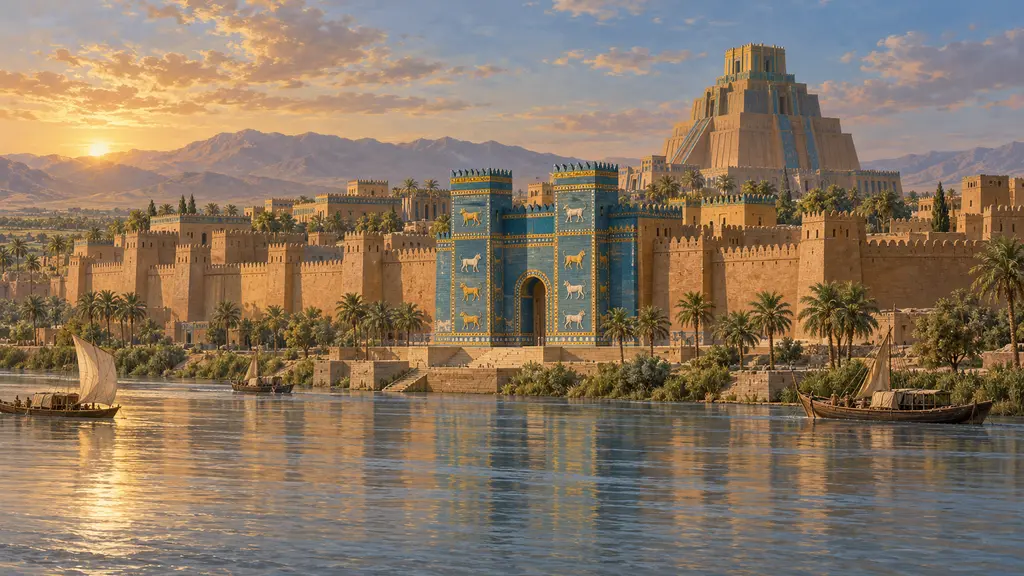
Babylon
Great city on the Euphrates, taken by Cyrus in 539 BCE, rebel seat under Darius
In the game: Level 1: The Founder's Tomb, Level 2: The Spear-bearer, Level 3: The Lie, Level 5: The Charter
Babylon was the largest and richest city of Mesopotamia and the capital of the last Babylonian kings. Cyrus took it in 539, and it became one of the empire's royal cities and a great source of tax. Twice in 522-521 it rose against Darius under men who each claimed to be Nebuchadnezzar, son of its last native king.
In the game: Babylon is not one of the game's levels. It appears only in the Chronicle, which notes Cyrus's capture of the city in 539 and the two rebels who called themselves Nebuchadnezzar under Darius.
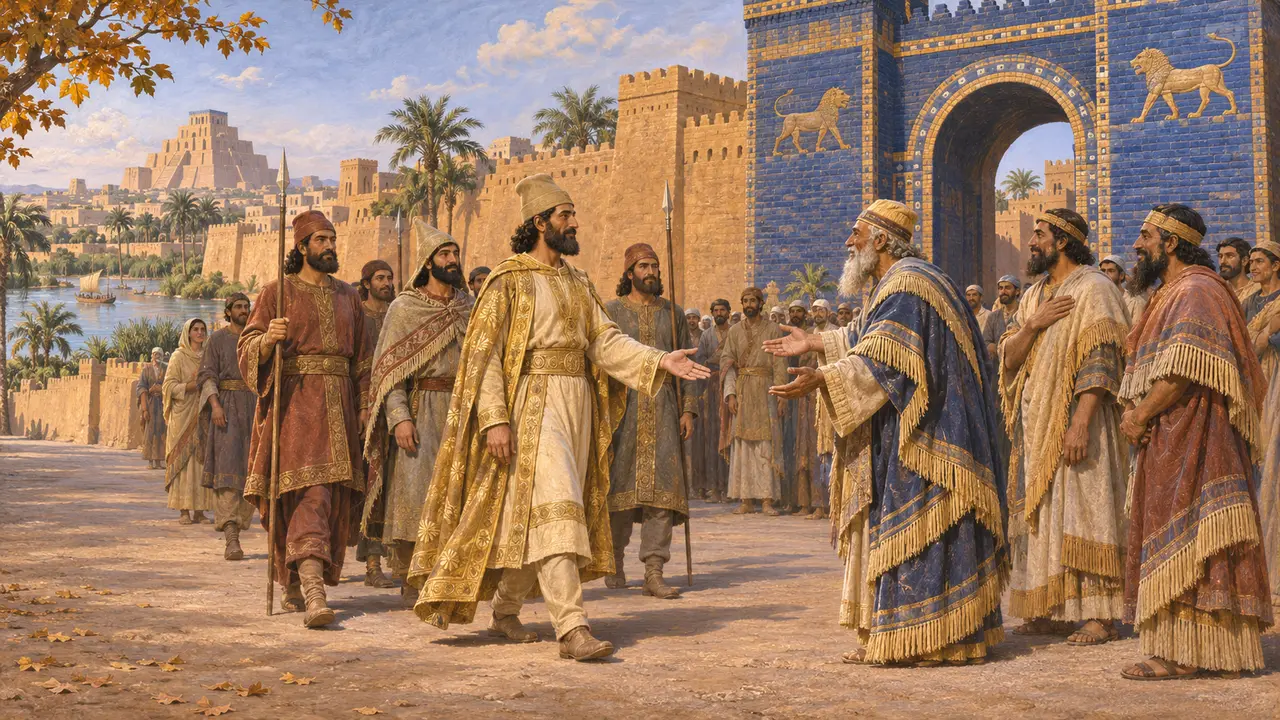
Cyrus enters the city
In the recordThe Nabonidus Chronicle says Cyrus defeated the Babylonian army at Opis on the Tigris in autumn 539, then took Sippar without a battle. His general Ugbaru entered Babylon two days later, also without fighting, and Cyrus himself arrived a little over two weeks later. The Cyrus Cylinder, written for the new king, claims the god Marduk chose Cyrus to replace Nabonidus and that Cyrus returned displaced gods to their shrines.
Nabonidus Chronicle (Grayson, Chronicle 7); Cyrus Cylinder
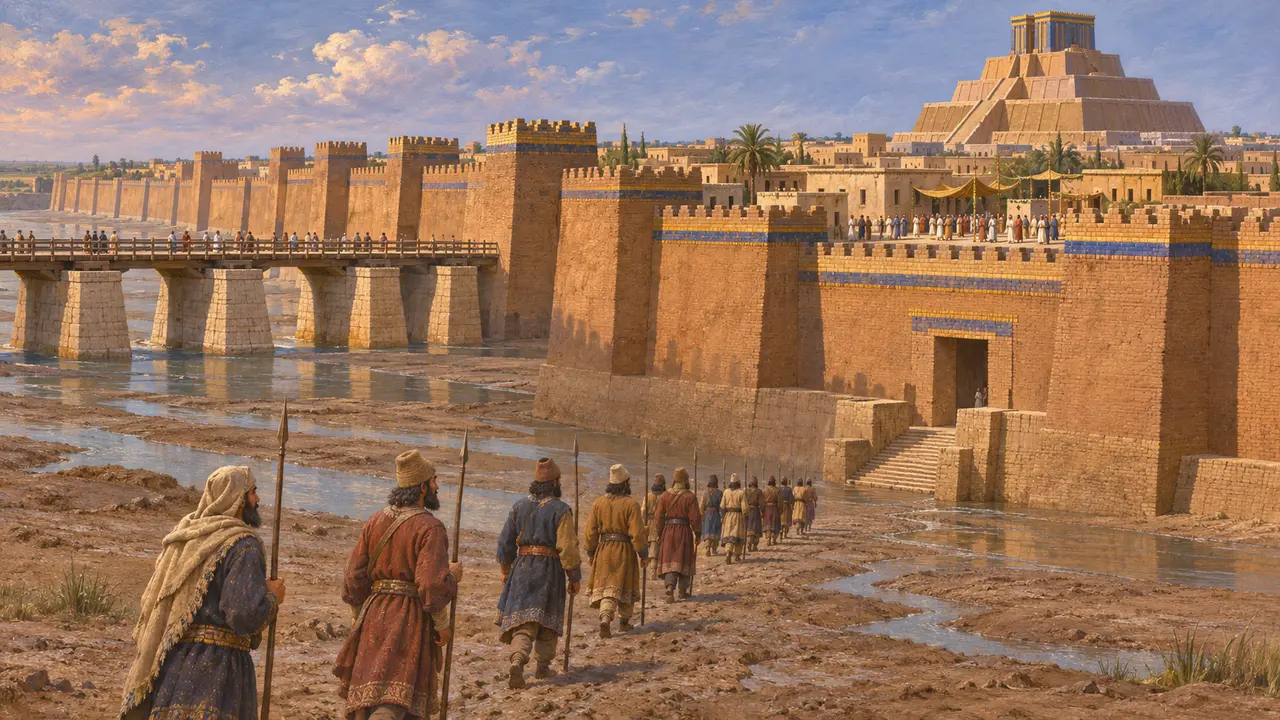
Herodotus describes the walls and the river
Ancient accountHerodotus describes Babylon's huge walls, its bridge across the Euphrates and the temple of Bel. He says Cyrus diverted the river and sent troops along the dry bed, so the city fell while people in its centre were still celebrating a festival. The Babylonian chronicle mentions no siege or river trick, only an entry without a battle, so his version is probably shaped by later storytelling.
Herodotus 1.178-191
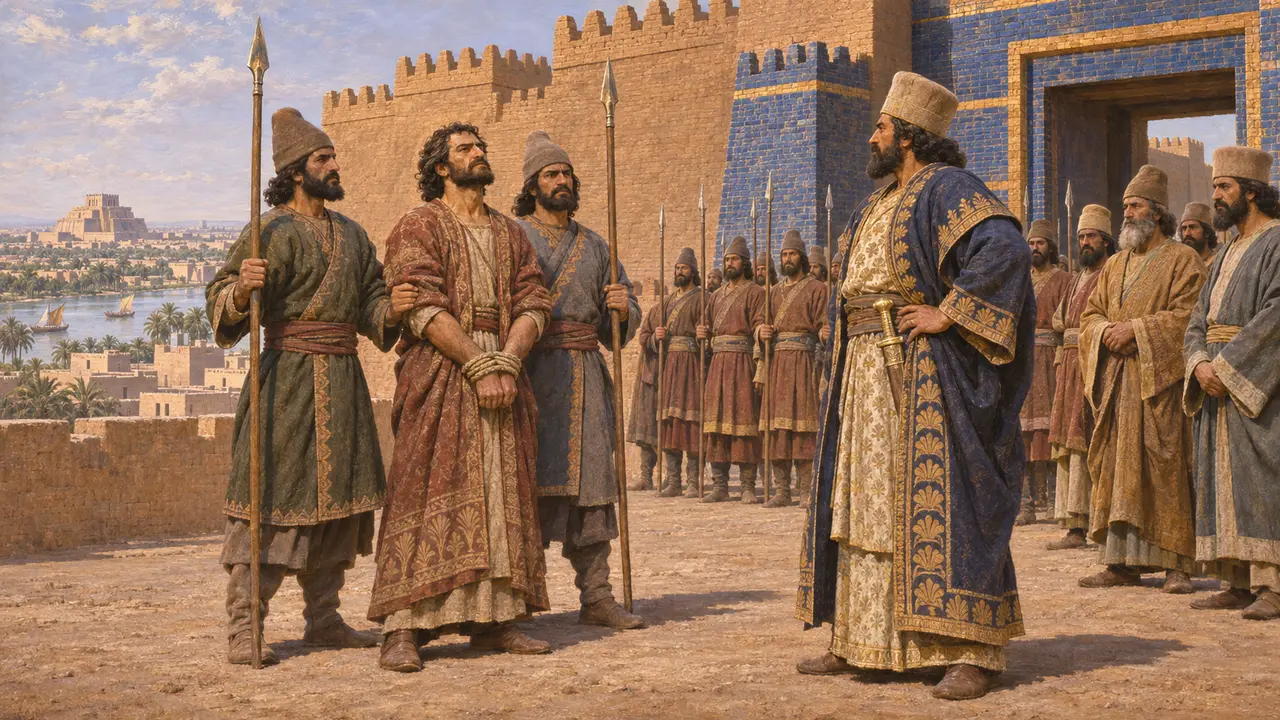
Two rebel Nebuchadnezzars
In the recordDarius says that in 522 Nidintu-Bel seized Babylon calling himself Nebuchadnezzar, son of Nabonidus. Darius defeated him on the Tigris and at Zazana on the Euphrates and put him to death in Babylon. In 521 Arakha, an Armenian, made the same claim. Darius's general Vindafarna (Intaphernes) captured him, and he was impaled at Babylon.
DB §16-20; DB §49-50
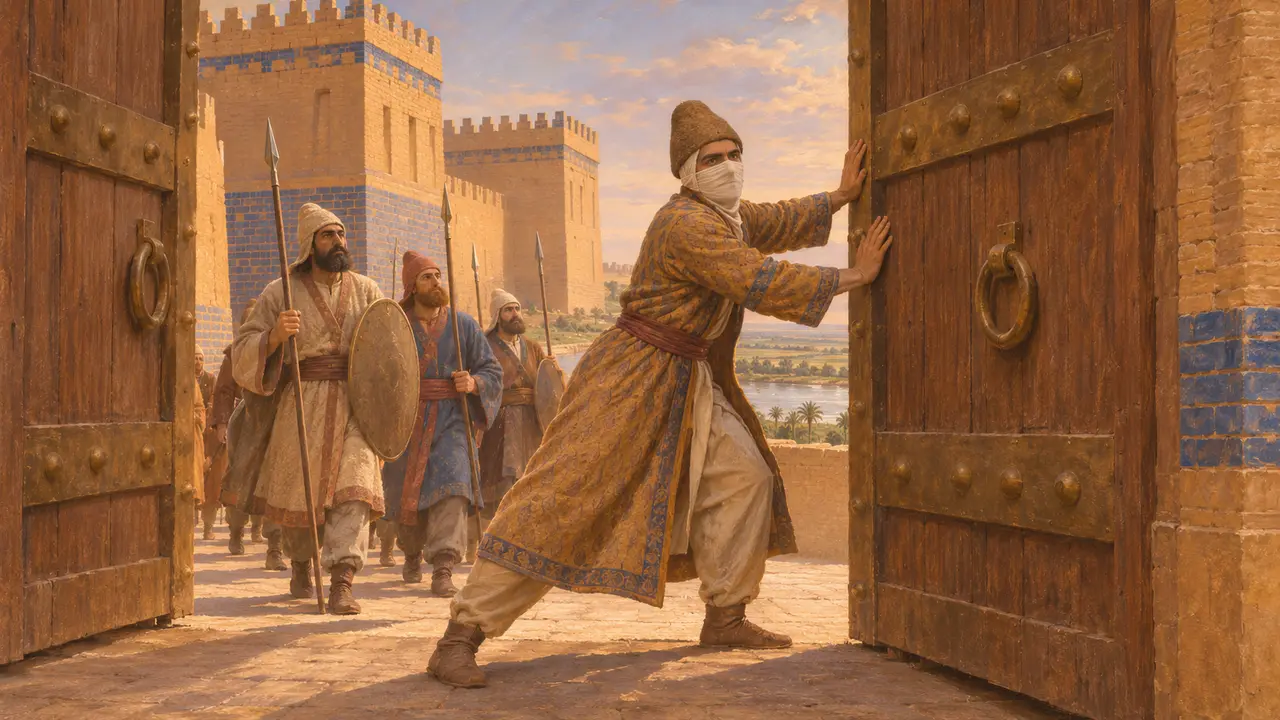
Zopyrus and the long siege
Later legendHerodotus tells of a single Babylonian revolt against which Darius laid siege for about twenty months. A noble named Zopyrus cut off his own nose and ears, went over to the Babylonians as a supposed victim of Darius, won their trust and opened the gates. The tale is a moral story of loyalty, and it does not match the two separate revolts in Darius's own record.
Herodotus 3.150-160
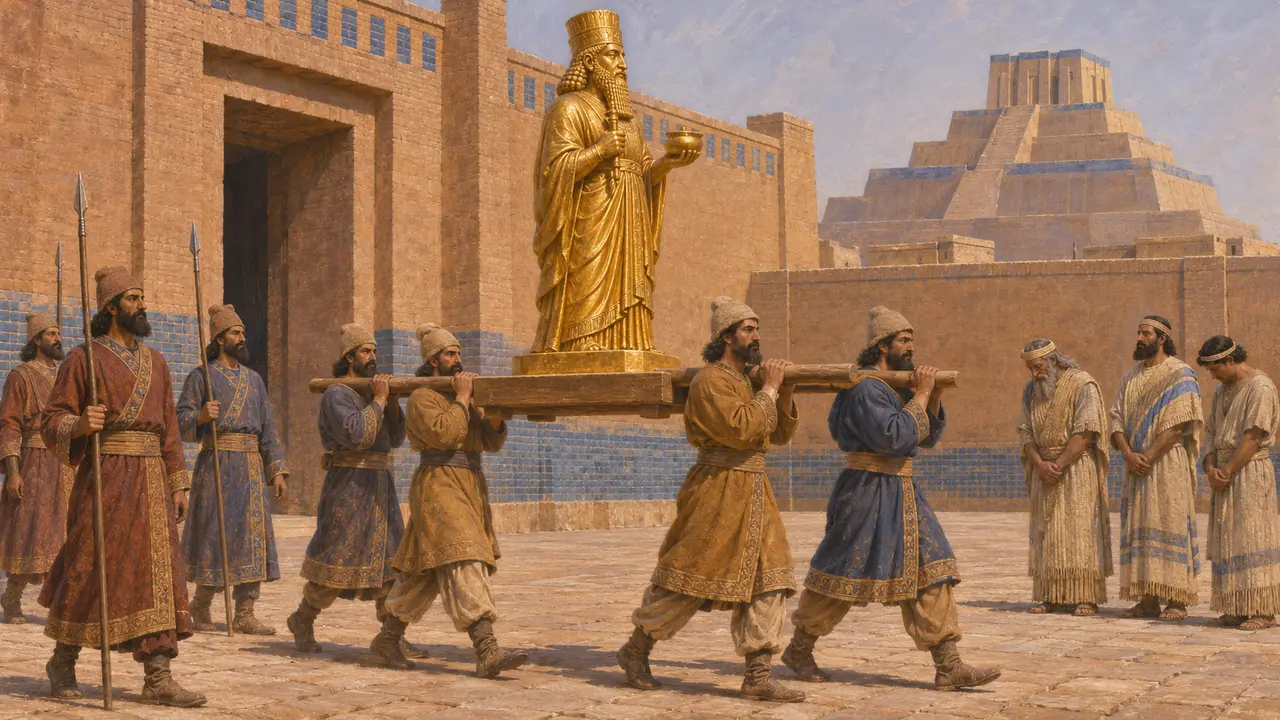
Xerxes and the revolts of 484
DisputedBabylonian tablets name two more rebel kings, Bel-shimanni and Shamash-eriba, in Xerxes' second year, about 484. Many family archives in northern Babylonia end at that time. Herodotus says Xerxes carried off a gold statue from the temple of Bel, and Arrian says Xerxes destroyed the temple. Historians still argue how harsh the reprisals were, and the older view that Xerxes razed the great temple is now widely doubted.
Herodotus 1.183; Arrian, Anabasis 7.17; C. Waerzeggers, The Babylonian Revolts against Xerxes and the End of Archives, 2003/2004
Sources
- Nabonidus Chronicle (A. K. Grayson, Assyrian and Babylonian Chronicles, 1975)
- Darius, Behistun inscription (DB)
- Herodotus, Histories 1.178-191, 3.150-160
- A. Kuhrt, The Persian Empire: A Corpus of Sources, 2007
- P. Briant, From Cyrus to Alexander, 2002
- C. Waerzeggers, The Babylonian Revolts against Xerxes and the End of Archives, 2003/2004