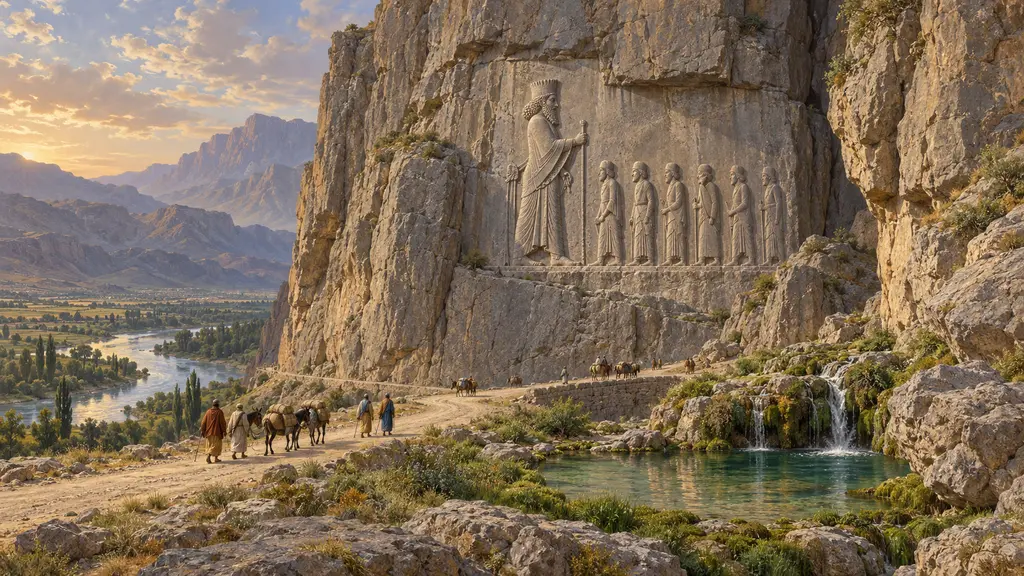
Behistun (Bagastana)
Cliff monument of Darius I on the road to Ecbatana, Media, carved about 520-518 BCE
In the game: Level 3: The Lie
Behistun is a cliff in the Zagros mountains, near modern Kermanshah, where Darius I had a relief and his account of winning the throne carved after the revolts of 522-521. Written in Elamite, Babylonian and Old Persian, it is the longest Achaemenid royal inscription and the only one that narrates events at length. In the nineteenth century it became a key to reading cuneiform.
In the game: The Bagastana level is set in 522-521, the year of revolts the monument records; the carving itself came afterwards, about 520-518. The chronicle note's credit to Rawlinson is fair but simplified, as others shared the decipherment.
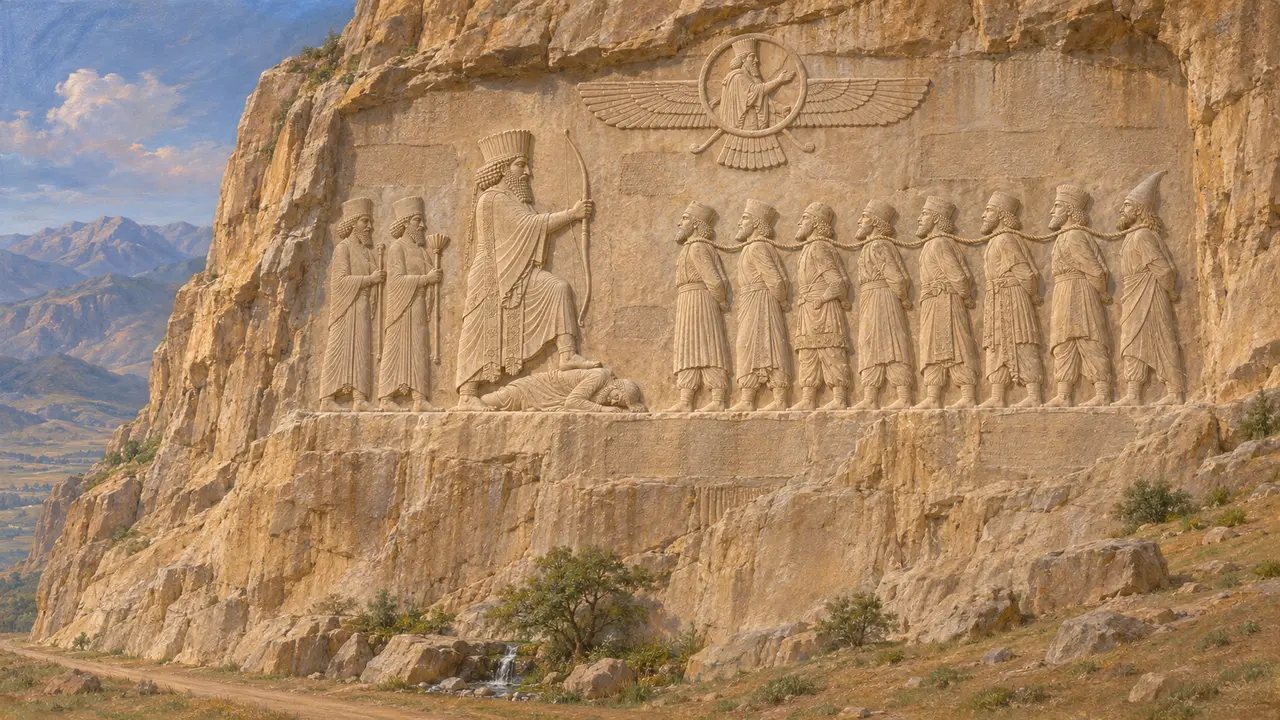
A royal relief above the Ecbatana road
In the recordThe monument sits high on the cliff of Mount Bisotun, some 60 metres above a spring and the old road from Babylonia to Ecbatana. The relief shows Darius holding a bow, one foot on the fallen Gaumata, facing nine rebel leaders roped together at the neck, with a winged figure in a disc above. Two attendants stand behind the King, and a short label names each captive.
Darius, Behistun relief labels (DBa-DBk)
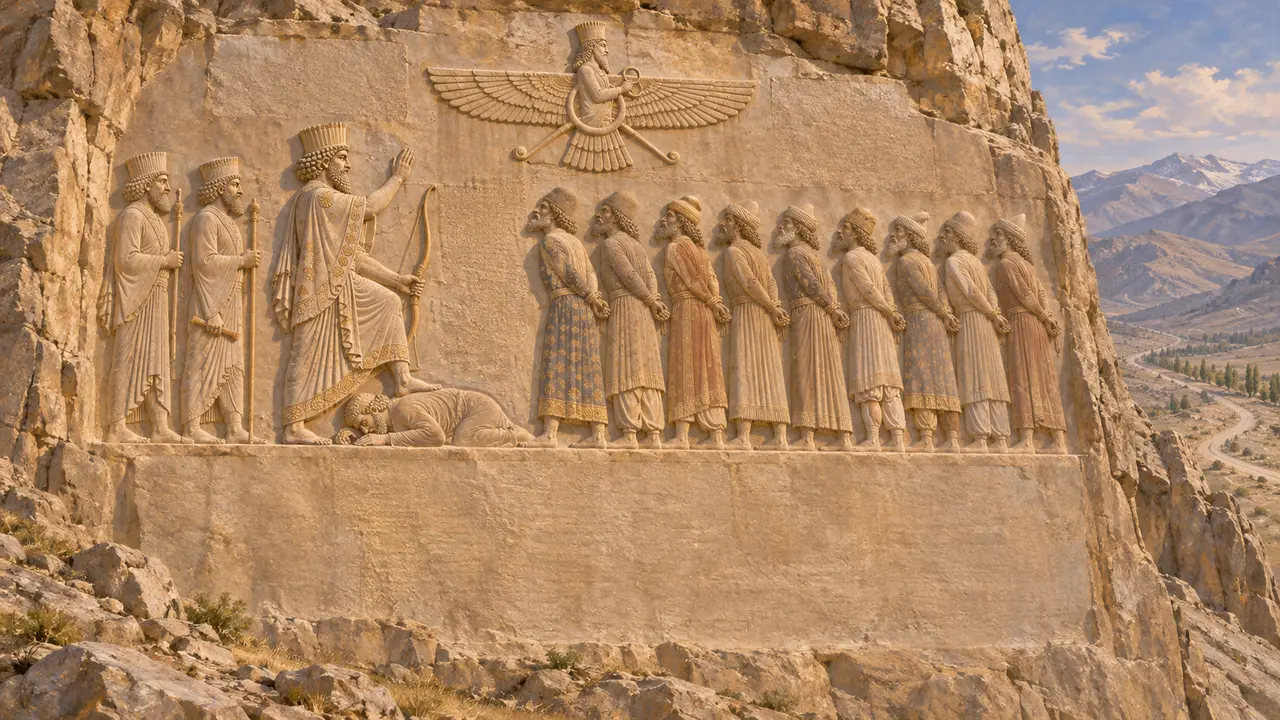
What Darius had written
In the recordDarius traces his ancestry back to Achaemenes and tells how he killed Gaumata, a magus who had seized the throne by claiming to be Bardiya. He then lists the rebels he defeated, among them Fravartish in Media, Vahyazdata in Persis and Arakha in Babylon, and names the six men who helped him. He ordered copies sent through the empire. An Aramaic version survives on papyrus from Elephantine, and fragments of a Babylonian version survive from Babylon.
DB §§1-4, 13, 52, 68, 70
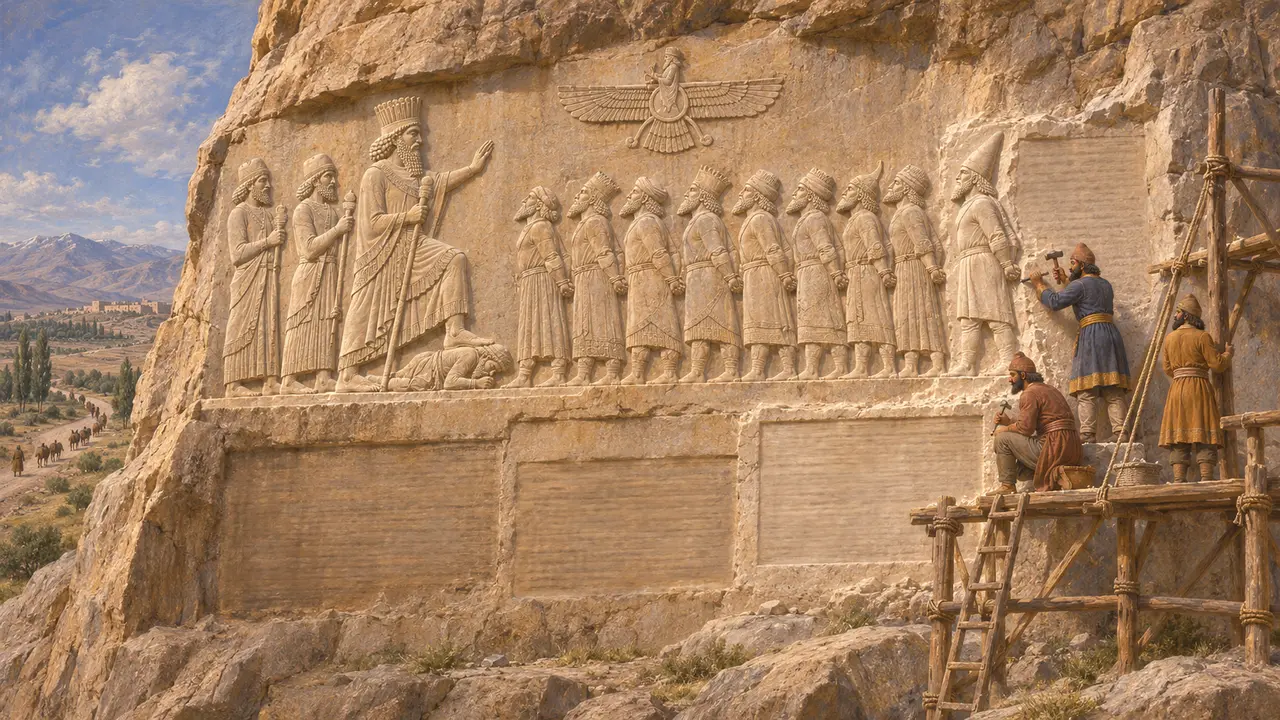
A monument built in stages
DisputedThe rock shows the work grew in phases: the relief and an Elamite text, then a Babylonian version, then the Old Persian. The later figure of the Saka captive Skunkha cut into the first Elamite text, which was carved again elsewhere. Scholars debate whether Old Persian script was invented for this monument, as DB §70 may imply. They also debate whether the man Darius killed was an impostor, as Darius and Herodotus say, or the real Bardiya.
R. Schmitt, The Bisitun Inscriptions of Darius the Great, 1991; Herodotus 3.61-79
Rawlinson and the reading of cuneiform
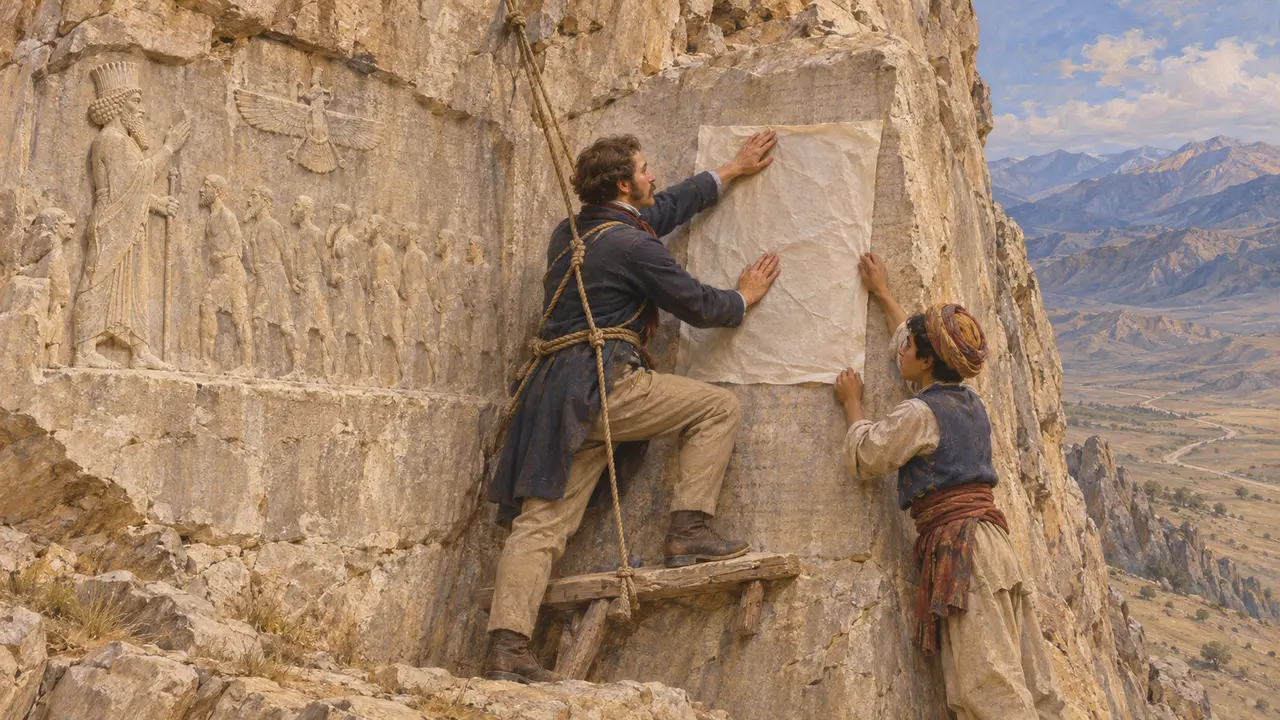
DisputedHenry Rawlinson, a British officer, began copying the Old Persian text in 1835 and returned in 1844 and 1847, when a local boy helped take paper squeezes of the Babylonian text. He published the Old Persian text in 1846-47, building on Grotefend's earlier work, and his Babylonian copy was central to reading Akkadian. Credit for the decipherment is still argued, since Edward Hincks, Jules Oppert and others made key advances independently.
H. C. Rawlinson, The Persian Cuneiform Inscription at Behistun, 1846-47
Semiramis and the place of the gods
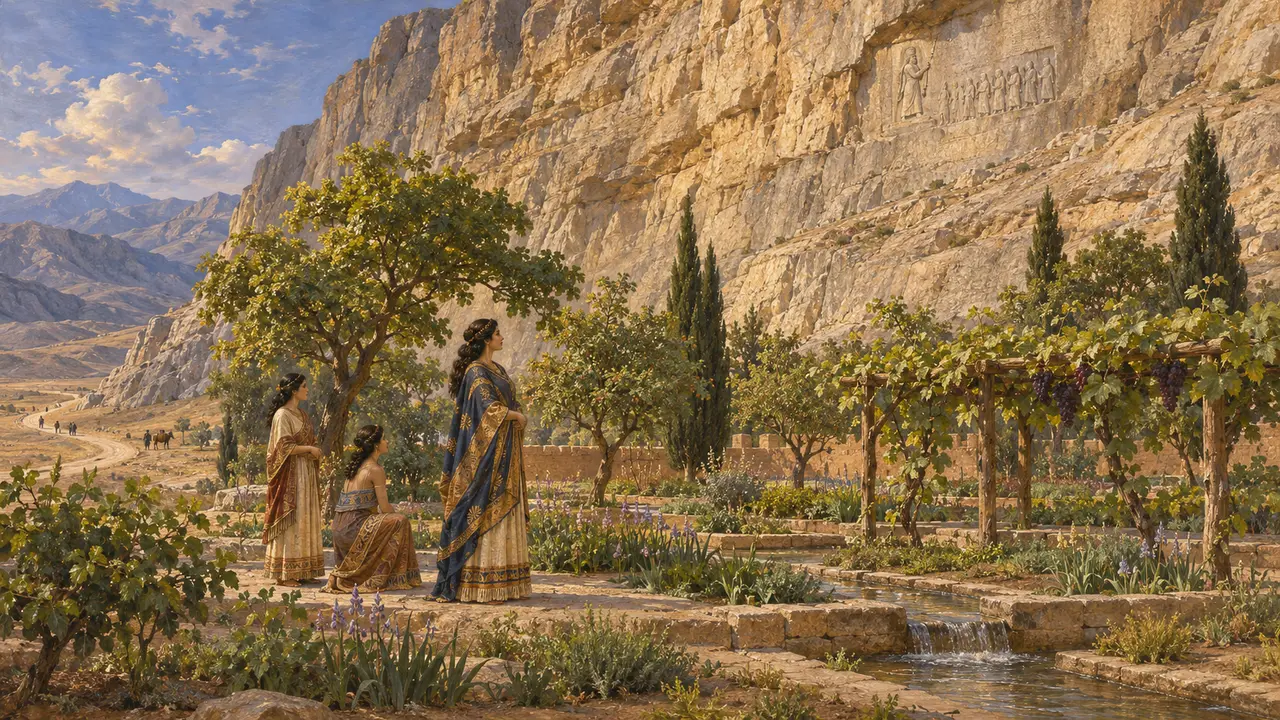
Later legendDiodorus, probably drawing on Ctesias, called the mountain Bagistanon and said it was sacred to Zeus. He credited the carving to the Assyrian queen Semiramis, who was said to have laid out a garden at its foot. The Greek name probably preserves a reconstructed Old Persian Bagastana, place of the gods, but the Semiramis story is a later invention. Medieval Persian poets linked the cliff to Farhad, who cut through mountains for love of Shirin.
Diodorus 2.13; Nizami, Khosrow and Shirin
Sources
- Darius, Behistun inscription (DB)
- R. Schmitt, The Bisitun Inscriptions of Darius the Great: Old Persian Text, 1991
- A. Kuhrt, The Persian Empire, 2007
- P. Briant, From Cyrus to Alexander, 2002
- Herodotus 3.61-88
- Diodorus 2.13