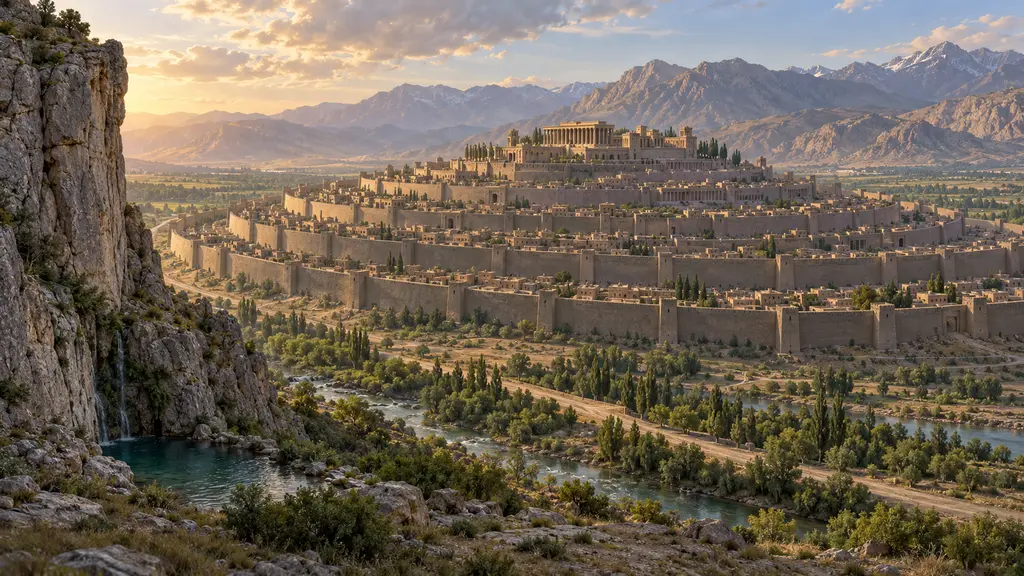
Ecbatana
Median capital and Persian royal residence, modern Hamadan, from about 550 BCE
In the game: Level 1: The Founder's Tomb, Level 3: The Lie
Ecbatana, Hagmatana in Old Persian, was the chief city of the Medes in the Zagros highlands, where modern Hamadan stands. Cyrus took it from Astyages in about 550, and it remained one of the royal centres of the empire. Darius executed the Median rebel Fravartish there in 521, so the city stood at the heart of both the Persian rise and the crisis that followed.
In the game: Ecbatana is not one of the game's levels; the chronicle names it as the Median capital where Fravartish was put to death, as the Behistun inscription records. The seven walls come only from Herodotus.
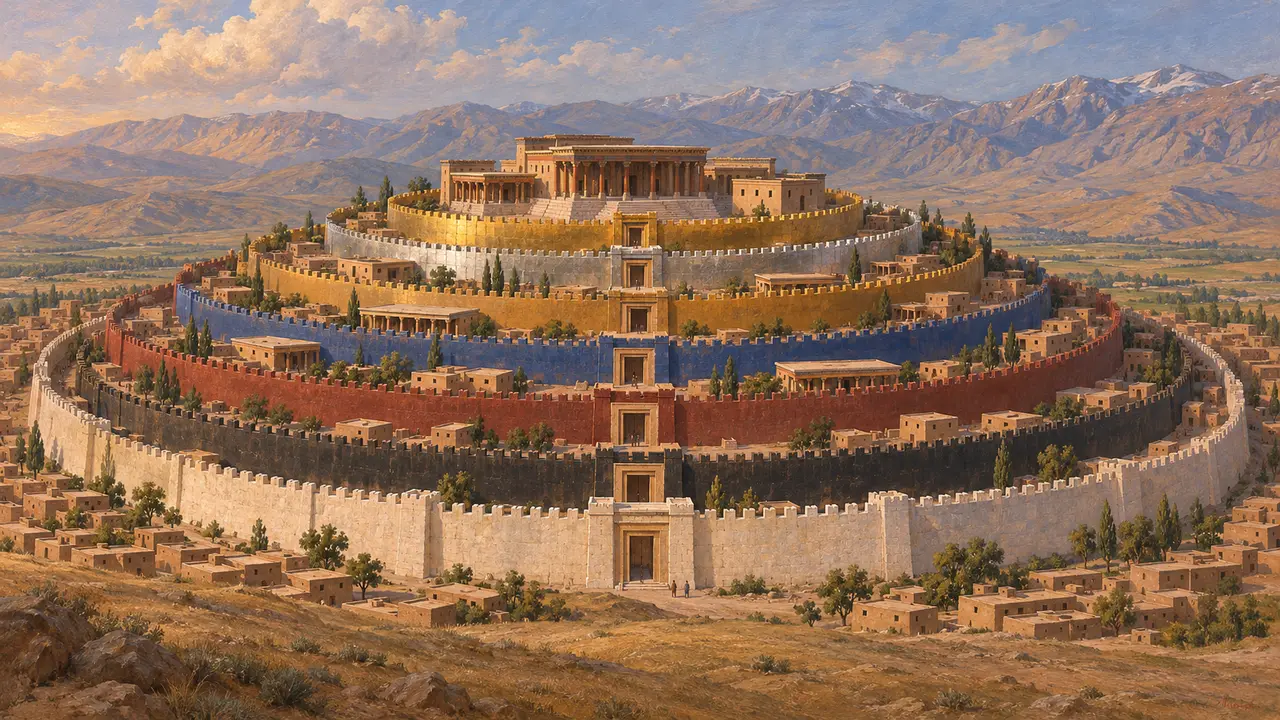
The city of Deioces in Herodotus
Ancient accountHerodotus says the Median king Deioces founded Ecbatana on a hill and ringed it with seven concentric walls. In his account the battlements of each ring were painted a different colour, the two innermost covered in silver and gold, with the king's palace and treasuries at the centre. No excavation has confirmed this plan. Many historians read it as a Greek picture of an eastern capital rather than a survey.
Herodotus 1.96-99
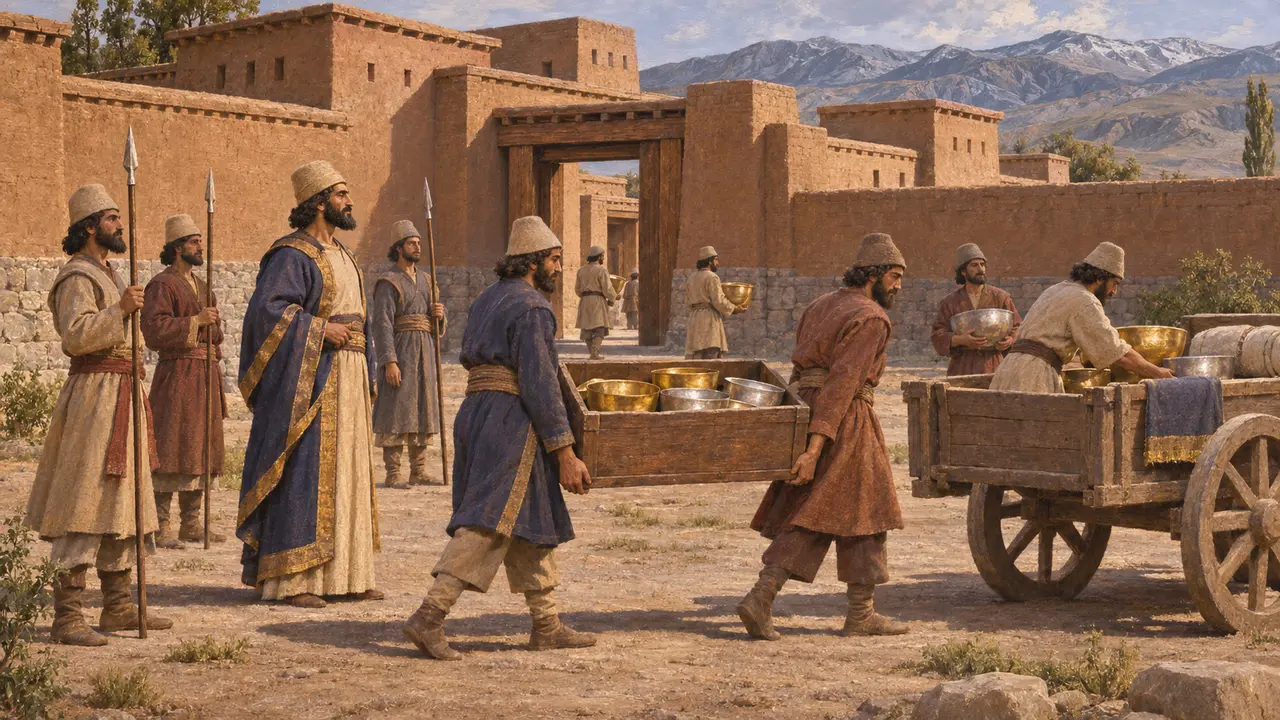
Taken by Cyrus
In the recordThe Nabonidus Chronicle, a Babylonian record, says that Astyages marched against Cyrus, king of Anshan, and that his own army rebelled and handed him over. Cyrus then went to Ecbatana, the royal city, and carried silver, gold and other goods back to Anshan. The entry falls in the sixth year of Nabonidus, about 550, and is the only near-contemporary record of the city's fall.
Nabonidus Chronicle (ABC 7), col. II
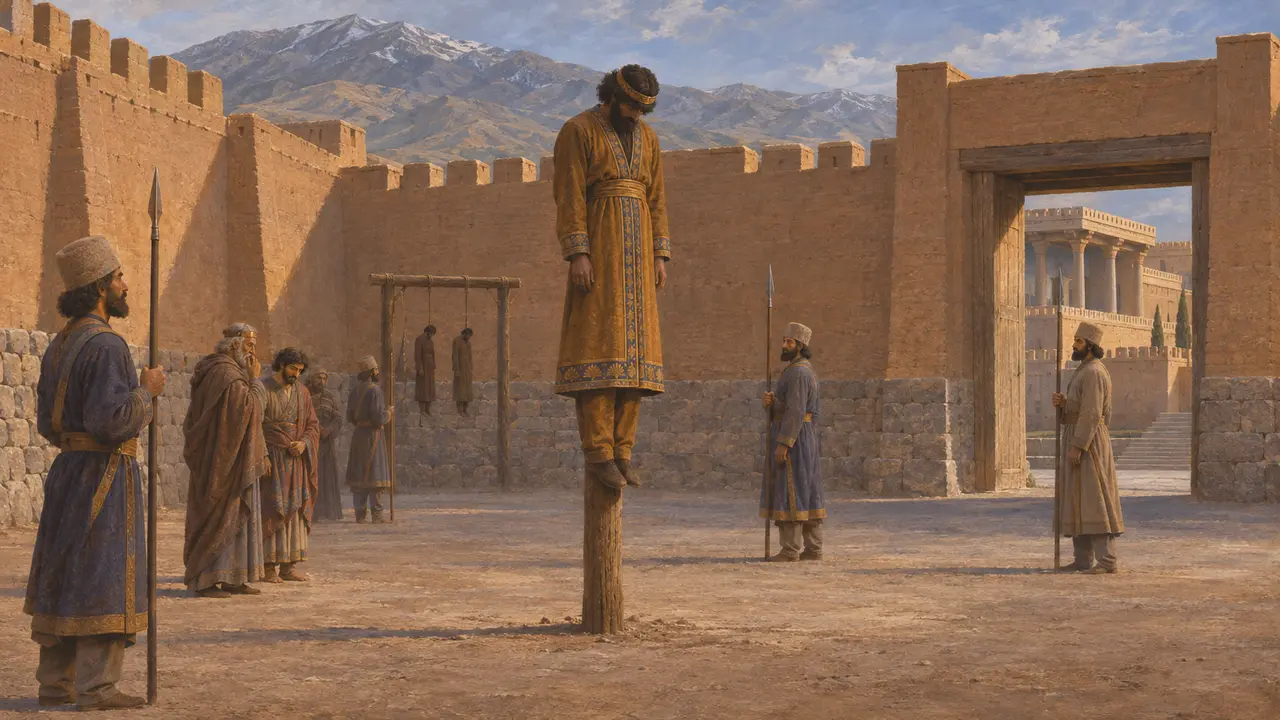
The end of Fravartish
In the recordIn the Behistun inscription Darius says that Fravartish, who claimed the Median throne as a descendant of Cyaxares, fled after his defeat and was captured at Raga. Darius had his nose, ears and tongue cut off and one eye put out, and kept him bound at the palace gate where all the people saw him. He then impaled him at Ecbatana and hanged his leading followers there within the fortress.
DB §§24, 31-32
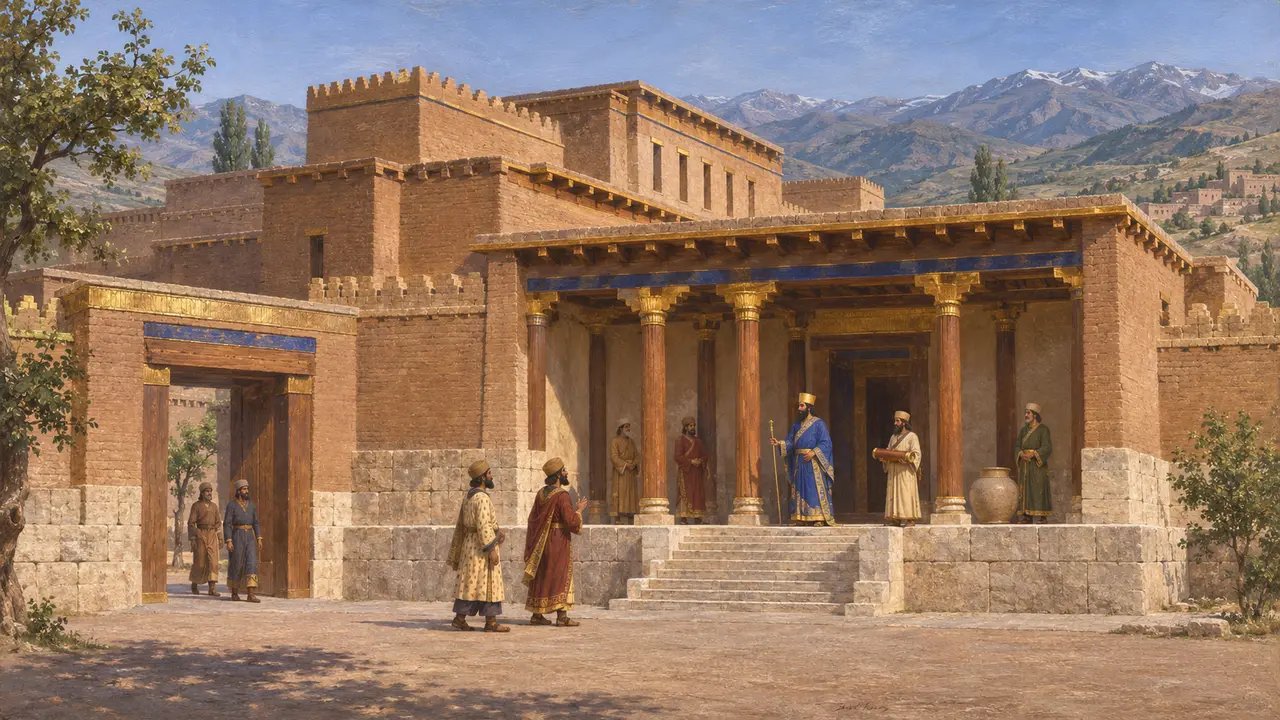
A residence of the Persian kings
Ancient accountXenophon, in his idealised life of Cyrus, says the king spent two summer months at Ecbatana, three spring months at Susa and seven winter months at Babylon, since the highland city was cool in the heat. The Book of Ezra, written later, places a scroll recording Cyrus's decree on the Jerusalem temple in the fortress at Ecbatana in Media. Both remember the city as a royal seat after the Median kings.
Xenophon, Cyropaedia 8.6.22; Ezra 6:2
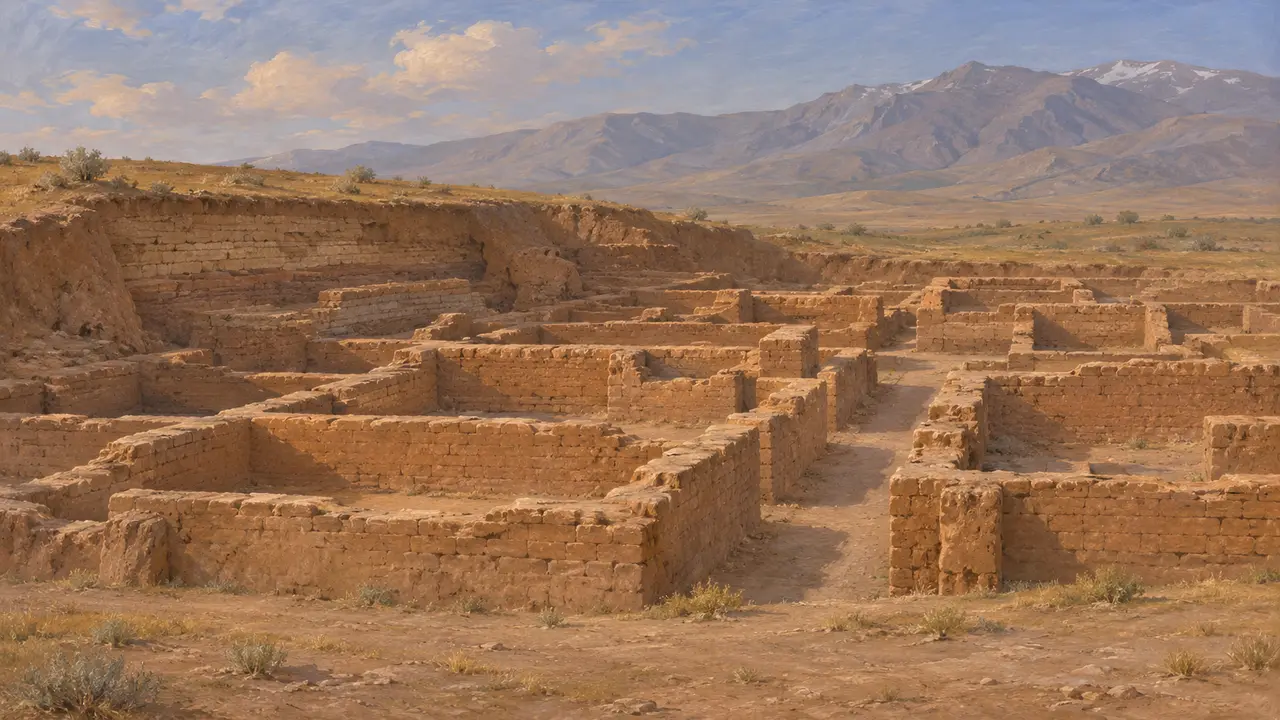
What lies under Hamadan
DisputedExcavations at Tepe Hegmataneh in Hamadan have uncovered a grid of mudbrick buildings that many scholars now date after the Achaemenids, while Median and early Persian levels lie under the modern city. Historians also argue over how large and centralised the Median kingdom was, since its picture as a great empire rests mainly on Herodotus. Gold tablets in the names of Ariaramnes and Arsames said to come from Hamadan are suspected forgeries or later works.
H. Sancisi-Weerdenburg, Was there ever a Median empire?, 1988
Sources
- DB §§24, 31-32
- Nabonidus Chronicle (ABC 7)
- Herodotus 1.96-99
- Xenophon, Cyropaedia 8.6.22
- P. Briant, From Cyrus to Alexander, 2002
- H. Sancisi-Weerdenburg, Was there ever a Median empire?, in Achaemenid History III, 1988