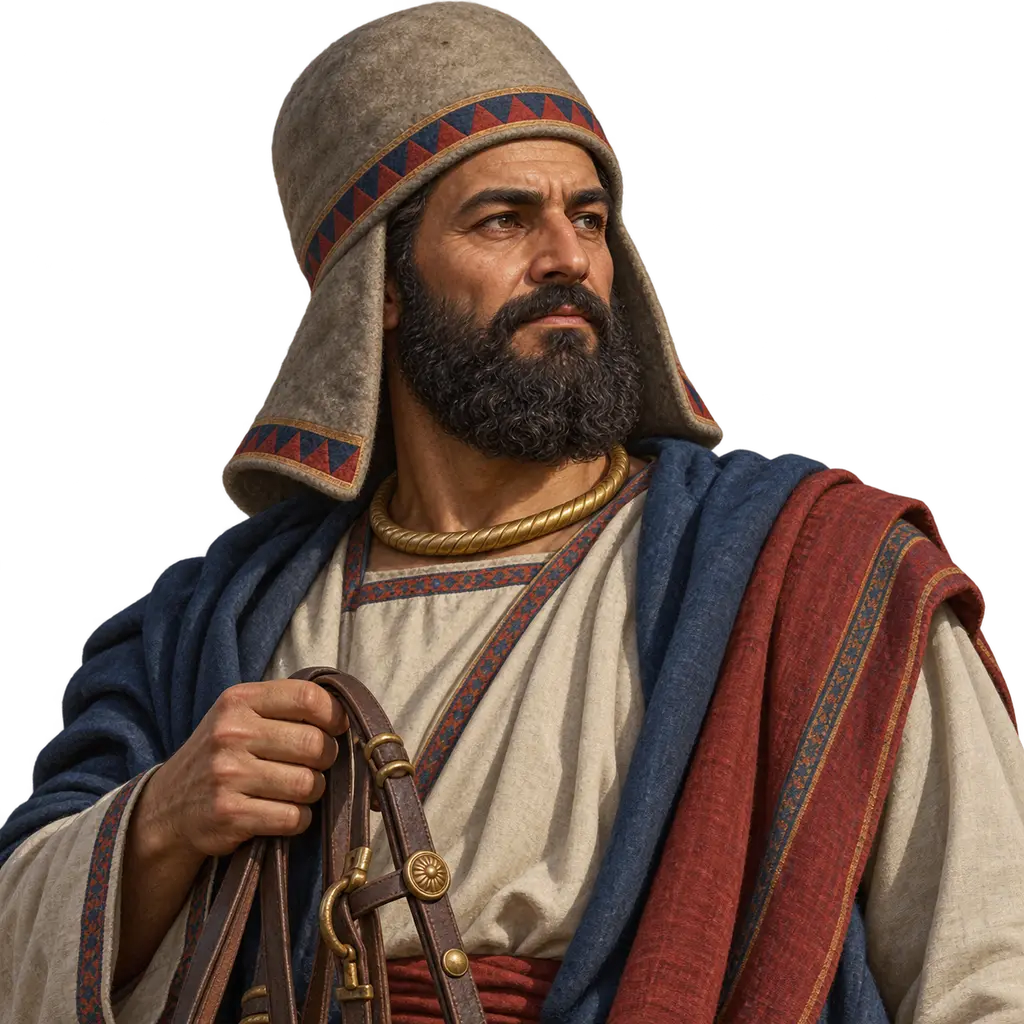
The Medes
Iranian-speaking people of the Zagros, centred on Ecbatana, 9th-5th centuries BCE
In the game: Level 1: The Founder's Tomb, Level 3: The Lie
The Medes were an Iranian-speaking people of the central Zagros whose chief city was Ecbatana. Their king helped bring down Assyria in 612, and Herodotus says Median kings ruled the Persians until Cyrus overthrew Astyages in about 550. Under the Achaemenids they remained the empire's closest partners, so close that Greeks often called the Persians 'Medes'.
In the game: The game shows Medes as wool- and timber-trading herdsmen, as levies and as Fravartish's rebels at Bagastana. The trade is simplified: Media was famed for horses, and the revolt centred on Ecbatana, not Behistun itself.
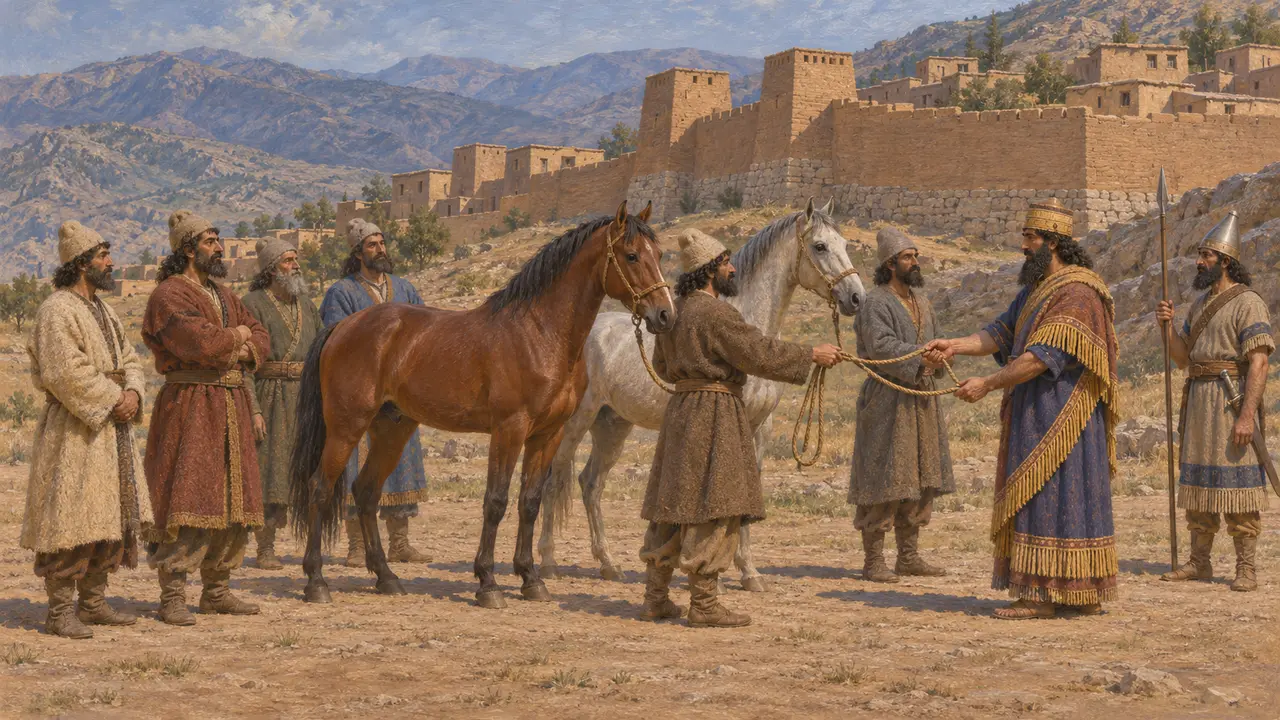
Medes in Assyrian and Babylonian records
In the recordAssyrian royal inscriptions name the land of Mada from the 9th century onwards. They describe many separate chiefs ruling fortified towns, and Assyrian kings boasted of taking horses from them as tribute. A Babylonian chronicle records that Umakishtar, the king Greeks called Cyaxares, took Assur in 614 and joined Nabopolassar of Babylon in the capture of Nineveh in 612.
Assyrian royal annals; Babylonian Chronicles, Fall of Nineveh Chronicle
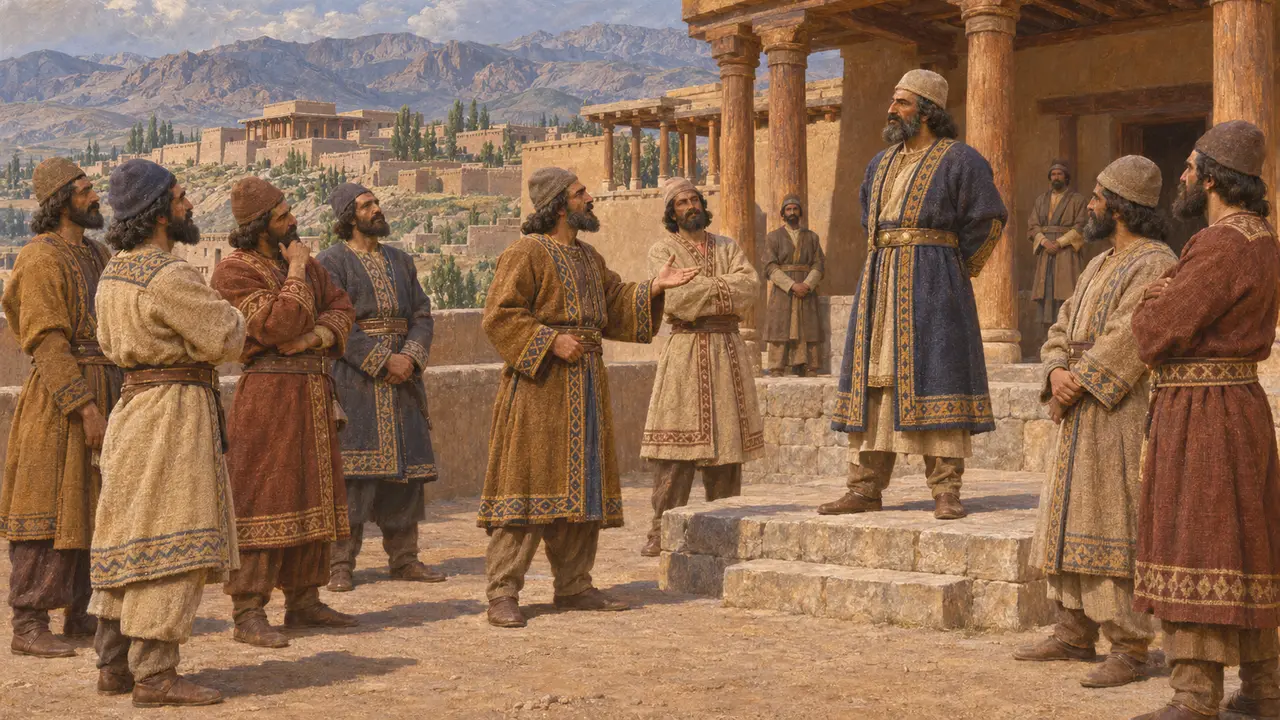
A Median kingdom or a league of chiefs
DisputedHerodotus gives the Medes four kings, Deioces, Phraortes, Cyaxares and Astyages, and says they built Ecbatana and ruled upper Asia. Some historians, following H. Sancisi-Weerdenburg, doubt that a lasting Median state ever existed, since no Median royal inscription or archive has been found. Others accept a powerful but loosely held kingdom centred on Ecbatana, whose customs the Persians later borrowed.
Herodotus 1.95-130; H. Sancisi-Weerdenburg, Achaemenid History III, 1988
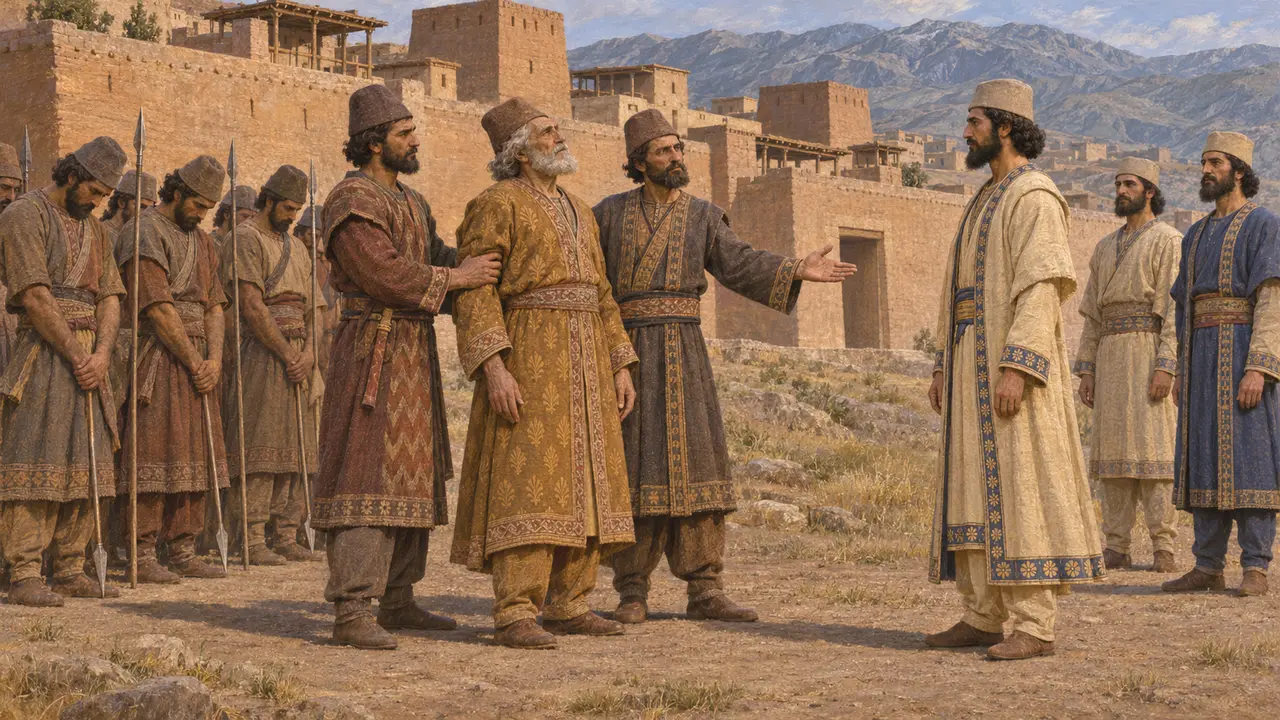
The fall of Astyages
In the recordThe Nabonidus Chronicle records that Ishtumegu (Astyages) marched against Cyrus, but his own army rebelled and handed him over. Cyrus then took Ecbatana and carried its treasure to Anshan. The entry falls in about 550. A cylinder of Nabonidus from Sippar also mentions Cyrus scattering the Medes and capturing Astyages. Herodotus says the noble Harpagus arranged the betrayal, while Ctesias, known only from later excerpts, described a longer war.
Nabonidus Chronicle; Sippar Cylinder of Nabonidus; Herodotus 1.123-130
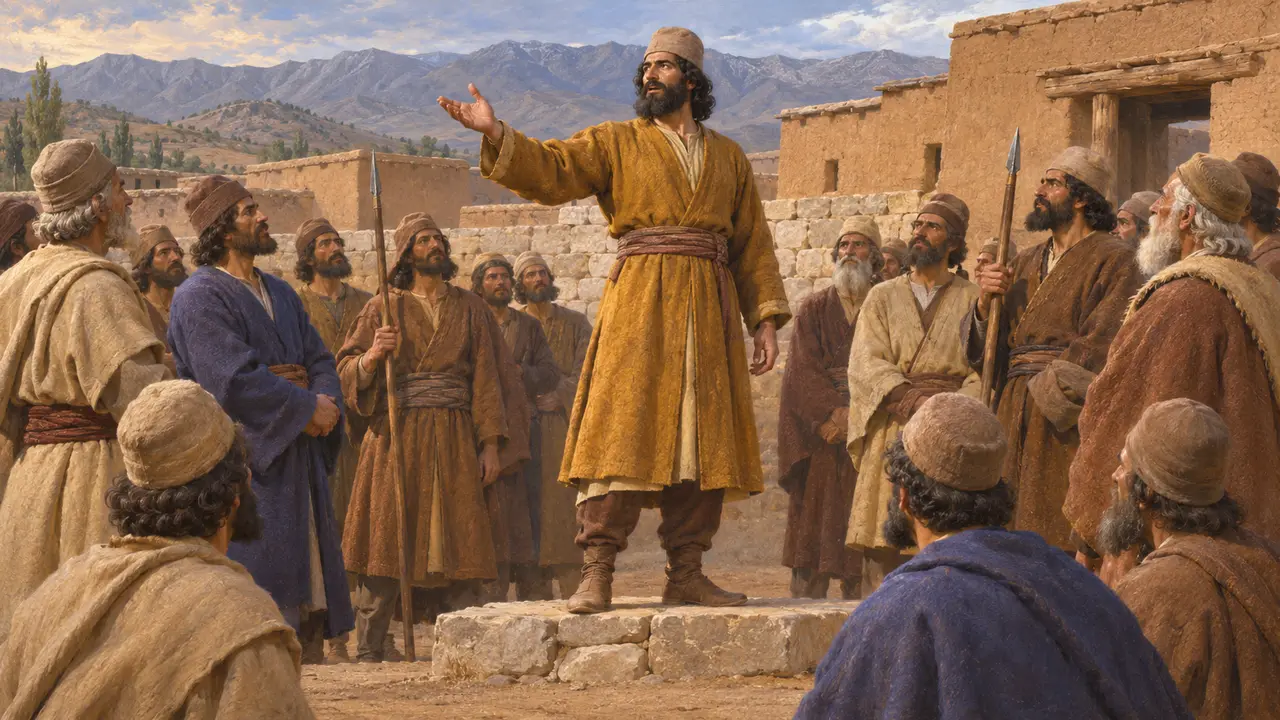
Fravartish and the revolt of 522-521
In the recordDarius's Behistun inscription says that a Mede named Fravartish claimed to be Khshathrita of the family of Cyaxares, and that the people of Media went over to him. Darius's generals fought his supporters, and Darius himself defeated him at Kunduru. Fravartish fled towards Raga, was captured, mutilated and impaled at Ecbatana.
DB §24-32
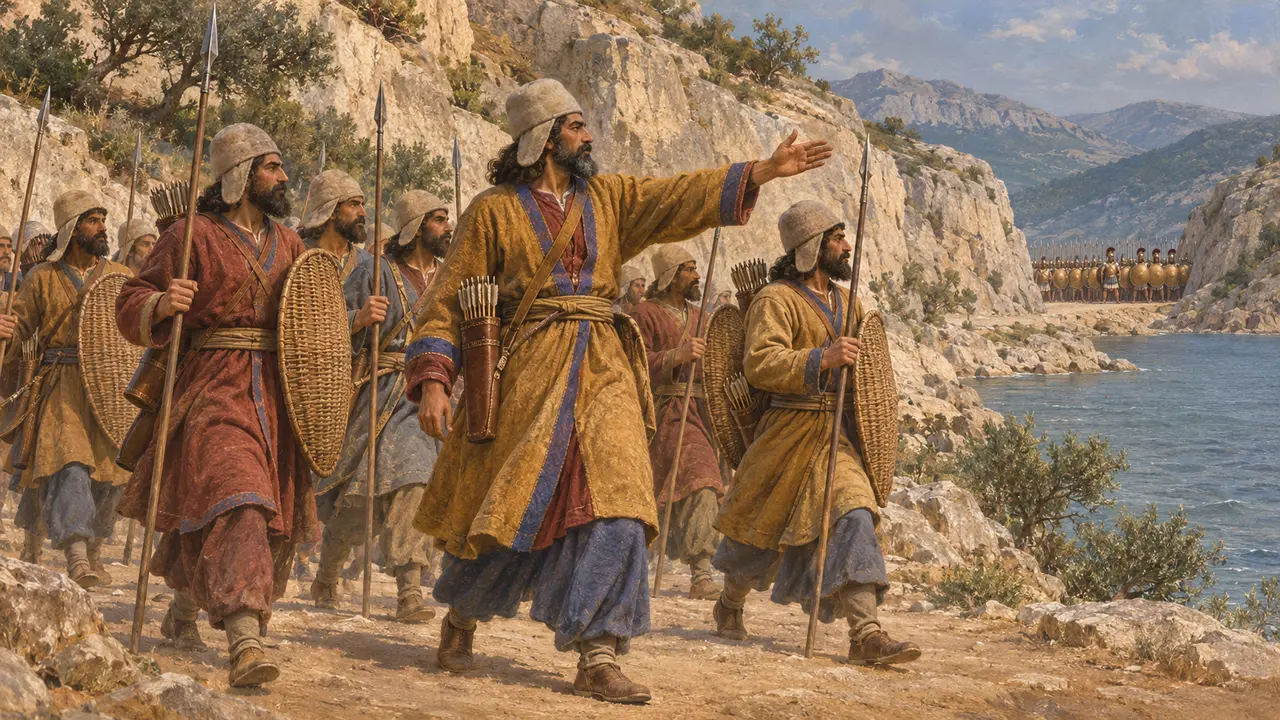
Partners in the Persian empire
Ancient accountHerodotus says the Medes in Xerxes' army were equipped like the Persians, adding that this dress was really Median, and that Medes were sent first against the Spartans at Thermopylae. Medes held high command: Harpagus subdued Ionia for Cyrus and Datis led the expedition of 490. Greeks called siding with Persia 'medizing'.
Herodotus 7.62, 7.210, 1.162, 6.94
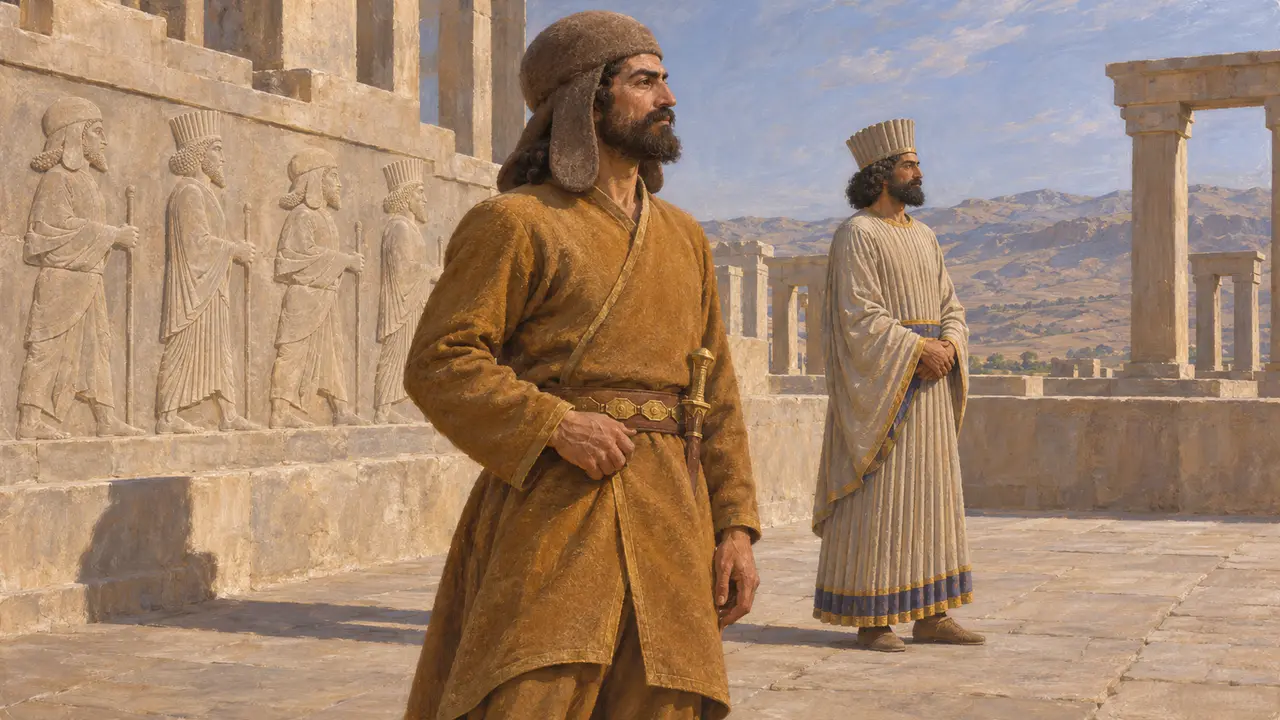
The emblem beside its name
In the recordThe Medes had no flag that we know of. The game marks them with the Median felt cap with its side flaps, the dress that tells a Mede from a Persian on the Persepolis reliefs, where Medes and Persians alternate on the Apadana stairs.
Persepolis, Apadana reliefs; E. Schmidt, Persepolis I, 1953
Sources
- Herodotus, Histories 1.95-130
- Darius I, Behistun inscription (DB)
- Nabonidus Chronicle
- H. Sancisi-Weerdenburg, Was there ever a Median empire?, Achaemenid History III, 1988
- G. Lanfranchi, M. Roaf and R. Rollinger (eds.), Continuity of Empire (?): Assyria, Media, Persia, 2003
- P. Briant, From Cyrus to Alexander, 2002