Thermopylae
Coastal pass in central Greece, where Xerxes forced Leonidas's line, 480 BCE
In the game: Level 10: The Hot Gates
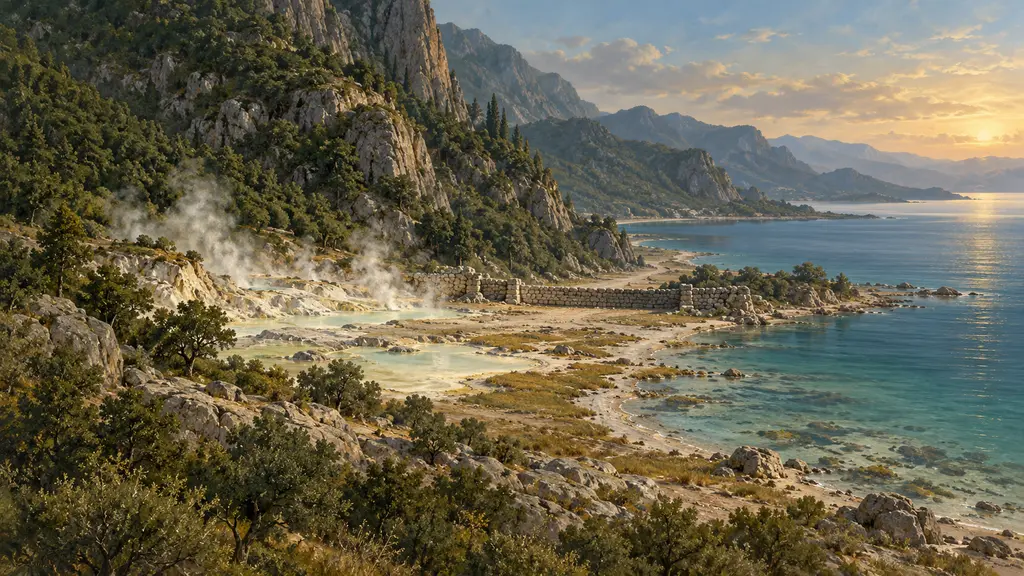
Thermopylae, the Hot Gates, was a narrow pass between the mountains and the Malian Gulf, on the main land route from Thessaly into central Greece. In 480 a small Greek force under the Spartan king Leonidas blocked Xerxes' army here for three days of fighting, until a mountain path let the Persians get round it. The Greeks lost the battle, but their stand became one of the most retold stories of the war.
In the game: The tenth level is set here in 480. The chronicle follows Herodotus on the pass, its warm springs and the Phocian wall. Its three days match his three days of fighting, which came after Xerxes had waited four.
The pass and its wall
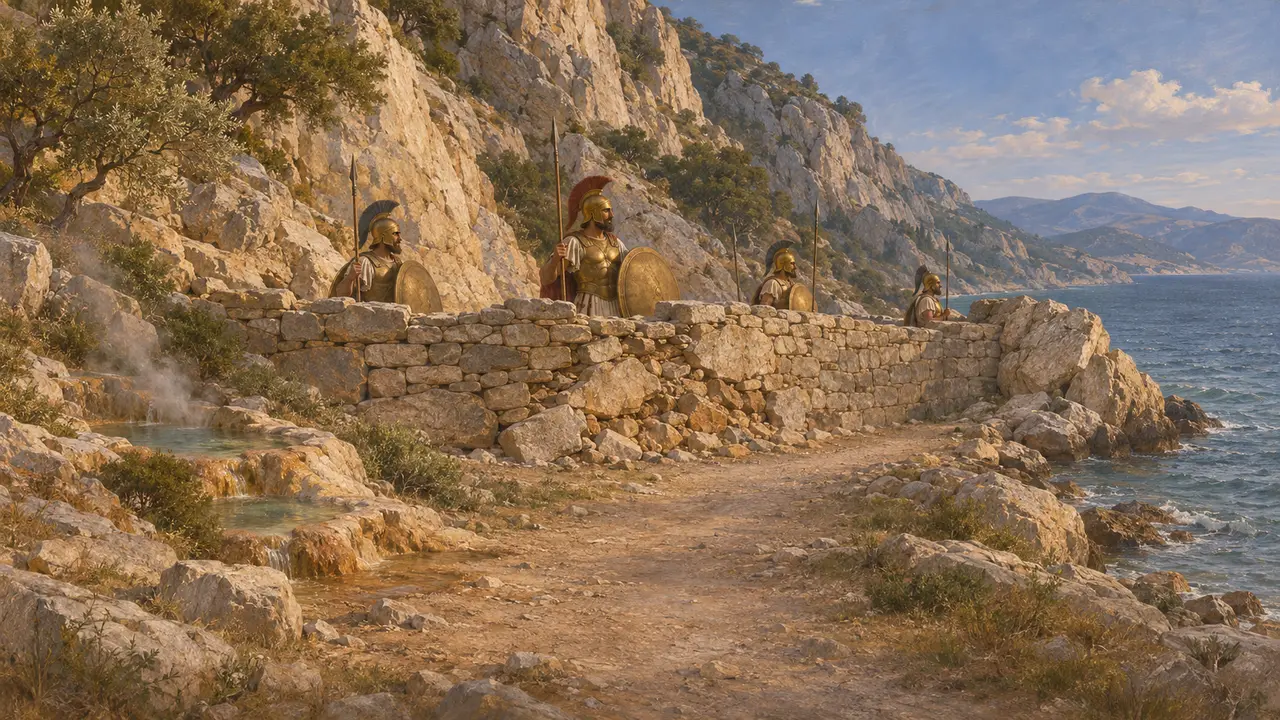
Ancient accountHerodotus describes a road squeezed between steep slopes and the sea, with warm springs that gave the place its name. Long before 480 the Phocians had built a wall across the pass to keep out Thessalian raids, and by then it lay largely in ruins. The Greeks rebuilt it and made it their line. At the same time the fleet held the strait at Artemisium nearby, so the defence on land and at sea worked together.
Herodotus 7.175-177
Three days of fighting
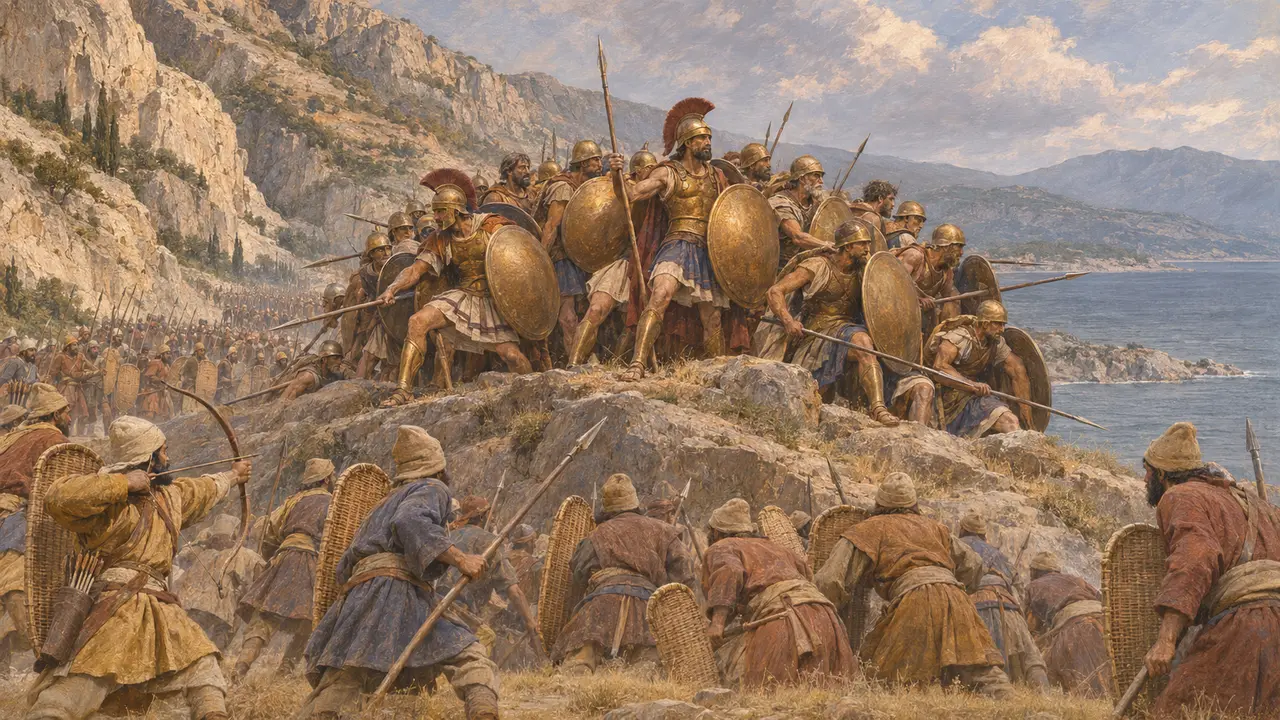
Ancient accountHerodotus says Xerxes waited four days, then sent Medes and Cissians against the wall, and after them the Immortals under Hydarnes, but the line held. Ephialtes of Malis showed the Persians the Anopaea path, and Hydarnes led troops over it by night past the Phocian guard. Leonidas sent most of the allies away. He stayed with the Spartans and Thespians, and with Thebans whom Herodotus says he kept as hostages. The last fighters died on a low hill.
Herodotus 7.210-225
Numbers and motives
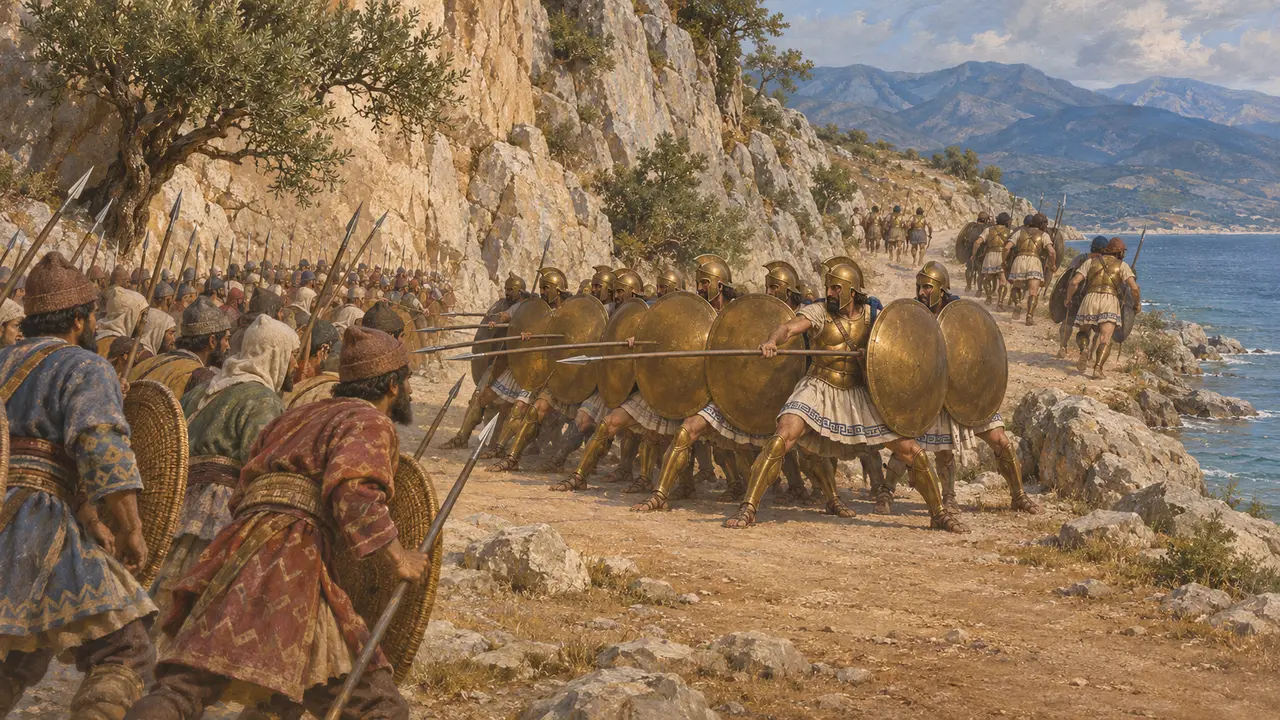
DisputedHerodotus puts Xerxes' land army at 1,700,000, a figure historians reject as wildly exaggerated. Modern estimates are far lower, though they vary widely. The Greeks numbered perhaps seven thousand. Herodotus says Leonidas stayed for honour and because of an oracle, while many historians see a rearguard covering the retreat. No Persian text mentions the battle, and for the Persians it was probably one pass forced on the march to Athens.
Herodotus 7.60, 7.202-203, 7.220; J. F. Lazenby, The Defence of Greece, 1993
The ground today
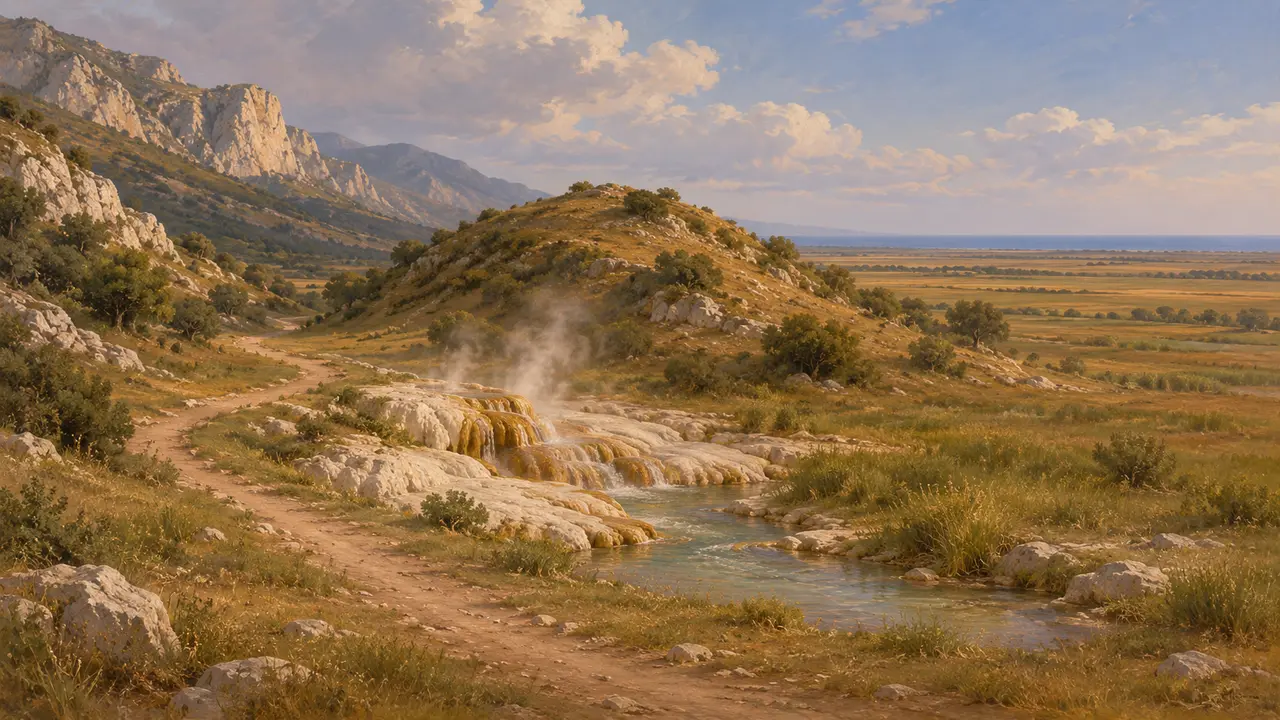
In the recordThe Spercheius river has since laid down silt, so the shore now lies several kilometres from the old road and the pass has become a wide plain. In 1939 Spyridon Marinatos excavated the hill of Kolonos, which Herodotus names as the scene of the last stand, and found a large number of bronze and iron arrowheads. The warm springs still flow beside the modern highway.
Excavations of S. Marinatos on Kolonos, 1939; Herodotus 7.225
Sayings of the Spartans
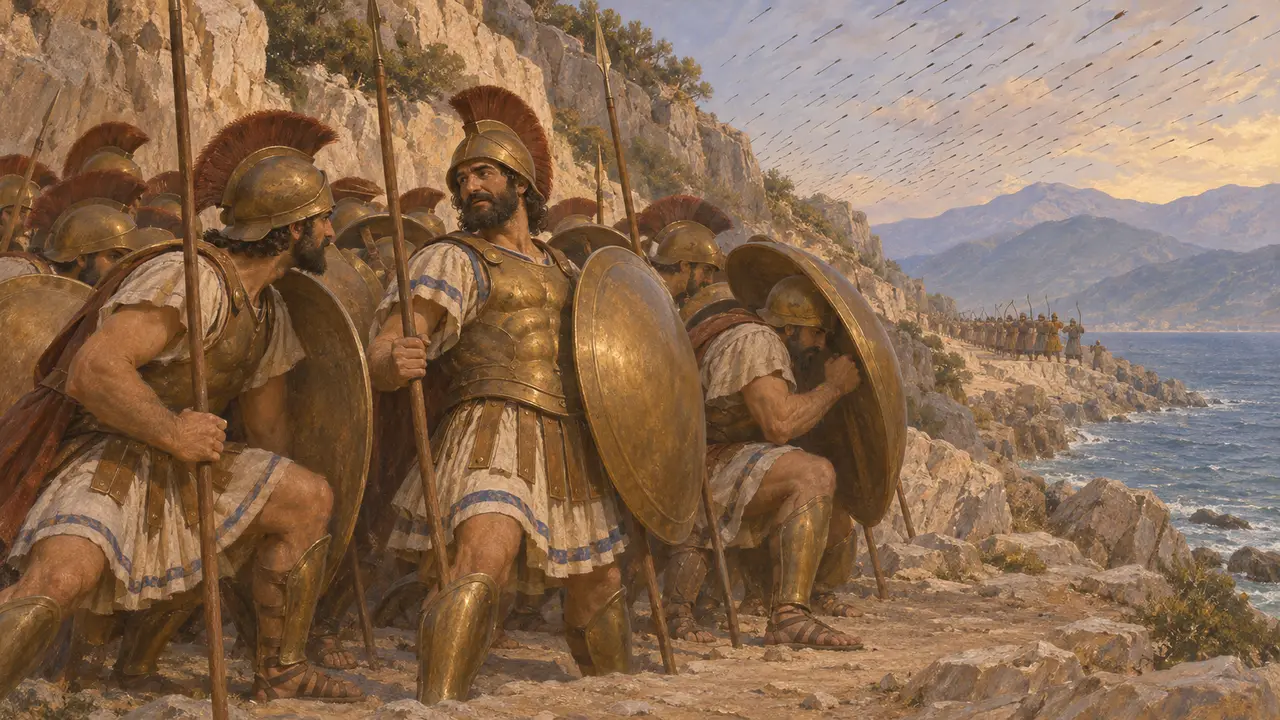
Later legendThe battle soon gathered famous sayings. Herodotus tells how Dieneces, hearing that Persian arrows would hide the sun, replied that the Greeks would then fight in the shade. The reply 'come and take them', said to answer a Persian demand to hand over their arms, appears only in Plutarch, more than five centuries later. Both are best read as Greek moral tales rather than records of the day.
Herodotus 7.226; Plutarch, Sayings of the Spartans
Sources
- Herodotus, Histories 7.175-233
- J. F. Lazenby, The Defence of Greece 490-479 BC, 1993
- P. Cartledge, Thermopylae: The Battle That Changed the World, 2006
- P. Green, The Greco-Persian Wars, 1996
- P. Briant, From Cyrus to Alexander, 2002
- Plutarch, Sayings of the Spartans