The Phocians
People of central Greece round Mount Parnassus, guards of the Anopaea path, 480-479 BCE
In the game: Level 10: The Hot Gates, Level 11: The Finale
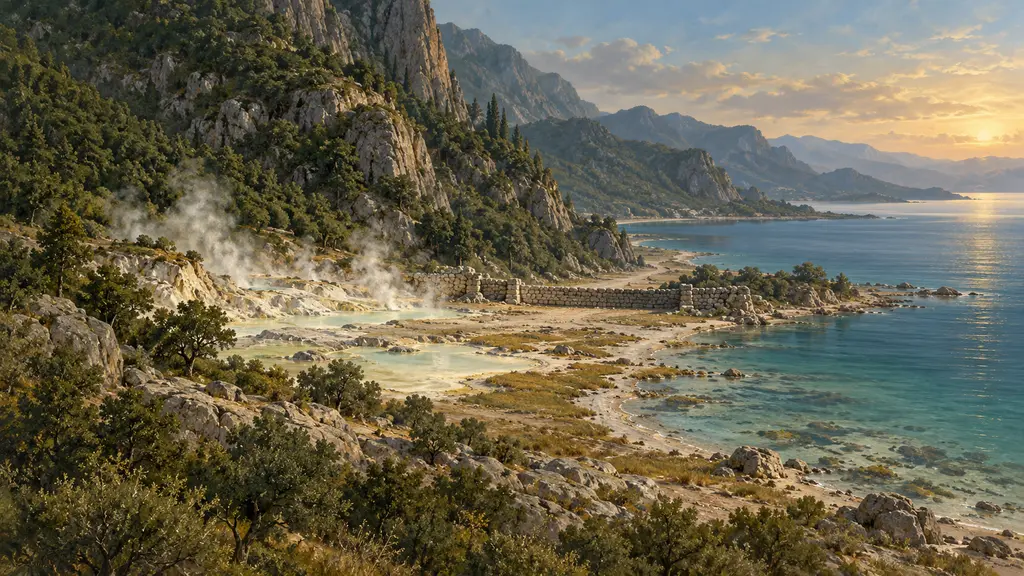
The Phocians lived in central Greece between Boeotia and Thessaly, round Mount Parnassus and Delphi. In 480 a thousand of them guarded the mountain path above Thermopylae and gave way to the Immortals. Their land was then burned by the King's army, and in 479 a thousand served Mardonius unwillingly.
In the game: The Phocians hold the Anopaea path in the Thermopylae level and its field battle, a Phocian band raids the road to Athens in Act II, and Phocians stand in Mardonius's line at Plataea.
The old wall
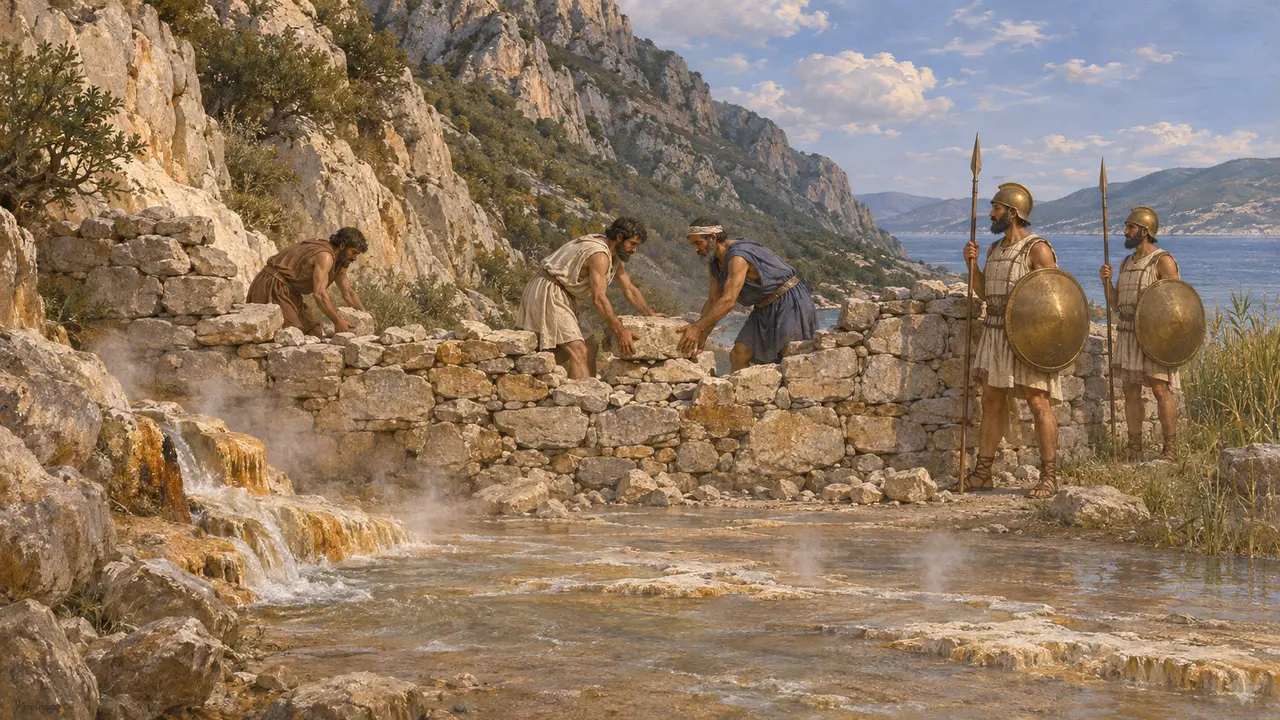
Ancient accountHerodotus says the Phocians long before had built a wall across the pass at Thermopylae against the Thessalians and let the hot springs flood the road. The Greeks of 480 rebuilt it. The Phocians were bitter enemies of the Thessalians, which is why they stood with the Greeks.
Herodotus 7.176, 8.27-30
The thousand on the path
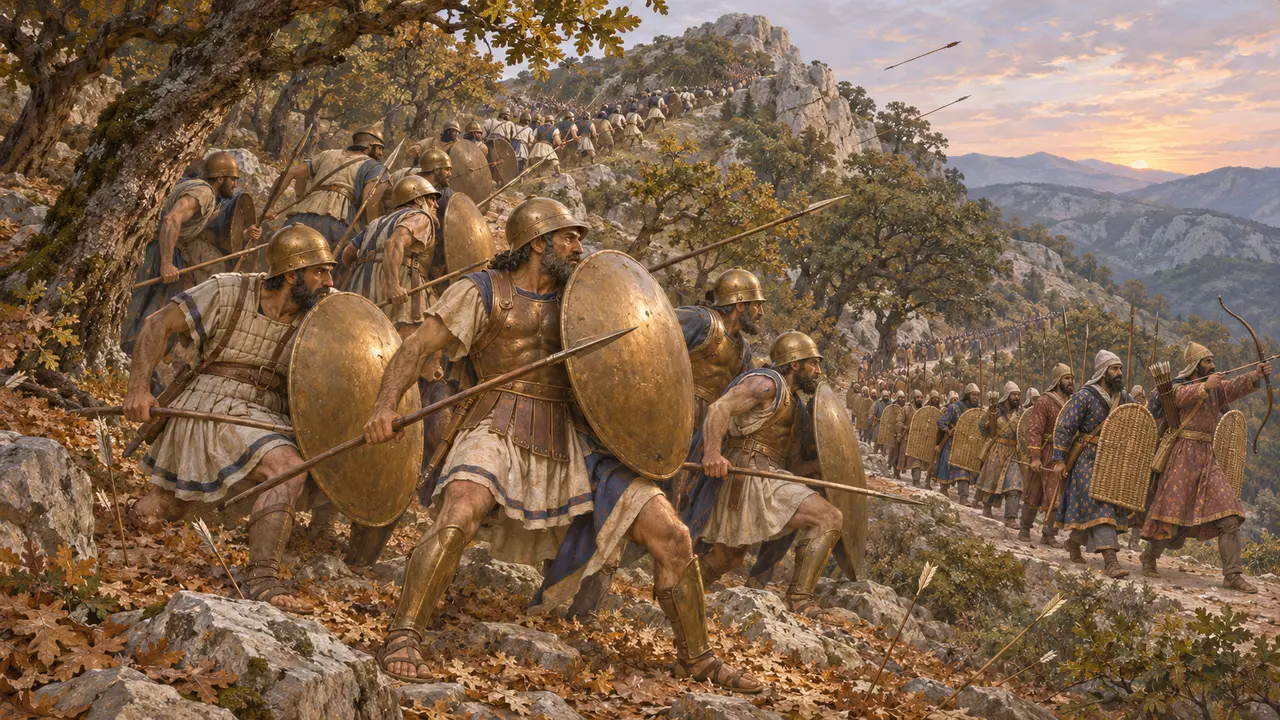
Ancient accountA thousand Phocians guarded the Anopaea path. At dawn they heard the Immortals in the fallen oak leaves and armed, but under the Persian arrows they fell back to the peak, ready to die; the Persians passed them by and went down behind the Greeks.
Herodotus 7.217-218
Phocis burned
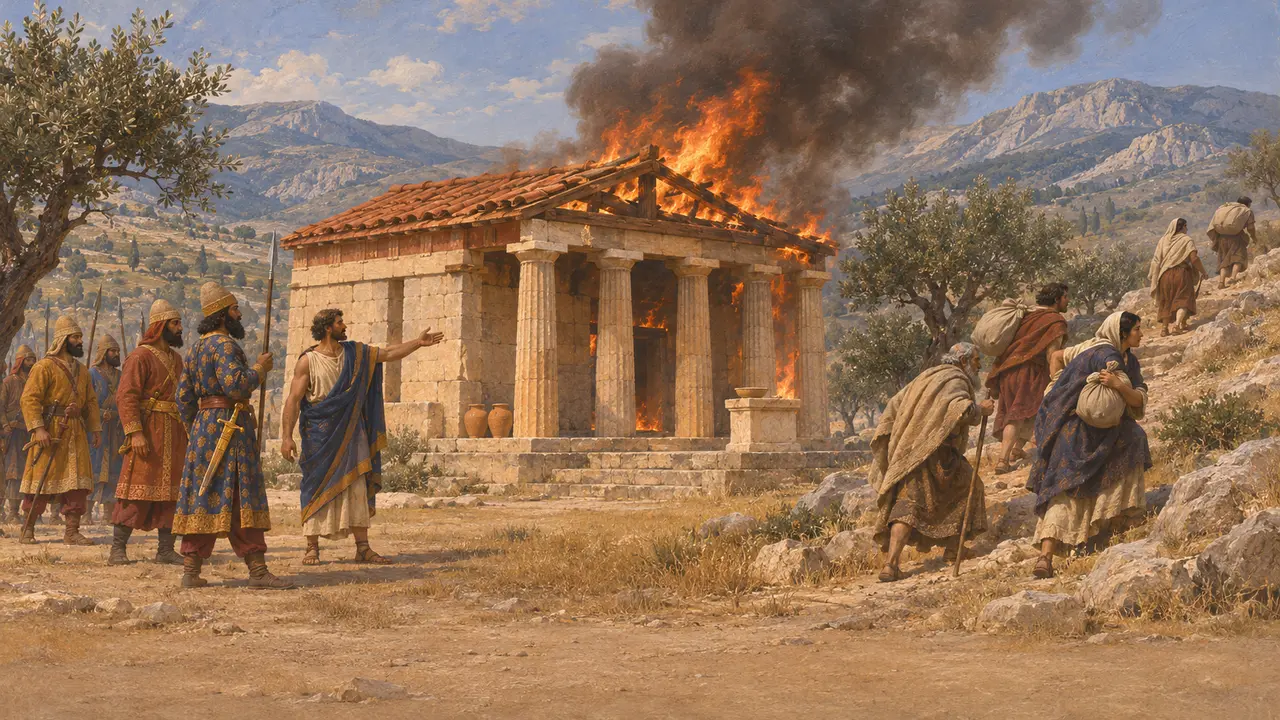
Ancient accountAfter the pass, Herodotus says, the King's army, guided by the Thessalians, overran Phocis and burned its towns and temples, among them the sanctuary of Apollo at Abae. Many Phocians had fled to the heights of Parnassus or to Amphissa.
Herodotus 8.31-33
For Mardonius against their will
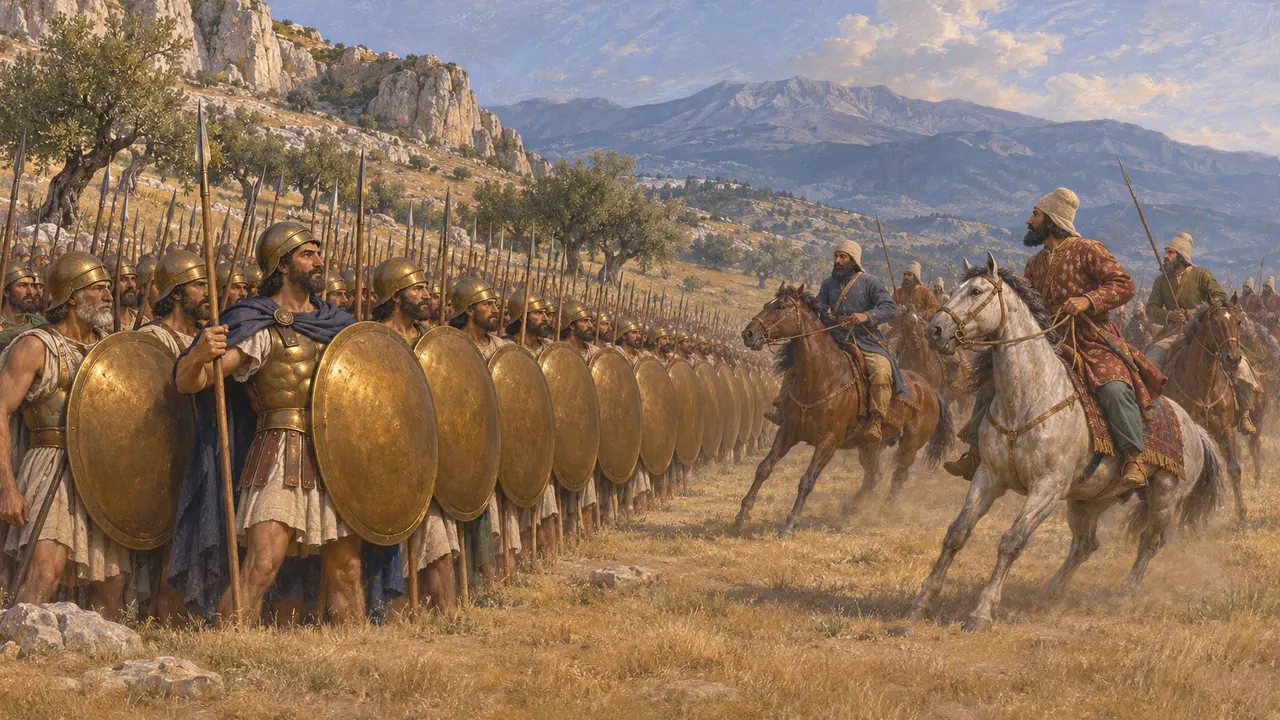
Ancient accountIn 479 a thousand Phocian hoplites under Harmocydes joined Mardonius, not by their own will. Herodotus says Mardonius had his horse ride at them as if to destroy them, and they closed ranks and stood, and he praised them. Other Phocians on Parnassus raided his army.
Herodotus 9.17-18, 9.31
Sources
- Herodotus 7.176, 7.203, 7.212-218, 8.27-33, 9.17-18, 9.31