Level 10: The Hot Gates · Thermopylae · 480 BCE
The Hot Gates
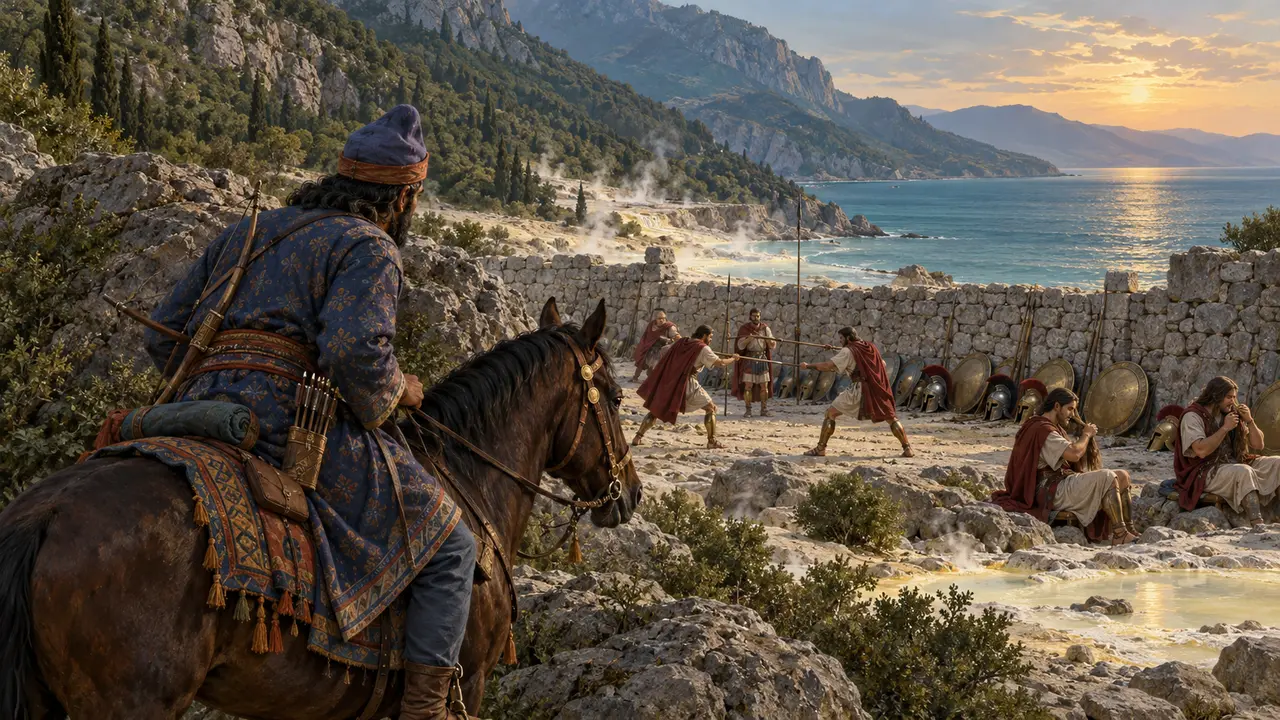
The Greeks at the Phocian wall in the pass of Thermopylae.
Encyclopedia › The History
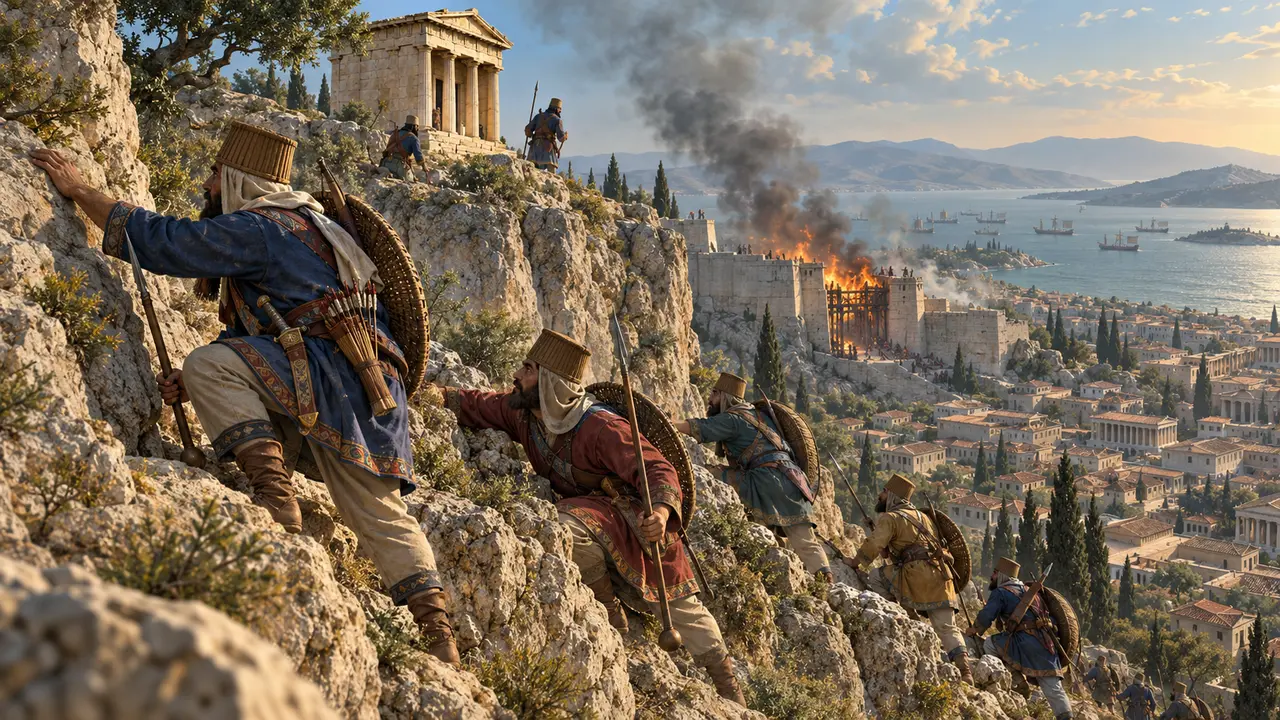
In late summer 480 Leonidas of Sparta held the pass at Thermopylae with about seven thousand Greeks while the fleet fought at Artemisium. After three days a local man showed the Persians a mountain path. Leonidas died with his rearguard, and Xerxes marched on Athens.
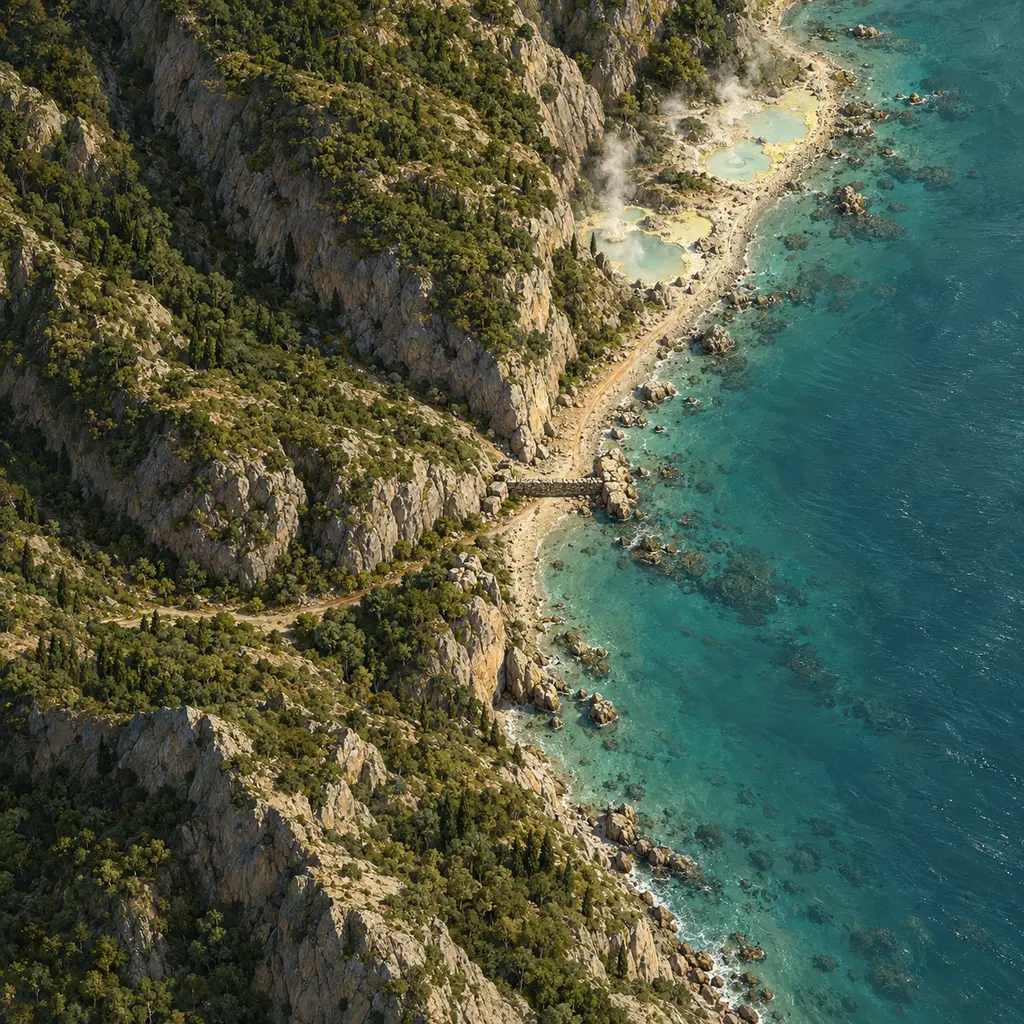
- 480 BCE The Greeks at the pass
- 480 BCE Storm off Magnesia
- 480 BCE Three days
- 480 BCE Athens taken
- 480 BCE Salamis
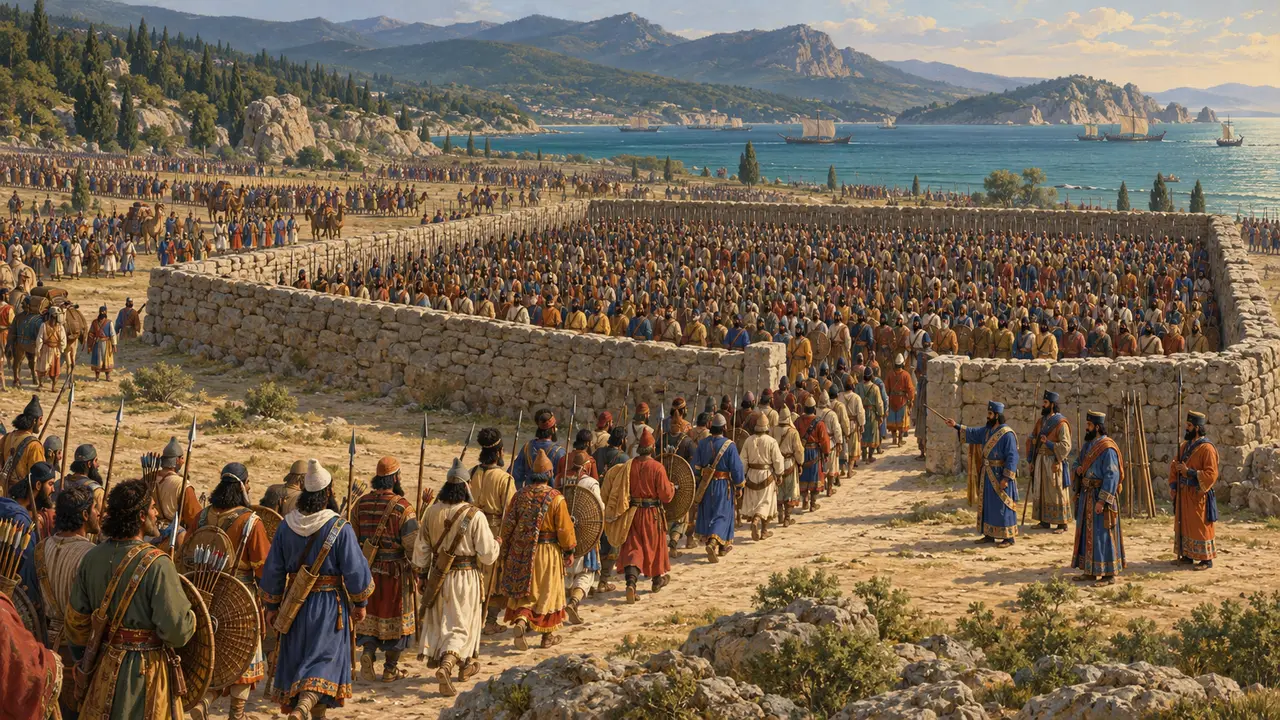
How big was the King's army?
DisputedHerodotus counts 1,700,000 foot soldiers, and an epitaph speaks of three million. Supply, water and road space make that impossible; modern estimates run from about 100,000 to 300,000 in all.
In the game: The muster shows the modern estimate, and says it is one.
Herodotus 7.60, 7.184-187, 7.228
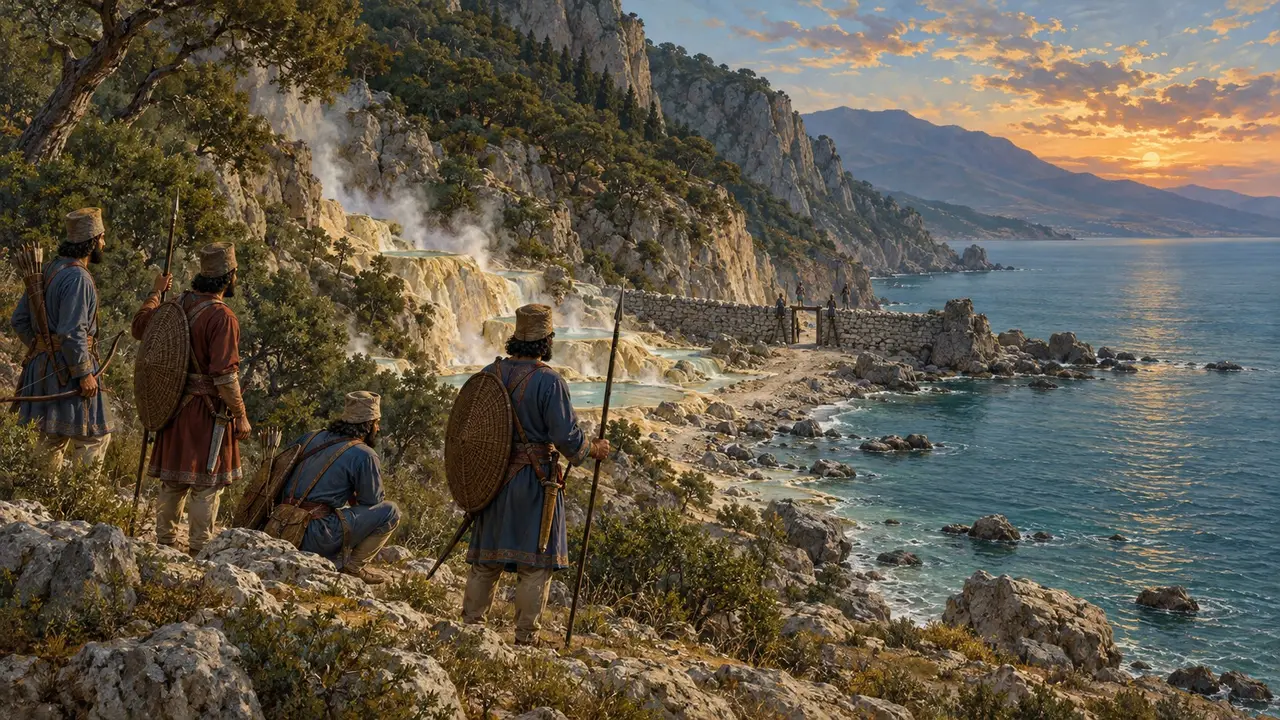
The wall and the springs
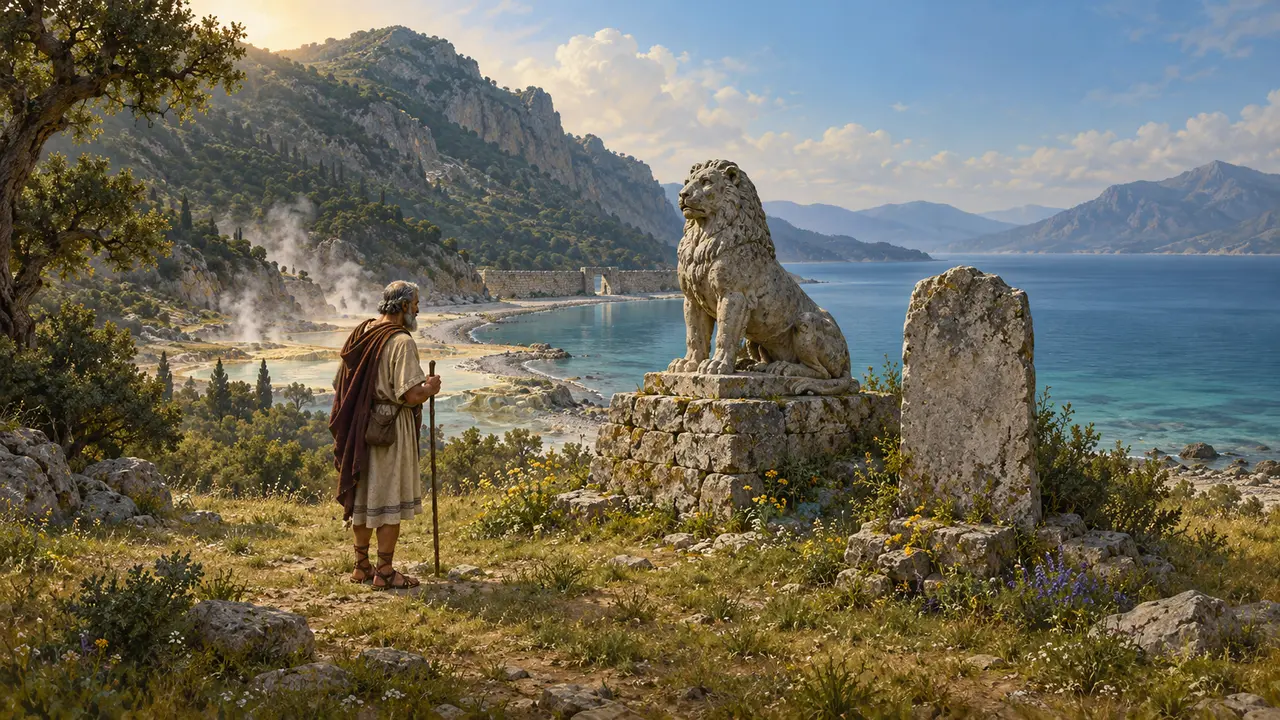
In the recordThe pass ran between mountain and sea, with hot springs and an old Phocian wall. The river has since carried so much silt that the shore now lies kilometres away. Herodotus says rivers on the march were drunk dry.
In the game: Thermopylae's decree asks for wells for the host.
Herodotus 7.176, 7.196; geological surveys of the Spercheius delta
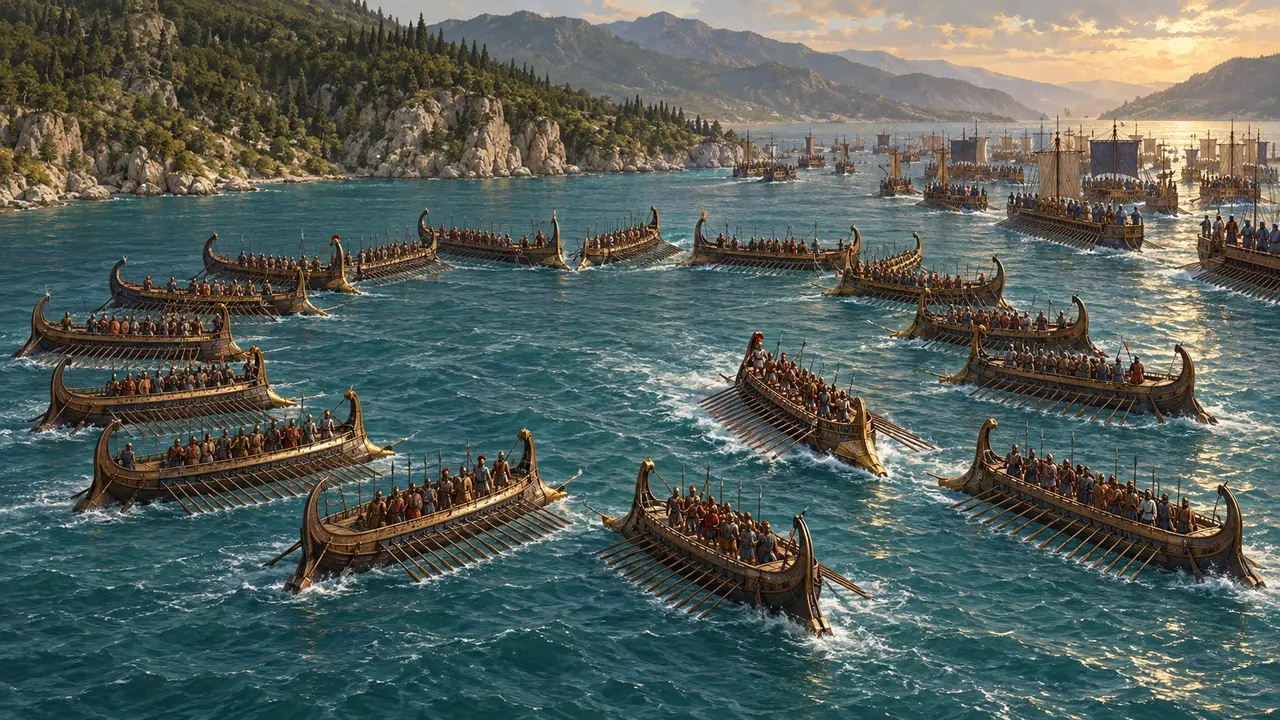
Storm and sea fight
Ancient accountBefore the fighting, a storm off Magnesia blew for three days and wrecked hundreds of the King's ships. Then, on the same three days as the fighting in the pass, the Greek fleet fought at Artemisium, each front guarding the other's flank.
In the game: A strip at the top of the screen follows Artemisium day by day; a trireme rammed hard may break across amidships, as Herodotus describes at Salamis (8.90).
Herodotus 7.188-191, 8.1-18 (8.15 for the same days)
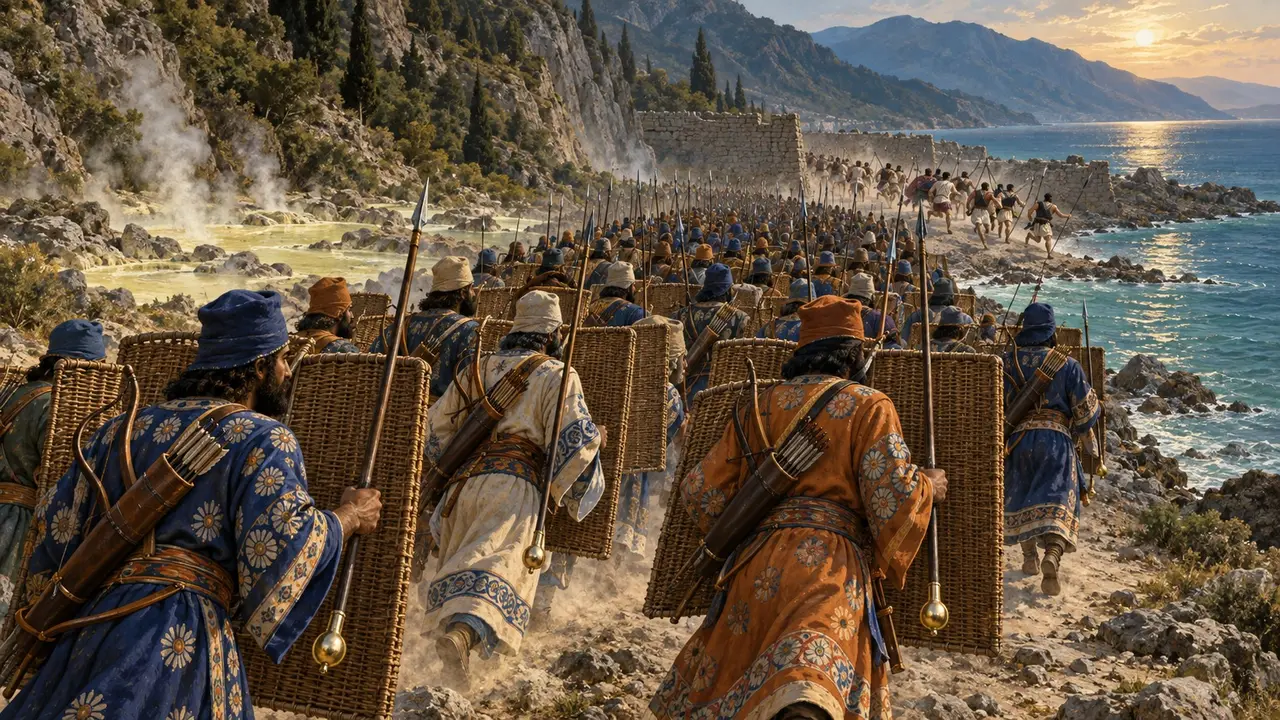
The Immortals and the false retreat
Ancient accountThe Medes were thrown back, then the Immortals under Hydarnes. Herodotus says the Spartans turned as if to flee, then wheeled on their pursuers.
In the game: The Spartans feign flight once; fallen Immortals are queued again at a barracks.
Herodotus 7.210-212
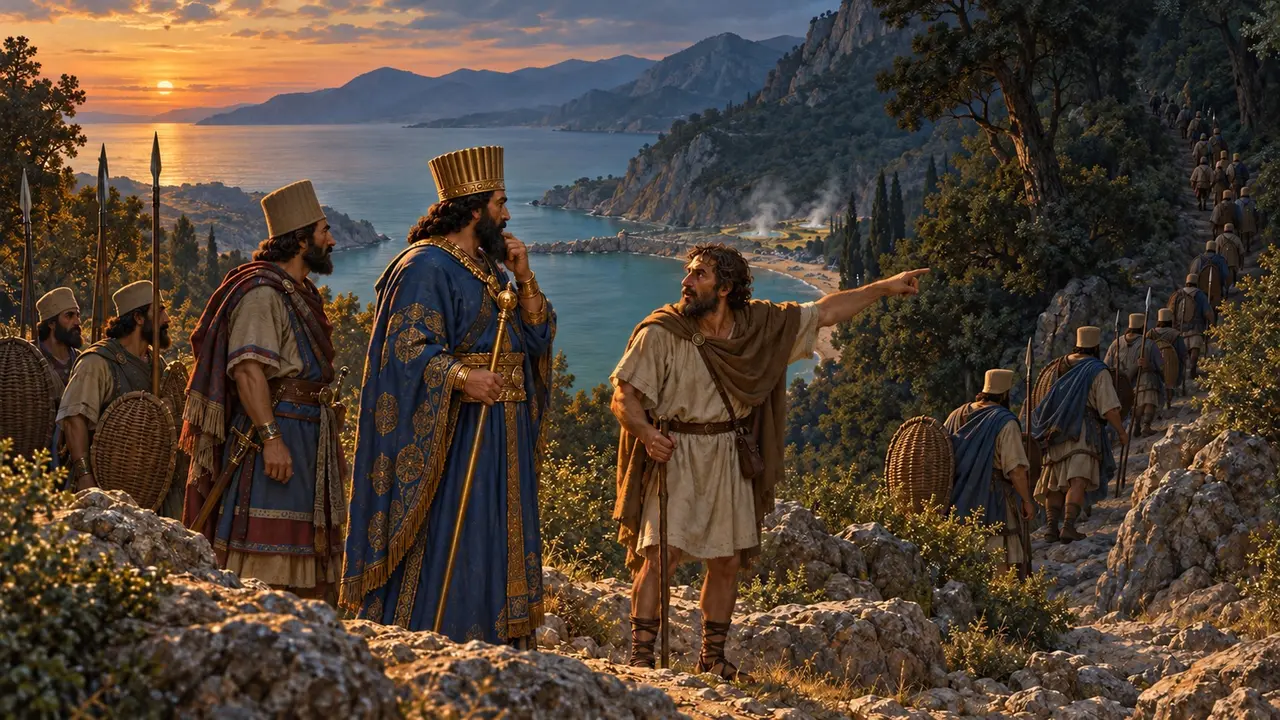
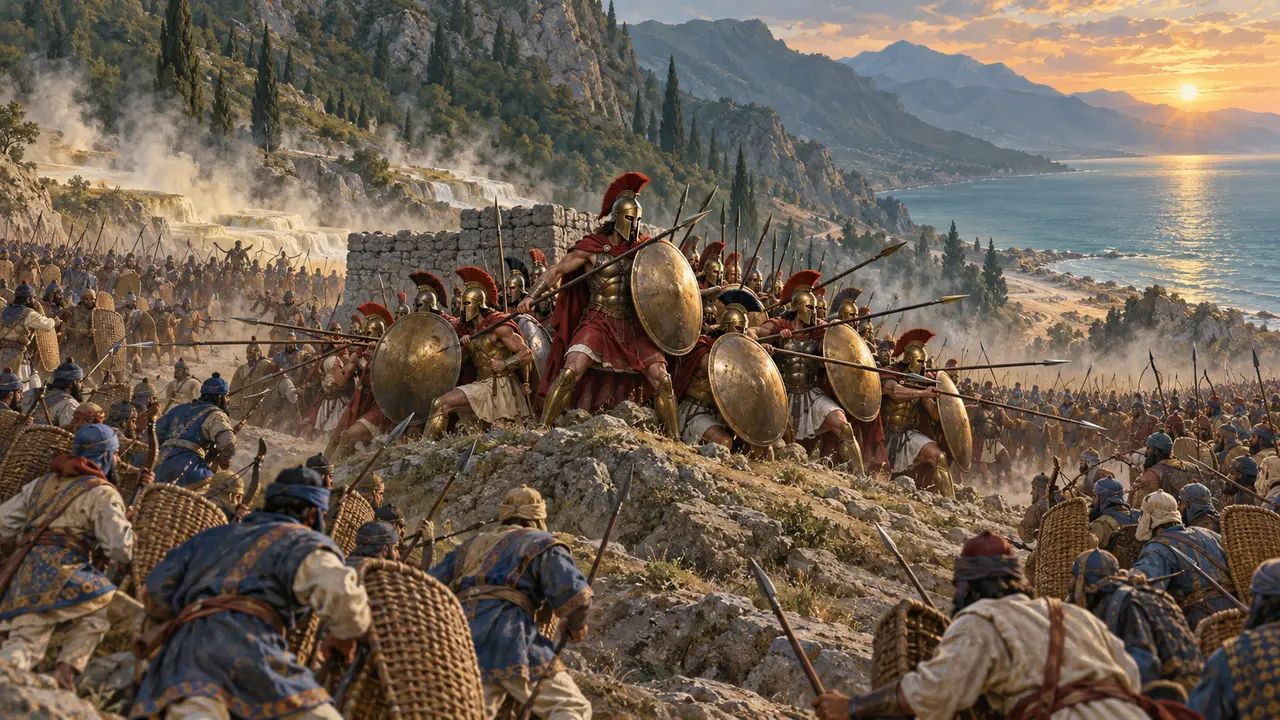
The last stand
Ancient accountLeonidas sent most of the army away and stayed with his 300 Spartans, 700 Thespians and 400 Thebans. They fought on the little hill in the pass until they were overwhelmed. In 1939 archaeologists found many Persian arrowheads on that hill.
Herodotus 7.219-225; S. Marinatos, excavation of 1939
'Come and take them'
Later legendLeonidas's famous reply to the demand for his arms comes from Plutarch, six centuries later. Herodotus does record the Spartan who, told the arrows would hide the sun, said they would fight in the shade.
Plutarch, Sayings of Spartans (Leonidas 11); Herodotus 7.226
Read next: the topics of The Hot Gates
Battles and events
The crossing of the Hellespont · Xerxes' invasion of Greece · The review at Doriscus · The storm off Magnesia · The battle of Thermopylae · The battle of Artemisium
Buildings
Soldiers and ships
Immortal · Cissian Spearman · Egyptian Marine · Greek hoplites · Spartan soldiers
People
Xerxes · Leonidas · Demaratus · Ephialtes of Malis · Hydarnes
Peoples
The Persians · The Macedonians · The Thessalians · The Thebans · The Athenians · The Spartans · The Argives · The Greeks of Istros · The Hellenic League · The Phocians · The Thespians · The Locrians
Offices
Places
Sardis · Thermopylae · Artemisium · Athens · Salamis · Sparta · The Acropolis of Athens · The Anopaea path · Magnesia · Trachis
Wildlife and weather
Deer · The wild boar · The white stork · The hare · The fox · The wolf · Wild ducks · The kite · The griffon vulture · The rock dove · The jackdaw · The crane · The swallow · Gulls · Bats · The little owl · The hooded crow · Morning mist