Encyclopedia › Wildlife and weather

The hare
Small game of open country from Greece to Egypt, 6th-5th century BCE
In the game: Level 1: The Founder's Tomb, Level 2: The Spear-bearer, Level 3: The Lie, Level 4: The Terrace, Level 5: The Charter, Level 6: The Bridge of Boats, Level 7: Sardis Burns, Level 8: The Bay of Marathon, Level 9: The Canal, Level 10: The Hot Gates, Level 11: The Finale
The hare was a common animal of open ground from Greece to Egypt. Greek writers treated it as the usual quarry of the hunt, and Herodotus mentions it in two passages, one on its breeding and one on an omen. Evidence for Persian hare hunting is thin, and most of what is known comes from Greek authors.
In the game: The game draws hares as scenery on open ground on eleven levels, from Pasargadae to Plataea, but not in the Mycale epilogue. No rule reads them, and they do not affect play.
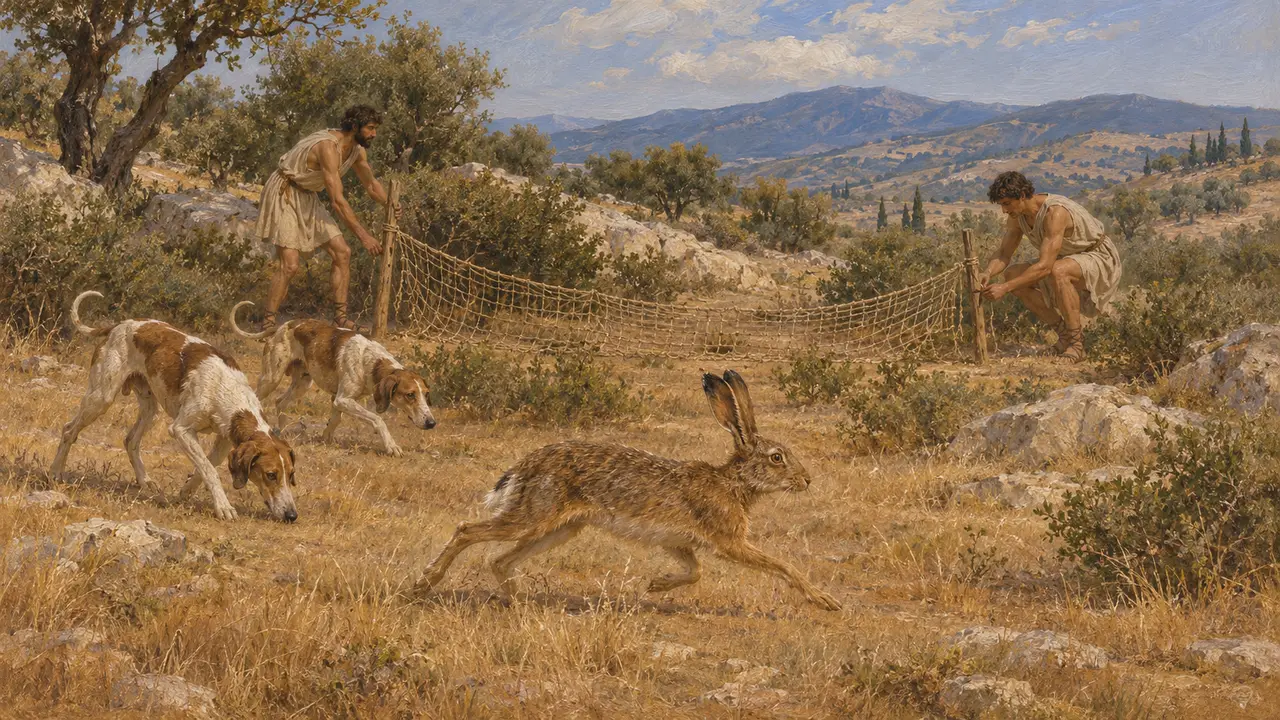
The hare in Greek hunting
Ancient accountXenophon, writing in the early 4th century, gave much of his treatise on hunting to the hare. He describes hounds that follow scent and the use of nets, and he treats the hare as the usual quarry of the Greek hunter. His evidence concerns Greece after the Persian wars, not the Persian court.
Xenophon, Cynegeticus 2-8
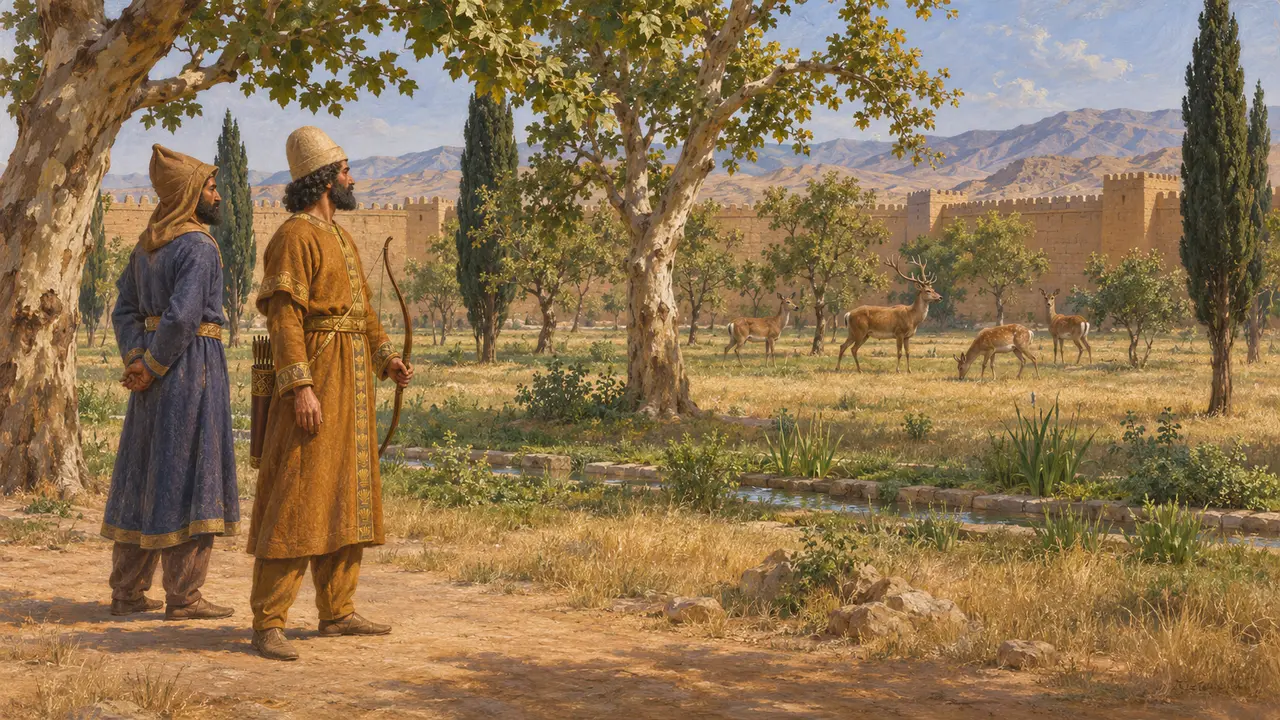
Hunting at the Persian court
Ancient accountXenophon describes Persian hunting in the Cyropaedia, chiefly of larger game, and he knew of enclosed parks, called paradises, kept for the King and his nobles. His picture of Cyrus's court is idealised, and he does not single out hares for the royal hunt.
Xenophon, Cyropaedia
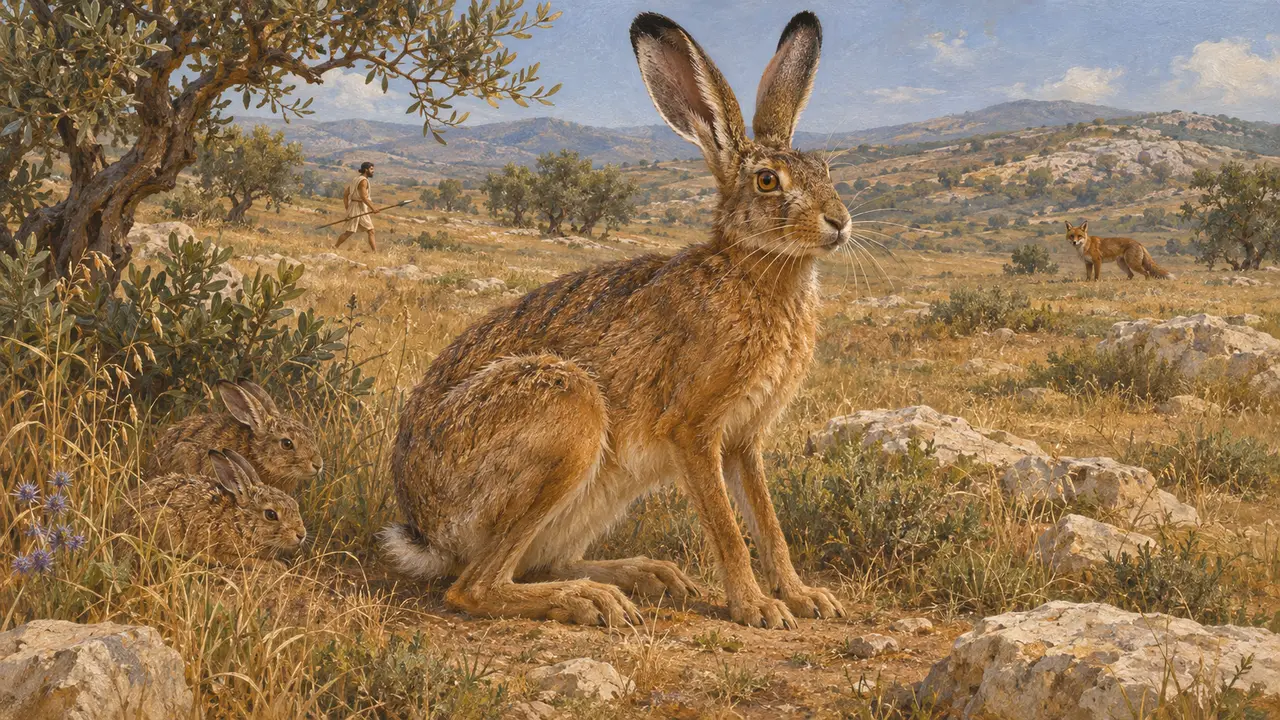
Herodotus on the hare
Ancient accountHerodotus says that the hare is hunted by every creature and by man, and that it alone conceives while already pregnant. He offers this as a sign of divine providence in keeping prey animals fertile. Modern biology shows that hares do breed often and can conceive while pregnant, though not in the exact way he describes.
Herodotus 3.108
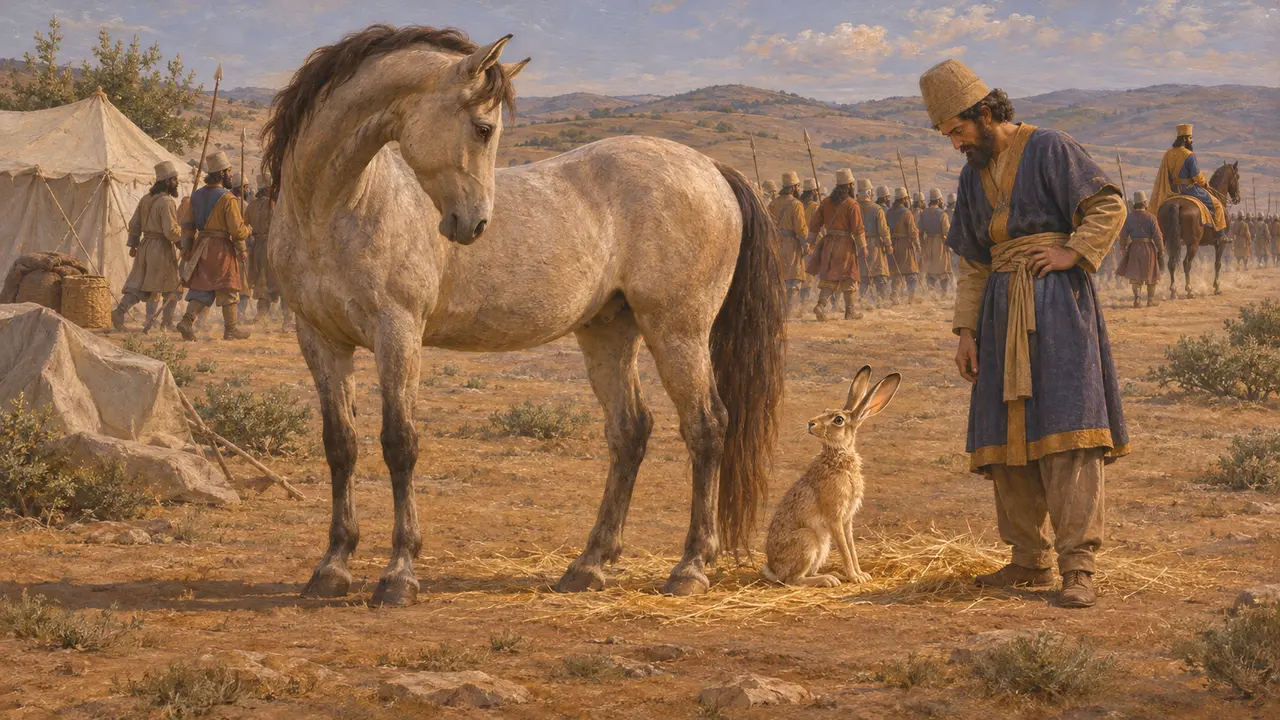
The hare omen of 480
Ancient accountHerodotus tells that as Xerxes' army set out, a mare gave birth to a hare. He says Xerxes took no notice of the portent, although it was understood as a sign of the army's later flight. The story is Herodotus's, and no Persian source mentions it.
Herodotus 7.57
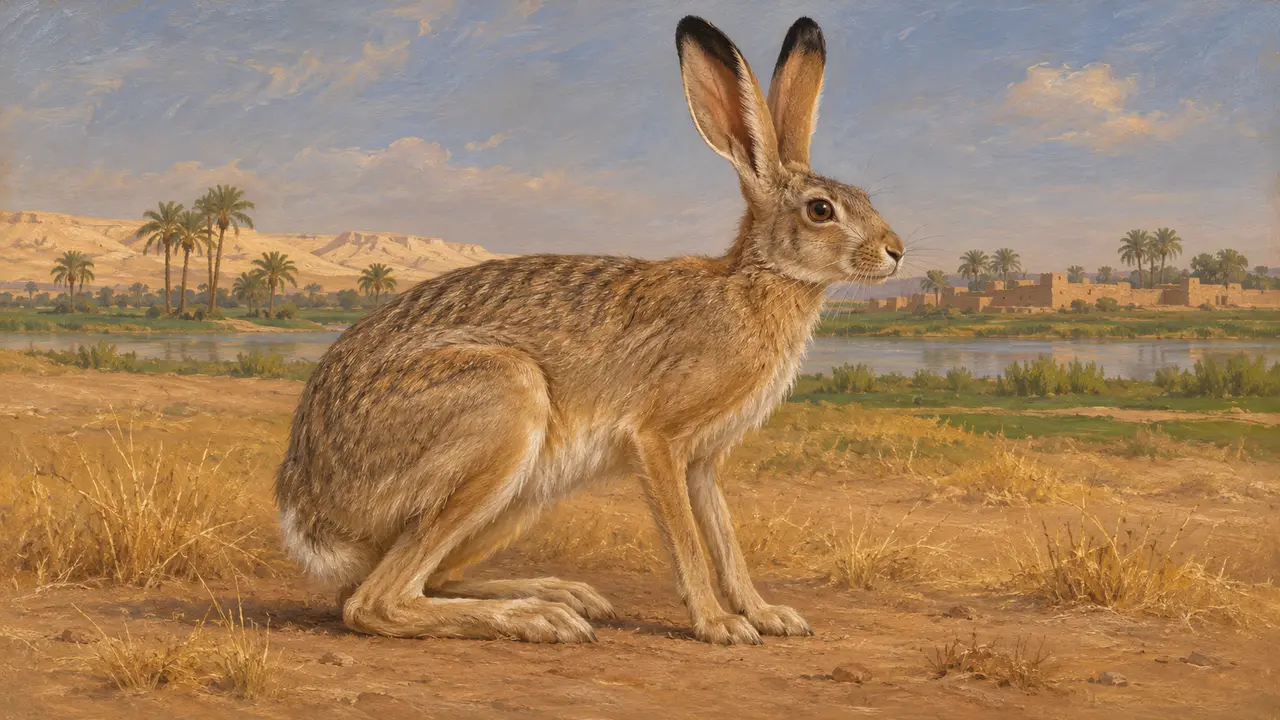
The hare in Egypt
In the recordThe Cape hare lives in Egypt and in dry country across the region, and the game uses it on the Memphis level. Hares appear in Egyptian art, and a hare sign was used in hieroglyphic writing, notably for the name of the Hare nome that held Hermopolis. These Egyptian sources do not show how far Persian officials there joined in hunting hares.
P. Briant, From Cyrus to Alexander, 2002
Sources
- Xenophon, Cynegeticus 2-8
- Xenophon, Cyropaedia
- Herodotus 3.108
- Herodotus 7.57
- P. Briant, From Cyrus to Alexander, 2002