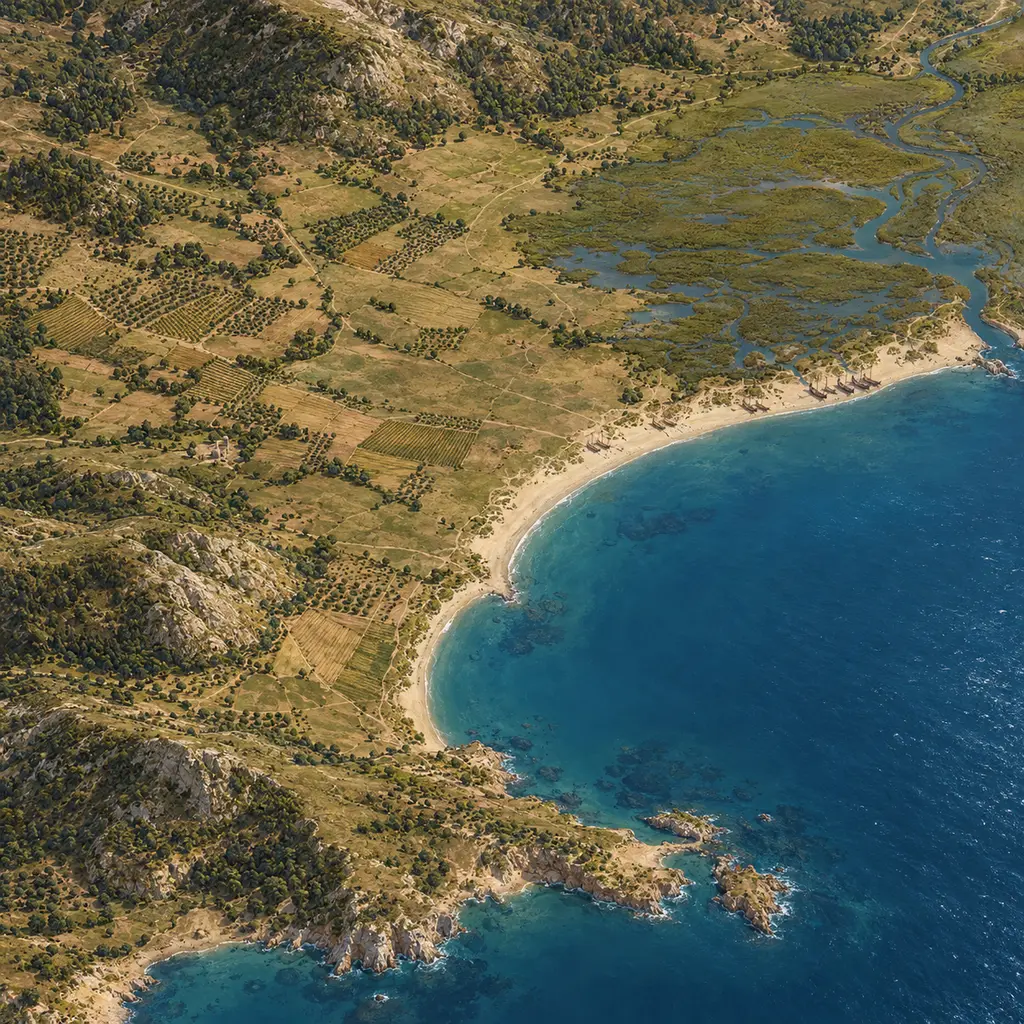
Level 8: The Bay of Marathon · Marathon · 490 BCE
The Bay of Marathon
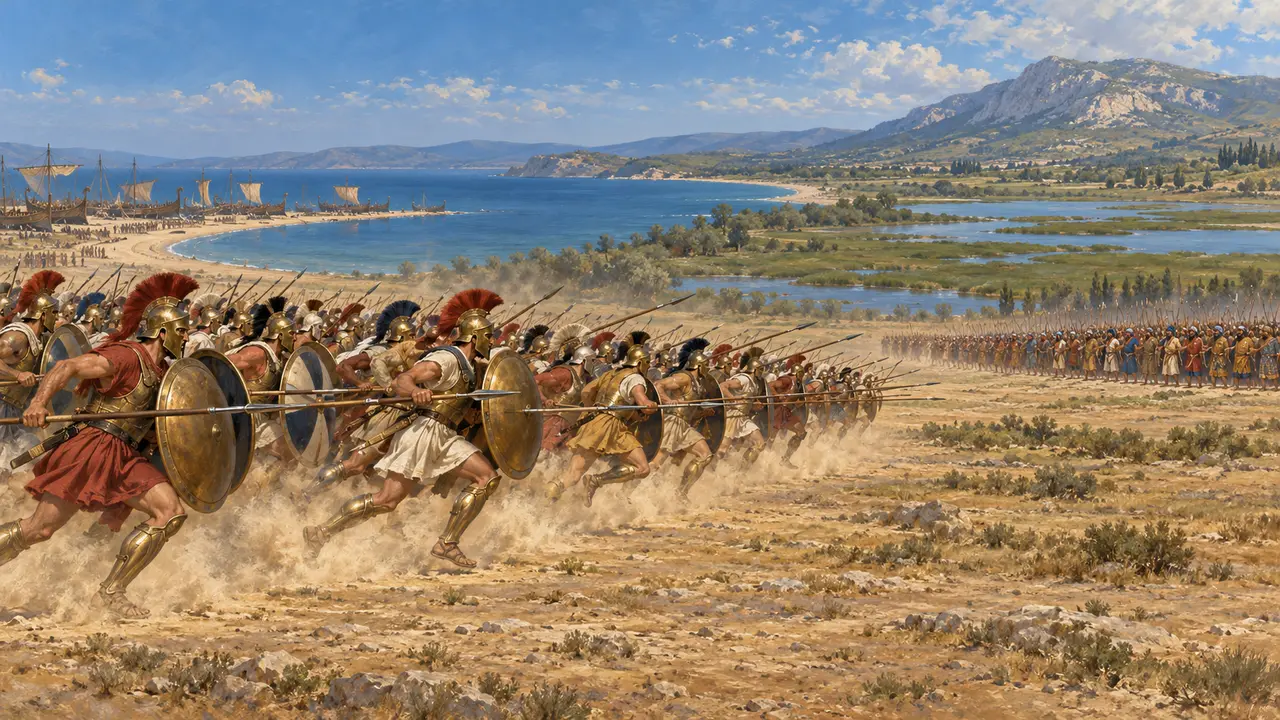
The Athenians come on at the run at Marathon, 490 BCE.
Encyclopedia › The History
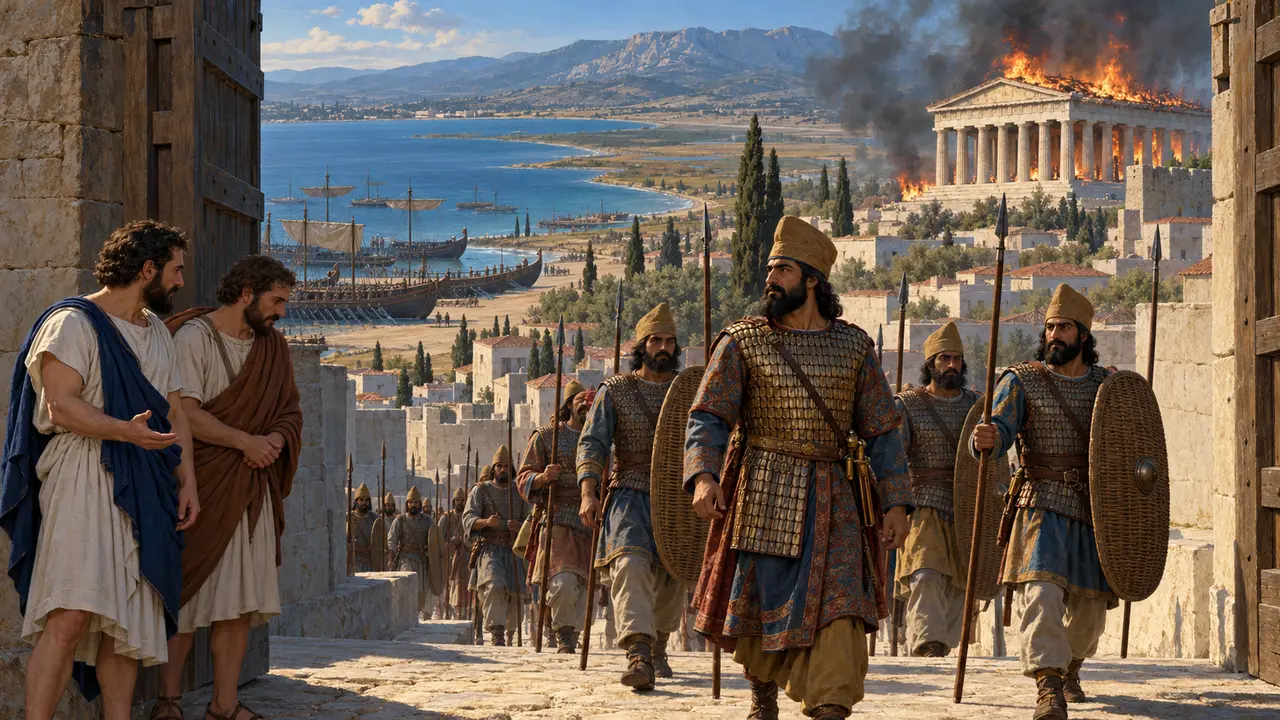
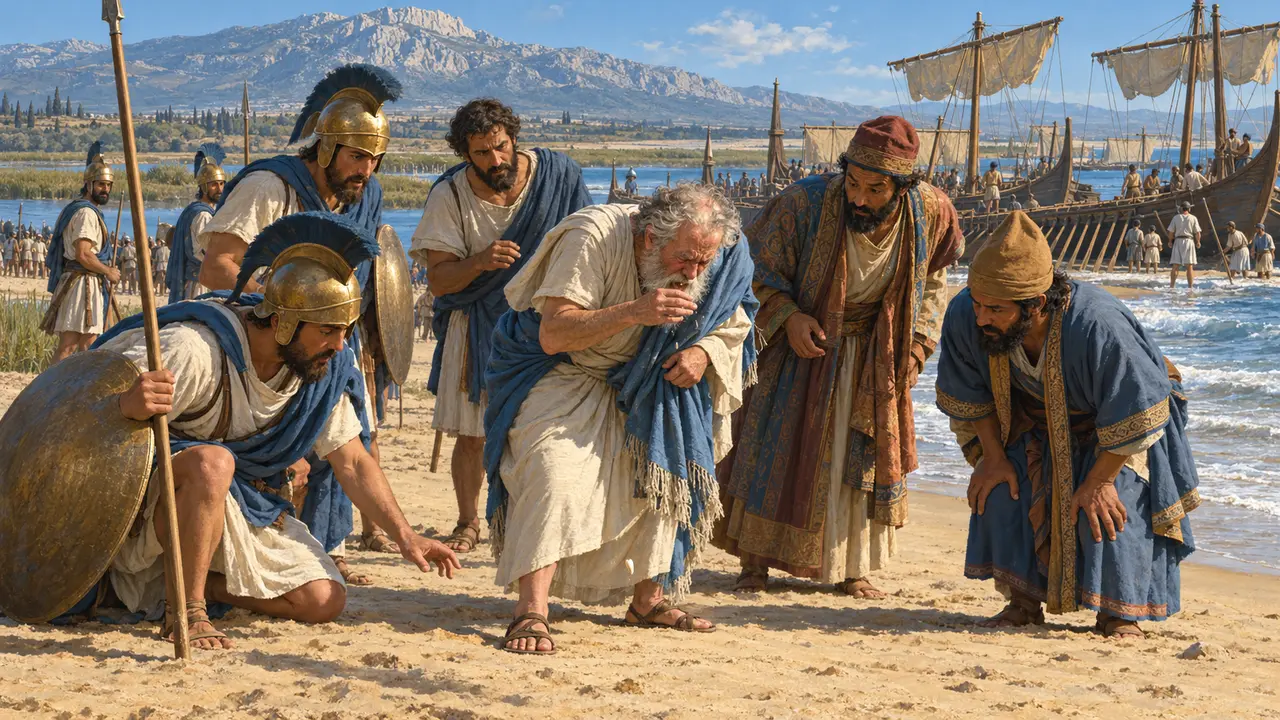
In 490 Darius sent Datis and Artaphernes across the Aegean with horse transports to punish Eretria and Athens for Sardis. Eretria fell. At Marathon the Athenians and Plataeans charged and drove the King's army back to its ships.
- 492 BCE Fleet wrecked at Athos
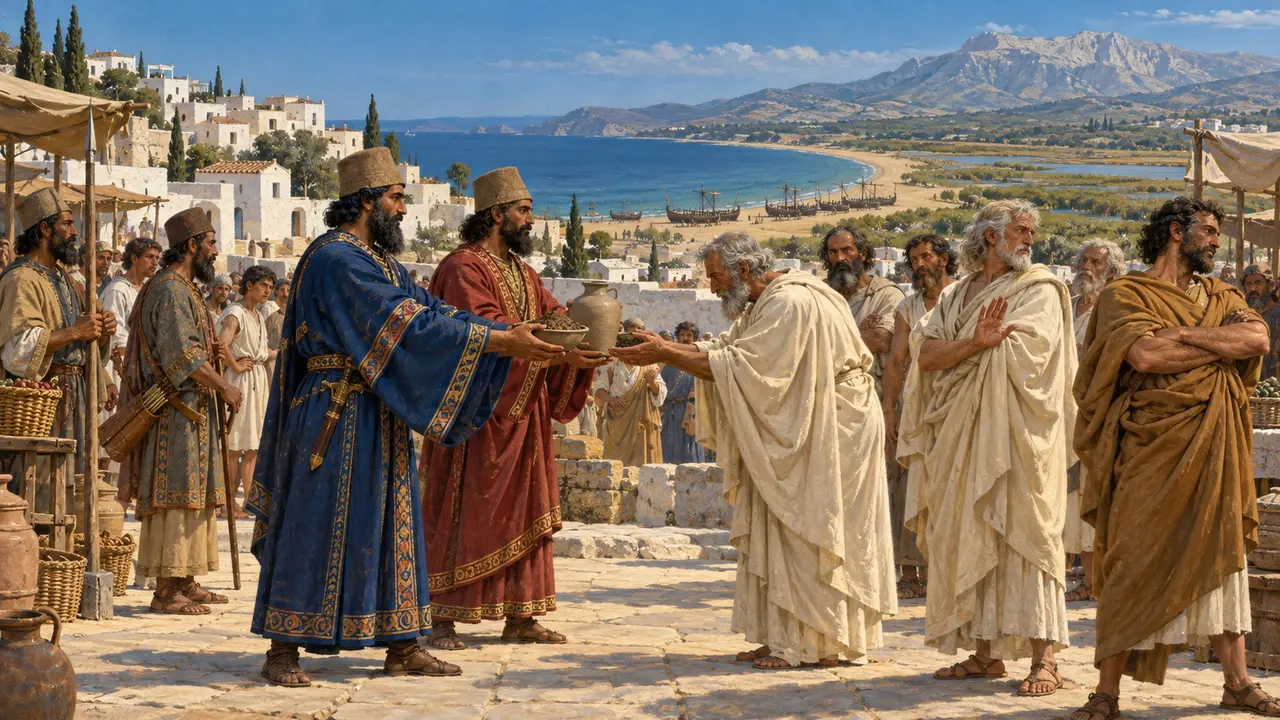
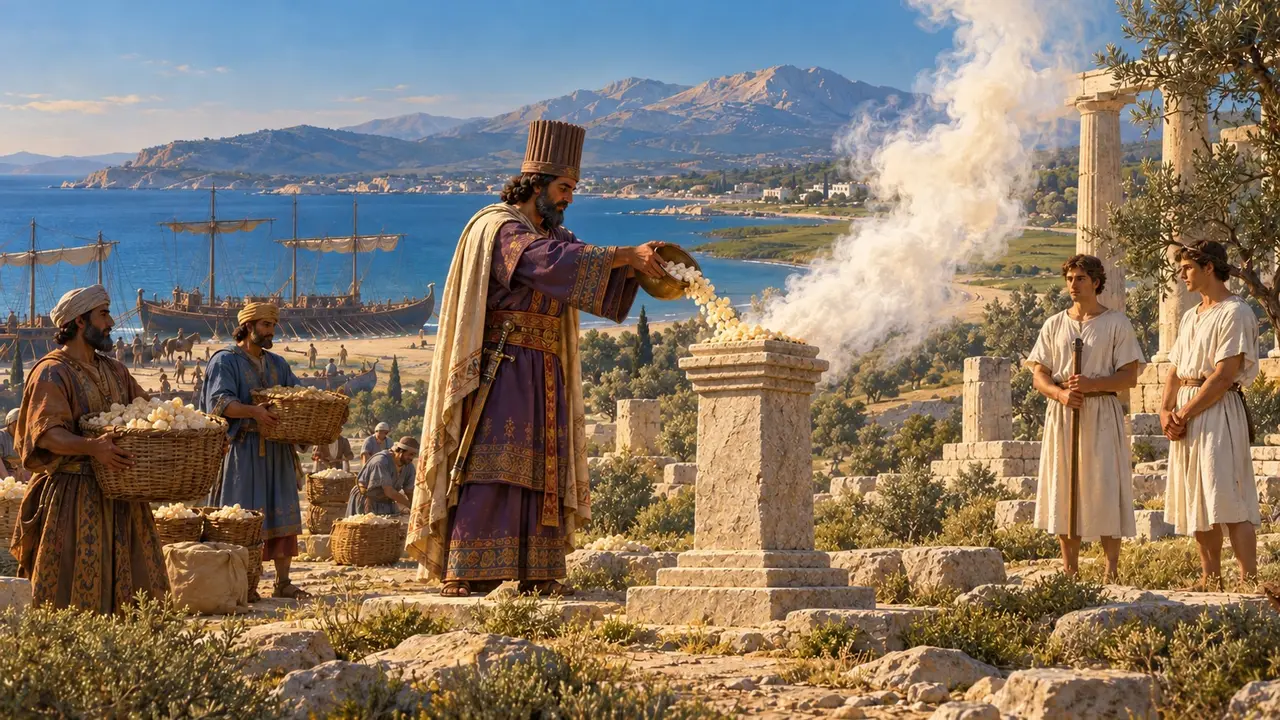
- 491 BCE Earth and water
- 490 BCE Delos; Eretria
- 490 BCE Marathon
- 490 BCE Round Sunium
The runner
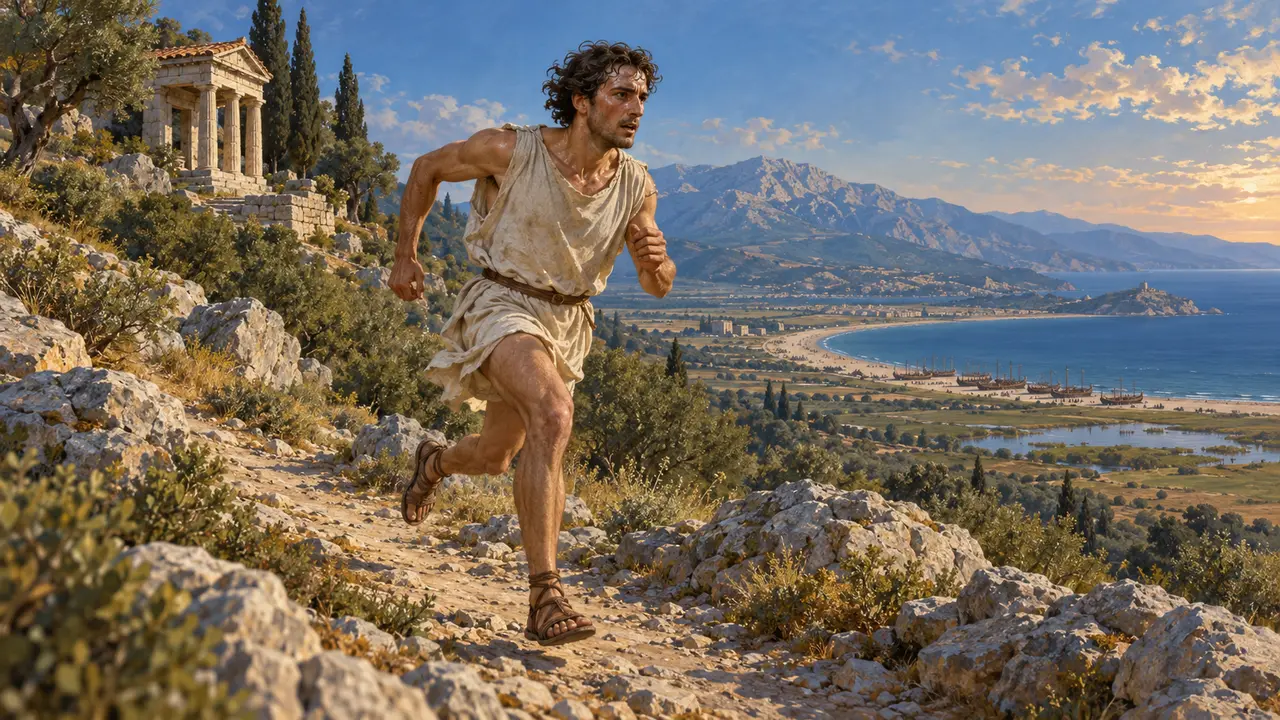
Later legendHerodotus says Pheidippides ran to Sparta, about 240 km, in two days; the Spartans would not march before the full moon. The run from Marathon to Athens with news of victory first appears in Plutarch and Lucian, five centuries later. The modern race comes from that legend.
Herodotus 6.105-106; Plutarch, Moralia 347c; Lucian, A Slip of the Tongue 3
The charge
Ancient accountThe Athenians, Herodotus says, were the first Greeks to charge at the run, for eight stades. The Persian centre broke through, but the Greek wings won and closed on it. Herodotus counts 6,400 Persian dead and 192 Athenian.
In the game: Marathon's hoplites alone keep their sprint: they came on at the run.
Herodotus 6.109-117
At the ships
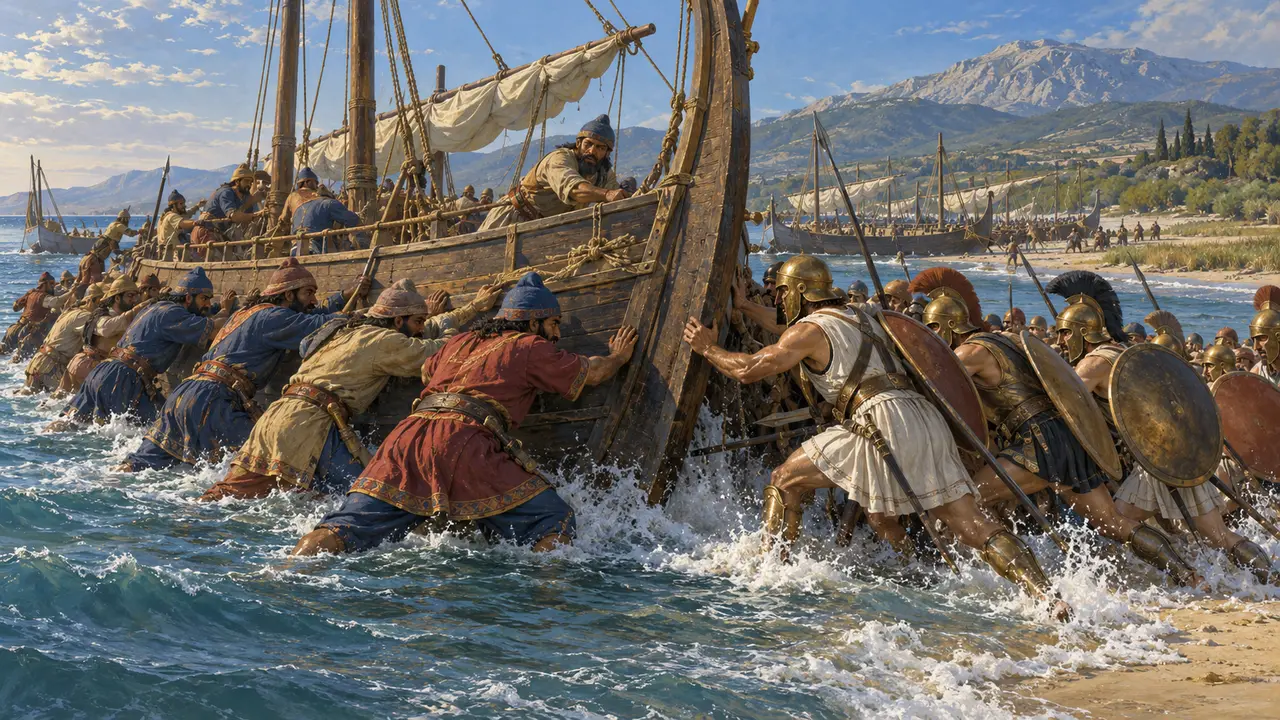
Ancient accountThe Greeks chased the Persians to the beach and seized seven ships. Cynegirus, brother of the playwright Aeschylus, had his hand cut off gripping a stern. The rest of the fleet got away.
In the game: Hold the camp at the ships: the fight at your town.
Herodotus 6.113-115
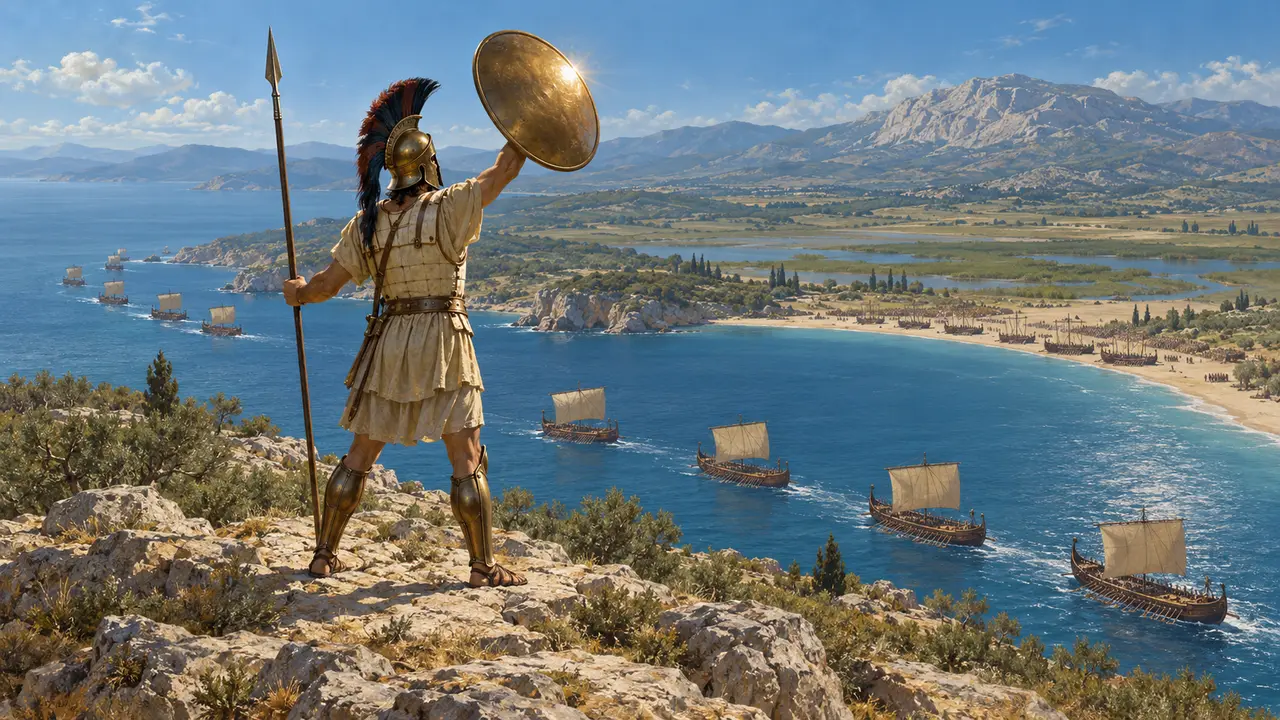
The shield on the mountain
DisputedA shield flashed from the heights, and the fleet sailed round Cape Sunium for Athens. The Athenians marched home in time. Who signalled was argued in Athens; Herodotus defends the Alcmaeonid family that was blamed.
Herodotus 6.115-124
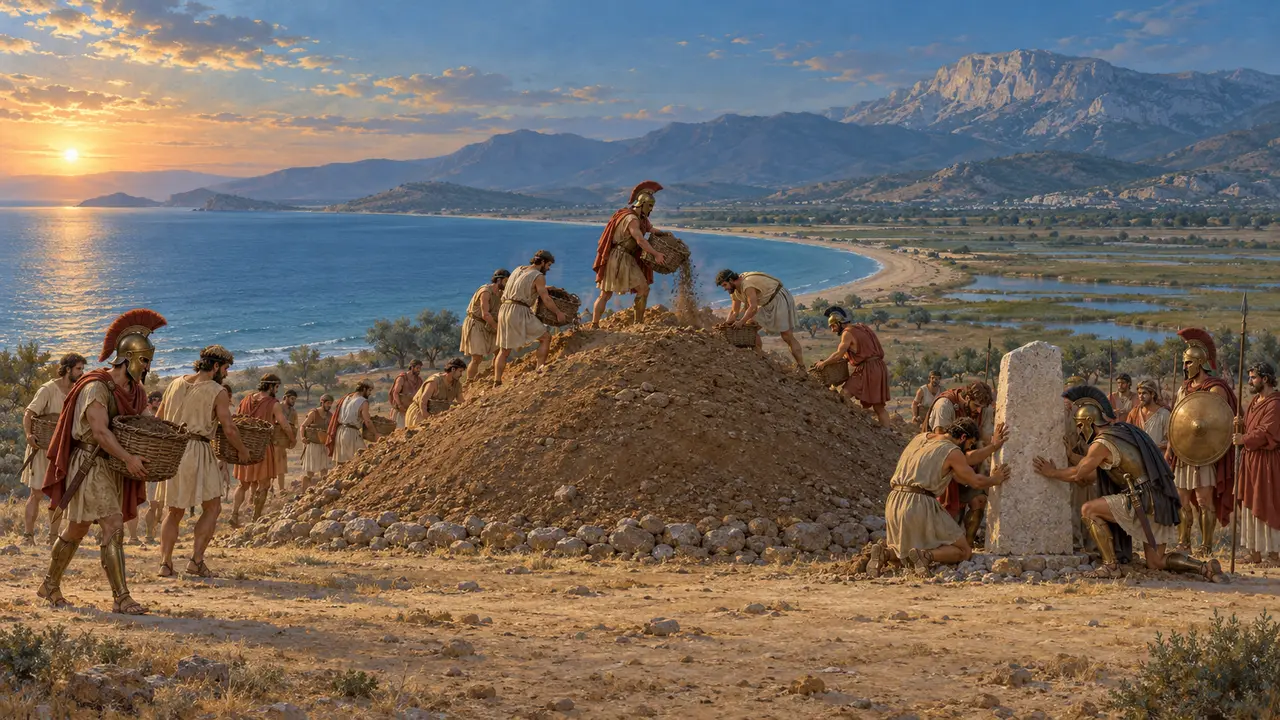
The Soros
In the recordThe Athenian dead were buried on the field under a great mound, the Soros, still about nine metres high. When it was dug in 1890 it held ash, bone and pottery of about 490.
Thucydides 2.34; V. Staïs, excavation of 1890
Read next: the topics of The Bay of Marathon
Battles and events
The expedition of Datis and Artaphernes · The fall of Eretria · The battle of Marathon
Buildings
Soldiers and ships
People
Darius the Great · Artaphernes · Datis the Mede · Hippias · Pheidippides · Callimachus
Peoples
The Persians · The Ionians · The Athenians · The Eretrians · The Plataeans · The islanders
Wildlife and weather
Deer · The wild boar · The white stork · The hare · The fox · Wild ducks · The partridge · The kite · The rock dove · The jackdaw · The crane · The swallow · Gulls · Bats · The little owl · The hooded crow · Morning mist