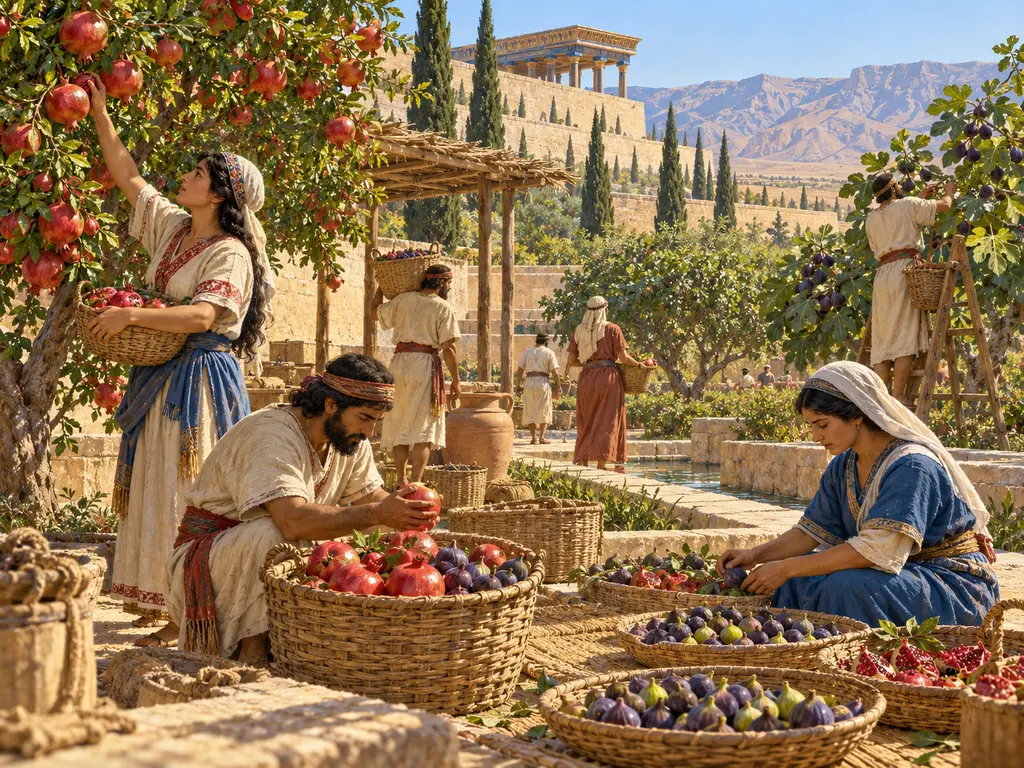
Olive Grove
Olive orchards and oil presses of Greece and the Aegean coasts, about 490-479 BCE
In the game: Level 8: The Bay of Marathon
Olive groves covered the dry hillsides of Greece and the Aegean coasts in the years of the Persian Wars, and their oil served as food, lamp fuel and the cleanser of bathers and athletes. Later Greek writers say Athenian law let oil alone of the farm's produce be sold abroad. For a Persian official the olive marked the Mediterranean edge of the empire, far from the sesame-oil lands of Babylonia.
In the game: In the Greek levels, from Marathon to Plataea, the Orchard becomes an Olive Grove on dry ground that needs no river soil. It is slow to bear, its oil is pressed on the estate, and Elder's Houses want it.
Groves and presses in the ground
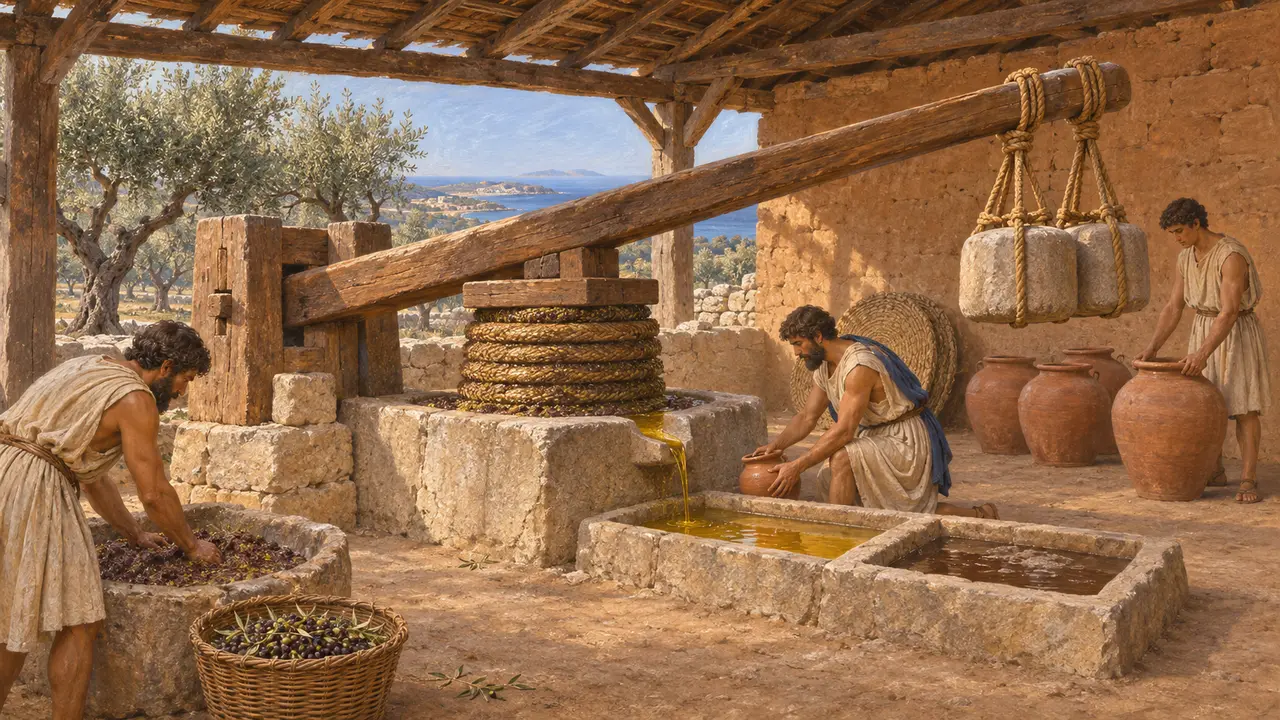
In the recordLinear B tablets from Knossos and Pylos, written centuries before the Persian Wars, already list olive oil, much of it perfumed. Stone press weights, oil jars and olive stones are found on Archaic Greek sites. At Klazomenai in Ionia, a city under Persian rule from the 540s, excavators uncovered a workshop of probably the 6th century. There, crushed olives were squeezed under a weighted wooden beam, and the oil was left to separate from the watery juice.
L. Foxhall, Olive Cultivation in Ancient Greece, 2007; excavation reports from Klazomenai
Oil in Athenian law and festival
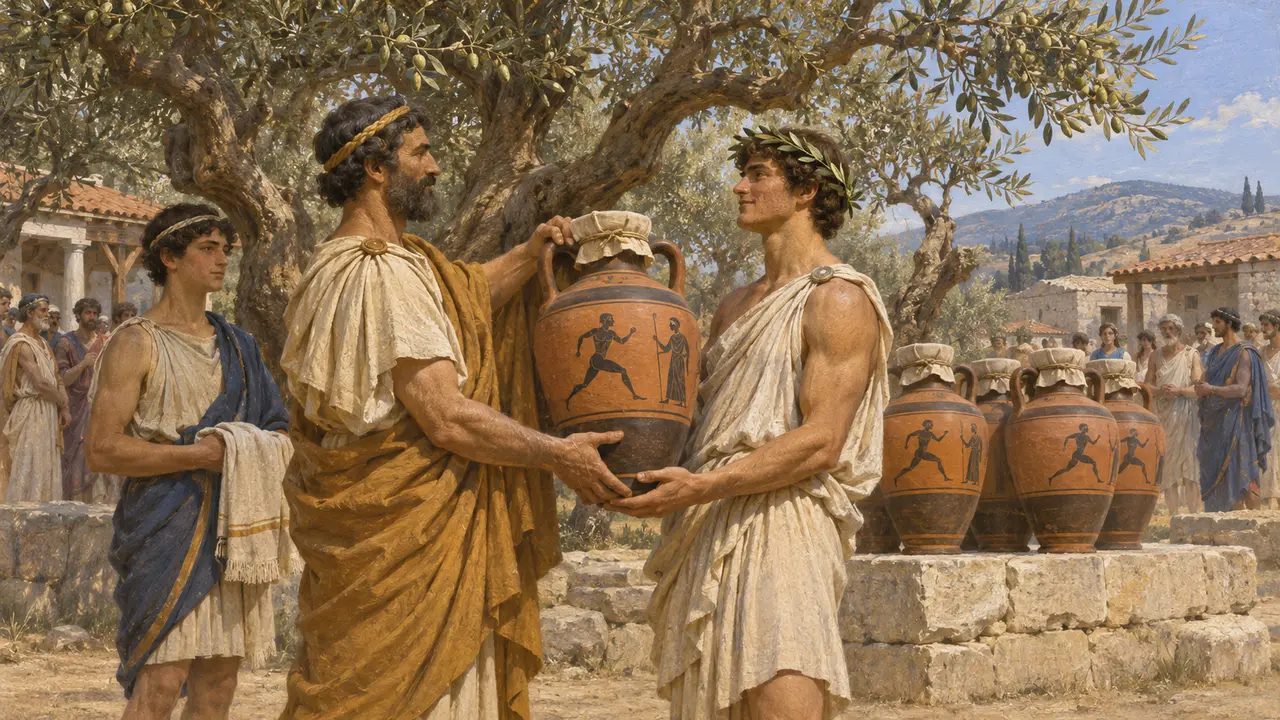
Ancient accountPlutarch, writing some seven centuries later, says that Solon in the early 6th century allowed Athenians to export olive oil but no other produce of the soil. He adds that Solon set a minimum distance between a newly planted olive and a neighbour's land. The Constitution of the Athenians, written in Aristotle's school about 330, describes oil from Athena's sacred olives being given as prizes at the Panathenaic games.
Plutarch, Solon 23-24; Aristotle, Athenaion Politeia 60
Oil at the edge of the empire
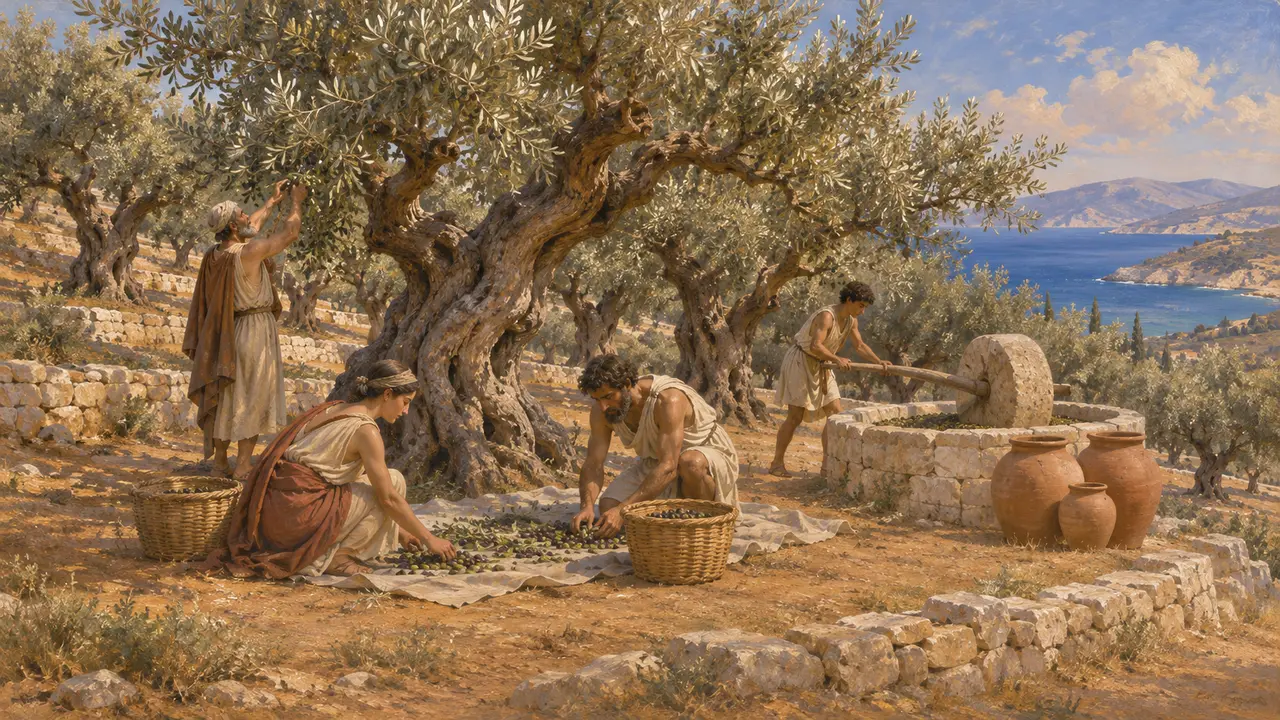
Ancient accountHerodotus says the land of Babylonia did not even try to bear the olive, and that the Babylonians used oil pressed from sesame instead. The olive belonged to the Mediterranean rim of the Persian empire: the Ionian and Carian coast, Cyprus, Phoenicia and the Levant. The armies that crossed into Greece in 490 and 480 entered country where the olive was everywhere.
Herodotus 1.193
Could an army destroy the groves
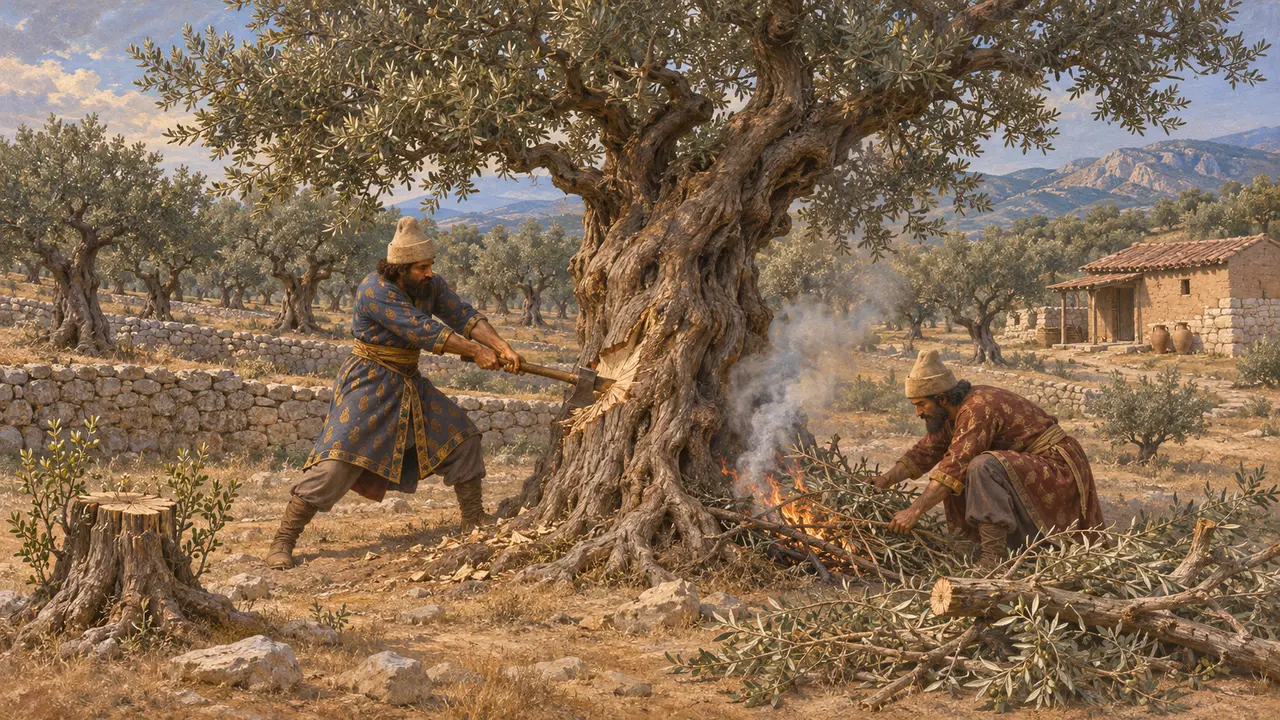
DisputedA new olive grove took years to bear a good crop, so invaders were thought to strike hard by cutting and burning it. Herodotus says Mardonius burned Athens before he withdrew in 479, though he does not speak of the groves. Victor Davis Hanson argued that mature olives are hard to fell or burn and grow back from the stump, so the real loss was a few harvests. Other historians think repeated raids could do lasting harm to farms.
V. D. Hanson, Warfare and Agriculture in Classical Greece, 1998; Herodotus 9.13
Athena's olive on the Acropolis
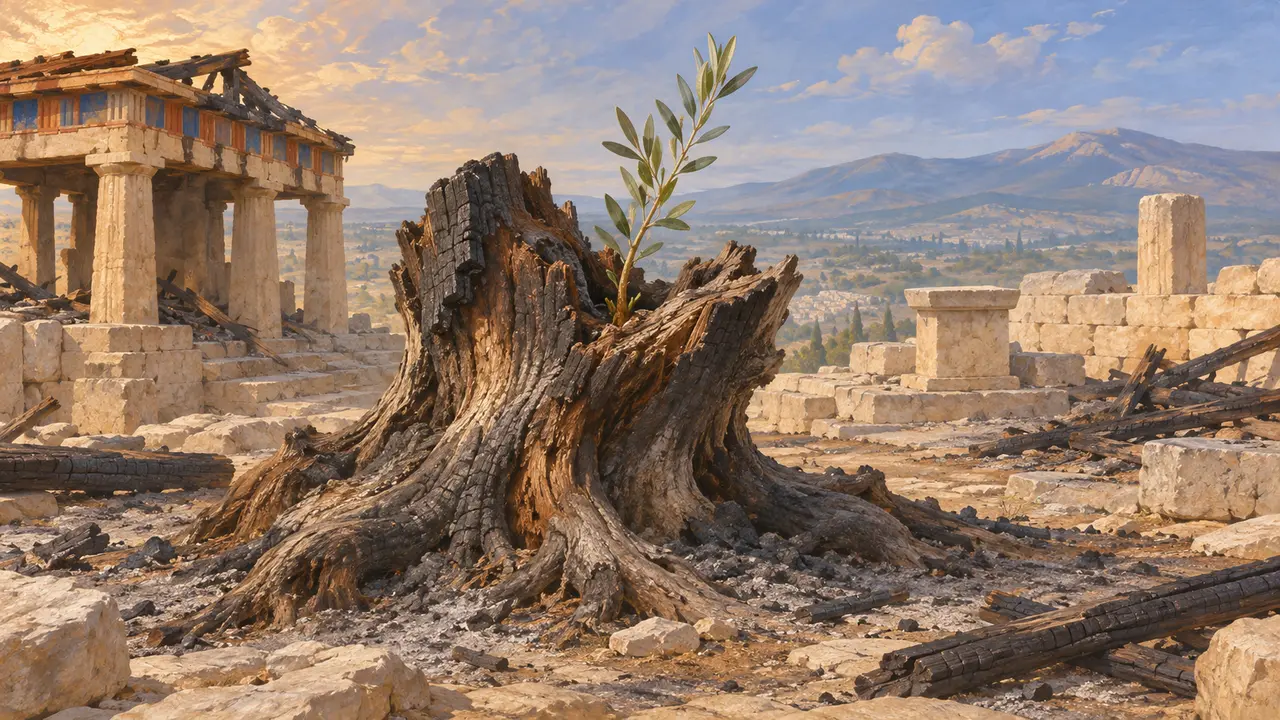
Later legendAthenians believed Athena had given them the olive in her contest with Poseidon for the land. Herodotus says the Persians burned the sacred tree with the sanctuary in 480, yet the next day a shoot a cubit long had sprung from the stump. He also passes on a story that at one time olives grew nowhere but at Athens, a claim that does not fit the evidence.
Herodotus 8.55; Herodotus 5.82
Sources
- Herodotus 8.55
- Herodotus 1.193
- Plutarch, Solon 23-24
- Aristotle, Athenaion Politeia 60
- L. Foxhall, Olive Cultivation in Ancient Greece, 2007
- V. D. Hanson, Warfare and Agriculture in Classical Greece, 1998