Orchard
Irrigated fruit groves of the Achaemenid empire, 6th to 5th centuries BCE
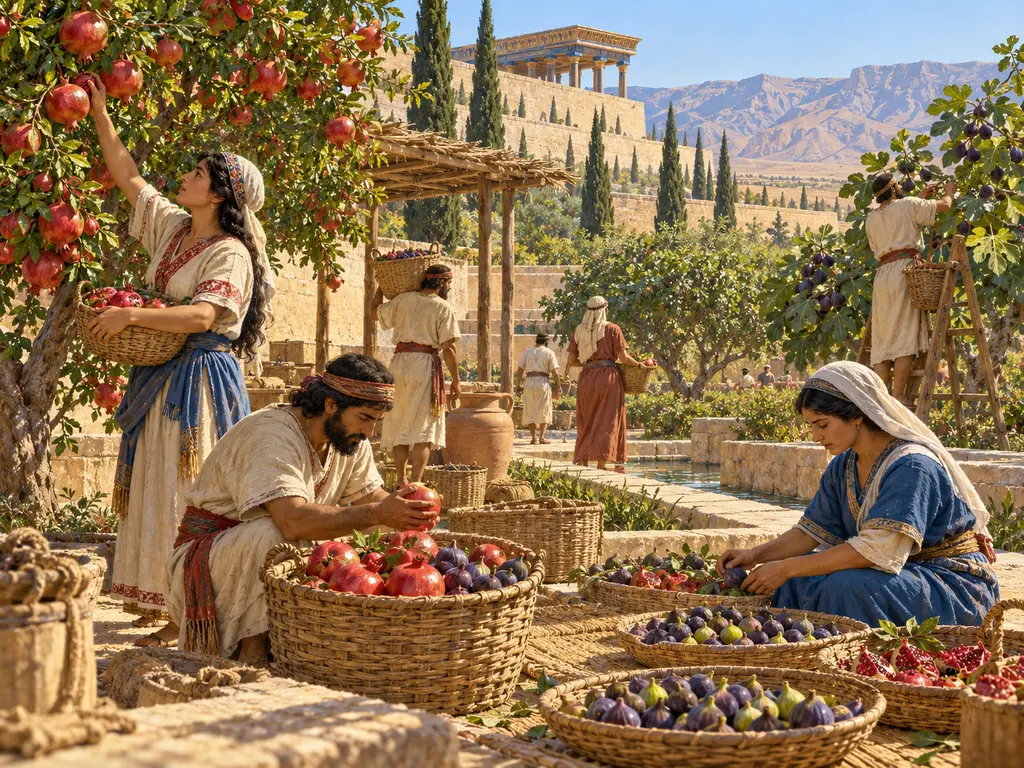
Across the empire, fruit trees grew on watered land: date palms in Babylonia, figs, vines and other fruit in Persis, and mixed groves on royal estates. Palace records show fruit as rations and as royal food. Greek writers, and a royal letter of disputed authenticity, link the planting of trees to good rule, so the orchard was both a working farm and a mark of the King's care for the land.
In the game: In the game the Orchard is a food building of fruit trees watered from canals, and Elder's Houses want its fruit. This is a simplification: real orchards also grew on upland estates in Persis, fed by channels from streams.
Fruit in the Persepolis tablets
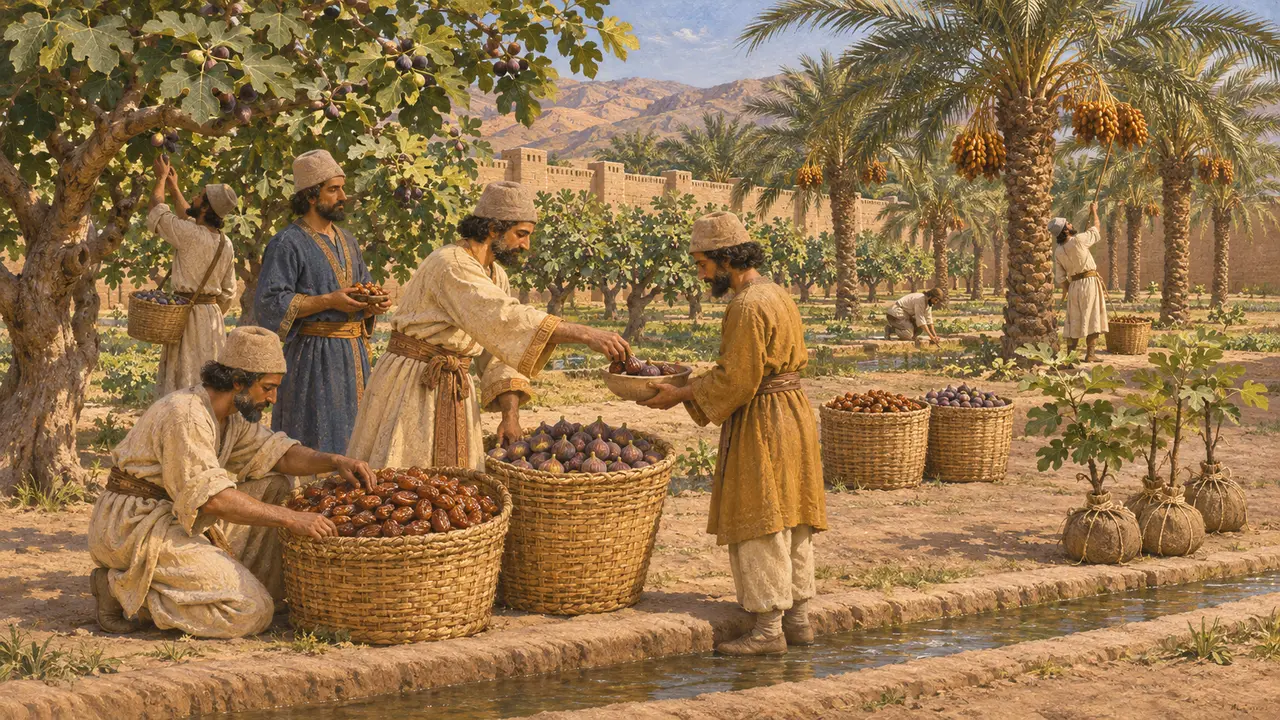
In the recordThe Persepolis Fortification tablets, written in Elamite between about 509 and 493, record fruit moving through the King's economy. Dates and figs appear as rations for workers and as supplies for royal and elite households. Some texts appear to concern fruit trees for planting on estates, including the walled parks the tablets call partetaš, the Elamite form of the Persian word that lies behind the Greek paradeisos.
R. Hallock, Persepolis Fortification Tablets, 1969; W. Henkelman, The Other Gods Who Are, 2008
Date groves of Babylonia
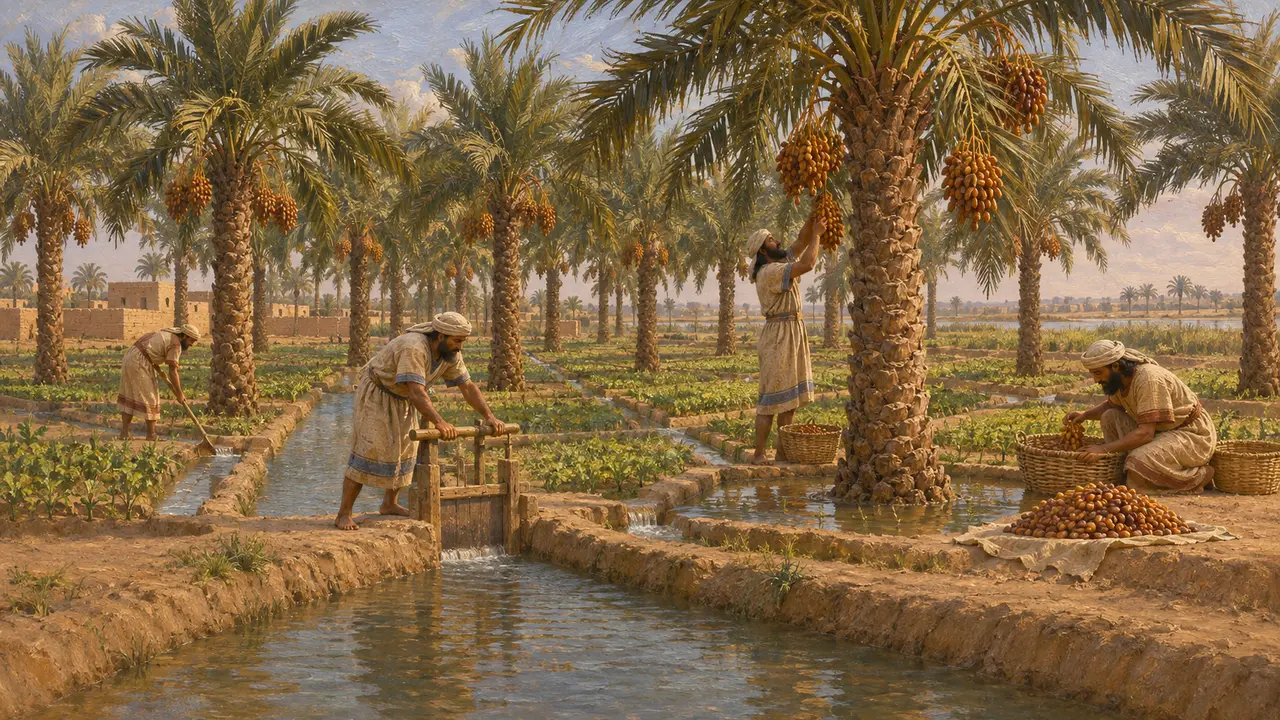
In the recordIn Babylonia the date palm was the main orchard tree, planted along canals on the river plain. Business archives such as the Egibi texts, and the later Murashu archive from Nippur (after 479), record leases of date groves, the shares owed by gardeners and rents paid in dates. These documents show orchards as carefully managed property, tied to access to canal water.
M. Stolper, Entrepreneurs and Empire, 1985
Herodotus on the Babylonian palm
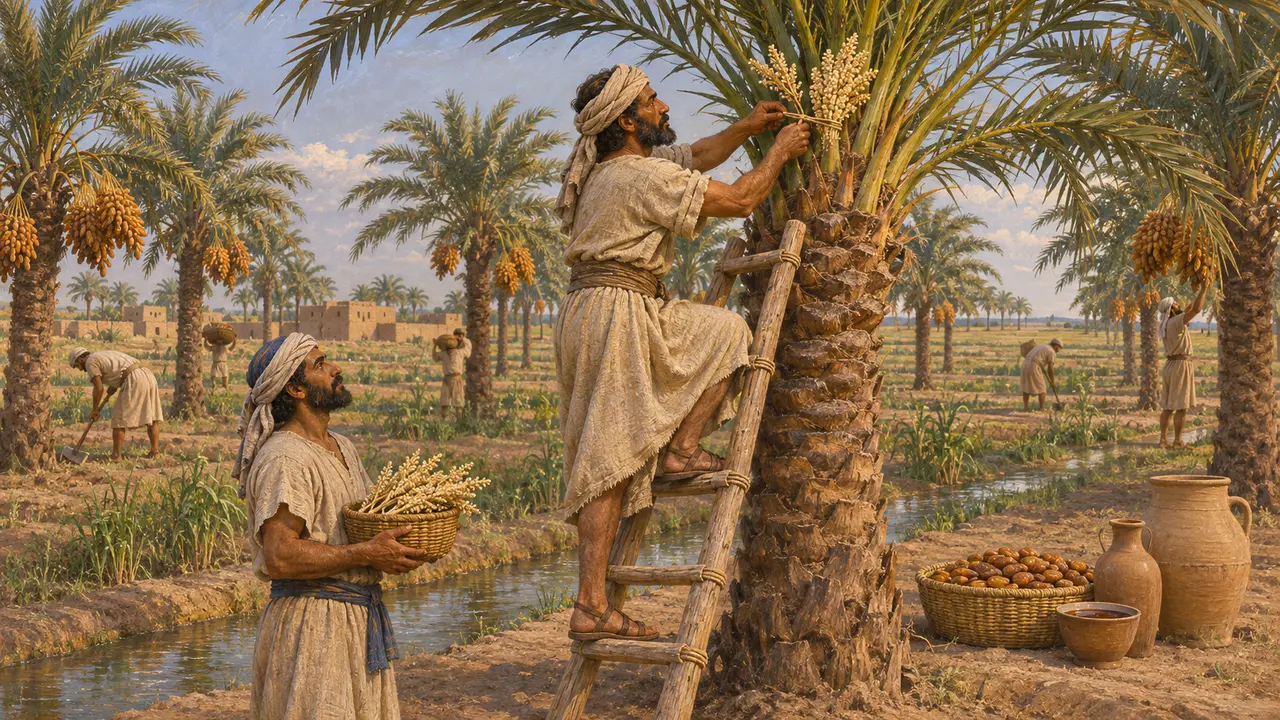
Ancient accountHerodotus says palm trees grew all over the Babylonian plain and that people made food, wine and honey from their fruit. He also describes growers tying the fruit of the palms the Greeks called male to the fruit-bearing trees. He explains this, mistakenly, by comparing it with the Greek treatment of fig trees. His account fits the importance of dates shown in Babylonian documents.
Herodotus 1.193
Darius and the letter to Gadatas
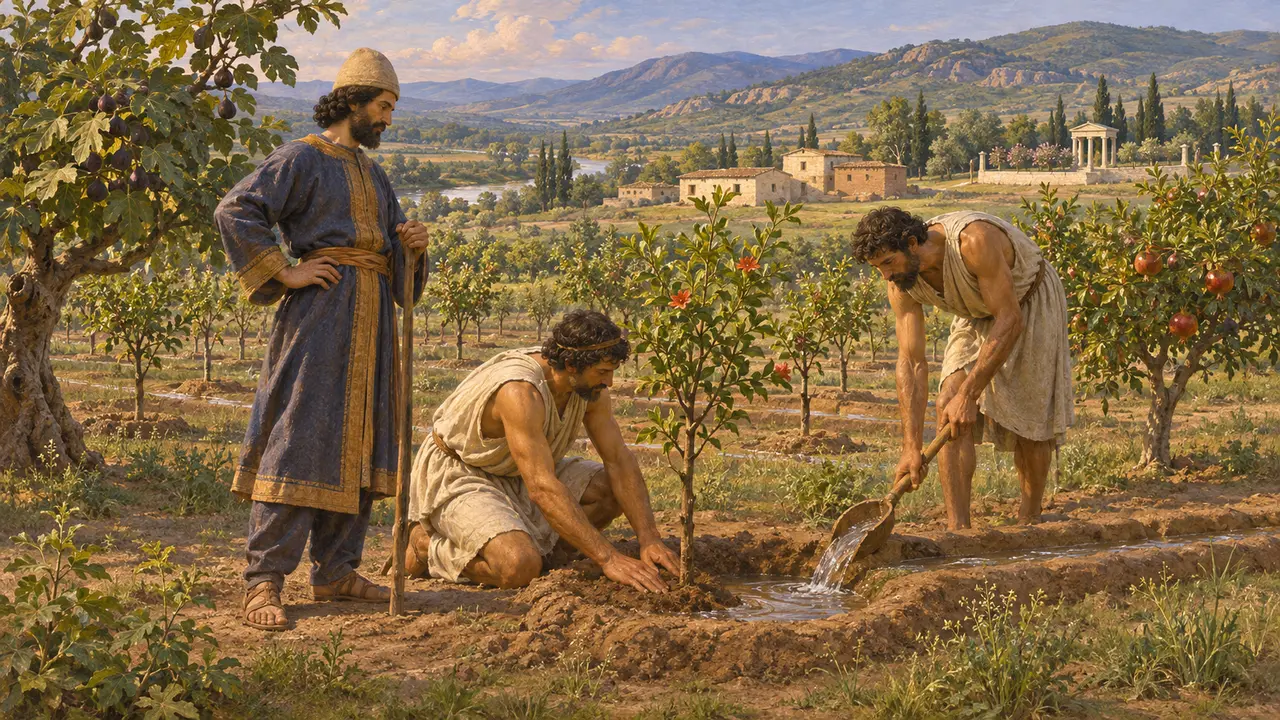
DisputedA Greek inscription from Magnesia on the Maeander presents a letter of Darius praising his official Gadatas for planting fruit trees from beyond the Euphrates in the lower parts of Asia, while rebuking him for taxing the sacred gardeners of Apollo. The surviving stone was cut in Roman times. Some historians accept it as a copy of a real royal letter. Others, notably Pierre Briant, have argued that it is a later forgery.
R. Meiggs and D. Lewis, Greek Historical Inscriptions, no. 12; P. Briant, Histoire et archéologie d'un texte: la Lettre de Darius à Gadatas, 2003
Xenophon on the King's trees
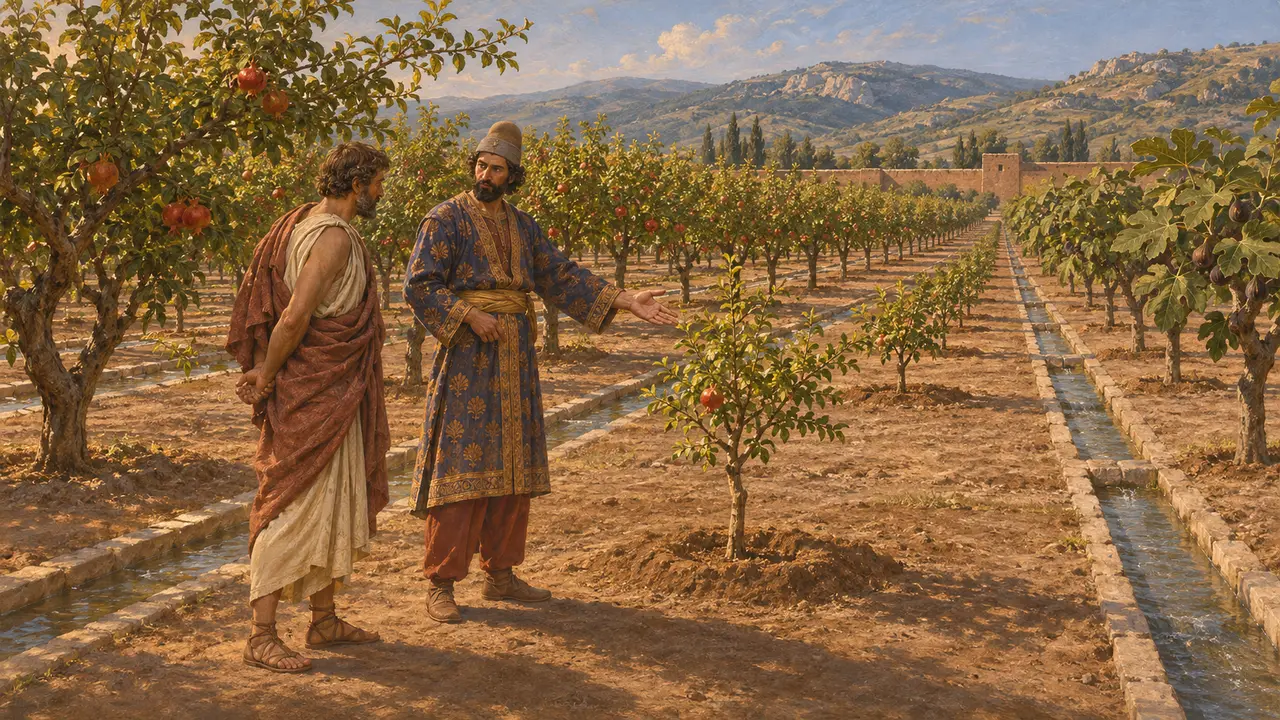
Ancient accountXenophon, writing in the 4th century, says the Persian king saw to it that his parks were full of trees and that the land was well cultivated. He tells how Cyrus the Younger showed the Spartan Lysander his park at Sardis, with trees planted in straight rows, and claimed to have planted some himself. The scene is later than this game's period, but it shows how Greeks linked planting to royal virtue.
Xenophon, Oeconomicus 4.13 and 4.20-25
Sources
- W. Henkelman, The Other Gods Who Are, 2008
- R. Hallock, Persepolis Fortification Tablets, 1969
- M. Stolper, Entrepreneurs and Empire, 1985
- Herodotus 1.193
- Xenophon, Oeconomicus 4.20-25
- R. Meiggs and D. Lewis, Greek Historical Inscriptions, no. 12