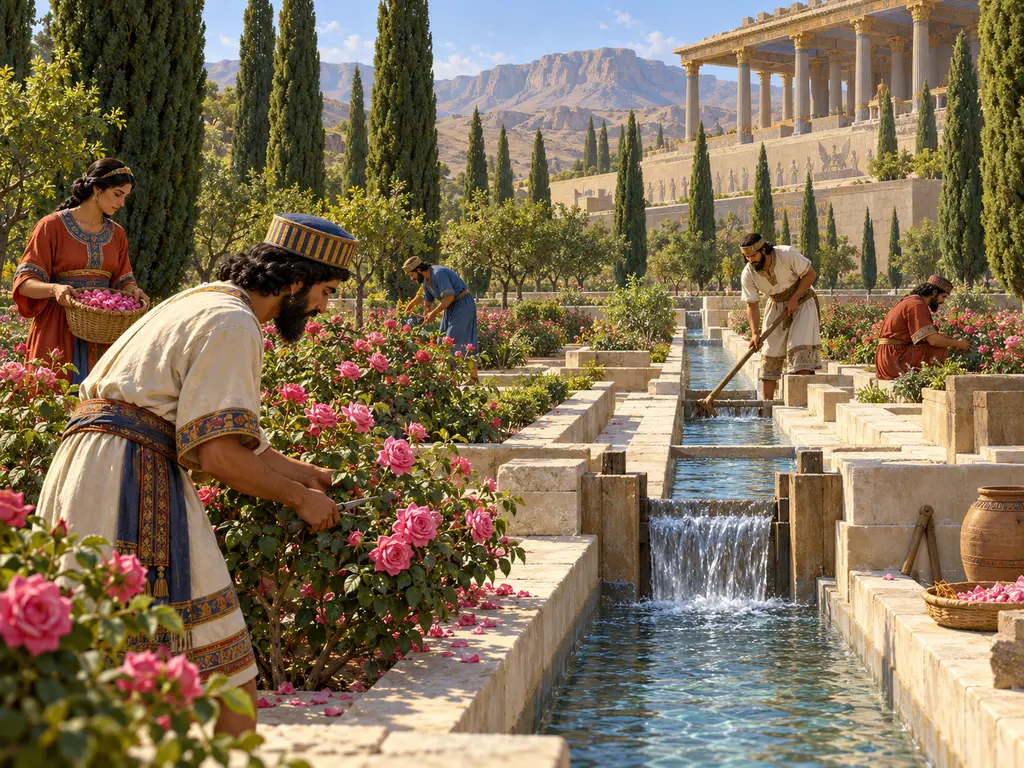
Formal Garden
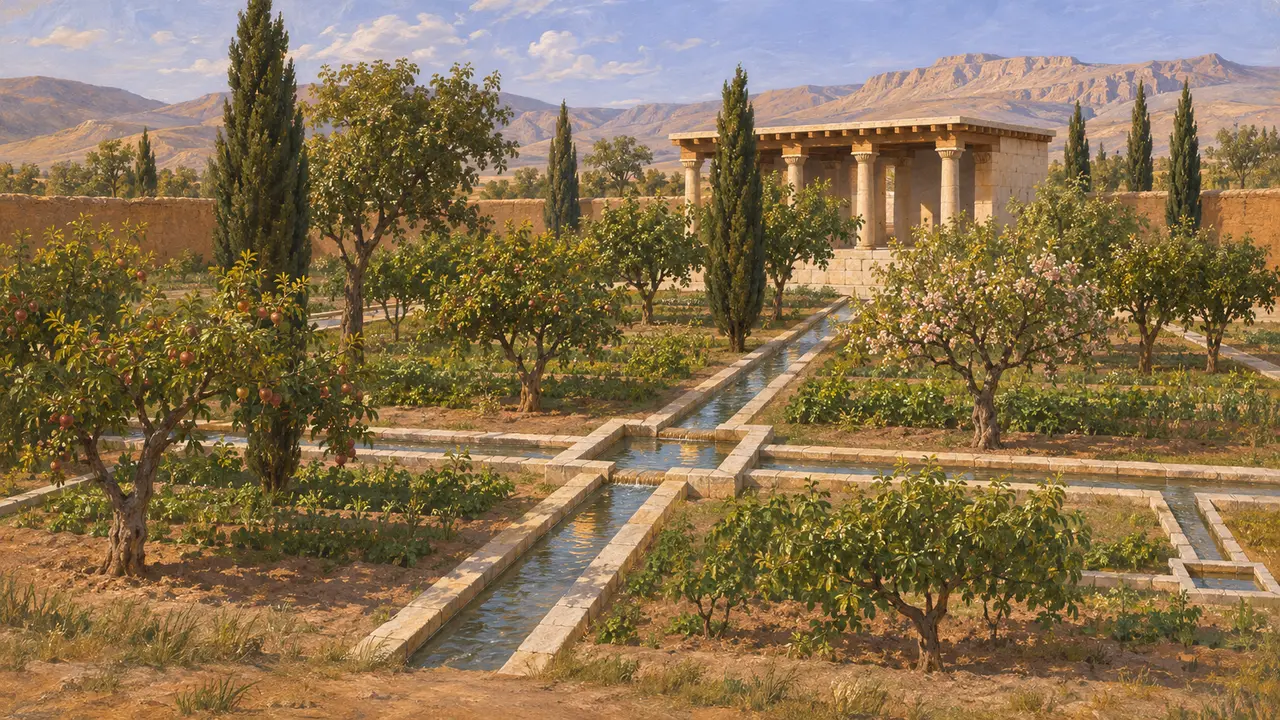
Walled Persian garden of trees and water channels, from about 540 BCE
In the game: Level 1: The Founder's Tomb
The Persians probably called a walled, irrigated garden paridaida, a word reconstructed from its Elamite and Babylonian forms. The Greeks borrowed it as paradeisos, the origin of the word paradise. Kings, satraps and nobles laid out such gardens with rows of trees and stone-lined channels, and a well-watered garden showed that its owner could command land, water and labour.
In the game: In the game the Formal Garden is a service building of shade trees and stone channels that Noble Residences need within ten cells. Real Persian gardens were walled royal or noble estates, so this rule is a simplification.
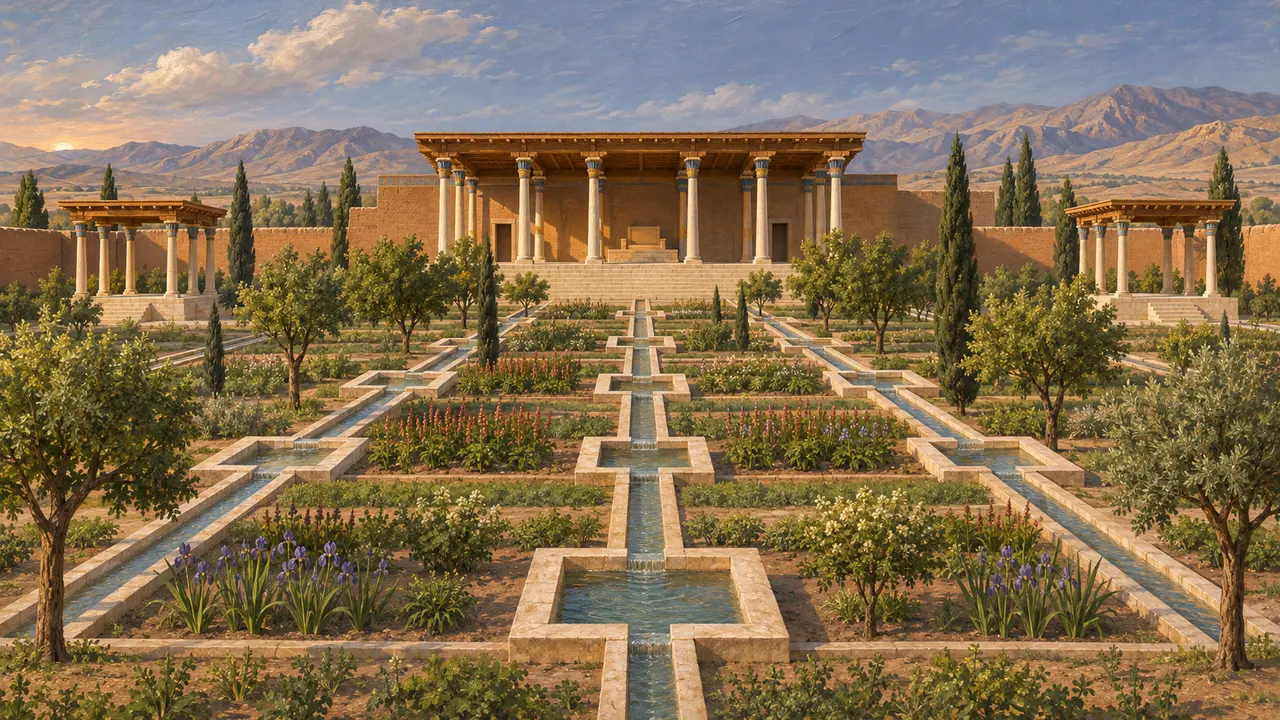
The channels of Pasargadae
In the recordExcavations at Pasargadae in the 1960s uncovered limestone water channels in the royal garden laid out under Cyrus, between Palace P and two small pavilions. The channels ran in straight lines and opened at intervals into small square basins. Planting beds lay between them, and the throne portico of Palace P looked out over the whole layout.
D. Stronach, Pasargadae, 1978
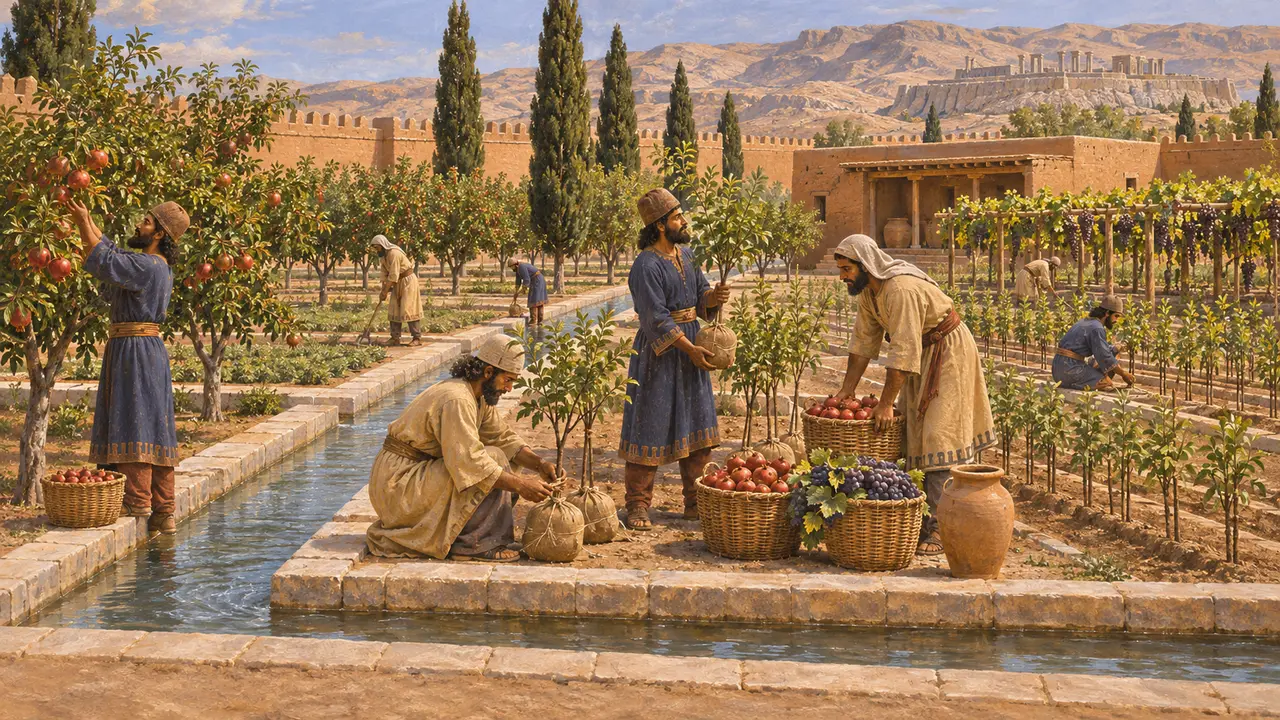
Gardens in the Fortification tablets
In the recordThe Elamite administrative tablets from Persepolis, written about 509 to 493, use the word partetaš, borrowed from the Persian term. They record such estates at several places in Persis, with workers assigned to them and produce and young trees passing through them. They show gardens as working parts of the royal economy, not only places of pleasure.
Persepolis Fortification tablets; C. Tuplin, Achaemenid Studies, 1996
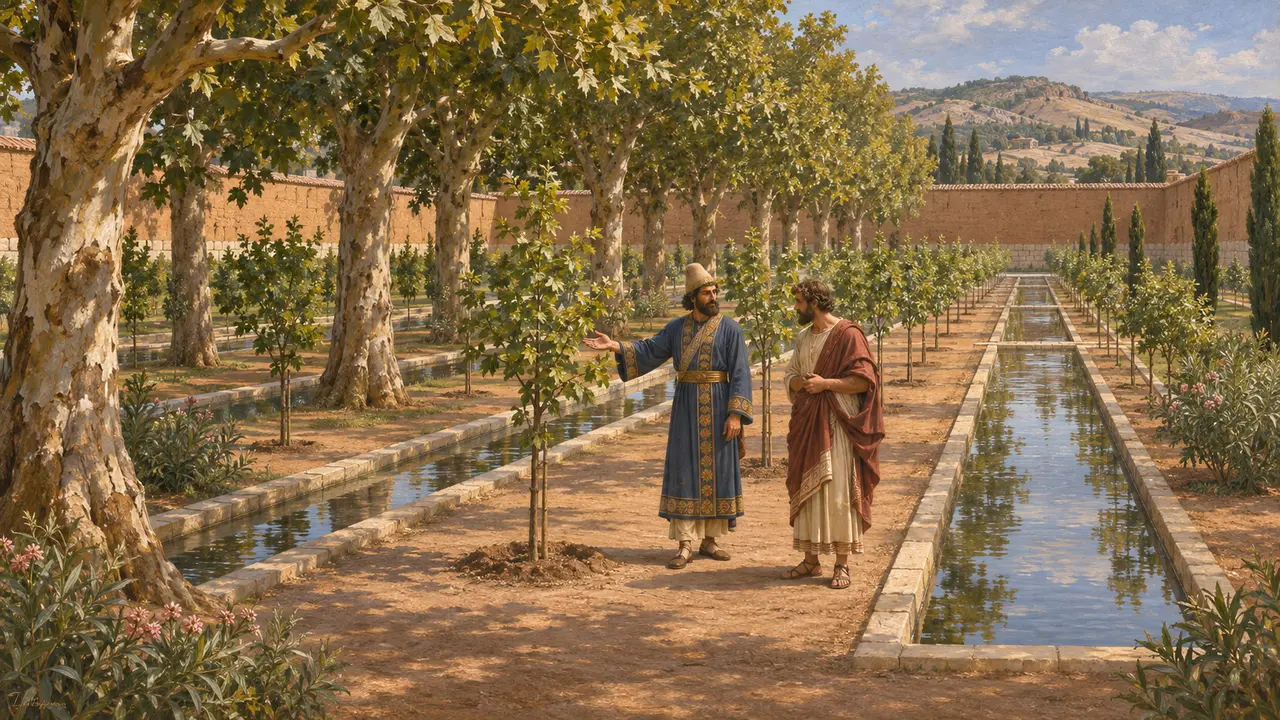
Greek visitors in Persian gardens
Ancient accountXenophon tells how Cyrus the Younger, a Persian prince, showed the Spartan Lysander his paradeisos at Sardis late in the fifth century, with trees in straight rows, and said he had planted some himself. Herodotus says Xerxes, marching towards Sardis in 481, found a fine plane tree in Lydia, adorned it with gold and left a guard over it. Both writers present tree care as something Persian rulers valued.
Xenophon, Oeconomicus 4.20-25; Herodotus 7.31
A fourfold plan or not
DisputedStronach, the excavator, later argued that the Pasargadae channels framed four quarters, making this the earliest known fourfold garden and an ancestor of the later Persian chahar bagh. Others note that only parts of the layout survive, and geophysical surveys of the site since about 2000 point to a less tidy arrangement. Whether the fourfold plan began here remains debated.
D. Stronach, Pasargadae, 1978; P. Briant, From Cyrus to Alexander, 2002
Darius's letter to Gadatas
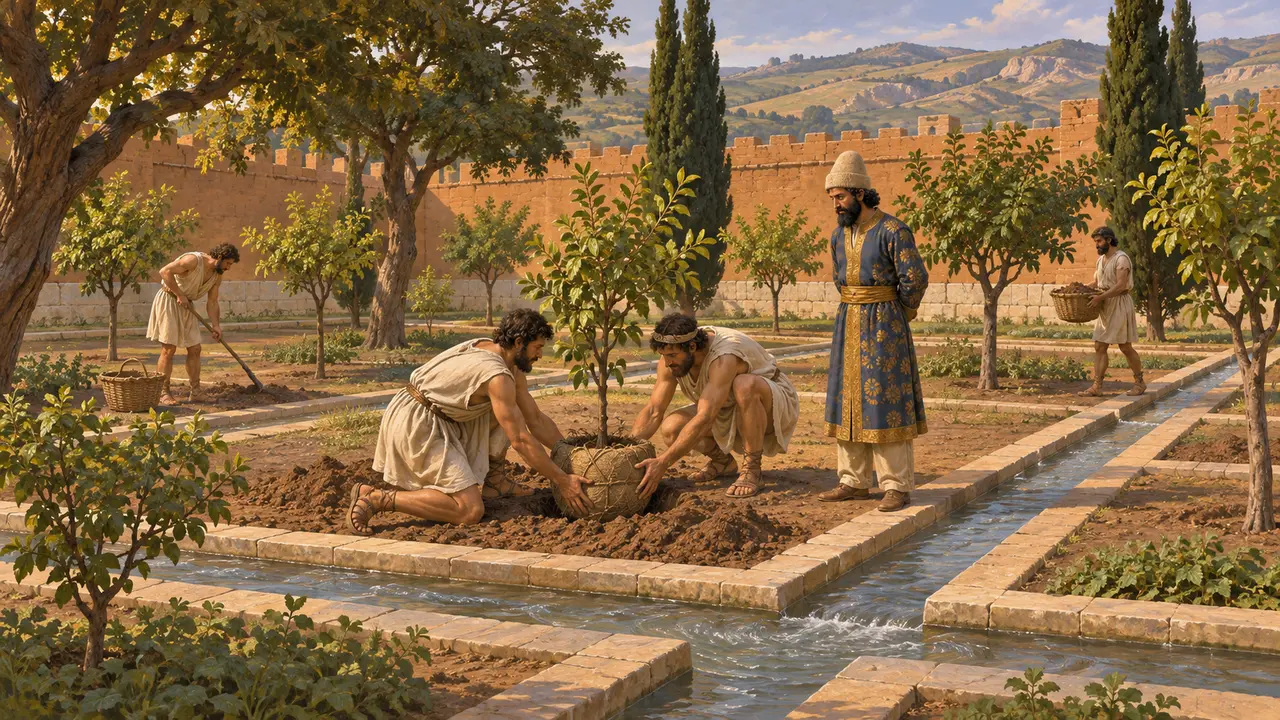
DisputedA Greek inscription records a letter in which Darius praises his official Gadatas for planting trees from beyond the Euphrates in western Asia Minor. The stone itself was cut centuries later, in the Roman period. Historians disagree over whether it copies a genuine royal letter or is a later composition.
Letter of Darius to Gadatas (Meiggs-Lewis 12); P. Briant, From Cyrus to Alexander, 2002
Sources
- D. Stronach, Pasargadae, 1978
- P. Briant, From Cyrus to Alexander, 2002
- C. Tuplin, Achaemenid Studies, 1996
- Xenophon, Oeconomicus 4.20-25
- Herodotus 7.31
- Letter of Darius to Gadatas (Meiggs-Lewis 12)