Royal Garden
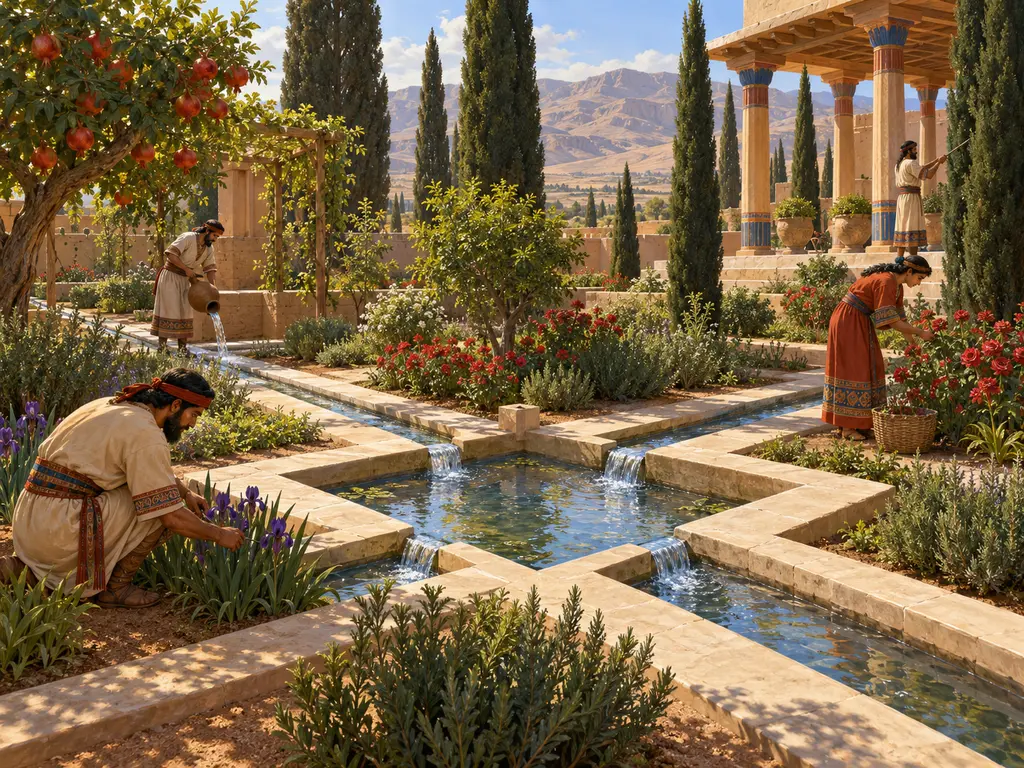
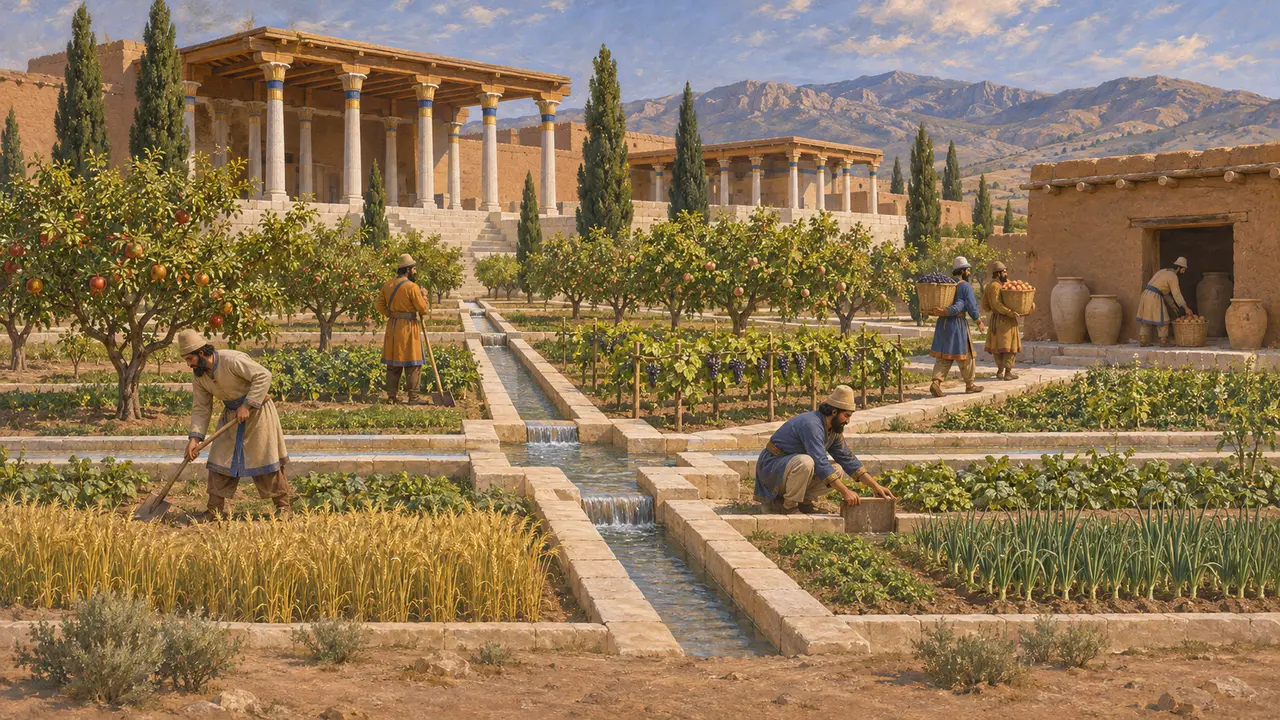
Garden with stone water channels by the palaces of Pasargadae, about 540-530 BCE
In the game: Level 1: The Founder's Tomb
At Pasargadae, Cyrus the Great probably laid out a planted garden beside his palaces, watered by narrow channels cut from limestone. It is probably the oldest Persian royal garden whose plan survives on the ground. It joined palace, water and trees into one setting for kingship, and Greek writers later took the Persian word for such parks into their language as paradeisos.
In the game: The game treats the garden as a monument that gives a garden to every house within sixteen cells. This is a simplification: the real garden was a royal space beside the palaces, not a public amenity for townspeople.
Channels between the palaces
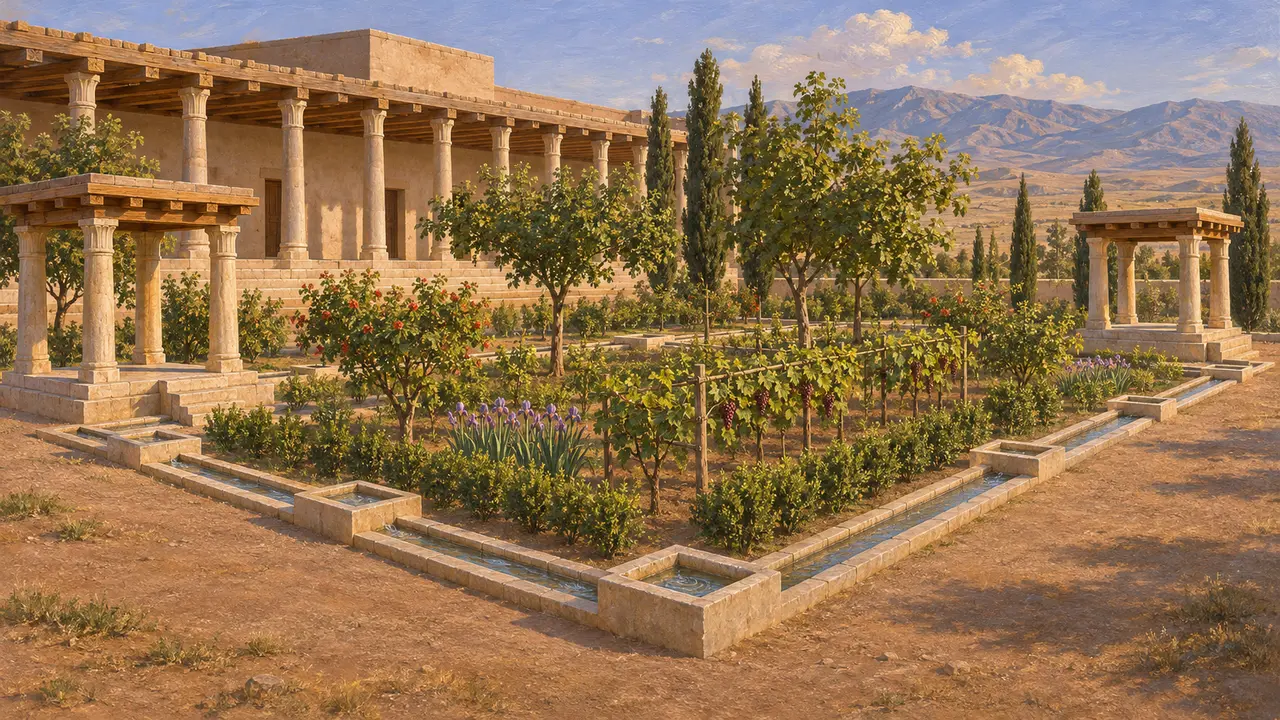
In the recordExcavations in the 1960s found stone water channels, about a quarter of a metre wide, running around a rectangular plot beside the residential palace. Small square basins were set into the channels at intervals. Two small pavilions stood at corners of the garden, and the long portico of the palace looked out over the planting.
D. Stronach, Pasargadae, 1978
A fourfold plan or something larger
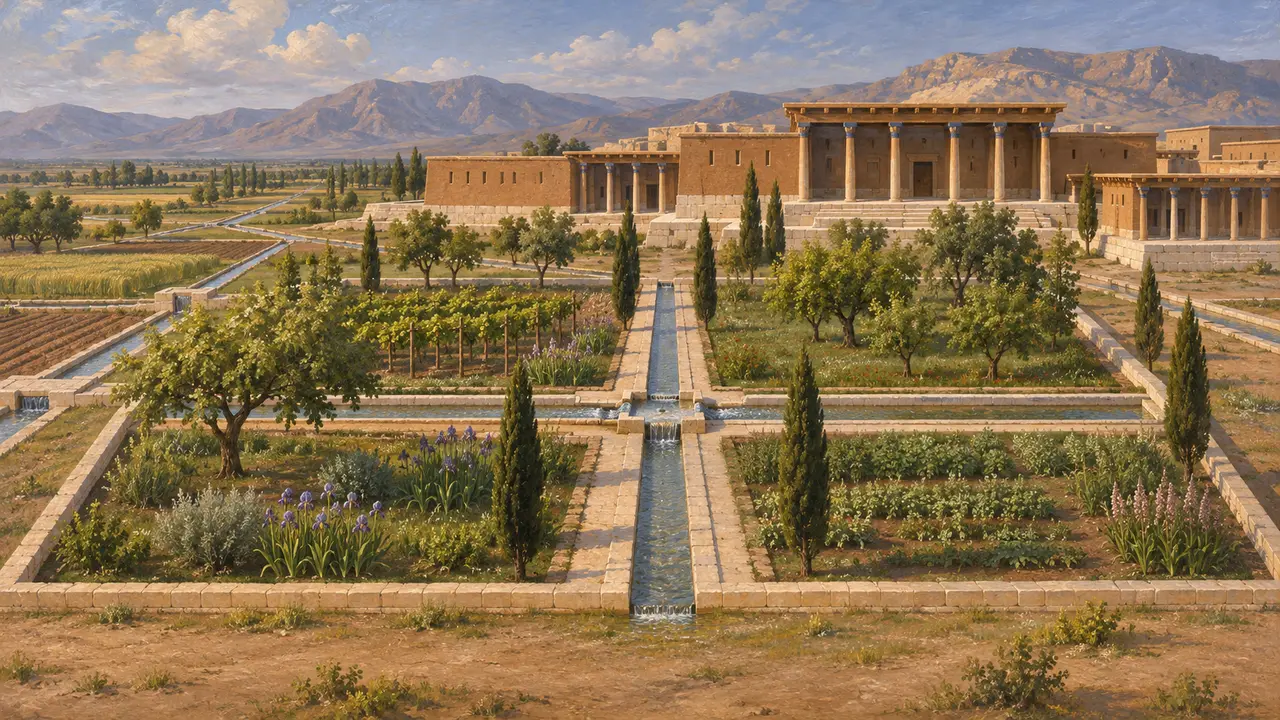
DisputedStronach reconstructed the garden as a rectangle divided into four by channels and walks, and saw it as the ancestor of the later Persian fourfold garden. A geophysical survey of the site in the early 2000s traced a wider network of channels across the plain. Historians now debate whether the four-part layout is certain, and how much of the system belongs to Cyrus or to later work under Darius.
R. Boucharlat and C. Benech, Organisation et aménagement de l'espace à Pasargades, 2002
The park around the tomb
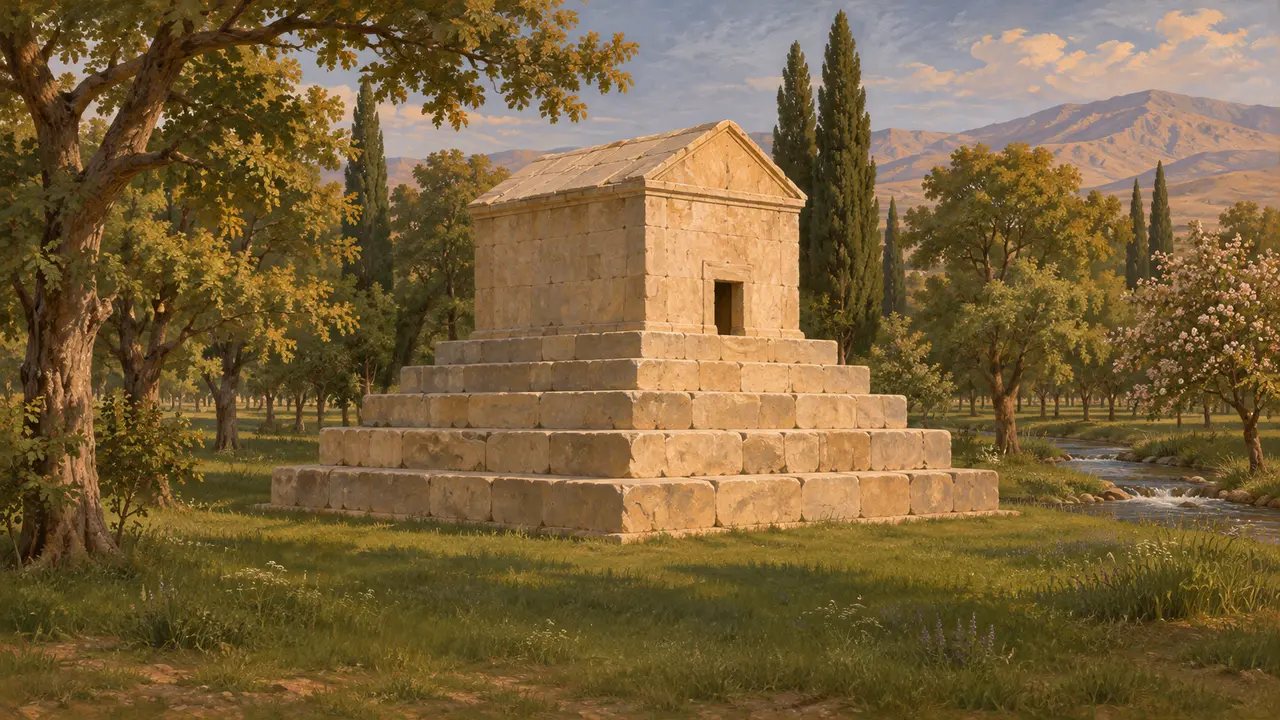
Ancient accountArrian draws on Aristobulus, who saw Pasargadae with Alexander about two centuries after Cyrus. He says the tomb of Cyrus stood within the royal park, in a grove of many kinds of trees with running water and deep grass. Strabo gives a similar picture from the same source. The tomb lies some distance from the palaces, so this park was probably a wider planted landscape, not the channelled garden itself.
Arrian, Anabasis 6.29; Strabo 15.3.7
Paradise as a royal institution
In the recordThe Persepolis Fortification tablets, from the reign of Darius, name estates called partetaš in Elamite, from the Old Persian word behind Greek paradeisos. These were managed royal properties where trees, crops and stores were kept, not only pleasure gardens. The Pasargadae garden belongs to this wider pattern of the king as owner and improver of land.
P. Briant, From Cyrus to Alexander, 2002; W. Henkelman, The Other Gods Who Are, 2008
The king who planted trees
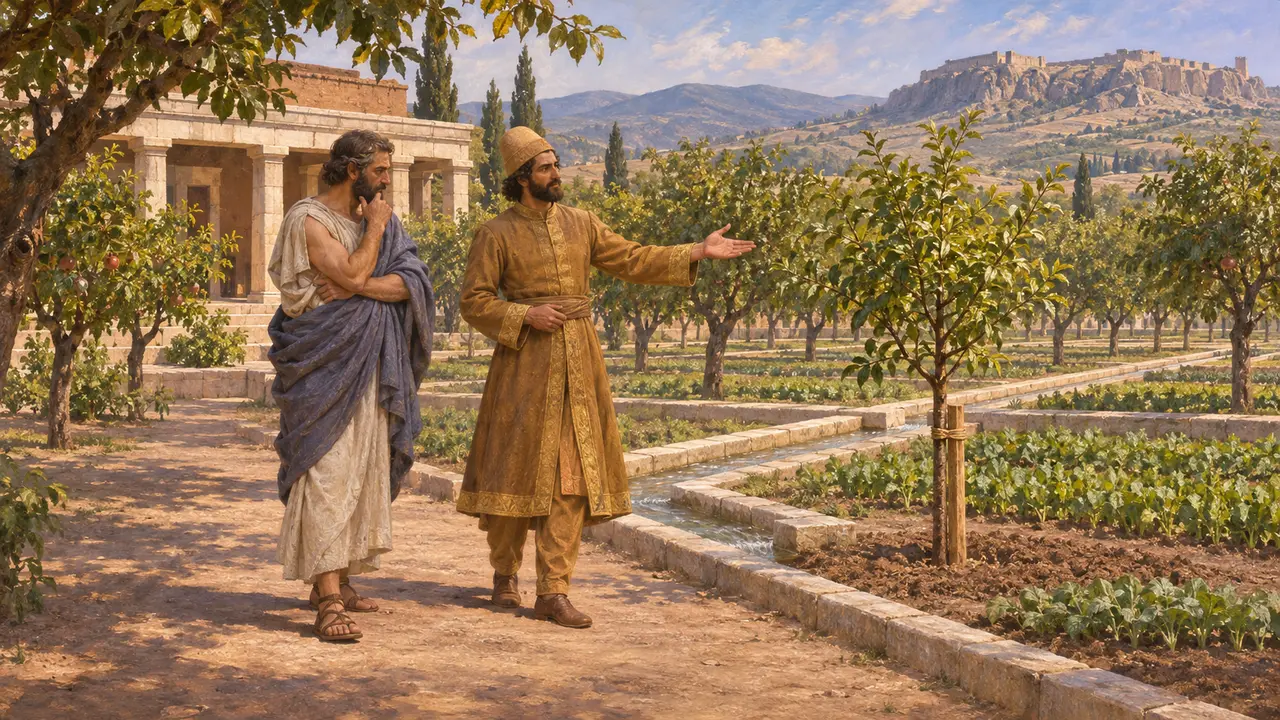
Later legendXenophon tells how the younger Cyrus, a Persian prince, showed the Spartan Lysander his park at Sardis in about 407. Cyrus said he had planned it and planted some of it himself. Xenophon uses the scene as a moral lesson that a good ruler cares for farming. It concerns a later Cyrus and shapes an ideal, so it cannot describe the garden of Cyrus the Great directly.
Xenophon, Oeconomicus 4.20-25
Sources
- D. Stronach, Pasargadae, 1978
- R. Boucharlat and C. Benech, Organisation et aménagement de l'espace à Pasargades, 2002
- Arrian, Anabasis 6.29
- Strabo 15.3.7
- P. Briant, From Cyrus to Alexander, 2002
- Xenophon, Oeconomicus 4.20-25