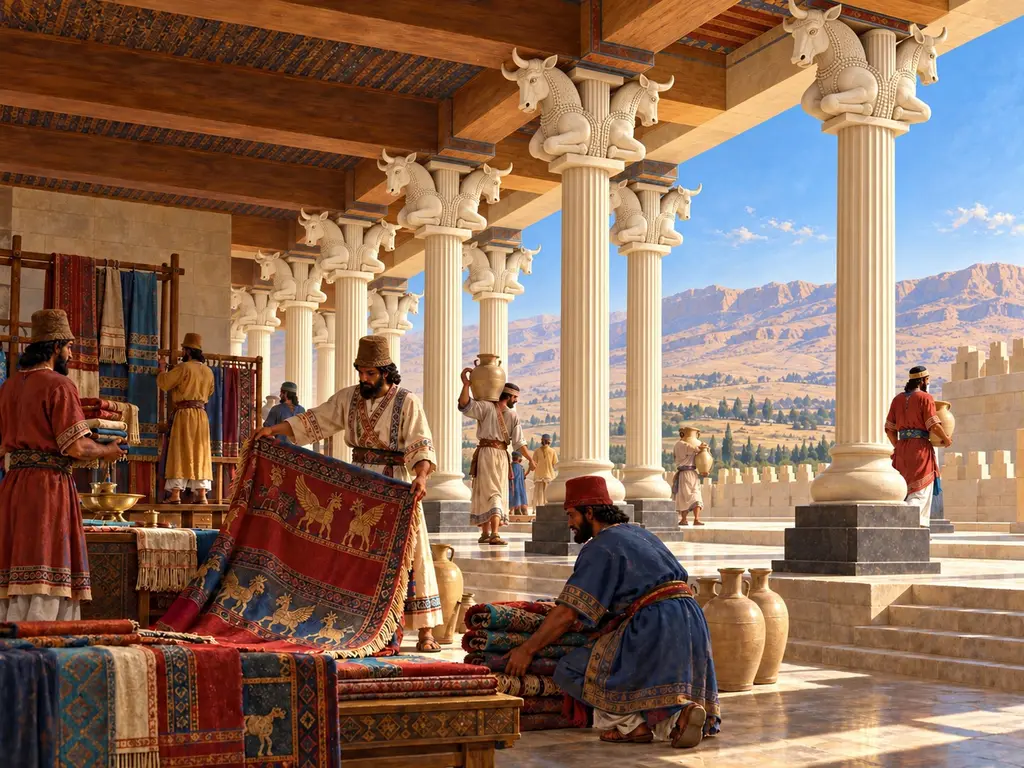
Audience Hall
Columned hall of Cyrus, known as Palace S, at Pasargadae, about 540-530 BCE
In the game: Level 1: The Founder's Tomb
The so-called Audience Hall, or Palace S, was one of the stone halls that Cyrus raised at Pasargadae, his new royal seat in Persis. A lofty central room of columns, opened by porticoes on every side, it set the pattern for the great columned halls later built by Darius and Xerxes at Susa and Persepolis.
In the game: In the Pasargadae level the hall rises stone by stone from limestone blocks and timber. That is broadly fair, but the real hall mixed white and dark stone, and 'audience hall' is a modern label, not an ancient one.
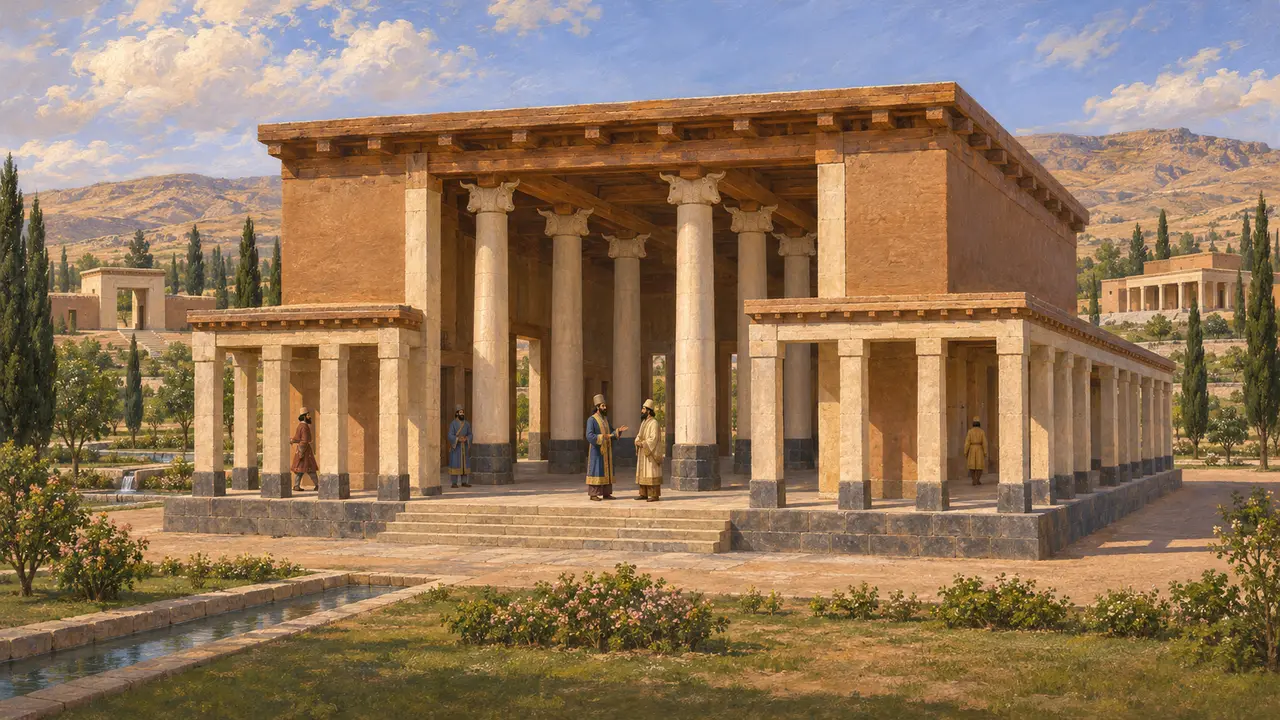
A hall of columns in a garden
In the recordExcavation by Ali Sami and later by David Stronach showed a rectangular main hall with two rows of four tall columns, once carrying a timber roof. Porticoes with lower columns ran along all four sides. The column shafts were of white limestone on bases of dark stone, and fragments suggest animal-headed capitals. The hall stood near the gatehouse known as Gate R and the residential Palace P, among gardens and water channels.
D. Stronach, Pasargadae, 1978
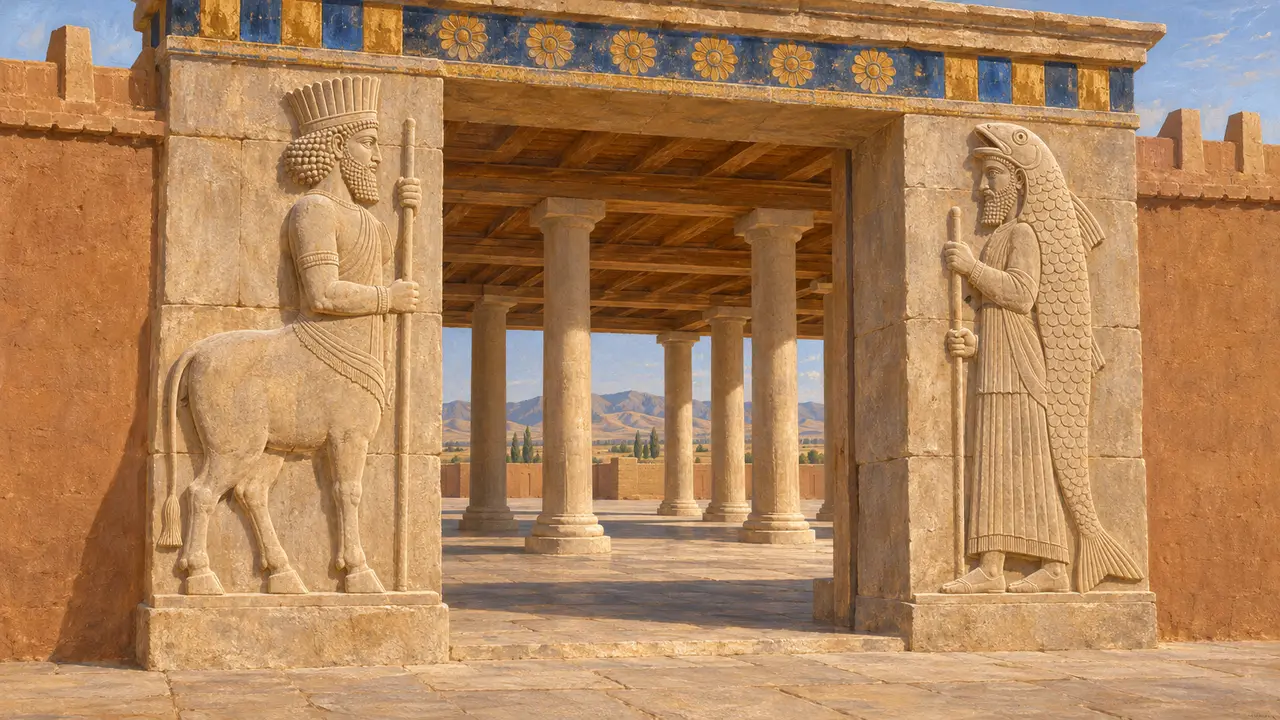
Guardian figures at the doors
In the recordThe doorways carried carved reliefs, of which only the lower parts survive. They include a bull-man and a figure wrapped in a fish-skin cloak, both protective beings borrowed from the palace art of Assyria. They show that Cyrus's builders drew on older Mesopotamian royal imagery while working out a new Persian style.
M. C. Root, The King and Kingship in Achaemenid Art, 1979
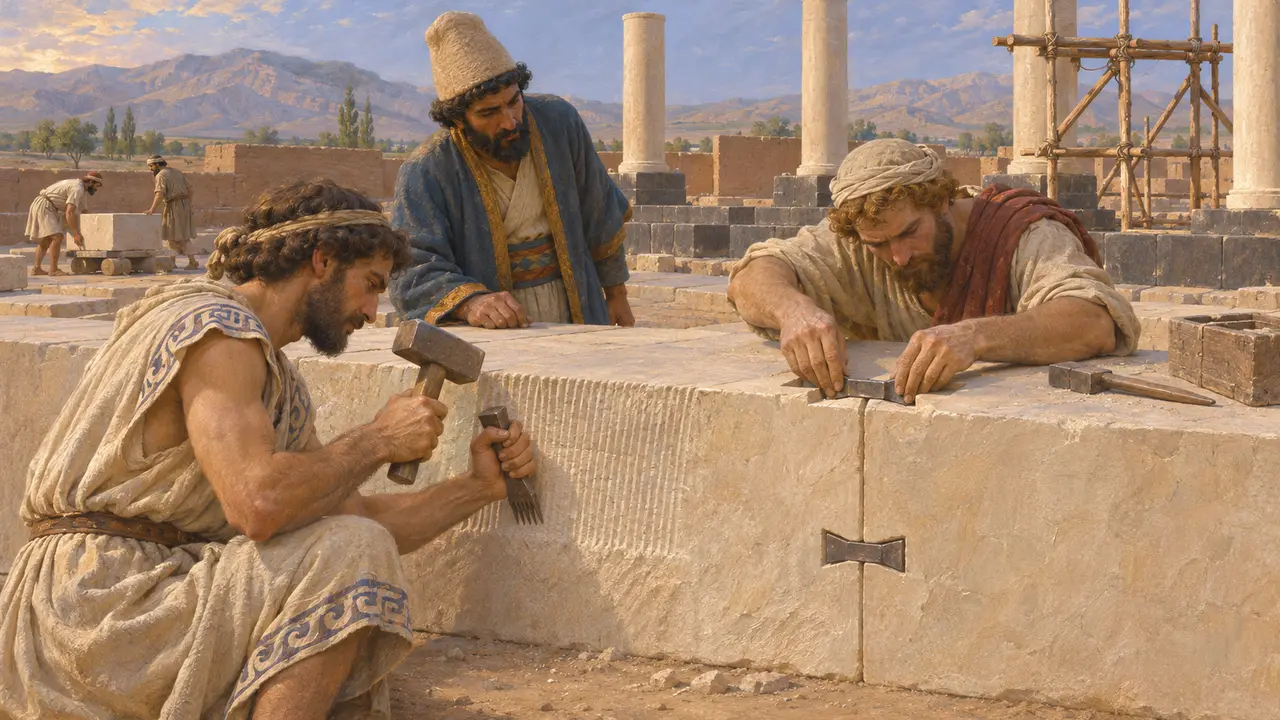
Masons from the western conquests
DisputedTool marks on the stone, notably those of the toothed chisel, and the use of dovetail clamps to bind blocks point to craftsmen trained in Lydia and Ionia. Carl Nylander argued that western masons came east after Cyrus took Sardis in the 540s. Most historians accept a strong Lydian and Ionian hand, though how many such workers came, and on what terms, is still debated.
C. Nylander, Ionians in Pasargadae, 1970
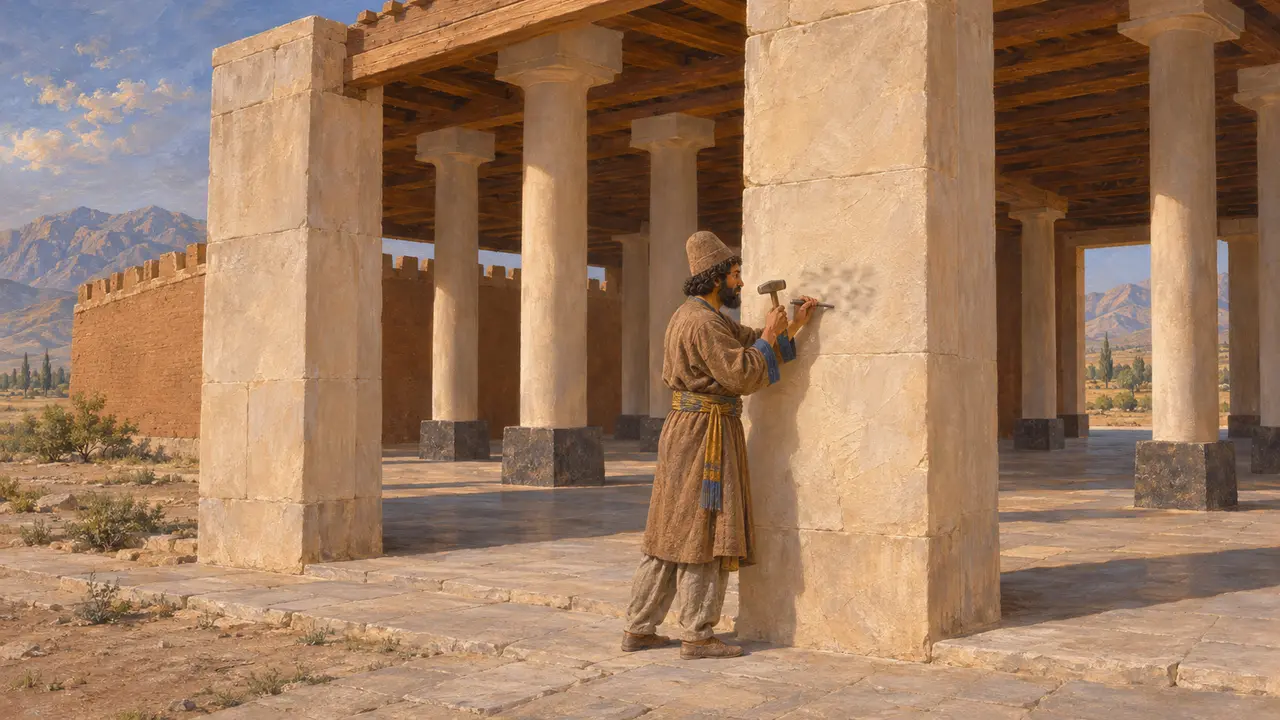
The name of Cyrus on the stones
DisputedShort texts in Old Persian, Elamite and Babylonian on the palaces say, in substance, that the speaker is Cyrus the King, an Achaemenid (CMa). Darius later claimed to have created a written form of Persian (DB §70), so many scholars think these labels were added under Darius to link himself with Cyrus. Others hold that they were cut in Cyrus's own reign.
CMa; DB §70; A. Kuhrt, The Persian Empire, 2007
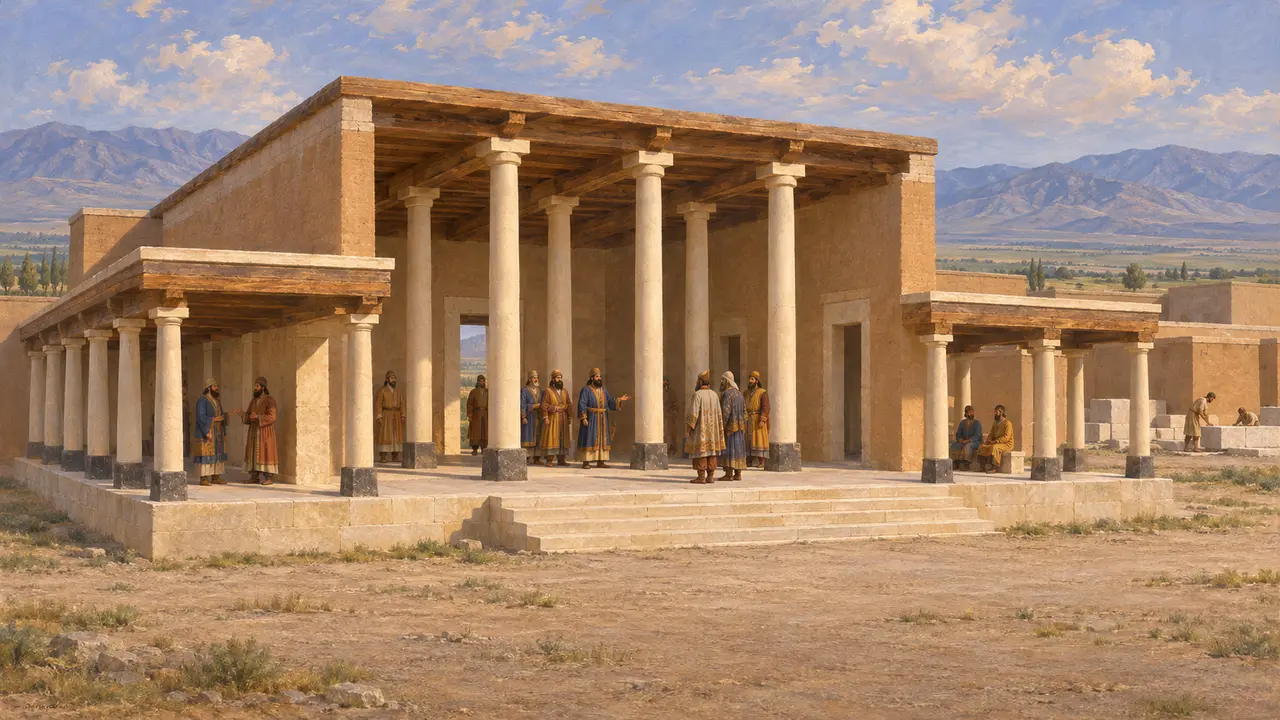
Purpose and completion
DisputedNo ancient text says how Palace S was used. Its open plan suggests a place for receiving subjects and envoys, which is why it is called an audience hall, but this is an inference. Stronach placed the start of building after the conquest of Lydia, in the 540s. Palace P at least was left unfinished when Cyrus died in 530, and parts may have been completed under Darius.
D. Stronach, Pasargadae, 1978
Sources
- D. Stronach, Pasargadae, 1978
- C. Nylander, Ionians in Pasargadae, 1970
- M. C. Root, The King and Kingship in Achaemenid Art, 1979
- CMa; DB §70
- A. Kuhrt, The Persian Empire, 2007
- P. Briant, From Cyrus to Alexander, 2002