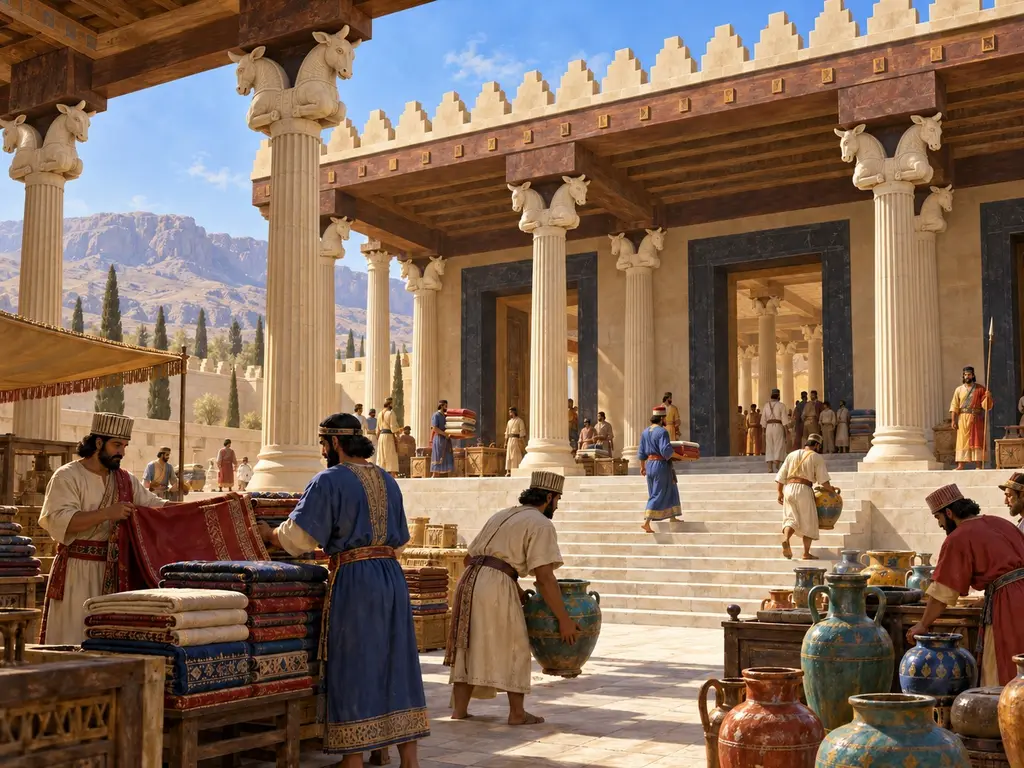
Residential Palace
Palace P at Pasargadae, begun under Cyrus before 530 BCE and finished later
In the game: Level 1: The Founder's Tomb
Palace P is the modern name for a large columned building beside the royal garden at Pasargadae, the first royal centre built by Cyrus. Scholars call it the residential palace, though its exact use is unknown. Its excavator concluded that Cyrus began it and left it unfinished at his death in 530, and that work went on under Darius.
In the game: In the Pasargadae level (530) the Residential Palace is a monument raised stone by stone from limestone blocks and timber. The game does not show the later work, probably under Darius, that finished its carved doorways.
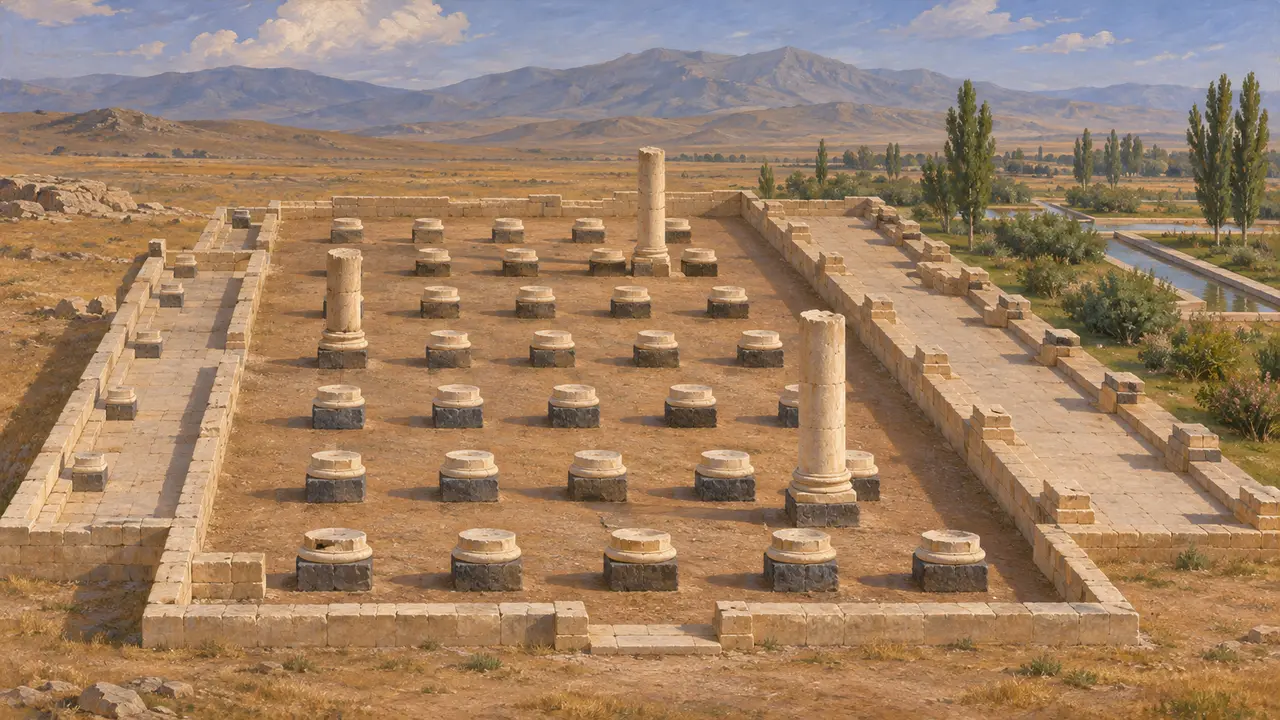
What the excavators found
In the recordDavid Stronach's excavations of 1961 to 1963 uncovered a central hall with thirty columns set in five rows of six, flanked by two porticoes, the longer one facing the garden. The column bases paired dark and pale stone, a two-coloured effect also seen in Palace S nearby. The roof and ceilings were of timber, which has not survived.
D. Stronach, Pasargadae, 1978
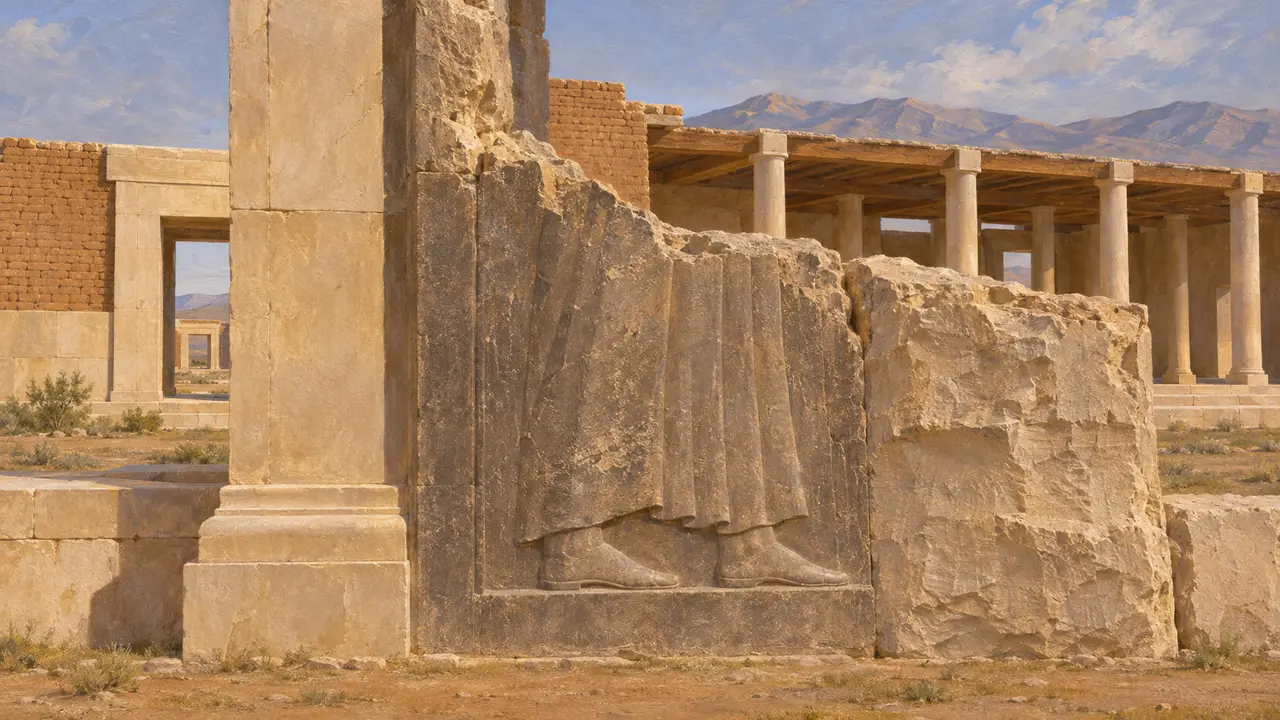
Unfinished at Cyrus's death
In the recordParts of the building were left rough or incomplete, and the doorway reliefs differ in style from the rest of the work. Only the lower parts of the reliefs survive, showing the King's feet and the hem of his robe. A short trilingual inscription on the robe folds names Cyrus as Great King, an Achaemenid. Stronach concluded that Cyrus died before the palace was done and that Darius completed it.
D. Stronach, Pasargadae, 1978
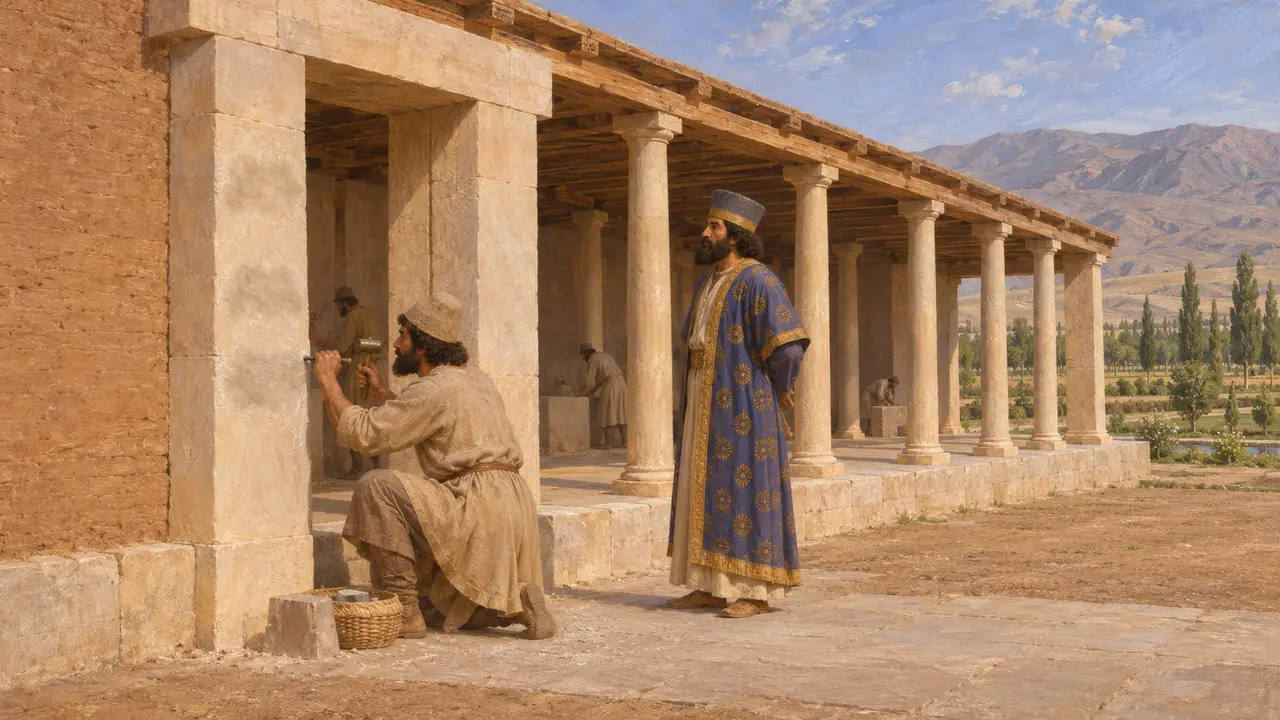
Who wrote the Cyrus inscriptions
DisputedThe inscriptions are in Old Persian, Elamite and Babylonian. At Behistun, Darius claims that a new form of writing was made under him, and many scholars take this to mean the Old Persian script was created in his reign. If so, the inscriptions naming Cyrus were added by Darius, who had reason to honour the founder. Others argue that the script may already have existed under Cyrus.
DB §70; D. Stronach, Pasargadae, 1978
Ionian and Lydian masons
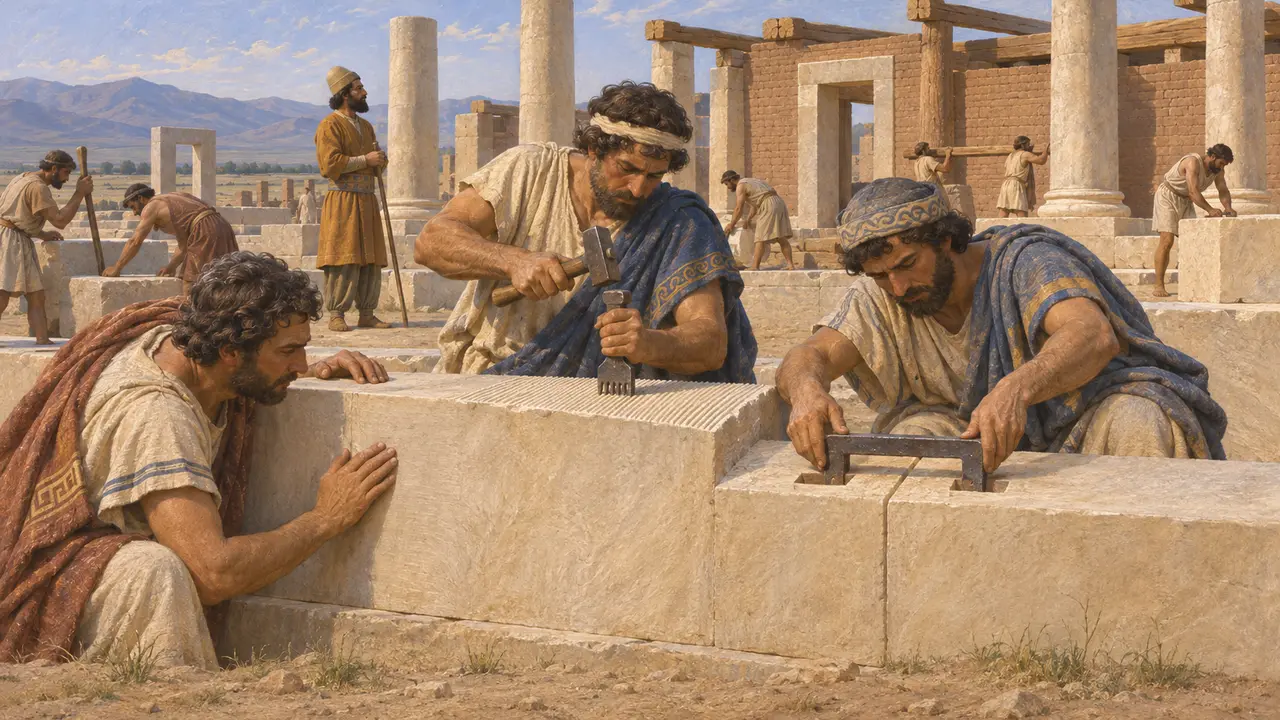
In the recordTool marks and joints show techniques known from western Asia Minor, such as the claw chisel, iron clamps and finely dressed joint surfaces. From this evidence Carl Nylander argued that craftsmen from Lydia and Ionia worked at Pasargadae after Cyrus took Sardis. If he is right, the building drew on the skills of newly subject peoples.
C. Nylander, Ionians in Pasargadae, 1970
A palace on the field of victory
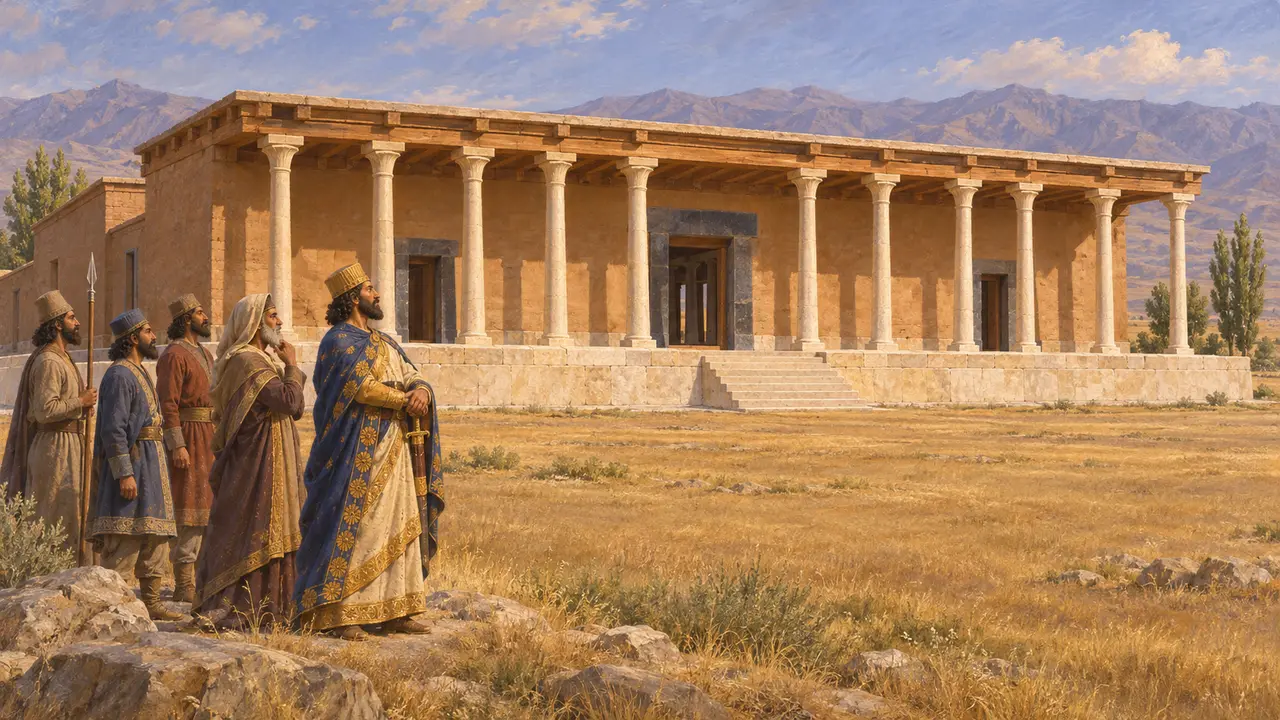
Later legendStrabo, writing more than five centuries later, says that Cyrus honoured Pasargadae because he had defeated Astyages the Mede there in his last battle, and that he built a city and palace on the spot. No excavated evidence ties the site to that battle. The story may have grown from the place's fame as Cyrus's city.
Strabo 15.3.8
Sources
- D. Stronach, Pasargadae, 1978
- C. Nylander, Ionians in Pasargadae, 1970
- DB §70
- M. Root, The King and Kingship in Achaemenid Art, 1979
- Strabo 15.3.8
- P. Briant, From Cyrus to Alexander, 2002