Tomb of Cyrus
Stone gabled tomb of Cyrus the Great at Pasargadae, Persis, about 540-530 BCE
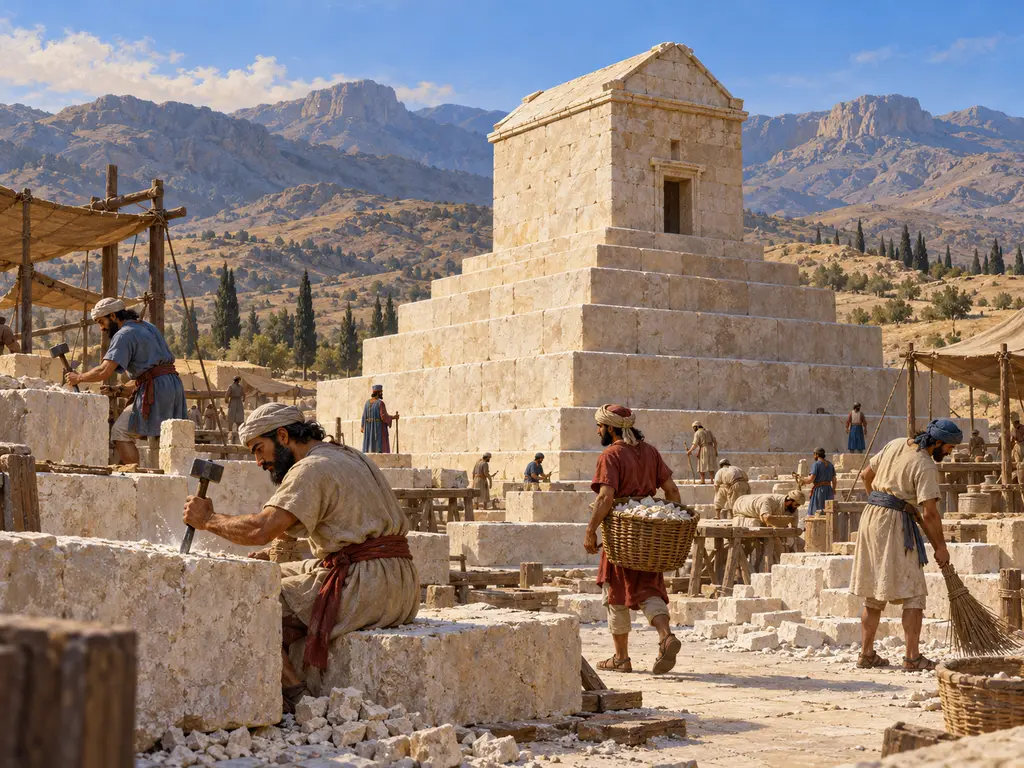
In the game: Level 1: The Founder's Tomb
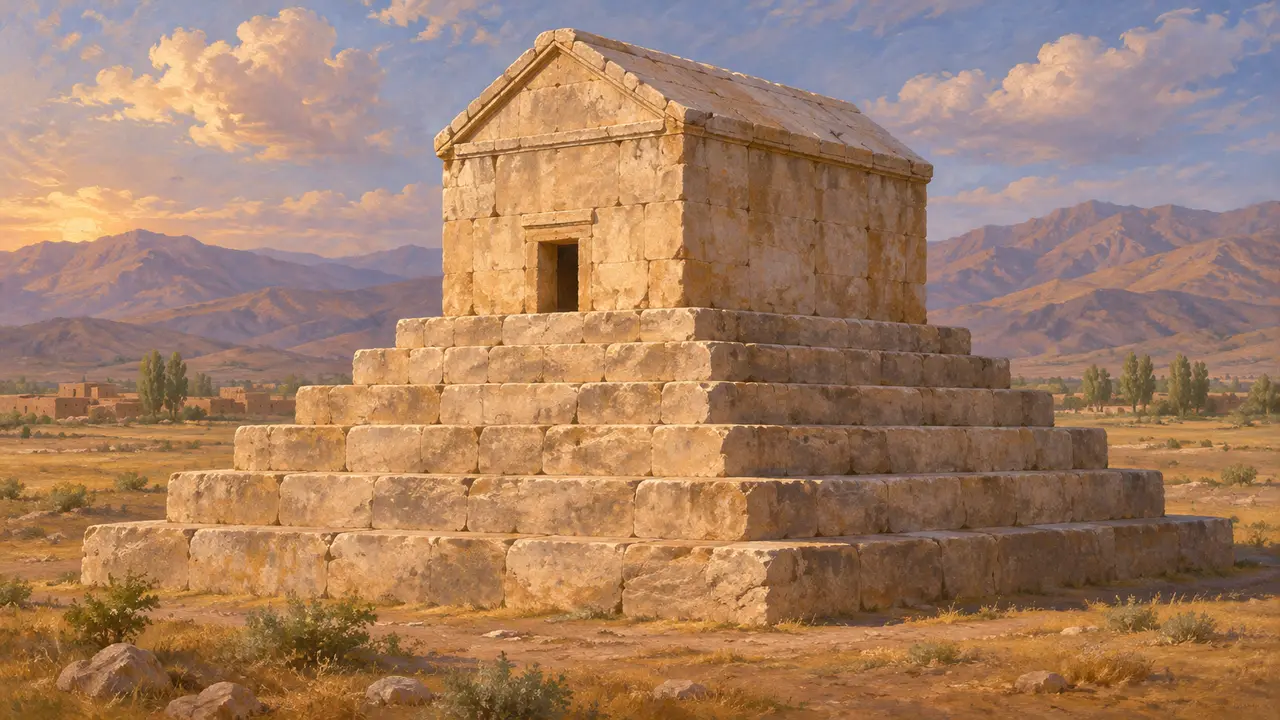
The Tomb of Cyrus is a small gabled stone chamber on a high stepped plinth on the plain of Pasargadae, the city Cyrus founded in Persis. Writers who came with Alexander, preserved by Arrian and Strabo, say it held the king's body in a golden coffin and was guarded by magi. It still stands, one of the best preserved buildings of the early Persian empire.
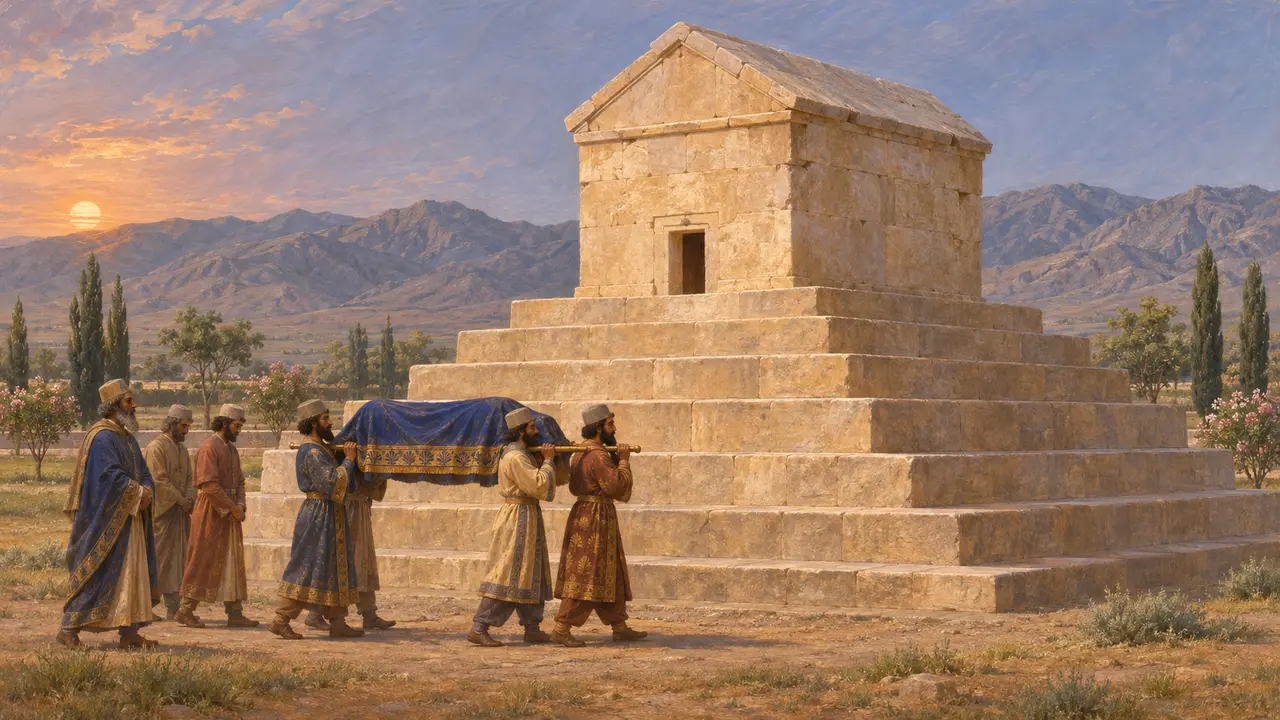
In the game: In the game Cyrus commissions the tomb in 530, and masons set it stone by stone from limestone blocks. The commission is a dramatized scene. Whether Cyrus ordered it himself or it was finished after his death is not known.
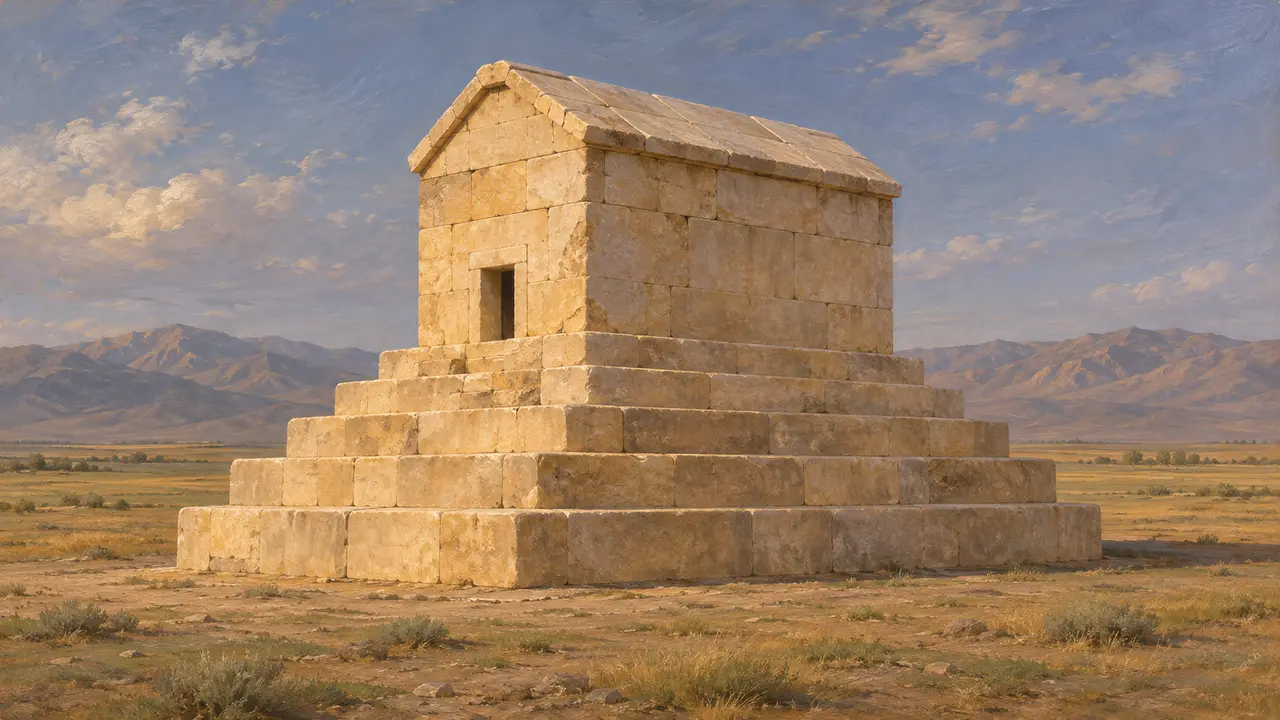
The building on the plain
In the recordThe tomb rises about 11 metres in pale limestone. A plinth of six steps carries a single chamber about 3 by 2 metres, entered by a low, narrow doorway and covered by a gabled stone roof. The blocks are very large and were held together by metal clamps, many of them later torn out by robbers. David Stronach's excavations in 1961-63 studied the tomb and its surroundings closely.
D. Stronach, Pasargadae, 1978
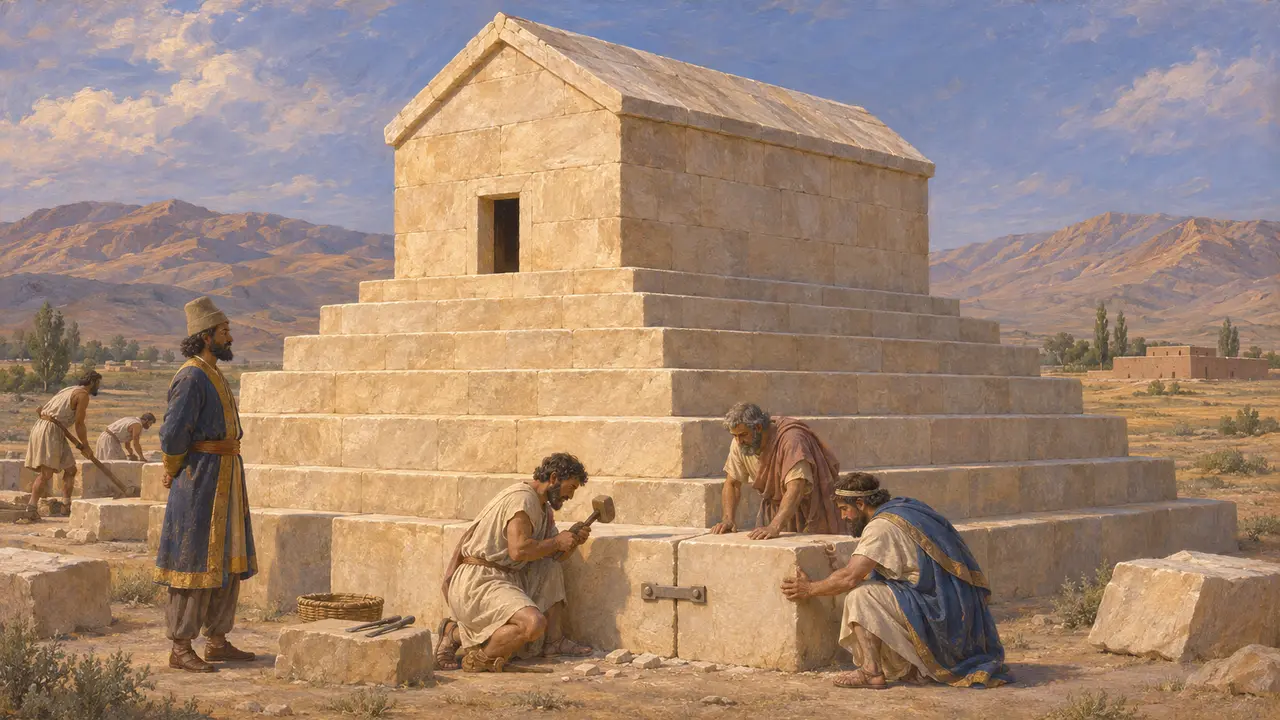
Who built it and where the design came from
DisputedThe fine joints and clamp work match stone techniques of Lydia and Ionia, and many scholars think craftsmen from Sardis worked here after Cyrus took that city. The stepped plinth and gabled chamber have been compared with Lydian tombs, Mesopotamian and Elamite stepped platforms, and gabled houses of the Iranian highlands, with no agreement on one model. Most date it to the later years of Cyrus, but it may have been completed under Cambyses.
D. Stronach, Pasargadae, 1978; P. Briant, From Cyrus to Alexander, 2002
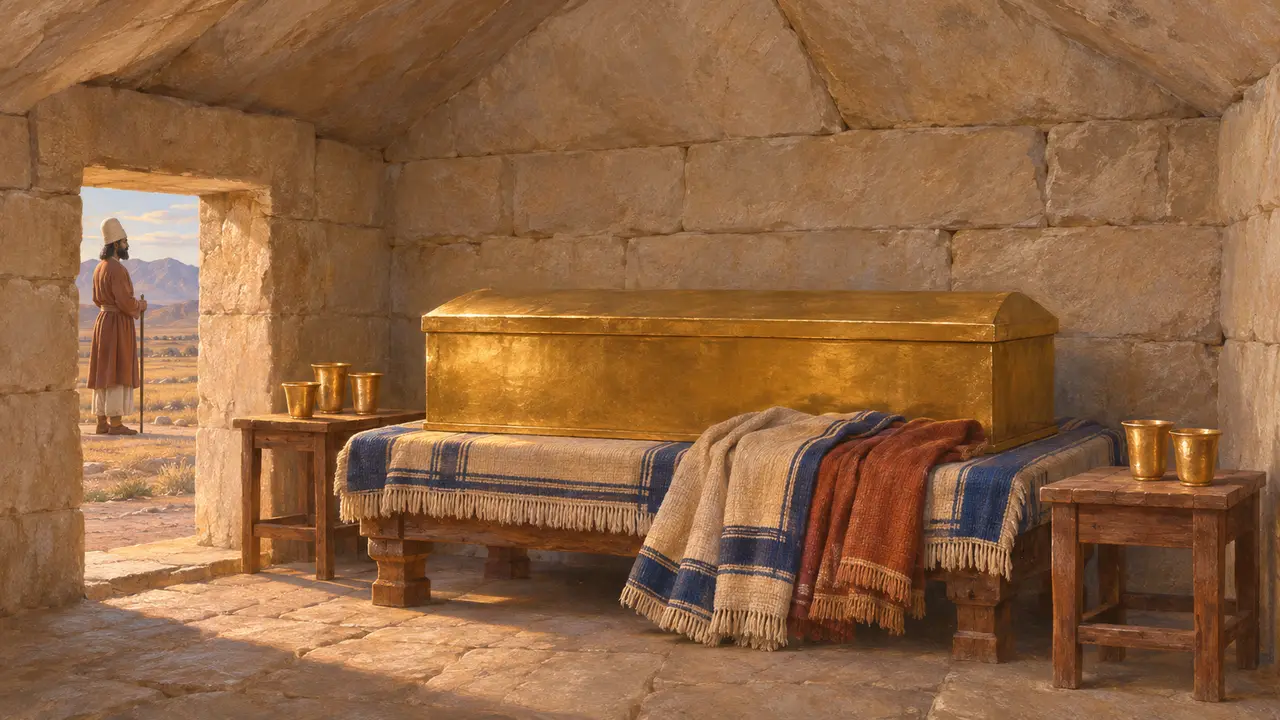
What Alexander's men found
Ancient accountArrian, drawing on Aristobulus, says the chamber held a golden coffin, a couch, tables, cups and fine garments, and that an inscription named Cyrus. He says magi guarded it from the time of Cambyses, receiving a sheep a day and a horse each month to sacrifice to Cyrus. When Alexander returned from India, about 324, he found it plundered and had Aristobulus restore it. Strabo and Plutarch also tell of the robbery and the inscription.
Arrian, Anabasis 6.29; Strabo, Geography 15.3.7; Plutarch, Alexander 69
How Cyrus died and came to lie here
DisputedCyrus died in 530, and the ancient writers disagree on how. Herodotus says he fell fighting the Massagetae, and admits his version was one of many. Ctesias says he died of wounds after a battle with the Derbices and that his body was sent home to Persia, while Xenophon has him die peacefully in his bed. No text survives on the tomb, but almost all scholars accept it as his.
Herodotus 1.214; Ctesias, Persica; Xenophon, Cyropaedia 8.7
Tomyris's revenge and Solomon's mother
Later legendHerodotus records a tale that Queen Tomyris of the Massagetae dipped the dead king's head in a skin of blood, a story shaped as a moral lesson rather than a report. In medieval times local tradition called the building the tomb of the mother of Solomon, and a small mosque was built around it with columns taken from the ruined palaces. Travellers of the early 19th century later matched it with Arrian's description.
Herodotus 1.214; D. Stronach, Pasargadae, 1978
Sources
- Arrian, Anabasis 6.29
- D. Stronach, Pasargadae, 1978
- Strabo, Geography 15.3.7
- Plutarch, Alexander 69
- Herodotus 1.214
- P. Briant, From Cyrus to Alexander, 2002