Alexander the Great
King of Macedon who conquered the Achaemenid empire, 336-323 BCE
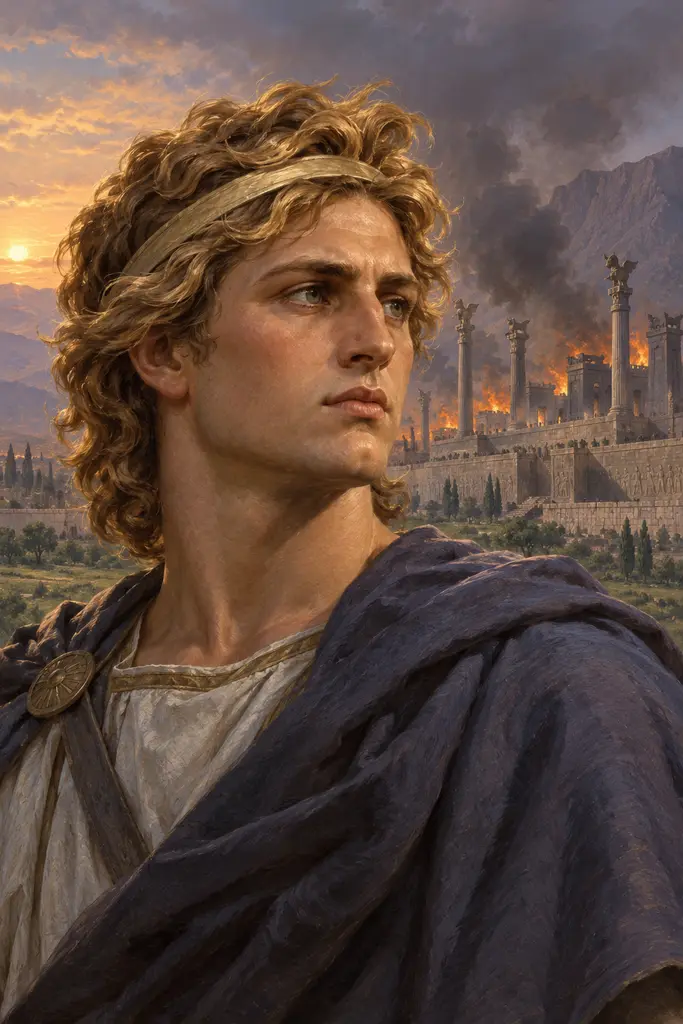
Alexander III of Macedon invaded the Persian empire in 334 and within four years had defeated Darius III and taken the royal cities. In 330 the palaces of Persepolis burned while he held them, and in 324 he had the robbed tomb of Cyrus at Pasargadae repaired. His conquest ended the Achaemenid line about a century and a half after Plataea.
In the game: Alexander falls outside the game's eleven levels, which end in 479 with the Mycale epilogue. He appears only in a Chronicle note on the later fate of Persepolis and of Cyrus's tomb.
The conquest of the empire
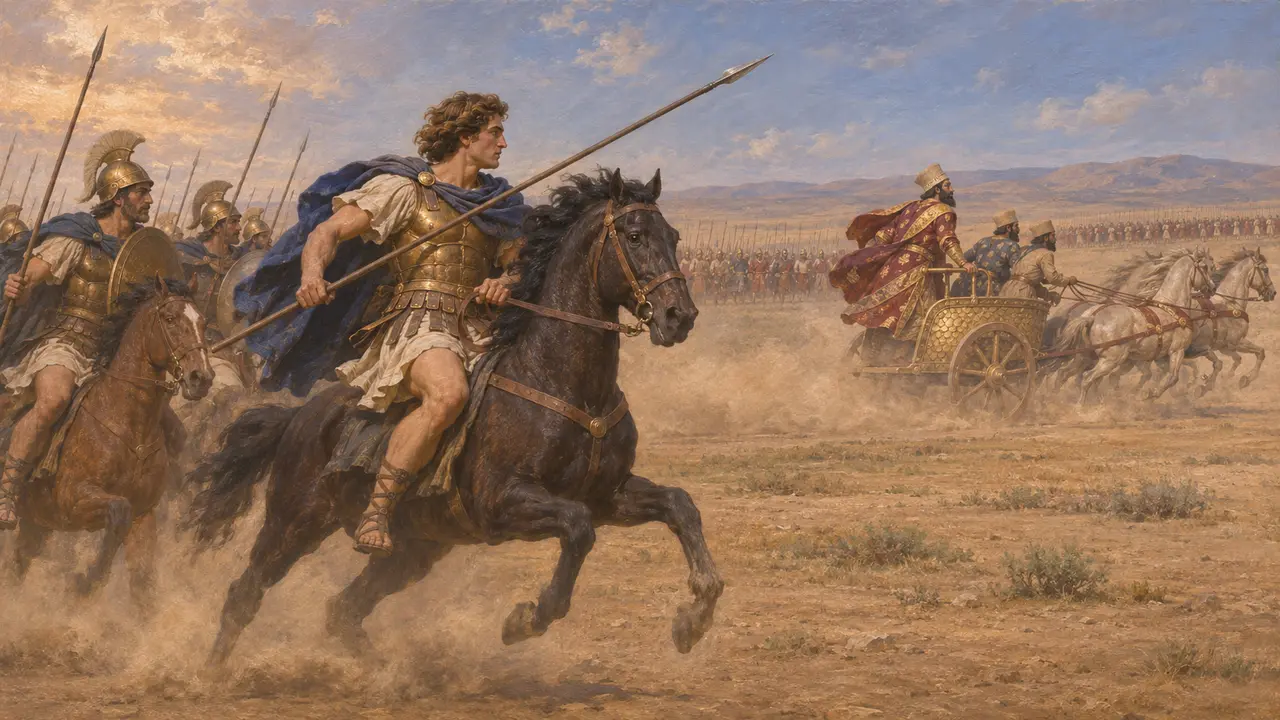
Ancient accountArrian wrote in the 2nd century CE, drawing on the lost memoirs of Ptolemy and Aristobulus. He tells how Alexander crossed the Hellespont in 334 and won at the Granicus. He then beat Darius III at Issus in 333 and again at Gaugamela in 331, after which Babylon and Susa opened to him. Darius fled east and was killed in 330 by his own satrap Bessus.
Arrian, Anabasis books 1-3
Why Persepolis burned
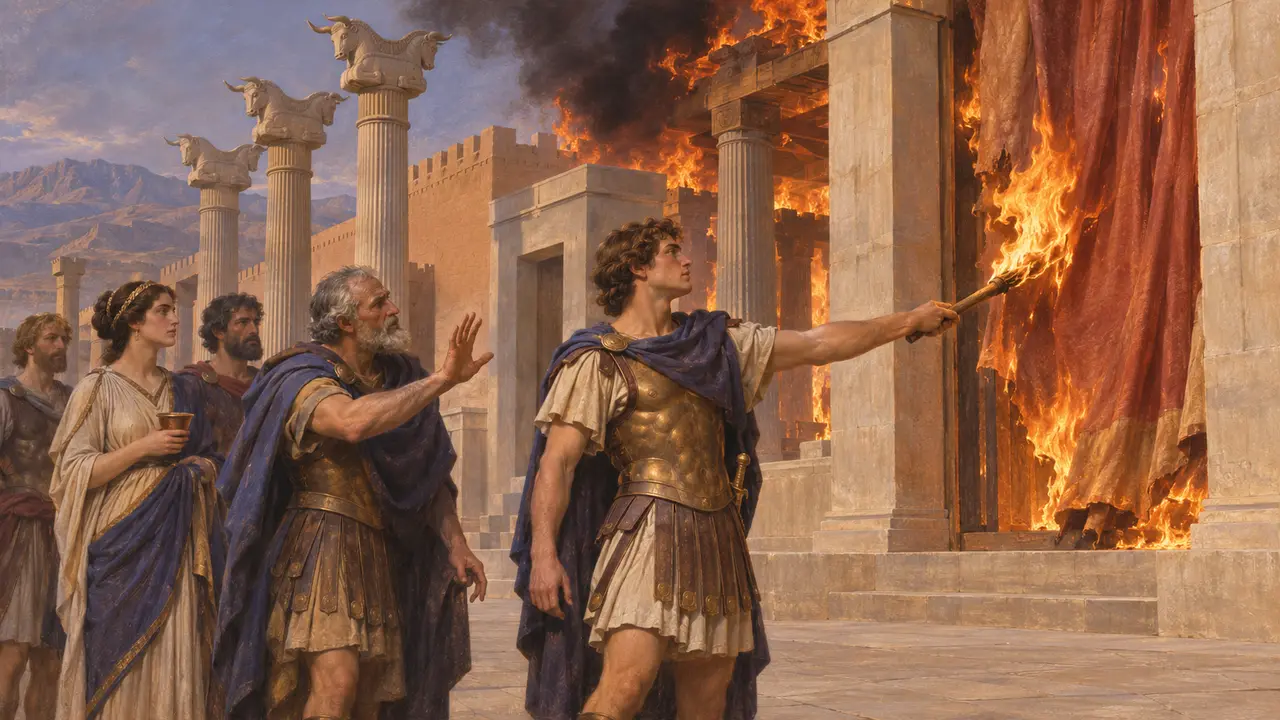
DisputedArrian says Alexander burned the palace on purpose, as revenge for Xerxes' sack of Athens, against Parmenion's advice, and he judges the act unwise. Diodorus and Plutarch tell instead of a drinking party at which the Athenian courtesan Thais urged the king to set the fire. Historians still argue whether it was policy, a drunken impulse, or both.
Arrian, Anabasis 3.18; Diodorus 17.72; Plutarch, Alexander 38
Traces in the record
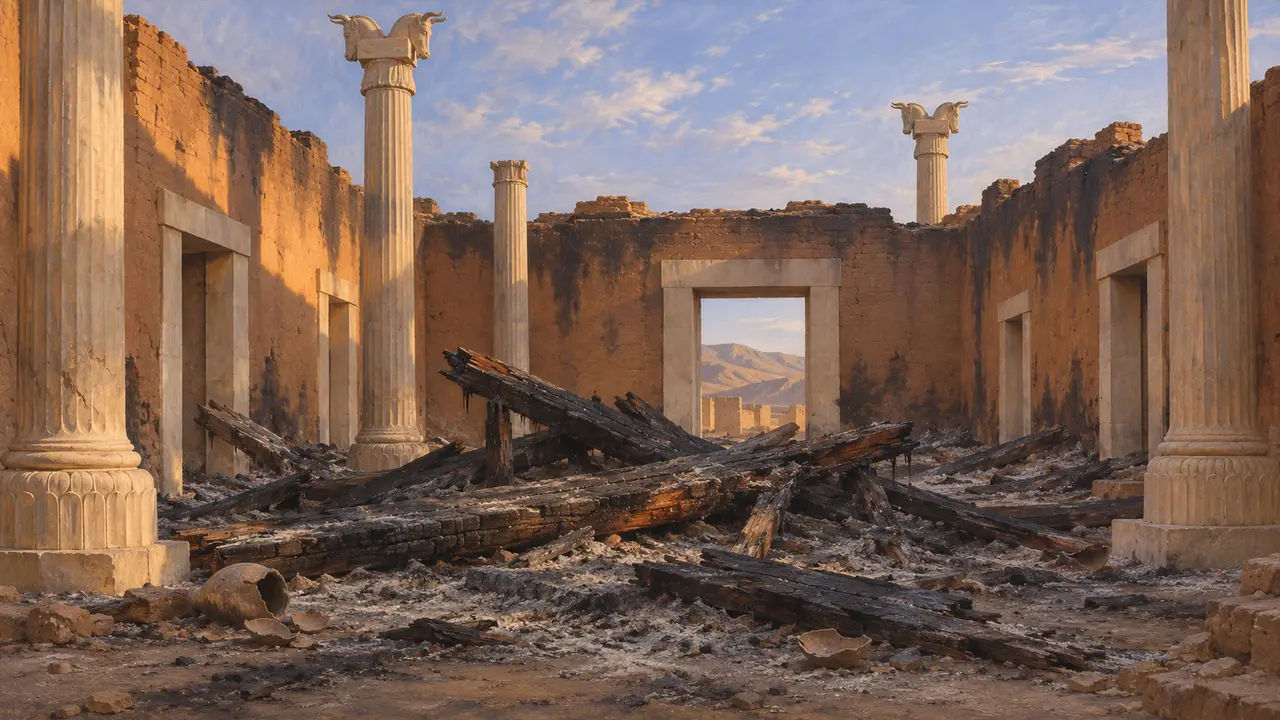
In the recordExcavations at Persepolis in the 1930s found thick burned debris in the Treasury and the great halls. The Treasury had been largely emptied of its valuables before the fire. A Babylonian astronomical diary of 331 notes the defeat of the King's army at Gaugamela and Alexander's approach to Babylon. It is a rare record of the conquest written at the time and not by Greeks.
E. Schmidt, Persepolis I, 1953 and Persepolis II, 1957; A. Sachs and H. Hunger, Astronomical Diaries and Related Texts from Babylonia I, 1988
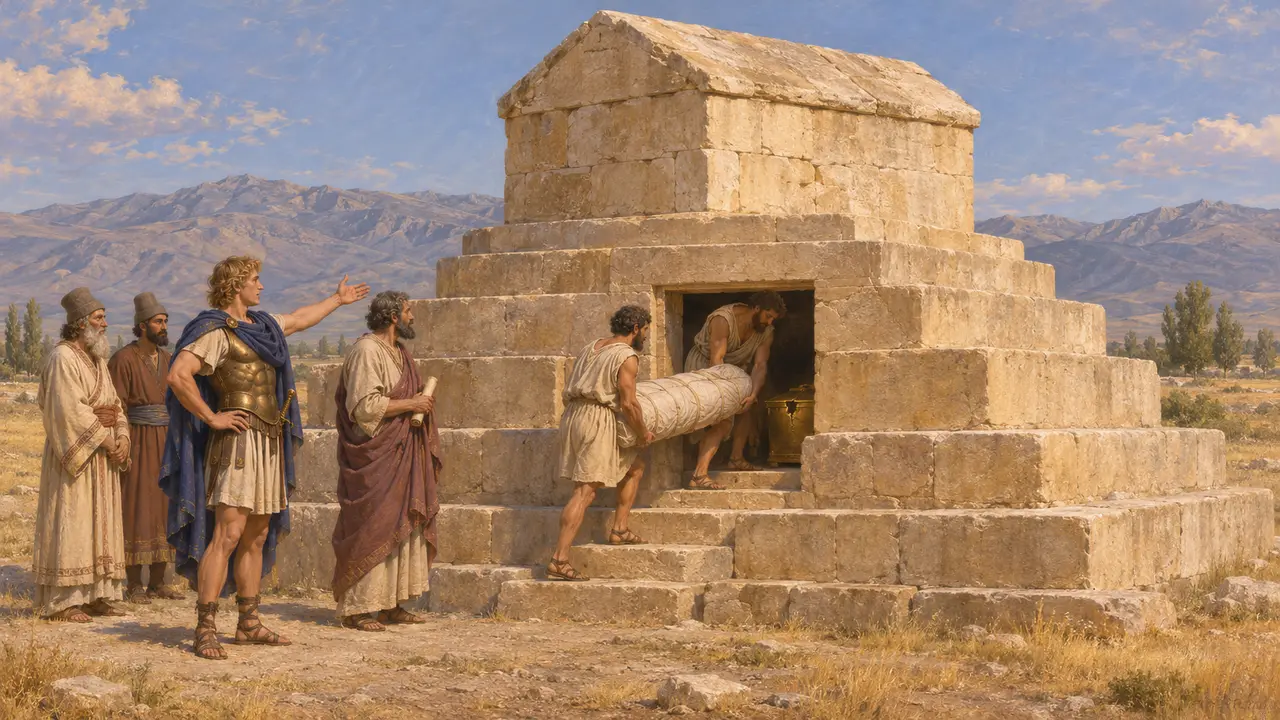
Restoring the tomb of Cyrus
Ancient accountArrian follows Aristobulus here. He says that on the march back from India, early in 324, Alexander found Cyrus's tomb at Pasargadae plundered, the gold coffin damaged and the body thrown out. He ordered Aristobulus to put the remains back, restore the contents and seal the door. The magi who guarded the tomb were questioned under torture but named no culprit.
Arrian, Anabasis 6.29; Strabo 15.3.7
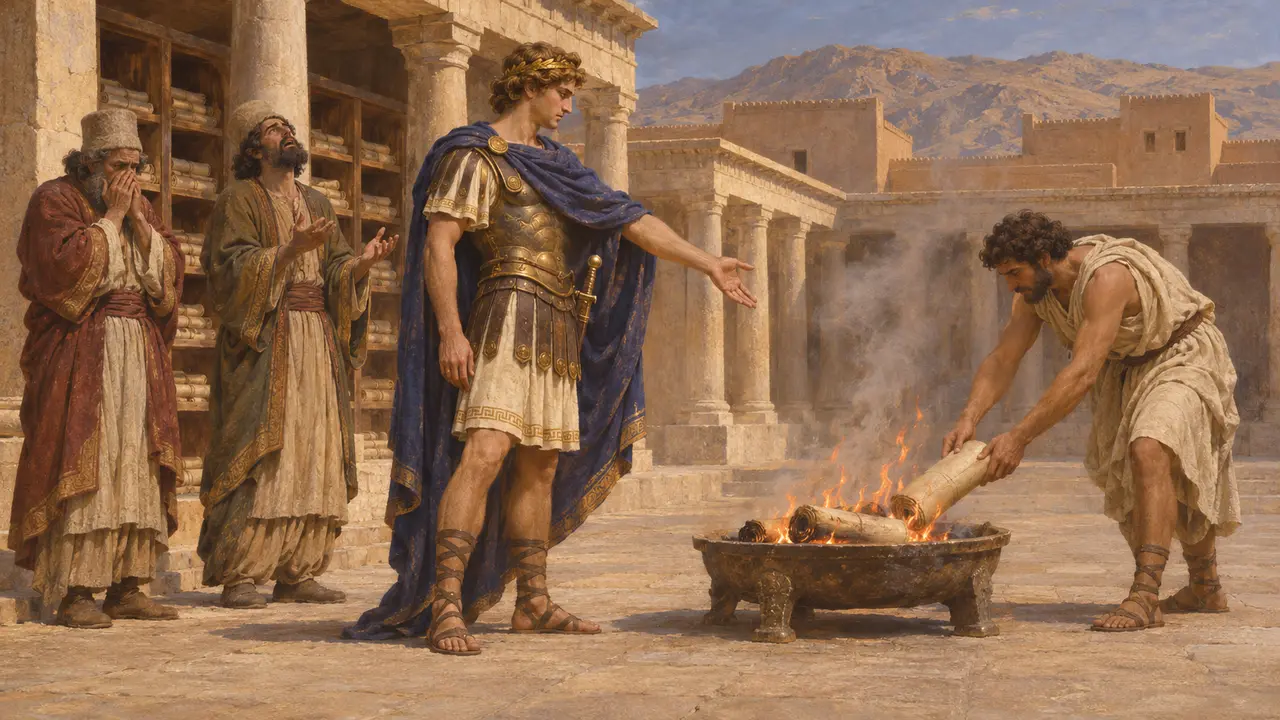
Iskandar in later memory
Later legendThe Greek Alexander Romance, compiled centuries later, turned him into a wandering hero and made him the son of the Egyptian pharaoh Nectanebo. Persian epic, above all Ferdowsi's Shahnameh, made him a half-brother of Darius. Middle Persian Zoroastrian writings instead remember him as the accursed Alexander who burned sacred texts. All are later portraits, not evidence for the events of 330.
Pseudo-Callisthenes, Alexander Romance; Ferdowsi, Shahnameh; Arda Wiraz Namag
Sources
- Arrian, Anabasis 3.18 and 6.29
- Diodorus 17.72
- Plutarch, Alexander 38
- P. Briant, From Cyrus to Alexander, 2002
- E. Schmidt, Persepolis I, 1953 and Persepolis II, 1957
- A. Sachs and H. Hunger, Astronomical Diaries and Related Texts from Babylonia I, 1988