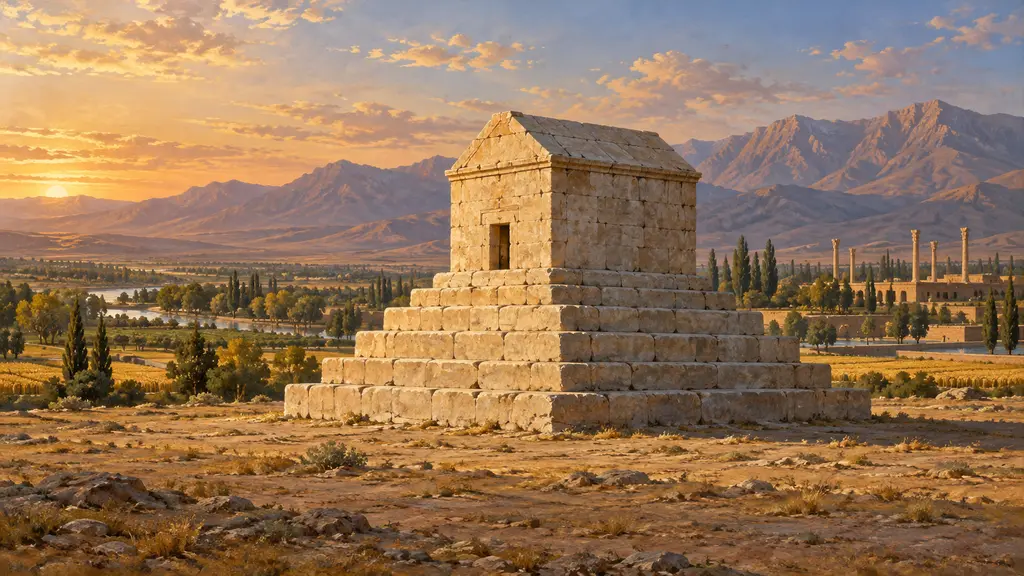
Pasargadae
Cyrus's royal seat beside the Pulvar river in Persis, built about 550-530 BCE
In the game: Level 1: The Founder's Tomb
Pasargadae was the royal seat that Cyrus the Great built on a high plain of Persis, beside the Pulvar river, after he overthrew the Median king Astyages. It was the first great Achaemenid building site: stone palaces set among gardens rather than a walled city of streets. Cyrus was buried there, and a later Greek writer says new kings still came to it to be made king.
In the game: The first level is set here in 530, among palaces, a gatehouse and walled gardens fed by stone channels. The game follows Strabo in siting the city on Cyrus's battlefield, which the Babylonian chronicle does not confirm.
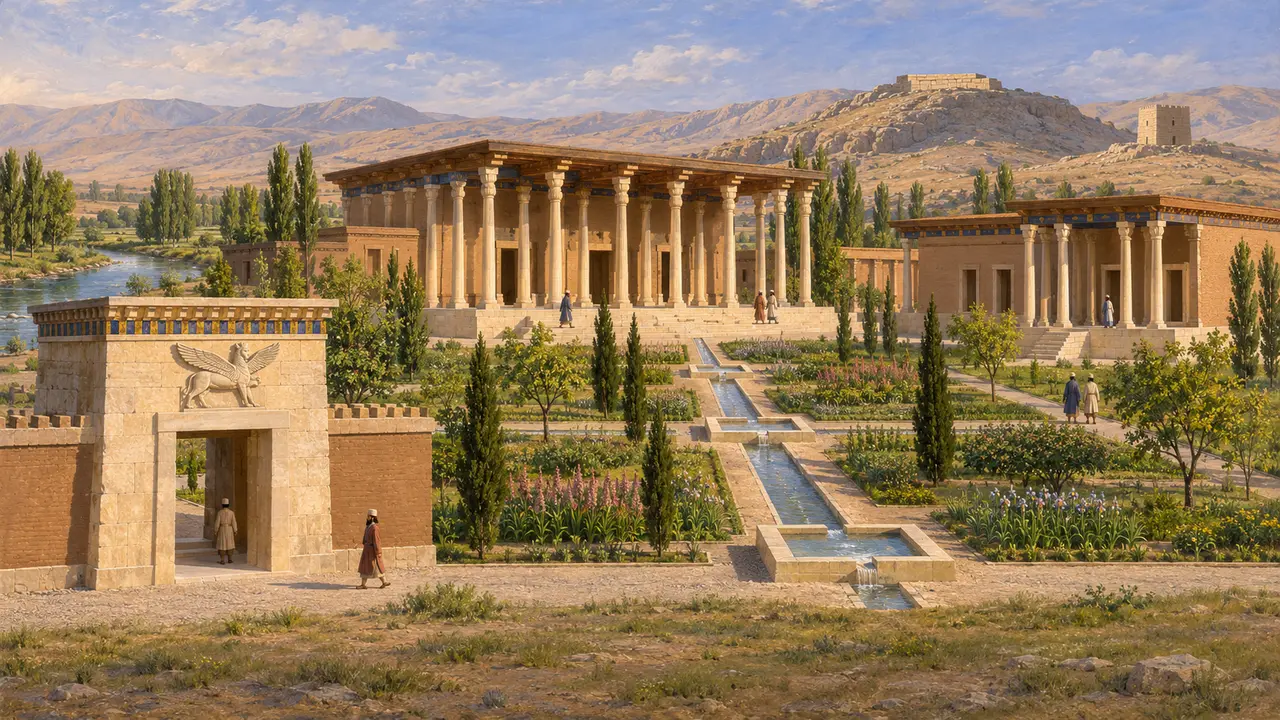
Palaces among gardens
In the recordExcavations, above all David Stronach's in 1961-63, uncovered a gatehouse (Gate R) with a relief of a four-winged guardian figure, a tall-columned audience hall (Palace S) and a residential palace (Palace P). Between them ran cut limestone water channels with small square basins at intervals. A stone platform, the Tall-e Takht, rises on a hill to the north, and one wall of a square stone tower, the Zendan-e Soleyman, still stands nearby.
D. Stronach, Pasargadae, 1978
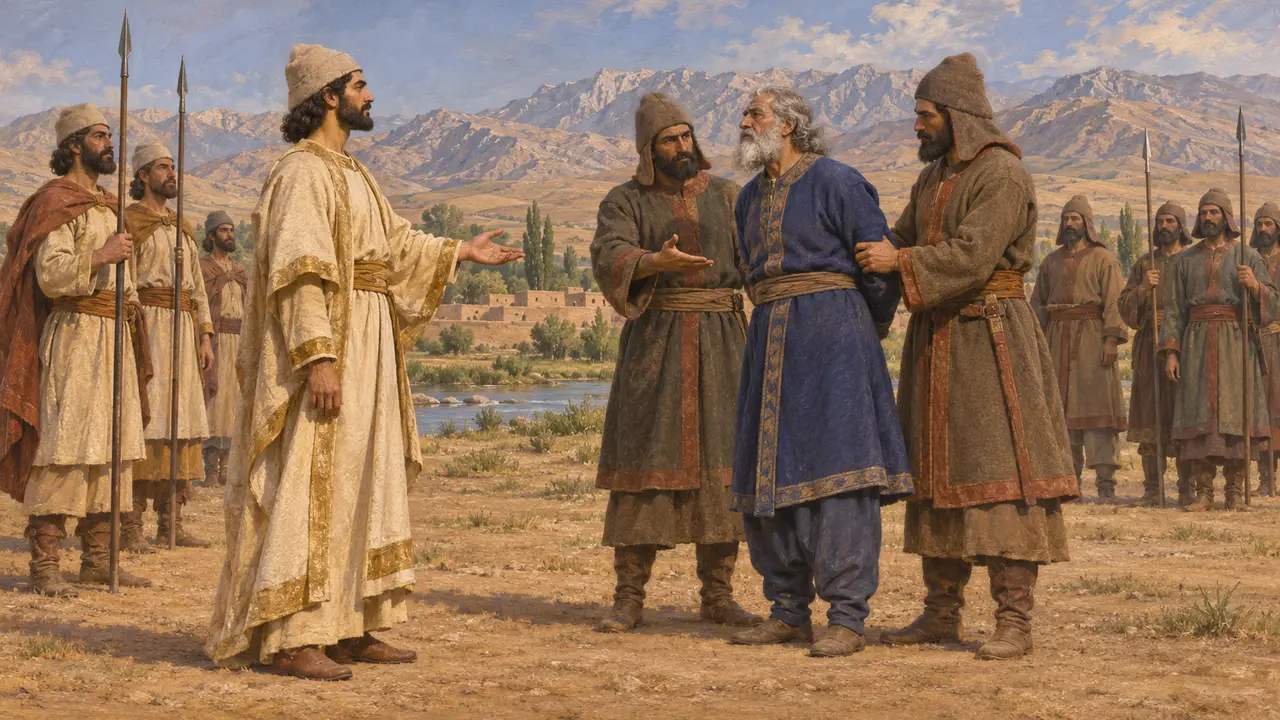
Where Cyrus beat the Medes
DisputedStrabo says Cyrus honoured Pasargadae because he won his final battle against Astyages there and built his palace on the spot. The Nabonidus Chronicle, written in Babylon, says instead that Astyages' own troops rebelled, seized him and handed him over to Cyrus, who then took Ecbatana; it names no battlefield. Herodotus gives Pasargadae as the name of the leading Persian tribe, so the place may simply have been that tribe's home ground.
Strabo 15.3.8; Nabonidus Chronicle; Herodotus 1.125
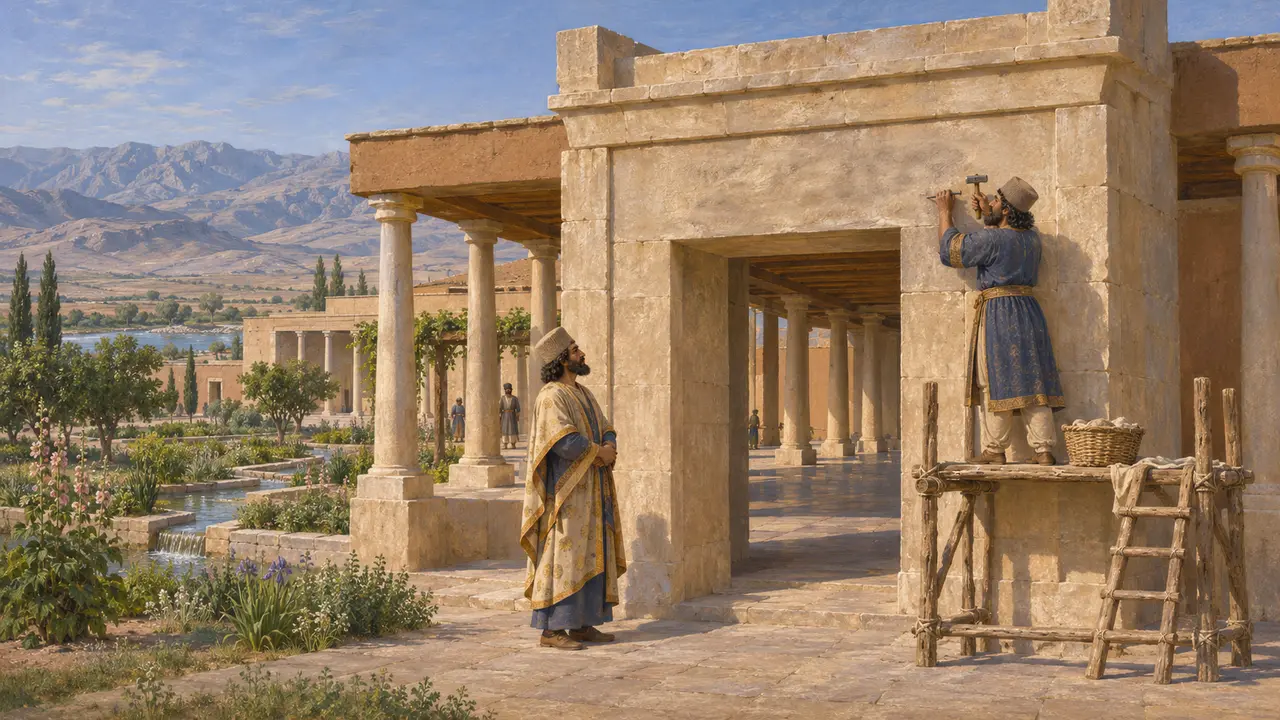
Doubts over the inscriptions and gardens
DisputedShort texts in Old Persian, Elamite and Babylonian on the palace doorways name Cyrus as king and an Achaemenid. Many historians think they were added under Darius, who says he introduced a new form of writing, to tie his own line to Cyrus. Others argue some were cut in Cyrus's lifetime. Stronach's neat four-part garden plan has also been questioned by later survey work at the site.
CMa; DB §70; D. Stronach, Pasargadae, 1978
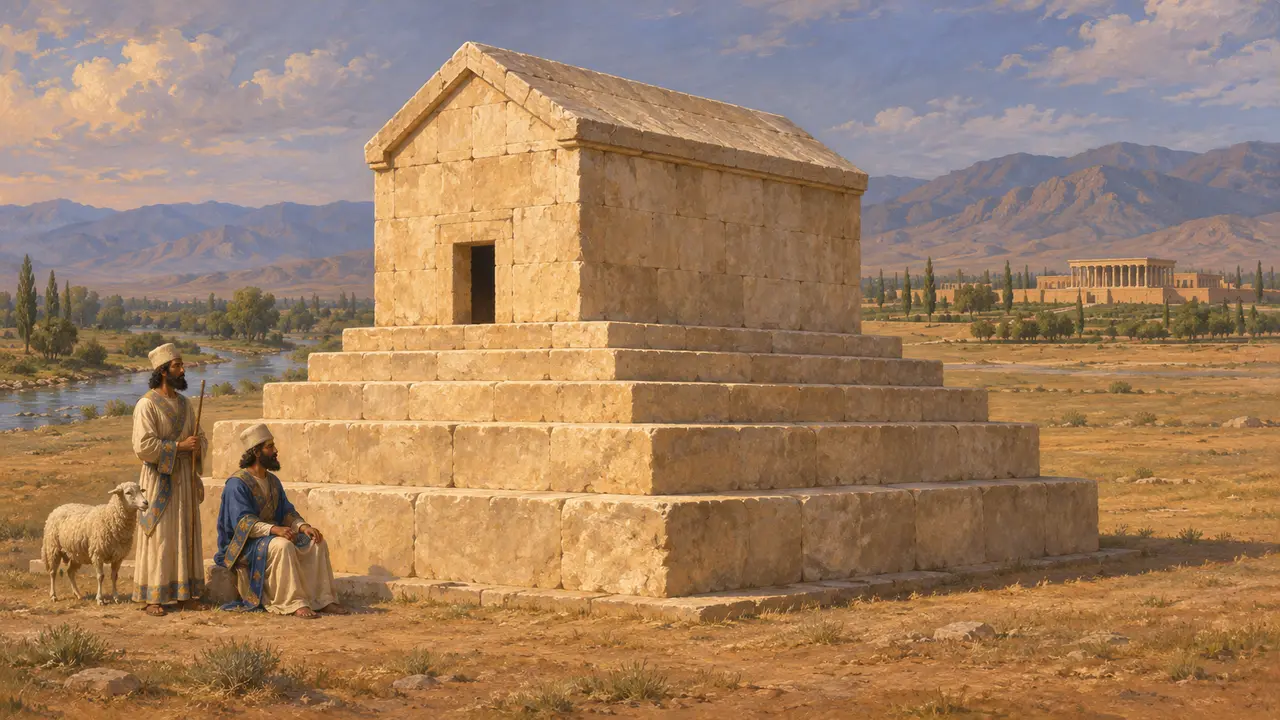
The tomb of Cyrus
Ancient accountThe tomb still stands south-west of the palaces: a gabled stone chamber on six stepped courses. Arrian, drawing on Aristobulus, says it held a golden couch and coffin. He adds that it was guarded by magi who received a sheep each day and a horse each month for sacrifice. He reports that Alexander found it robbed on his return from India, about 324, and ordered Aristobulus to restore it.
Arrian, Anabasis 6.29; Strabo 15.3.7
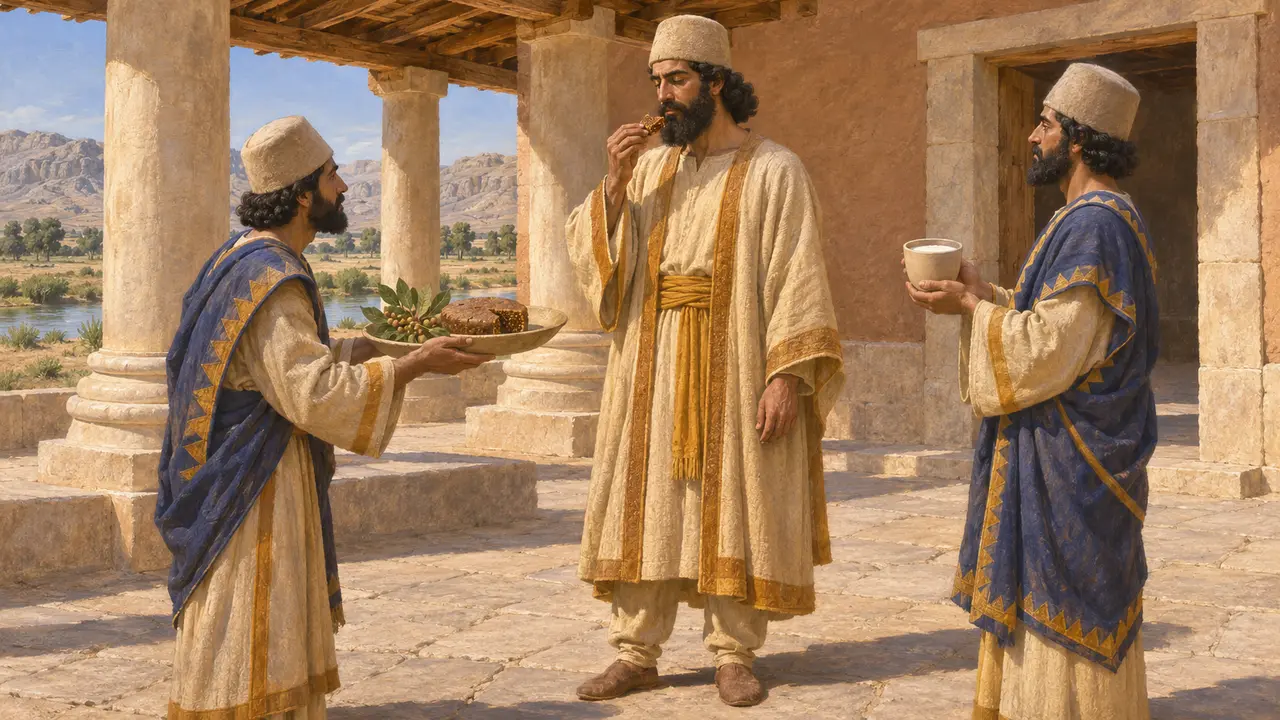
Where kings were made
Ancient accountPlutarch, writing around 100 CE, says each new Persian king went to a sanctuary of a warrior goddess at Pasargadae. There he put on the robe Cyrus had worn before he became king, ate a fig cake, chewed terebinth and drank sour milk. Plutarch tells it of Artaxerxes II in 404, so it describes later practice written down five centuries afterwards. It still shows Pasargadae remained the seat of Cyrus's memory long after Darius built Persepolis.
Plutarch, Artaxerxes 3
Sources
- D. Stronach, Pasargadae, 1978
- Strabo 15.3.7-8
- Arrian, Anabasis 6.29
- Nabonidus Chronicle
- Plutarch, Artaxerxes 3
- P. Briant, From Cyrus to Alexander, 2002