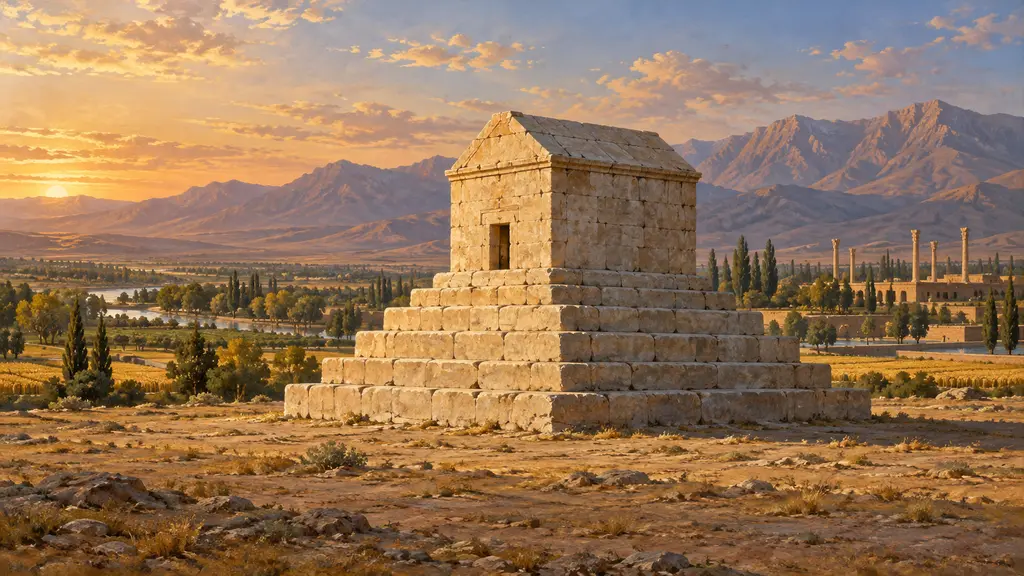
The Pulvar river
River of the Pasargadae plain in Persis, flowing south to the Kur near Persepolis
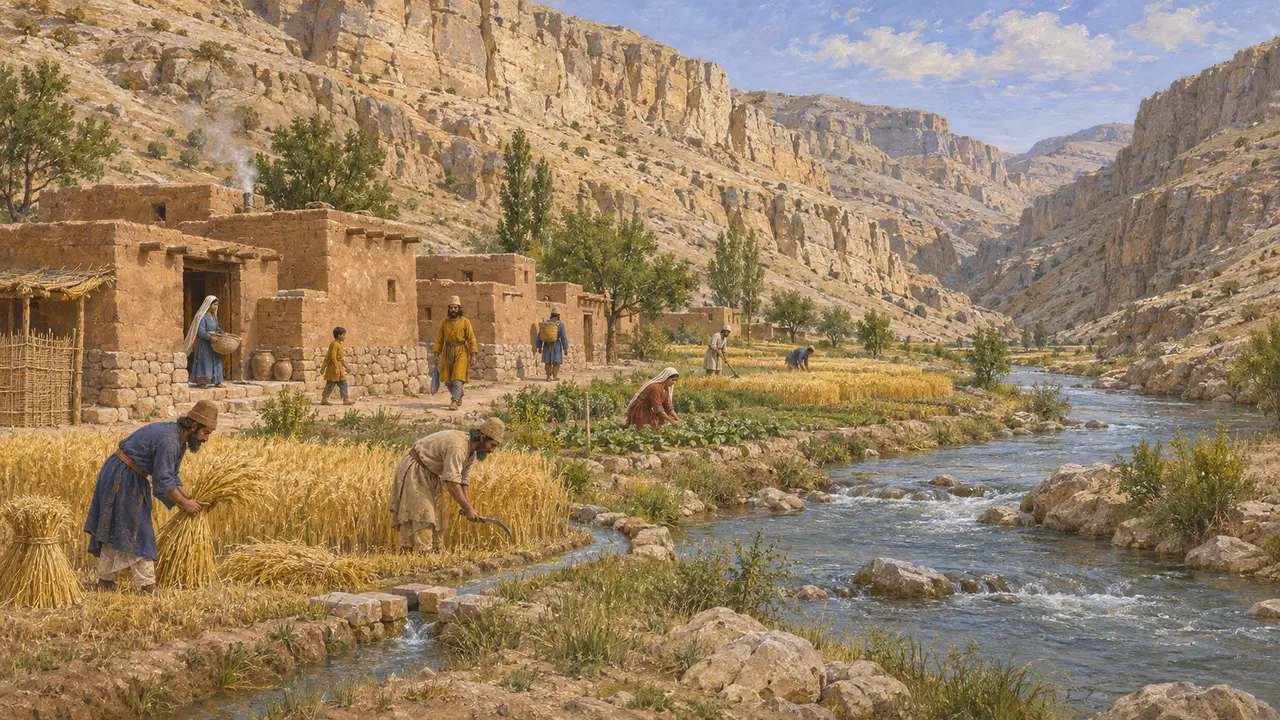
The Pulvar runs through the plain of Pasargadae, cuts south through a narrow gorge, and joins the Kur on the Marvdasht plain below Persepolis. Its water made farming possible on the high Pasargadae plain and probably fed the stone channels of Cyrus's royal garden. Both the first Persian royal seat and the later one at Persepolis lay along its course.
In the game: The game shows the Pulvar watering the farms of the Pasargadae plain, which is broadly true. It simplifies the picture: in practice river water reached fields and gardens through dug channels.
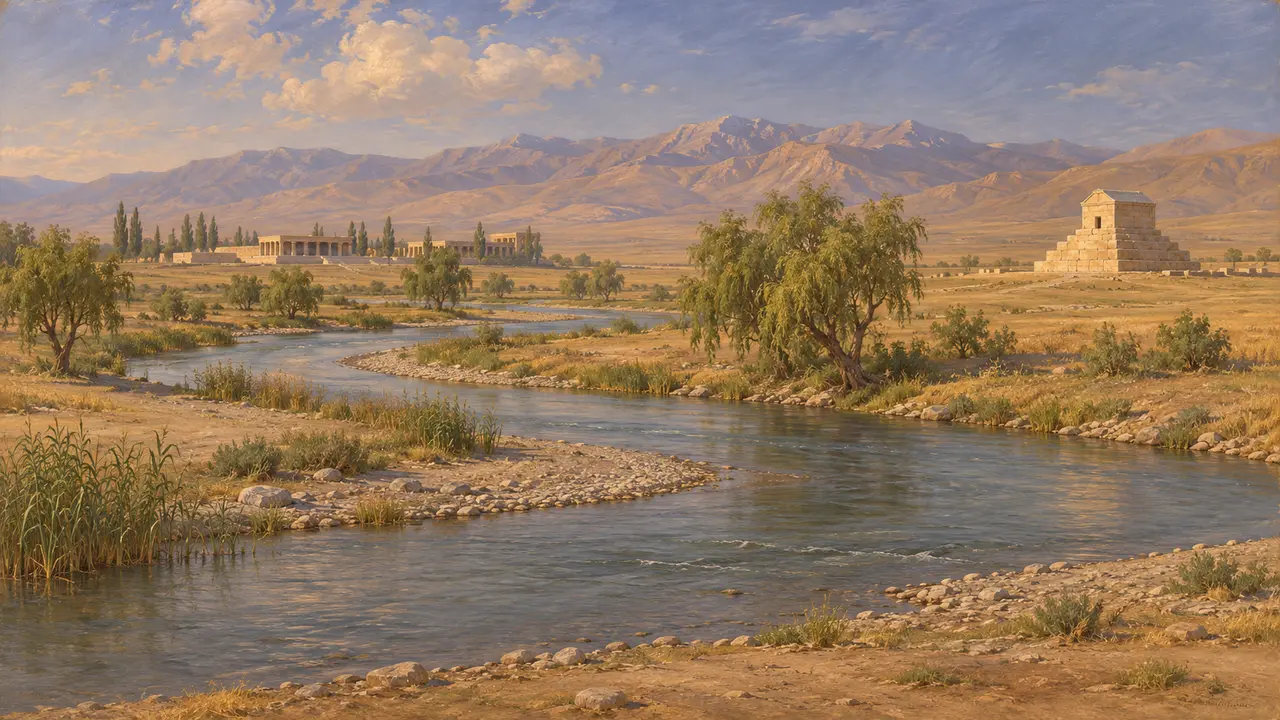
A river through the heart of Persis
In the recordThe Pulvar rises in the mountains north of Pasargadae and flows south across the Murghab plain, past the remains of Cyrus's palaces and tomb. It then passes through the Tang-i Bulaghi gorge onto the Marvdasht plain. There it runs past Istakhr and Naqsh-e Rostam and meets the larger Kur south of the Persepolis terrace. Pulvar is a modern name, and the river's Achaemenid name is not securely known.
D. Stronach, Pasargadae, 1978
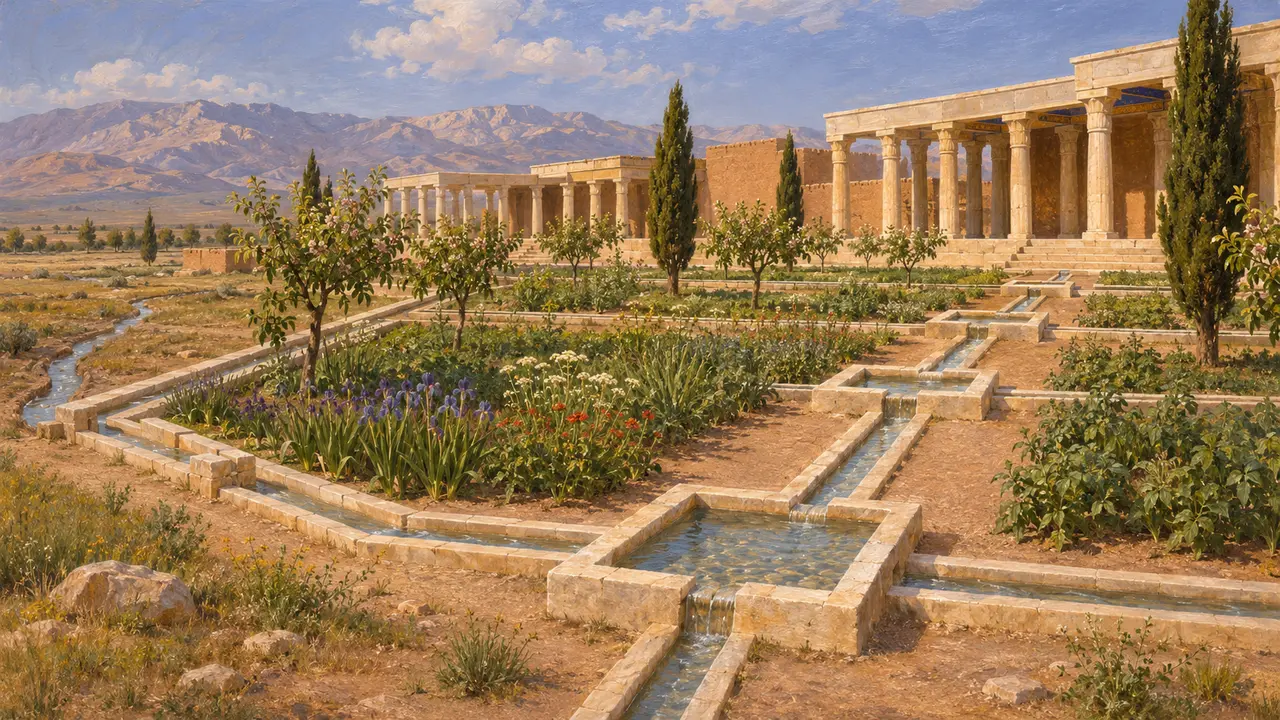
Water for Cyrus's garden
In the recordStronach excavated the palace area at Pasargadae and found narrow limestone channels running along the edges of a formal garden, with small square basins set at intervals. The water was probably drawn from the river system of the plain. The channels show that the garden and the setting of the palaces were planned around a controlled water supply.
D. Stronach, Pasargadae, 1978
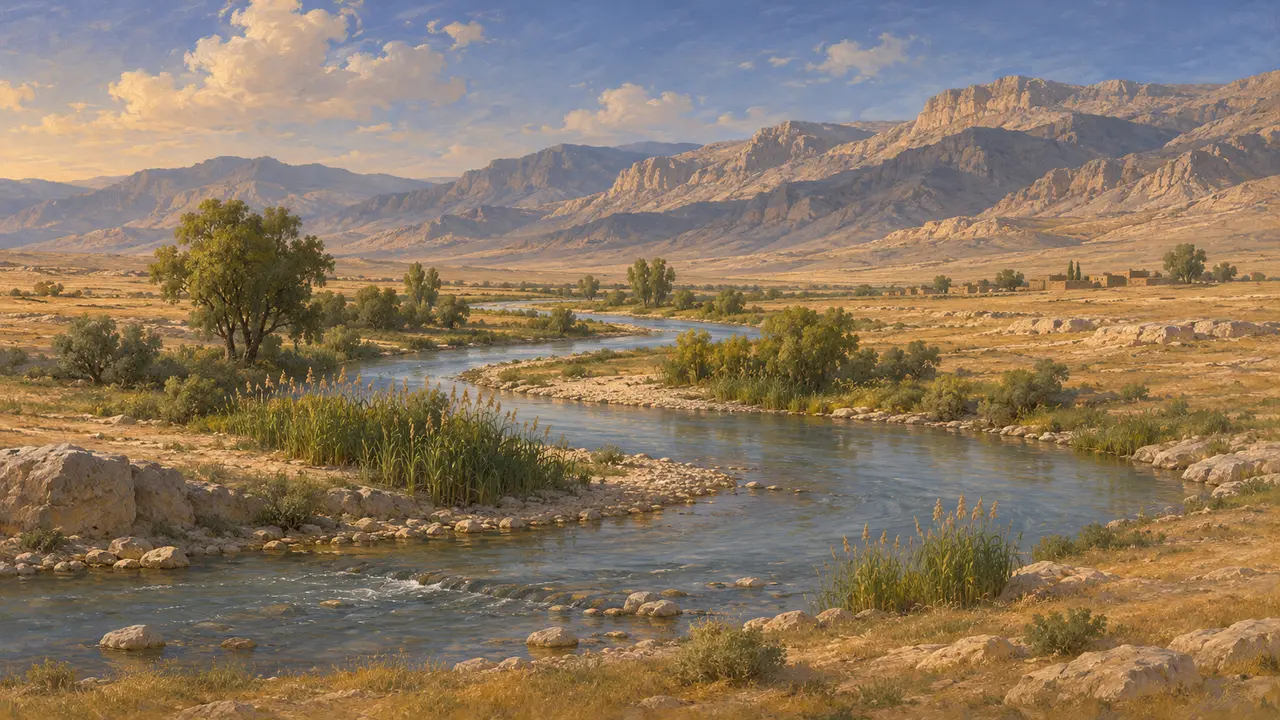
What the Greeks called it
DisputedStrabo names a river Cyrus that flowed through Persis near Pasargadae, and a river Medus that joined the Araxes near Persepolis. Arrian has Alexander cross the Araxes on his way to Persepolis. The Kur is usually taken as the Araxes, while the Pulvar has been matched both with Strabo's Cyrus and with his Medus. None of these identifications is certain.
Strabo 15.3.6; Arrian, Anabasis 3.18
The gorge and the modern dam
In the recordBefore the Sivand dam on the Pulvar began flooding the valley in the 2000s, Iranian and foreign teams carried out rescue excavations in the Tang-i Bulaghi gorge. They recorded settlements and other remains of the Achaemenid period along the river. This work suggests that the valley linking Pasargadae and Persepolis was farmed and lived in during the Persian period, not merely passed through.
Reports of the Tang-i Bulaghi rescue excavations, partly published in ARTA
Sources
- D. Stronach, Pasargadae, 1978
- Strabo 15.3.6
- Arrian, Anabasis 3.18
- Reports of the Tang-i Bulaghi rescue excavations, partly published in ARTA
- P. Briant, From Cyrus to Alexander, 2002