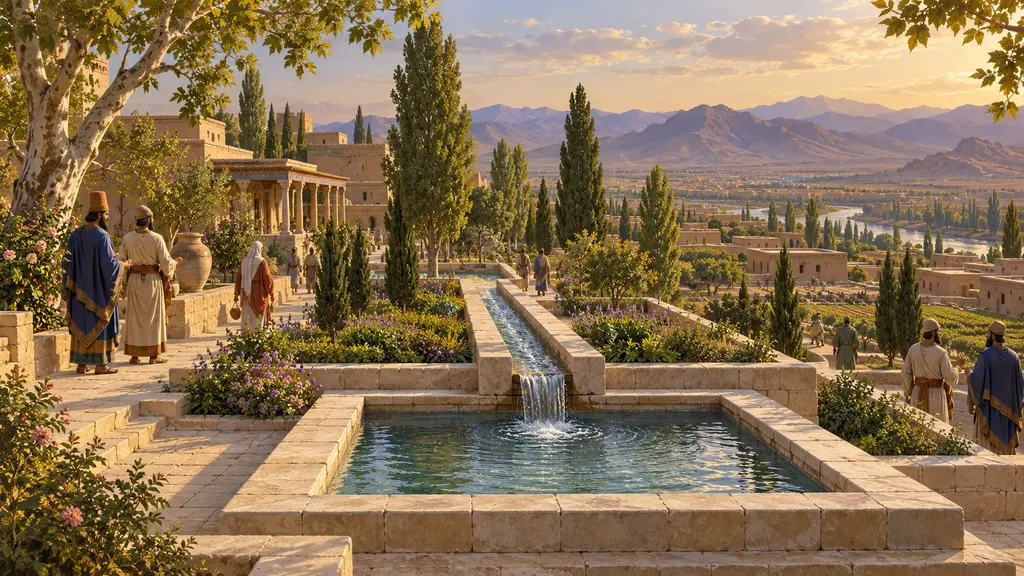
Water Channel
Cut-stone garden watercourses with basins, Pasargadae, about 540-530 BCE
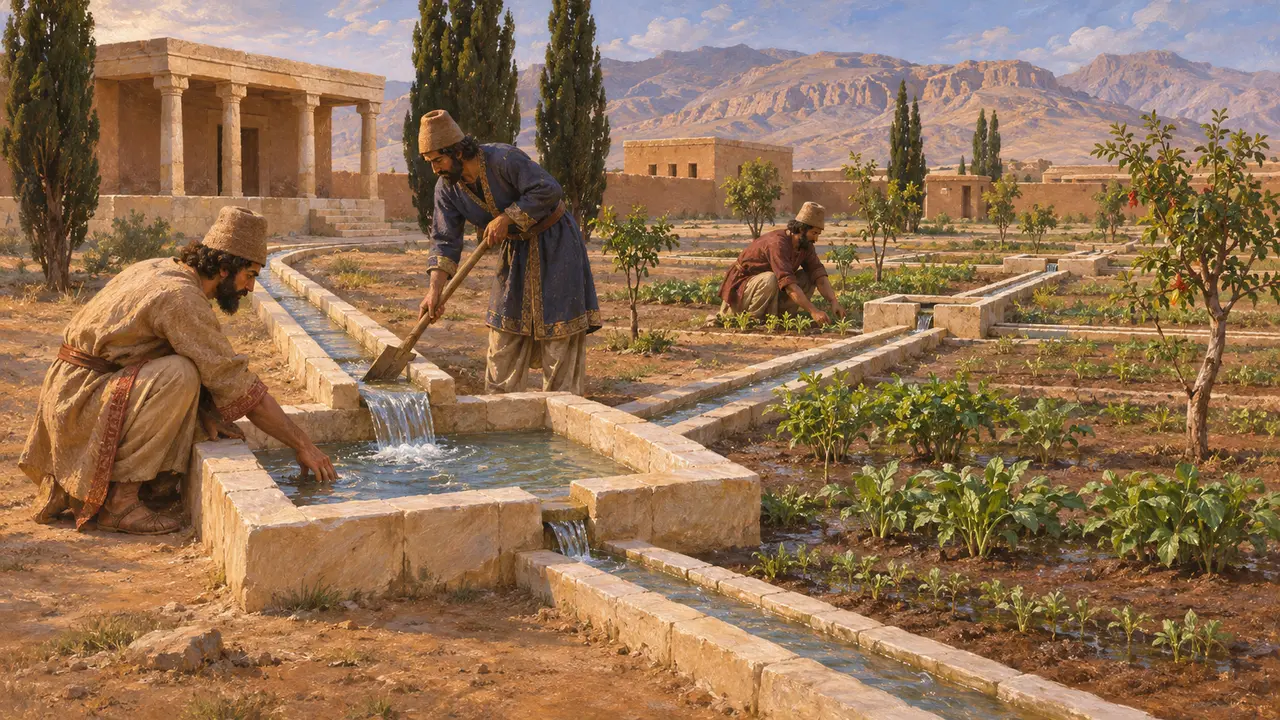
At Pasargadae, Cyrus's builders laid narrow channels of cut limestone, broken at intervals by small square basins, to carry water through the royal garden. They are among the earliest surviving stone-built formal garden channels known. They show how Persian kings used controlled water to make a dry upland plain green and to display royal power.
In the game: The game lists the Water Channel among its housing buildings. The real stone channels at Pasargadae served a royal garden beside the palaces, not ordinary neighbourhoods, so the game simplifies their setting.
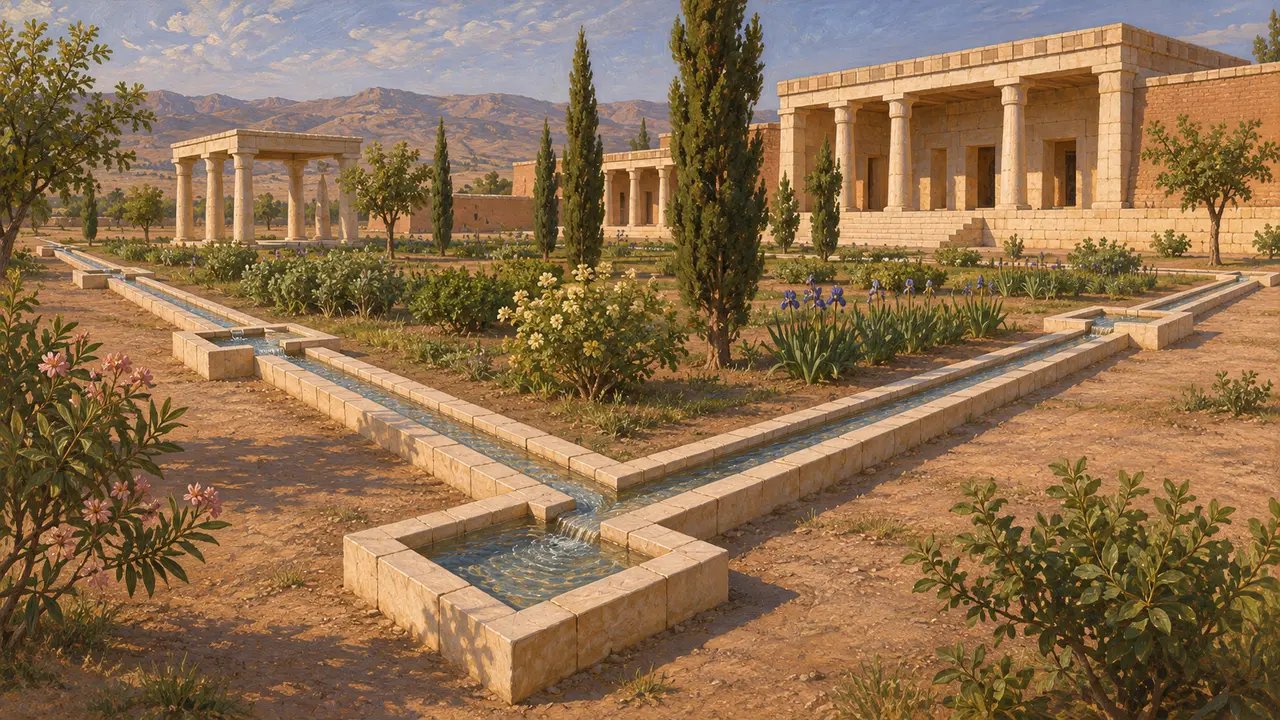
The stone channels of Cyrus's garden
In the recordDavid Stronach's excavations at Pasargadae in the early 1960s uncovered limestone channels about 25 centimetres wide running along the edges of a rectangular garden in front of the residential palace and near its pavilions. Small square basins were set into the channels at intervals. The blocks were cut and fitted with care, matching the fine masonry of the palaces nearby.
D. Stronach, Pasargadae, 1978
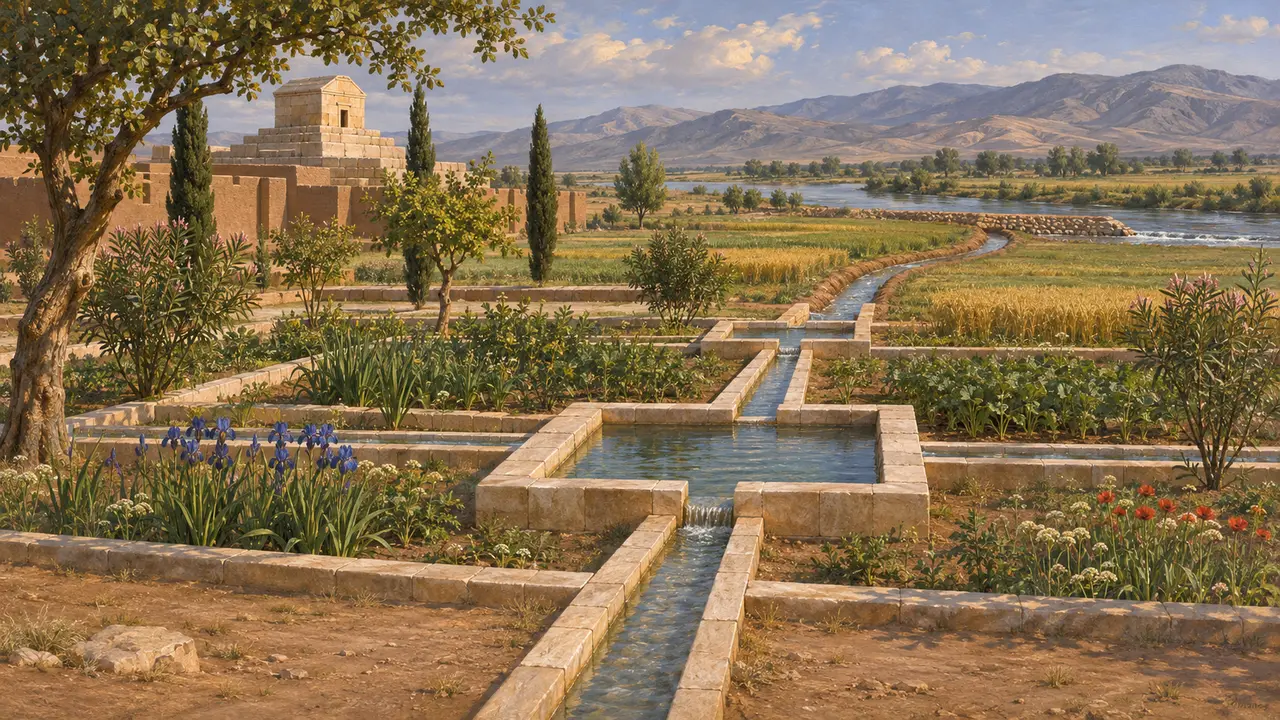
Where the water came from
In the recordPasargadae lies on the plain of the Pulvar river, and the garden channels were probably fed by water drawn from it. Later surveys of the plain and the valleys around it have traced other ancient water works, including dams and canals. The garden channels were probably the most refined part of a wider system for managing water on the plain.
D. Stronach, Pasargadae, 1978; R. Boucharlat and C. Benech, 'Organisation et aménagement de l'espace à Pasargades', Arta, 2002
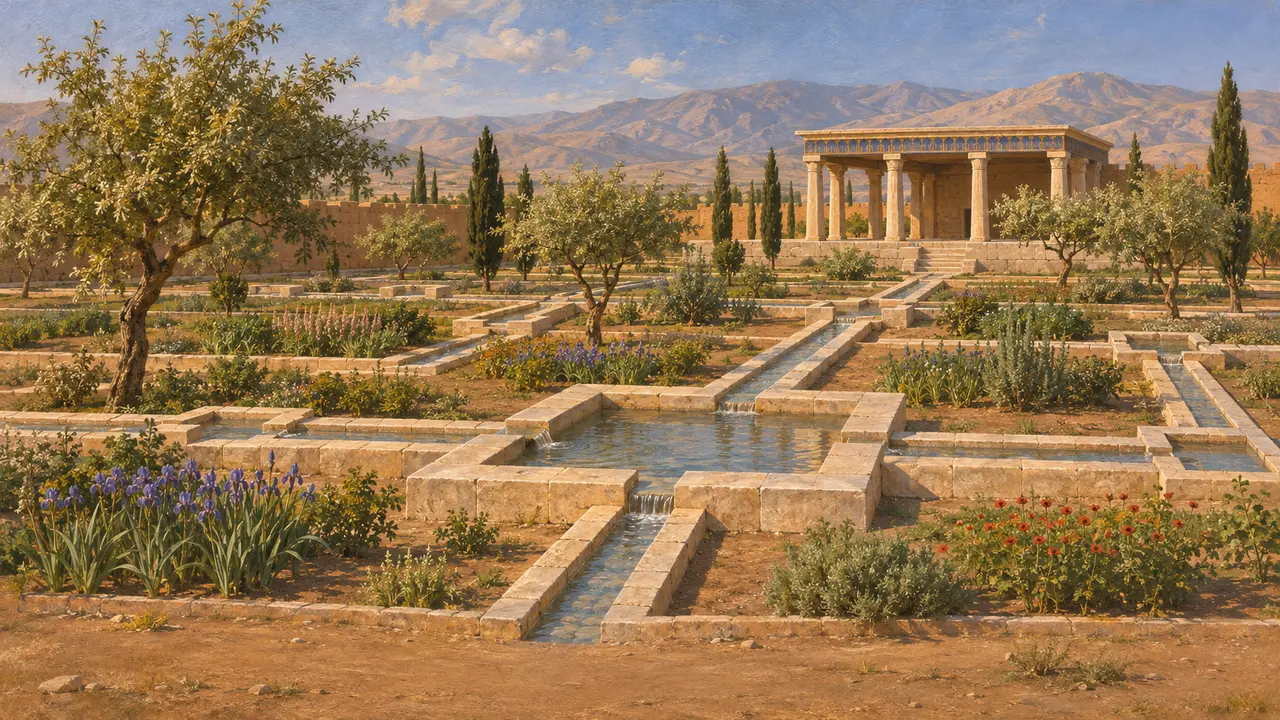
A fourfold garden or something else
DisputedStronach reconstructed the channels as framing a garden divided into four parts, and argued it was an early ancestor of the later Persian fourfold garden. Other scholars doubt that the plan was truly quadripartite. Geophysical survey by a Franco-Iranian team suggested the layout of water and planting may have been more complex. The exact design remains debated.
D. Stronach, 'The Royal Garden at Pasargadae: evolution and legacy', 1989; R. Boucharlat and C. Benech, Arta, 2002
Bringing water to dry land
Ancient accountPolybius, writing in the second century, says that when the Persians ruled Asia they granted the use of land for five generations to anyone who brought water to ground that had not been watered before. He tells this in connection with the underground channels on the route toward Hyrcania. His account is late, but it fits the royal interest in irrigation seen at Pasargadae.
Polybius 10.28
A Greek visitor's view of a royal garden
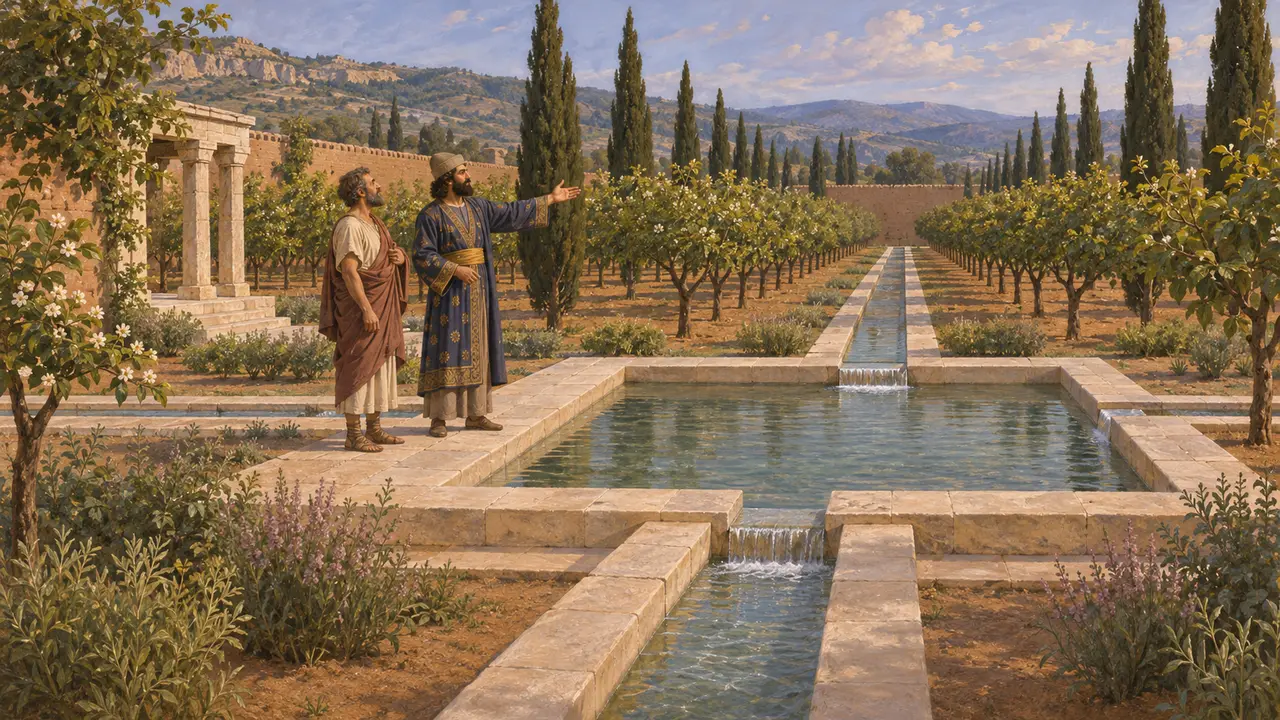
Ancient accountXenophon, in a dialogue told by Socrates, says the Persian prince Cyrus the Younger showed the Spartan Lysander his garden at Sardis, with trees planted in straight rows. Lysander admired the order, and Cyrus said he had measured out and arranged it all himself and planted some of the trees. The visit took place about 407, long after Pasargadae, but it shows how Greeks saw the planned Persian garden.
Xenophon, Oeconomicus 4.20-25
Sources
- D. Stronach, Pasargadae, 1978
- D. Stronach, 'The Royal Garden at Pasargadae: evolution and legacy', 1989
- R. Boucharlat and C. Benech, 'Organisation et aménagement de l'espace à Pasargades', Arta, 2002
- Polybius 10.28
- Xenophon, Oeconomicus 4.20-25