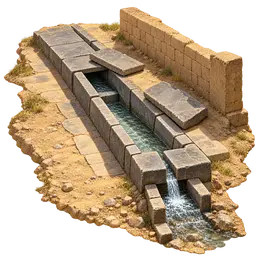
Stone Drain
Covered channels for rain and waste water, Persepolis terrace, about 518-460 BCE
Under the royal terrace at Persepolis ran a network of covered drains, some cut into the bedrock and some built of stone. They carried rain water off flat roofs and paved courts and away from the buildings. Without them, the mud-brick walls of the palaces would probably have been badly damaged by the winter rains of Persis.
In the game: The game's Stone Drain keeps houses within seven cells clean. The excavated drains at Persepolis served the palace terrace and mainly carried rain water. Little is known of drainage in the town below.
Cut before the buildings rose
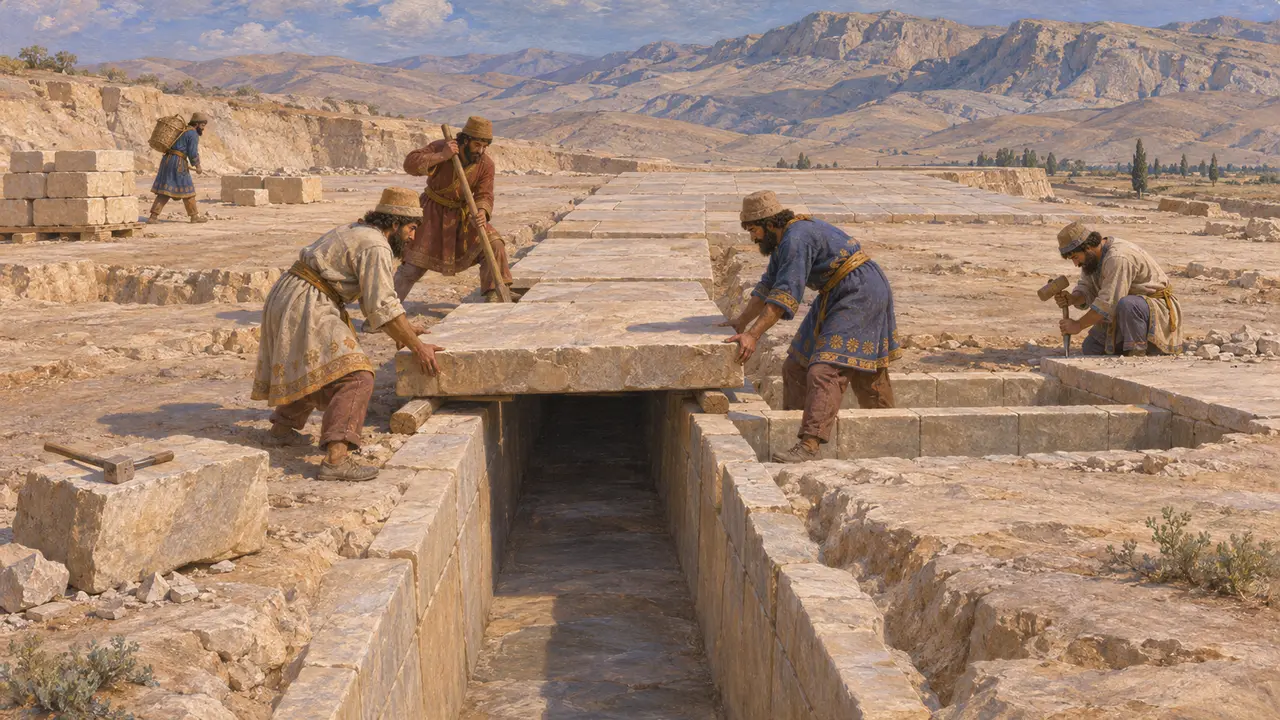
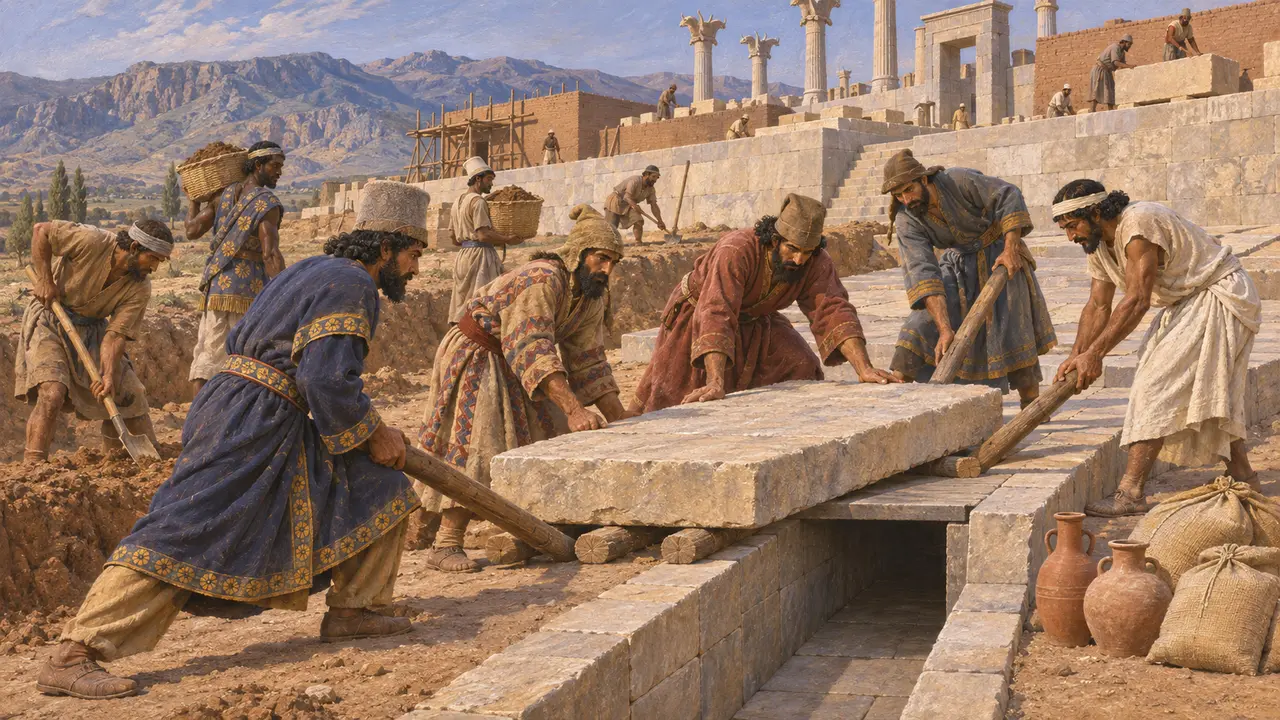
In the recordExcavators found that the drainage network was laid out while the terrace was being levelled, before the halls and palaces were built over it. Channels were cut into the living rock or lined and roofed with stone slabs, then hidden under later floors. This shows the drains were planned as part of the terrace from the start, not added afterwards.
E. Schmidt, Persepolis I, 1953
From roof to channel
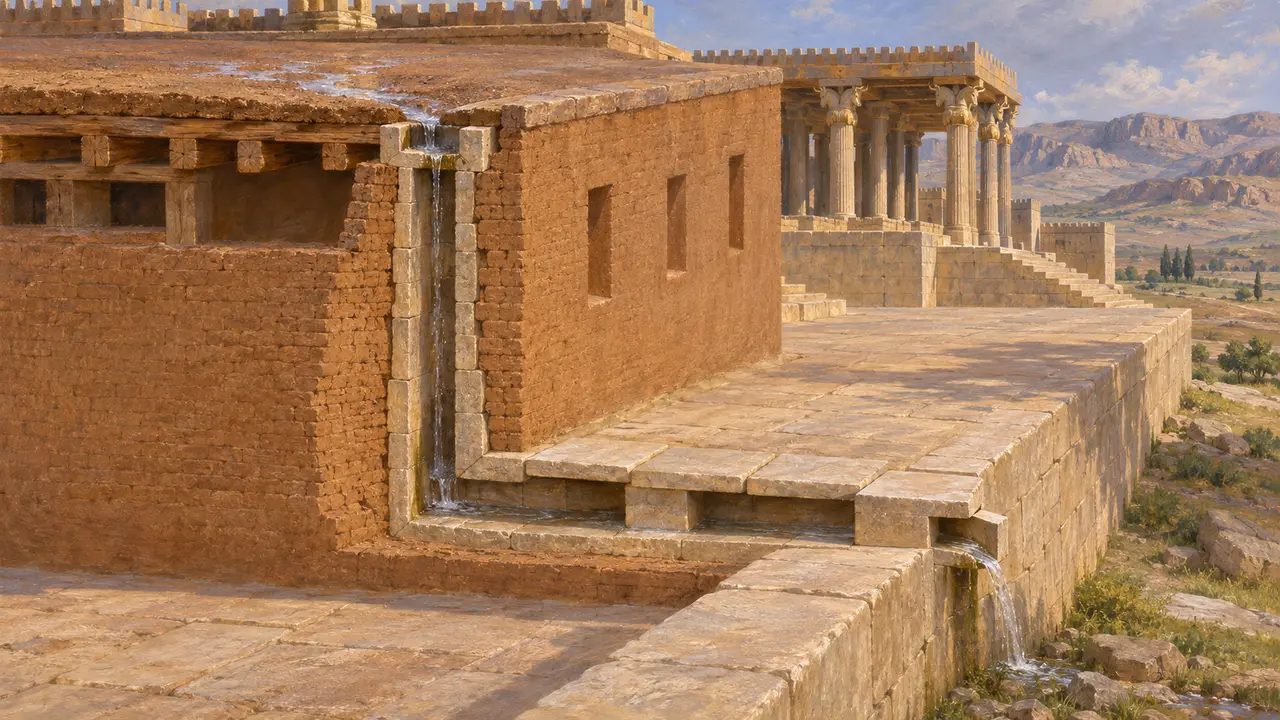
In the recordThe buildings had flat roofs of earth laid over timber beams, which collected rain. Excavators traced vertical shafts built into the thick mud-brick walls that led water down to the channels beneath. The drains then carried it to outlets at the edges of the terrace, away from the foundations.
E. Schmidt, Persepolis I, 1953
Rain, waste or water supply
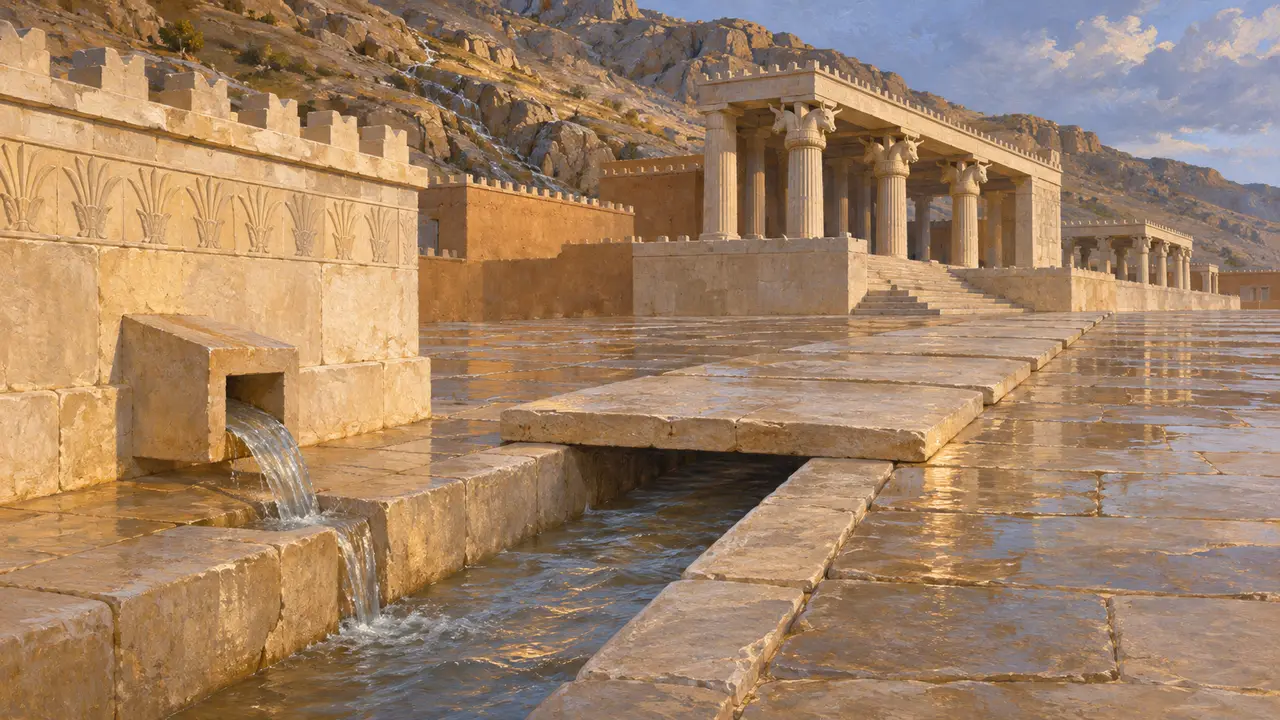
DisputedScholars agree the network chiefly handled storm water, both from roofs and from runoff off the mountain behind the terrace. How much household waste it carried is less clear, since the terrace was a royal and ceremonial site with few known latrines. Some also link parts of the system to the cisterns on the terrace, and the exact working of the whole network is still argued.
A. Mousavi, Persepolis: Discovery and Afterlife of a World Wonder, 2012
Older traditions of water work
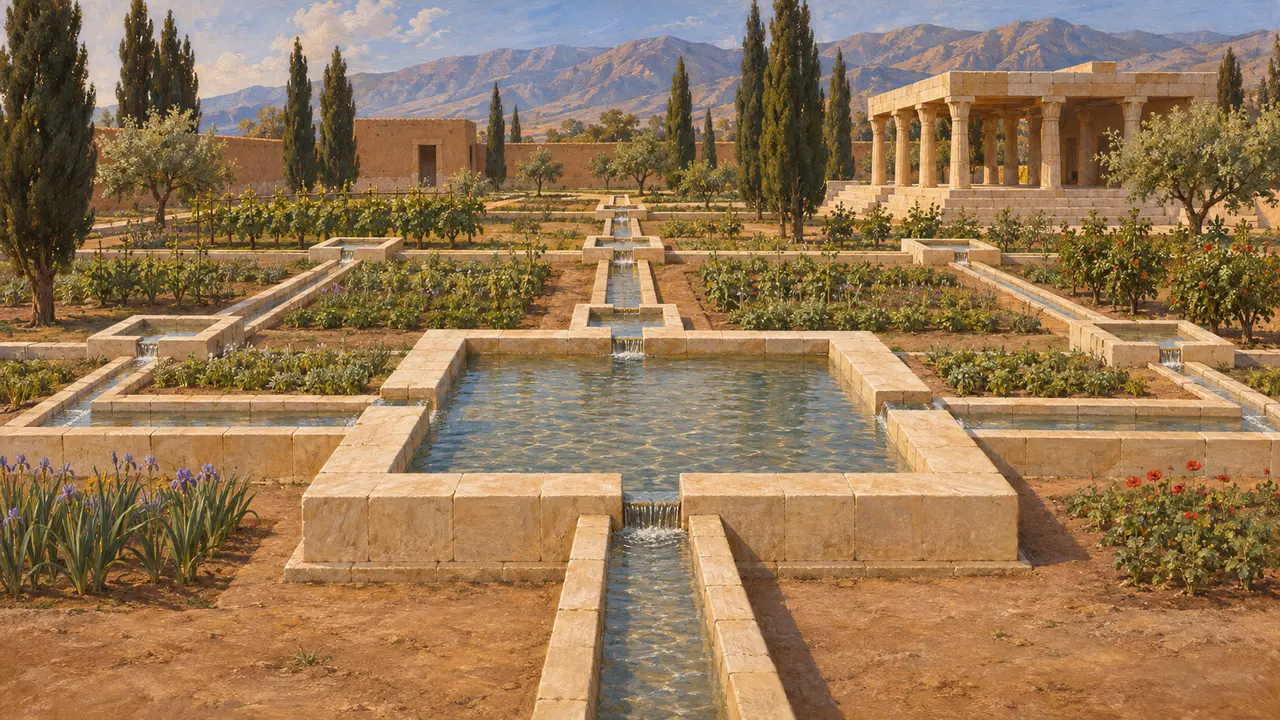
In the recordDrains of baked brick were long known in Elam and Mesopotamia, and Persian builders probably drew on these traditions. At Pasargadae, Cyrus's garden had channels of cut limestone with small basins at intervals. Those channels fed water into the garden rather than draining it away, but they show the same skill in cutting stone to carry water.
D. Stronach, Pasargadae, 1978
The workers behind the works
In the recordThe Persepolis Fortification tablets record rations of grain, wine and beer paid to large groups of workers at Parsa, many of them from distant peoples of the empire, among them skilled craftsmen. The digging of the drains was probably part of the general labour of building the terrace, carried out by workers like these.
R. Hallock, Persepolis Fortification Tablets, 1969; P. Briant, From Cyrus to Alexander, 2002
Sources
- E. Schmidt, Persepolis I, 1953
- A. Mousavi, Persepolis: Discovery and Afterlife of a World Wonder, 2012
- D. Stronach, Pasargadae, 1978
- R. Hallock, Persepolis Fortification Tablets, 1969
- P. Briant, From Cyrus to Alexander, 2002