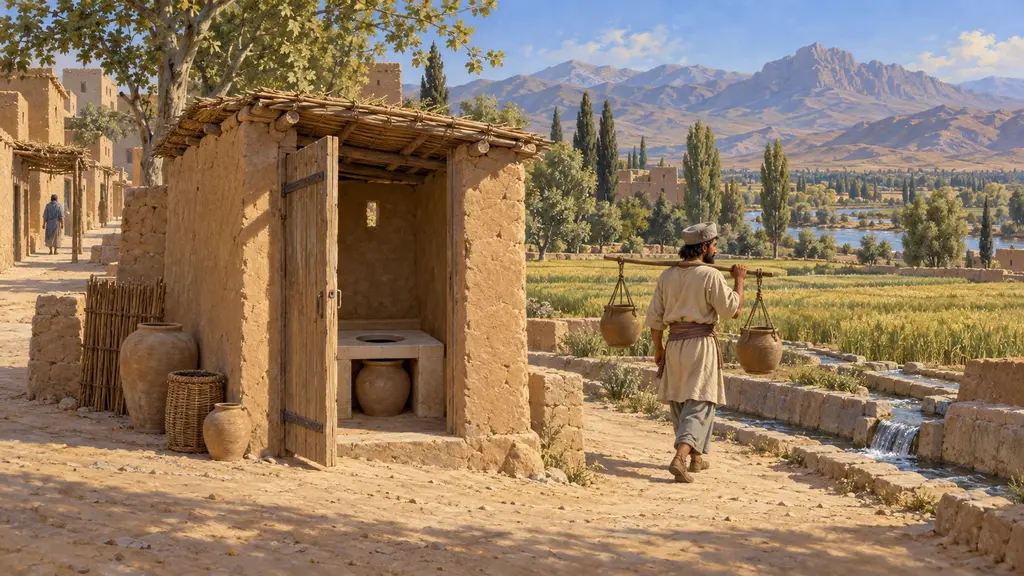
Privy
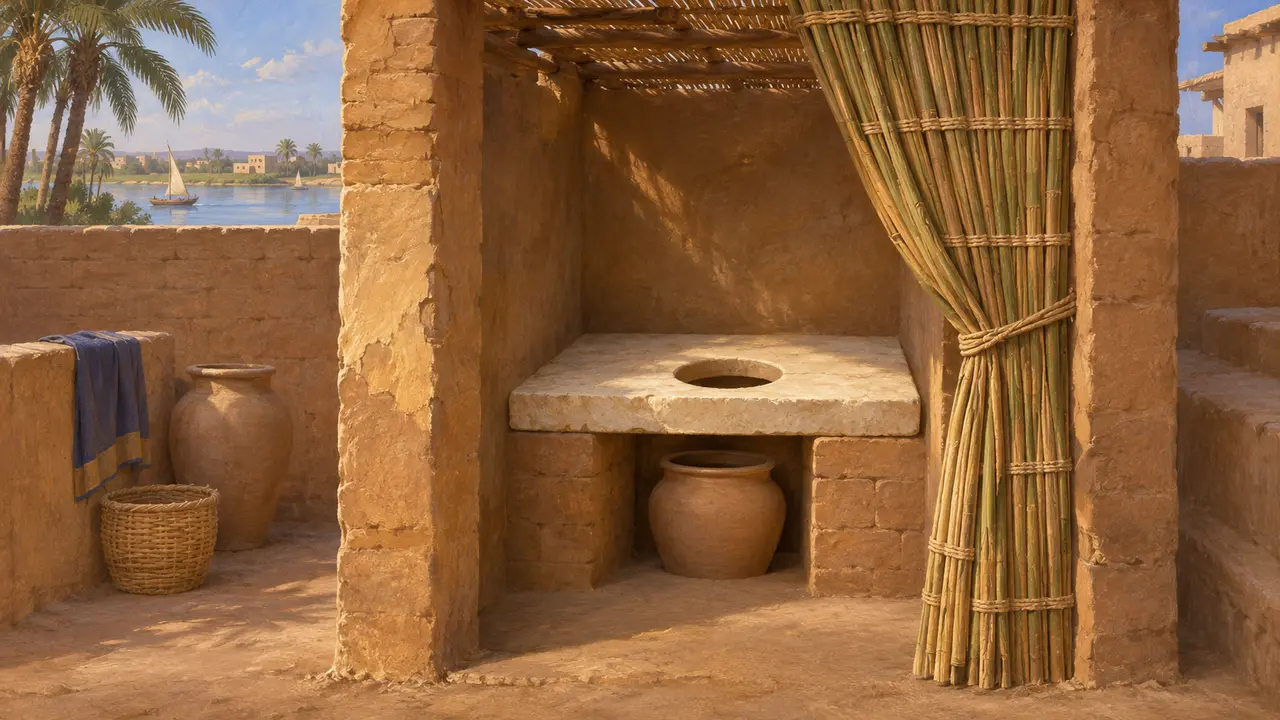
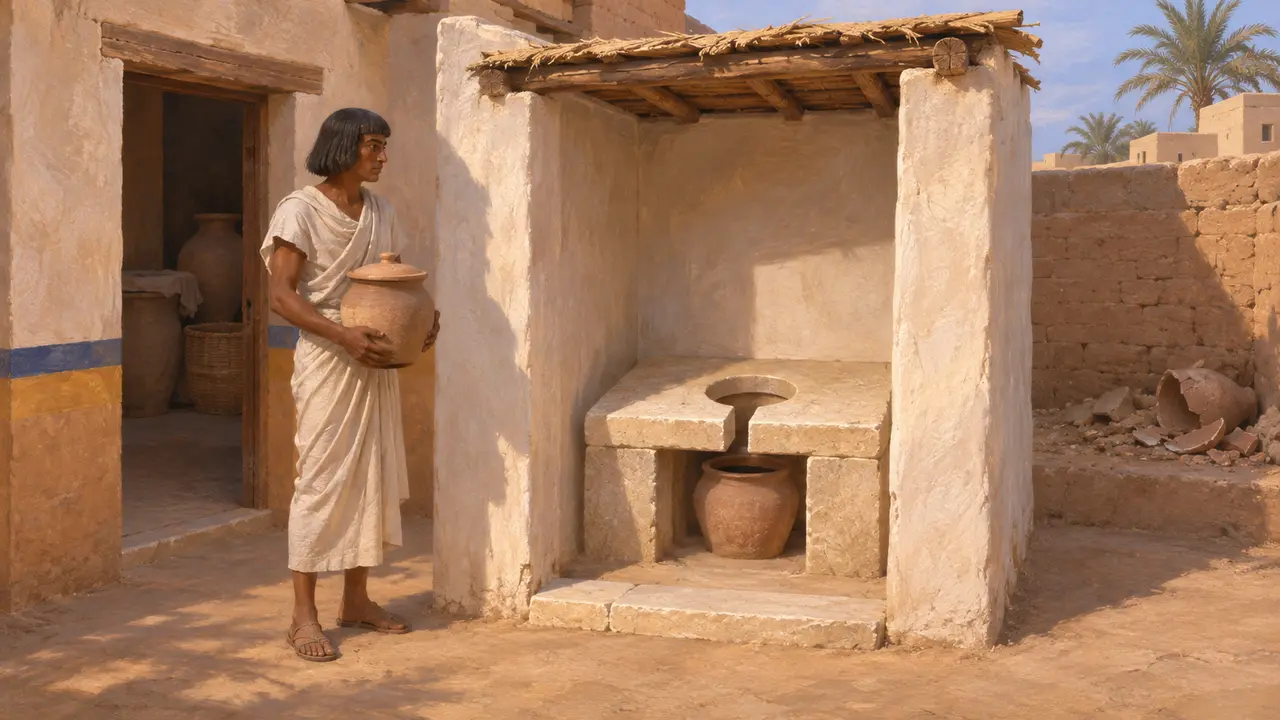
Household latrine seat of an old Egyptian and Near Eastern type, in use 6th-5th century BCE
A privy was a fixed seat or small room where a household relieved itself, usually over a pot, a pit or a drain. Such fittings were centuries old by the time of Cyrus, known from Egyptian houses and Mesopotamian palaces, but they were a comfort of the better-off. Most people in the empire probably made do with open ground, pots and cesspits.
In the game: The game shows a seat over a sand pot emptied onto fields, keeping houses within four cells clean; Elder's Houses need one. Sand-pot seats are known from Egypt, but there is no firm evidence of emptying them onto fields, and such seats were rare.
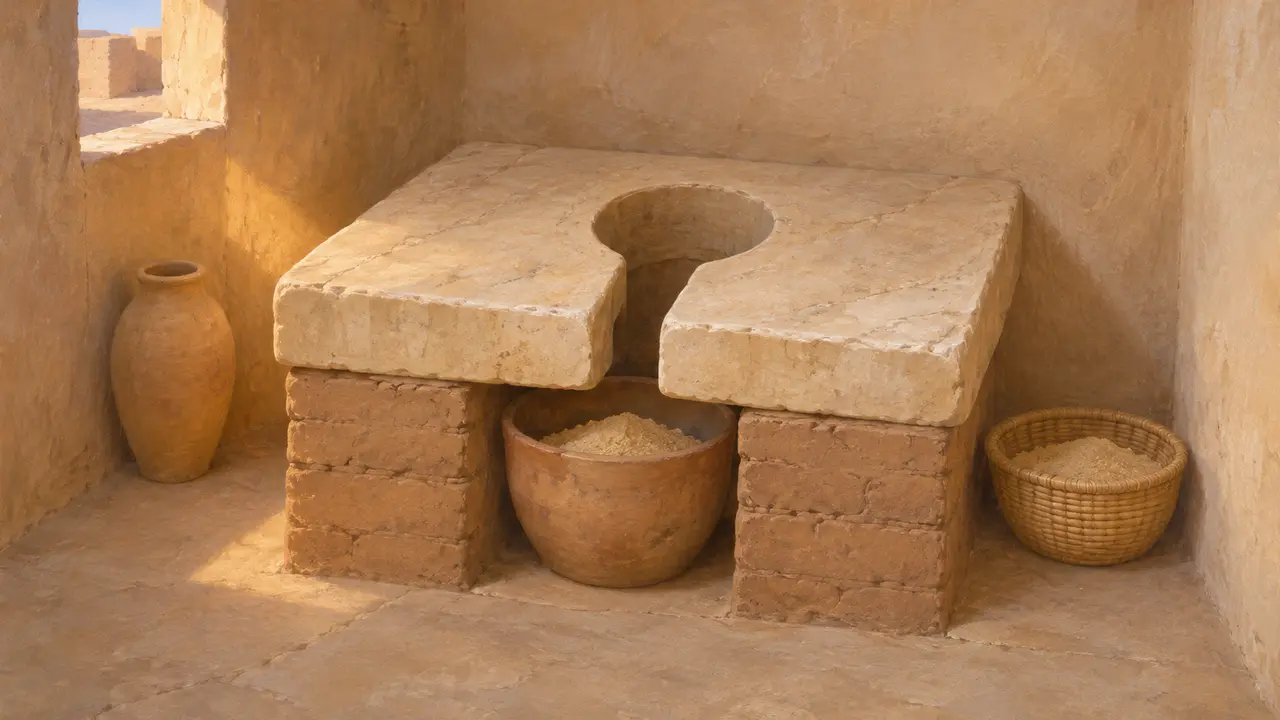
Stone seats over sand at Amarna
In the recordThe clearest Egyptian evidence comes from Amarna, the city of Akhenaten, built about 800 years before Cyrus. Excavators found limestone seats with a keyhole-shaped opening, set on brick supports above a removable vessel that probably held sand. They stood in small washrooms in the larger houses, not in ordinary homes.
B. Kemp, The City of Akhenaten and Nefertiti, 2012
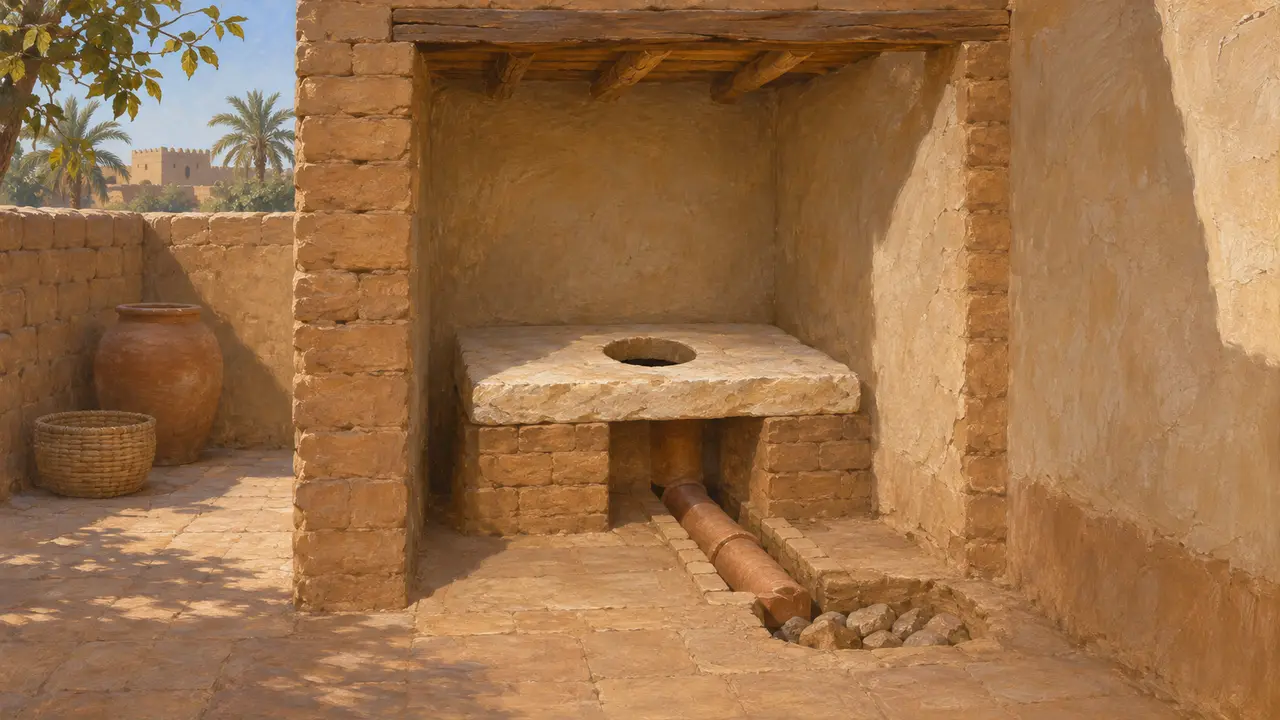
Drains in Mesopotamia and Persia
In the recordIn Mesopotamia, palaces and some houses had latrines draining into pipes or soak pits from the third millennium onward. At Persepolis, the royal terrace was laid out with a network of drains cut into the rock beneath the buildings to carry off rain and waste water. Excavation has not shown in detail how latrines on the terrace worked.
E. Schmidt, Persepolis I, 1953
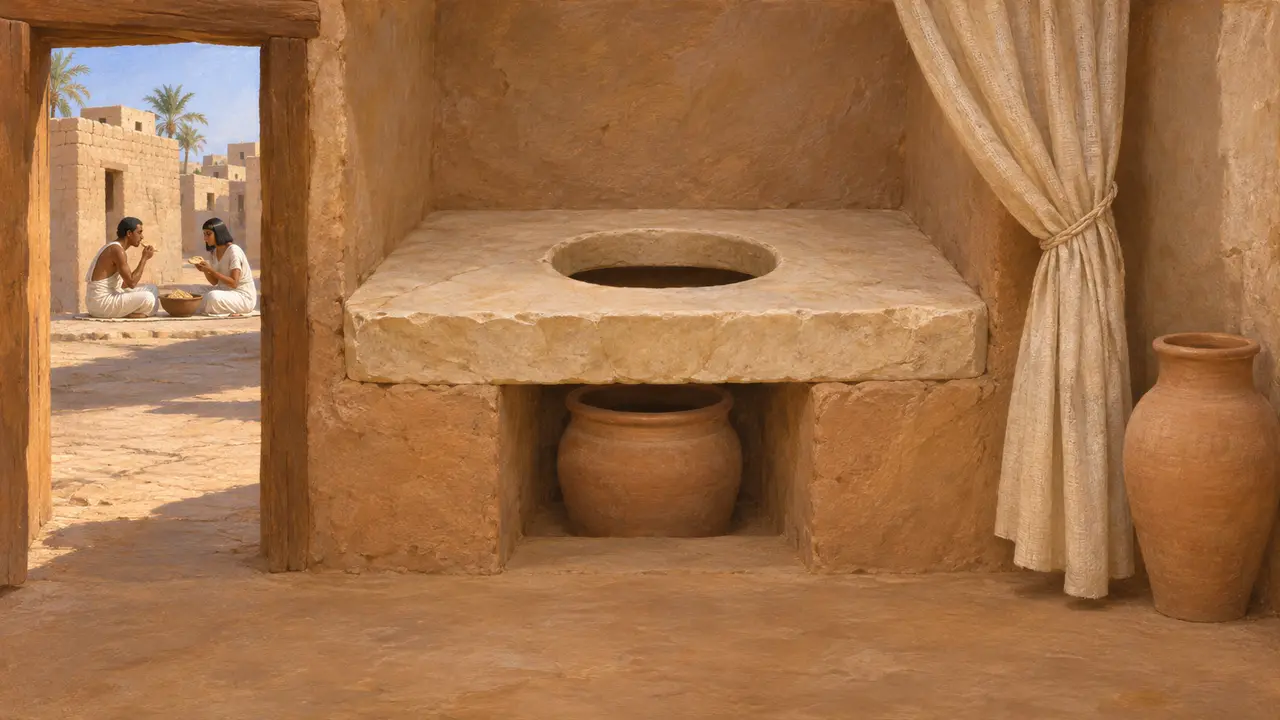
Herodotus on Egyptian habits
Ancient accountHerodotus lists Egyptian customs that seemed the reverse of Greek ones. He says Egyptians relieved themselves indoors and ate outside in the streets, explaining that shameful necessities should be done in private. His remark fits the household latrines found in Egyptian houses, though he wrote as an outsider looking for contrasts.
Herodotus 2.35
Persian modesty and running water
Ancient accountHerodotus says Persians were not permitted to vomit or urinate in front of others. He adds that they would not urinate or spit into a river, nor wash their hands in one, because they held rivers in great reverence. These customs suggest care about where waste went, but he gives no description of Persian latrines.
Herodotus 1.133; Herodotus 1.138
Who had privies, and where waste went
DisputedMost archaeologists think built latrines were limited to wealthier houses and palaces, but how waste was cleared remains unclear. Pots may have been emptied outside the house, into pits or onto rubbish heaps; there is no firm evidence that it was spread on fields. Later Zoroastrian purity rules about bodily waste were written down long after the Achaemenids, and historians differ on how far they reflect Persian practice in this period.
B. Kemp, The City of Akhenaten and Nefertiti, 2012; P. Briant, From Cyrus to Alexander, 2002
Sources
- B. Kemp, The City of Akhenaten and Nefertiti, 2012
- Herodotus 2.35
- Herodotus 1.133; 1.138
- E. Schmidt, Persepolis I, 1953
- P. Briant, From Cyrus to Alexander, 2002