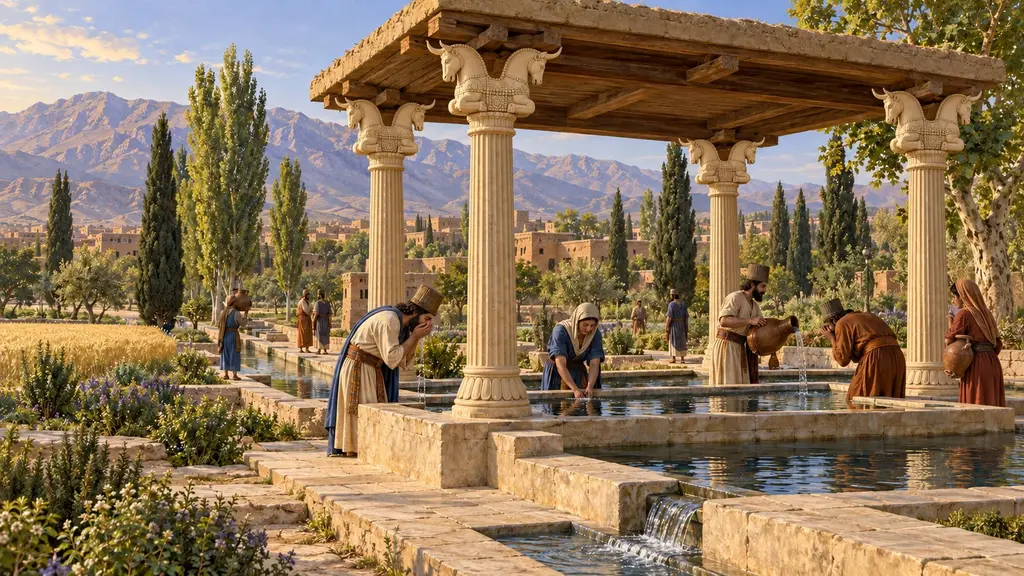
Water House
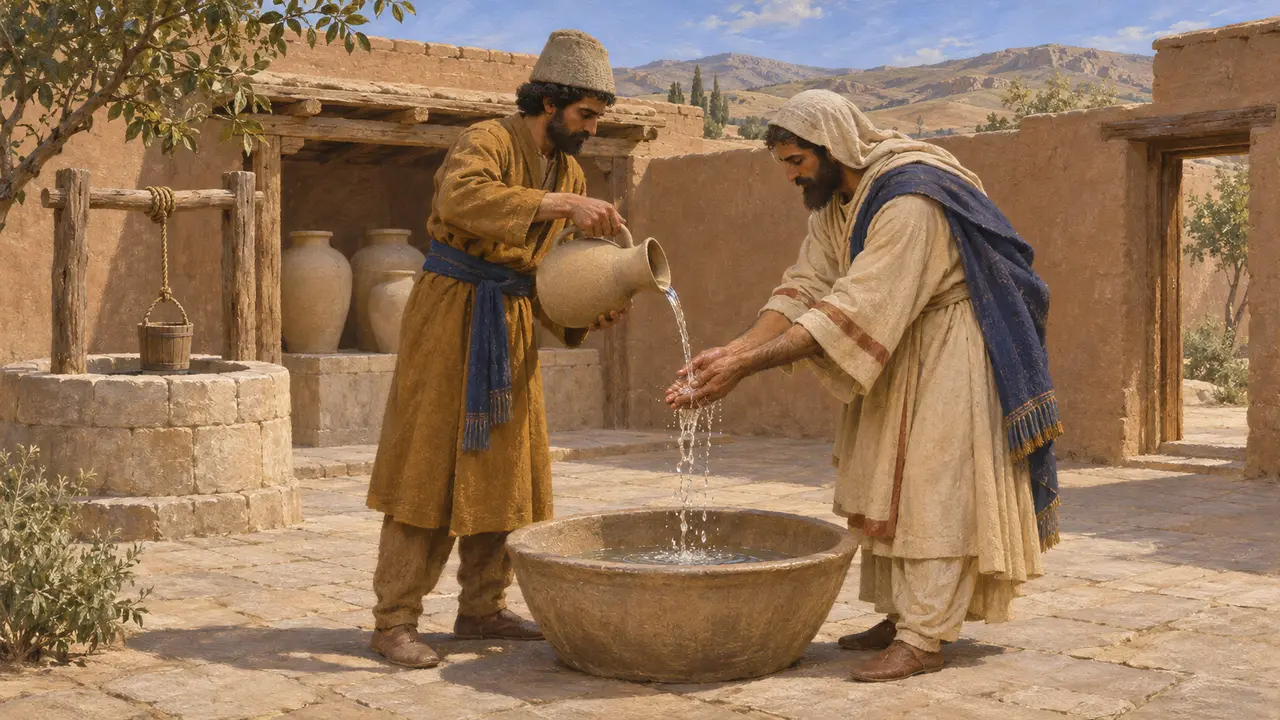
Drawn water for washing, after a Persian custom, 6th to 5th centuries BCE
Greek writers noticed that Persians treated running water with unusual care and would not wash in a river or foul it. Washing therefore had to be done with water taken away from the stream. No building made for this purpose has been identified, but the stone watercourses at Pasargadae and the drains at Persepolis show how carefully Persian builders managed water.
In the game: In the game, houses within six cells wash at a Water House, and Noble Residences need one. No public washing house of this kind is known from Persia, so the game turns the rule against fouling rivers into a service building.
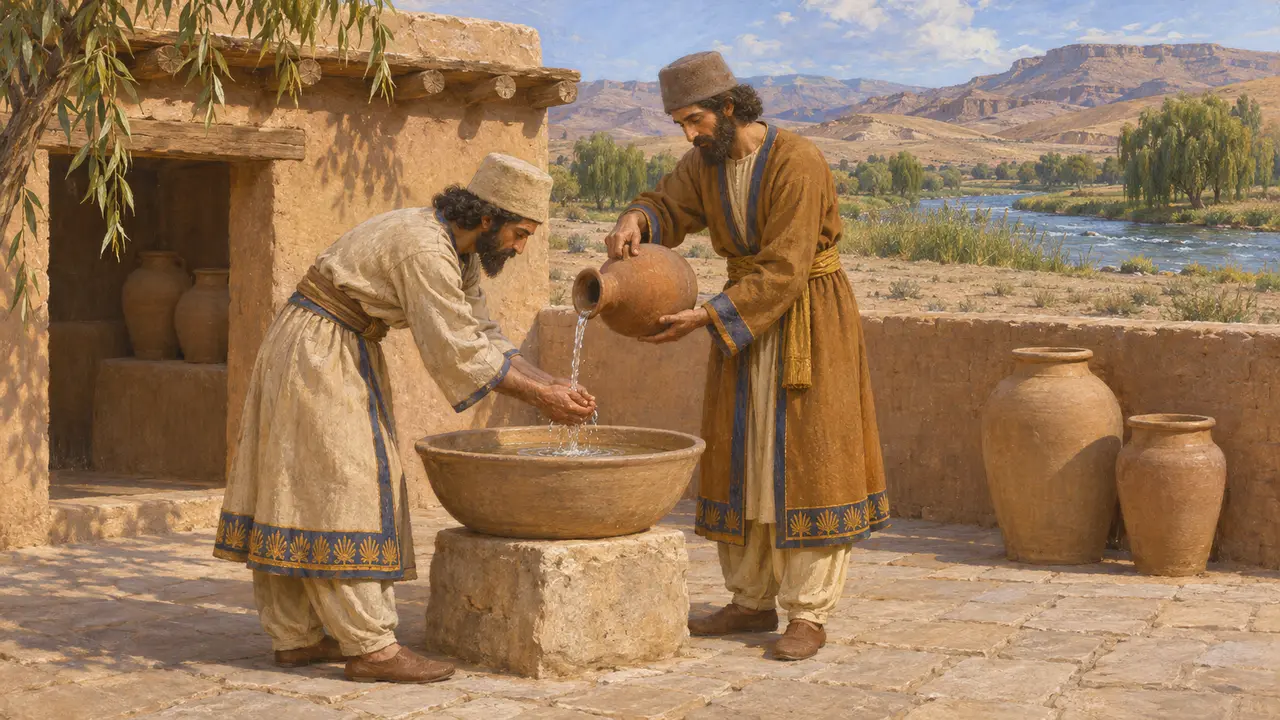
Reverence for rivers
Ancient accountHerodotus says that Persians did not urinate or spit into a river, did not wash their hands in one, and did not let others do so, because they honoured rivers greatly. Strabo, writing more than four centuries later, adds that they did not bathe in water or throw anything dead or unclean into it. Both are outsiders' reports, but they agree that washing was kept away from flowing water.
Herodotus 1.138; Strabo 15.3.16
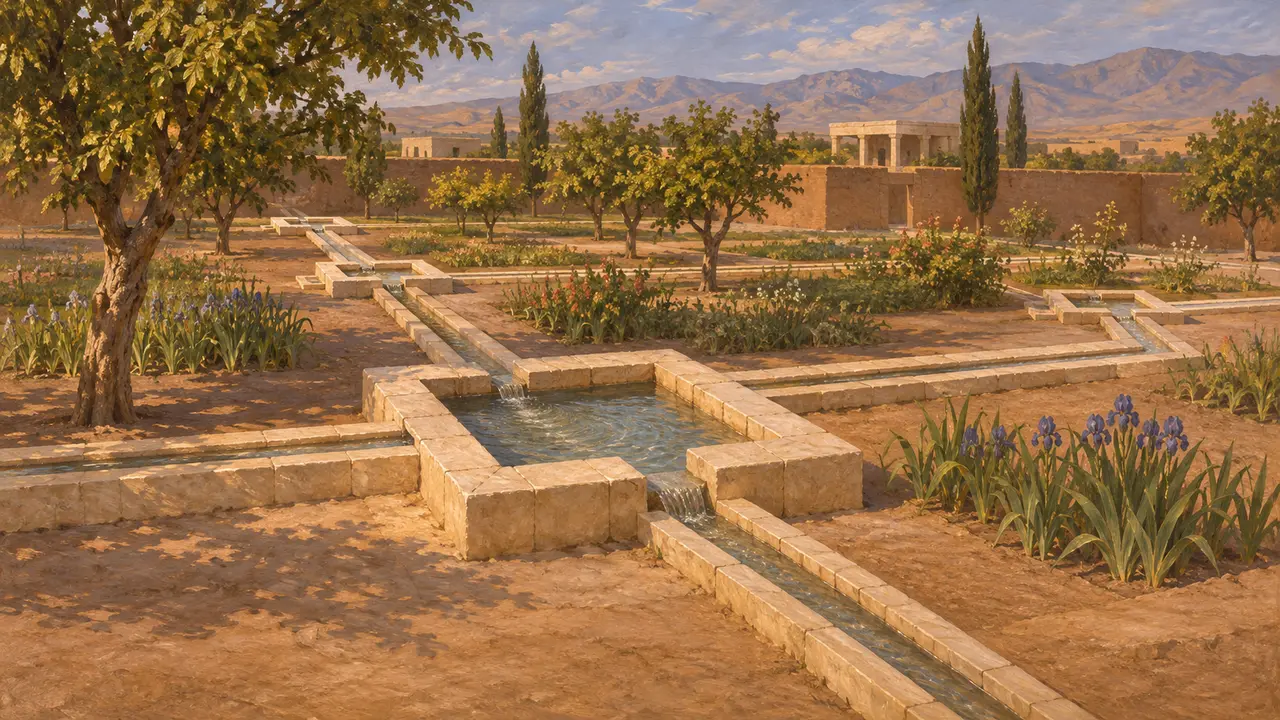
Stone channels and basins at Pasargadae
In the recordThe royal garden that Cyrus laid out at Pasargadae was watered by narrow channels cut in limestone blocks. Small square basins were set at intervals along them. The water probably came from the Pulvar river. These were garden works for irrigation and display, and nothing shows that they were used for washing.
D. Stronach, Pasargadae, 1978
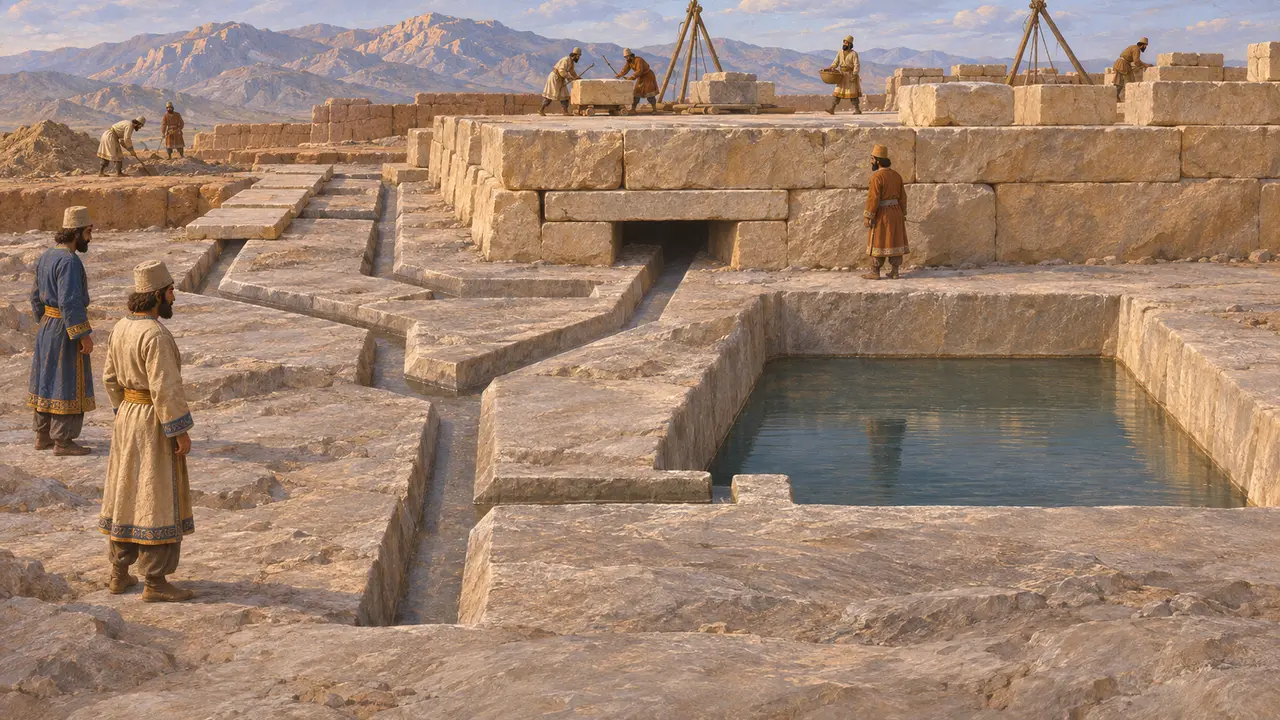
Drains and cisterns at Persepolis
In the recordExcavators found a network of drains cut into the bedrock beneath the Persepolis terrace, planned before the buildings rose above them. The drains carried off rain and waste water, and there were cisterns as well. Such works show that the King's builders planned water supply and drainage from the start.
E. F. Schmidt, Persepolis I, 1953
Underground channels and royal grants
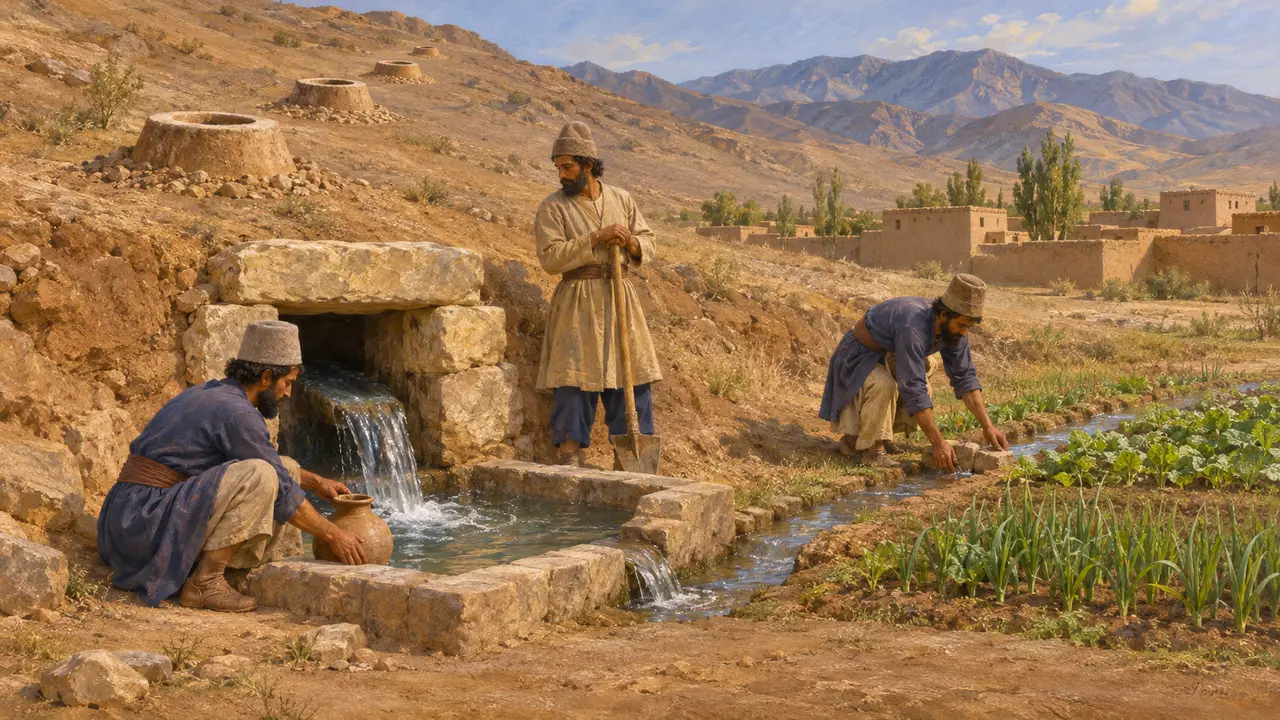
DisputedPolybius reports that when the Persians ruled Asia, they gave people the use of land for five generations if they brought water to places that had none. Historians link this to qanats, underground channels that tap groundwater. Scholars still argue over whether the Persians spread this technique or whether it was older and local, and over how to date similar channels found in Egypt's western oases.
Polybius 10.28; P. Briant, From Cyrus to Alexander, 2002
Later purity laws
DisputedZoroastrian texts such as the Videvdad set out strict rules against polluting water. They were written down many centuries after the Achaemenid kings. Historians disagree about how far these rules reflect Persian practice in the time of Cyrus and Darius. The Greek reports are closer in date, but they describe the custom from outside.
P. Briant, From Cyrus to Alexander, 2002
Sources
- Herodotus 1.138
- Strabo 15.3.16
- D. Stronach, Pasargadae, 1978
- E. F. Schmidt, Persepolis I, 1953
- Polybius 10.28
- P. Briant, From Cyrus to Alexander, 2002