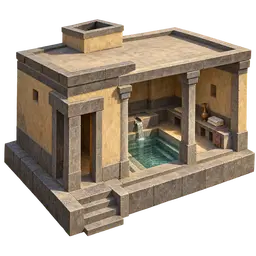
Palace Bath
Washrooms and drains in the Achaemenid palaces, Persepolis, about 518-465 BCE
The palaces of the Persian kings had built drains and paved or plastered rooms where water could be poured and carried away. Excavation shows a careful system of channels beneath the terrace at Persepolis. Exactly which rooms served for washing is still argued, and no known text of the period names a bath.
In the game: The game's Palace Bath is a service that Elder's Houses and Noble Residences within nine cells use. That is a simplification: palace washrooms belonged to royal buildings, and nothing shows a shared bath serving several households.
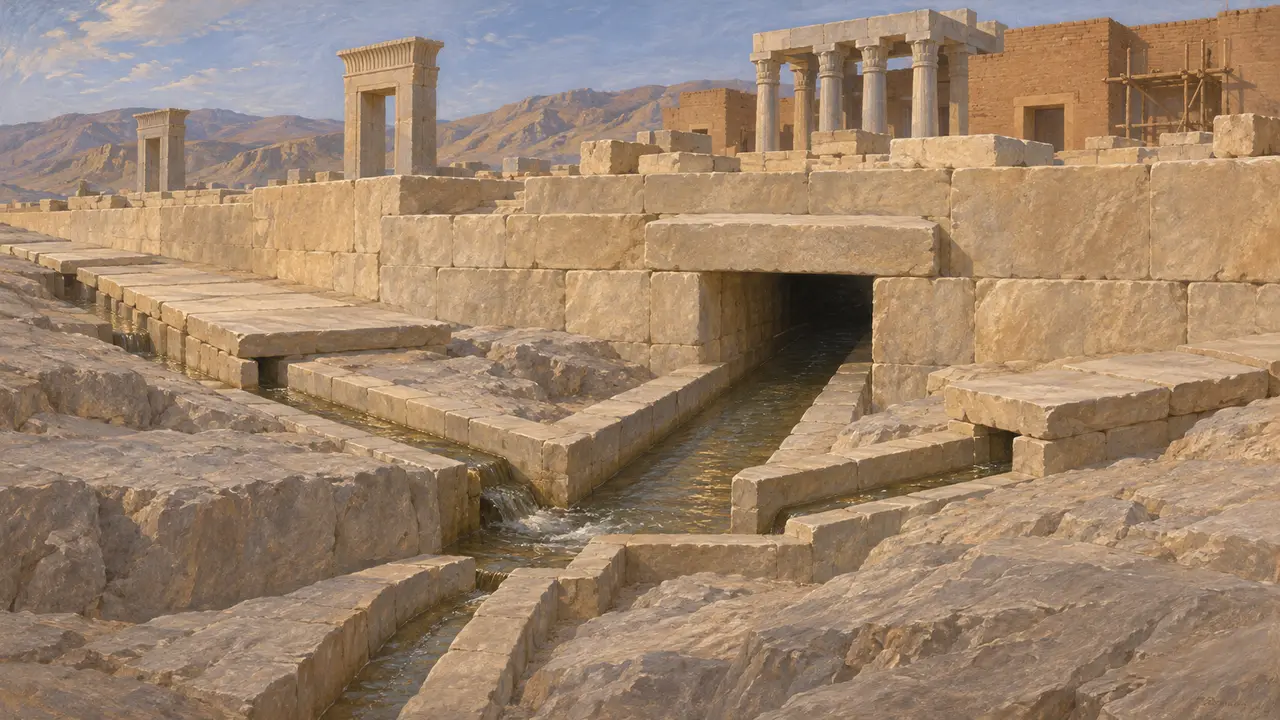
Drains beneath the terrace at Persepolis
In the recordExcavators at Persepolis found a network of channels cut into the rock and built under the terrace. The system was probably laid out before the palaces were raised on top of it. It carried rainwater and wastewater from roofs, courts and some rooms down and away from the platform. At Pasargadae, stone water channels ran through the royal garden, which shows the same skill in handling water.
E. F. Schmidt, Persepolis I, 1953; D. Stronach, Pasargadae, 1978
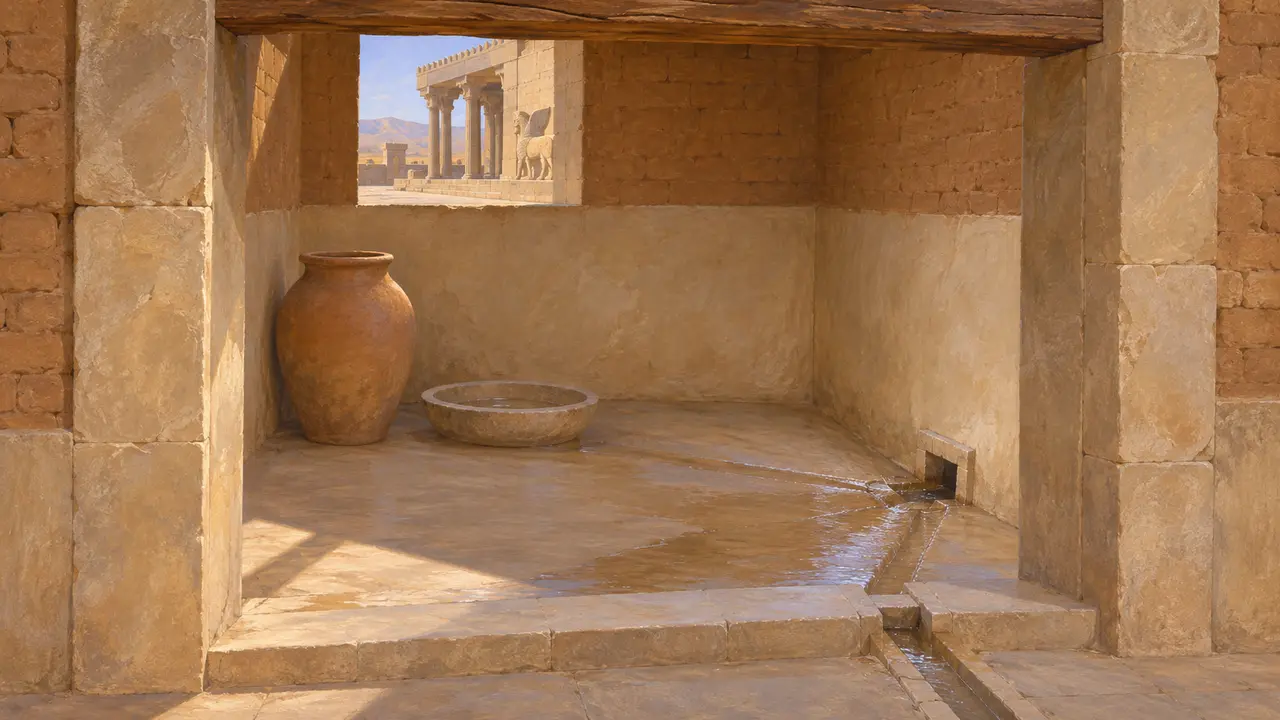
Which rooms were for washing
DisputedSome small rooms in the palaces have paved or plastered floors with outlets that lead into the drains. Excavators have read some of these as washrooms or latrines. Other scholars think some were service or storage rooms that simply needed drainage. No known inscription or tablet of the period labels a room as a bath, so each identification rests on the floor and the plumbing alone.
E. F. Schmidt, Persepolis I, 1953
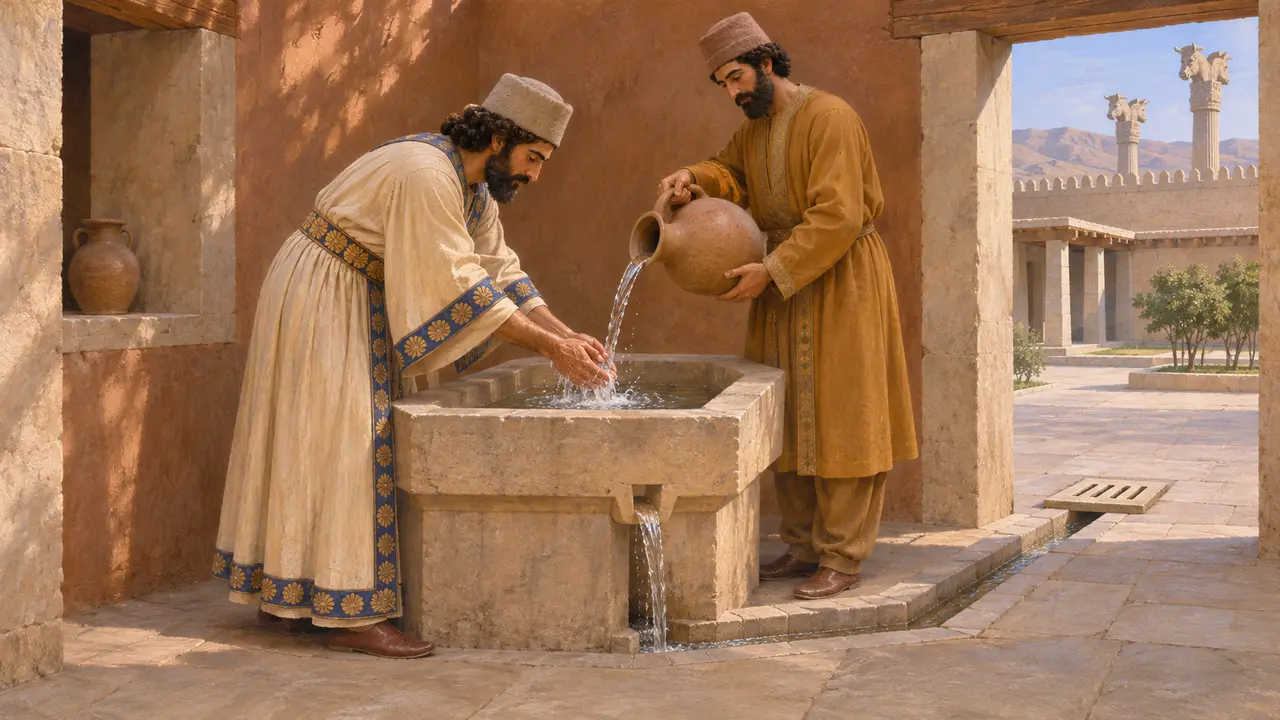
Respect for running water
Ancient accountHerodotus says that Persians did not urinate or spit into a river and did not wash their hands in one. Strabo, writing much later, also describes Persian reverence for water. If the Greek writers are right, washing was probably done with water drawn into basins and then drained away, not in streams. They may have simplified a custom they knew only at second hand.
Herodotus 1.138; Strabo 15.3
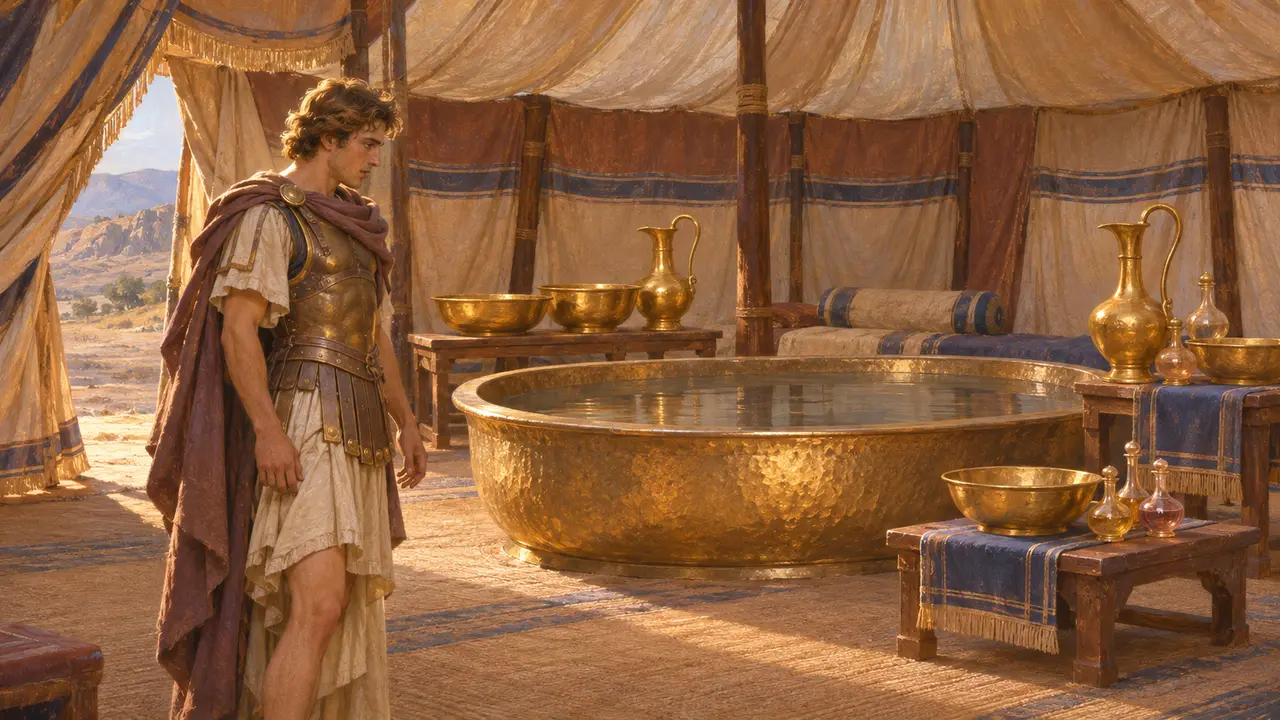
The bath of Darius III
Later legendPlutarch tells how Alexander, after the battle of Issus in 333, entered the captured tent of Darius III. There he found a bath fitted with gold vessels, basins and perfumes, and remarked that this, it seemed, was what being a king meant. The story was written down more than four centuries later. It is shaped as a moral tale about Persian luxury and says little about palace bathrooms in the time of Darius I.
Plutarch, Alexander 20
Sources
- E. F. Schmidt, Persepolis I, 1953
- Herodotus 1.138
- D. Stronach, Pasargadae, 1978
- P. Briant, From Cyrus to Alexander, 2002
- Strabo 15.3
- Plutarch, Alexander 20