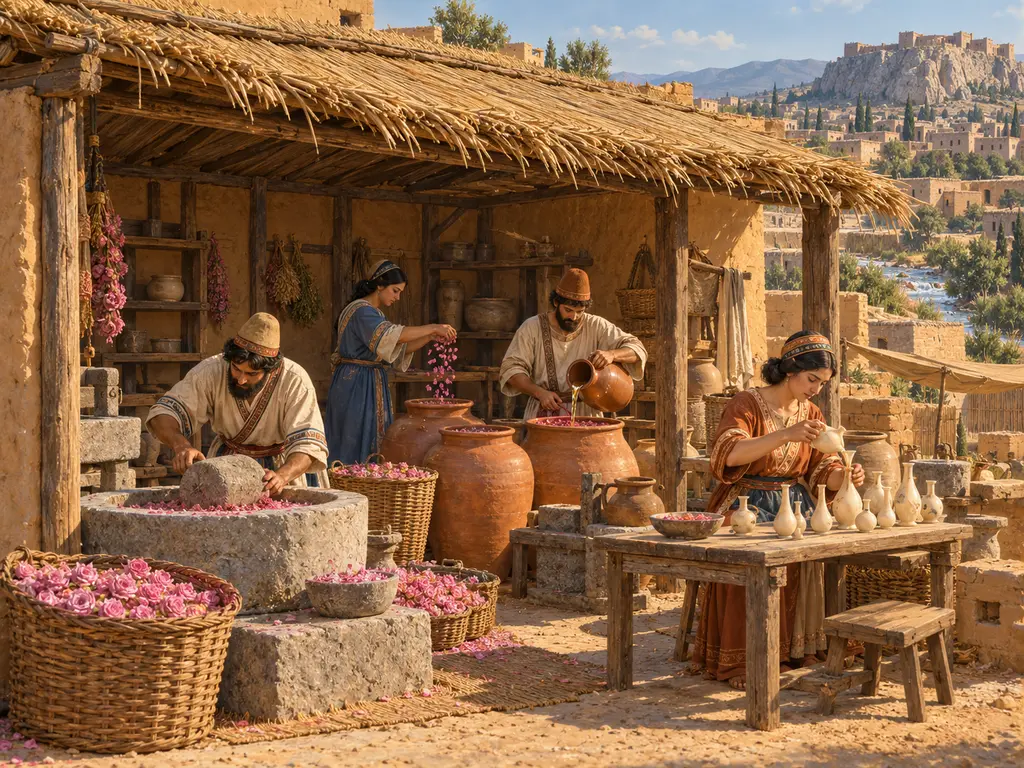
Perfumer's Workshop
Makers of scented oils and unguents at Sardis, Lydia, about 500 BCE
In the game: Level 7: Sardis Burns
Greek writers counted scented oil among the luxuries of Lydia, and some linked a Lydian unguent with the name bakkaris. Perfume was made by steeping flowers, spices and resins in oil. It was used on the body and hair and given as gifts between rulers. Under Persian rule Sardis was the seat of a satrap, and its trade in fine oils probably carried on.
In the game: In the Sardis level perfumers steep pressed fruit and flowers in oil, drawing fruit from the granaries to supply unguent to Noble Residences. Real perfumers scented oil with flowers, spices and resins, not fruit alone.
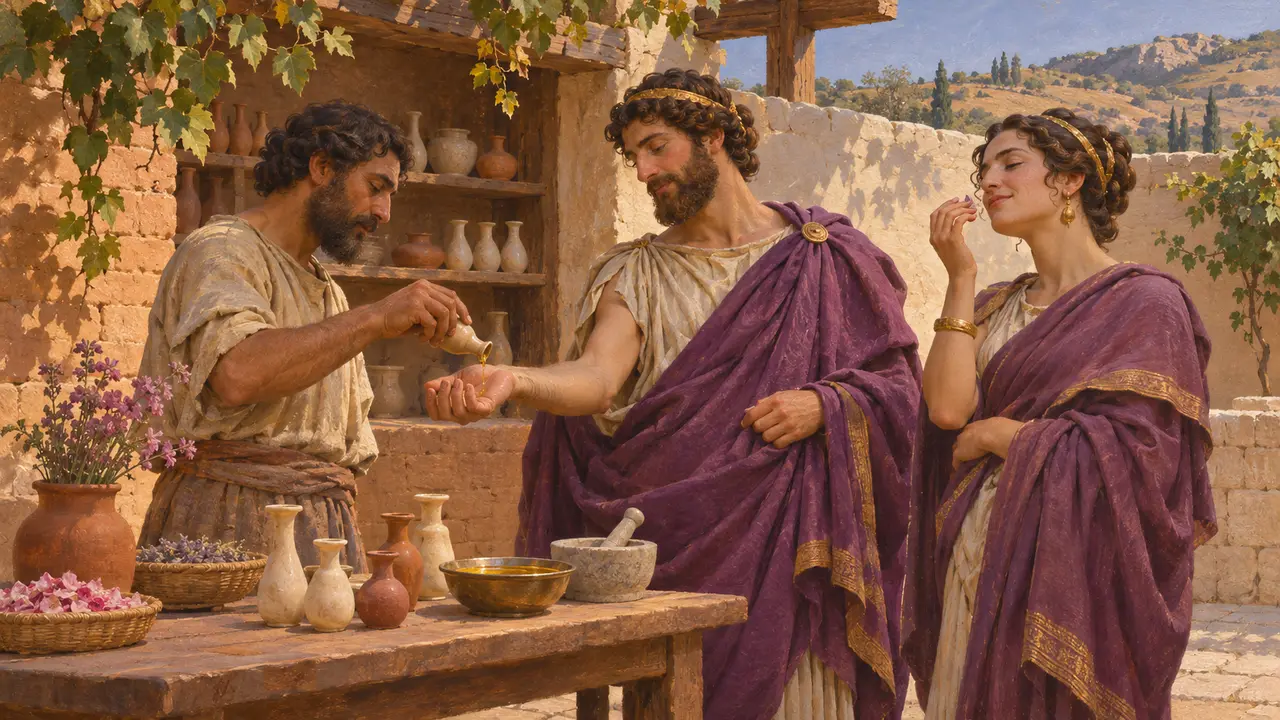
A Lydian luxury
Ancient accountThe poet Xenophanes of Colophon, writing in the 500s, complained that his fellow citizens had learned useless luxuries from the Lydians. He pictured them in purple cloaks, proud of their dressed hair and soaked in scented oil. Athenaeus, writing many centuries later, preserves these lines. He also discusses bakkaris, a word some Greeks linked with Lydian unguent, though others used it for a plant.
Xenophanes fr. 3, in Athenaeus, Deipnosophists 12.526a; Athenaeus, Deipnosophists 15
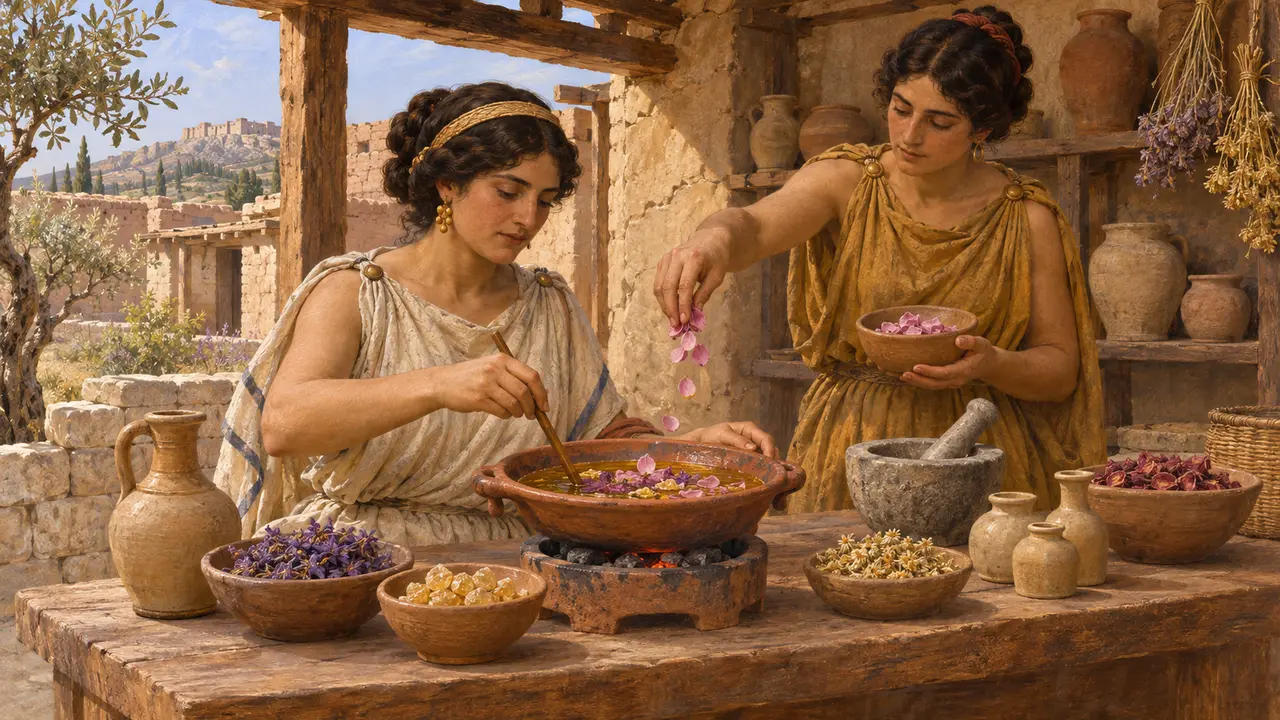
How unguents were made
Ancient accountTheophrastus, writing about 300, describes how Greek perfumers worked. They first treated an oil so that it would take up scent. Then they steeped aromatics such as flowers, spices and resins in it, sometimes with gentle heat. His account comes two centuries after the Persian period, but the basic craft was old and was probably similar in Lydia.
Theophrastus, On Odours
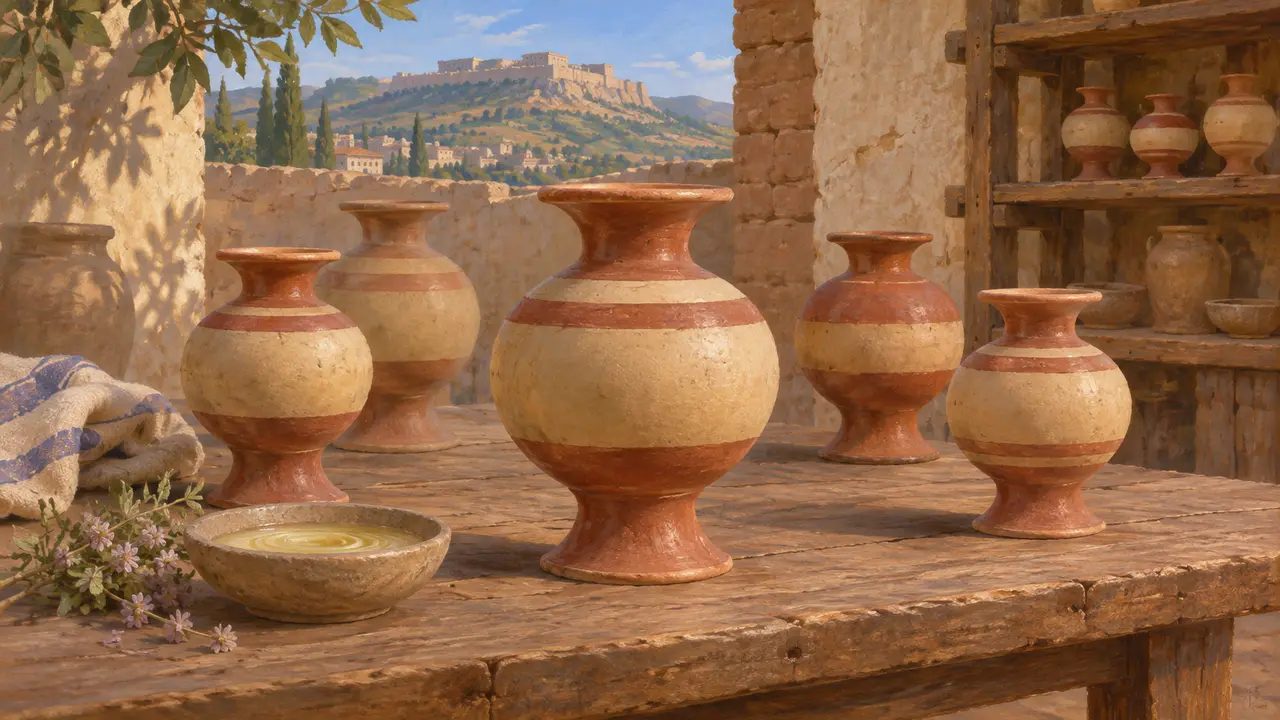
The lydion jar
DisputedExcavators at Sardis have found many lydia, small round jars with a flaring foot and lip, and the shape was traded and copied in Greek lands. Many scholars think these jars held unguent, perhaps bakkaris, because of their size and wide spread. Their contents have not been firmly established, so the link between the jar and the perfume trade remains a likely guess.
E. Dusinberre, Aspects of Empire in Achaemenid Sardis, 2003
Scented oil at the Persian court
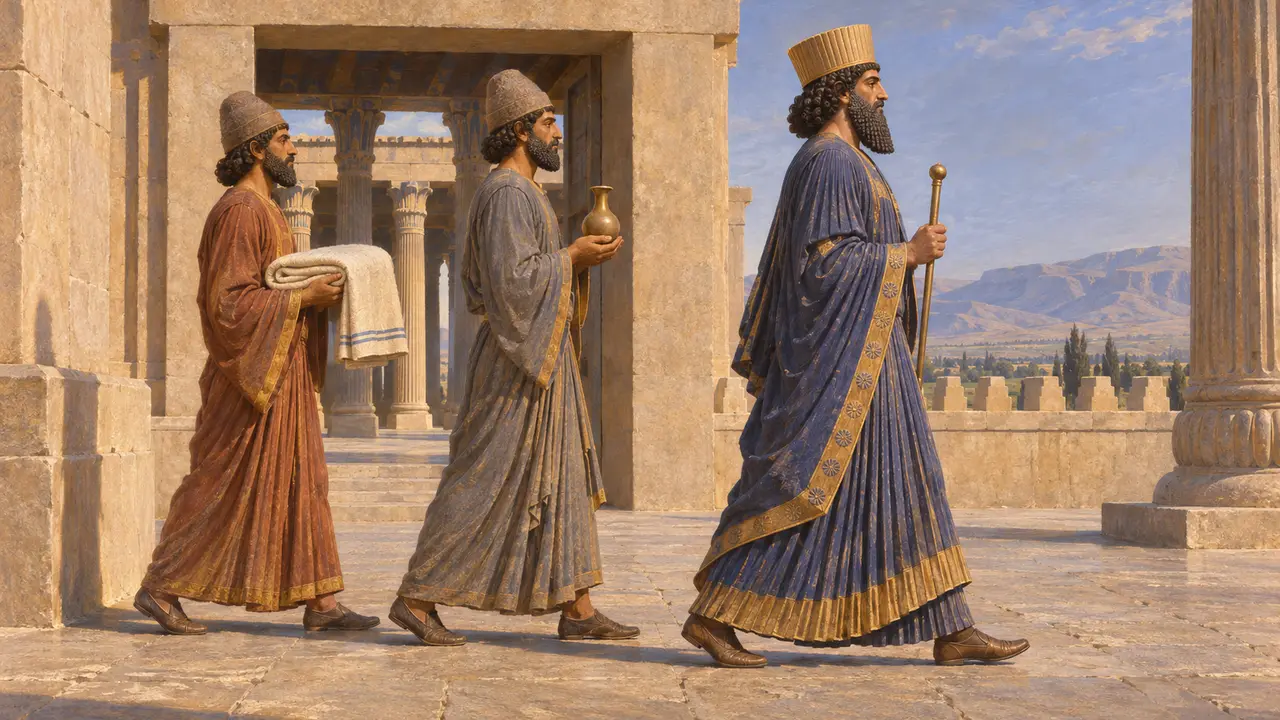
In the recordDoorway reliefs in the palace of Darius at Persepolis show the King followed by attendants carrying items for his person, among them a towel. A small vessel held by an attendant is often read as a flask of scented oil, though that reading is an interpretation. The reliefs say nothing about where such oils were made, and Sardis is only one of several possible sources.
Persepolis, palace of Darius, doorway reliefs; E. F. Schmidt, Persepolis I, 1953
Perfume as a royal gift
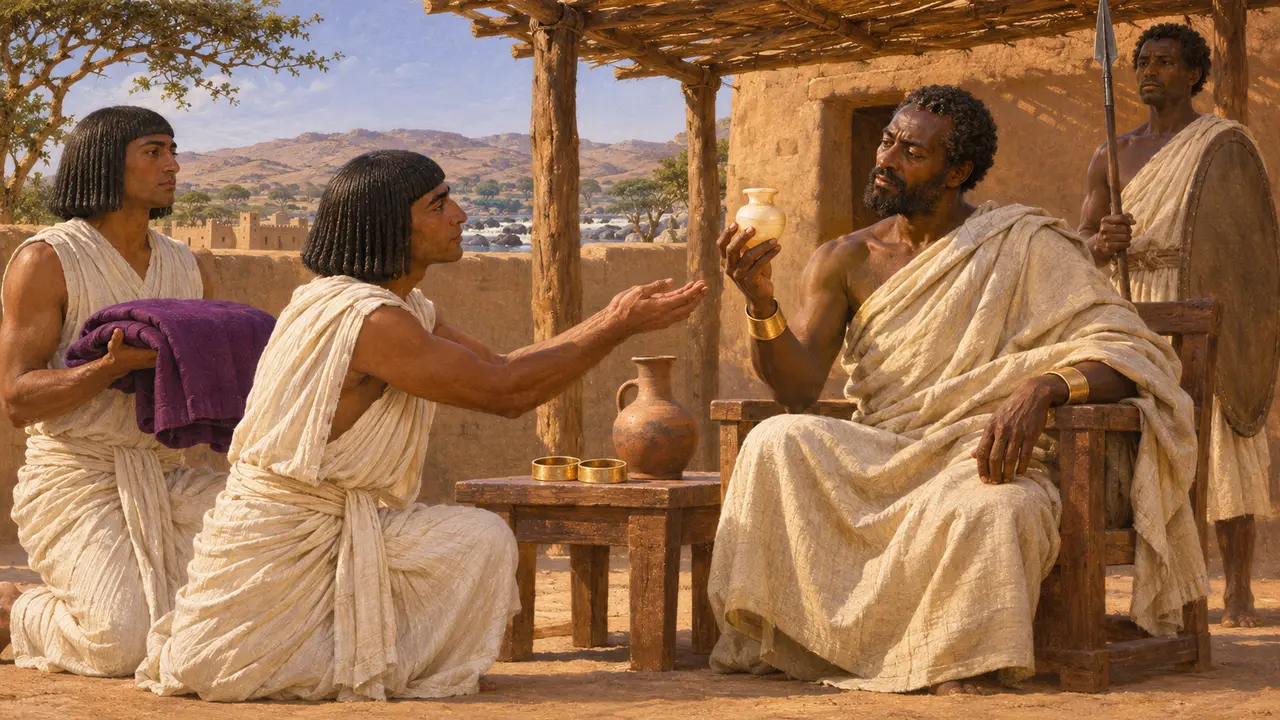
Ancient accountHerodotus says that Cambyses sent Fish-eaters from Elephantine as spies to the king of the Ethiopians. Their gifts included a purple garment, gold ornaments, palm wine and an alabaster jar of myrrh ointment. The story is told to make a point about Ethiopian simplicity, but it shows that Greeks expected Persian kings to give scented oils as marks of favour.
Herodotus 3.20
Sources
- Theophrastus, On Odours
- Xenophanes fr. 3, in Athenaeus, Deipnosophists 12.526a
- Athenaeus, Deipnosophists 15
- Herodotus 3.20
- E. Dusinberre, Aspects of Empire in Achaemenid Sardis, 2003
- E. F. Schmidt, Persepolis I, 1953