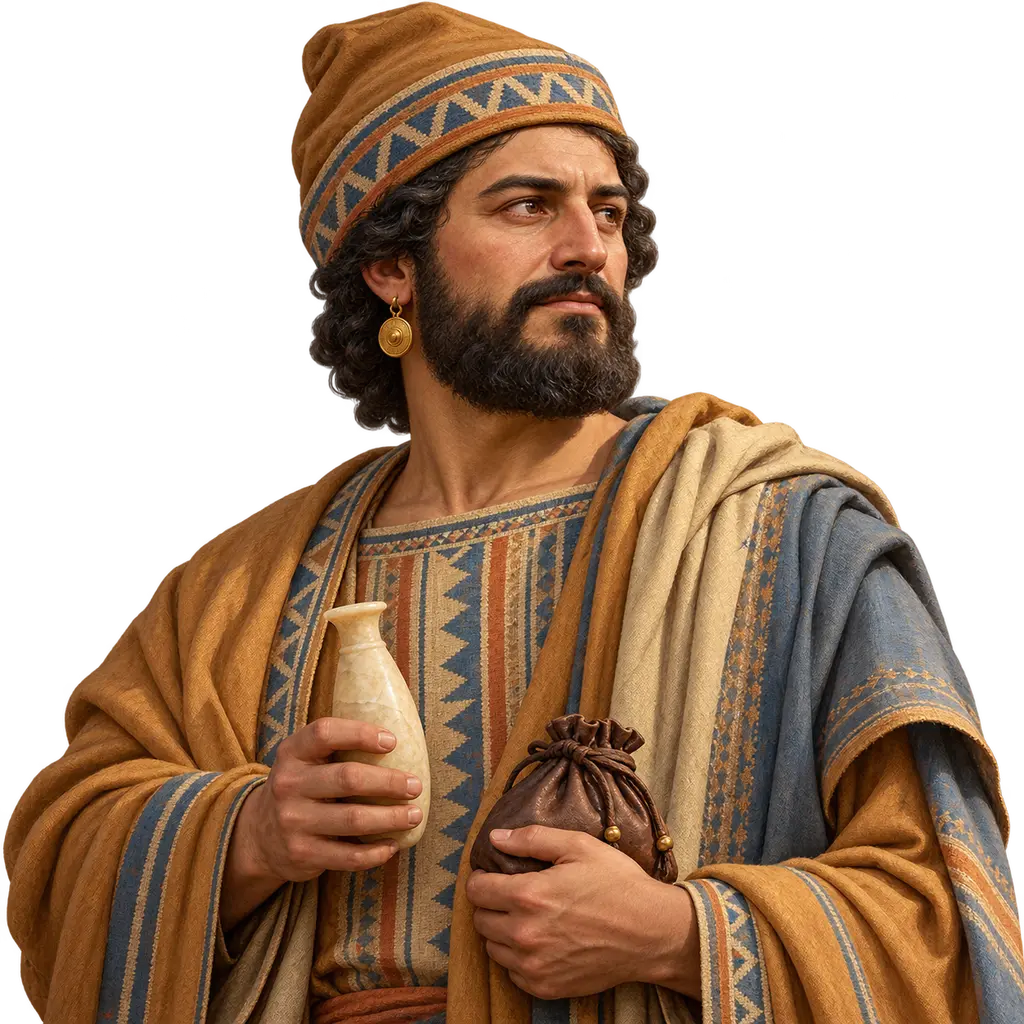
The Lydians
People of western Anatolia, ruled from Sardis; a Persian province from the 540s BCE
In the game: Level 1: The Founder's Tomb, Level 7: Sardis Burns
The Lydians lived in the river valleys of western Anatolia, with their capital at Sardis below a steep citadel. Under the Mermnad kings they ruled much of Anatolia west of the Halys and grew rich on gold from the Pactolus. After Cyrus took Sardis in the 540s, Lydia became the Persian province of Sparda, from which the King's governors watched the Greek cities of the Aegean coast.
In the game: The game treats Lydia as a trade partner sending gifts from Sardis and raises Lydian levies there. In fact by 498 Lydia was a tribute-paying province; Herodotus says Lydians and Persians defended Sardis together.
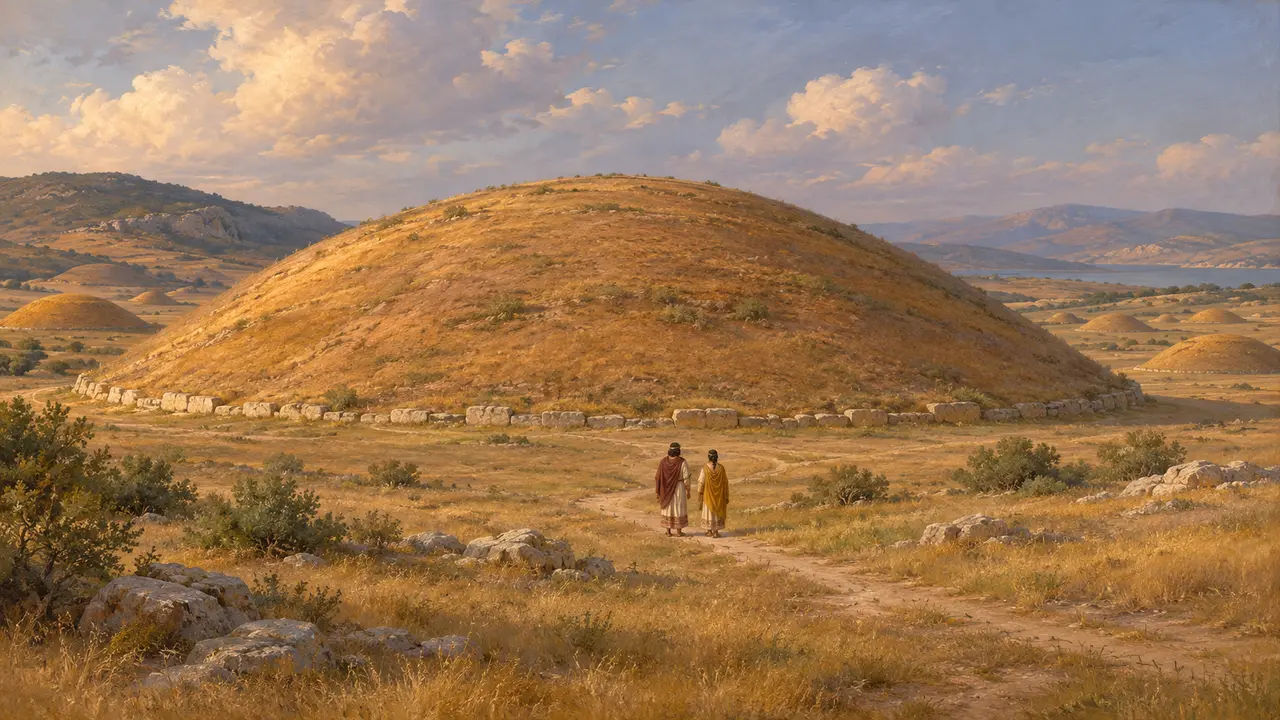
Kings of the Mermnad house
Ancient accountHerodotus traces the Mermnad dynasty from Gyges, who seized the throne, through Ardys, Sadyattes and Alyattes to Croesus. These kings attacked the Greek cities of the coast, and he says Croesus was the first to make them pay tribute. He also says an eclipse halted a battle between Alyattes and the Medes, and a peace then fixed the border at the Halys. The great burial mound of Alyattes, which Herodotus describes, still stands at Bin Tepe north of Sardis.
Herodotus 1.6-27, 1.74, 1.93
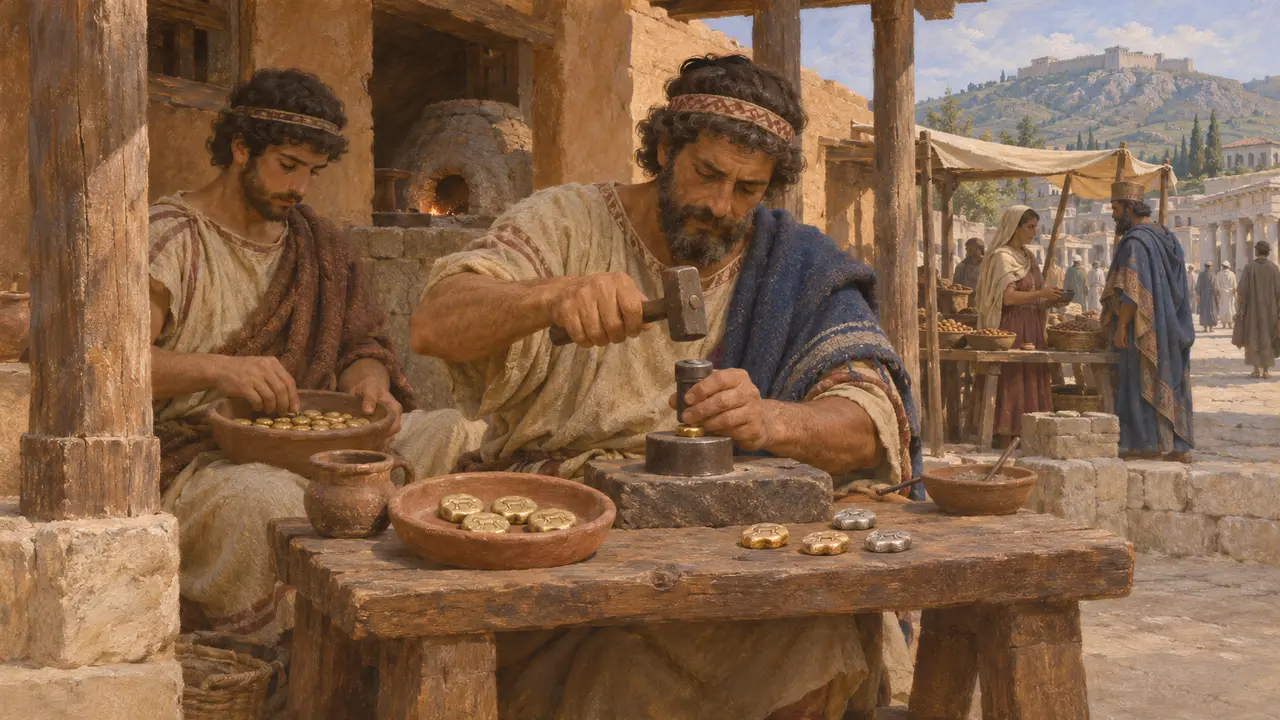
The first coins
DisputedHerodotus says the Lydians were the first people to strike coins of gold and silver and the first to keep retail shops. Excavated electrum coins, among the earliest from a deposit at the Artemision of Ephesus, point to a Lydian or East Greek origin around 600 or a little before. Historians still argue over the pure gold and silver coins called Croeseids. Some think Croesus himself struck them, and others think the Persians did so after the conquest.
Herodotus 1.94; A. Ramage and P. Craddock, King Croesus' Gold, 2000
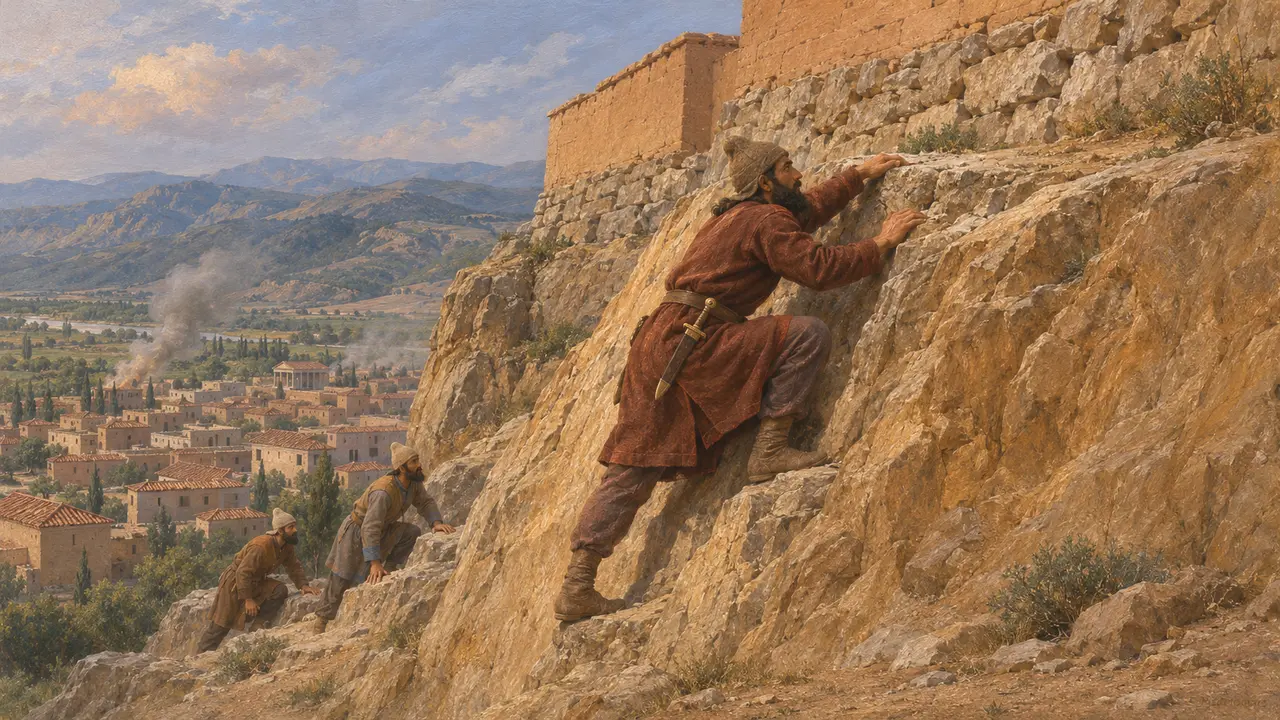
The fall of Sardis
DisputedHerodotus says Croesus crossed the Halys into Persian territory and then retreated to Sardis. He lost the city after a fourteen-day siege, when a Mardian soldier climbed an unguarded part of the citadel rock. Excavators have found a mid-500s destruction layer with weapons and the remains of men killed in the fighting. The date is uncertain. The Nabonidus Chronicle records a campaign of Cyrus in 547, but the country's name is damaged and many doubt it reads Lydia.
Herodotus 1.76-84; Nabonidus Chronicle; Sardis excavation reports
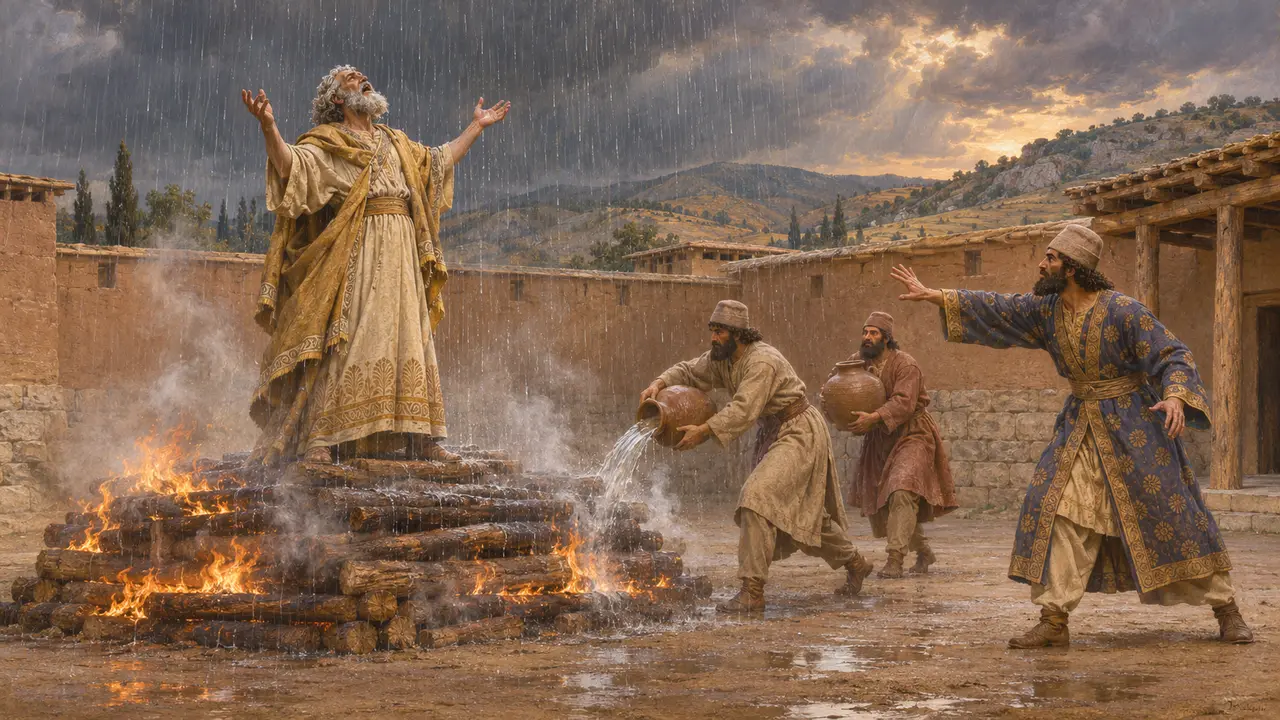
Croesus on the pyre
Later legendHerodotus tells that Cyrus set the captive Croesus on a pyre and that Croesus called out the name of Solon. When Cyrus relented and the flames could not be put out, Apollo sent rain. The poet Bacchylides, writing earlier, has Croesus mount the pyre by his own choice, and Apollo carries him away to the Hyperboreans. Both versions are shaped as lessons about the fall of the proud and cannot be taken as reports of what happened.
Herodotus 1.86-87; Bacchylides, Ode 3
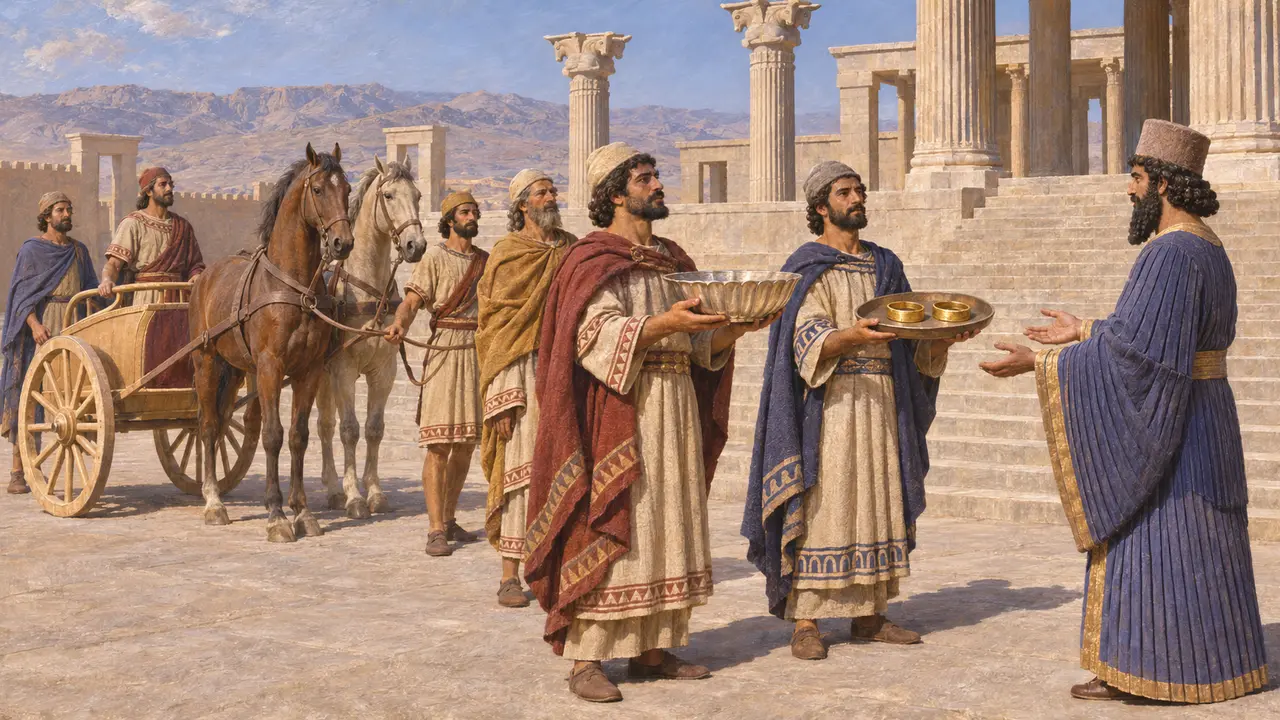
Sardians in the King's service
In the recordAt Behistun, Darius lists Sparda among the lands that came to him. His Susa foundation charter says gold was brought from Sardis and that Sardians worked stone and wood for the palace. On the Apadana stairways at Persepolis, a Lydian delegation brings vessels, armlets and a chariot. Lydian, an Anatolian language with its own alphabet, survives in inscriptions from Sardis, including a later bilingual in Lydian and Aramaic.
DB §6; DSf; Persepolis Apadana reliefs
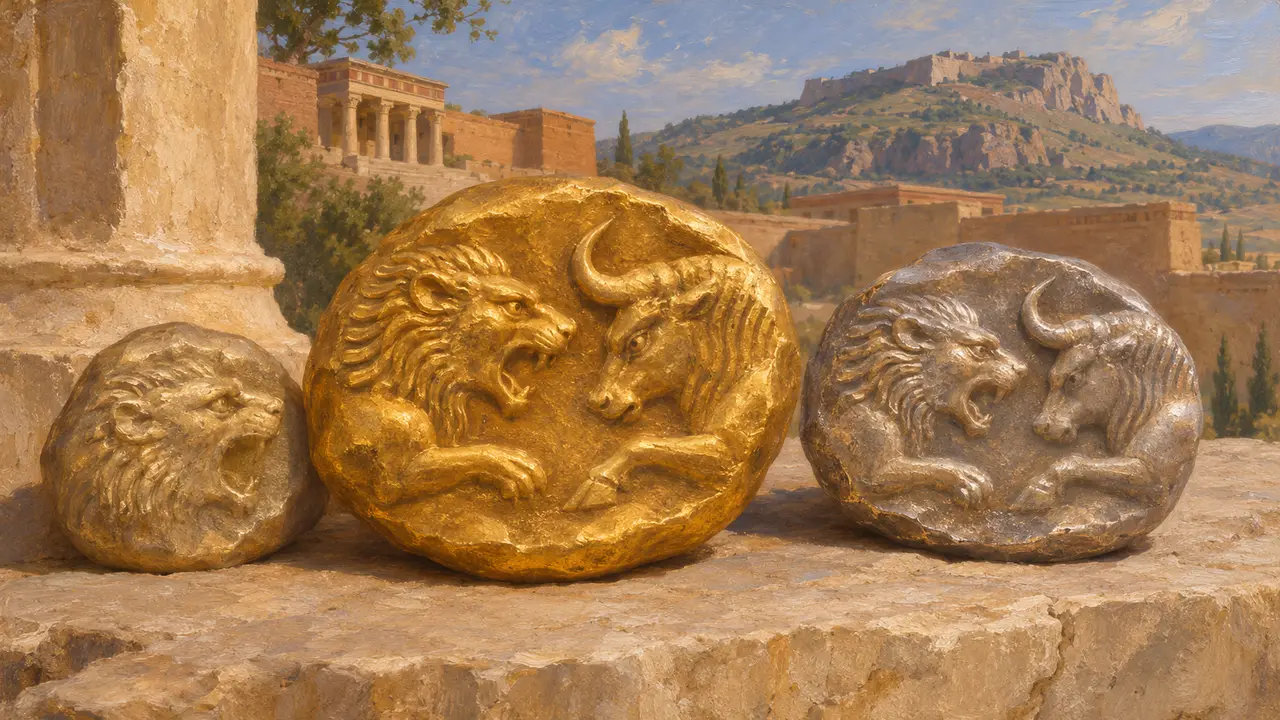
The emblem beside its name
In the recordLydia's emblem in the game follows Croesus's coins: the foreparts of a lion and a bull facing each other, struck in gold and silver about 560-546. Earlier Lydian electrum showed a roaring lion's head. Herodotus says the Lydians were the first to strike coins.
Herodotus 1.94; J. Kroll, in N. Cahill (ed.), Love for Lydia, 2008
Sources
- Herodotus, Histories, book 1
- Darius, Behistun inscription (DB)
- Darius, Susa foundation charter (DSf)
- P. Briant, From Cyrus to Alexander, 2002
- A. Ramage and P. Craddock, King Croesus' Gold, 2000
- Bacchylides, Ode 3