The Pactolus
Gold-bearing river of Sardis in Lydia, flowing down from Mount Tmolus
In the game: Level 7: Sardis Burns
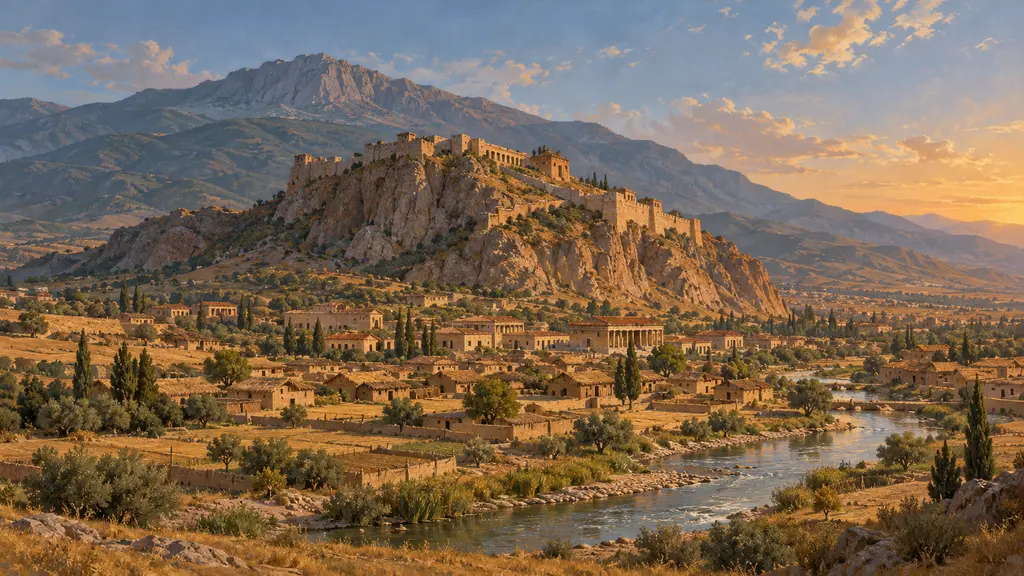
The Pactolus is a small river that runs north from Mount Tmolus through the site of Sardis and into the Hermus. In antiquity it carried flakes of electrum, a natural alloy of gold and silver, and the Lydian kings refined this metal beside its banks. Its gold became a byword for the wealth of Croesus, and under Persian rule Sardis remained the main seat of royal power in western Anatolia.
In the game: In the Sardis level (498) the Pactolus is the gold-bearing river beside which the Pactolus Gold Refinery stands. The excavated refinery dates from the Lydian kings, and there is no clear evidence it still worked under the Persians, so the game extends it.
A river from Mount Tmolus
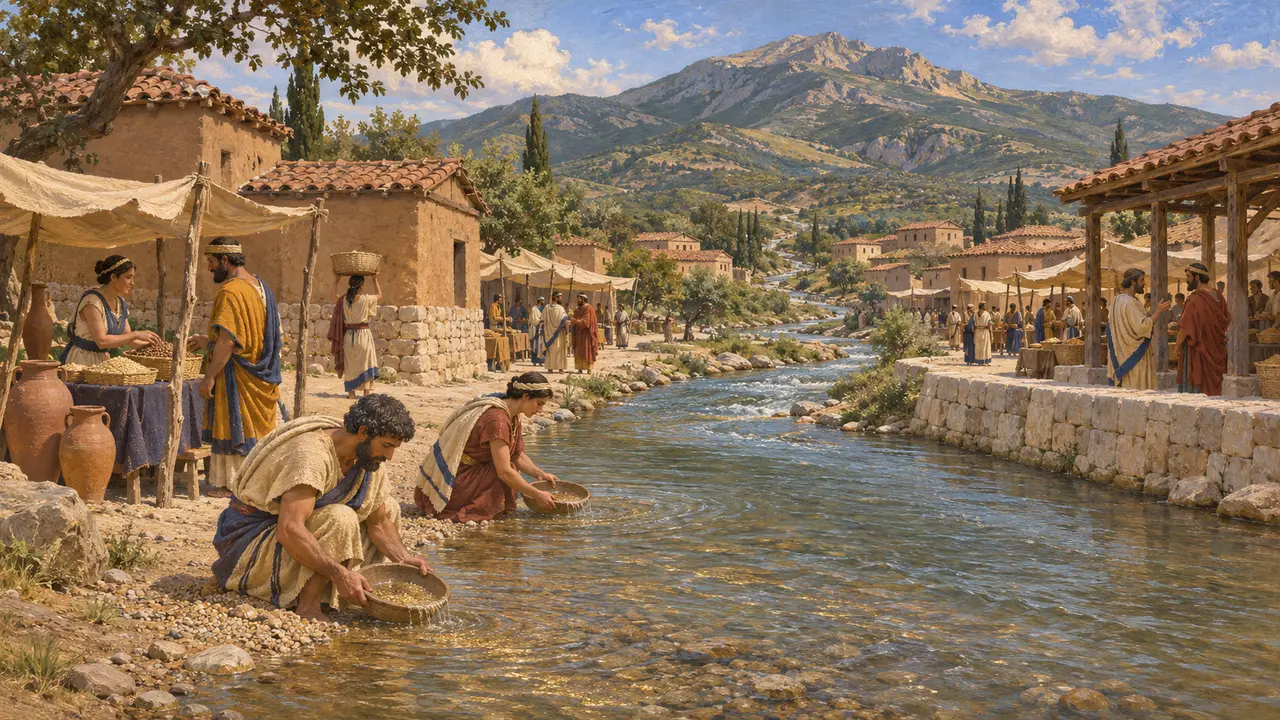
Ancient accountHerodotus says that Lydia had few marvels worth recording except the gold dust washed down from Tmolus. He describes the Pactolus carrying this gold through the middle of the agora of Sardis before joining the Hermus, which flows on to the sea. Strabo, writing centuries later, says the river had once supplied the wealth of Croesus but that its gold had run out by his own day.
Herodotus 1.93; Herodotus 5.101; Strabo 13.4
The refinery on the riverbank
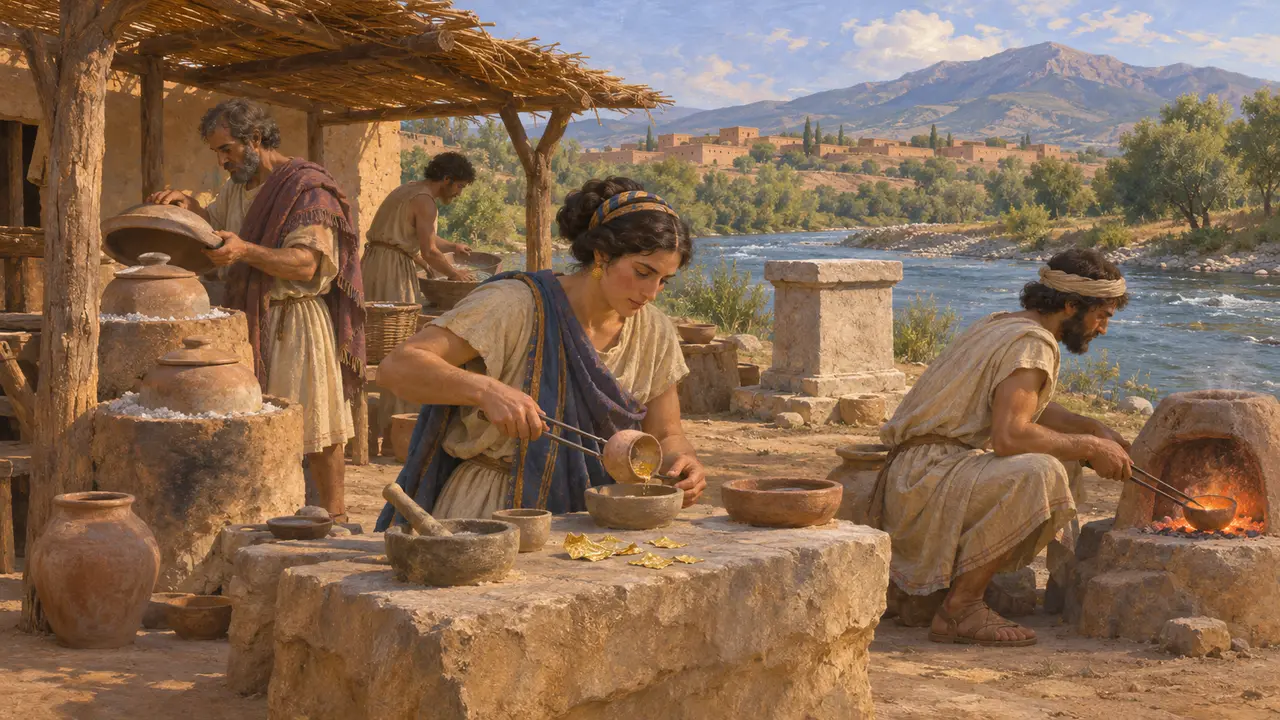
In the recordExcavators at Sardis found a gold refinery on the east bank of the river, in the area called Pactolus North, dated to the 500s before the Persian conquest. Workers removed lead and base metals by cupellation, then heated the gold with salt to draw off the silver, a process called cementation. Crucibles, furnaces and scraps of gold foil survive, along with an altar nearby. It is the earliest well-documented gold-parting workshop known.
A. Ramage and P. Craddock, King Croesus' Gold, 2000
The agora by the river in 498
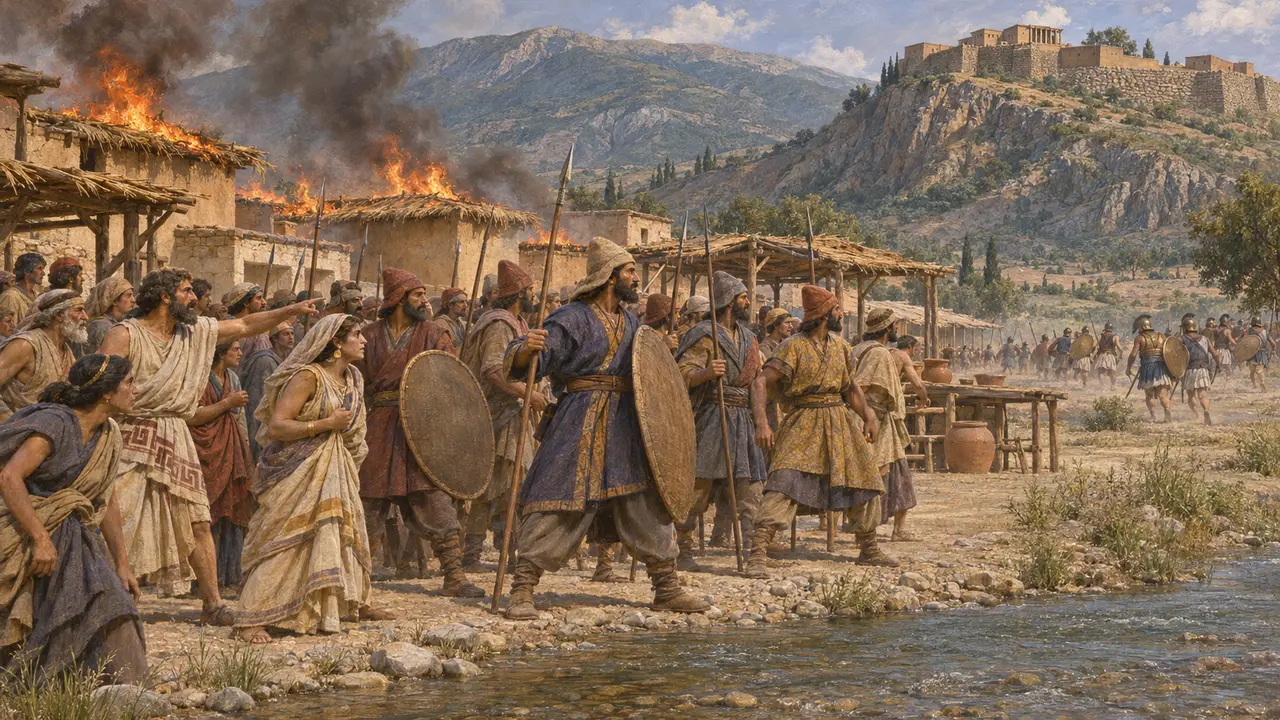
Ancient accountHerodotus tells how Ionian rebels, with Athenian and Eretrian allies, marched on Sardis in 498. A soldier set fire to a house, and because most houses were built of reeds or roofed with them, the blaze spread through the lower city. The Lydians and Persians trapped by the fire gathered in the agora beside the Pactolus to defend themselves, and the attackers withdrew to the coast. The satrap Artaphernes held the citadel throughout.
Herodotus 5.100-102
Electrum, Croesus and the first coins
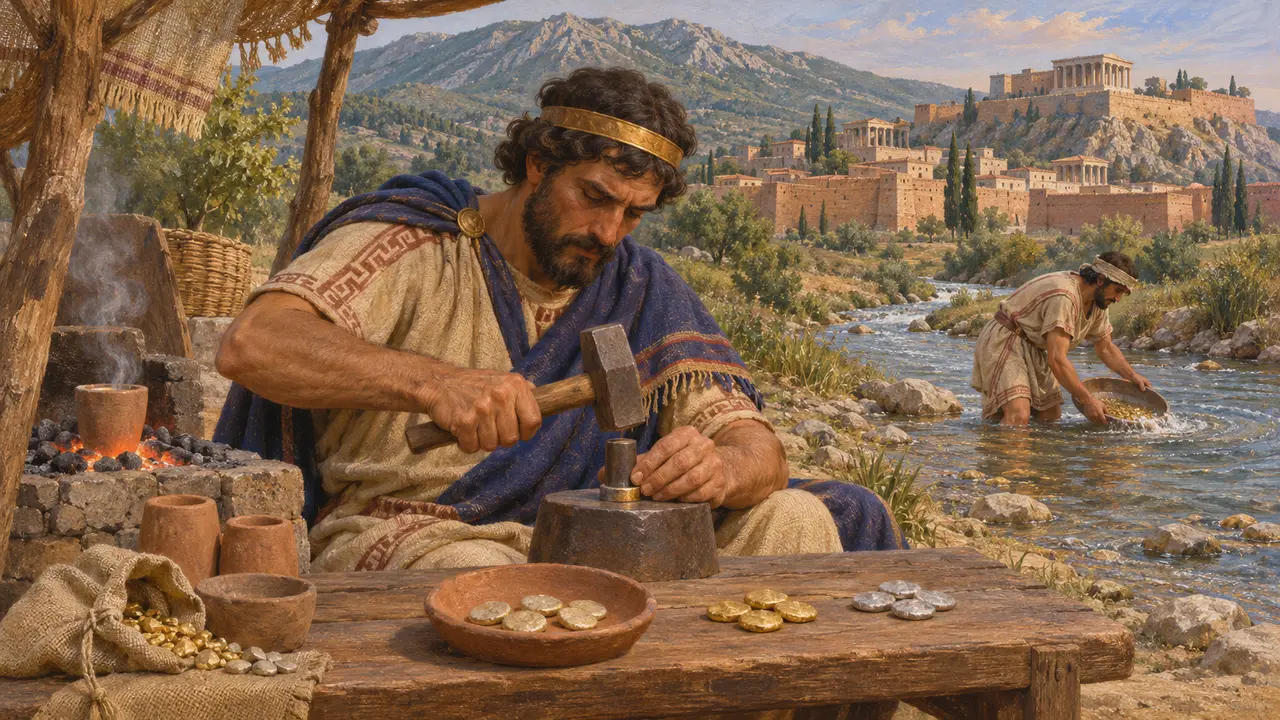
DisputedLydia struck some of the earliest coins in electrum, probably in the late 600s, and probably from river metal. Herodotus says the Lydians were the first to strike coins of gold and silver, and modern scholars call these pure-metal coins Croeseids. Some historians argued that the Persians first struck them after taking Sardis in about 547. Coins found in the destruction level of that sack led Cahill and Kroll to argue that they began under Croesus, but the debate continues.
Herodotus 1.94; N. Cahill and J. H. Kroll, New Archaic Coin Finds at Sardis, 2005
Midas washes away his gift
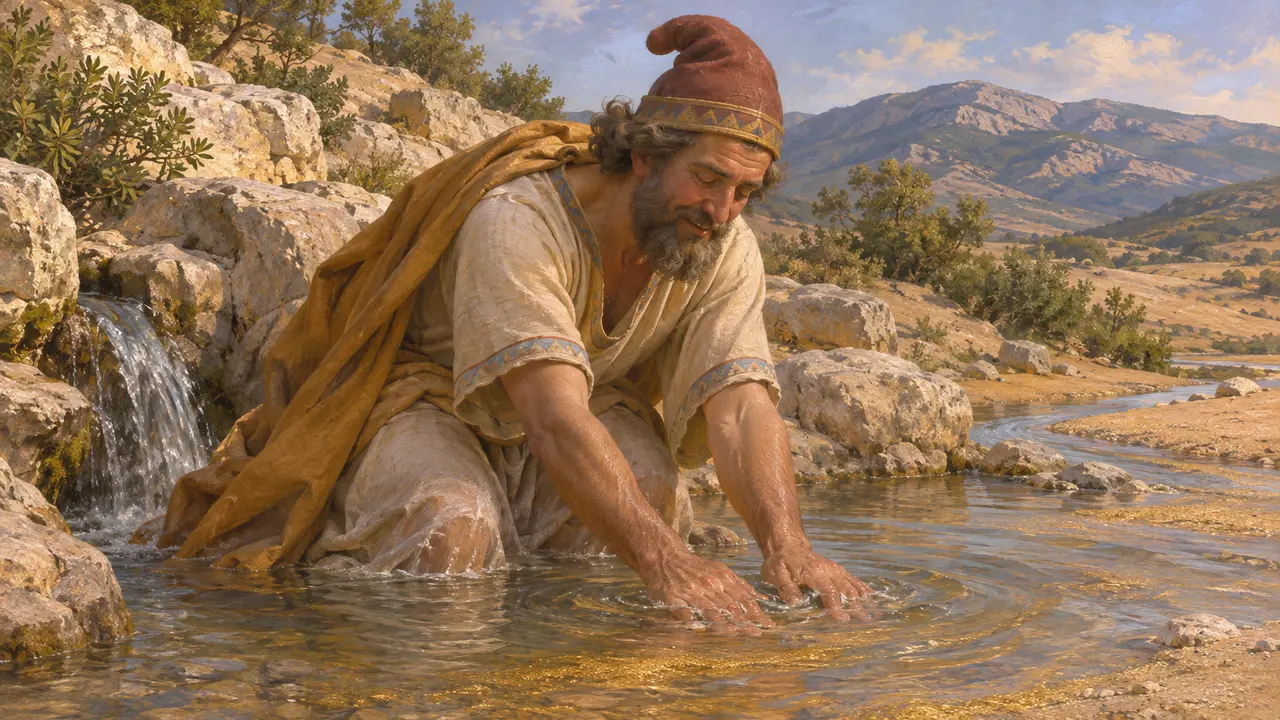
Later legendLater Greek and Roman writers explained the river's gold with the story of Midas, the Phrygian king whose touch turned everything to gold. Ovid tells that the god Bacchus sent him to bathe at the source of the Pactolus, and that the curse passed into the water and its sands. The tale was written down more than five centuries after Croesus and is myth, not history.
Ovid, Metamorphoses 11
Sources
- Herodotus, Histories 1.93-94, 5.100-102
- A. Ramage and P. Craddock, King Croesus' Gold: Excavations at Sardis and the History of Gold Refining, 2000
- N. Cahill and J. H. Kroll, New Archaic Coin Finds at Sardis, 2005
- Strabo, Geography 13.4
- P. Briant, From Cyrus to Alexander, 2002
- Ovid, Metamorphoses 11