Croesus
Last Mermnad king of Lydia, ruling from Sardis about 560-547 BCE
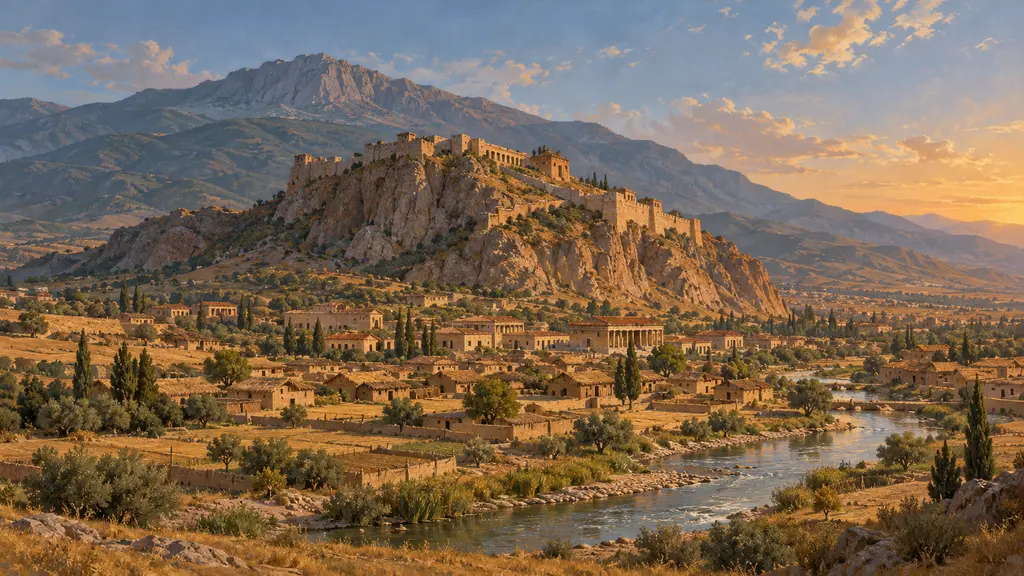
Croesus was the last king of Lydia, whose wealth from the gold of the Pactolus became proverbial among the Greeks. He ruled the Greek cities of western Asia Minor until Cyrus defeated him and took Sardis, probably in the 540s. The fall of Lydia gave Persia its first foothold on the Aegean and brought the Ionian Greeks under the King.
In the game: The game's chronicle note presents Croesus as Herodotus does, as Cyrus's counsellor sent home with Cambyses. That survival is Herodotus's story; no Persian or Babylonian text names him.
King of Lydia and master of Ionia
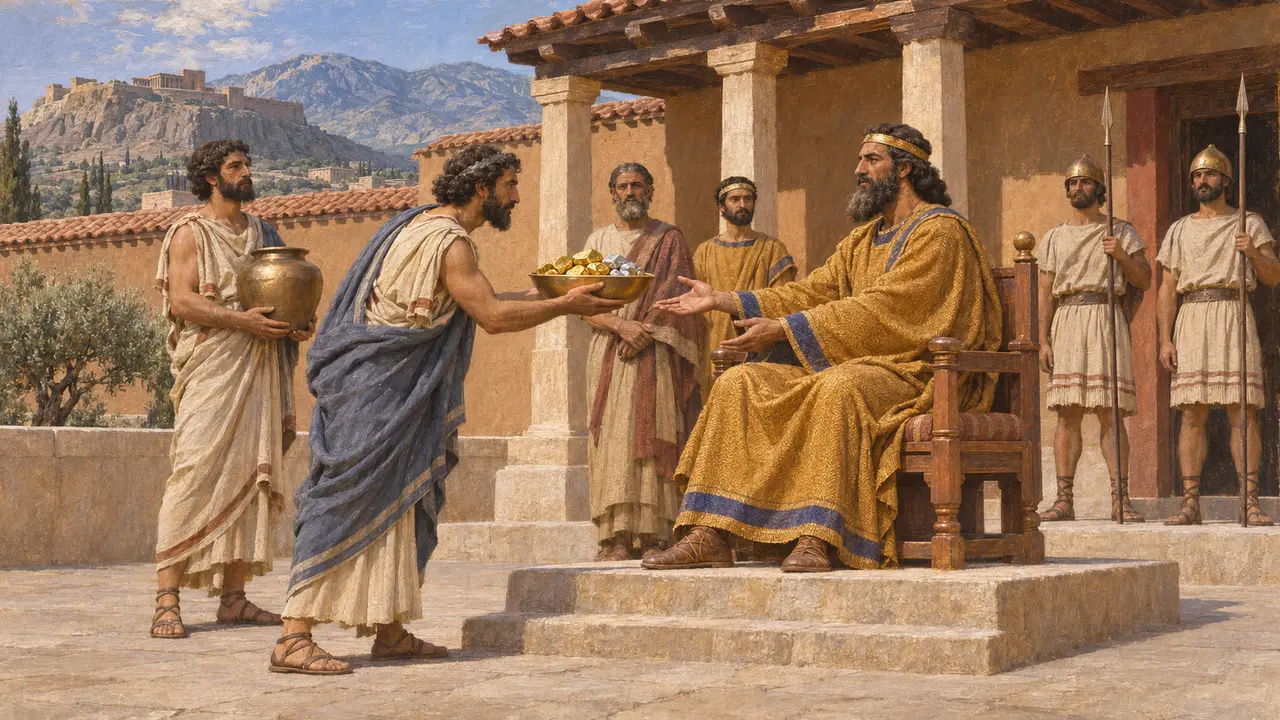
Ancient accountHerodotus says Croesus, son of Alyattes, was the first foreign ruler to make the Greeks of Asia pay tribute, attacking Ephesus first and then the other Ionian and Aeolian cities. He made alliances with Sparta, with Amasis of Egypt and with Babylon. After Cyrus overthrew Astyages, Croesus crossed the Halys and fought an indecisive battle at Pteria. When he went home, Cyrus followed and took Sardis on the fourteenth day of the siege.
Herodotus 1.6, 1.26-28, 1.69, 1.76-84
His name at Ephesus
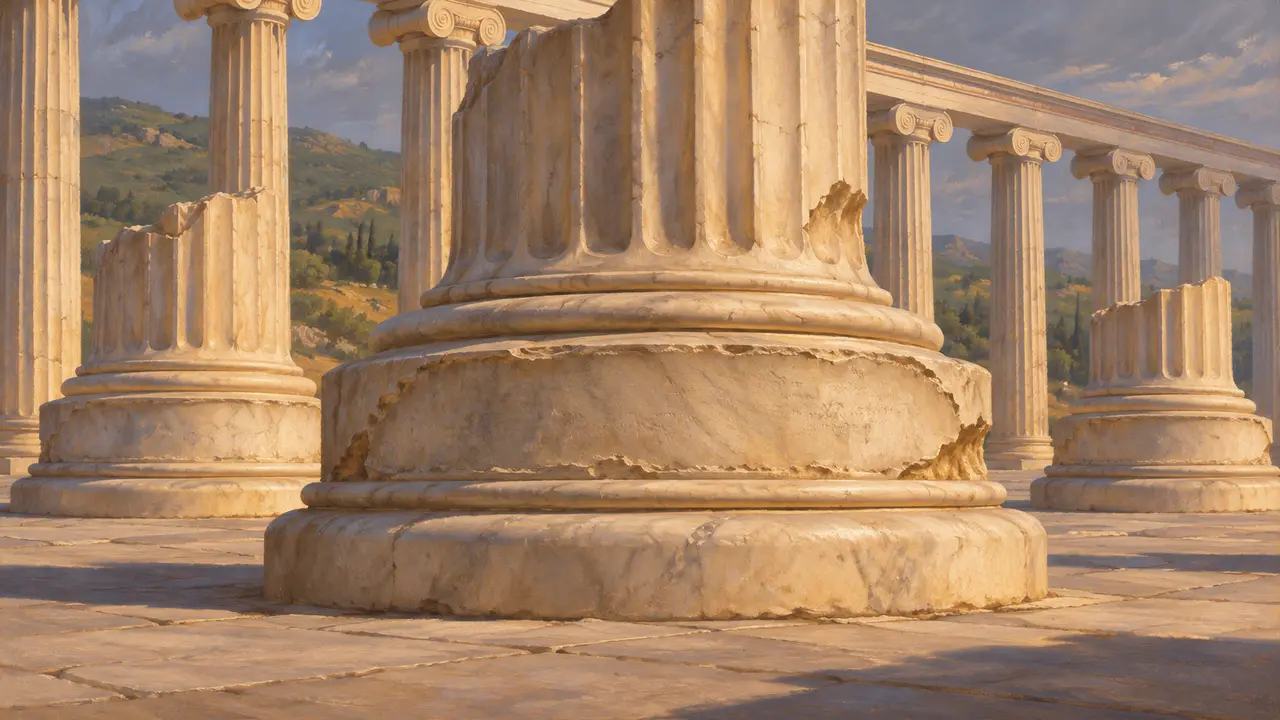
In the recordFragments of marble column bases from the archaic temple of Artemis at Ephesus carry a short, partly restored inscription naming King Croesus as dedicator. They are now in the British Museum. They support Herodotus, who says Croesus gave most of that temple's columns. His rich gifts to Delphi are known mainly from Herodotus, who says some were damaged when the temple there burned.
Ephesus column-base inscriptions, British Museum; Herodotus 1.50-51, 1.92
When Sardis fell and what became of him
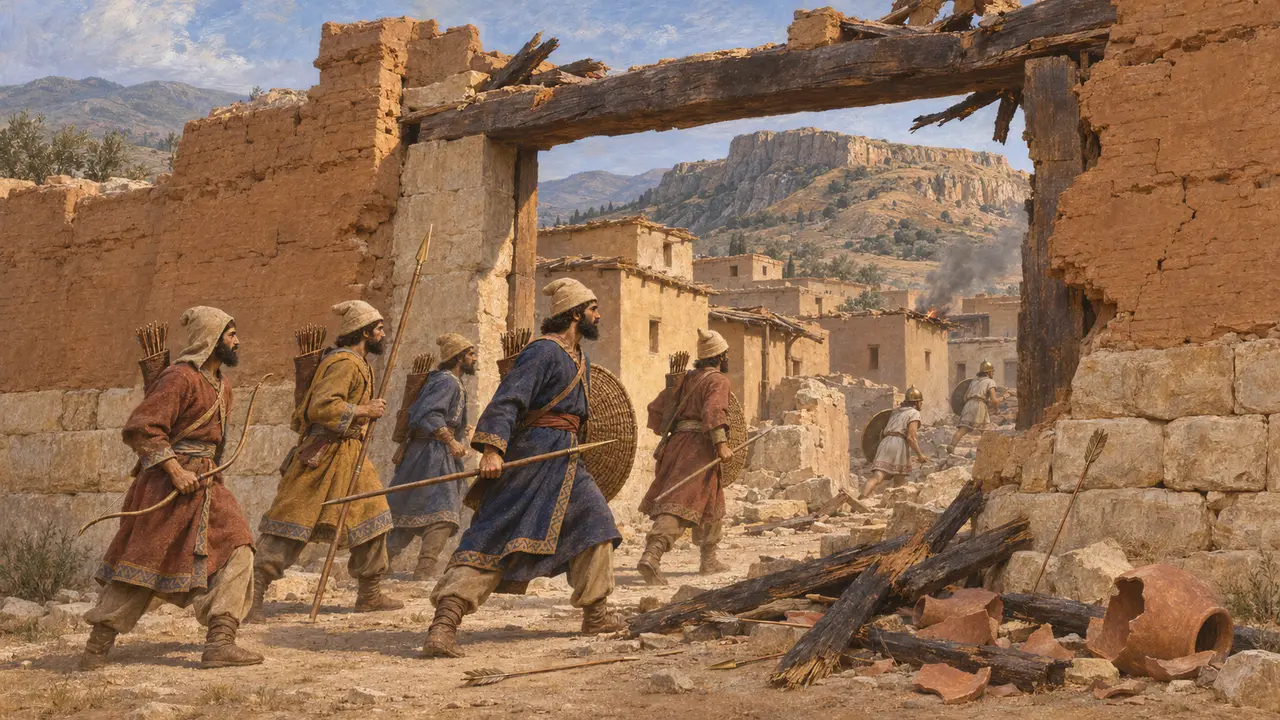
DisputedThe usual date of 547 or 546 rests on Greek chronology and on the Nabonidus Chronicle, which says Cyrus marched against a king in Nabonidus's ninth year. The name of that country is broken, and many scholars now doubt that it reads Lydia. Excavations at Sardis found a violent destruction of the mid-sixth century with many arrowheads, which fits a Persian siege. Historians also disagree over whether Croesus really survived the city's fall.
Nabonidus Chronicle (ABC 7); Sardis excavation reports
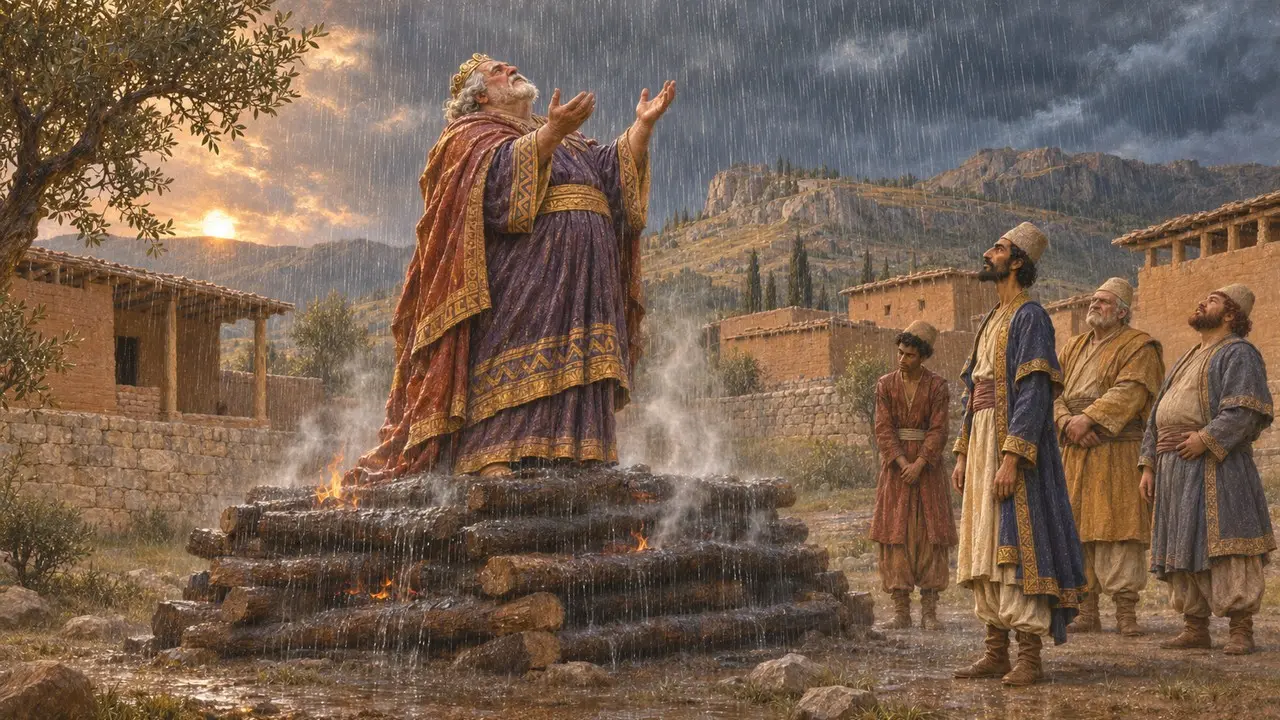
The pyre, Solon and Apollo
Later legendHerodotus tells that Cyrus placed Croesus on a pyre. Croesus called on Solon, who had warned him that no man should be called happy before his end, and Apollo sent rain to put out the fire. The dates make a meeting with Solon very unlikely. In the poet Bacchylides, writing in 468, Croesus climbs the pyre by choice and Apollo carries him to the Hyperboreans.
Herodotus 1.29-33, 1.86-87; Bacchylides, Ode 3
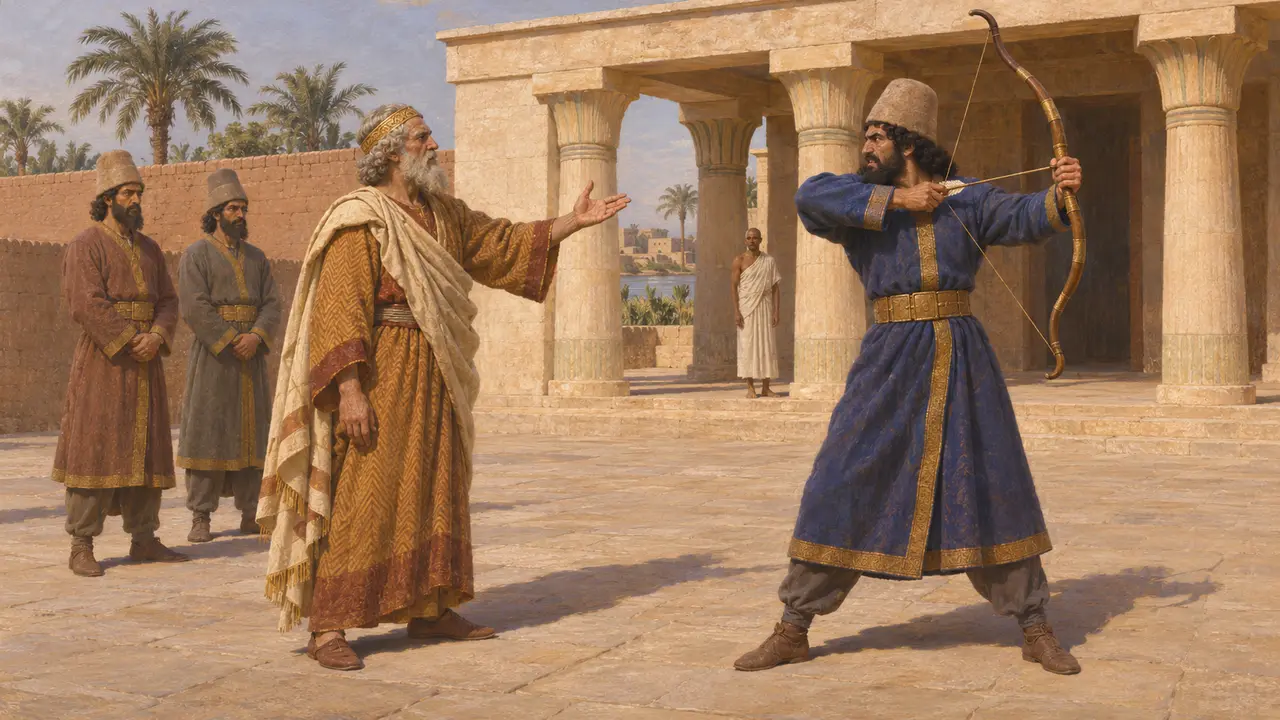
Counsellor to Cyrus and Cambyses
Ancient accountIn Herodotus, Croesus advised Cyrus to turn the rebellious Lydians from arms to trade and music rather than enslave them. He also urged Cyrus to cross the Araxes against the Massagetae, a campaign that ended in Cyrus's death. Cyrus sent him back to Persia in Cambyses' keeping. Herodotus later places him in Egypt rebuking Cambyses, who tried to shoot him. Nothing is recorded of his death.
Herodotus 1.155-156, 1.207-208, 3.14, 3.34-36
Sources
- Herodotus, Histories 1.6-94, 1.153-156, 1.207-208, 3.14, 3.34-36
- Nabonidus Chronicle (ABC 7)
- Bacchylides, Ode 3
- P. Briant, From Cyrus to Alexander, 2002
- A. Kuhrt, The Persian Empire: A Corpus of Sources from the Achaemenid Period, 2007
- Archaeological Exploration of Sardis, excavation reports