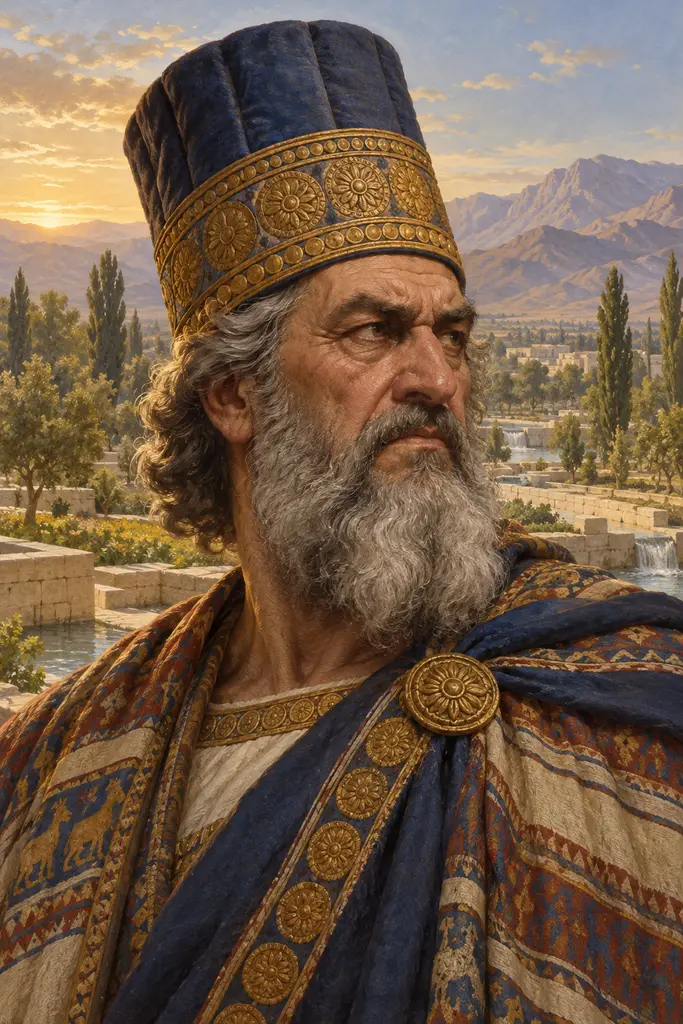
Astyages
Last king of the Medes, ruled from Ecbatana until about 550 BCE
In the game: Level 1: The Founder's Tomb
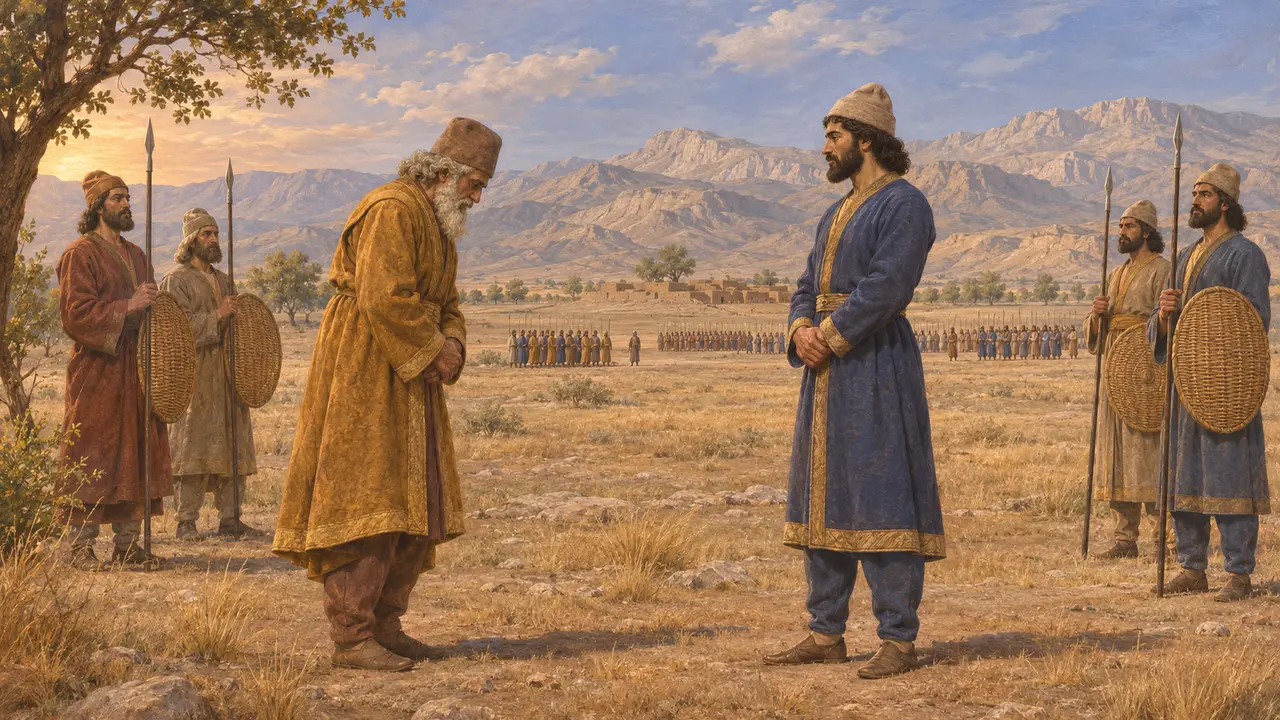
Astyages was the last king of the Medes, ruling from Ecbatana until Cyrus, king of Anshan in Persis, overthrew him in about 550. A Babylonian chronicle records that his own army turned on him and handed him to Cyrus, a fall that made the Persians masters of the Median lands and opened the way to Lydia and Babylon. Herodotus calls Astyages Cyrus's grandfather, but Ctesias denied it.
In the game: The game mentions Astyages only in its chronicle, as the Median king whose general Harpagus went over to Cyrus. It calls him Cyrus's grandfather on Herodotus's word alone, a tie Ctesias denied.
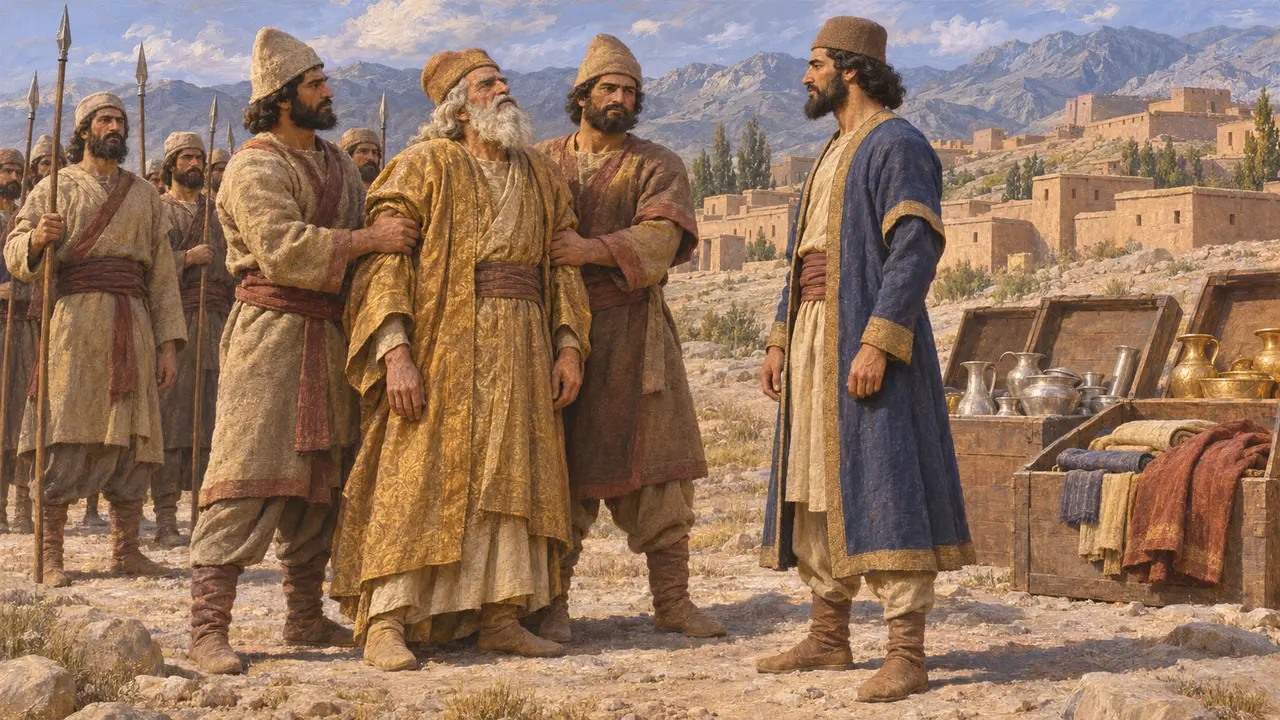
The Babylonian record of his fall
In the recordThe Nabonidus Chronicle, under Nabonidus's sixth year (550-549), names him Ishtumegu. It says he marched against Cyrus, king of Anshan, but his army rebelled, seized him and handed him over. Cyrus then took silver, gold and goods from Ecbatana back to Anshan. Nabonidus's Sippar Cylinder, a building text, also tells of Cyrus scattering the Median host and capturing its king.
Nabonidus Chronicle (ABC 7), col. ii; Sippar Cylinder of Nabonidus; A. K. Grayson, Assyrian and Babylonian Chronicles, 1975
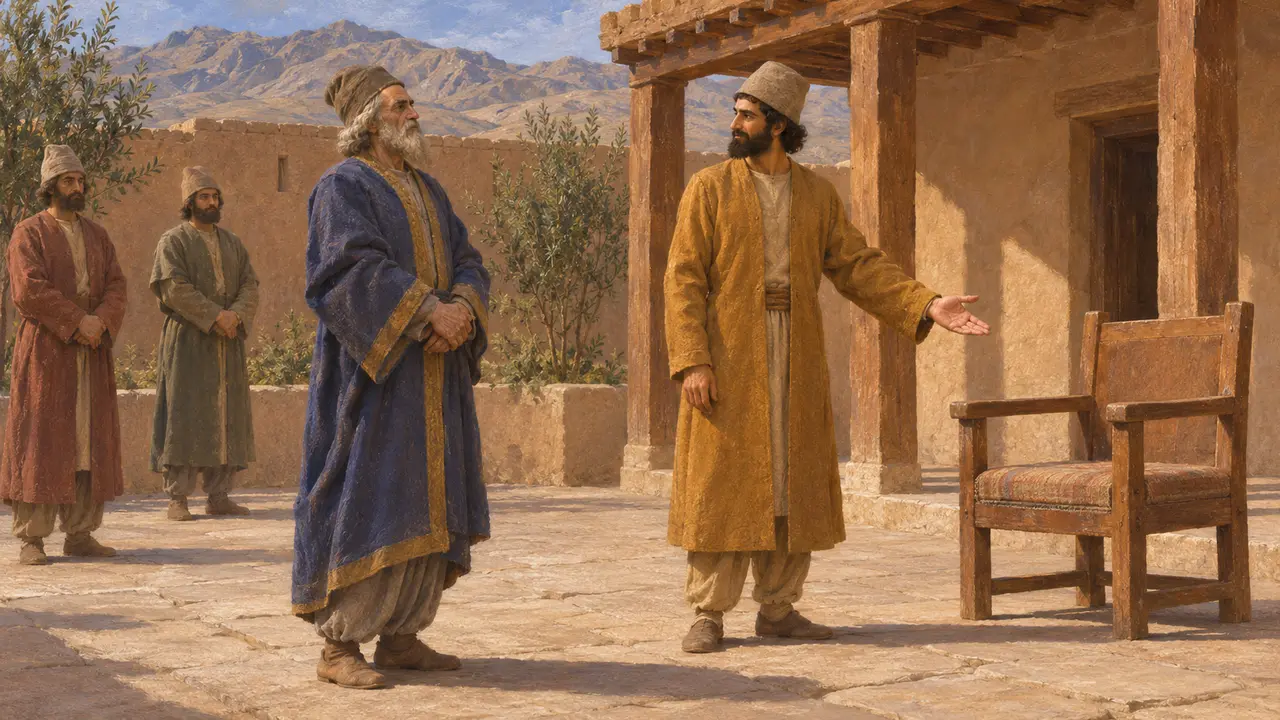
Herodotus on his reign and defeat
Ancient accountHerodotus makes Astyages the son of Cyaxares and says he ruled the Medes for 35 years. He says the Median noble Harpagus, bitter over an old wrong, plotted with Median nobles and urged Cyrus to lead the Persians in revolt. When Astyages sent Harpagus against the Persians, much of the Median army deserted or fled. Herodotus adds that Cyrus kept the old king at his court without harming him until he died.
Herodotus 1.73-74, 1.123-130

The dream and the exposed child
Later legendHerodotus tells that Astyages dreamed the child of his daughter Mandane would reign in his place, so he ordered the newborn Cyrus killed. Harpagus passed the baby to a herdsman, whose wife raised him as her own. When the boy was found out at ten years old, Astyages punished Harpagus by serving him his own son at a feast. The tale follows the old pattern of the hero exposed at birth, and historians do not treat it as history.
Herodotus 1.107-122
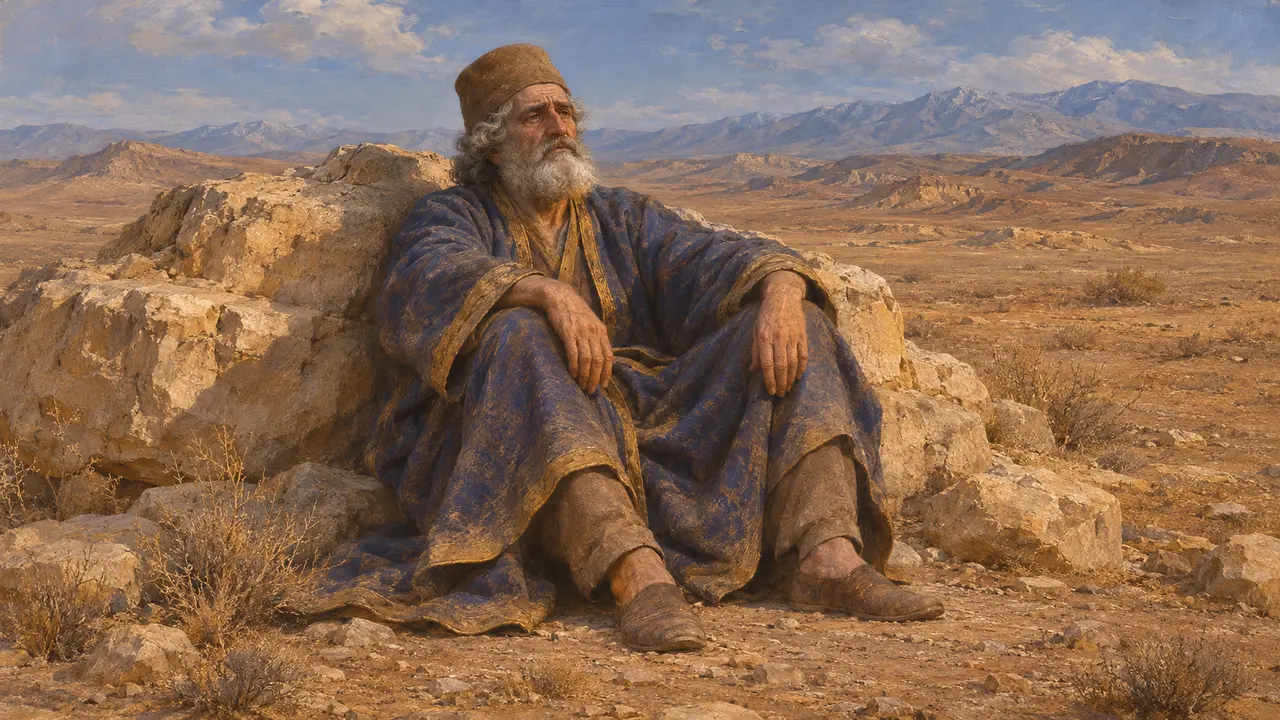
Grandfather or enemy
DisputedHerodotus and Xenophon make Cyrus the son of Astyages' daughter Mandane. Ctesias, a Greek physician at the Persian court around 400, denied any blood tie and said Cyrus married Astyages' daughter Amytis after the war. He adds that Astyages was later left to die in desert country. The Cyrus Cylinder names only Cyrus's forebears as kings of Anshan, and a Median link may have been claimed later to make him look a rightful heir.
Herodotus 1.107-108; Xenophon, Cyropaedia 1.2; Ctesias, Persica (epitome of Photius); Cyrus Cylinder
The extent of his kingdom
DisputedGreek writers describe a great Median empire that the Persians simply took over. Historians still argue over how far Median royal power reached and how organised it was. No Median royal inscriptions or archives have been found, so Assyrian and Babylonian texts and Herodotus are almost all there is. Strabo, writing centuries later, says Cyrus honoured Pasargadae because he defeated Astyages there in the final battle.
H. Sancisi-Weerdenburg, Was there ever a Median empire?, 1988; Strabo 15.3.8
Sources
- Herodotus 1.73-74, 1.107-130
- Nabonidus Chronicle (ABC 7) and Sippar Cylinder of Nabonidus; A. K. Grayson, Assyrian and Babylonian Chronicles, 1975
- Ctesias, Persica (epitome of Photius)
- Xenophon, Cyropaedia 1.2
- P. Briant, From Cyrus to Alexander, 2002
- H. Sancisi-Weerdenburg, Was there ever a Median empire?, 1988