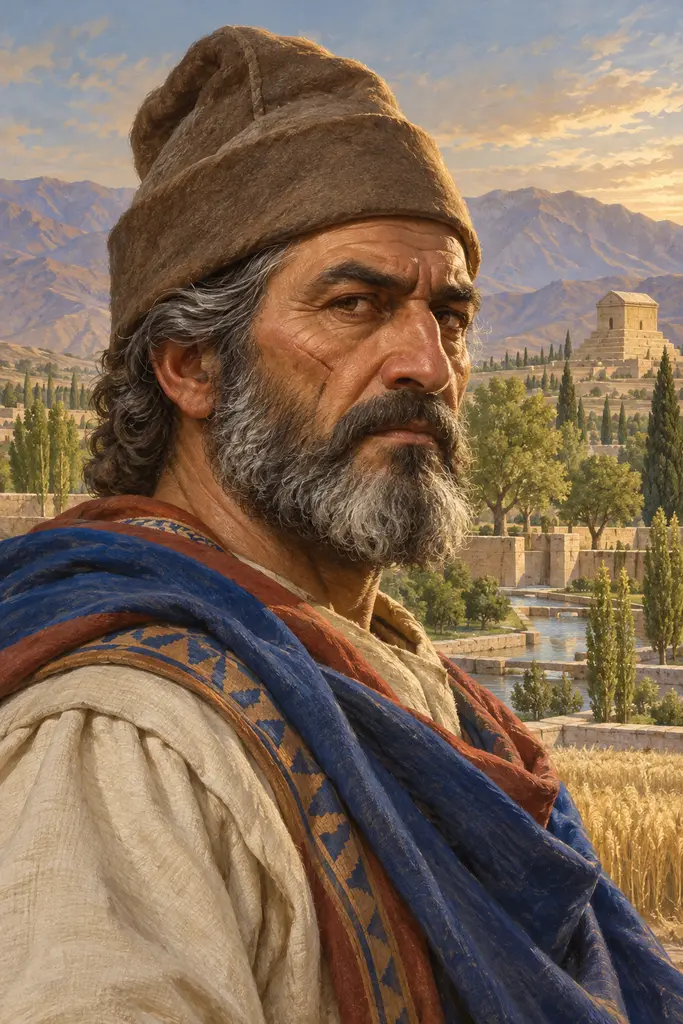
Harpagus
Median noble who served Cyrus and conquered western Anatolia, about 550-540 BCE
Harpagus was a Median nobleman who, Herodotus says, helped Cyrus overthrow the Median king Astyages and then served the new Persian king as a general. In the 540s BCE he brought the Greek cities of Ionia, and then Caria and Lycia, under Persian rule. Almost everything known about him comes from Herodotus, who tells his story as a tale of betrayal and revenge.
In the game: The game's chronicle note presents Harpagus as Herodotus does: the Mede who betrayed Astyages and took the Ionian cities with earth mounds. Only Herodotus names him; no Persian or Babylonian record does.

The child who was not killed
Later legendHerodotus says Astyages, warned by dreams, ordered Harpagus, a trusted man of his own household, to kill the newborn Cyrus. Harpagus passed the baby to a herdsman, who raised him instead. When the boy was found alive years later, Astyages punished Harpagus by serving him the flesh of his own son at a banquet. The story has the shape of a folk tale and cannot be checked against any Persian or Babylonian record.
Herodotus 1.107-119
Betraying Astyages
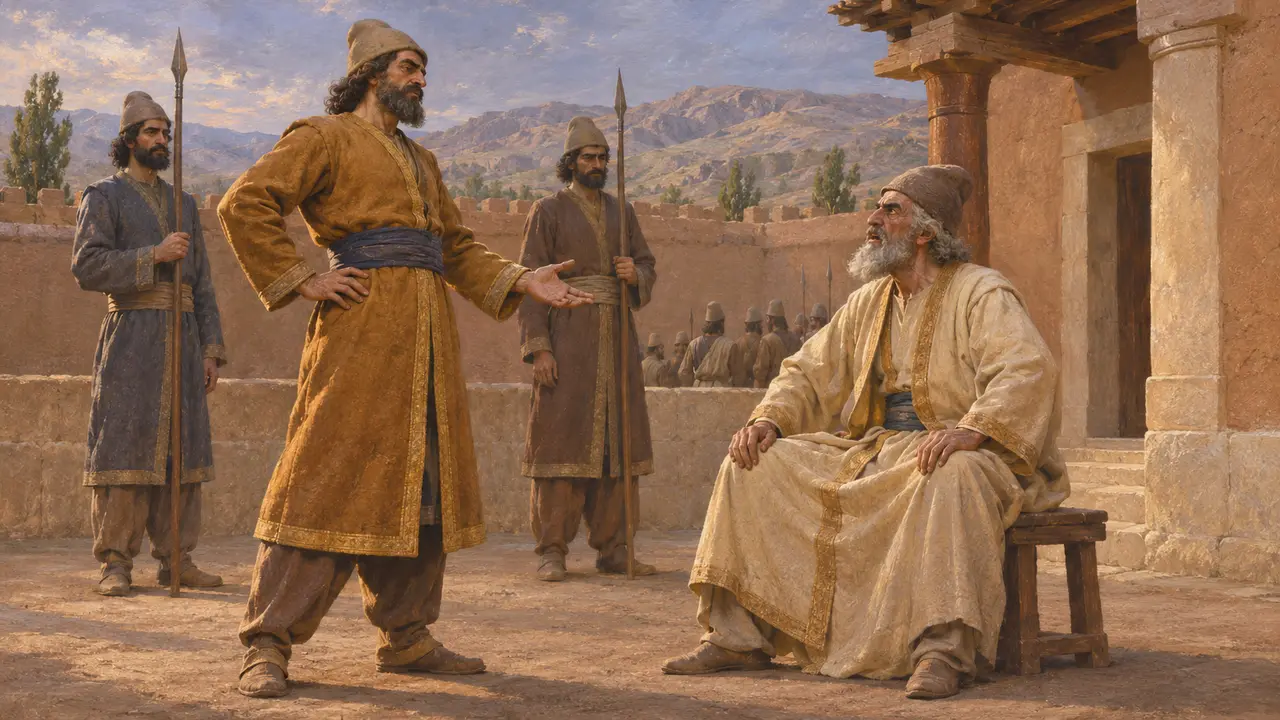
Ancient accountAccording to Herodotus, Harpagus nursed his grudge and urged Cyrus to rebel, sending him a letter sewn inside a hare. When Astyages gave Harpagus command of the Median army, many of the soldiers deserted or went over to Cyrus. After Astyages was captured, Harpagus is said to have mocked him. The old king replied that Harpagus had made the Medes slaves of the Persians.
Herodotus 1.123-129
What the Babylonian chronicle says
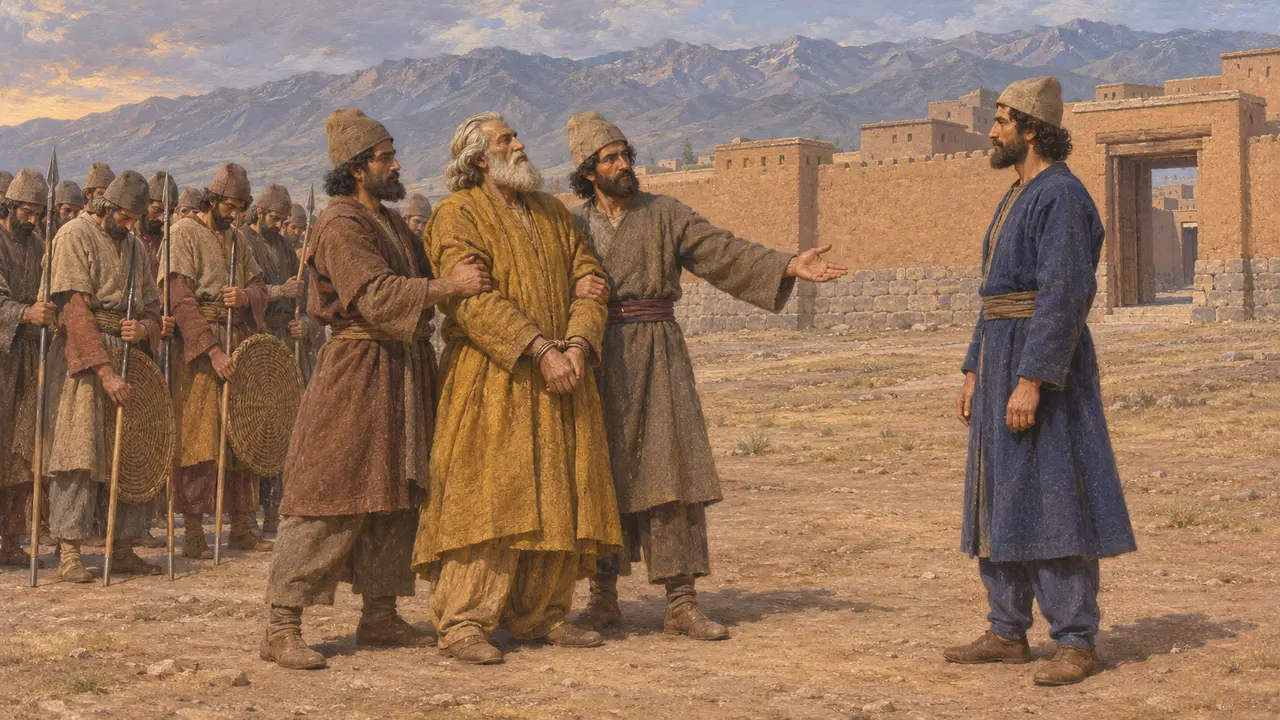
In the recordThe Nabonidus Chronicle, a Babylonian record, says that in the sixth year of Nabonidus, about 550 BCE, Astyages marched against Cyrus. His army then rebelled against him, seized him and handed him over to Cyrus. Cyrus took Ecbatana and carried its spoil to Anshan. The chronicle agrees with Herodotus that the Median army deserted its king, but it names no Harpagus.
Nabonidus Chronicle (A. K. Grayson, ABC 7)
The conquest of Ionia, Caria and Lycia
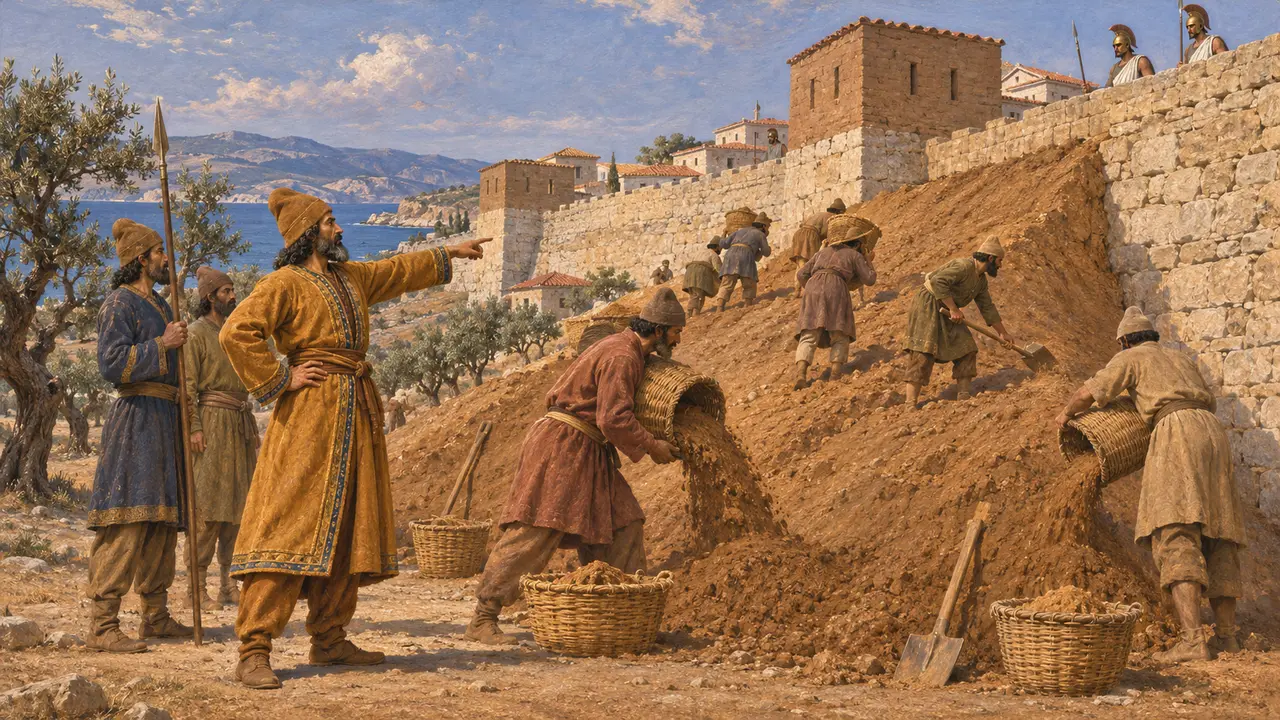
Ancient accountAfter the fall of Sardis, the Mede Mazares died, and Harpagus succeeded him in command on the coast. Herodotus says he took the Ionian cities one by one by piling earth mounds against their walls. The Phocaeans and Teians abandoned their cities by sea, though more than half the Phocaeans soon sailed home. He then subdued Caria and Lycia, where the Xanthians burned their families on their citadel and died fighting.
Herodotus 1.162-176
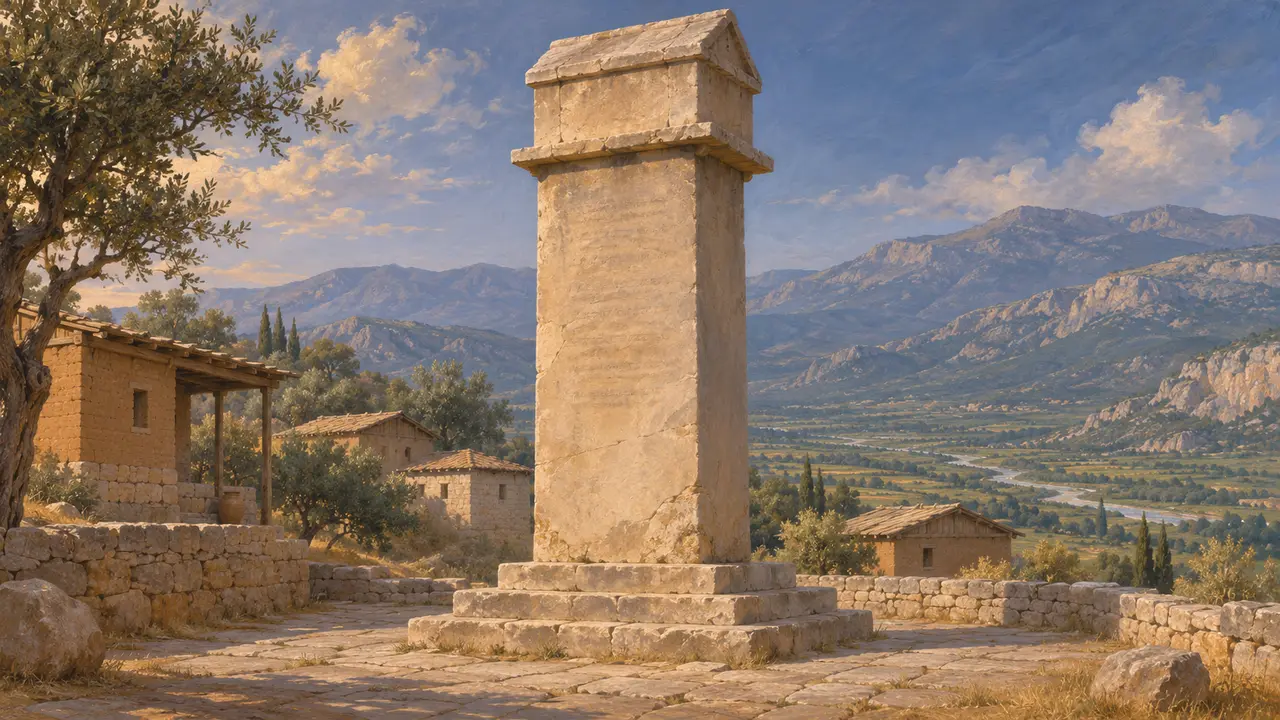
A Lycian dynasty of his line
DisputedThe Inscribed Pillar at Xanthus, set up about 400 BCE, honours a Lycian dynast called the son of Arppaxu, given as Harpagus in its Greek verse. Many historians think the ruling house of Xanthus descended from the conqueror and that the name recurred in the family. Others doubt any link. Herodotus calls the Harpagus who captured Histiaeus around 494 BCE a Persian, and he was probably a different man.
Inscribed Pillar of Xanthus (TL 44); Herodotus 6.28; P. Briant, From Cyrus to Alexander, 2002
Sources
- Herodotus 1.107-130
- Herodotus 1.162-176
- Nabonidus Chronicle (A. K. Grayson, Assyrian and Babylonian Chronicles, 1975, ABC 7)
- P. Briant, From Cyrus to Alexander, 2002
- Inscribed Pillar of Xanthus (TL 44)